Why Builders Are Investing in Modular and Off-Site Construction
By Housey · Last reviewed 24th of May 2026
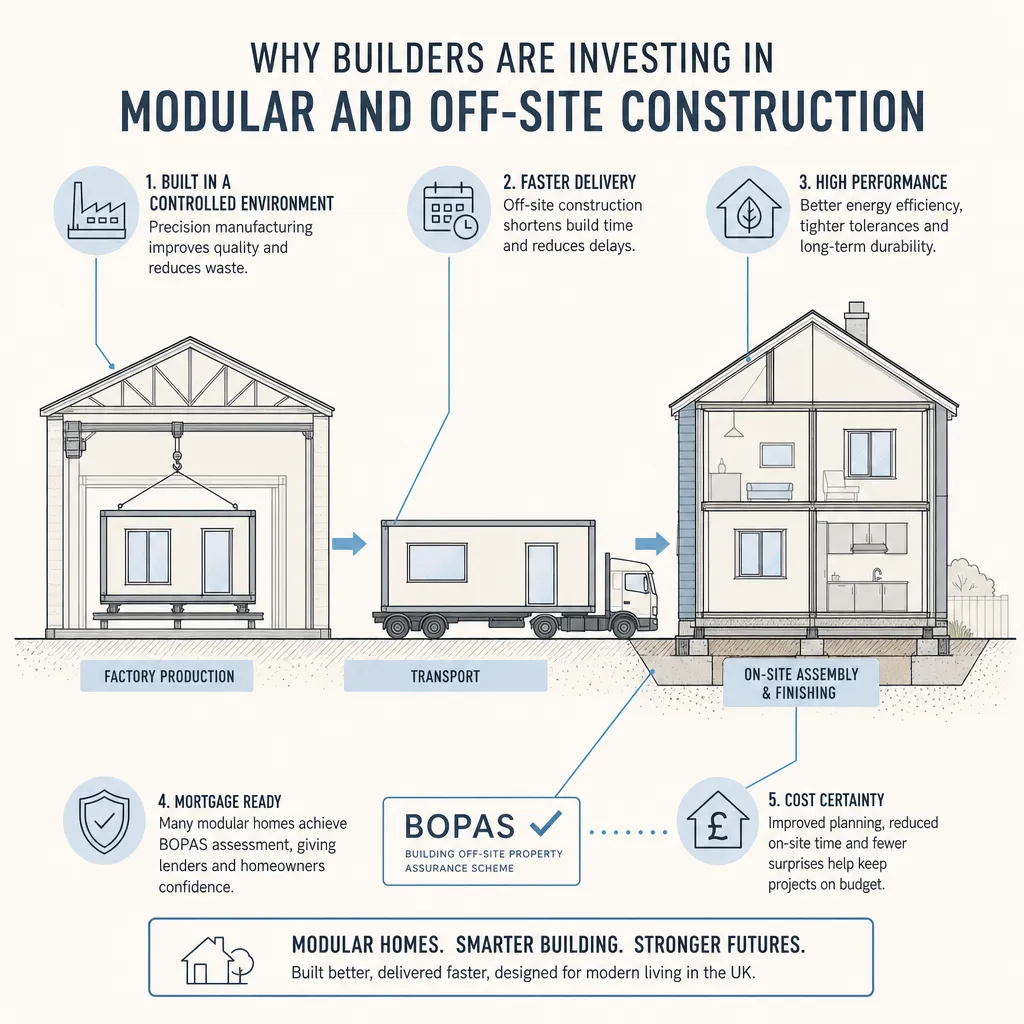
Why Builders Are Investing in Modular and Off-Site Construction
The term "Modern Methods of Construction" (MMC) has moved from niche specification to mainstream conversation in UK housebuilding. An expanding catalogue of completed projects, clearer routes to warranty and mortgage acceptance, and growing pressure on site-based labour have each contributed to wider adoption across builder types. For homeowners commissioning a new build or significant extension, understanding how these methods work and what questions to ask before appointing a contractor is increasingly important.
Key points
- The UK Government's MMC Definition Framework (published by MHCLG) classifies off-site construction into 7 categories, from Category 1 (three-dimensional volumetric modules) through to Category 7 (site labour-reducing products such as pre-formed floor cassettes).
- BOPAS (Buildoffsite Property Assurance Scheme), operated jointly by RICS and Lloyd's Register, provides durability assessments for MMC systems used by mortgage lenders and insurers to assess long-term lending risk on non-traditional homes.
- NHBC covers MMC homes under its Buildmark warranty, and the NHBC Accepts assessment route provides a widely recognised benchmark for system suitability and building control compliance.
- Off-site construction can reduce on-site programme duration by 30–50% compared to traditional masonry construction, according to NHBC research and industry data — though actual savings depend on design standardisation and site logistics.
- Homes England has backed MMC delivery through the Affordable Homes Programme and dedicated MMC developer partnerships, signalling sustained government intent to scale these methods across the housebuilding sector.
What modular and off-site construction means in practice
Off-site construction covers a spectrum of approaches. At one end, volumetric modular construction involves manufacturing fully fitted three-dimensional room modules in a factory — complete with finishes, fixtures, and services pre-installed — that are craned onto prepared foundations on site. At the other end, panelised systems (timber or light-gauge steel frames) involve manufacturing structural wall panels off-site and assembling them on site in a process that still requires significant on-site labour.
The UK Government's MMC Definition Framework distinguishes seven categories:
MMC Category | Description | Examples |
|---|---|---|
1 — 3D Volumetric | Fully fitted room modules manufactured off-site | Bathroom pods, modular housing units |
2 — Panelised (structural) | Structural wall, floor, or roof panels assembled on site | Timber SIPs panels, light-gauge steel frames |
3 — Hybrid | Combination of volumetric modules and panelised systems | Bathroom pods within a panelised structural frame |
4 — Sub-assemblies and components | Pre-made structural or envelope elements | Roof cassettes, pre-formed floor systems |
5 — Non-structural assemblies | Pre-made non-structural elements | Pre-insulated cladding panels, service modules |
6 — Traditional building, innovative methods | On-site construction using innovative processes | Thin-joint blockwork, tunnel form |
7 — Site labour-reducing products | Products that cut on-site labour hours | Engineered joists, pre-plumbed hot-water cylinders |
For most private homeowners, the most relevant categories are 1, 2, and 3 — volumetric and panelised systems used in new homes or significant extensions.
Why builders are shifting towards MMC
Several converging pressures have made MMC adoption commercially rational for UK builders:
Skilled labour shortages. The UK construction sector has faced a structural skills shortage for over a decade. Factory-based production requires a different workforce mix — fewer site-based bricklayers and more factory operatives — and reduces exposure to site weather stoppages and programme uncertainty caused by absenteeism.
Speed of delivery. Factory production runs on parallel programmes: while groundworks proceed on site, modules or panels are being manufactured off-site. This compression of the overall programme is attractive to both volume housebuilders (faster revenue recognition) and individual homeowners (shorter disruption periods).
Quality control. Factory environments allow for tighter tolerances, more consistent material specification, and structured quality checks that are harder to replicate on an open building site in variable British weather. This is particularly relevant for airtightness performance under Building Regulations Part L.
Housing delivery targets. Government housing targets — and the funding conditions attached to Homes England grants — have created incentives for registered providers and developers to demonstrate MMC capability. This has accelerated investment in MMC supply chains across the development sector.
Waste reduction. Off-site production generates less on-site waste and allows more efficient material use, increasingly relevant as embodied carbon calculations become part of pre-planning assessments and local authority planning requirements.
What homeowners should know before commissioning modular work
If you are considering a modular or off-site construction approach for a new self-build, replacement dwelling, or large extension, use the following checklist as a starting point for due diligence.
What to ask before appointing a builder or design-and-build firm:
- What MMC system or manufacturer do you use, and does it hold a BOPAS durability assessment or NHBC Accepts approval?
- Which structural warranty product will the completed building carry, and is it accepted by mainstream mortgage lenders?
- How is the system assessed under Building Regulations — will building control be handled by a Registered Building Inspector or the local authority?
- What are the design standardisation requirements, and how much can the design vary from standard module dimensions while maintaining the system's warranties?
- How is the factory programme co-ordinated with site preparation — what are the lead times and what happens if site conditions delay ground readiness?
- What are the contractor's responsibilities if manufacturing defects are identified during assembly or post-completion?
Challenges and considerations
Mortgage and insurance. While the market has improved significantly, some lenders remain cautious about non-traditional construction systems. Before proceeding, confirm that your intended MMC system is acceptable to the lender(s) you plan to use, and that buildings insurance is available on standard terms.
Planning. MMC does not change planning requirements — full planning permission or prior approval under permitted development still applies. Design standardisation inherent in some modular systems may require adjustment for planning-sensitive sites, conservation areas, or locally listed buildings.
Resale. Homes built using well-warranted MMC systems (BOPAS, NHBC Buildmark) are increasingly accepted by mainstream buyers and lenders. However, unusual or undocumented systems may present challenges at resale. Choosing systems with established warranty routes protects long-term value.
Self-build finance. Self-build mortgage products typically release funds in staged drawdowns. For MMC builds, stage payments may need to align with factory manufacture and delivery milestones rather than traditional on-site construction stages — confirm this arrangement with your lender before committing to a programme.
When to get professional help
Appoint a qualified professional — architect, architectural technologist, or experienced design-and-build firm — before committing to an MMC system if:
- You are commissioning a complete new dwelling or a structural extension requiring building control approval.
- The site has unusual ground conditions, restrictive covenants, or is in a conservation area.
- You are unsure whether the system you are considering carries adequate warranty or mortgage acceptance documentation.
- The proposed design cannot be accommodated within the manufacturer's standard module dimensions without bespoke engineering.
How Housey can help
Housey can connect you with experienced design-and-build firms who work with off-site and modular systems, helping you obtain like-for-like quotes and understand which MMC approaches suit your site, programme, and warranty requirements.
Frequently asked questions
Are modular homes as durable as traditionally built homes?
Well-specified MMC homes built to recognised standards and covered by BOPAS or NHBC warranty are assessed for a minimum 60-year durability standard. Durability depends on the specific system, build quality, and ongoing maintenance — not the construction method alone. Check that any system you are considering has a published durability assessment before proceeding.
Can I get a mortgage on a modular home?
Yes, in most cases, provided the system has been assessed through BOPAS, NHBC Accepts, or a similar recognised route and your lender accepts it. Mortgage availability has improved considerably as major lenders have updated their policies. Always confirm acceptance with your mortgage provider before exchanging contracts or committing to a specific system.
Does modular construction still require building regulations approval?
Yes. Building Regulations apply regardless of construction method. MMC systems can be assessed through local authority building control or Registered Building Inspectors. Many manufacturers provide type approval documentation that simplifies the process, but formal building control approval is still required before works commence.
Is off-site construction greener than traditional building?
Off-site construction typically generates less on-site waste and can achieve higher airtightness standards, reducing operational energy demand. Embodied carbon varies significantly by material — timber-frame systems generally have lower embodied carbon than concrete or steel equivalents. For verified performance claims, look for projects with published post-occupancy energy data or assessed against RIBA's 2030 Climate Challenge targets.
Sources and further reading
- Modern Methods of Construction: working group to develop a definition framework — GOV.UK / MHCLG
- NHBC Accepts — MMC assessment route — NHBC
- BOPAS — Buildoffsite Property Assurance Scheme — RICS / Lloyd's Register
- Homes England: Modern Methods of Construction — Homes England
- Approved Document L: Conservation of fuel and power — GOV.UK
Useful next reads
 Improvement & Build
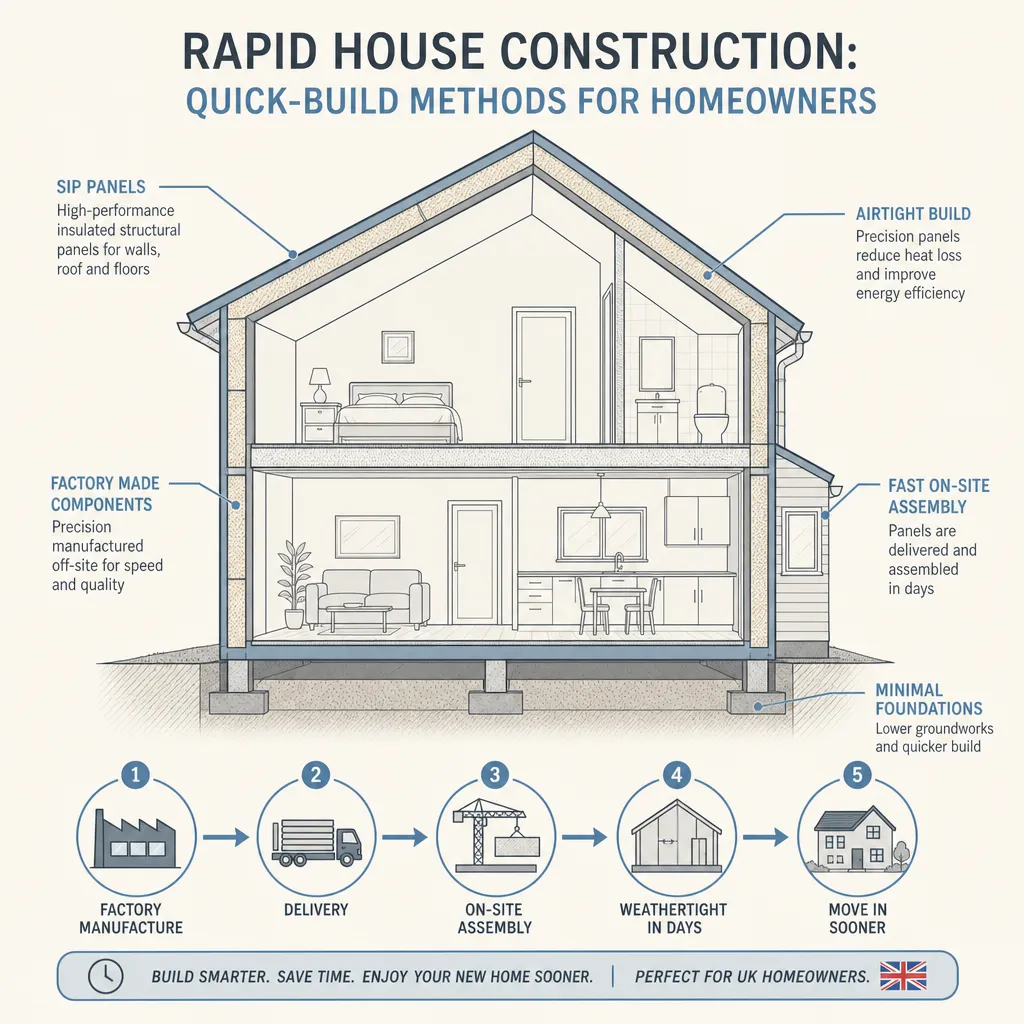
Rapid House Construction: Quick-Build Methods for Homeowners
Rapid house construction in the UK typically uses Modern Methods of Construction such as timber frame, structural insulated panels (SIPs), or volumetric modular systems.
 Improvement & Build
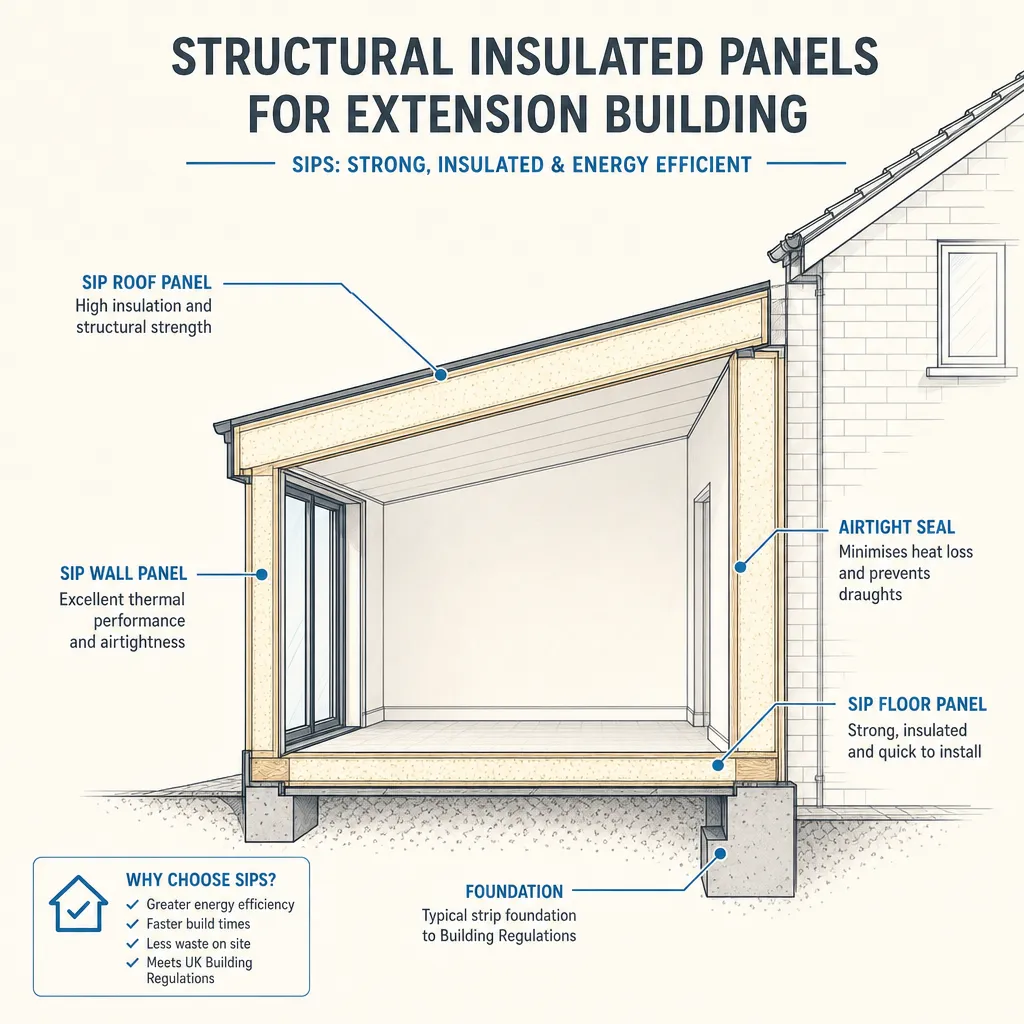
Structural Insulated Panels for Extension Building
SIP panels — a sandwich of rigid insulation between structural board faces — offer rapid erection, high thermal performance, and inherent airtightness.
 Improvement & Build
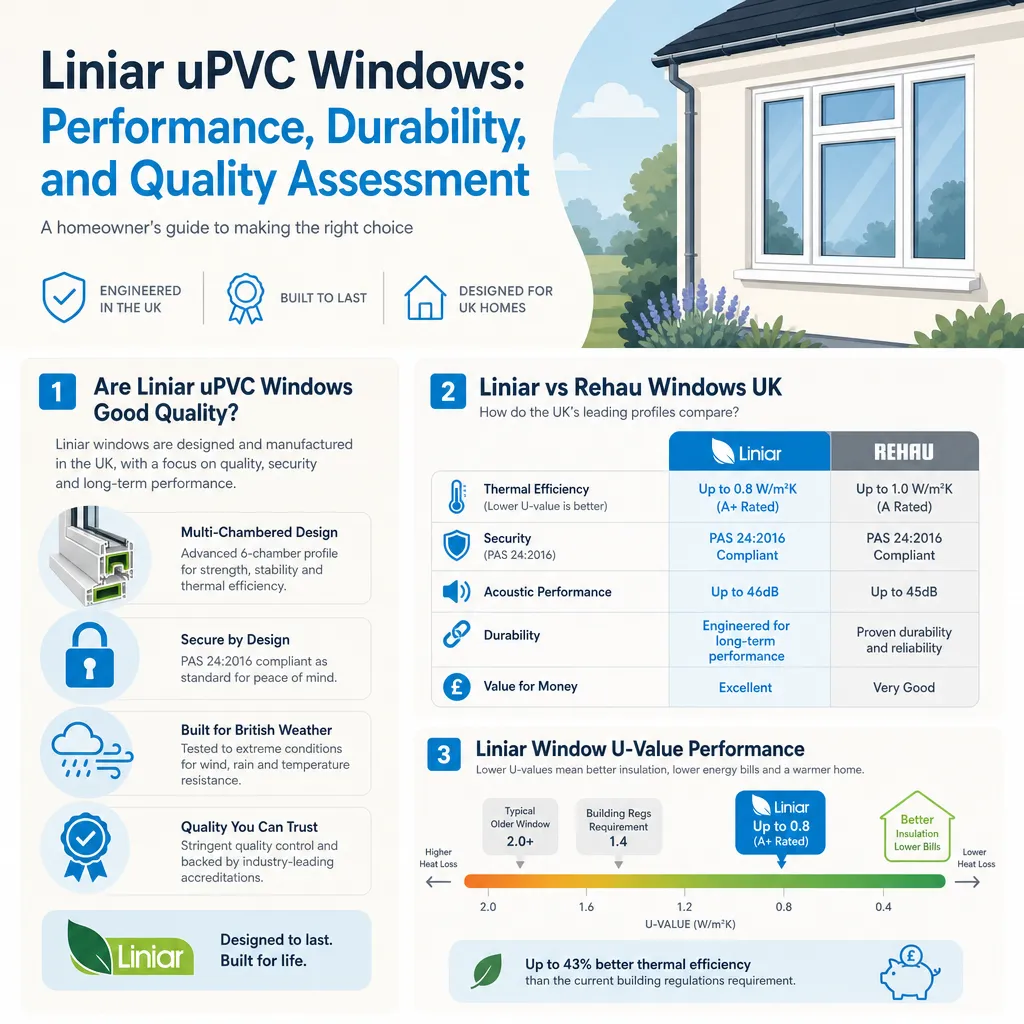
Liniar uPVC Windows: Performance, Durability, and Quality Assessment
Liniar uPVC window profiles are manufactured in the UK using multi-chambered, foamed frames.
 Improvement & Build
Garden Tap Installation with Hot and Cold Water: Plumbing Options
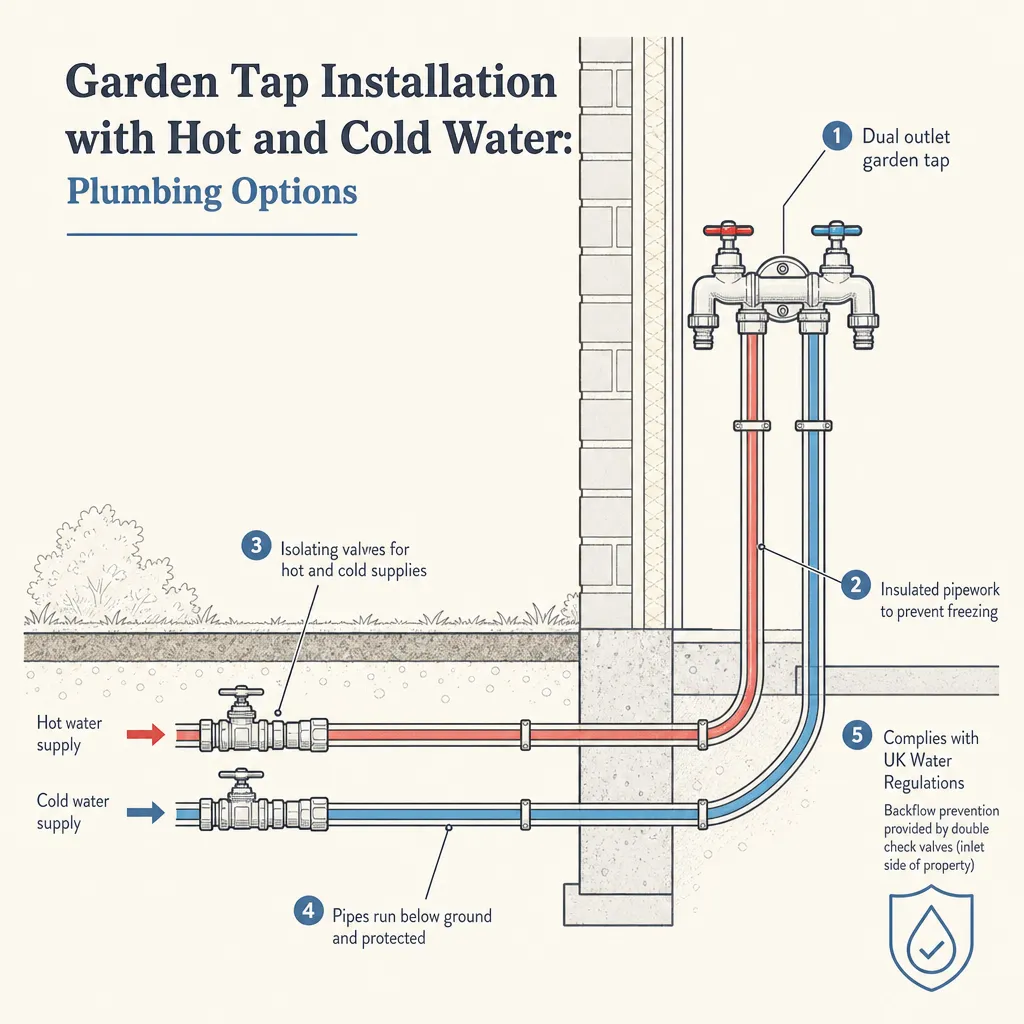
Adding a cold garden tap is a common DIY project, but routing hot water outdoors requires a plumber to connect to your domestic hot water system and comply with the Water Supply (Water Fittings) Regulations 1999.
 Improvement & Build
Sealing and Maintaining Historic Leaded Glass Windows: Preservation and Performance
Leaded glass windows are maintained using traditional linseed oil cement — not silicone or modern sealants, which prevent natural movement in the lead came.