Wood burning stove versus fireplace: which heating option to choose
By Housey · Last reviewed 19th of May 2026
Wood burning stove versus fireplace: which heating option to choose
Deciding between a wood burning stove and an open fireplace is rarely straightforward. Both burn solid fuel, both require a working flue, and both produce a visible flame — but beyond those shared features, the regulatory requirements, running costs, heat output, and installation implications differ considerably. This choice typically arises when a homeowner is renovating a room with an existing chimney breast, reinstating a blocked fireplace, or adding a supplementary heat source to an older property.
Key points
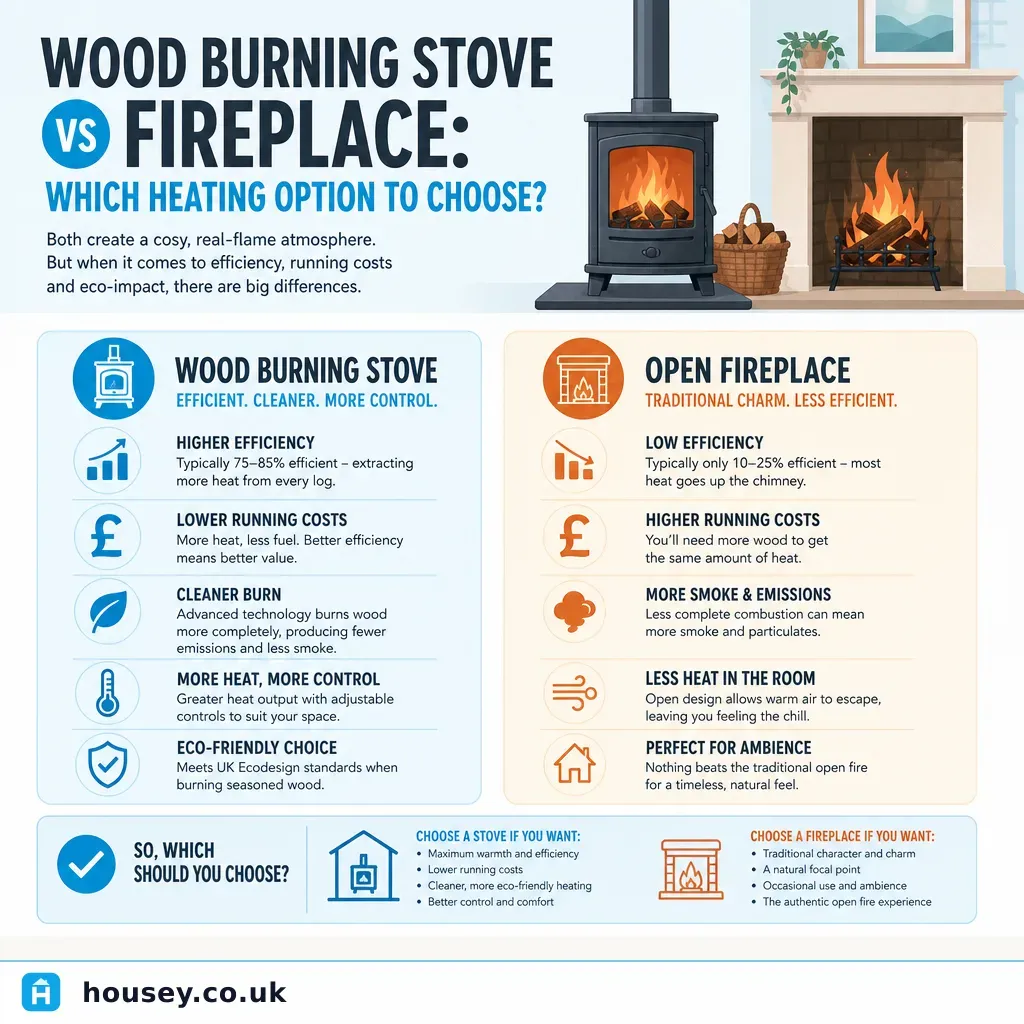
- Wood burning stoves are typically 70–80% thermally efficient; open fireplaces deliver only 15–30% of the fuel's energy as useful room heat, with the rest escaping up the chimney.
- From 1 January 2022, only Ecodesign-compliant stoves may be sold new in the UK; no equivalent product standard applies to the installation of a traditional open fireplace grate.
- All solid-fuel burning — stove or open fire — is subject to Smoke Control Area restrictions under the Clean Air Act 1993; check whether your postcode falls within a designated area before deciding.
- Building Regulations Approved Document J applies to both appliance types; hearth forward-projection requirements differ (300 mm for stoves, 500 mm for open fires measured from the back jambs).
- An existing chimney breast — whether the fireplace has been blocked or not — usually requires sweeping, a camera inspection, and lining before either option can be safely commissioned.
Efficiency and heat output compared
The most significant practical difference is thermal efficiency. An open fire pulls a large volume of room air up the chimney to sustain combustion; a draught-control stove restricts airflow and extracts more heat from the fuel before the flue gases escape.
Measure | Wood burning stove | Open fireplace |
|---|---|---|
Typical thermal efficiency | 70–80% (Ecodesign models) | 15–30% |
Heat output control | Precise via primary and secondary air controls | Very limited — damper only |
Room air consumption | Low; some models are room-sealed | High |
Radiated heat feel | Through glass and stove body | Directly from the open flame |
Ash and ember containment | Fully enclosed firebox | Open; ash falls to grate or basket |
Permitted fuel in Smoke Control Areas | Defra-exempt stove allows dry wood | Approved smokeless fuel only; no wood logs |
For a UK household managing fuel costs, the efficiency gap is meaningful. A stove burning 8 kg of dry hardwood per evening will deliver substantially more usable heat than an open fire burning the same quantity.
Regulatory requirements
Both appliances are regulated under Building Regulations Approved Document J and are subject to Smoke Control Area law under the Clean Air Act 1993. There are, however, important differences in how the rules apply.
Smoke Control Areas: In a Smoke Control Area, an open fire may only burn Defra-approved smokeless fuel — burning wood logs is an offence. A Defra-exempt (Ecodesign-compliant) wood burning stove allows you to burn dry wood legally even in a Smoke Control Area, provided you use authorised fuel. Check your local council or the Defra Smoke Control Area checker before choosing.
Building regulations: A new stove installation must be notified to building control, normally via a HETAS-registered installer who self-certifies. Reinstating or modifying an open fireplace in an existing chimney breast may also be notifiable depending on the scope of work — check with your local building control authority. Both scenarios require a non-combustible hearth meeting the dimensions specified in Approved Document J.
Listed buildings and conservation areas: Introducing either appliance type in a listed building or within a conservation area may require listed building consent or planning permission. Consult your local planning authority before committing to either option.
Which option should you choose? Decision tree
- Choose a wood burning stove if you want maximum heat output relative to fuel consumed, your home is in a Smoke Control Area (a Defra-exempt stove allows dry-wood burning), or reducing fuel costs is a priority.
- Choose an open fireplace if you prefer the unobstructed aesthetic of an open flame, you already have a functional fireplace opening that simply needs reinstating, or you want occasional supplementary heat and prioritise the traditional focal point over thermal performance.
- Consider a multifuel stove if you want the option to burn approved smokeless solid fuels as well as wood — useful in Smoke Control Areas where fuel flexibility matters.
- Ask a HETAS installer to assess your chimney first if you are starting from a redundant or blocked chimney breast — liner condition, flue draw, and throat dimensions will influence which option is structurally practical.
- Consult your local planning authority if the property is listed or within a conservation area before specifying either appliance type.
Cost comparison
Cost element | Wood burning stove | Reinstated open fireplace |
|---|---|---|
Appliance or grate supply | £400–£2,500+ | £100–£600 (grate, fireback, surround) |
Flue liner (new, recommended for both) | £500–£1,500 typically | £500–£1,500 typically |
Installation labour | £500–£1,200 | £300–£900 |
Hearth (if not already present) | £150–£500 | £150–£400 |
Building regulations (HETAS cert or building notice) | Usually included by HETAS installer | Notifiable if new work; separate application if self-managing |
Indicative total | £2,000–£5,500+ | £800–£2,500+ |
Indicative UK costs, last reviewed 2026-05-19. Costs vary significantly by region, chimney condition, and specification. Obtain written quotes.
An open fireplace can be the lower-cost option where the chimney breast and throat are already in good condition. However, if the chimney requires lining — advisable for both options to ensure safe and efficient operation — the cost differential narrows considerably.
Running costs and fuel
Ready to Burn certified kiln-dried hardwood (moisture content 20% or below) is appropriate for both appliance types. In Smoke Control Areas, open fires must use approved smokeless solid fuel; a Defra-exempt stove opens up the option of dry wood. The efficiency gap means a stove will deliver more heat per kilogram of fuel, reducing running costs over a season for homeowners who use their appliance regularly.
Important limitations
This article provides general comparative guidance on wood burning stoves and open fireplaces as at May 2026. Regulatory requirements — including Smoke Control Area boundaries, building regulations compliance, and listed building obligations — depend on your specific property and local authority. Efficiency figures are indicative of appliance-type ranges; actual performance depends on installation quality, chimney draw, fuel moisture content, and usage pattern. This is not legal, planning, or fire safety advice. Consult a HETAS-registered installer and your local planning authority before committing to either option.
What to ask a qualified professional
Before instructing a HETAS installer or chimney specialist:
- Is my property in a Smoke Control Area, and which appliance types and fuels are permitted?
- Does my existing chimney require lining for both — or either — option to operate safely?
- What does a camera inspection of the flue show about its structural condition and draw?
- Are there any listed building consents or planning permissions I need before starting?
- What hearth dimensions and materials does Approved Document J require for each appliance type in my specific opening?
- How do the air supply requirements differ between a stove and an open fire in my room volume, and does my room meet them?
When to get professional help
Seek professional advice before starting work if:
- The chimney breast has been fully or partially removed at any floor level — this is a structural concern requiring expert assessment before any appliance is connected.
- There are cracks in the chimney stack, evidence of smoke penetration through the breast, or a history of chimney fires.
- You live in a listed building or within a conservation area and have not yet obtained the necessary consents.
- You are unsure whether your postcode falls within a designated Smoke Control Area.
- The existing fireplace opening has non-standard dimensions that would require structural alteration to the lintel or jambs.
How Housey can help
If your stove or fireplace project involves structural building work — creating a new chimney breast, modifying an existing opening, or integrating the installation with a broader home improvement — Housey can connect you with qualified extension builders who understand the interface between construction work and combustion appliance installation.
Frequently asked questions
Is an open fireplace legal in the UK?
Open fireplaces are legal across the UK. In Smoke Control Areas, however, only Defra-approved smokeless fuels — not wood logs — may be burned on an open fire. Burning wood on an open fire in a Smoke Control Area is an offence under the Clean Air Act 1993. A Defra-exempt wood burning stove offers more fuel flexibility in these areas.
Which is cheaper to run: a stove or an open fireplace?
A wood burning stove is cheaper to run per unit of heat delivered, because of its higher thermal efficiency — typically 70–80% versus 15–30% for an open fire. A stove burning a given quantity of dry wood will produce substantially more usable warmth than an open fire burning the same amount of fuel.
Do both a stove and an open fireplace require building regulations approval?
Both fall under Building Regulations Approved Document J. Installing a new stove requires notification to building control, normally self-certified by a HETAS-registered installer. Reinstating or significantly modifying an open fireplace also falls under Part J. Check with your local building control authority if you are unsure whether your specific works are notifiable.
Can I convert an open fireplace to a wood burning stove?
Yes — this is one of the most common installation scenarios. The chimney will usually need to be swept, camera-inspected, and lined with a flexible stainless steel liner. A register plate is fitted to seal the throat above the stove. A HETAS installer will assess the opening dimensions to confirm the chosen stove and surround will fit correctly.
Which option adds more value to a property?
Both a functional open fireplace and a quality wood burning stove are generally viewed positively by UK buyers as desirable features. A stove may carry additional appeal in energy-conscious markets given its efficiency advantage. Estate agents sometimes cite value uplifts, but these are indicative rather than guaranteed and will vary by location and buyer profile.
Sources and further reading
- Building Regulations Approved Document J: Combustion Appliances and Fuel Storage Systems — GOV.UK
- Defra: Smoke Control Area exemptions checker — Department for Environment, Food and Rural Affairs
- HETAS: Registered installers and exempt appliances — HETAS
- Clean Air Act 1993 — legislation.gov.uk
- Wood-fuelled heating systems — Energy Saving Trust
Useful next reads
 Improvement & Build
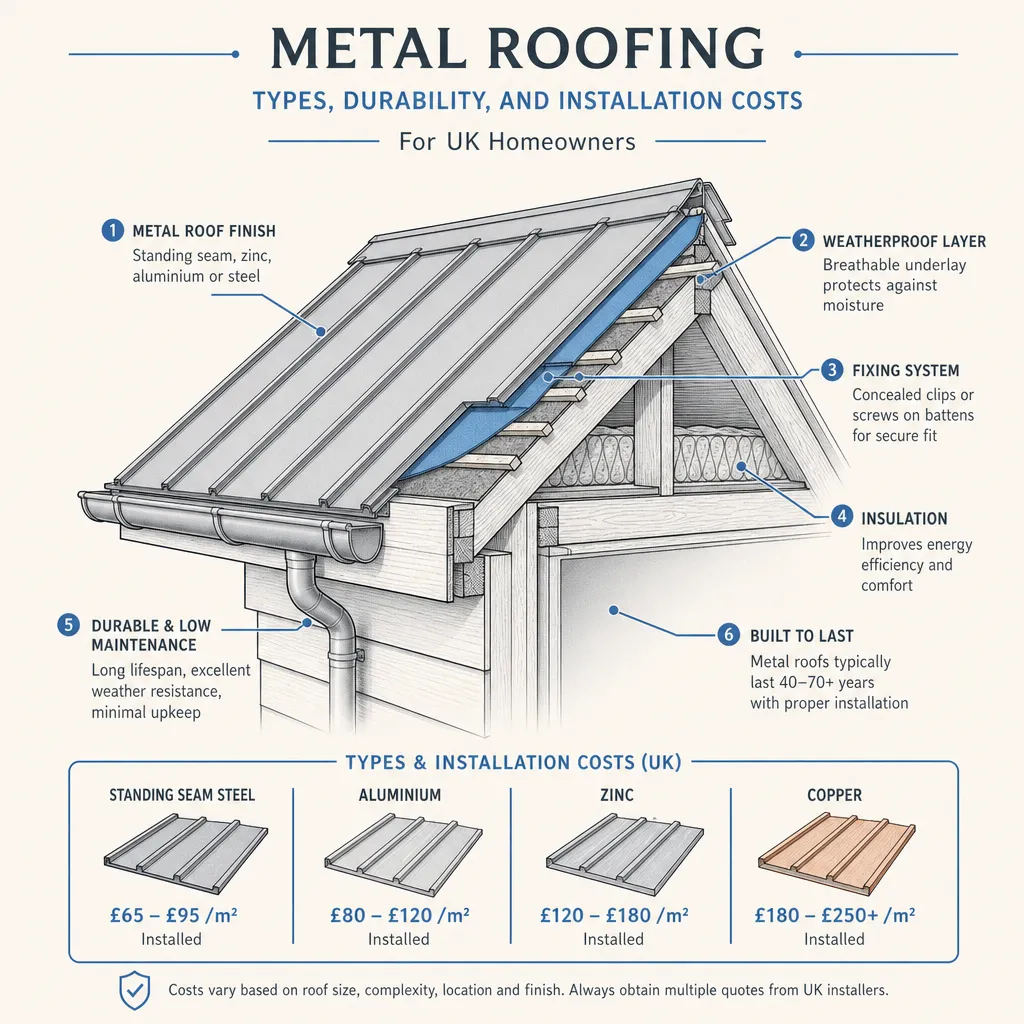
Metal Roofing: Types, Durability, and Installation Costs
Metal roofing in the UK includes standing seam, corrugated sheet, and metal tile systems in steel, aluminium, zinc, or copper.
 Improvement & Build
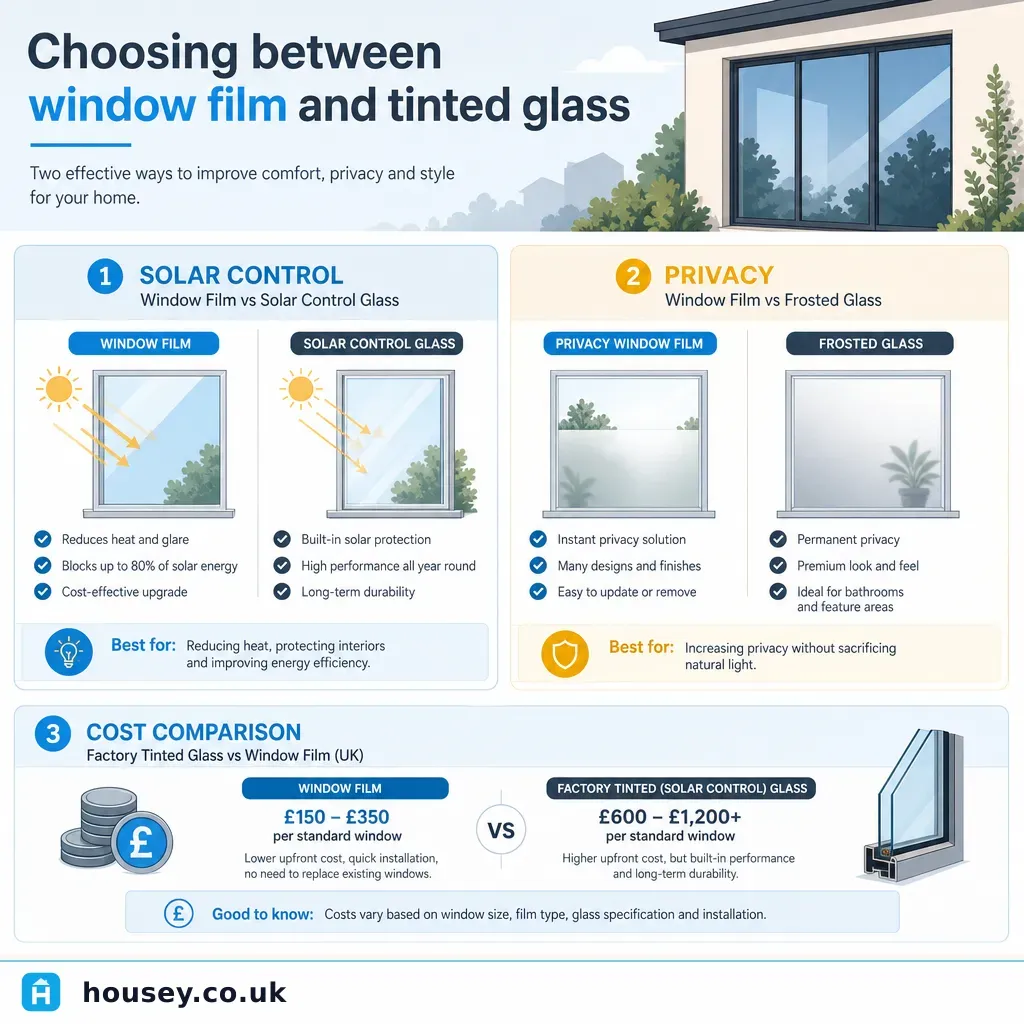
Choosing between window film and tinted glass
Window film is a retrofittable adhesive layer applied to existing glass — cheaper and reversible; factory-tinted or solar-control glass is manufactured with the tint integral to the pane, offering better durability and consistent performance.
 Improvement & Build
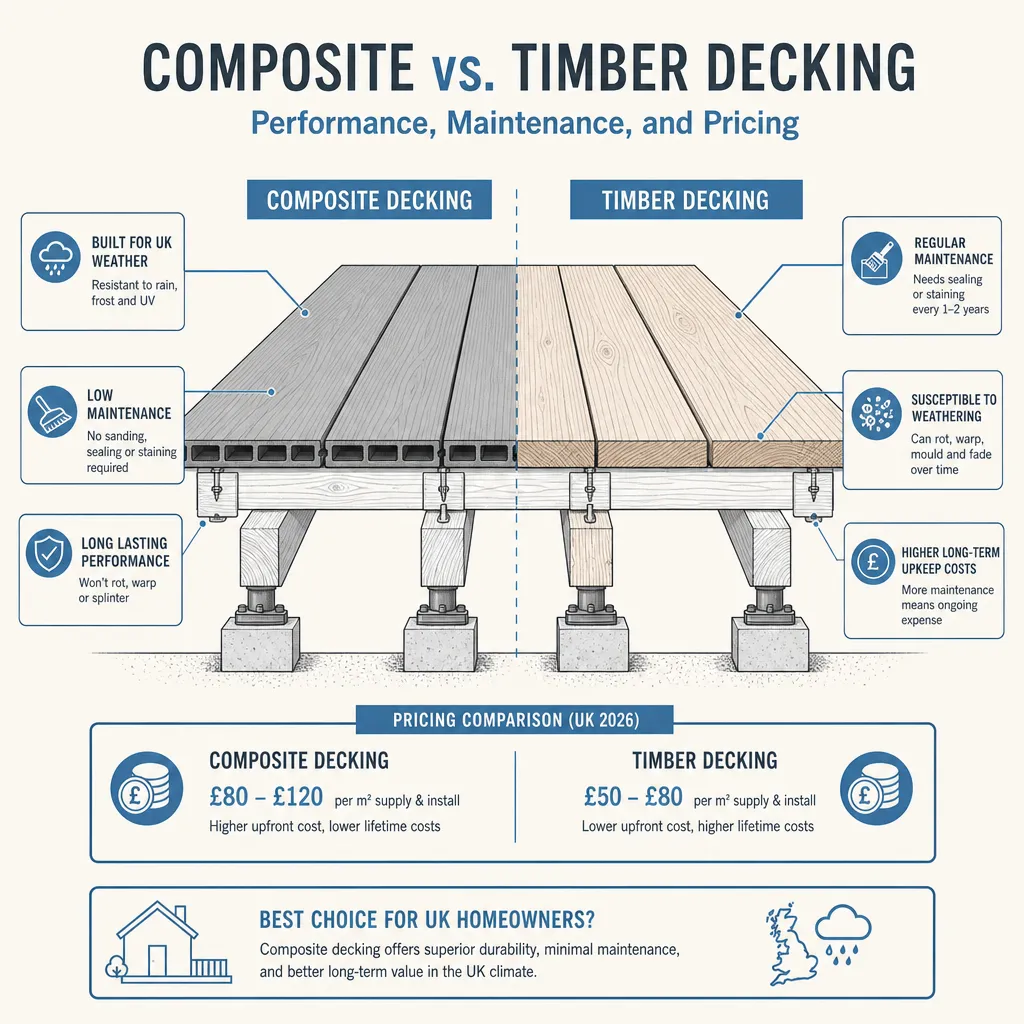
Composite vs. Timber Decking: Performance, Maintenance, and Pricing
Composite decking costs more upfront — typically £120–£220 per m² installed versus £80–£150 for treated softwood — but requires far less maintenance and carries a 25-year warranty.
 Improvement & Build
Smart garage door systems: investment and operating efficiency
A smart garage door system adds app control, automation, access logs, and smart home integration to a motorised garage door.
 Improvement & Build
Professional Versus DIY Door Hanging: Decision Guide
Most internal doors can be hung by a competent DIYer with basic carpentry tools and patience, but external doors, fire doors, and out-of-square frames usually need a professional door fitter.