Recycled Building Materials: Integration in Renovation Projects
By Housey · Last reviewed 12th of May 2026
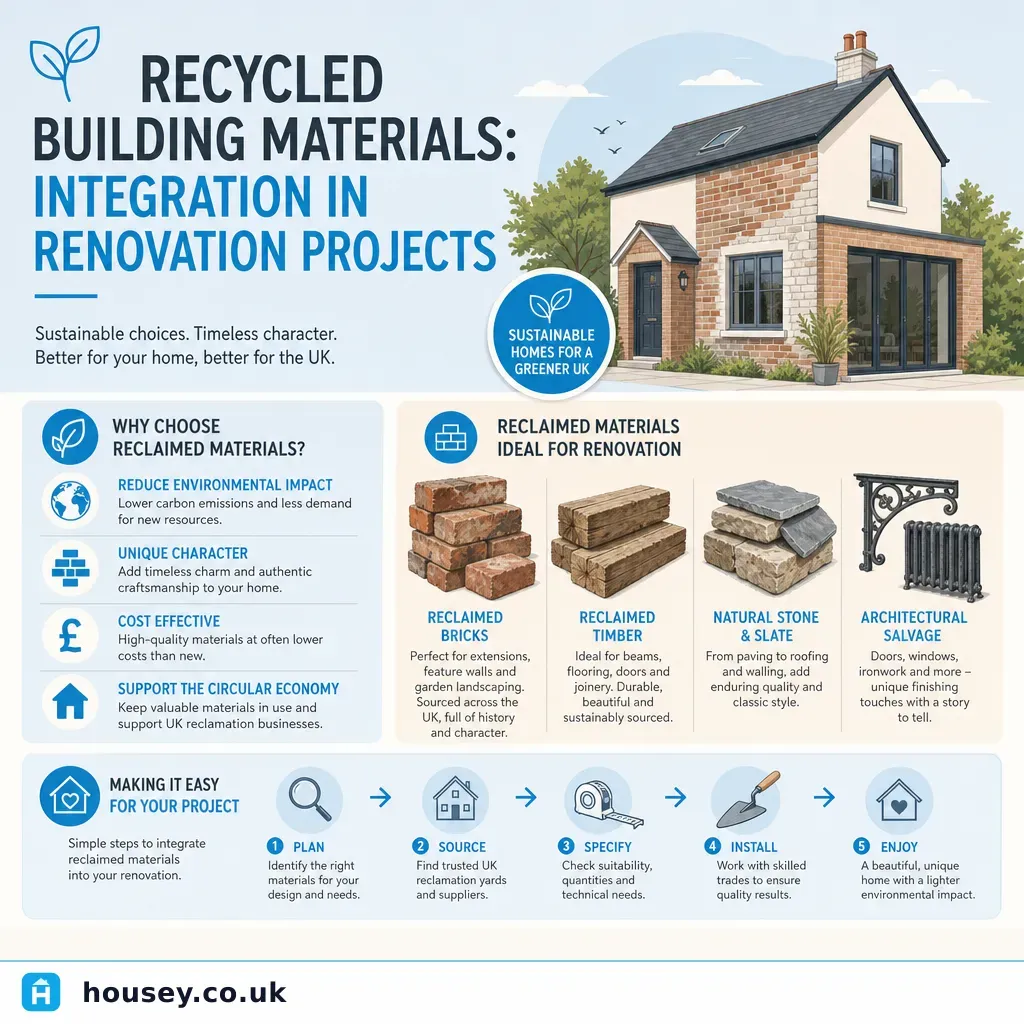
Recycled Building Materials: Integration in Renovation Projects
Interest in recycled and reclaimed building materials is growing across the UK, driven by embodied-carbon targets, rising material costs, and a broader shift towards circular economy approaches in construction. Homeowners planning extensions, internal alterations, or deep retrofits often ask whether reclaimed bricks, salvaged slates, or recycled insulation products can legitimately be used in a UK building project — and what compliance checks apply. The short answer is yes, with important caveats around quality, hazardous material risk, and Building Regulations.
Key points
- Recycled and reclaimed materials must meet the same Building Regulations performance standards as new materials — their reclaimed origin provides no compliance exemption.
- Reclaimed materials from buildings demolished before 2000 carry a real risk of asbestos contamination; the Control of Asbestos Regulations 2012 requires suspect materials to be surveyed by a UKAS-accredited assessor before disturbance.
- PAS 2035:2023, the UK retrofit standard, requires a Retrofit Coordinator to oversee medium and large domestic retrofit projects; material choices — including recycled options — must be compatible with the whole-house strategy.
- Blown cellulose insulation (produced from recycled newspaper) carries British Board of Agrément (BBA) certification and is a well-established, widely used recycled insulation option in UK loft and cavity retrofit applications.
- WRAP (Waste and Resources Action Programme) guidance on end-of-waste criteria determines when a recycled material can legally re-enter the supply chain as a construction product rather than a regulated waste.
Types of recycled and reclaimed materials in UK renovation
Material | Common UK sources | Key quality checks | Typical applications |
|---|---|---|---|
Reclaimed bricks | Demolition sites, architectural salvage yards | Frost resistance, spalling, mortar-bond compatibility, colour consistency | External walls, garden structures, feature interiors |
Reclaimed roof slates | Roof replacement projects, salvage dealers | Delamination test, thickness consistency, sufficient nail holes, provenance (Welsh, Lakeland) | Roof coverings on traditional properties |
Structural reclaimed timber | Barn demolitions, floor replacements | Structural grading or engineer assessment, moisture content, rot and beetle inspection | Beams, floor joists, roof structures |
Reclaimed hardwood flooring | House clearances, salvage | Species identification, moisture content, cupping or movement | Hardwood and parquet floors |
Recycled aggregate | Crushed concrete and brick rubble | BS EN 12620 compliance for structural use, contamination screening | Non-structural fill, sub-base, hard landscaping |
Recycled cellulose insulation | Processed recycled newspaper | BBA certificate, declared λ-value, fire classification | Blown loft insulation, cavity fill |
Reclaimed stone | Demolished walls, quarry waste | Compressive strength, frost resistance, match to existing stone type | Walling, coping stones, external paving |
Reclaimed lime mortar | Careful demolition recovery | Rarely viable to reclaim directly; lime putty from reclaim is sometimes usable | Pointing and render on older masonry |
Compliance: what Building Regulations require
Using reclaimed or recycled materials does not alter Building Regulations obligations. Every material used in a notifiable building project must be fit for purpose in its intended structural, thermal, or fire-performance role, and must meet the applicable British Standard, European Technical Assessment, or BBA certificate where one exists for that material type.
Reclaimed structural timber has no inherent stress grade. A structural engineer can inspect and grade individual members where no specification documents survive. Recycled insulation products — cellulose, recycled glass fibre, sheep's wool blends — must carry BBA or equivalent third-party certification confirming their declared thermal conductivity (λ-value) for use in U-value calculations under Part L.
Building control officers have discretion to accept materials without a formal certificate if sufficient evidence of fitness for purpose is provided; in practice, BBA certification is the cleanest route for recycled insulation products.
Asbestos and hazardous materials: a critical caution
This is the single most important risk associated with reclaimed materials from older UK buildings. Asbestos-containing materials (ACMs) were used widely in UK construction until a full ban in 1999. Materials from buildings demolished before 2000 — particularly ceiling tiles, vinyl floor tiles, pipe lagging, textured coatings (such as Artex applied before 1985), and fibre-cement sheeting — must be treated as potentially containing asbestos until proven otherwise.
Do not cut, drill, sand, or otherwise disturb any suspect reclaimed material. If you are uncertain whether a reclaimed product contains asbestos, arrange a survey from a UKAS-accredited asbestos assessor before any handling or fixing work. The Control of Asbestos Regulations 2012 places duties on persons managing work near ACMs, and penalties for non-compliance are serious.
Lead paint is also present on most reclaimed timber from pre-1970s properties. Handle carefully, do not sand dry, and follow HSE guidance on lead paint disturbance.
Sourcing reclaimed materials responsibly
The quality of reclaimed materials varies enormously between suppliers. There is no single national accreditation scheme for reclaimed material dealers in the UK.
What to check before purchasing reclaimed materials
- Provenance: Where did the material originate? Demolition waste from pre-2000 buildings requires asbestos consideration before purchase or use.
- Quantity and consistency: Is there sufficient matched stock to complete the project without mixing batches of different colour, dimension, or texture?
- Condition: Inspect in person where possible and request samples. Reject bricks showing freeze-thaw spalling, slates showing delamination, or timber with active rot or beetle infestation.
- Compliance documentation: Does the supplier provide test certificates, BS EN conformity statements, or grading documents for structural or insulation products?
- Supplier credentials: Is the dealer a member of the Salvo Code — the UK voluntary code of practice for architectural salvage dealers, which includes commitments to refuse stolen materials and maintain provenance records?
- Delivery and wastage: Reclaimed materials are often sold in mixed lots; factor in sorting time and a higher wastage allowance than you would for new materials.
Recycled materials in retrofit projects under PAS 2035
For domestic retrofit work governed by PAS 2035:2023, a Retrofit Coordinator (RC) must oversee the design and specification of energy-efficiency measures. The RC's role includes ensuring that material choices — including recycled alternatives — do not introduce moisture risks, thermal bridging, or ventilation incompatibilities into the dwelling.
Blown cellulose insulation is a well-established PAS 2035-compatible option for loft insulation and cavity infill in appropriate constructions. It is produced from recycled newspaper, carries BBA certification with a confirmed λ-value, and is installed by registered contractors. Reclaimed solid masonry used in wall rebuilds or extensions requires assessment of its thermal mass, vapour permeability, and compatibility with the whole-fabric energy strategy before specification.
Always discuss non-standard material choices with your Retrofit Coordinator before committing to a supply order. Find registered coordinators through TrustMark.
Environmental credentials: the real picture
Reclaimed materials often carry genuine embodied-carbon advantages over newly manufactured equivalents. A reclaimed brick avoids the kiln-firing energy of a new unit — a saving of approximately 0.1–0.2 kg CO₂e per brick compared to a standard new brick (indicative; actual savings depend on processing, transport distance, and comparator product). However, transport distances matter: reclaimed slate sourced 400 miles away may carry higher transport-related carbon than a locally produced engineered tile.
For projects pursuing formal sustainability credentials — BREEAM Domestic Refurbishment, Passivhaus EnerPHit retrofit — a lifecycle assessment (LCA) may be needed to properly quantify and evidence the carbon benefit of recycled material choices.
When to get professional help
- If any reclaimed material may contain asbestos: instruct a UKAS-accredited asbestos surveyor before any handling, cutting, or fixing work. Do not assume older materials are safe — this applies equally to materials purchased from a salvage yard.
- For structural reclaimed timber: ask a structural engineer to inspect, assess, and formally grade individual members before installation in any load-bearing position.
- For retrofit projects under PAS 2035: a Retrofit Coordinator must be engaged to oversee material specification and whole-house strategy; find registered coordinators through TrustMark.
- For listed buildings and conservation areas: authentic reclaimed materials of the correct type and period are often required or strongly preferred by planning conditions; discuss proposed materials with your conservation officer before ordering.
How Housey can help
If you are planning a retrofit that incorporates recycled or sustainable materials, Housey can connect you with accredited retrofit assessors who can advise on material compatibility, PAS 2035 requirements, and whole-house energy strategy. Submit your project details to compare assessors working in your area.
Frequently asked questions
Are reclaimed materials cheaper than buying new?
Not reliably. Common reclaimed items such as handmade bricks and Welsh slates can cost more than modern equivalents once cleaning, sorting, and wastage are accounted for. Specialist items — reclaimed London stock bricks, reclaimed oak beams — often command a significant premium over new alternatives. The environmental rather than cost case is usually the stronger argument for specifying reclaimed materials in a UK renovation.
Can I use reclaimed timber as structural floor joists?
Only if the timber can be shown to meet the required structural grade for its intended application. Reclaimed timber has no inherent stress grading; a structural engineer must inspect and classify individual members before installation in a load-bearing position. Using ungraded reclaimed timber as primary structure without formal engineering sign-off does not satisfy Building Regulations and may create serious safety risks.
Do I need planning permission to use reclaimed materials?
Planning decisions are generally based on the appearance, use, and massing of a development — not the origin of materials. In conservation areas and on listed buildings, however, authentic reclaimed materials may be specifically required or strongly encouraged by planning conditions or conservation officers. Always check with your local planning authority's conservation officer if the property is listed or within a designated area.
Where can I find reputable architectural salvage dealers in the UK?
The Salvo Code network (salvoweb.com) lists architectural salvage dealers across the UK who have committed to a code of practice including refusing stolen materials and maintaining provenance records. Local salvage yards can also be found through regional conservation officer networks, Historic England regional offices, and recommendations from heritage contractors.
Sources and further reading
- Control of Asbestos Regulations 2012 — HSE
- PAS 2035:2023 Retrofitting dwellings for improved energy efficiency — BSI / TrustMark
- WRAP: guidance on reuse and recycled materials in construction — WRAP
- Salvo Code — UK architectural salvage dealers — Salvo
- Conservation principles, policies and guidance — Historic England
- Insulation advice — Energy Saving Trust
Useful next reads
 Energy & Retrofit
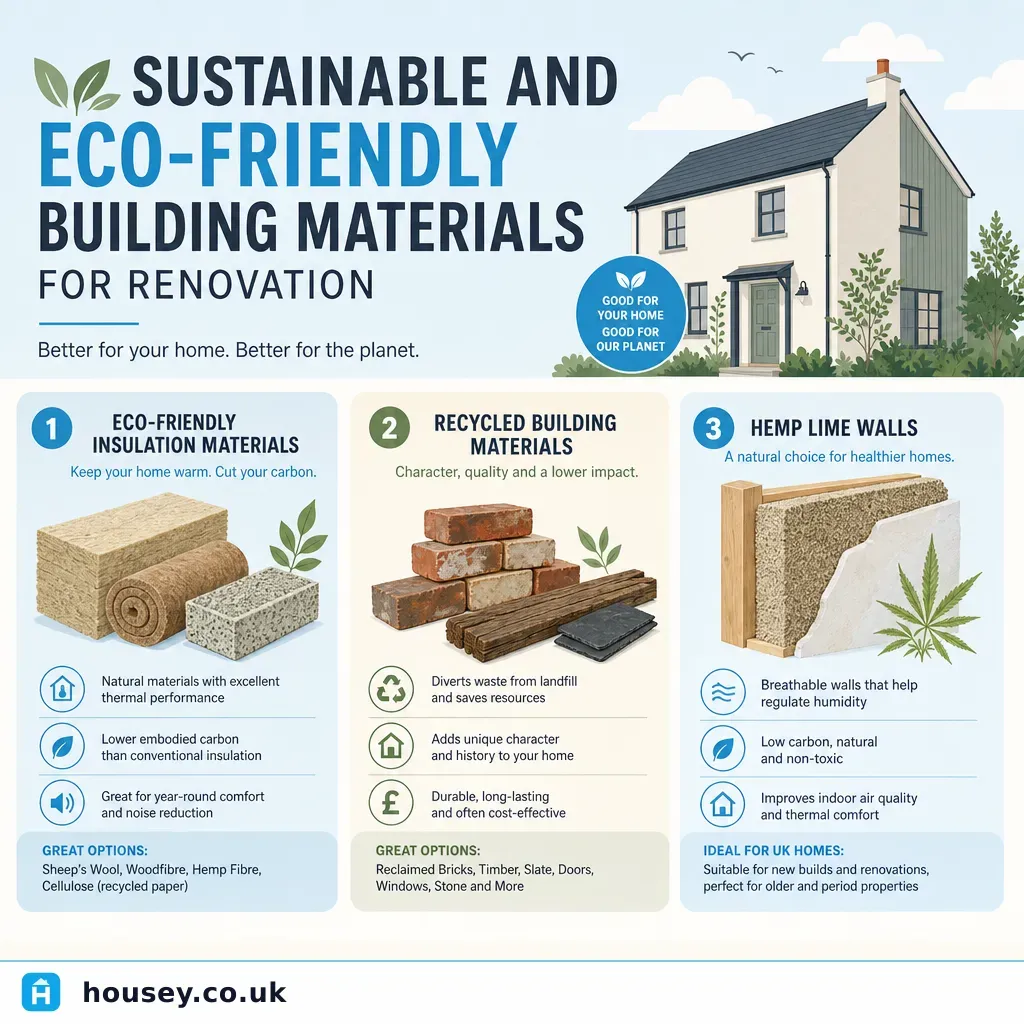
Sustainable and Eco-Friendly Building Materials for Renovation
Sustainable building materials for renovation include hemp lime, sheep's wool insulation, FSC-certified timber, and reclaimed brick.
 Energy & Retrofit
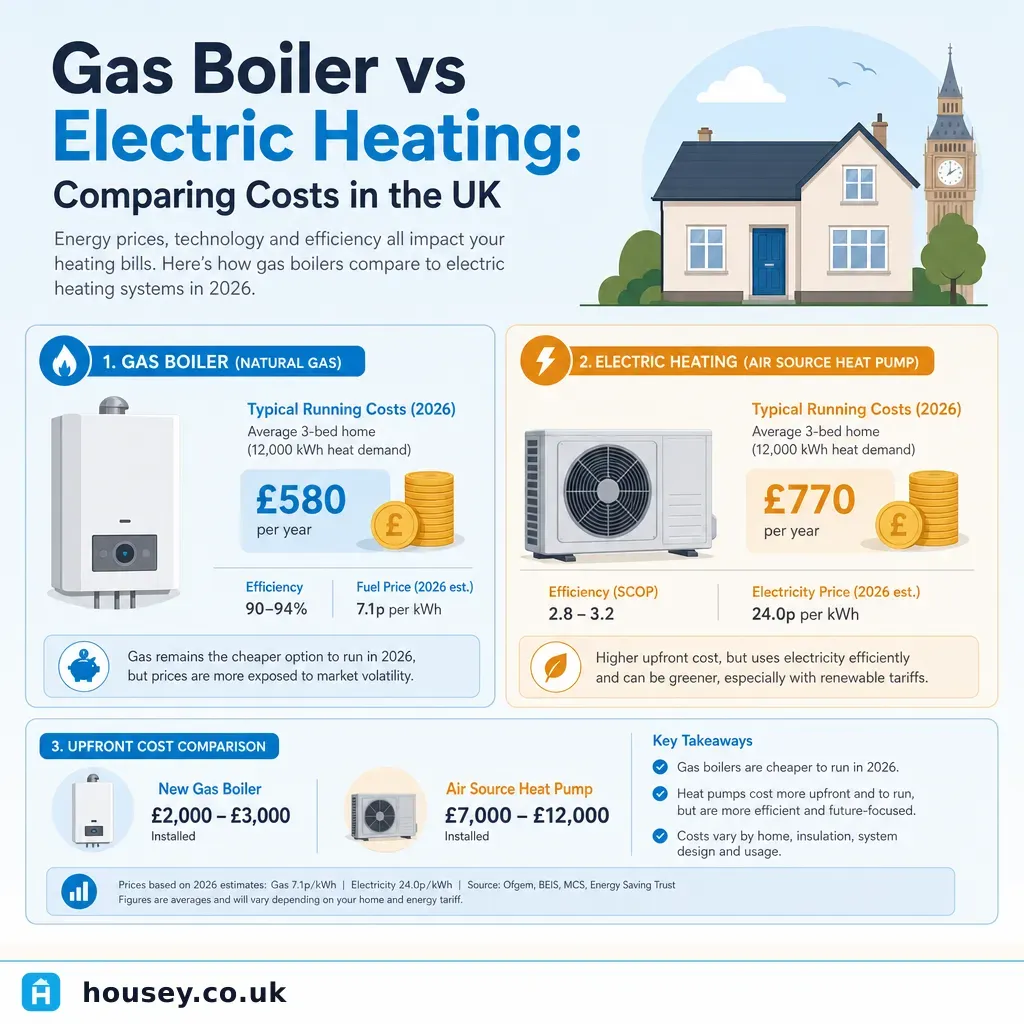
Gas Boiler vs Electric Heating: Comparing Costs in the UK
Gas boilers currently cost around 6.
 Energy & Retrofit
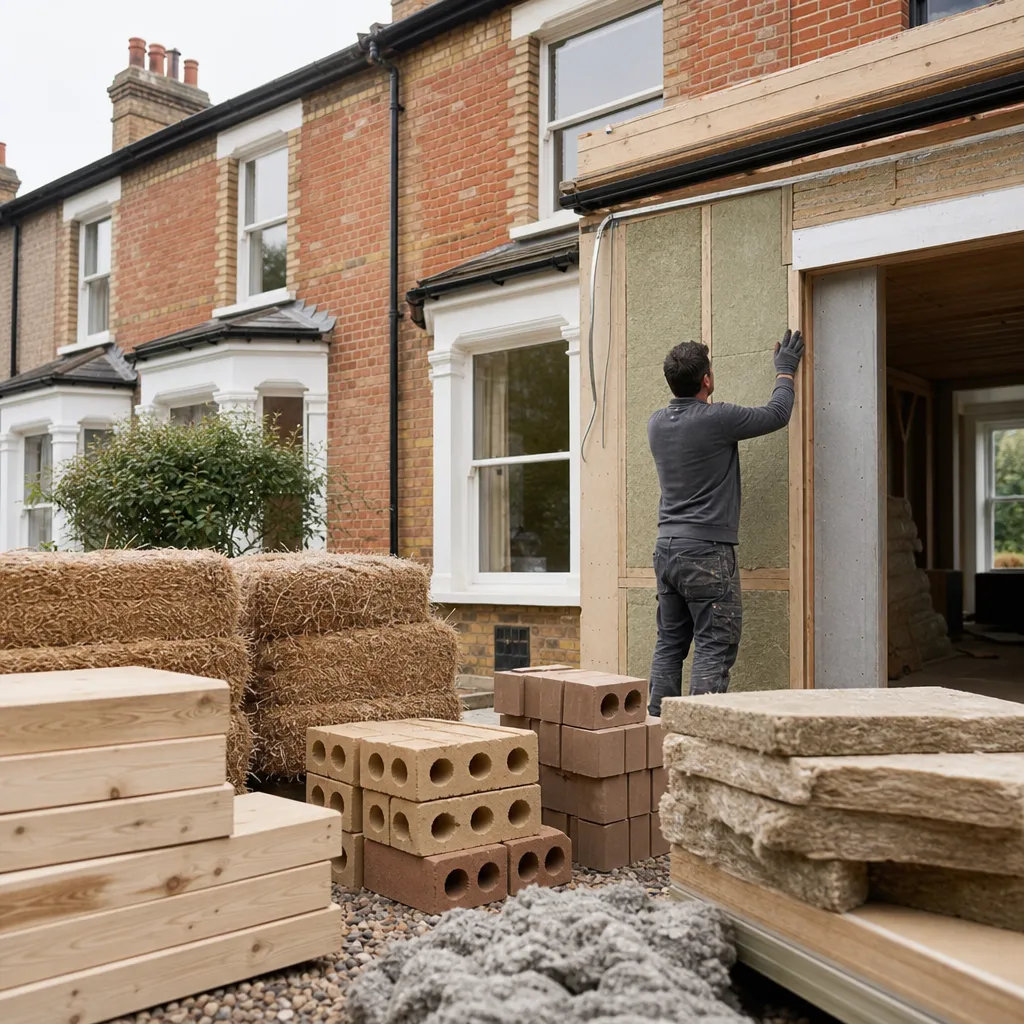
Sustainable Building Materials for Home Projects and Retrofits
Sustainable building materials for UK homes range from low-embodied-carbon insulation — wood fibre, sheep's wool, hemp — to FSC-certified structural timber and reclaimed stone or brick.
 Energy & Retrofit
Sustainable Outdoor Maintenance and Eco-Friendly Garden Care
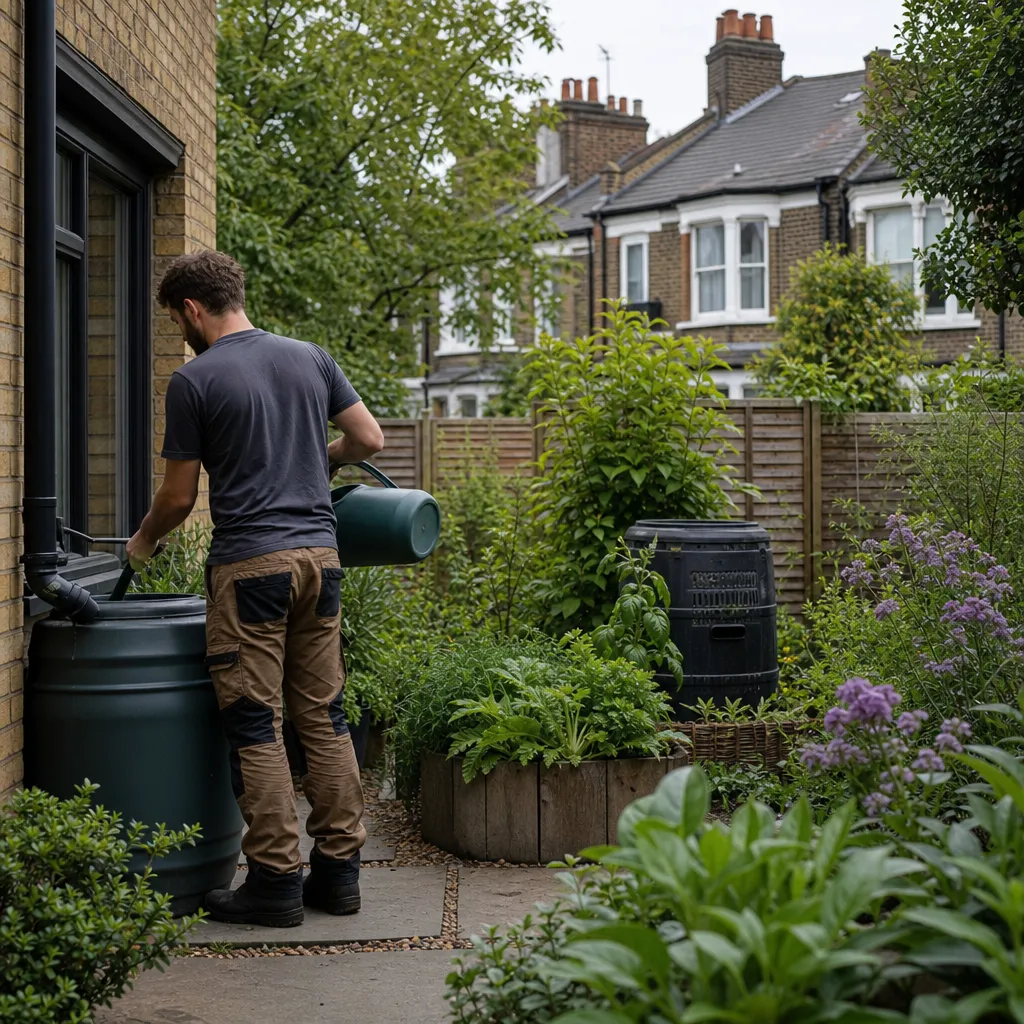
Sustainable garden care in the UK means switching to peat-free compost, collecting rainwater via a water butt, reducing synthetic fertiliser and pesticide use, and managing hard surfaces to improve drainage.
 Energy & Retrofit
Net-Zero Sustainable Homes: Energy-Efficient Building and Retrofit Standards
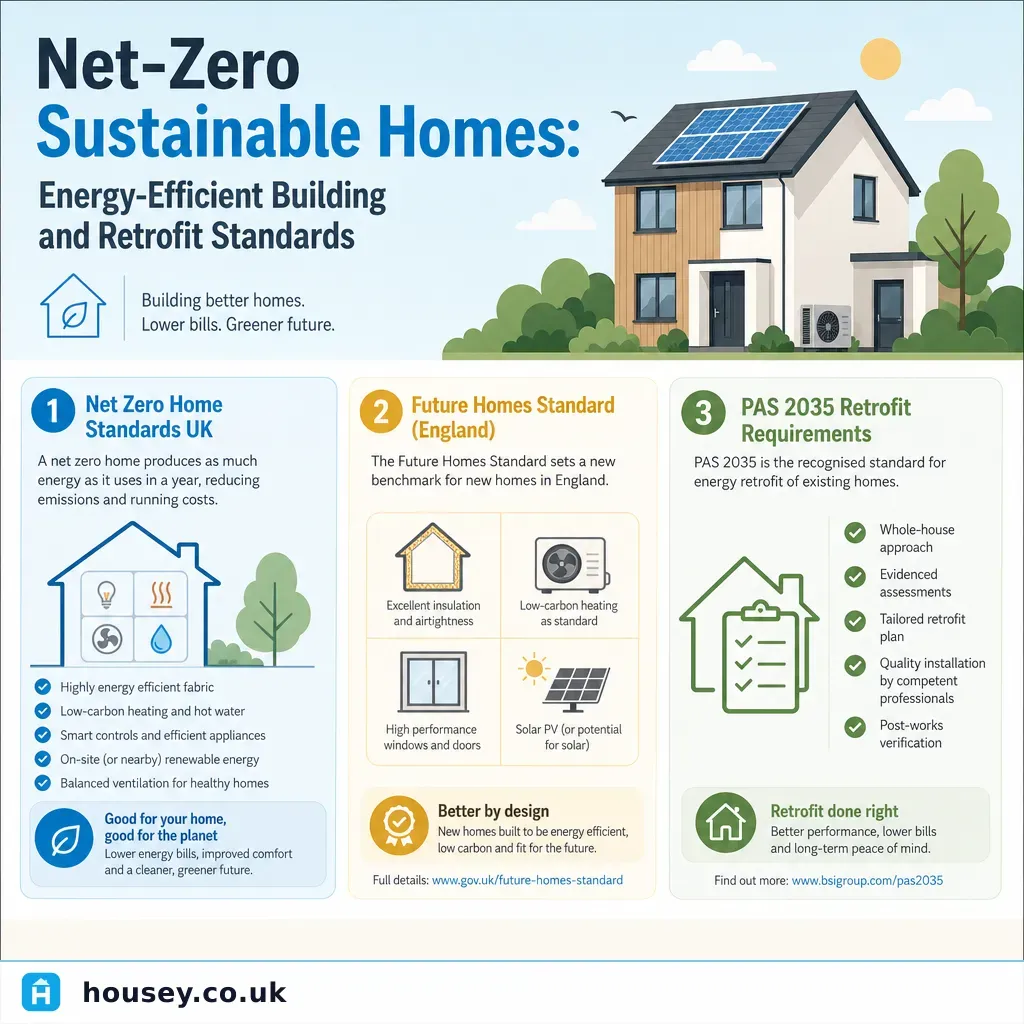
Net-zero homes in the UK combine very high fabric performance, low-carbon heating — usually a heat pump — and on-site renewable generation.