Sustainable and Eco-Friendly Building Materials for Renovation
By Housey · Last reviewed 11th of May 2026
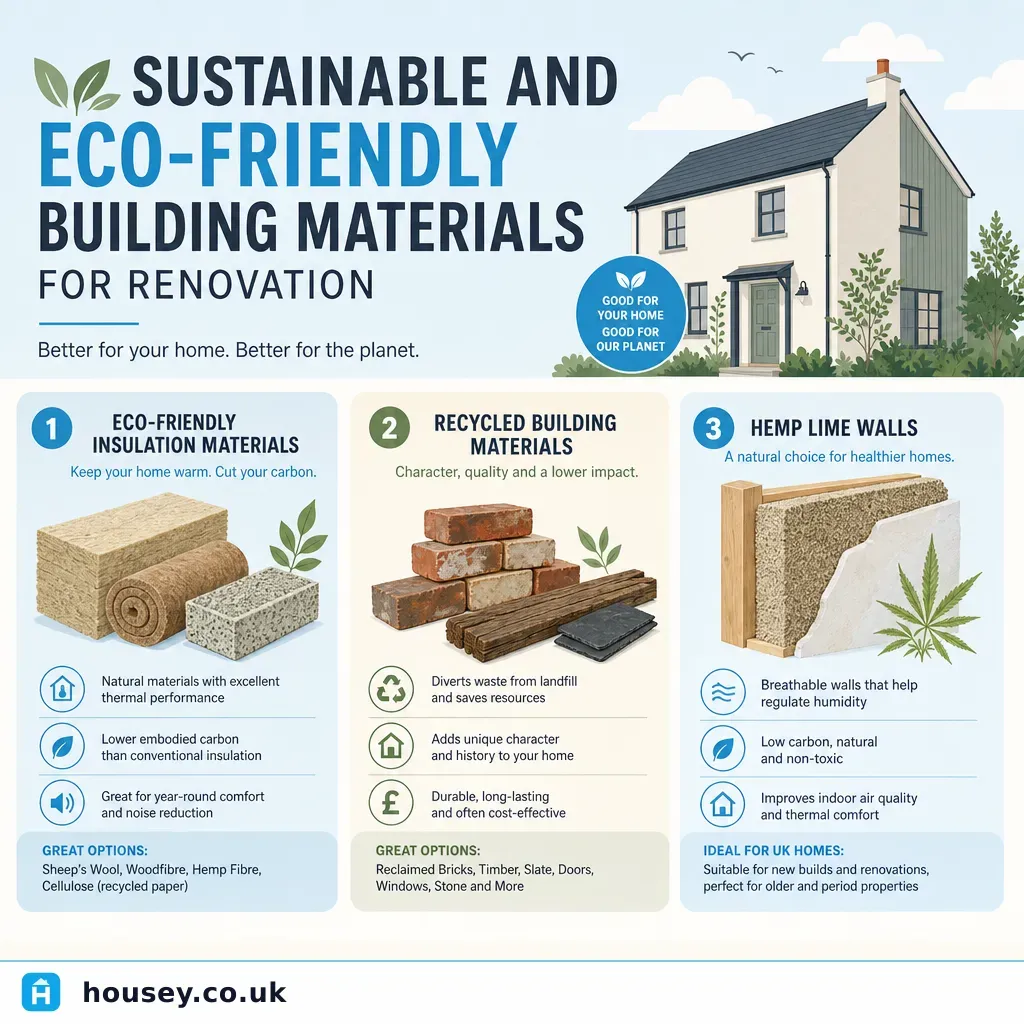
Sustainable and Eco-Friendly Building Materials for Renovation
Planning a renovation raises questions that go well beyond cost per square metre: whether a material will perform safely in a solid-wall Victorian terrace, whether its manufacture created more carbon than it will ever save, and whether local planning rules or grant conditions constrain the choice. The UK sustainable materials market has matured considerably over the past decade, but navigating performance claims, compliance requirements, and breathability trade-offs requires a clear framework before work begins.
Key points
- FSC-certified and PEFC-certified timber provide chain-of-custody assurance that wood comes from responsibly managed forests — request the certificate of conformity from your supplier, not just a logo on a leaflet.
- Hemp lime (hempcrete) has negative embodied carbon during production because the hemp plant absorbs CO₂ as it grows, but it is not a structural material and always requires a separate load-bearing frame.
- Sheep's wool and wood-fibre insulation are vapour-permeable alternatives to mineral wool; under PAS 2035:2023, moisture risk assessment is required before specifying insulation on most solid-wall properties.
- Reclaimed brick must be lime-matched before repointing — applying ordinary Portland cement (OPC) mortar to soft handmade bricks accelerates surface spalling and can cause irreversible damage.
- Building Regulations Approved Document L (Conservation of Fuel and Power) sets minimum U-value thresholds for new thermal elements regardless of material type — product data sheets and U-value calculations are required for building control.
What makes a material sustainable?
No single UK standard defines the term comprehensively for construction purposes. In practice, sustainability claims in construction typically cover one or more of the following:
- Low embodied carbon: CO₂ emitted during manufacture, transport, and installation (measured in kgCO₂e per unit).
- Recycled or reclaimed content: diverting waste from landfill and reducing demand for virgin materials.
- Renewable sourcing: materials that regenerate within a human timescale (timber, hemp, cork, sheep's wool).
- Vapour permeability (breathability): important for older UK housing stock where trapped moisture can cause structural decay and health problems.
- End-of-life recyclability or biodegradability: reduces long-term waste.
- Low toxicity: fewer volatile organic compounds (VOCs) indoors.
For grant-funded retrofit work under ECO4 or the Great British Insulation Scheme, the relevant compliance framework is PAS 2035:2023, which governs assessment, design, and installation of energy-efficiency measures in existing dwellings and requires a qualified Retrofit Coordinator to oversee material specification.
Embodied vs. operational carbon
A common oversight in renovation planning is focusing entirely on operational carbon (the energy your home uses daily) while ignoring embodied carbon (locked into materials during manufacture). Concrete has high embodied carbon; hemp lime is carbon-negative. For whole-life assessments, both matter — the UK Green Building Council provides guidance on calculating whole-life carbon for construction projects.
Comparison of common eco-friendly materials
Material | Best for | Breathable? | Structural use? | Key compliance point |
|---|---|---|---|---|
Hemp lime (hempcrete) | Infill walling, internal lining | Yes — excellent | No; needs separate frame | PAS 2035 moisture risk class for retrofit |
Sheep's wool insulation | Loft, stud walls, pitched roofs | Yes — high | No | U-value calc required for Part L |
Wood-fibre board | External wall insulation on solid walls | Yes — high | No | PAS 2035 risk class; check EWI system warranty |
Reclaimed brick | Extensions, repairs, feature walls | Moderate | Yes (with engineer spec) | Match mortar type to brick hardness; lime test |
FSC/PEFC certified timber | Structural frame, joinery, cladding | Moderate | Yes | Chain-of-custody cert from supplier; Eurocode 5 for structural |
Recycled steel | Structural sections, lintels | Low | Yes | Eurocode 3; grade confirmation from supplier |
Cork | Floor and wall insulation, flooring | Good | No | Check fire-performance classification for wall use |
Recycled glass mineral wool | Cavity and loft insulation | Low | No | Up to 80% recycled content; suitable for standard cavities |
Insulation: where the biggest eco gains lie
For most UK home retrofit projects, the highest-impact sustainable material decision is insulation. The right choice depends on wall construction, property age, and any grant scheme requirements.
Cavity walls (post-1920 brick construction)
Standard mineral wool or EPS (expanded polystyrene) bead cavity fill remains common. Recycled glass wool products contain up to 80% recycled glass and can carry BREEAM credits for recycled content. Vapour permeability is not typically a concern in a ventilated cavity.
Solid walls (pre-1919 brick or stone)
This is where breathability matters most. Solid-wall homes — a substantial proportion of the UK's older housing stock — rely on vapour movement through the wall fabric. Installing a vapour-impermeable insulation internally or externally can trap moisture, leading to interstitial condensation, mould, and potential structural decay. PAS 2035 requires a moisture risk assessment before specifying solid-wall insulation; wood fibre and sheep's wool are frequently specified for their permeability.
Loft insulation
Often the most straightforward retrofit win. Sheep's wool performs at around λ = 0.035–0.040 W/m·K — broadly similar to standard glass wool — and is fully biodegradable at end of life.
Timber and reclaimed materials: responsible sourcing
Timber is among the most renewable structural materials available when sourced responsibly. FSC (Forest Stewardship Council) and PEFC (Programme for the Endorsement of Forest Certification) are the two internationally recognised certification schemes. When ordering, ask for the chain-of-custody certificate number; the logo alone does not guarantee compliance.
For reclaimed brick, the critical step is a lime-compatibility test before specifying mortar. Traditional handmade bricks often have low compressive strength and high absorption; OPC mortar is too rigid and causes face spalling. Natural Hydraulic Lime (NHL 2 or NHL 3.5) or lime putty mortars allow the necessary vapour and structural movement.
Reclaimed timber is well suited to non-structural joinery, cladding, and internal applications. For any load-bearing reuse, a structural engineer should verify adequate section size and timber condition before installation.
Homeowner checklist: specifying sustainable materials
Before finalising material choices for your renovation:
When to get professional help
A Retrofit Coordinator (required under PAS 2035 for grant-funded whole-house retrofit) can advise on material selection with reference to your property's construction type, climate exposure, and moisture risk class.
Seek professional input if:
- You are insulating a solid-wall, stone, or pre-1919 property and are unsure about breathability requirements.
- You plan to use hemp lime, rammed earth, or another specialist material in a conservation area or for a listed building.
- Your renovation is part of an ECO4 or GBIS scheme — material selection must align with TrustMark and MCS requirements where applicable.
- You want to verify embodied carbon figures using recognised Life Cycle Assessment (LCA) methodology.
How Housey can help
Housey connects you with qualified professionals for retrofit assessments covering material selection, PAS 2035 compliance, and whole-house moisture profiling. If you need experienced insulation installers familiar with breathable and natural materials for older UK properties, you can compare vetted local quotes through Housey.
Frequently asked questions
Is hempcrete approved under UK Building Regulations?
Hempcrete is a recognised construction material in the UK and has been used for over 20 years. It does not have its own British Standard but can be specified under Approved Document A as a non-structural infill material, supported by manufacturer technical data sheets and third-party performance tests for building control submission.
Do eco-friendly insulation materials comply with Part L?
Yes, provided they achieve the required U-value. Approved Document L sets thermal performance thresholds, not material prescriptions. U-value calculations based on the product's stated lambda value (λ) are required for building control — your insulation supplier or a building physics specialist can prepare these.
Can I use reclaimed materials on a listed building?
Reclaimed materials are often favoured by conservation officers for their compatibility with historic fabric. However, Listed Building Consent is required for any material changes to the fabric of a listed building. Always consult your local planning authority before specifying materials for listed building work.
What is PAS 2035 and why does it matter for eco retrofit projects?
PAS 2035:2023 is the publicly available specification for domestic energy retrofit. It requires a Retrofit Assessor to survey the property, a Retrofit Coordinator to oversee works, and a specific design process to manage moisture and ventilation risks. Most publicly funded retrofit schemes — including ECO4 and the Great British Insulation Scheme — require PAS 2035 compliance as a condition of grant funding.
Sources and further reading
- Approved Document L: Conservation of Fuel and Power — GOV.UK
- PAS 2035:2023 overview — BSI Group
- Energy Saving Trust: insulation advice — Energy Saving Trust
- Forest Stewardship Council UK — FSC UK
- Historic England: traditional building materials guidance — Historic England
- UK Green Building Council: whole-life carbon — UK Green Building Council
Useful next reads
 Energy & Retrofit
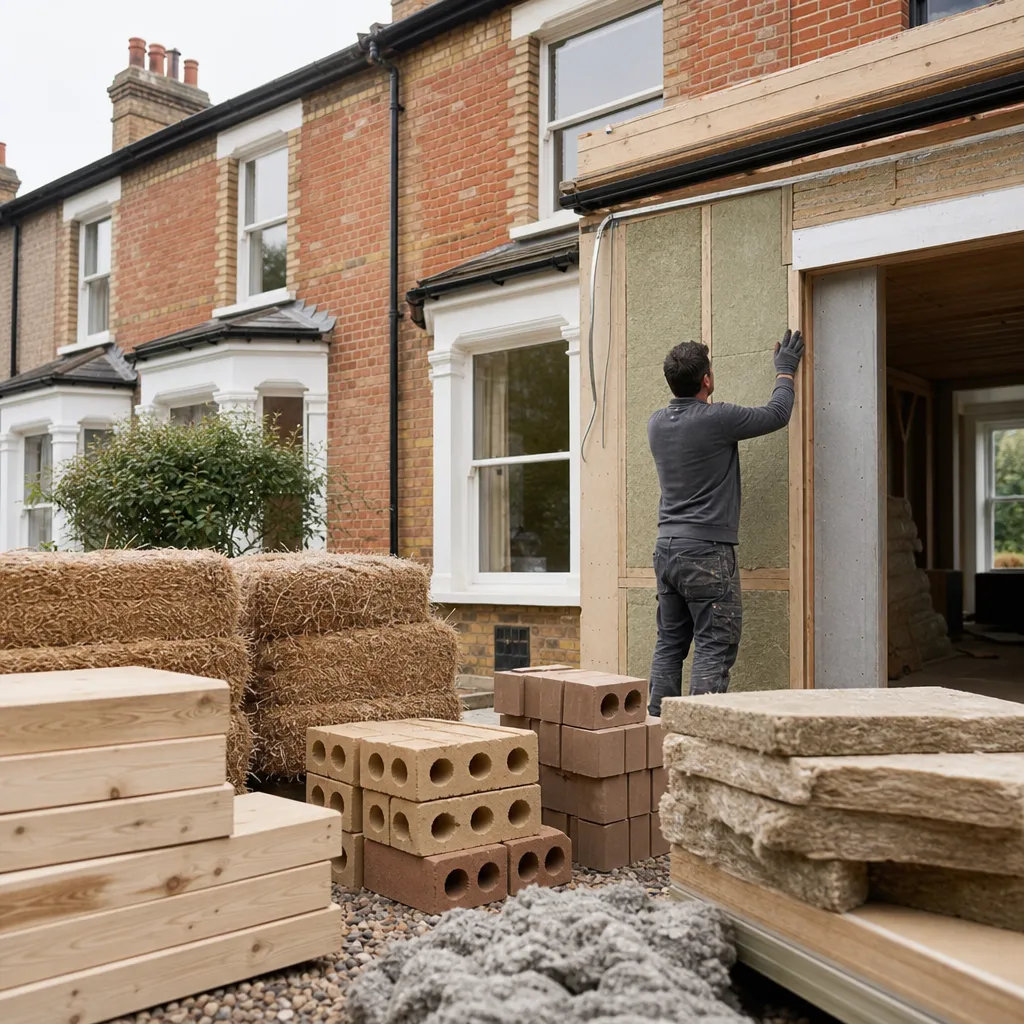
Sustainable Building Materials for Home Projects and Retrofits
Sustainable building materials for UK homes range from low-embodied-carbon insulation — wood fibre, sheep's wool, hemp — to FSC-certified structural timber and reclaimed stone or brick.
 Energy & Retrofit
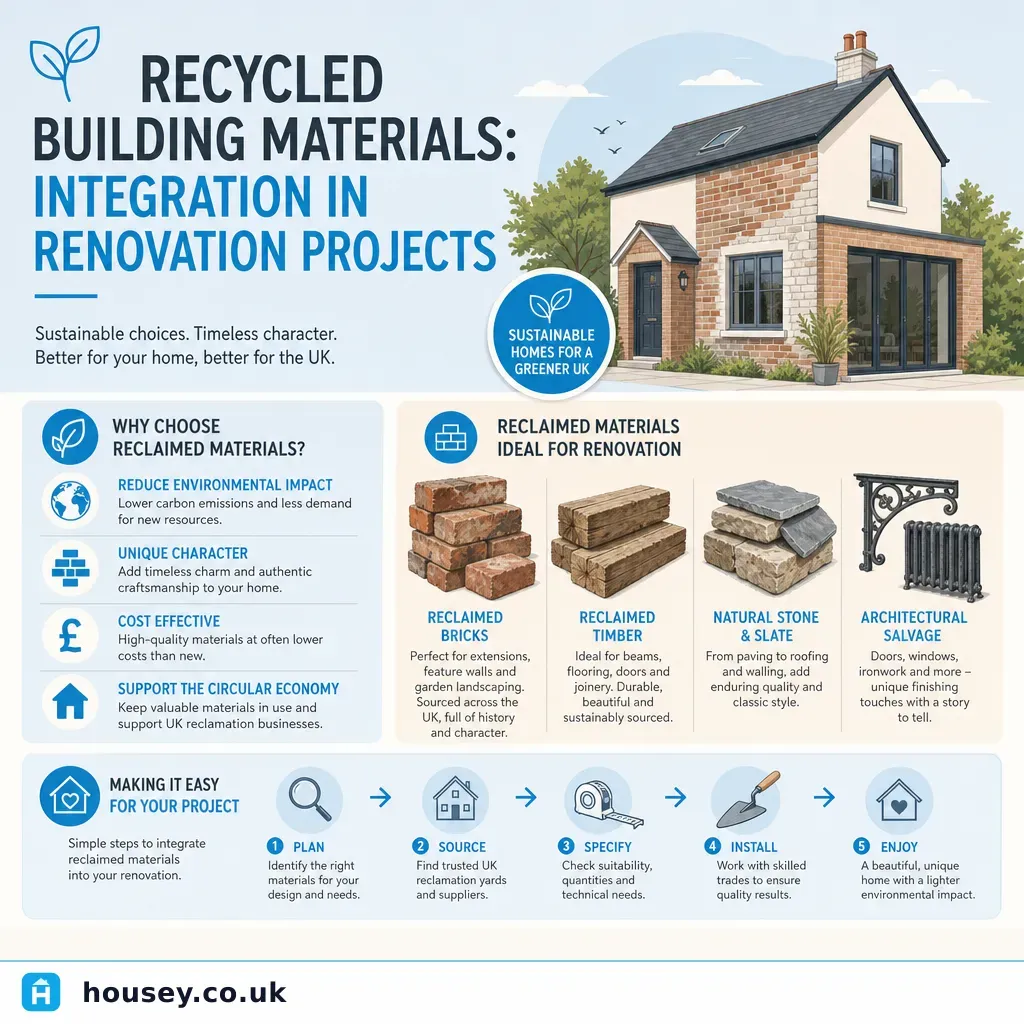
Recycled Building Materials: Integration in Renovation Projects
Recycled and reclaimed building materials — from reclaimed bricks and slates to recycled cellulose insulation — can be integrated into UK renovation projects provided they meet the same Building Regulations standards as new materials.
 Energy & Retrofit
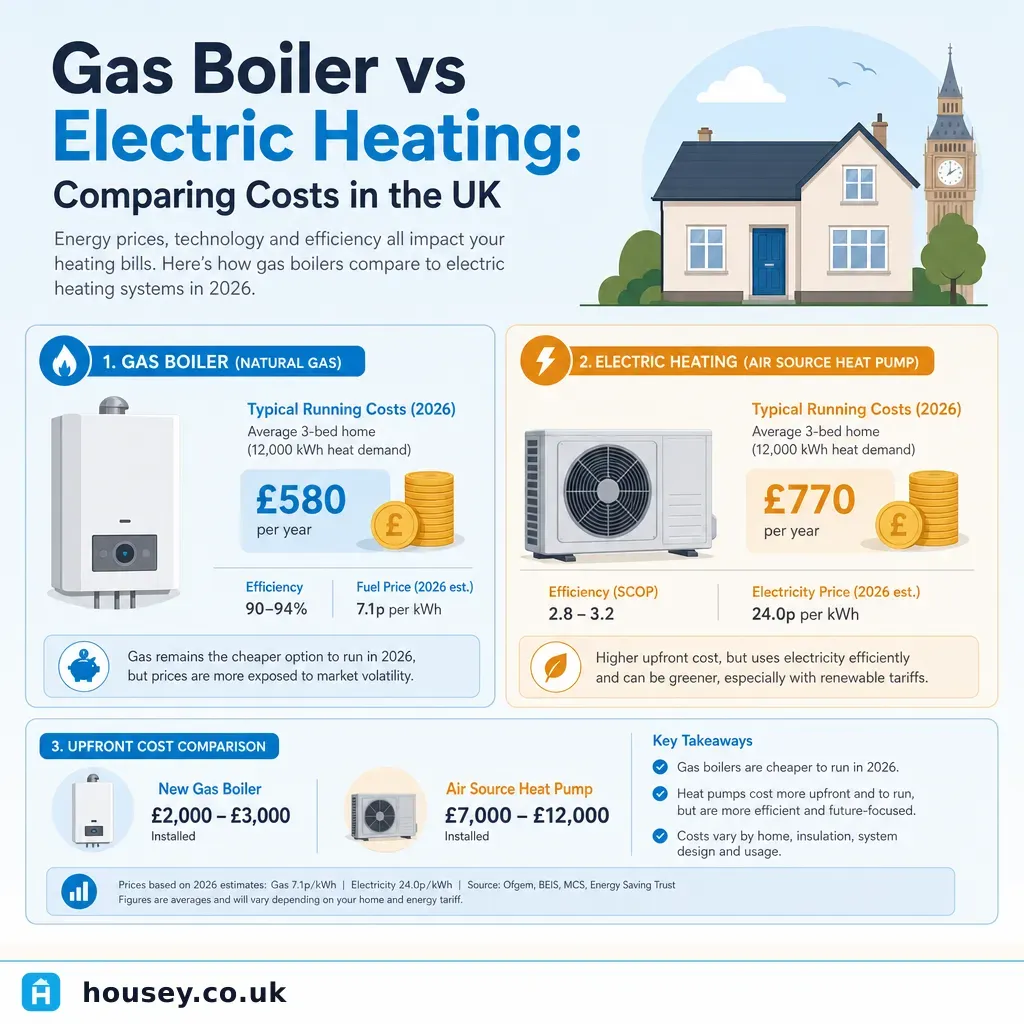
Gas Boiler vs Electric Heating: Comparing Costs in the UK
Gas boilers currently cost around 6.
 Energy & Retrofit
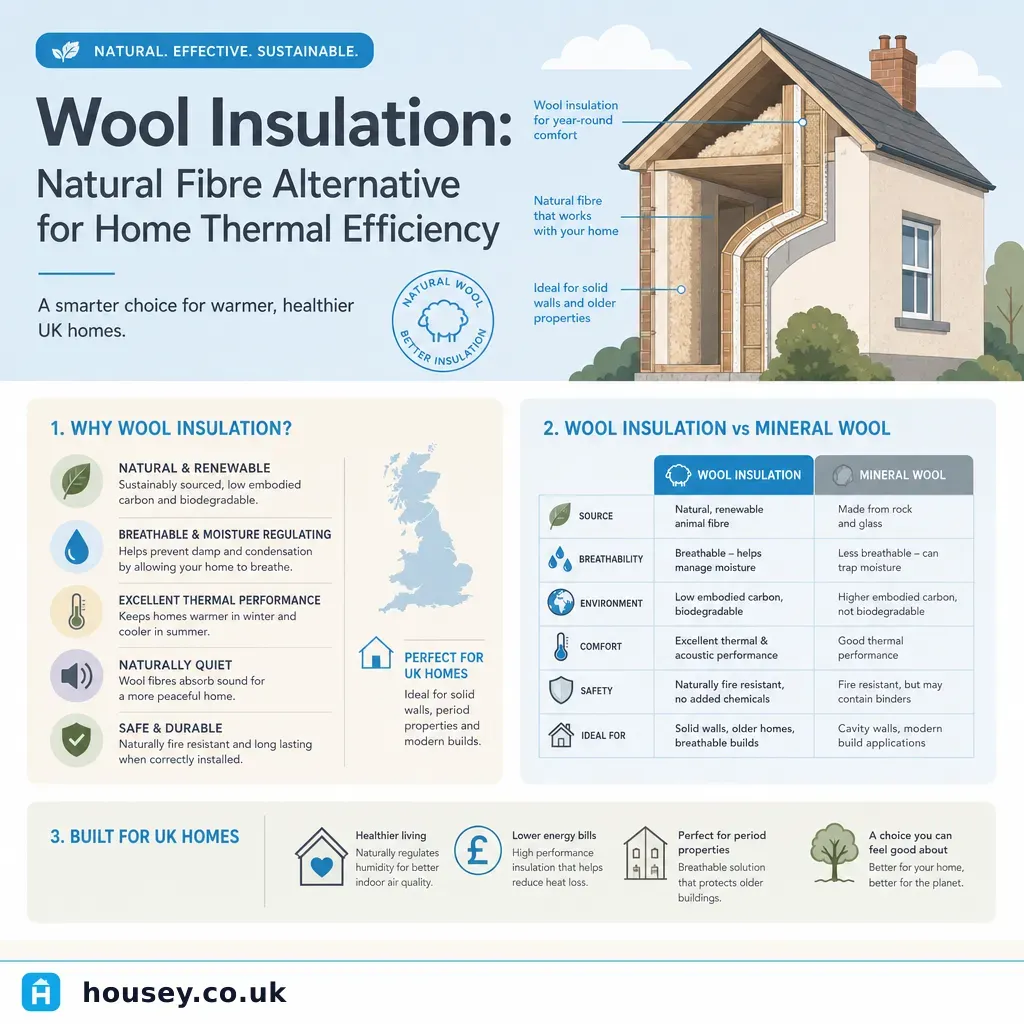
Wool Insulation: Natural Fibre Alternative for Home Thermal Efficiency
Sheep wool insulation achieves a thermal conductivity of 0.
 Energy & Retrofit
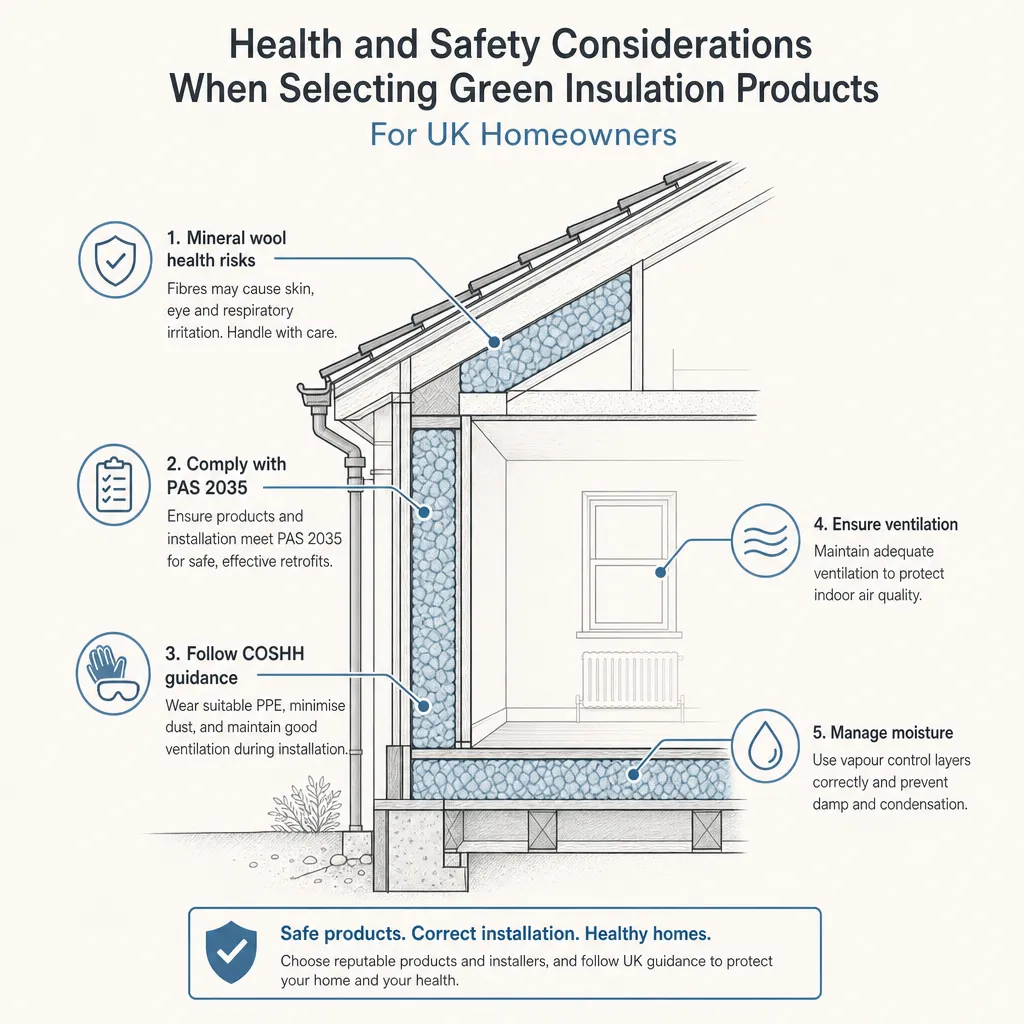
Health and Safety Considerations When Selecting Green Insulation Products
Selecting green insulation in the UK involves genuine health risks alongside environmental claims.