Comparing Refurbishment Investment Against New Build Viability
By Housey · Last reviewed 10th of May 2026
Comparing Refurbishment Investment Against New Build Viability
The choice between refurbishing an existing building and starting from scratch with a new build is one of the most consequential decisions in UK property development and renovation. It typically arises when a property is in poor structural condition, when a site has been cleared or demolition is being considered, or when an investor or self-builder is weighing the most cost-effective route to a target outcome. The financial, planning, and practical differences between the two routes are substantial, and the right answer is rarely obvious without a structured assessment.
Key points
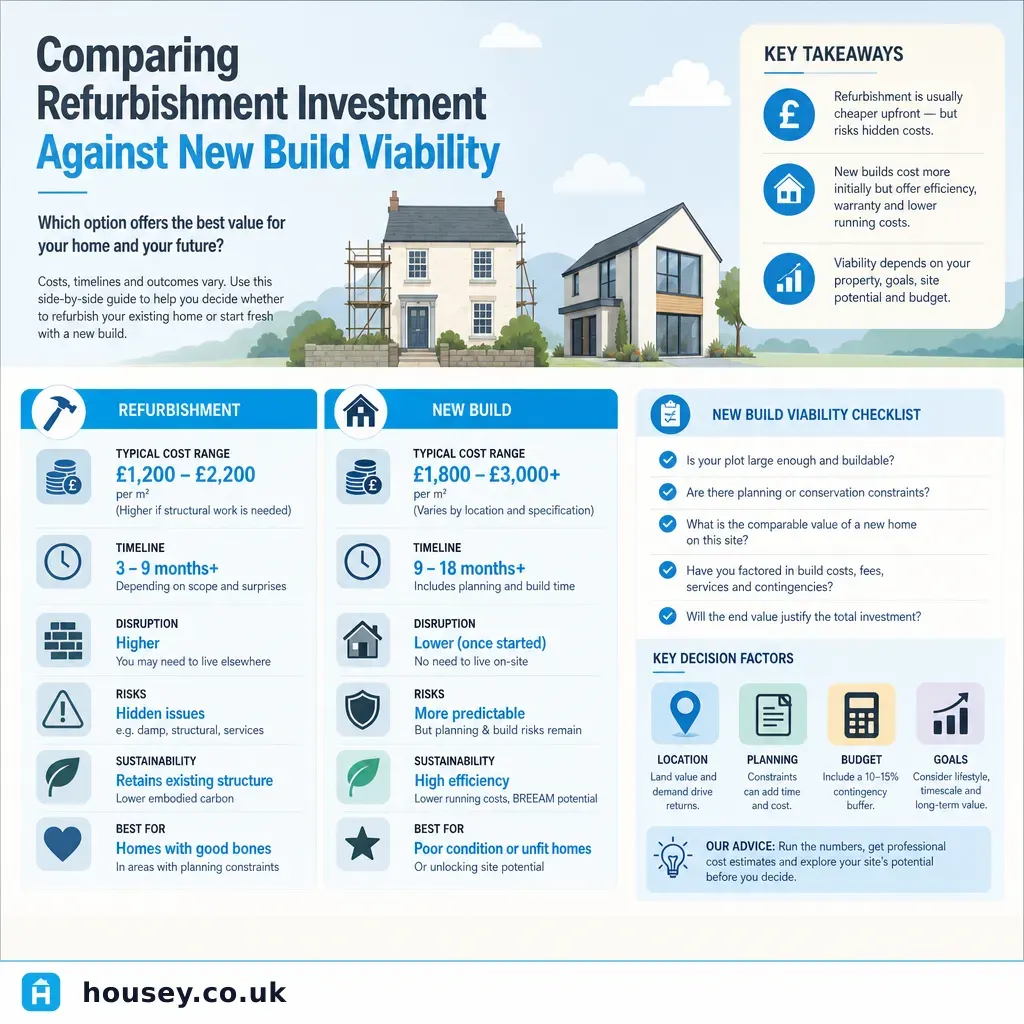
- Refurbishment in the UK typically costs £800–£2,500 per m² depending on the extent of works; new build construction typically ranges from £1,500–£3,000+ per m² depending on specification and location (Indicative UK costs, last reviewed 2026-05-10; consult BCIS benchmark data for current figures).
- New build construction attracts zero-rated VAT for qualifying dwellings under VATA 1994 Schedule 8; refurbishment of an existing dwelling is generally standard-rated at 20% — a difference of up to £100,000 on a £500,000 build contract.
- A residential building unoccupied for two or more years may qualify for the reduced 5% VAT rate on renovation or conversion work — see HMRC VAT Notice 708.
- Demolishing and rebuilding requires a full planning application in most cases; Permitted Development rights do not extend to demolition and replacement new build.
- A professional build cost estimate from a quantity surveyor using BCIS benchmarks is the most reliable basis for comparing the two routes before committing.
The core financial comparison
The viability case rests on four variables: construction cost, VAT treatment, planning risk, and the gross development value (GDV) achievable at completion.
Construction cost varies widely within each route. Light refurbishment — decorating, kitchen and bathroom replacement, new services — may cost £300–£800 per m². A comprehensive refurbishment involving structural alterations, full re-servicing, and a new roof can reach £1,200–£2,500 per m², approaching new build cost without the benefit of a modern envelope. New build for a standard-specification house in most of England and Wales typically falls between £1,500 and £2,500 per m², rising to £3,500+ for complex or London sites. Professional fees, planning, building control, landscaping, and finance typically add a further 25–40% on top of the build contract.
VAT is the most frequently underestimated variable. Zero-rating on new dwellings versus 20% on refurbishment can represent a six-figure difference on a mid-sized project. The 5% reduced rate for properties empty two or more years narrows this gap but does not eliminate it.
Planning risk is generally lower for refurbishment. Many improvement works fall within Permitted Development. Demolition and replacement almost always requires full planning permission with no guaranteed outcome, adding programme risk and cost.
Worked UK property scenario
Scenario: A 1930s semi-detached house in the East Midlands has been empty for three years and is in poor condition. The owner is deciding between a comprehensive refurbishment of the existing 85 m² footprint or demolition and replacement with a new 110 m² house.
Factor | Refurbishment | New build |
|---|---|---|
Gross floor area | 85 m² (existing) | 110 m² (new) |
Construction cost estimate | £1,500/m² = £127,500 | £2,000/m² = £220,000 |
VAT treatment | 5% (empty 2+ years) = £6,375 | 0% (new dwelling) = £0 |
Professional fees (approx. 12%) | ~£15,300 | ~£26,400 |
Planning route | Likely Permitted Development | Full planning application required |
Indicative programme | 6–9 months | 14–18 months |
Total indicative cost | ~£149,000 | ~£246,000 |
Estimated GDV | ~£280,000–£310,000 | ~£330,000–£360,000 |
Figures are illustrative only. A structural survey, professional cost estimate, and RICS-registered valuation are required before any investment decision.
In this scenario, refurbishment produces a materially lower total cost despite the larger new build floor area. New build achieves a modestly higher GDV but at significantly greater cost and programme length. A structural engineer's assessment of the existing building and a quantity surveyor's cost estimate would be essential to test whether new build viability stacks up.
Decision tree: refurbishment or new build?
- Choose refurbishment if the existing structure is confirmed sound by a structural engineer, required works fall within or near Permitted Development limits, and the cost gap to the target specification is meaningful.
- Consider new build if the existing structure has significant defects — roof structure failure, widespread subsidence, or contamination — or if the site configuration means a replacement building would be substantially larger than extension can achieve.
- New build is likely preferable if demolition and replacement achieves a materially higher GDV and planning risk is low, such as a straightforward residential plot with no conservation constraints.
- Seek planning advice first if the site is in a conservation area, involves a listed building, or if the principle of residential use is not yet established.
- Commission a build cost estimate from a quantity surveyor before comparing routes — rule-of-thumb £/m² figures are a first-order approximation only.
- Take VAT specialist advice before proceeding; the treatment differs significantly between routes and can reverse the apparent financial advantage of one over the other.
What a viability assessment should cover
A professional viability assessment for either route should address:
- GDV based on comparable evidence from a RICS-registered valuer
- Construction cost breakdown by element, using BCIS benchmarks or tendered rates
- Professional fees (architect, structural engineer, quantity surveyor, project manager)
- Planning and building control fees
- Finance costs including drawn-down profile, interest, and arrangement fees
- VAT treatment confirmed by a specialist
- Contingency — typically 10–15% for refurbishment, 5–10% for new build under a fixed-price contract
- Programme and its cash-flow implications
A common rule of thumb is that viable residential projects show a gross development profit of at least 15–20% of GDV after all costs, though this varies with risk profile and funding structure.
Common mistakes when comparing routes
- Comparing headline construction cost only. VAT, fees, planning, finance, and programme often account for 30–50% of total project cost and can reverse the apparent advantage.
- Assuming refurbishment is always cheaper. A comprehensive refurbishment of a structurally compromised building can exceed new build cost without delivering a modern, energy-efficient structure.
- Ignoring programme length. New build typically takes 6–12 months longer than an equivalent refurbishment; finance costs accumulate throughout.
- Overlooking planning risk for new build. A refused application causes significant delay and cost with no guarantee of a different outcome on resubmission.
- Not testing structural condition before committing. Discovering major structural problems after committing to refurbishment can make new build more attractive in hindsight, but costs may already have been incurred.
When to get professional help
This decision should always involve a preliminary professional assessment before any financial commitment. Seek advice from:
- A structural engineer to confirm whether the existing building is a sound basis for refurbishment
- A quantity surveyor or cost consultant to produce elemental cost estimates for both routes on a comparable basis
- A RICS-registered valuer to assess GDV for both scenarios using current comparable evidence
- A planning consultant or architect to assess planning risk and any constraints affecting either route
- A VAT specialist to confirm the treatment applicable to your specific project and ownership structure
Do not rely on £/m² rule-of-thumb figures alone when making a significant investment decision. Site-specific conditions frequently determine which route is more viable.
How Housey can help
Housey can help you request quotes from qualified structural engineering professionals to assess an existing building, experienced build cost estimating consultants to prepare reliable comparisons for both routes, and skilled project managers to oversee whichever route you choose.
Frequently asked questions
Is it always cheaper to refurbish than to build new?
Not always. Light-to-mid refurbishment is often cheaper on a cost-per-m² basis, but a comprehensive refurbishment of a structurally poor building can approach or exceed new build cost. The zero-rated VAT advantage of new build also shifts the comparison materially. A site-specific cost estimate from a quantity surveyor is the only reliable way to compare the two routes accurately.
Does demolishing and rebuilding require planning permission?
Yes, in almost all cases. Permitted Development rights do not cover demolition of a dwelling and its replacement with a new one. A full planning application is required. In conservation areas or for listed buildings, additional consents apply, including listed building consent and conservation area consent as relevant to the specific proposal.
What VAT rate applies to refurbishment works?
Standard rate VAT at 20% applies to most refurbishment work on an existing dwelling. The reduced 5% rate may apply to properties empty for two or more years or to certain conversions. New residential dwellings attract zero-rated VAT on qualifying construction services. HMRC VAT Notice 708 provides detailed guidance, and specialist advice should be obtained for specific projects.
How long does a new build take compared to a refurbishment?
A new build of a typical family house in the UK takes 12–18 months from groundworks to practical completion, excluding the planning phase. A comprehensive refurbishment of an equivalent property typically takes 6–9 months. Programme has a direct impact on finance costs and should be factored into any viability comparison between the two routes.
What is gross development profit and what is a viable margin?
Gross development profit is the difference between gross development value (GDV) and total project cost including construction, fees, finance, and land. A commonly cited viability threshold for residential projects is 15–20% of GDV as a minimum profit margin, though this varies with project risk, funding structure, and market conditions. Always seek professional advice before relying on any rule-of-thumb figure.
Sources and further reading
- VAT Notice 708: buildings and construction — GOV.UK / HMRC
- Planning Portal: when is planning permission required? — Planning Portal
- RICS Building Cost Information Service (BCIS) — RICS
- GOV.UK: Planning permission — GOV.UK
- Historic England: listed buildings and planning — Historic England
Useful next reads
 Improvement & Build
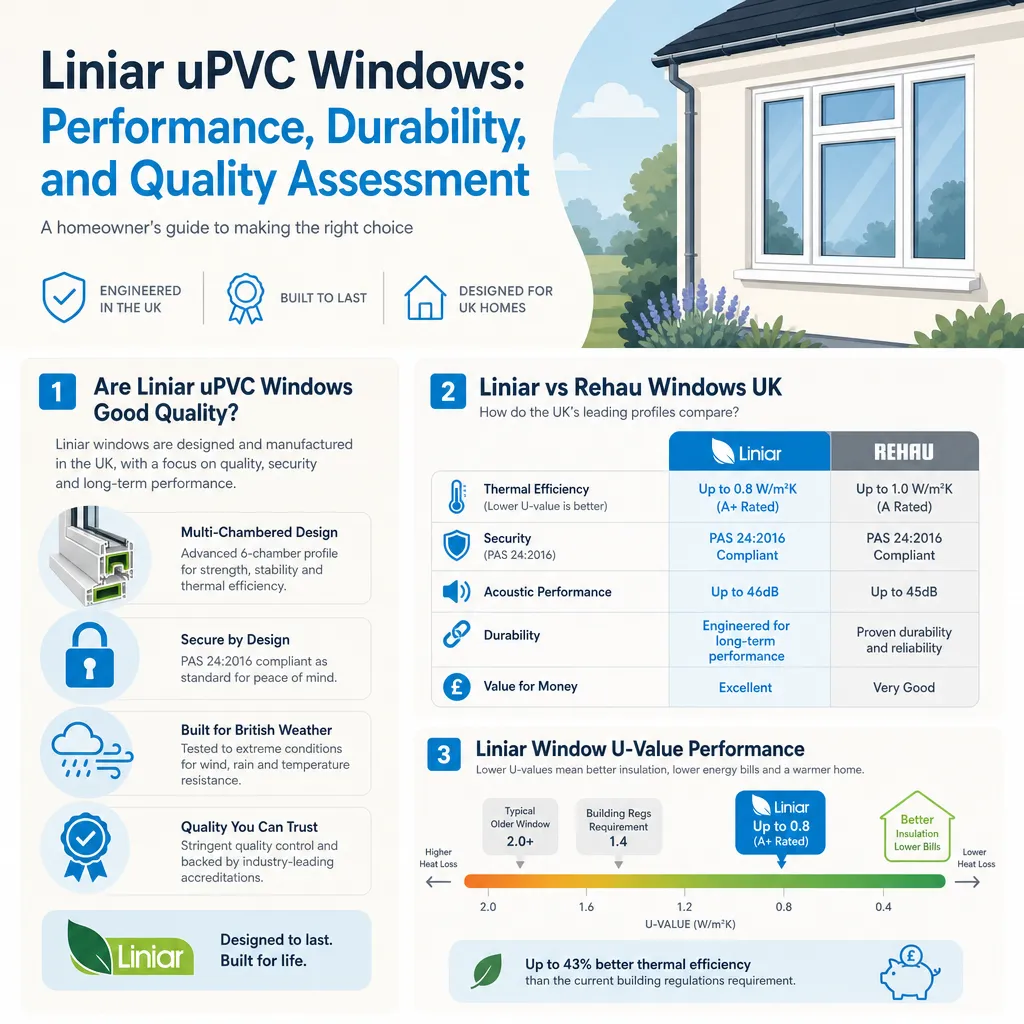
Liniar uPVC Windows: Performance, Durability, and Quality Assessment
Liniar uPVC window profiles are manufactured in the UK using multi-chambered, foamed frames.
 Improvement & Build
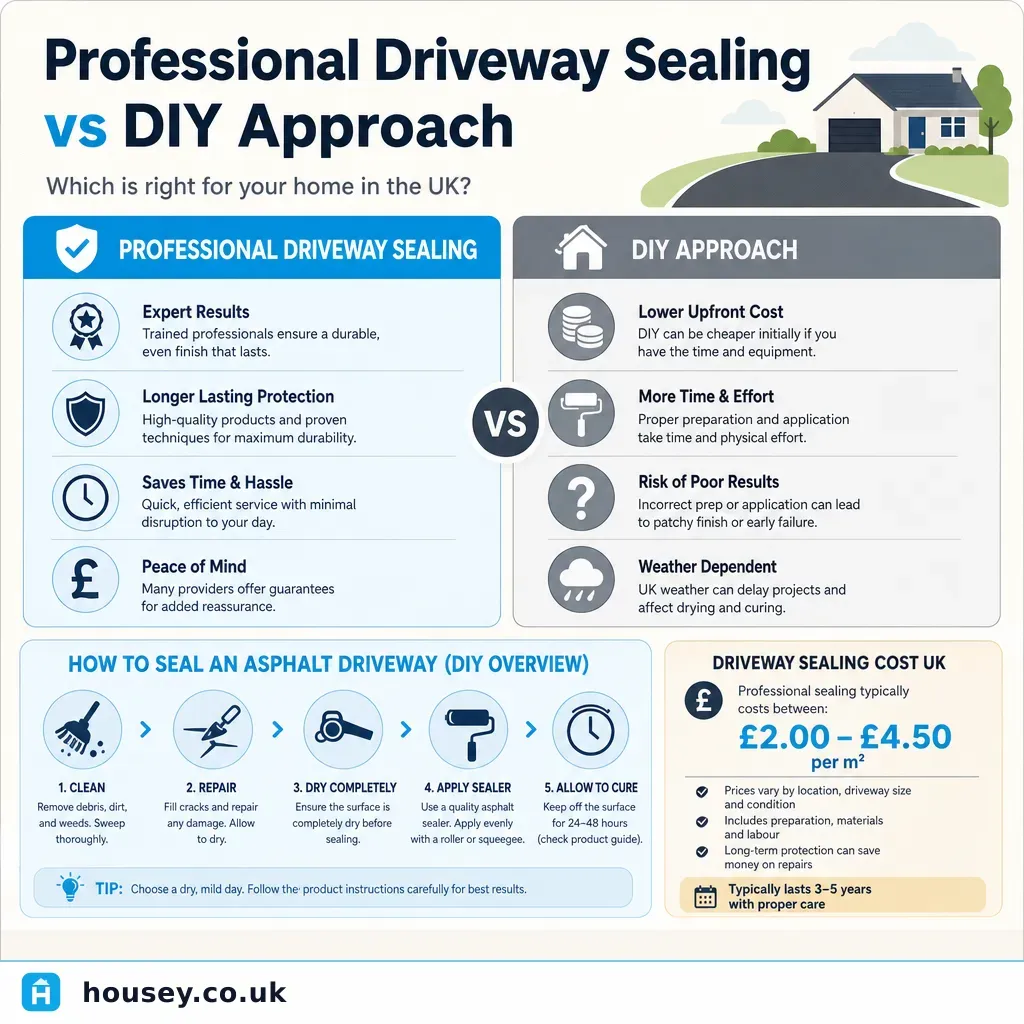
Professional Driveway Sealing vs DIY Approach
Professional driveway sealing offers a more durable, even finish using commercial-grade sealants and specialist equipment, typically costing £150 to £400 for an average drive.
 Improvement & Build
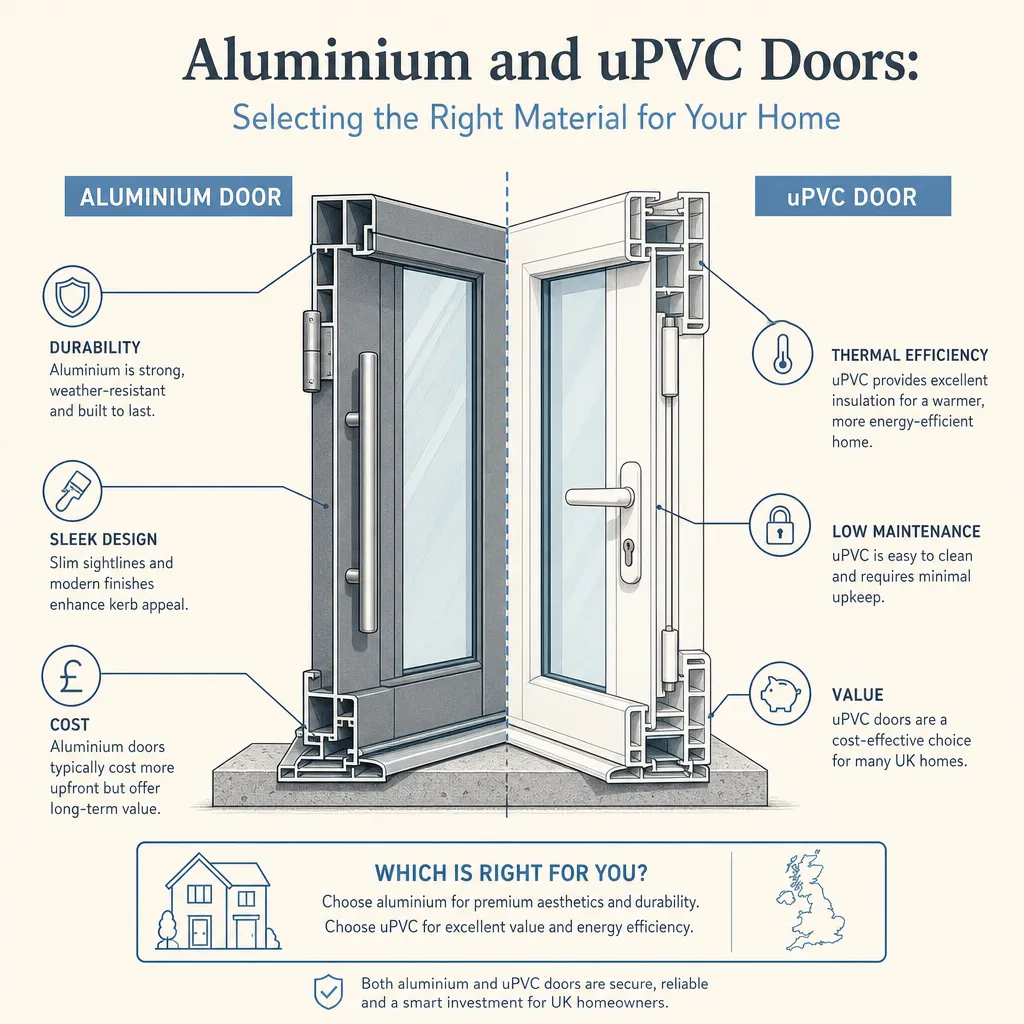
Aluminium and uPVC Doors: Selecting the Right Material for Your Home
uPVC doors are lower-cost and low-maintenance, making them a practical choice for most UK homes.
 Improvement & Build
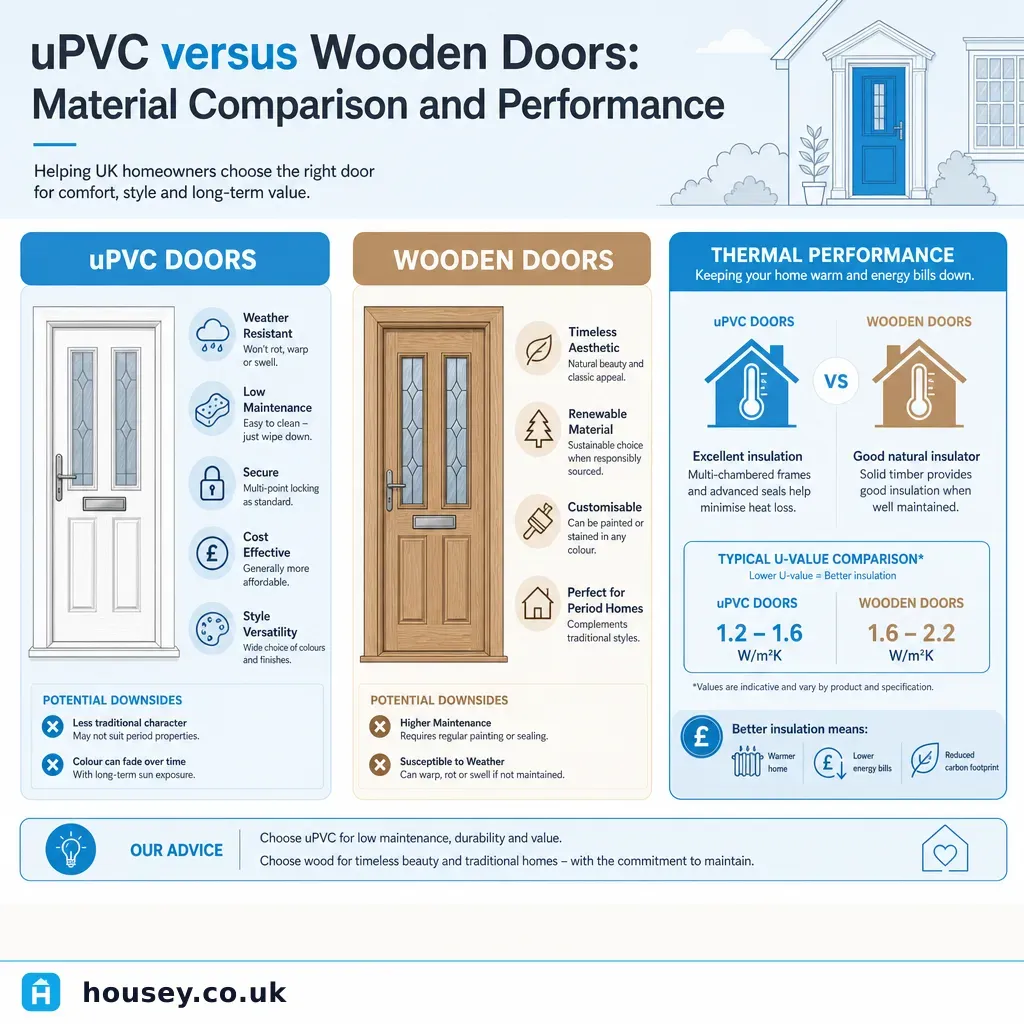
uPVC versus Wooden Doors: Material Comparison and Performance
uPVC doors are generally lower maintenance, better draught-sealed from the factory, and cheaper to install than timber doors.
 Improvement & Build
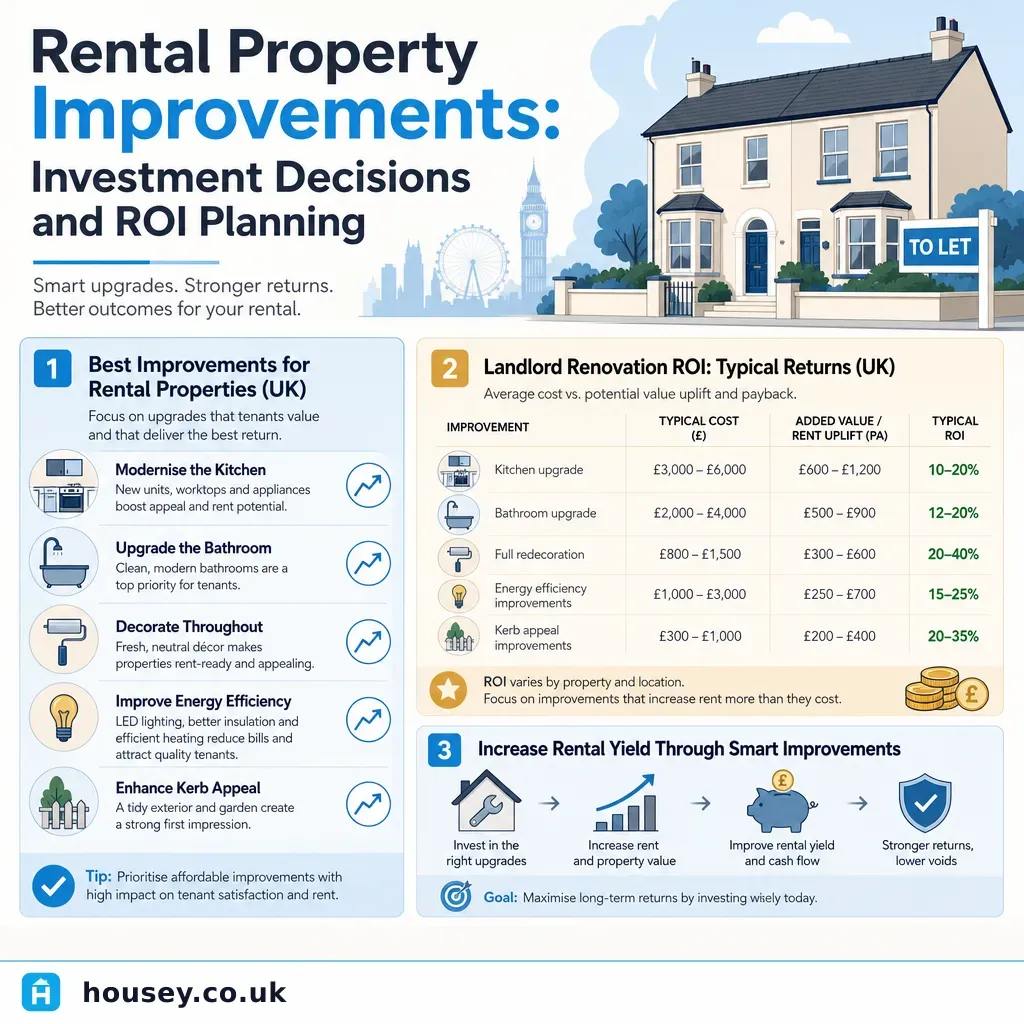
Rental Property Improvements: Investment Decisions and ROI Planning
Prioritise compliance-driven improvements first — a minimum EPC rating of E (with C proposed for new tenancies), annual Gas Safety Certificate, EICR every five years, and smoke and CO alarms on every storey.