Regulatory Changes and Your Home Relocation: What You Need to Know
By Housey · Last reviewed 18th of May 2026
Regulatory Changes and Your Home Relocation: What You Need to Know
Property transactions in the UK sit at the intersection of contract law, tax policy, planning regulation, and consumer protection — and this landscape changes regularly. Stamp duty thresholds, conveyancing identity rules, leasehold reform, and building safety obligations have all shifted in recent years, directly affecting the timeline, cost, and complexity of moving home. If you are currently buying or selling, understanding which rules apply right now can prevent costly surprises at exchange or completion.
Key points
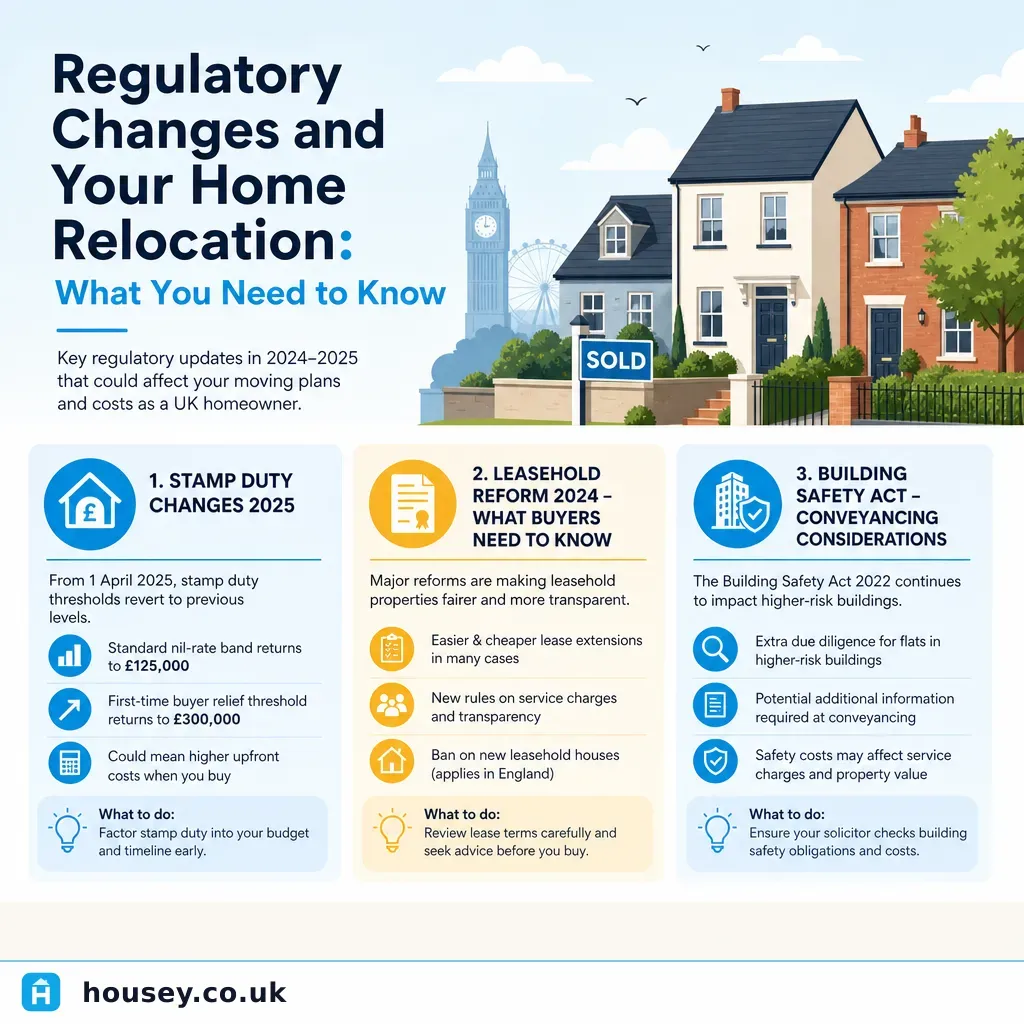
- The stamp duty land tax (SDLT) nil-rate threshold in England returned to £125,000 on 1 April 2025, ending the temporary £250,000 threshold introduced in 2022; first-time buyers retain relief up to £300,000 on purchases up to £500,000.
- The Leasehold and Freehold Reform Act 2024 changed how lease extension premiums are calculated and removed the two-year ownership requirement before extending — sellers and buyers of leasehold properties should seek specific solicitor advice.
- Anti-money-laundering (AML) identity verification requirements for conveyancing have tightened; solicitors must conduct enhanced due diligence, which can add days to transaction timelines.
- The Building Safety Act 2022 introduces new documentation requirements for leaseholders in residential buildings over 11 metres or five storeys — these documents must be disclosed during conveyancing and can delay exchange.
- A valid Energy Performance Certificate (EPC) rated E or above is legally required before a property is marketed for sale; ratings of F or G may restrict some buyers' mortgage options.
How recent regulatory changes affect buyers
SDLT thresholds (England): The temporary stamp duty holiday ended on 31 March 2025. From 1 April 2025, standard rates apply: 0% on the first £125,000; 2% on £125,001–£250,000; 5% on £250,001–£925,000. First-time buyers pay 0% on the first £300,000 and 5% on £300,001–£500,000, with no first-time buyer relief on purchases above £500,000. Additional-dwelling buyers pay a 5% surcharge on top of standard rates. Always confirm current figures with your solicitor or on GOV.UK, as rates can change at Budget.
Leasehold reform: The Leasehold and Freehold Reform Act 2024 removes the two-year ownership requirement before lease extension and reforms the basis on which extension premiums are calculated. Buyers of leasehold flats should ask their solicitor to assess the updated premium for any planned extension. The Act is broadly positive for buyers but introduces complexity during transactions as solicitors work through new calculations.
Building safety: Properties in residential buildings over 11 metres may be subject to Landlord's Certificate requirements and Leaseholder Deed of Certificate under the Building Safety Act 2022. These documents must be obtained and disclosed during conveyancing and can delay exchange by several weeks. Mortgage lender policies on qualifying buildings vary — raise this with your solicitor at the outset, not after an issue is flagged.
How regulatory changes affect sellers
Regulatory area | Impact on sellers | What to prepare |
|---|---|---|
SDLT threshold change | No direct SDLT cost for sellers, but affects buyer affordability and demand | Price competitively for the current buyer pool |
Leasehold and Freehold Reform Act 2024 | Leasehold sellers may need to disclose ongoing lease extension negotiations | Instruct solicitor early; obtain service charge and ground rent accounts |
AML identity verification | Solicitors must verify seller identity and source of funds | Prepare passport or driving licence, proof of address, and source-of-funds documents |
EPC requirement | Valid EPC required before marketing; F or G may deter buyers or lenders | Obtain or renew EPC before listing; consider improvements if rating is borderline |
Building Safety Act 2022 | Sellers of qualifying leasehold flats must provide Leaseholder Deed of Certificate | Obtain from building owner or managing agent; allow 4–8 weeks |
Which regulations most affect your move?
- Buying a freehold house in England? → SDLT at current rates applies; AML identity checks are required by your solicitor; review the EPC before commissioning a survey.
- Buying a leasehold flat? → All of the above, plus check lease length (under 80 years affects mortgage availability), Building Safety Act status if the block exceeds 11 metres, and review service charge and ground rent accounts.
- Selling a leasehold flat in a building over 11 metres? → Building Safety Act documentation is critical; instruct an experienced solicitor early and allow extra time for document retrieval from the building owner.
- First-time buyer? → SDLT first-time buyer relief applies on purchases up to £500,000; confirm eligibility and calculation with your solicitor before exchange.
- Buying a second home or buy-to-let? → The 5% SDLT surcharge on additional dwellings applies in England; check LBTT with the Additional Dwelling Supplement (Scotland) or Land Transaction Tax higher residential rates (Wales).
- Uncertain about your obligations? → Instruct a regulated solicitor or licensed conveyancer at the earliest opportunity — this is not a process to navigate without professional guidance.
Conveyancing timelines and regulatory delays
Average conveyancing timescales in England and Wales have extended to around 20–24 weeks in many areas (Citizens Advice). Regulatory factors contributing to delays include AML identity checks, Building Safety Act queries for qualifying buildings, local authority search backlogs that vary significantly by council (some taking 6–10 weeks), and leasehold management pack requests (allow 4–6 weeks minimum from the outset).
Professional conveyancing by a solicitor regulated by the Solicitors Regulation Authority (SRA) or a licensed conveyancer regulated by the Council for Licensed Conveyancers (CLC) is essential for managing these timelines and ensuring your legal position is properly protected throughout the transaction.
Planning your physical move around regulatory timelines means booking house removals with flexibility built in — avoid fixed-date bookings until contracts have been exchanged, as transaction delays are common and removal firm cancellation fees can be significant.
Important limitations
This article reflects the regulatory position as of May 2026 for England unless otherwise stated. Scotland (LBTT, Scottish property law), Wales (LTT), and Northern Ireland operate under separate legal and tax regimes. Legislative timelines, lender policies, and local authority practices change frequently. Nothing in this article constitutes legal or financial advice. Always instruct a regulated solicitor or licensed conveyancer for your specific transaction.
What to ask a qualified professional
Before instructing a conveyancer, or shortly after an offer is accepted:
- What are my current SDLT obligations, and do I qualify for any reliefs such as first-time buyer relief?
- Does this property fall within the scope of the Building Safety Act 2022, and what documentation will be required?
- Is the lease long enough to obtain a mortgage on, and has the seller initiated any lease extension process?
- How long are local authority searches currently taking in this area?
- What AML documents will you need from me, and when should I supply them to avoid delays?
When to get professional help
Always instruct a regulated solicitor or licensed conveyancer before exchanging contracts — unrepresented buyers face serious legal and financial risk. Additionally:
- If you are buying a leasehold flat in a block over 11 metres, request specific Building Safety Act advice at the outset, not after a problem is flagged.
- If the EPC rating is F or G, seek legal and mortgage advice before proceeding — some lenders will not offer mortgages on properties below an E rating.
- If there is any uncertainty about SDLT liability — for example, if you own property abroad or are buying jointly with a first-time buyer — consult a specialist tax adviser.
How Housey can help
Housey connects movers with regulated professional conveyancing professionals who understand current regulatory requirements, and with reputable house removals firms that can accommodate flexible completion dates. Get matched with trusted local providers through Housey.
Frequently asked questions
Has stamp duty changed in 2025?
Yes. In England, the temporary stamp duty holiday ended on 31 March 2025. From 1 April 2025, the nil-rate threshold reverted to £125,000 from the temporary £250,000. First-time buyers retain relief up to £300,000, with 5% on the portion from £300,001 to £500,000, and no relief above £500,000. Check GOV.UK for the current rates table, as these can be updated at Budget.
Do I need to do anything differently if I'm buying a leasehold flat?
Yes. Ask your solicitor to check the lease length, service charge accounts, and any Building Safety Act obligations. The Leasehold and Freehold Reform Act 2024 also changes how lease extension premiums are calculated. If the lease is under 80 years, extending before exchange is usually important for mortgageability and future saleability — seek advice early in the process.
How long does conveyancing take now?
Average timescales are around 20–24 weeks in England and Wales, though this varies considerably depending on chain length, local authority search times, and whether Building Safety Act documentation is required. Instructing a conveyancer promptly after offer acceptance and providing anti-money-laundering documents immediately can help avoid delays that are otherwise difficult to recover.
What is the Building Safety Act 2022 and does it affect my transaction?
The Building Safety Act 2022 introduced protections for leaseholders in buildings over 11 metres or five storeys regarding fire and structural safety remediation costs. If you are buying or selling a flat in such a building, certificates and documentation are required during conveyancing, and mortgage availability may be affected. Ask your solicitor to investigate this at the very start of your transaction.
Sources and further reading
- Stamp Duty Land Tax: residential property rates — GOV.UK
- Leasehold and Freehold Reform Act 2024 — legislation.gov.uk
- Building Safety Act 2022: guidance — GOV.UK
- Council for Licensed Conveyancers — regulator for licensed conveyancers
- Solicitors Regulation Authority — regulator for solicitor-conveyancers
- Buying a home — Citizens Advice
Useful next reads
 Buying & Moving
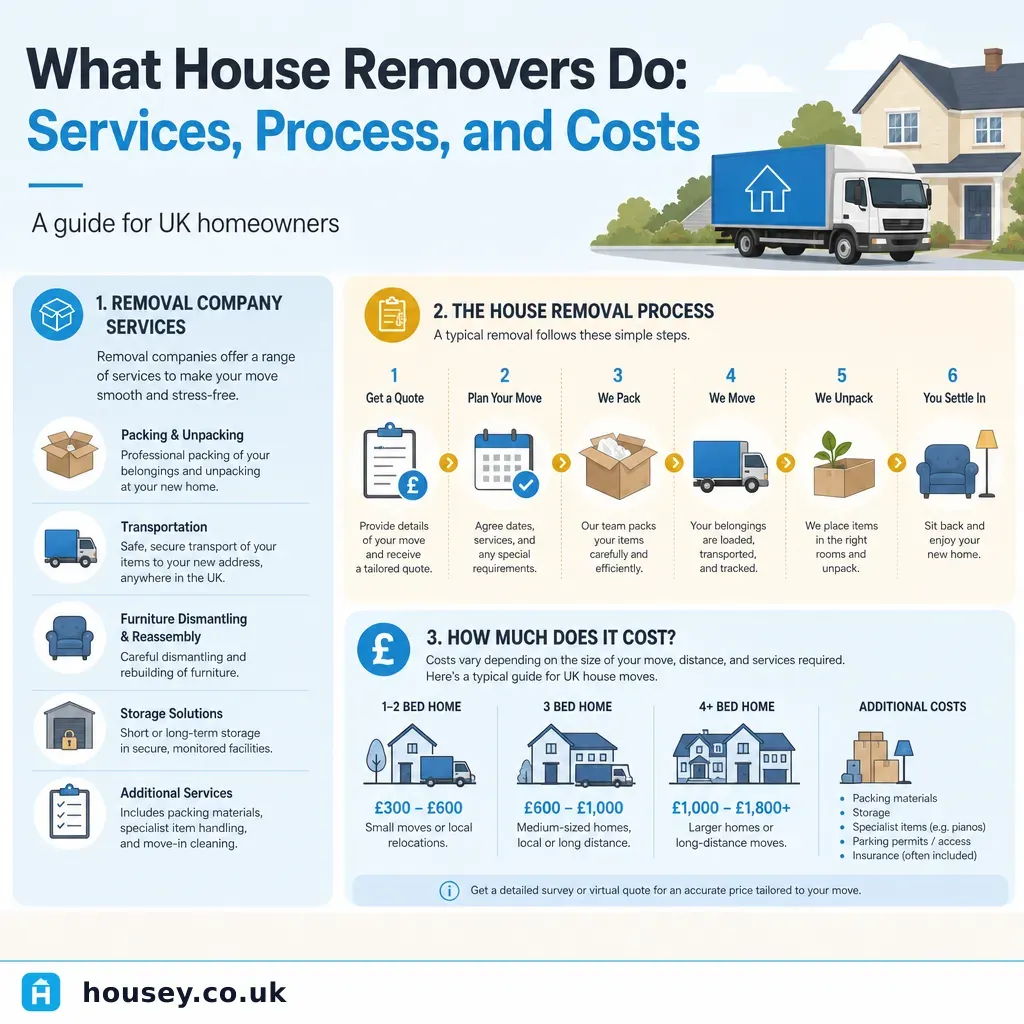
What House Removers Do: Services, Process, and Costs
House removers load, transport, and unload your belongings between properties.
 Buying & Moving
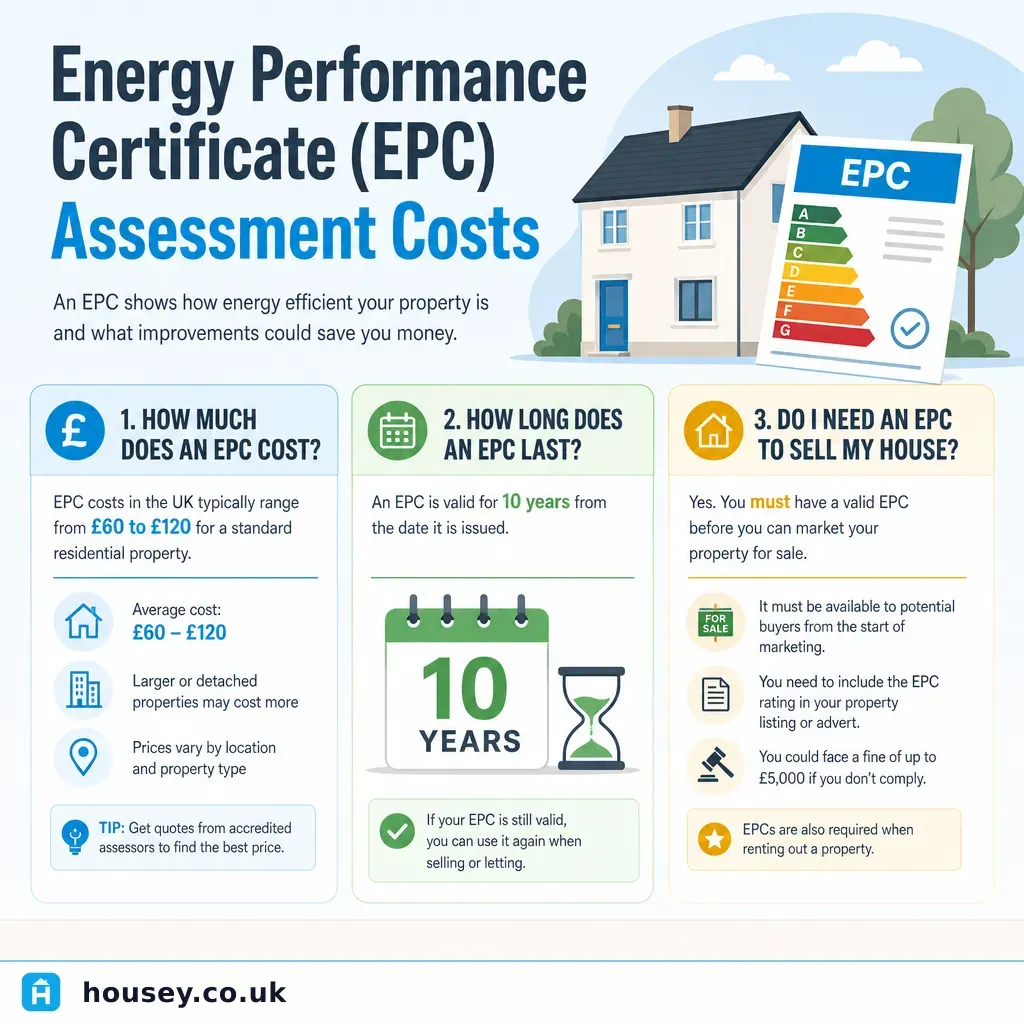
Energy Performance Certificate (EPC) Assessment Costs
An EPC typically costs between £60 and £120 for a standard UK home, though prices vary by property size and assessor.
 Buying & Moving
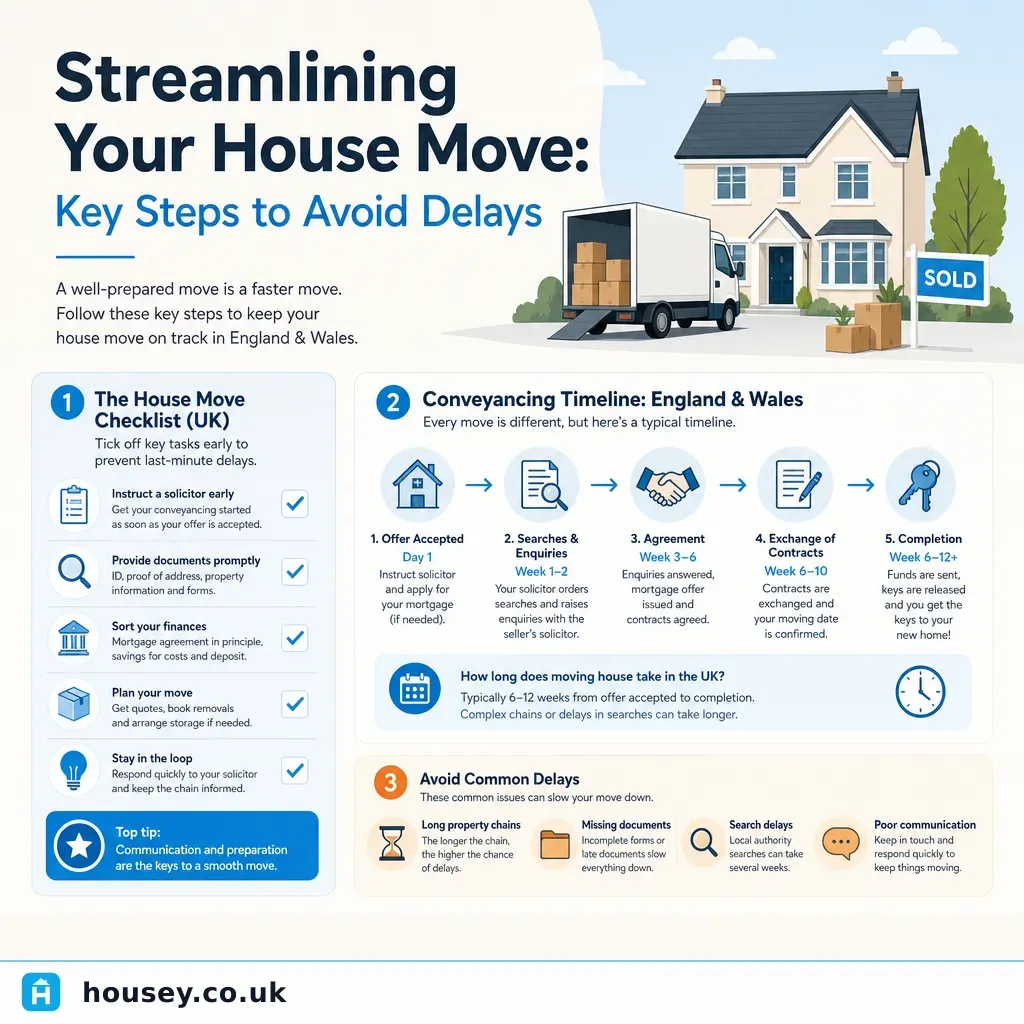
Streamlining Your House Move: Key Steps to Avoid Delays
The key to a smooth house move is acting early: instruct your conveyancer and surveyor on the day an offer is accepted, gather required documents before your solicitor requests them, and shortlist removal firms before exchange.
 Buying & Moving
How to Facilitate a Successful House Move: Steps to Take
Start planning your move at least 8 weeks before completion day.
 Buying & Moving
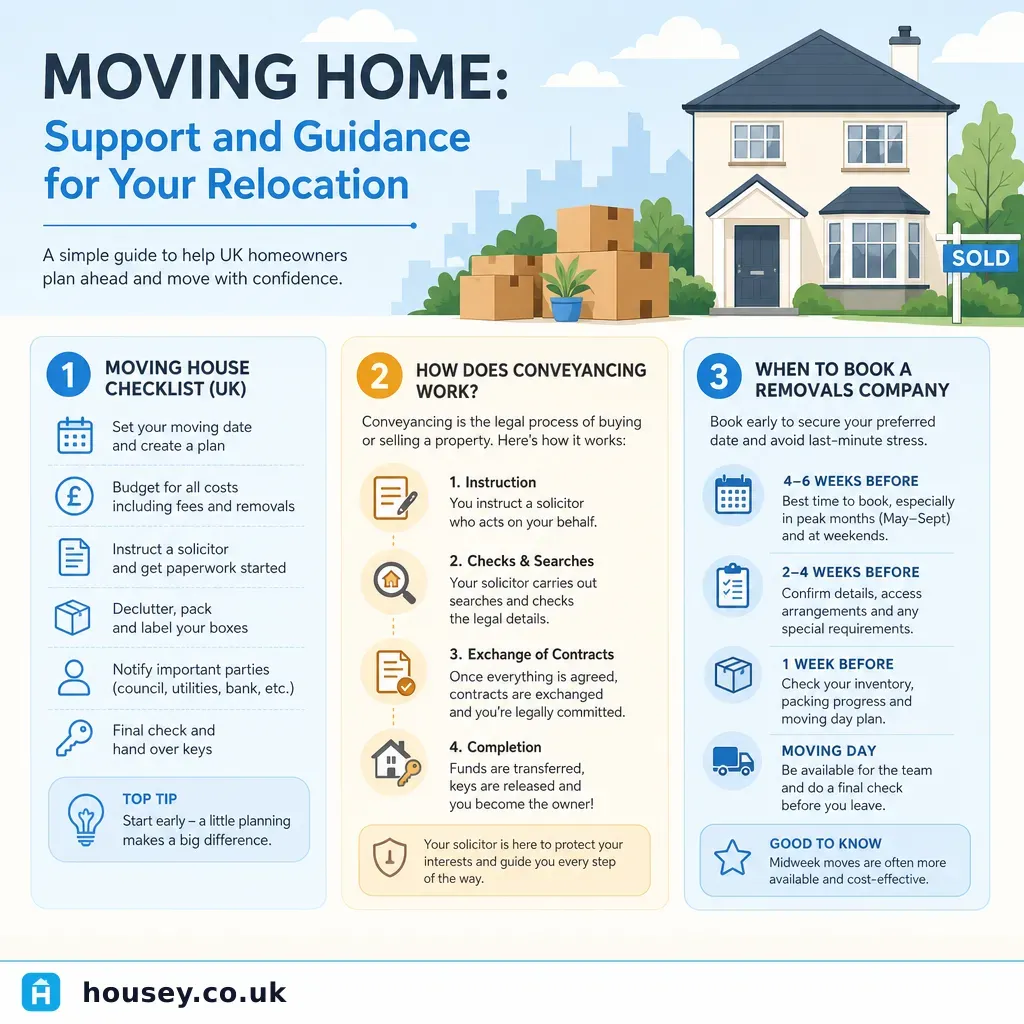
Moving Home: Support and Guidance for Your Relocation
Moving home involves coordinating conveyancing, removals, and logistics across 8–16 weeks.