Removing Bird Nests Safely: Professional and Humane Approaches
By Housey · Last reviewed 1st of June 2026
Removing Bird Nests Safely: Professional and Humane Approaches
UK homeowners often discover bird nests tucked into gutters, soffits, roof voids, and garden trees precisely when renovation or maintenance work is about to begin. The timing matters because removing a nest — even accidentally — can break the law if birds are present or actively building. Understanding the legal position, the seasonal window, and when to call a professional can save you from delays, fines, and unnecessary harm to wildlife.
Key points
- Section 1 of the Wildlife and Countryside Act 1981 makes it a criminal offence to intentionally take, damage, or destroy the nest of any wild bird while that nest is in use or being built.
- All UK wild bird species are protected under this Act; no permit is needed to prevent future nesting, but any intervention during active use requires a licence from Natural England, NatureScot, or Natural Resources Wales.
- The general nesting season runs roughly from March to August, though blackbirds, collared doves, and robins can nest from February through to October.
- Schedule 1 of the Wildlife and Countryside Act extends further protection to rare species including peregrine falcon and barn owl: even intentionally disturbing their active nests is an offence, regardless of season.
- Swifts are a declining species listed under Section 41 of the Natural Environment and Rural Communities (NERC) Act 2006; Natural England strongly discourages any works that remove swift nesting access from buildings.
When is it legal to remove a bird nest?
A nest can be legally removed without a licence only when it is completely inactive — meaning no birds are present, no eggs or chicks are visible, and the breeding season has concluded. In practice this usually means September through January for most common species, though you should verify with a wildlife consultant if you are unsure whether a particular nest is abandoned.
The key test under the Wildlife and Countryside Act 1981 is intent: deliberately destroying a nest you know to be occupied is an offence. Honest mistakes do not automatically grant exemption — the prosecution burden rests on intent and knowledge. If you can see birds entering and leaving, or hear chicks, the nest must be left alone.
Decision tree: should you proceed?
- Proceed if: the nest is visibly empty, no birds are entering or leaving, and it is outside the main nesting season (September–January for most species).
- Postpone if: you can see or hear birds, eggs, or chicks in the nest, or if it is March–August and you cannot confirm the nest is abandoned.
- Apply for a licence if: the work is urgent (for example, a dangerous structure or emergency scaffolding) and the nest is active — contact Natural England (England), NatureScot (Scotland), or Natural Resources Wales.
- Call a specialist if: the nest belongs to a Schedule 1 species, a declining species such as swift or house sparrow, or you cannot identify the bird.
Which birds and nests have extra protection?
Most garden birds — blue tits, robins, house sparrows, blackbirds, and pigeons — are covered by the basic Section 1 protection. A separate tier exists under Schedule 1, covering rare and vulnerable species where even disturbance at or near the nest is an offence. Examples include kingfishers, ospreys, barn owls, and red kites.
Swifts warrant particular attention for homeowners. Their numbers have fallen by around 60% since the 1990s, and Natural England's guidance specifically asks that building owners retain or replace swift nesting opportunities wherever possible. If your property has active swift access points — small holes under eaves — removal of these constitutes loss of a nesting site even outside the season, which may be relevant during planning applications.
Species type | Legal status | Who issues licences? |
|---|---|---|
Common garden birds (robins, tits, blackbirds) | Section 1 WCA 1981 — nest protected in use | Natural England / NatureScot / NRW |
Declining species (house sparrow, swift, house martin) | Section 1 + NERC Act 2006 s.41 — conservation concern | Natural England / NatureScot / NRW |
Schedule 1 species (barn owl, peregrine, kingfisher) | Enhanced — disturbance itself is an offence | Natural England / NatureScot / NRW |
Eggs of all wild birds | Section 1 — taking or destroying is an offence | No routine licence available |
Removing nests as part of building or tree work
Renovation work, scaffolding erection, roof repairs, and tree surgery are the most common situations where nests are discovered unexpectedly. Contractors and homeowners share responsibility under the law.
If you are planning works between March and August:
- Inspect before work begins. Walk around the property and check likely nesting locations: gutters, soffits, ridge tiles, open chimneys, dense hedges, and ivy on walls. If you employ a contractor, ask them to carry out a pre-work nest check.
- If a nest is found, halt work in that area immediately and seek advice from a licensed ecological consultant, or contact the RSPB's advice line.
- For tree surgery, a tree surgeon should check for nests before any cutting, pruning, or felling between February and September. British Standard BS 3998:2010 on tree work recommends a pre-work wildlife inspection.
- For scaffolding or roofing, if the programme requires work during active nesting, apply for a licence in advance — Natural England licence processing can take several weeks.
Failure to carry out a pre-work check is not a defence in law. Courts have prosecuted both homeowners and contractors where nests were disturbed through carelessness.
How to handle a discovered nest safely
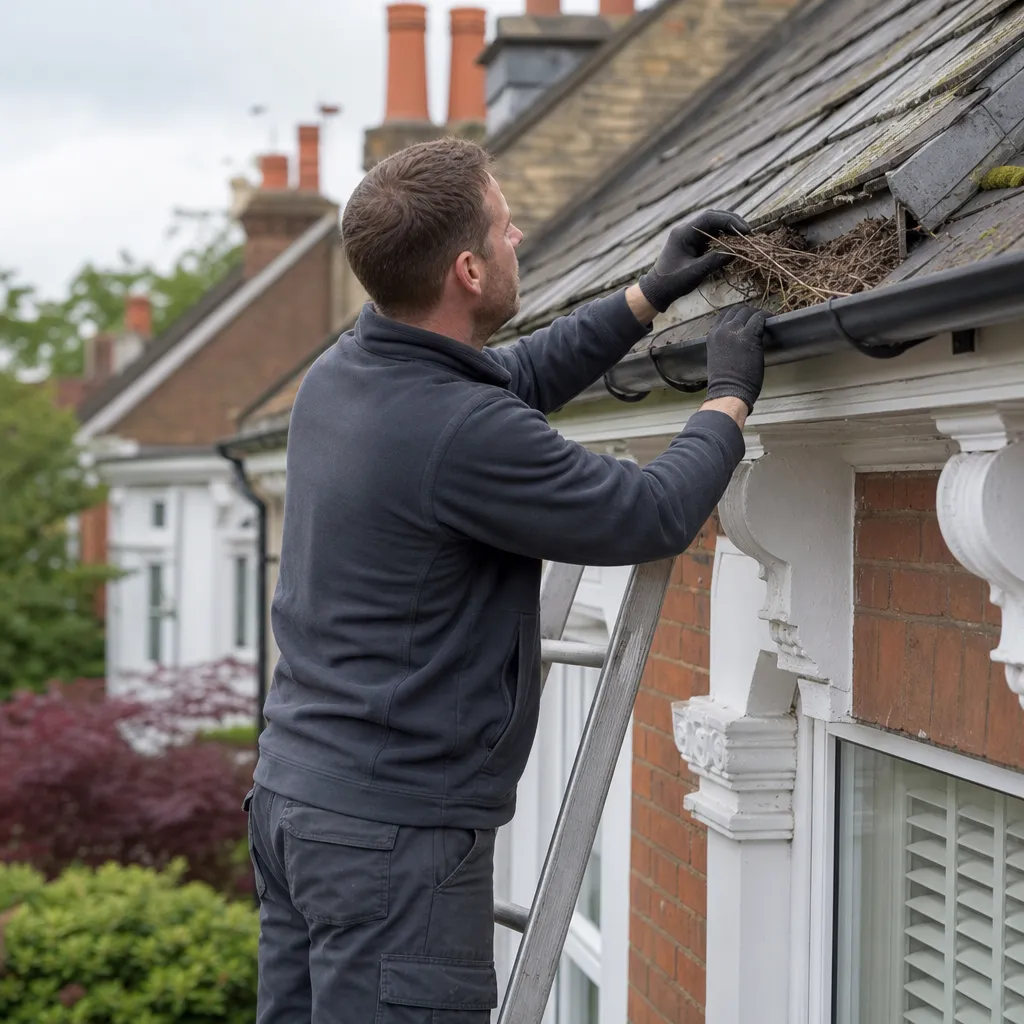
If you find a nest that is genuinely inactive and outside the breeding season:
- Wear disposable gloves — bird nests can harbour mites, fleas, and bacteria.
- Place the nest in a sealed bag before disposal to prevent parasites spreading.
- Clean the area with a suitable outdoor disinfectant.
- To deter future nesting in unsuitable locations (blocked gutters, open roof gaps), seal access points after the nesting season, not during.
- Do not use chemical deterrents near active nests; this may contravene the Act.
What not to assume:
- A nest is not abandoned simply because you have not seen a bird near it for a day or two. Parent birds often leave for extended periods, particularly during incubation.
- Pigeons are not exempt from the Wildlife and Countryside Act 1981 simply because they are considered pest birds in other contexts. Feral pigeon nests and eggs are protected while in use.
- Removing a nest from your own property does not exempt you from the law. The Act applies on all land, including private gardens.
- The sight of a fledgling near a nest does not mean the nest is abandoned — fledglings often leave before they can fly, and parent birds continue to feed them on the ground.
When to get professional help
Most homeowners can safely remove a clearly inactive, out-of-season nest. Professional input is strongly advised in these situations:
- Building or tree works are planned for March–August and no pre-work nest survey has been carried out.
- You have identified or suspect a Schedule 1 species, or a declining species such as swift, house martin, or barn owl.
- The nest is inside a roof void or chimney and removal requires working at height or disturbing structural elements.
- A licence may be required — only a suitably qualified ecologist can advise on and apply for a licence from Natural England or the devolved equivalents.
Red flags — stop work and call a professional:
- Birds or chicks are visible in or near the nest.
- The nest is in a tree or hedge you intend to remove or heavily prune before September.
- The property is within or adjacent to a Site of Special Scientific Interest (SSSI) or Local Nature Reserve.
- The nest appears to belong to a bird of prey or other large bird of conservation concern.
- You are uncertain of the species or whether the nest is currently in use.
How Housey can help
If your planned tree surgery or property maintenance involves potential nesting sites, Housey can connect you with qualified tree surgeons who are experienced in pre-work nest checks and in scheduling works to comply with the Wildlife and Countryside Act 1981.
Frequently asked questions
Can I remove an old bird nest in winter?
Yes, provided the nest is completely inactive and no birds are using it. Between October and January is generally the safest window for most common species. Before disturbing it, check for signs of occupancy — feathers, droppings, or bird activity near the entrance. Some species, including certain owls and pigeons, may use nests year-round, so a visual check is always worthwhile.
Do I need a licence to remove a nest from my own roof?
You need a licence only if the nest is active — in use or being built — regardless of whether it is on your own property. You do not need a licence to remove a wholly inactive, abandoned nest outside the breeding season. If you are unsure whether the nest is active, seek advice from a wildlife professional or the RSPB before proceeding.
Are pigeons protected in the UK?
Yes. Feral pigeons are protected under the Wildlife and Countryside Act 1981 in the same way as other wild birds. Their nests and eggs cannot be deliberately destroyed while in use. Professional pest controllers use methods — nest proofing, egg replacement under licence, and licensed lethal control where permitted — that comply with the law.
What is the penalty for illegally removing a bird nest?
Under the Wildlife and Countryside Act 1981 (as amended), offences relating to wild birds carry an unlimited fine and up to six months' imprisonment per offence in England and Wales. Both homeowners and contractors can be prosecuted; the unlimited fine provision applies to each individual offence.
Do swifts have extra legal protection?
Swifts are not listed on Schedule 1 but appear on the UK Birds of Conservation Concern Red List and under Section 41 of the Natural Environment and Rural Communities Act 2006 as a species of principal importance for biodiversity. Natural England's standing guidance strongly discourages removal of established swift nesting access points from buildings.
Sources and further reading
- Wildlife and Countryside Act 1981 — legislation.gov.uk
- Protected species and sites: how to get a licence — GOV.UK
- The law on nesting birds — RSPB
- Natural Environment and Rural Communities Act 2006, Section 41 — legislation.gov.uk
- BS 3998:2010 Tree Work Recommendations — BSI Group
Useful next reads
 Improvement & Build
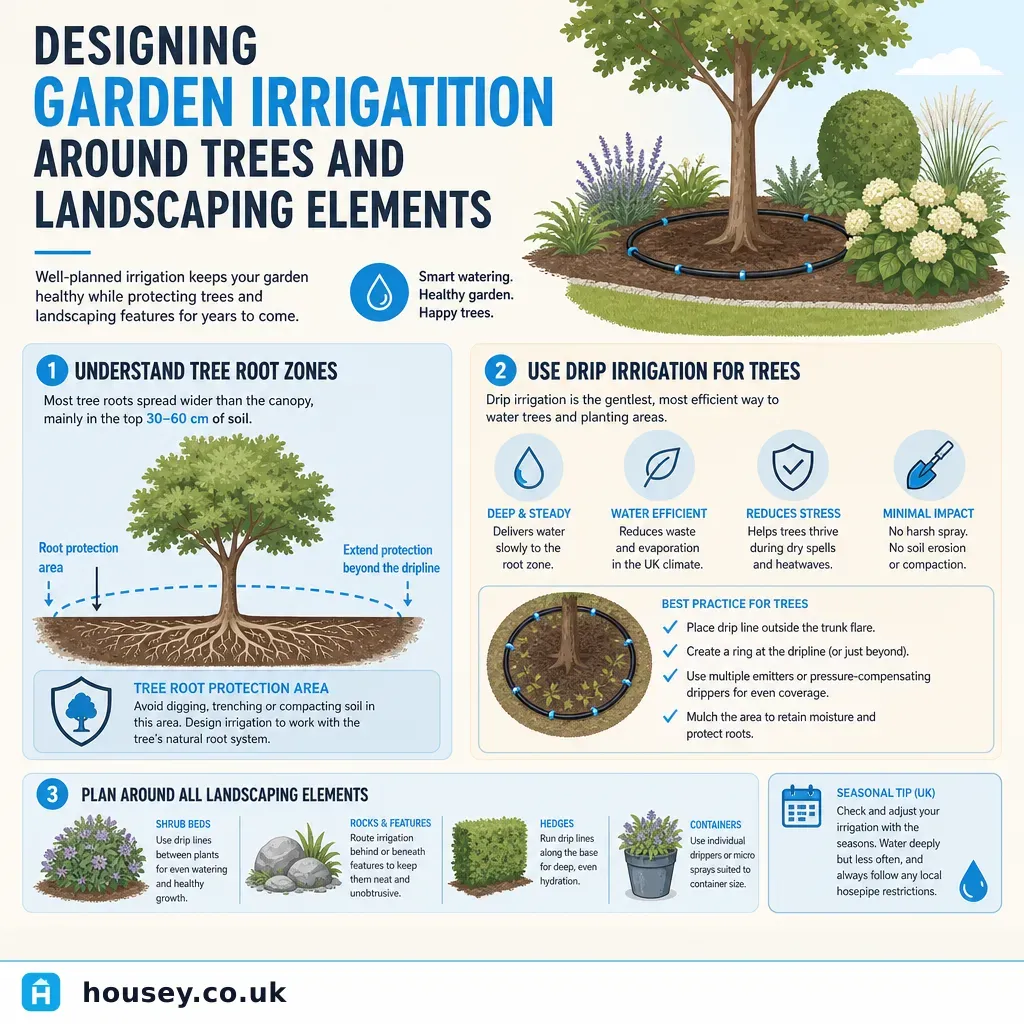
Designing Garden Irrigation Around Trees and Landscaping Elements
Design irrigation around trees by respecting the root protection area defined under BS 5837:2012, using drip or leaky pipe delivery rather than spray heads, and putting the tree zone on its own circuit.
 Improvement & Build
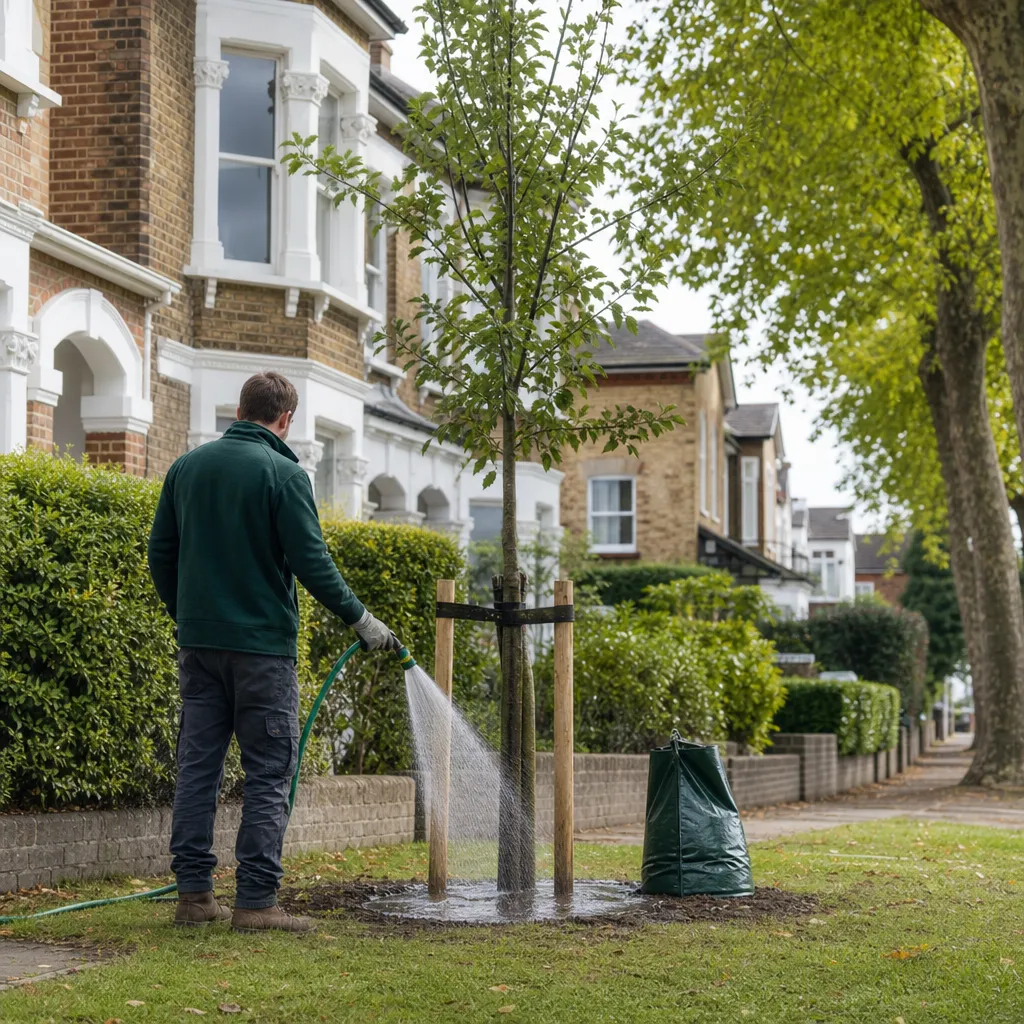
Watering Large Trees: Techniques and Frequency for Establishment
Newly planted large trees typically need 50–90 litres of water per week during the growing season for the first two to three years.
 Improvement & Build
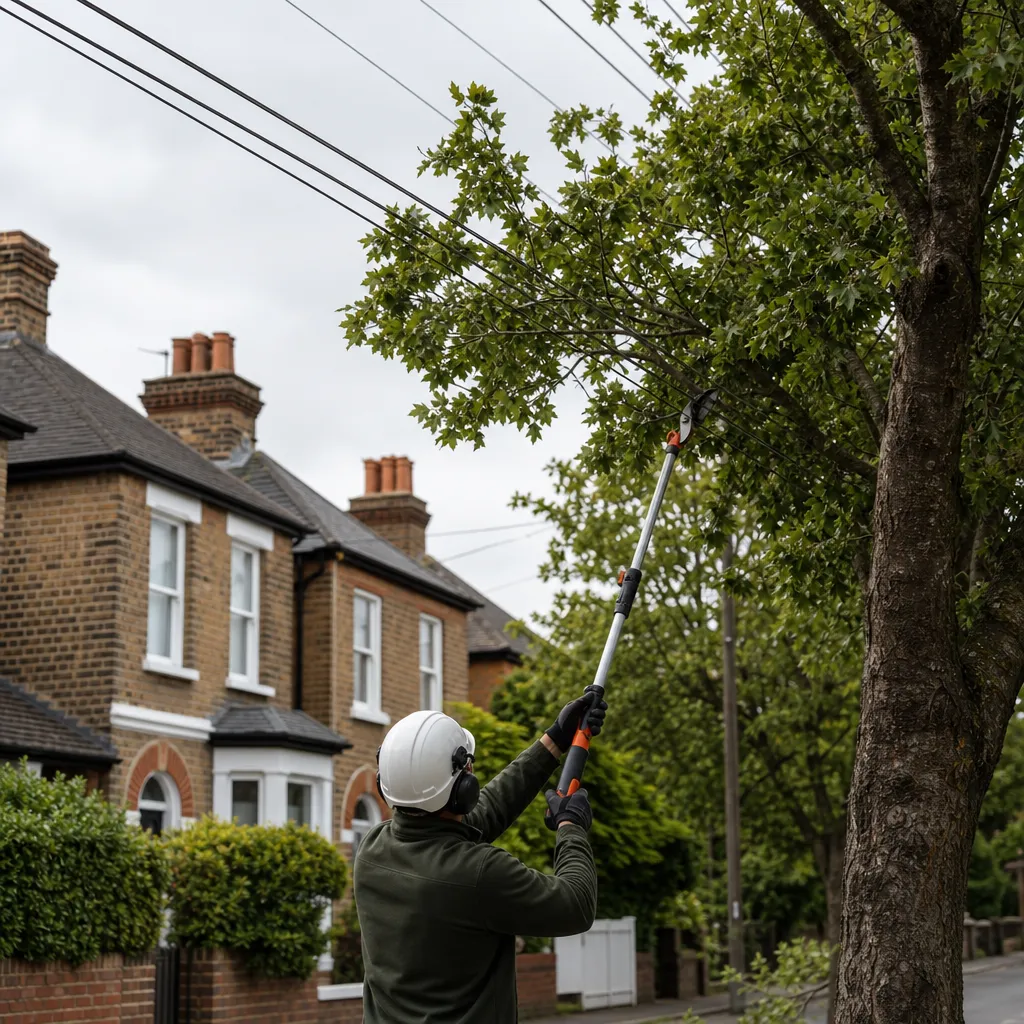
Safe Tree Trimming Near Overhead Power Lines
Never attempt to trim trees near overhead power lines yourself.
 Improvement & Build
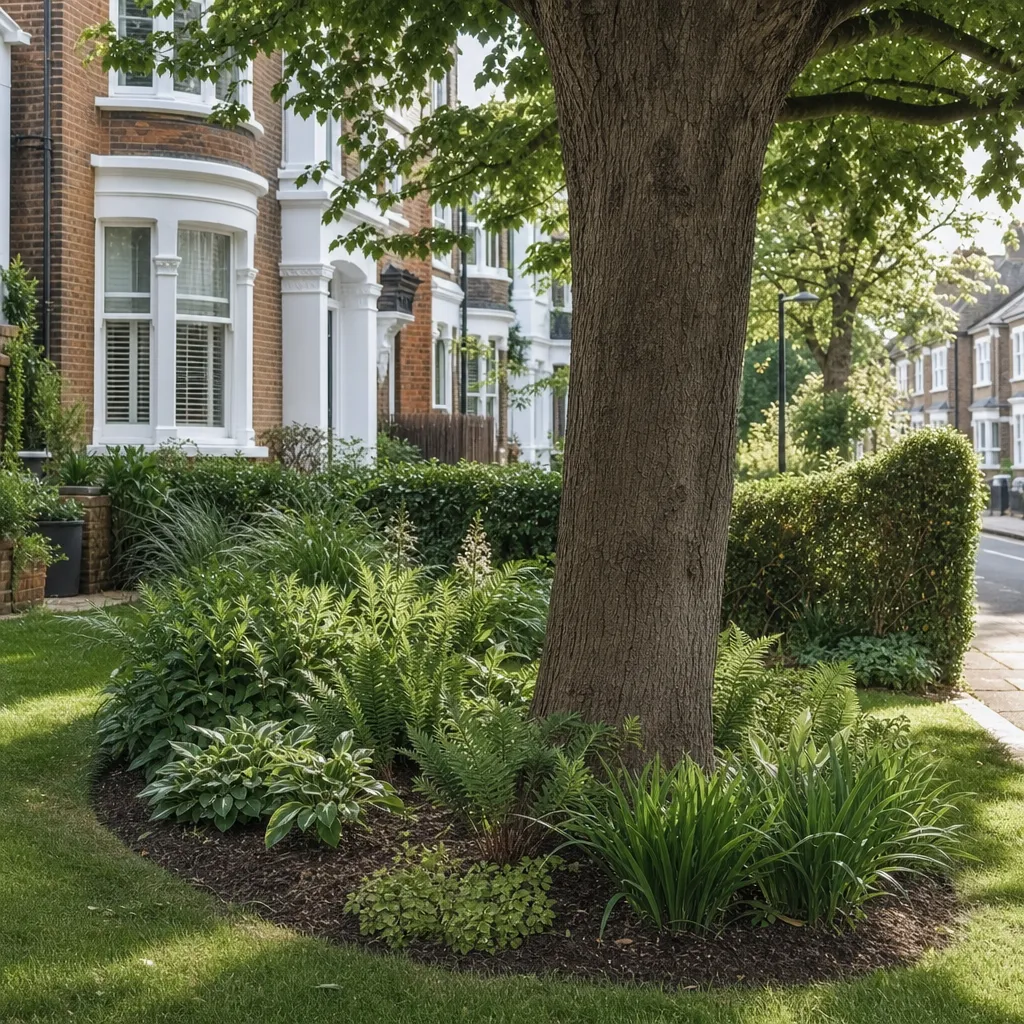
Landscaping Around Trees: Design and Planting Guide
The key to landscaping around trees is working with the tree's conditions rather than against them.
 Improvement & Build
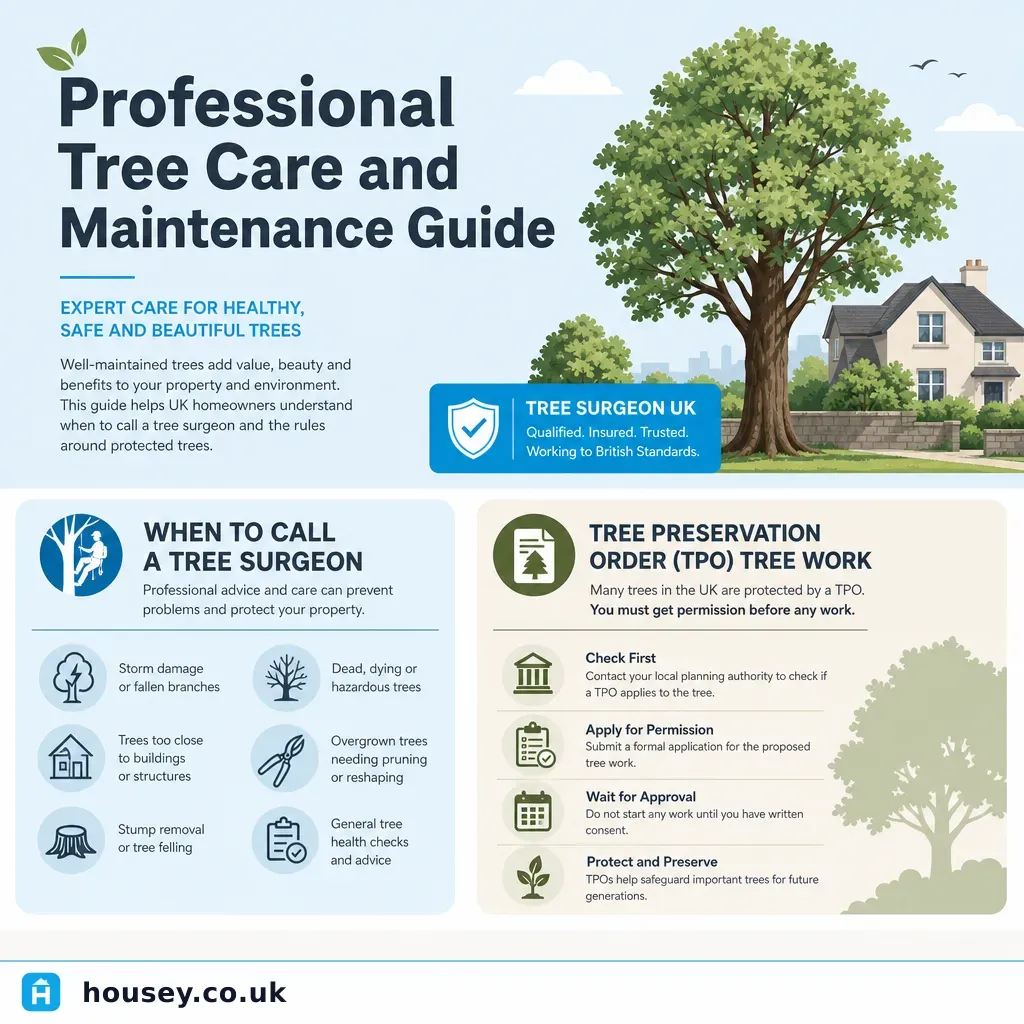
Professional Tree Care and Maintenance Guide
Professional tree care covers pruning, crown reduction, felling, and health assessments carried out by qualified arborists.