Removing Mice from Cavity Walls: Identification and Solutions
By Housey · Last reviewed 10th of May 2026
Removing Mice from Cavity Walls: Identification and Solutions
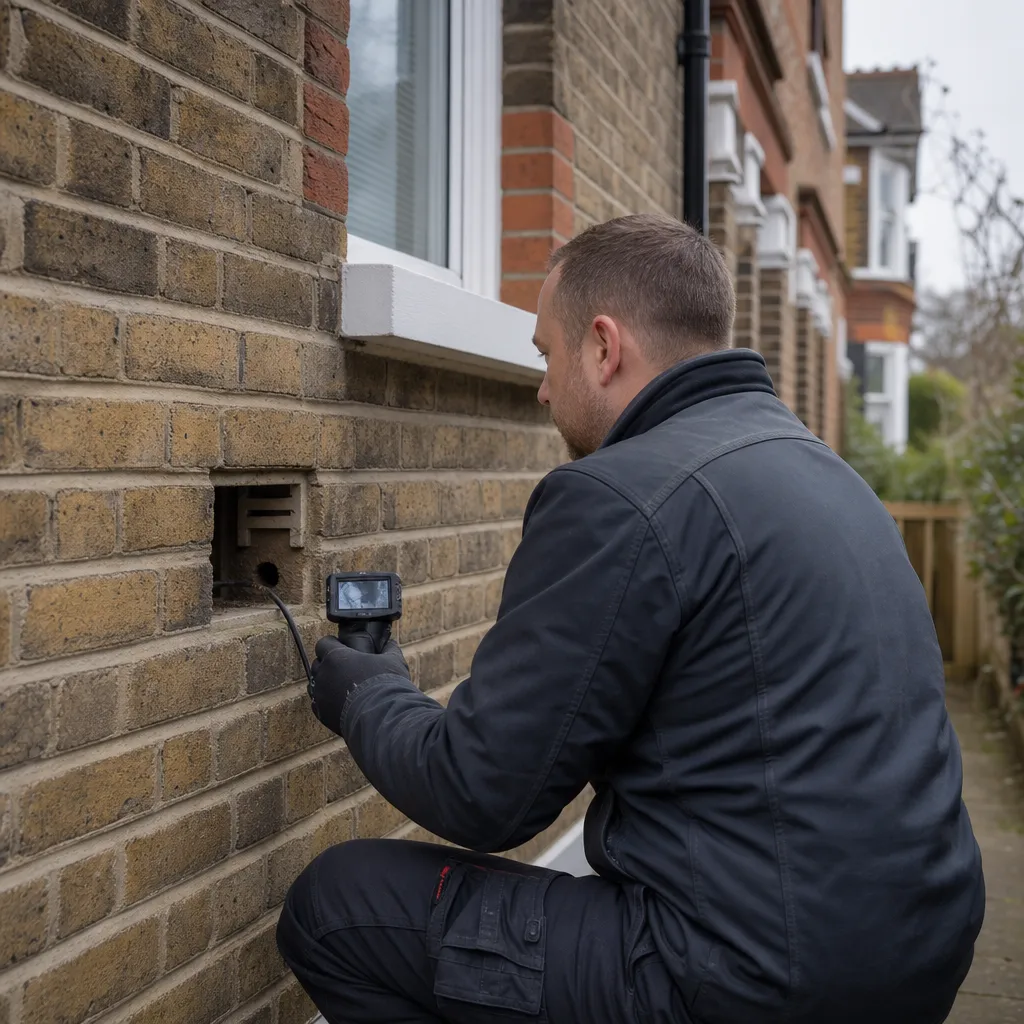
Discovering mice within the cavity walls of your home tends to reveal itself gradually — first a faint scratching sound at night, then droppings appearing along skirting boards, and eventually the realisation that the infestation is inside the building fabric rather than an accessible cupboard or under the floor. Cavity walls present a particular challenge because they offer mice warmth, concealment, and a protected run through the building, making DIY treatment significantly less reliable than in more accessible locations.
Key points
- House mice (Mus musculus) can enter through gaps as small as 6 mm — approximately the width of a standard pencil
- Scratching sounds within cavity walls are most audible between dusk and dawn, as mice are primarily nocturnal; daytime quiet does not confirm the problem has resolved
- Mice can chew through mineral wool, EPS bead, and PIR cavity wall insulation, reducing thermal performance and producing loose nesting material within the cavity
- The Prevention of Damage by Pests Act 1949 gives local authorities statutory powers to require property owners to address rodent infestations that present a risk to neighbouring properties
- The British Pest Control Association (BPCA) recommends that pest controllers carry out a full inspection before any baiting programme — incorrectly placed rodenticide can cause secondary poisoning of owls, foxes, and other predatory wildlife
Identifying mice in cavity walls
The first step is confirming both the source of the noise and which animal is involved. Squirrels, rats, and mice are commonly confused, and the control approach for each differs significantly.
Which animal is in my wall?
- Choose mice as the most likely cause if: sounds are light scratching or scurrying, predominantly nocturnal, and small dark droppings (3–6 mm, similar in size to a grain of rice) are present near skirting boards or behind appliances.
- Consider rats if: sounds are heavier and more deliberate; droppings are noticeably larger (12–20 mm); gnaw marks are visible on structural timbers, cables, or pipework.
- Consider squirrels if: activity is predominantly daytime, particularly in autumn; noise may include rolling or dropping objects; entry is likely via the roof space, eaves, or soffits rather than at ground level.
- Ask a BPCA-registered pest controller to carry out a full inspection if you are uncertain — misidentification leads to ineffective treatment and can delay resolution by several weeks.
How mice enter cavity walls
Most mice gain access through:
- Weep holes in the outer brick leaf — the small gaps left at the base of cavity walls to allow moisture drainage; standard 65 mm × 10 mm weep holes are a common entry point
- Gaps around utility entry points — gas, water, and electrical services entering the building through the external wall often have poorly sealed surrounds
- Damaged or absent air bricks — clay and engineering brick air bricks in pre-1945 properties frequently crack or lose their mortar surround over time
- Gaps at the wall-floor junction — particularly in pre-1920s properties where skirting boards do not fully seal the floor perimeter
- Cracks in render or pointing at low level — especially on exposed gable or flank walls
A systematic inspection of the external elevation at ground level and around service entries will usually identify the most likely entry points before or alongside any treatment programme.
Red flags: when to seek professional help immediately
The following signs indicate the infestation may be more serious or widespread than a straightforward cavity wall mouse problem:
- Gnaw marks on electrical wiring, cables, or plastic conduit — mice chewing through insulation create a genuine fire risk; the wiring must be assessed by a qualified electrician
- Visible gnawing on exposed structural timbers such as joists, noggins, or sole plates
- Droppings appearing in multiple rooms or at distance from the suspected entry point, suggesting established runs through the building fabric
- A persistent smell of decay from within the wall — mice that die inside an inaccessible cavity are difficult to retrieve without cutting access holes
- Activity returning immediately after an initial treatment — this typically means the entry point has not been successfully sealed
- Evidence of nesting material or displaced insulation visible when an air brick is removed
DIY versus professional treatment
Approach | Suitable when | Not ideal for | Notes |
|---|---|---|---|
DIY snap traps | Mice confirmed in accessible spaces (kitchen, loft) with no cavity access required | Cavity wall infestations — traps cannot be placed inside the wall | Safe for use around children and pets if positioned carefully |
DIY rodenticide | Low-level infestation; single entry point identified; homeowner understands safe placement | Homes with pets or young children; cavity wall situations; repeat infestations | Follow the CRRU UK code for responsible rodenticide use |
Professional pest controller | Cavity wall infestation; damage to wiring or insulation suspected; repeated treatments have failed | — | Choose a BPCA or NPTA (National Pest Technicians Association) registered operative |
Structural or defect inspection | Gnawing to structural timbers; dampness linked to displaced insulation or damaged cavity closers | — | A specific defect survey can assess structural or insulation damage after treatment |
For cavity wall mice specifically, professional treatment is almost always more effective than DIY. Pest controllers have access to professional-grade bait stations that can be positioned at entry points and within the cavity via air bricks or purpose-drilled access holes, with bait monitored and replenished between visits.
What to ask a professional pest controller
Before instructing a pest controller for a cavity wall mouse problem:
- Are you registered with the BPCA or the National Pest Technicians Association (NPTA)?
- Will you carry out a full inspection before recommending a treatment programme?
- What access will be needed to external walls, and will any drilling or material removal be required?
- How many visits are included in the programme, and what is the sign-off process?
- Does the programme include proofing works (sealing entry points), or is proofing quoted separately?
- If dead mice are inaccessible within the cavity, what retrieval options are available?
- Is your rodenticide use compliant with the CRRU UK code of best practice?
- Do you offer a guarantee period, and what are the conditions?
Proofing: preventing reinfestation
Treatment without proofing almost always results in reinfestation within weeks. Effective proofing measures include:
- Fitting stainless steel mesh (6 mm aperture) behind existing weep holes, or replacing standard weep holes with proprietary mesh-backed versions
- Sealing gaps around pipework and cable entries with rodent-resistant expanding foam or mortar, applied from the outside
- Replacing cracked or damaged air bricks and fitting steel mesh behind all replacements
- Fitting door brush strips and threshold plates at all ground-level access points to the building
- Repointing cracked brickwork or render at the base of all external walls
Some pest control companies include proofing within their treatment programme; others quote it as a separate item. Clarify this before instructing to avoid unexpected additional costs once the treatment is under way.
Cavity wall insulation damage
If mice have been active within the cavity for a prolonged period, they may have disturbed or contaminated the insulation. Signs include an unusually cold wall surface, increased heating costs without obvious explanation, a damp smell from within the wall, or visible nesting material when an air brick is removed.
A specific defect survey can assess the condition of the cavity and confirm whether insulation reinstatement is necessary after pest control is complete. Replacement of cavity wall insulation may be covered under some original installer warranties, and qualifying properties may be eligible for subsidy through the ECO4 scheme.
When to get professional help
Cavity wall mouse infestations should almost always involve professional pest control. Seek professional help when:
- Sounds originate from within the wall structure rather than from accessible floor or ceiling voids
- Droppings appear in multiple rooms, suggesting established runs through the building fabric
- There is any sign of damage to electrical wiring, structural timbers, or pipework
- A DIY treatment has not resolved the problem within two to three weeks
- You have pets or young children in the property and are uncertain about the safe placement of rodenticide
How Housey can help
If you are concerned that mice may have damaged cavity wall insulation or affected the structural fabric of your walls, a specific defect survey arranged through Housey can provide a professional assessment of any damage and identify whether repair works are needed. This is particularly useful once a pest control programme has concluded, to confirm the integrity of the affected wall section before redecoration or re-insulation.
Frequently asked questions
How long does it take to get rid of mice in cavity walls?
A professional treatment programme typically runs over three to four weeks across two or three visits. The first visit establishes bait stations and identifies entry points; subsequent visits monitor uptake, replenish bait, and confirm whether activity is declining. Entry point proofing is usually carried out on the second or final visit once activity has clearly reduced.
Can mice damage cavity wall insulation?
Yes. Mice will shred mineral wool insulation for nesting material and can displace EPS bead insulation, reducing its coverage and effectiveness. PIR board is more resistant to gnawing but can still be displaced by persistent activity. If you suspect insulation damage, arrange a survey after pest control is complete to confirm whether reinstatement is necessary.
Are there health risks from mice in cavity walls?
Mice can carry Salmonella and Leptospirosis (Weil's disease). The risk from mice confined to a cavity wall, with no direct contact with food preparation areas, is generally lower than from mice in kitchens. However, dust and droppings can become airborne during drilling or wall access works — wear a P2 respirator and disposable gloves when working in affected areas.
What are a tenant's rights if mice enter through the cavity wall?
Landlords are responsible under the Landlord and Tenant Act 1985 and the Housing Act 2004 for maintaining properties free from serious pest infestations caused by structural defects. An infestation entering through a cavity wall weep hole or damaged air brick is typically a structural matter and the landlord's responsibility. Tenants should report the problem in writing and keep a record of all communications.
Sources and further reading
- Pest control advice and find a registered pest controller — British Pest Control Association (BPCA)
- Prevention of Damage by Pests Act 1949 — legislation.gov.uk
- Responsible rodenticide use: CRRU UK code — Campaign for Responsible Rodenticide Use (CRRU)
- Housing health and safety rating system guidance — GOV.UK
Useful next reads
 Surveys & Inspections
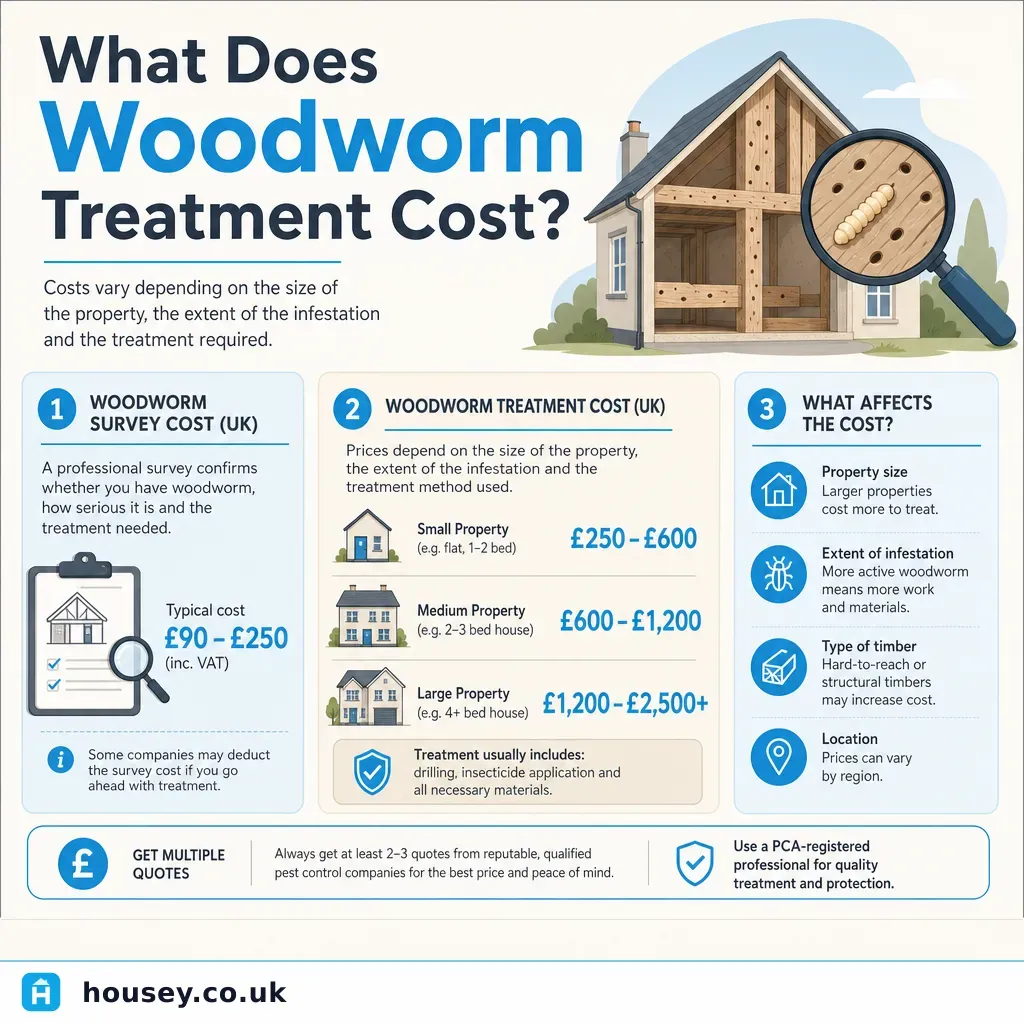
What Does Woodworm Treatment Cost?
Woodworm treatment in the UK typically costs £300–£900 for a standard three-bedroom home, depending on the extent of infestation and timbers affected.
 Surveys & Inspections
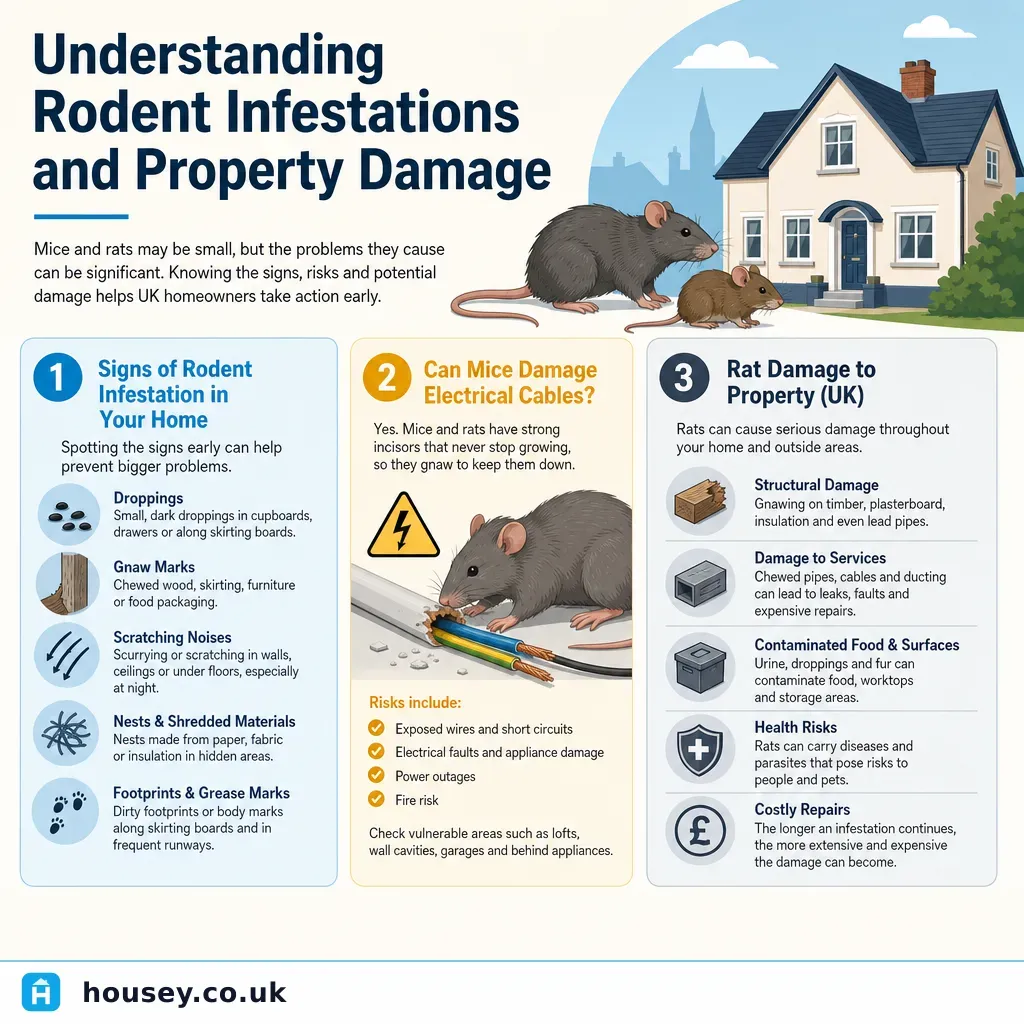
Understanding Rodent Infestations and Property Damage
Rats and mice can cause significant property damage in UK homes, including gnawed electrical cables that create fire risk, damaged pipework causing hidden leaks, and burrowing near foundations in older properties.
 Surveys & Inspections
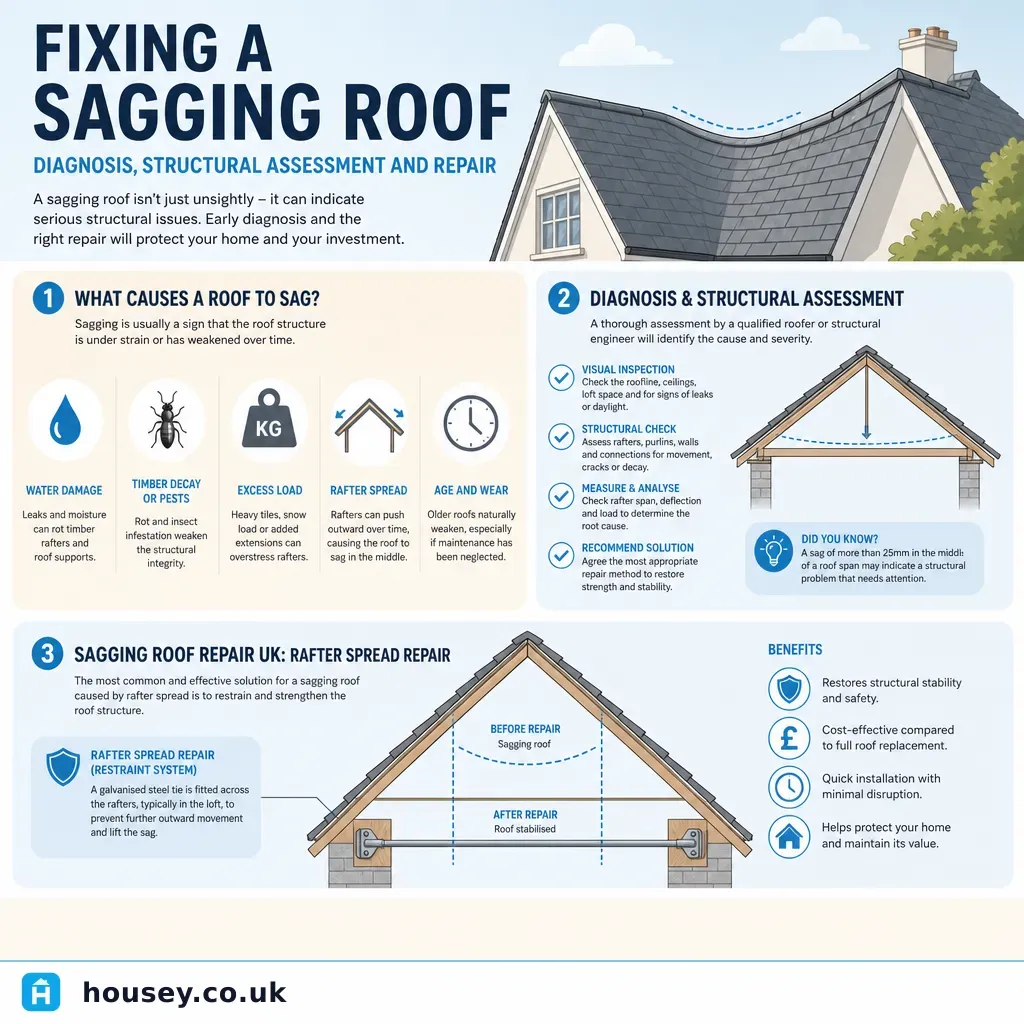
Fixing a Sagging Roof: Diagnosis, Structural Assessment and Repair
A sagging roof usually points to failed or overloaded roof timbers, rafter spread, or a compromised ridge board.
 Surveys & Inspections
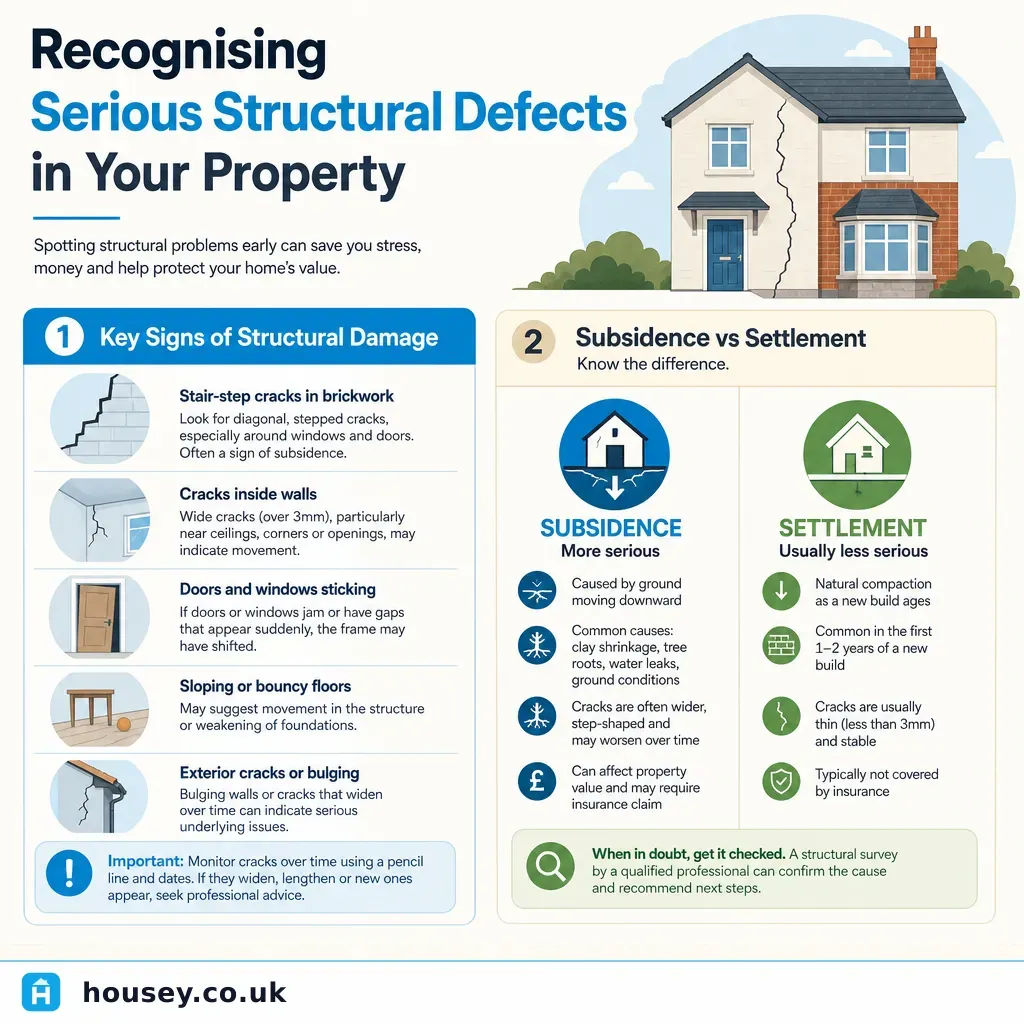
Recognising Serious Structural Defects in Your Property
Serious structural defects in UK homes include wide or diagonal cracks through brickwork, bowing or leaning walls, a sagging roof ridge, and floors or door frames notably out of level.
 Surveys & Inspections
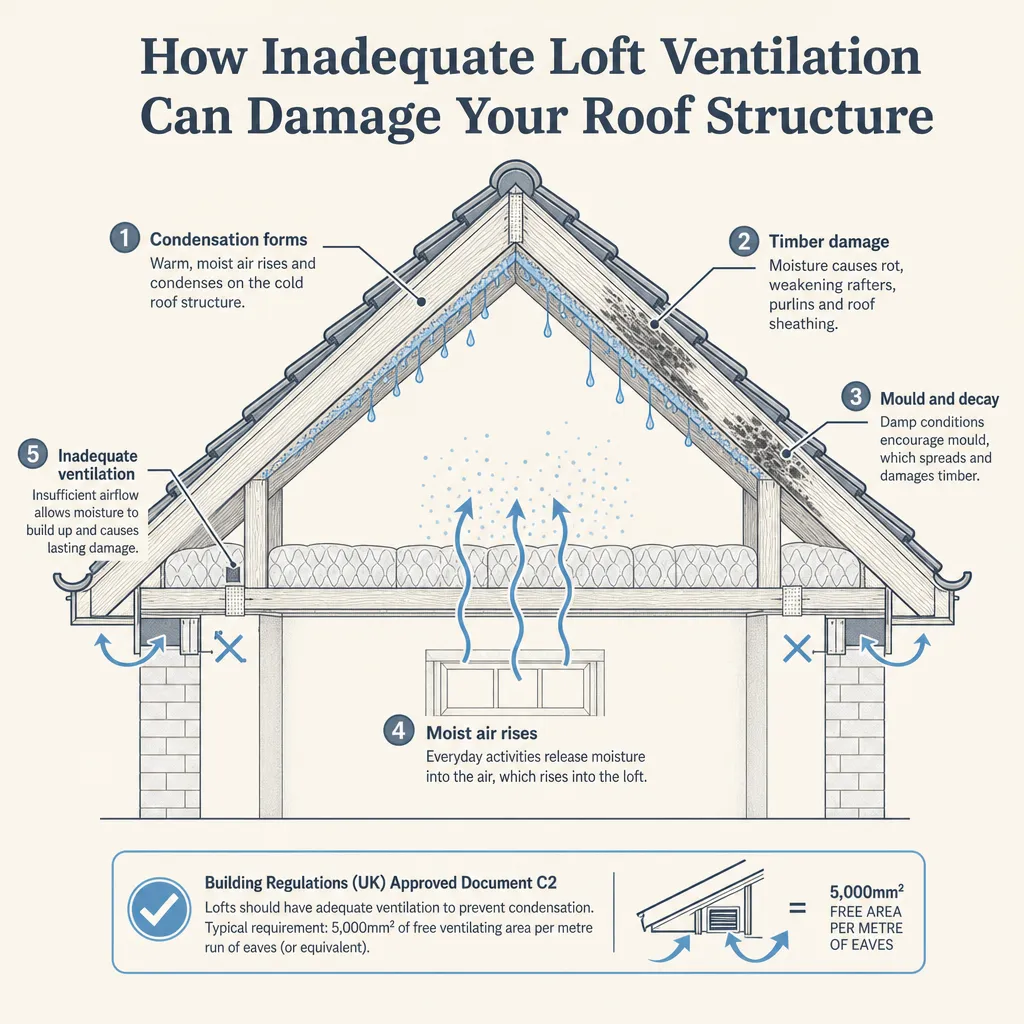
How Inadequate Loft Ventilation Can Damage Your Roof Structure
Inadequate loft ventilation allows warm, moist air to condense on cold roof timbers.