Removing Paint from Exterior Brickwork Safely
By Housey · Last reviewed 6th of May 2026
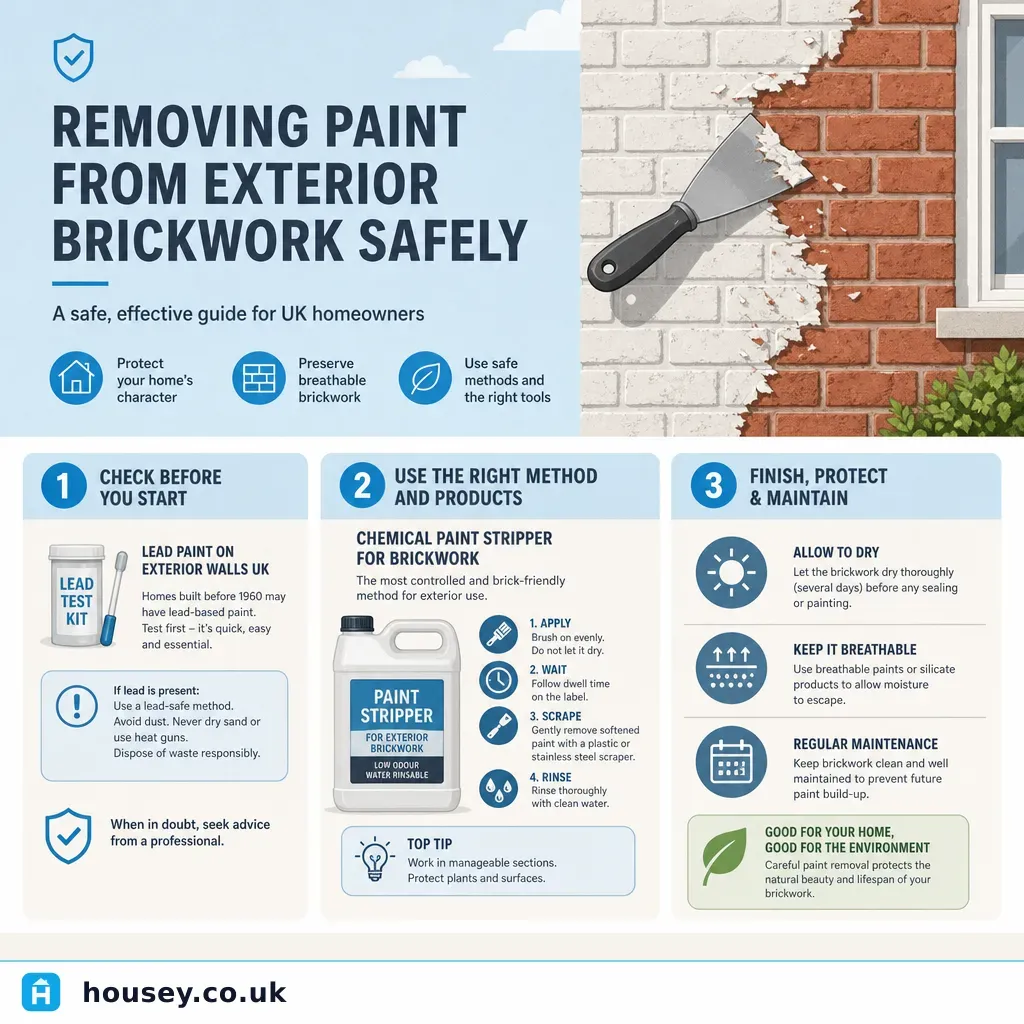
Removing Paint from Exterior Brickwork Safely
Painted brickwork is common on UK homes built between the 1930s and 1980s, when exterior masonry paint was frequently applied to weatherproof porous brick, cover ageing mortar joints, or simply to modernise a facade. Many homeowners today want to restore the natural brick finish — whether to improve kerb appeal, address moisture issues, or meet planning requirements on a listed or conservation area property. Choosing the wrong removal method can permanently damage the brick surface, so understanding the options before starting is essential.
Key points
- Properties built or last repainted before approximately 1960 should be tested for lead-based paint before any removal work begins — HSE-recognised swab test kits cost around £10–£20.
- Dry abrasive sandblasting can permanently erode brick faces and damage mortar joints; it is generally unsuitable for domestic UK brickwork.
- Listed buildings require listed building consent from the local planning authority before any paint removal, regardless of the method used.
- Chemical gel strippers and poultice systems are considered the safest options for most solid and cavity-wall brick construction.
- COSHH regulations require appropriate PPE and controlled waste disposal when using chemical paint strippers.
Is there lead paint on your brickwork?
This is the first question to answer before any removal work begins. Lead was used in exterior paints in the UK until its use in domestic applications was progressively phased out during the 1960s and 1970s. Any property built or last painted before approximately 1960 should be treated as potentially containing lead-based paint.
Testing and precautions:
- An HSE-recognised swab test kit can indicate lead presence in minutes and is available from most hardware retailers for approximately £10–£20. For a definitive result, send a paint chip to a UKAS-accredited laboratory.
- If lead is confirmed, avoid dry-sanding, grinding, or using a heat gun. These activities generate fine dust or fumes that are hazardous to health.
- Wear a P3 respirator (not a standard dust mask), chemical-resistant gloves, and eye protection throughout the work.
- Contain all waste paint and rinsate; do not allow contaminated material to enter drains or soil.
- For large areas with confirmed lead paint, engage a contractor with appropriate training and documented experience in lead paint removal.
HSE guidance on lead at work, including in historic paints, is covered in the EH40 Workplace Exposure Limits publication and associated HSE guidance documents.
Which method is right for your brickwork?
The correct approach depends on the brick type (hard engineering brick versus soft handmade), the mortar condition, the paint type (masonry emulsion, oil-based, limewash), and how many layers have accumulated over time.
Method | Best for | Avoid when | Indicative cost (last reviewed 2026-05-06) | Main risk |
|---|---|---|---|---|
Chemical gel stripper | Most brick types, single or multi-layer masonry paint | Soft or porous lime-mortared brickwork without a test patch | £5–£15 per m² (DIY product cost) | Skin and eye contact; drain contamination from rinsate |
Poultice system | Historic, soft, or porous brick; conservation area properties | Very large areas — slow and labour-intensive | £15–£40 per m² (specialist product) | Incomplete removal if dwell time is insufficient |
Low-pressure wet blasting (Doff/Torc) | Stubborn paint on harder bricks; large facade areas | Soft handmade brick, loose or lime mortar joints | £20–£50 per m² (contractor rate) | Moisture ingress on already porous brickwork |
Dry abrasive blasting | Industrial or engineering brick only | Almost all domestic UK properties | Variable | Permanent erosion of brick face and mortar |
Heat gun | Small areas, non-lead oil-based paint | Any surface with suspected lead paint; large areas | Low — tool hire or purchase | Fire risk near timber; lead fumes if paint contains lead |
For most domestic UK properties, a chemical gel stripper or a professional Doff or Torc low-pressure steam clean is the most commonly recommended combination.
Applying a chemical gel stripper
For smaller areas confirmed to be free of lead paint, a DIY chemical gel approach is practical:
- Carry out a test patch first — apply the product to a 0.5 m² area following the manufacturer's dwell time instructions before committing to the full surface.
- Apply the gel thickly — brush or trowel on as directed. Many products require a plastic film cover to prevent the gel drying out.
- Allow the full dwell time — typically 4–24 hours depending on paint depth and ambient temperature.
- Remove with a wooden or plastic scraper — avoid metal scrapers on soft brick faces, which can score the surface.
- Neutralise and rinse — follow the manufacturer's instructions carefully. Avoid forceful hosing that drives water into the wall cavity.
- Repeat as necessary — multi-layer paint systems often need two or three applications.
- Allow the wall to dry fully before assessing the result and inspecting mortar joints for any damage.
Listed buildings and conservation areas
If your property is listed, removing or altering a historic paint finish almost always requires listed building consent from your local planning authority. This applies even where the work appears reversible — the paint itself may be considered part of the building's historic fabric.
In conservation areas, some external works may be controlled by Article 4 Directions, which remove certain permitted development rights. Check with your local planning authority or a heritage consultant before starting any work. Historic England publishes technical guidance on cleaning historic brickwork that is useful when preparing a listed building consent application.
Decision tree: which approach suits your property?
- Pre-1960s property, unknown paint history → Test for lead paint first. Use wet or chemical methods only. Consider engaging a heritage specialist.
- Listed building or conservation area → Apply for listed building consent before starting any work. Use a contractor familiar with heritage requirements and approved methods.
- 1960s–1990s property, standard masonry paint → Chemical gel stripper (DIY or contractor) is usually suitable. Always carry out a test patch first.
- Large area or thick paint build-up → Professional low-pressure wet blasting (Doff or Torc system) is likely to be more efficient and consistent.
- Crumbling mortar joints or spalling brick faces → Address mortar condition before or alongside paint removal. Avoid high-pressure methods entirely.
- Unsure of brick hardness or paint type → Carry out a test patch in an inconspicuous area and consult a contractor before treating the full facade.
What to ask a contractor before hiring
- What removal method do you recommend for this brick type, and why?
- Will you carry out a lead paint test before starting work, or should I arrange one independently?
- Are you experienced with listed buildings or conservation area properties?
- What COSHH controls will you put in place for chemical strippers or blasting media?
- How will you contain and dispose of paint waste and rinsate?
- Will you carry out a visible test patch before treating the full facade?
- What do you expect the brickwork to look like after removal — are any tide marks or residual staining likely?
- Is VAT included in the quote, and what could cause the price to change?
When to get professional help
Consider hiring a specialist contractor rather than attempting DIY when:
- Lead paint is confirmed or strongly suspected from the property's age or paint history.
- The property is listed or in a conservation area.
- The brickwork shows signs of mortar deterioration, previous inappropriate repairs, or visible spalling.
- The area to be treated is large — above approximately 15–20 m².
- You are uncertain about the brick type, mortar composition, or paint history.
- The work requires scaffolding or involves working above ground-floor level.
How Housey can help
Housey connects UK homeowners with vetted local contractors who carry out exterior paint removal and masonry restoration work. Whether you need a lead paint test arranged, a heritage specialist for a listed building, or a contractor to quote on a full facade strip and repoint, you can request and compare quotes from qualified tradespeople in your area through the Housey marketplace.
Frequently asked questions
Can you remove masonry paint from brick yourself?
Yes, for standard masonry paint on solid brick without lead content, a chemical gel stripper is manageable for a competent DIYer on small areas. Always test for lead paint first and carry out a test patch before treating the full wall. For large areas, historic properties, or confirmed lead paint, a professional contractor is strongly recommended.
How long does paint removal from brickwork take?
A chemical gel stripper typically needs 4–24 hours dwell time per application, plus two or three applications for multi-layer paint. A professional using a Doff or Torc system can usually treat 10–20 m² per day. A full semi-detached house facade could take two to four days for an experienced contractor team.
Will removing paint damage my brickwork?
Correctly applied chemical or poultice methods rarely damage sound brickwork. The highest risk of permanent damage comes from dry abrasive blasting or high-pressure water jetting, particularly on soft handmade bricks, older lime mortar, or joints that are already deteriorating. Always carry out a test patch in an inconspicuous area first.
Do I need planning permission to remove paint from external brickwork?
Not for standard residential properties — stripping external walls does not generally require planning permission. However, listed buildings require listed building consent before any paint removal is carried out. In conservation areas, check whether an Article 4 Direction applies that may restrict external changes to the property.
What should I do if the brickwork is stained after paint removal?
Some residual staining is common after paint removal, particularly with multi-layer coatings. A second application of stripper, a specialist masonry cleaner, or a careful low-pressure rinse can sometimes improve results. Persistent staining may benefit from a professional assessment; in many cases it will gradually weather and fade over time.
Sources and further reading
- HSE: EH40 Workplace Exposure Limits — Health and Safety Executive
- Historic England: Technical advice on historic buildings — Historic England
- Planning Portal: Listed buildings — Planning Portal
- HSE: COSHH — A brief guide to the Regulations (INDG136) — Health and Safety Executive
Useful next reads
 General property advice
What to do when your boiler stops working
When your boiler stops working, check the pressure gauge (should read 1–1.
 General property advice
Property Market Trends: Activity Growth and Price Movements
UK property market activity is measured through completed sale registrations (HM Land Registry), lender mortgage data, and transaction volumes from HMRC.
 General property advice
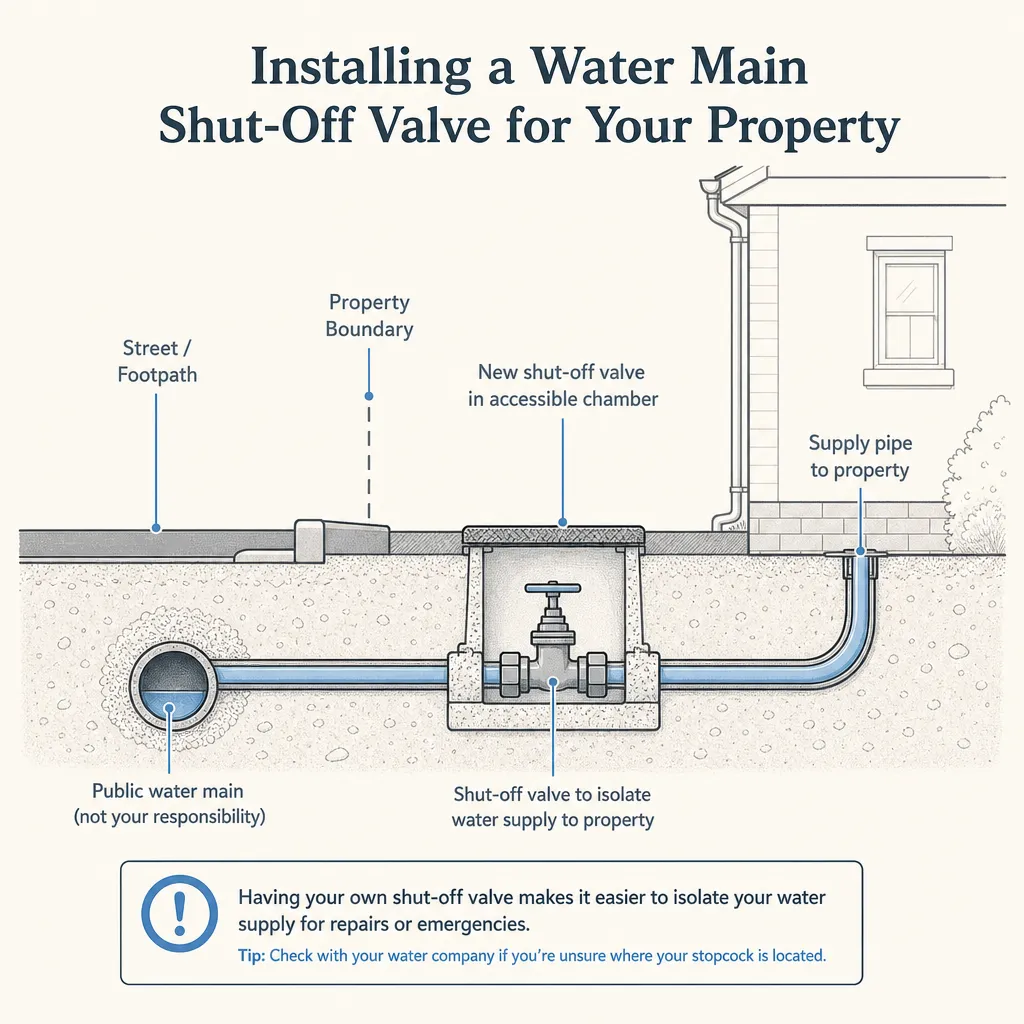
Installing a water main shut-off valve for your property
A water main shut-off valve — commonly called a stopcock — controls all water entering your home from the mains.
 General property advice
Monthly House Price Index: August Market Report and Analysis
The UK House Price Index is published monthly using completed Land Registry transaction data, meaning August figures typically reflect sales agreed months earlier.
 General property advice
Scottish Property Market: Activity and Regional Trends
Scotland's property market operates under distinct legal rules: sellers must provide a Home Report before marketing, transactions become legally binding at conclusion of missives rather than exchange of contracts, and Land and Buildings Transaction Tax replaces Stamp Duty.