Methods for Removing Stains and Discolouration from Concrete
By Housey · Last reviewed 25th of May 2026
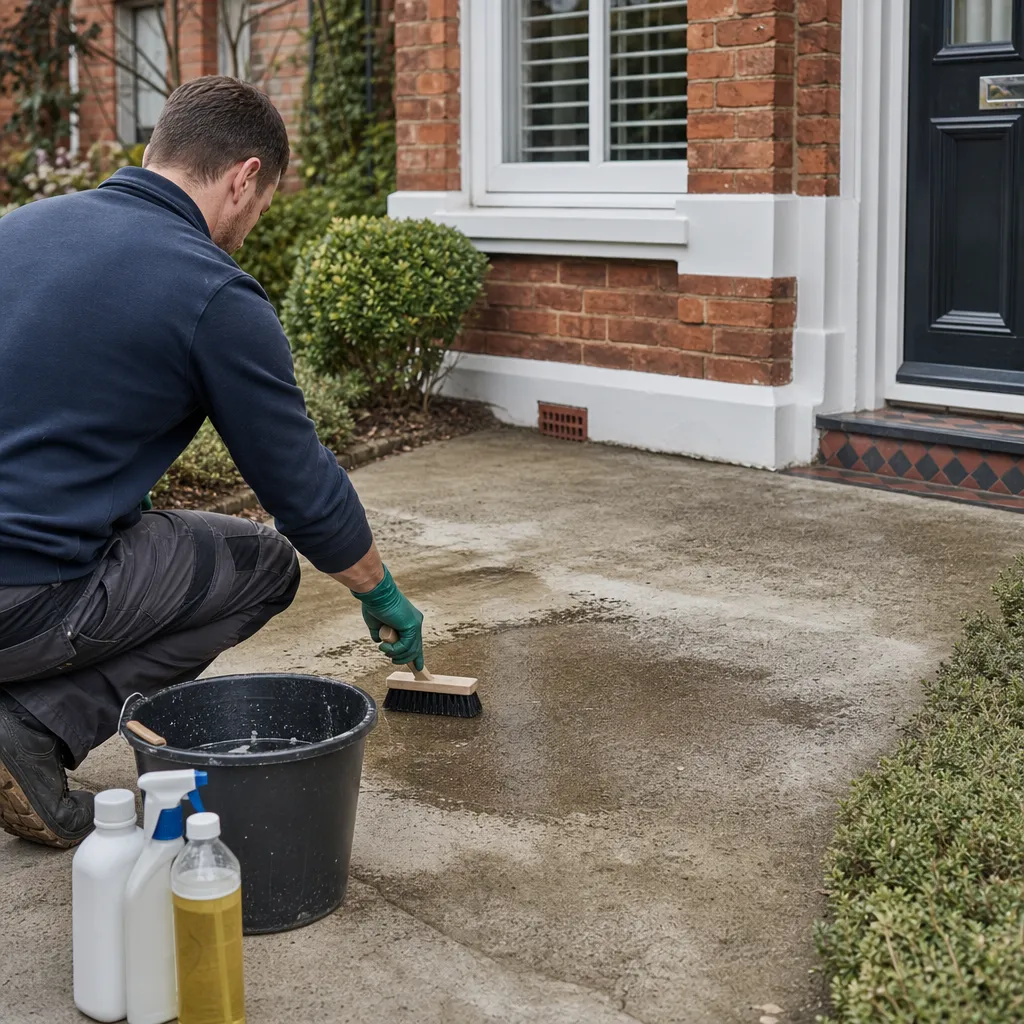
Methods for Removing Stains and Discolouration from Concrete
Concrete surfaces — whether a driveway, patio, garage floor, or garden path — are exposed to everything British weather and daily life can throw at them. Oil drips from cars, moss and algae in damp climates, rust from metal furniture legs, and the white chalky bloom of efflorescence are among the most common problems homeowners report. Choosing the wrong cleaning method can damage the surface, drive stains deeper, or create patchy bleaching that looks worse than the original mark.
Key points
- Oil and grease stains require a dedicated alkaline degreaser applied as a poultice or scrub, not just water pressure, to lift the contamination from the pore structure.
- Efflorescence — white salt deposits on the surface — is best treated with a diluted masonry acid wash (typically a 5–10% hydrochloric acid solution) after brushing off loose deposits; always neutralise afterwards with clean water.
- Rust stains respond to oxalic acid-based removers, commercially available at most builders' merchants, not bleach.
- Pressure washing is effective for surface soiling and biological growth at around 1,500–3,000 PSI, but pre-treatment is usually needed for embedded stains.
- Sealing concrete after thorough cleaning significantly reduces future staining and makes ongoing maintenance easier.
Identifying the stain type before you start
The most important step is diagnosing what you are dealing with. Applying the wrong product wastes time and money, and some chemicals can cause discolouration or surface damage.
Stain type | Typical appearance | Likely cause | Recommended approach |
|---|---|---|---|
Oil / grease | Dark patch, may spread over time | Vehicle leaks, cooking fat | Alkaline degreaser; poultice method for old stains |
Efflorescence | White or grey powdery bloom | Salts migrating through concrete | Dry brush, then diluted acid wash; neutralise afterwards |
Rust | Orange-brown streak or ring | Metal furniture, rebar, fixings | Oxalic acid-based remover |
Algae / moss / lichen | Green, black, or grey biological film | Damp, shaded conditions | Biocidal cleaner, then pressure wash |
Tyre marks | Black rubber transfer | Vehicle movement | Alkaline degreaser or solvent-based cleaner |
Paint or coating | Solid colour, may be peeling | Spilled paint, previous coating | Chemical stripper appropriate to paint type |
Mineral / limescale | White crusty deposit | Hard water run-off, wet screed | Diluted acid wash |
Cleaning methods explained
Pressure washing
A petrol or electric pressure washer is the starting point for most outdoor concrete cleaning. For domestic concrete, 1,500–2,500 PSI is generally sufficient; patterned imprinted or exposed aggregate surfaces may need lower pressures to avoid dislodging surface material. A rotating turbo nozzle or surface cleaner attachment gives more even results than a lance, which can leave visible striping.
Pressure washing alone will not remove oil, rust, or deeply embedded staining. Use it as a first pass to clear loose debris and biological matter before applying chemical treatments, then again as a final rinse step afterwards.
Alkaline degreasers for oil and grease
Apply the degreaser neat or diluted per the manufacturer's instructions, agitate with a stiff brush, and allow adequate dwell time — often 10–30 minutes for fresh spills, or several hours for old stains using a poultice (degreaser applied under absorbent material such as cat litter, then covered with plastic sheeting). Rinse thoroughly. Repeat applications are often necessary for deep or long-standing staining.
Acid washing for efflorescence and mineral deposits
Diluted hydrochloric acid (muriatic acid) or proprietary masonry acid wash products are effective on efflorescence. Work in a well-ventilated area, wear appropriate personal protective equipment (gloves, eye protection, chemical-resistant clothing), pre-wet the surface, apply the diluted solution, agitate lightly, and rinse thoroughly with clean water. Neutralise with a diluted bicarbonate of soda solution or a proprietary neutraliser. Do not use acid on coloured or polished concrete without testing on an inconspicuous area first.
Oxalic acid removers for rust
Proprietary rust stain removers containing oxalic acid are widely available at builders' merchants and DIY stores. Apply per the manufacturer's instructions, allow to work, agitate, and rinse. Multiple applications may be needed for deep rust penetration. Address the rust source — corroding rebar, metal furniture legs — to prevent recurrence.
Biological growth: algae, moss, and lichen
Use proprietary biocidal treatments conforming to the Biocidal Products Regulation (BPR). Apply the biocide, allow the dwell time the manufacturer specifies, then pressure wash. Lichen is particularly slow to lift and may need a repeat treatment several weeks later once growth dies back. Improving drainage and reducing shade around the surface reduces regrowth.
What not to assume
- Bleach removes all stains. Domestic bleach kills algae and lightens some organic staining but has no effect on oil, rust, or efflorescence. Over-use can degrade the concrete surface over time.
- Pressure washing is risk-free. Excessive pressure on aged or damaged concrete can erode the surface, open existing cracks, and delaminate thin surface layers.
- One application is always enough. Deeply penetrated stains — particularly oil — may need three or more treatments spaced over several days or weeks.
- Chemical products are safe without precautions. Acid-based cleaners and strong degreasers can cause serious skin and eye injuries; always read the safety data sheet before use.
Sealing concrete after cleaning
Once the concrete is clean and fully dry — allow at least 48–72 hours in typical UK conditions — applying a concrete sealer significantly reduces future staining. Penetrating sealers are generally preferred for exterior surfaces as they do not create a film that can peel. Film-forming sealers provide a sheen where that effect is wanted. Verify that the product is appropriate for the concrete type and outdoor exposure conditions before applying.
Red flags: when cleaning may not be enough
- Staining is accompanied by cracking, spalling, or surface delamination — cleaning will not address the underlying deterioration.
- Efflorescence keeps returning after treatment, which may indicate ongoing water ingress or a drainage problem worth investigating professionally.
- Rust staining is accompanied by visible cracking along rebar lines, which can signal reinforcement corrosion within the concrete — a structural concern requiring professional assessment.
- Large areas of deep oil contamination near a watercourse may require specialist environmental advice before treatment begins.
When to get professional help
For most domestic stain removal, a well-informed homeowner can achieve good results. Consider engaging a professional concrete cleaning contractor when:
- The stained area is large and professional-grade equipment would produce significantly better results.
- Rust staining is accompanied by cracking or surface lifting that may indicate reinforcement corrosion.
- Recurring efflorescence points to underlying water ingress that needs a damp specialist or surveyor to assess.
- The surface is high-value or architecturally significant and you cannot risk causing damage.
How Housey can help
If you are considering professional concrete cleaning, resurfacing, or a new driveway installation, Housey can connect you with vetted driveway installers and concrete specialists who can assess your surface, advise on the most suitable treatment, and carry out professional work.
Frequently asked questions
Can I remove old oil stains from a concrete driveway?
Old oil stains are harder to remove than fresh ones because the oil has penetrated further into the concrete's pore structure. A poultice method — applying a generous layer of degreaser sealed under plastic sheeting overnight — is usually more effective than a quick scrub. Multiple treatments followed by a pressure wash typically give the best result. Very old, deeply embedded staining may only partially lift.
Will pressure washing damage my concrete?
Pressure washing at appropriate pressures (1,500–2,500 PSI for most domestic concrete) is generally safe. Older or damaged concrete is more vulnerable. Avoid holding a lance nozzle too close to the surface, and use a wide-angle or rotating nozzle rather than a narrow jet. Decorative surfaces such as exposed aggregate or imprinted concrete benefit from lower pressures.
How do I stop efflorescence coming back?
Efflorescence returns when water moves through concrete, carrying soluble salts to the surface. Reducing water ingress — improving drainage, sealing cracks, and applying a penetrating sealer after thorough cleaning — helps reduce recurrence. If it keeps returning despite these steps, a surveyor or damp specialist should assess the water source.
Is acid washing safe to carry out at home?
Diluted acid wash products are widely used by homeowners for concrete cleaning, but they require care. Always wear gloves, eye protection, and old clothing; work in a well-ventilated area; dilute correctly; neutralise thoroughly; and rinse with plenty of clean water. If you are not comfortable with chemical handling, this is a standard job for a professional concrete cleaning contractor.
Sources and further reading
- COSHH guidance on chemical cleaning agents — Health and Safety Executive (HSE)
- Concrete maintenance and surface care — The Concrete Society
- Biocidal Products Regulation (BPR) overview — Health and Safety Executive (HSE)
Useful next reads
 Improvement & Build
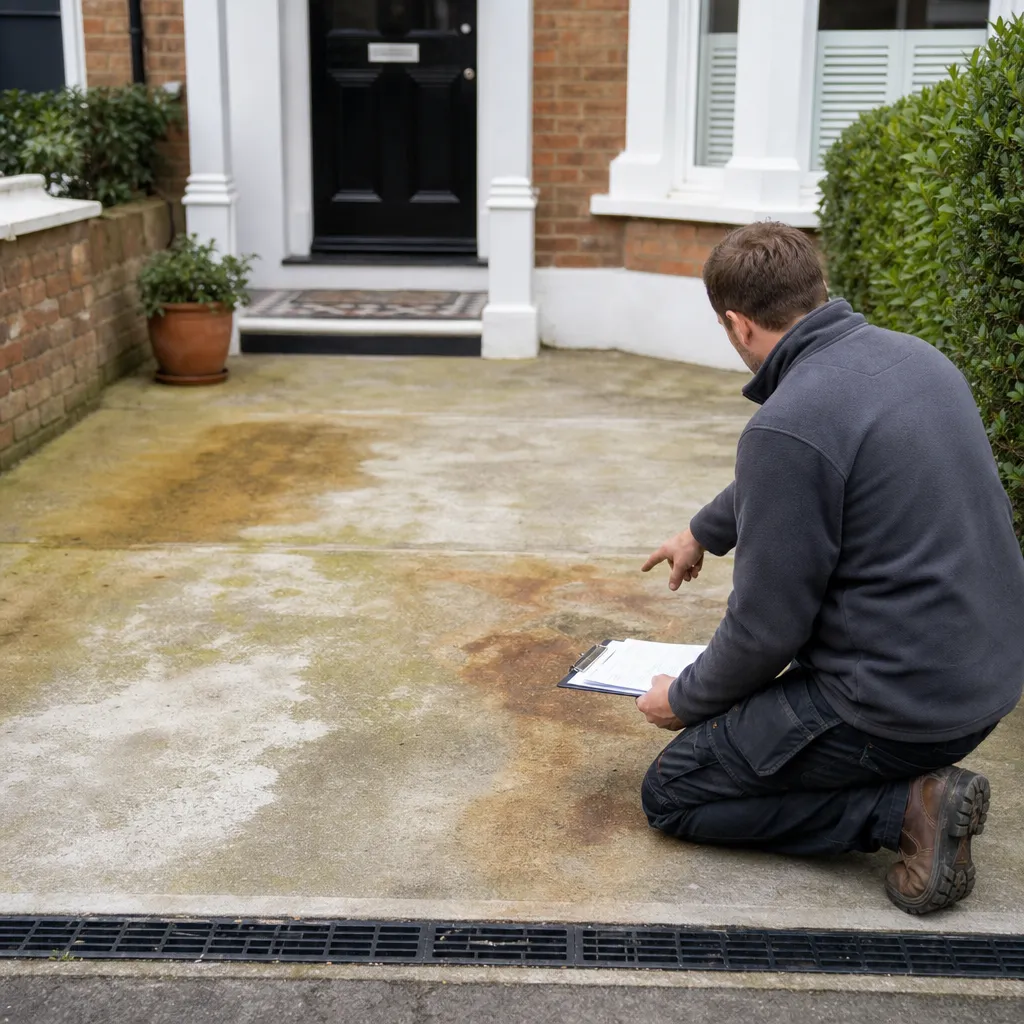
Surface Staining and Discolouration in Concrete Flatwork
Surface staining and discolouration in concrete flatwork has several distinct causes, each requiring a different remedy.
 Improvement & Build
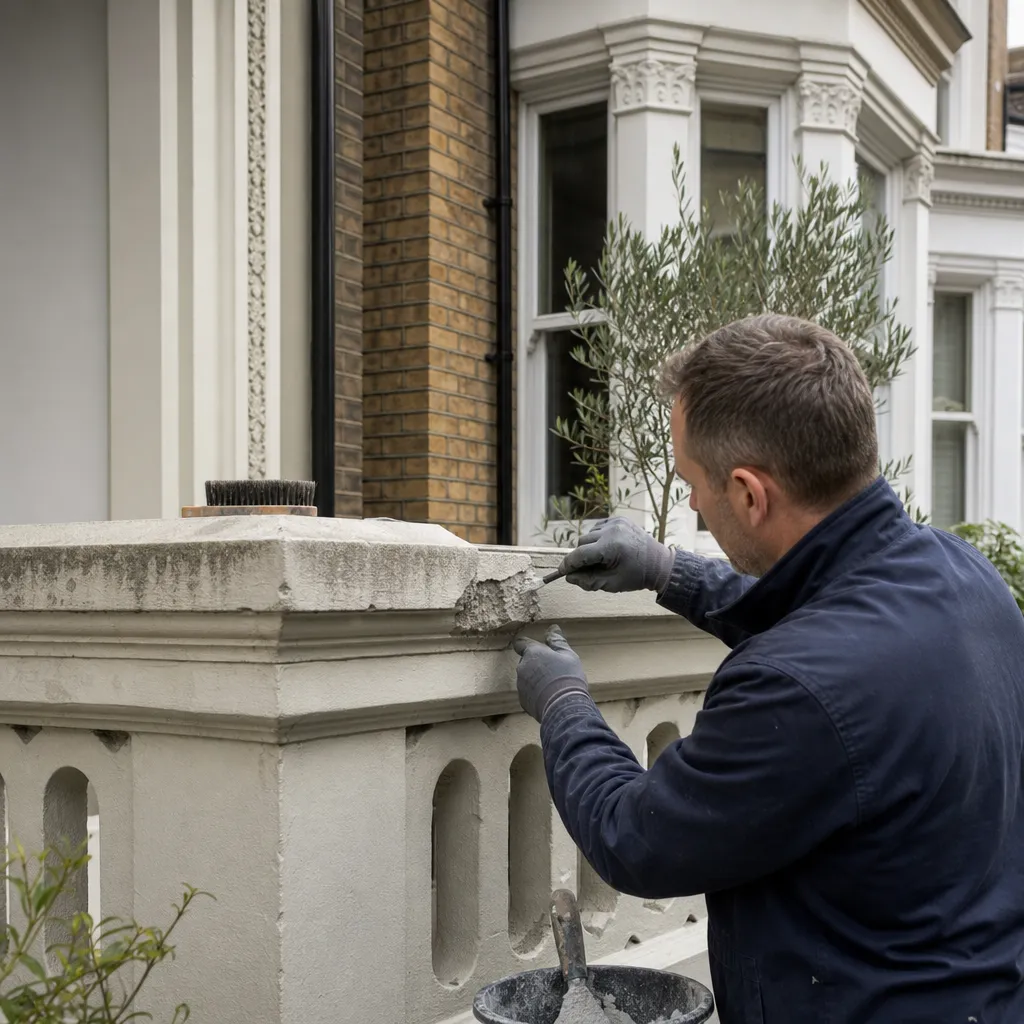
Repair and Restoration Techniques for Architectural Concrete
Architectural concrete repair involves matching the original mix colour and texture, not just filling the defect.
 Improvement & Build
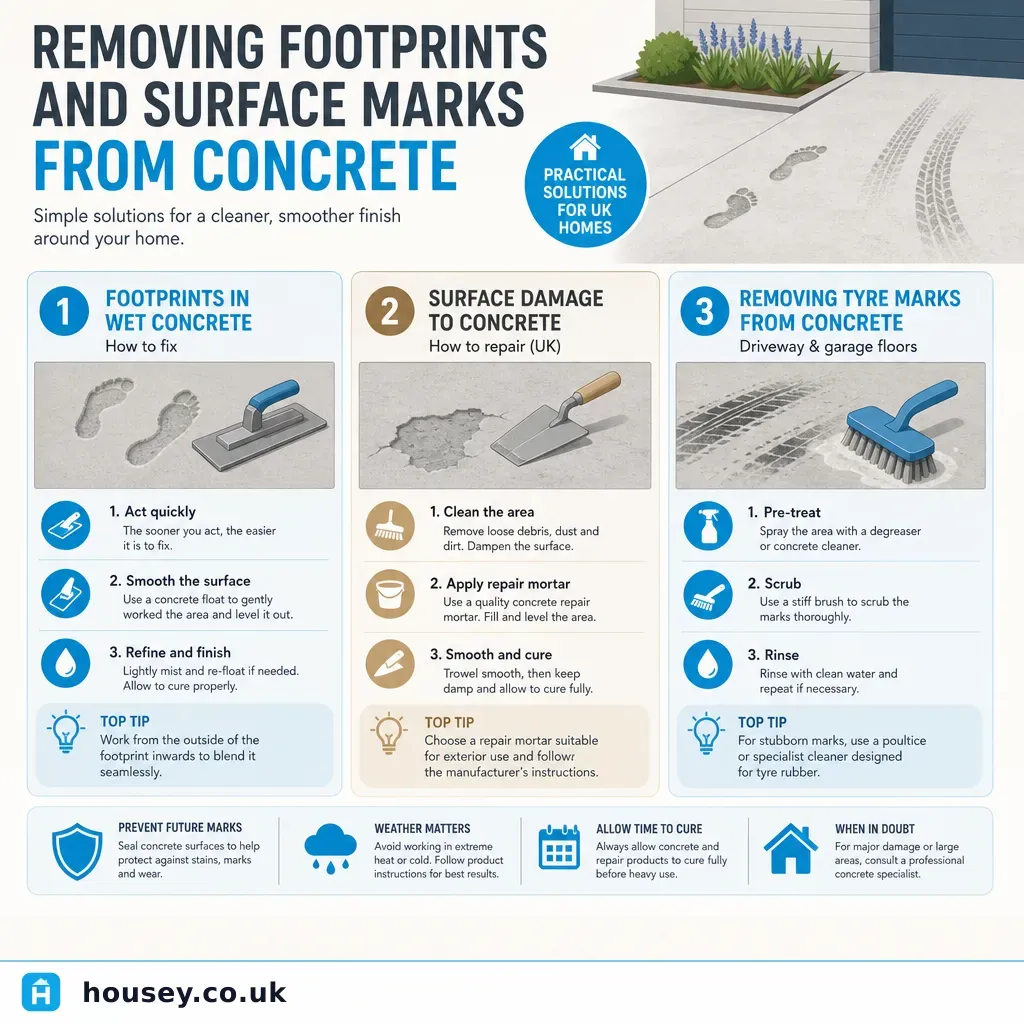
Removing Footprints and Surface Marks from Concrete
Footprints and marks in fresh concrete under 4–6 hours old can often be re-floated or trowelled smooth by a skilled finisher before initial set occurs.
 Improvement & Build
Essential Steps for Driveway Installation
Installing a driveway in England requires planning permission only when using an impermeable surface (standard tarmac, concrete, or block paving) on a front garden area over 5 m².
 Improvement & Build
Preparing Walls for Patching: Surface Preparation Best Practice
Durable wall patching starts with removing all loose material, cutting back to a clean and stable edge, cleaning the substrate, and priming with a construction-grade PVA bonding agent before applying any filler or plaster.