Surface Staining and Discolouration in Concrete Flatwork
By Housey · Last reviewed 25th of May 2026
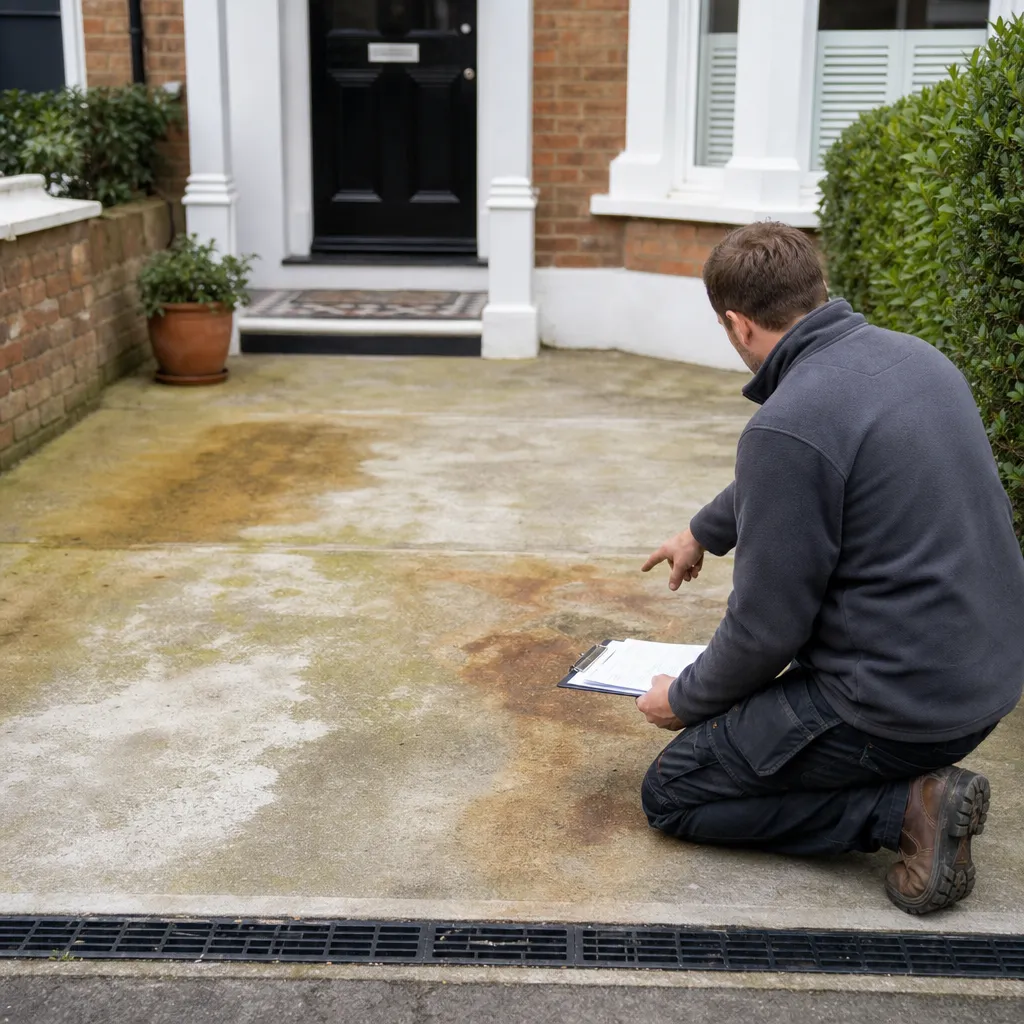
Surface Staining and Discolouration in Concrete Flatwork
Concrete driveways, paths, and patios are among the most durable surfaces in a UK garden, but they are not immune to staining and discolouration. The problem often develops gradually — white powdery deposits after a wet winter, dark patches beneath a parked car, or green biological growth on a north-facing path — and the correct remedy depends entirely on identifying the cause correctly. Applying the wrong treatment can set stains permanently or damage the surface matrix.
Key points
- Efflorescence — white or grey powdery deposits caused by soluble salts migrating to the surface — is the most common form of discolouration in new concrete and typically resolves naturally within 12–24 months as the concrete carbonates.
- Alkaline degreasers (pH 9–13) are significantly more effective on petroleum-based oil staining than acidic cleaners; using the wrong pH product delays remediation and can fix staining into the surface pores.
- Rust-coloured streaks and spots usually indicate iron-rich aggregate, corroding reinforcement bars near the surface, or iron fittings above the concrete — not the concrete itself oxidising.
- Penetrating silane or siloxane sealers allow concrete to breathe while significantly reducing surface porosity; they are generally preferred for driveways over film-forming sealers, which can peel if moisture is trapped below.
- Hydrochloric (muriatic) acid is sometimes recommended for concrete cleaning but requires COSHH-compliant handling and should only be used by experienced contractors; it can damage the surface matrix and harm surrounding drainage and vegetation.
What causes concrete surface staining?
Concrete staining falls into several distinct categories with different origins and remedies. Using the right treatment for each type is essential to avoid making the problem worse.
Stain type | Typical appearance | Common cause | Likely remedy |
|---|---|---|---|
Efflorescence | White or grey powdery patches | Soluble salts migrating to surface as water evaporates | Dry brushing; dilute acidic cleaner if persistent |
Oil and grease | Dark, spreading patches | Vehicle leaks, cooking or maintenance spillage | Alkaline degreaser; poultice for deep stains |
Rust staining | Orange-brown streaks or spots | Corroding reinforcement, iron fittings, or iron-rich aggregate | Oxalic or phosphoric acid rust remover; address the source |
Mould and algae | Green or black patches | Damp, shaded conditions; poor drainage | Biocide cleaner; improve drainage or light exposure |
Tyre marks | Black rubber deposits | Vehicle tyre tracking, especially when warm | Specialist rubber or tyre mark remover |
Chemical spillage | Variable colour change | Fertiliser, de-icer, paint, or solvents | Depends on chemical; neutralise and rinse thoroughly |
Curing variation | Blotchy, mottled colour | Inconsistent curing conditions or batch variation | Often cosmetic; overlay system or sealer may improve appearance |
Efflorescence in detail
Efflorescence is particularly common in freshly laid concrete and newly installed block paving. Water moving through the concrete dissolves soluble calcium compounds; as it evaporates at the surface, calcium carbonate deposits are left behind. In most situations, normal weathering — rain and UV exposure — reduces efflorescence progressively over one to two years. If deposits are heavy or persist beyond two years on an established surface, investigate whether there is a moisture ingress or drainage issue driving continued water movement through the slab.
Mould, algae, and biological growth
Green or black biological growth is common on north-facing patios and paths across the UK, where moisture and shade combine to create ideal conditions. Pressure washing temporarily clears visible growth, but without a biocide treatment the spores remain and regrowth typically returns within months. Improving drainage or trimming back overhanging planting to increase light exposure can reduce recurrence without repeated chemical intervention.
What not to assume about concrete staining
- Do not assume pressure washing alone will fix all stains. Oil, rust, and chemical stains penetrate porous concrete and require chemical treatment, not just mechanical force. Pressure washing without prior chemical treatment can drive contamination further into the surface.
- Do not assume all discolouration indicates a defect. Batch and curing variation in freshly poured concrete often produces blotchy colour variation — this is a normal characteristic of the material, not a manufacturing fault, and typically evens out over time.
- Do not assume bleach is safe on all concrete. Household bleach (sodium hypochlorite) can lighten some organic staining but may cause further discolouration on certain aggregate or pigmented mixes and is harmful to drainage when used in quantity. Specialist cleaners formulated for the specific stain type are generally safer and more effective.
- Do not assume surface staining is always cosmetic. Extensive rust staining accompanied by surface cracking or spalling may indicate corroding reinforcement — a structural matter requiring professional assessment, not a cleaning problem.
Choosing the right cleaning approach
Matching the treatment to the stain type avoids compounding the problem:
- Efflorescence: Dry brush first to remove loose deposits. If persistent after weathering, apply a dilute acidic cleaner formulated for concrete (pH 2–4) following the manufacturer's instructions. Rinse thoroughly and direct run-off away from planted areas.
- Oil and grease: Apply a penetrating alkaline degreaser generously, allow to dwell (typically 15–30 minutes), scrub with a stiff brush, then rinse. For deeply penetrating or old stains, a clay or bentonite poultice mixed with degreaser can draw oil out of the pores over 24–48 hours. Multiple treatment cycles are often needed.
- Rust stains: Proprietary rust removers containing oxalic or phosphoric acid are effective on surface rust staining. Identify and treat the underlying source of iron to prevent recurrence.
- Algae and mould: Apply a biocide path and patio cleaner, allow the dwell time stated on the product label, then rinse. Reapply seasonally in persistently damp conditions.
- Tyre marks: Specialist rubber remover or acetone-based products. Always test any solvent-based product in an inconspicuous area first.
Protecting concrete with a sealer
A quality sealer reduces future staining by limiting surface porosity. Penetrating silane or siloxane sealers are generally preferred for driveways and paths — they do not alter surface appearance, resist UV degradation, and allow the concrete to breathe rather than trapping moisture below. Film-forming sealers (acrylic, polyurethane) offer a higher-gloss finish and strong protection but can peel if moisture is present in the slab at the time of application and may need more frequent reapplication.
Apply any sealer only to thoroughly clean, dry concrete. Typical reapplication intervals are 3–5 years. Sealers prevent future staining but cannot restore deep-set existing staining — thorough cleaning before sealing is essential.
When to get professional help
Surface staining is usually a maintenance issue, but seek professional advice if:
- Rust staining is accompanied by surface cracking, raised bumps, or delamination — this may indicate corroding steel reinforcement requiring structural remediation.
- The concrete surface is spalling (flaking or crumbling) over a large area rather than at isolated points.
- Discolouration is accompanied by settlement, unevenness, or subsidence — which may indicate a sub-base or drainage failure beneath the slab.
- You are considering strong acid or chemical treatments and are not familiar with COSHH safe handling and disposal requirements.
- The concrete is in a conservation area or forms part of a listed building where surface treatments may require consent.
How Housey can help
If you are looking to restore, reseal, or replace a discoloured or stained concrete driveway, Housey can connect you with vetted driveway installers who can assess the extent of the problem and advise on cleaning, resurfacing, or full replacement options.
Frequently asked questions
Will efflorescence on my new concrete driveway go away on its own?
In most cases, yes. Efflorescence is common on newly laid concrete and block paving and tends to reduce naturally through weathering over 12 to 24 months as the surface carbonates. If deposits are heavy or persist beyond two years, a mild acid-based efflorescence remover can help. Persistent efflorescence on an older surface may indicate a drainage or moisture problem worth investigating.
Is it safe to use a pressure washer on a concrete driveway?
Pressure washing is safe at moderate pressures (1,500–2,500 psi) for general cleaning and loosening surface contamination. Very high pressures can damage the surface, particularly on brushed or exposed-aggregate finishes. For oil, rust, or deep biological staining, chemical pre-treatment should come first. Always direct run-off away from soft landscaping and drainage gullies.
Can I paint or coat over concrete staining?
Concrete paint and overlay systems can cover staining, but surface preparation is critical — residual oil, efflorescence, or biological growth will cause coatings to fail prematurely. The surface must be thoroughly cleaned, degreased, and allowed to dry completely before any coating is applied. Coatings will require periodic reapplication every few years depending on the product and the level of traffic.
Does surface staining affect my driveway's structural integrity?
Most surface staining is purely cosmetic and does not affect structural performance. However, extensive rust staining over steel reinforcement, persistent moisture-related spalling, or chemical attack from de-icing salts over many years can weaken the surface layer. If you notice deep cracking, crumbling, or significant unevenness alongside discolouration, a professional inspection is advisable before applying any surface treatment.
Sources and further reading
- The Concrete Centre – guidance on concrete appearance and maintenance — The Concrete Centre
- HSE COSHH guidance for use of chemical cleaning agents — Health and Safety Executive
- British Standard BS 8204: Screeds, bases and in-situ floorings — BSI Group
- Marshalls maintenance guides for block paving and concrete surfaces — Marshalls
Useful next reads
 Improvement & Build
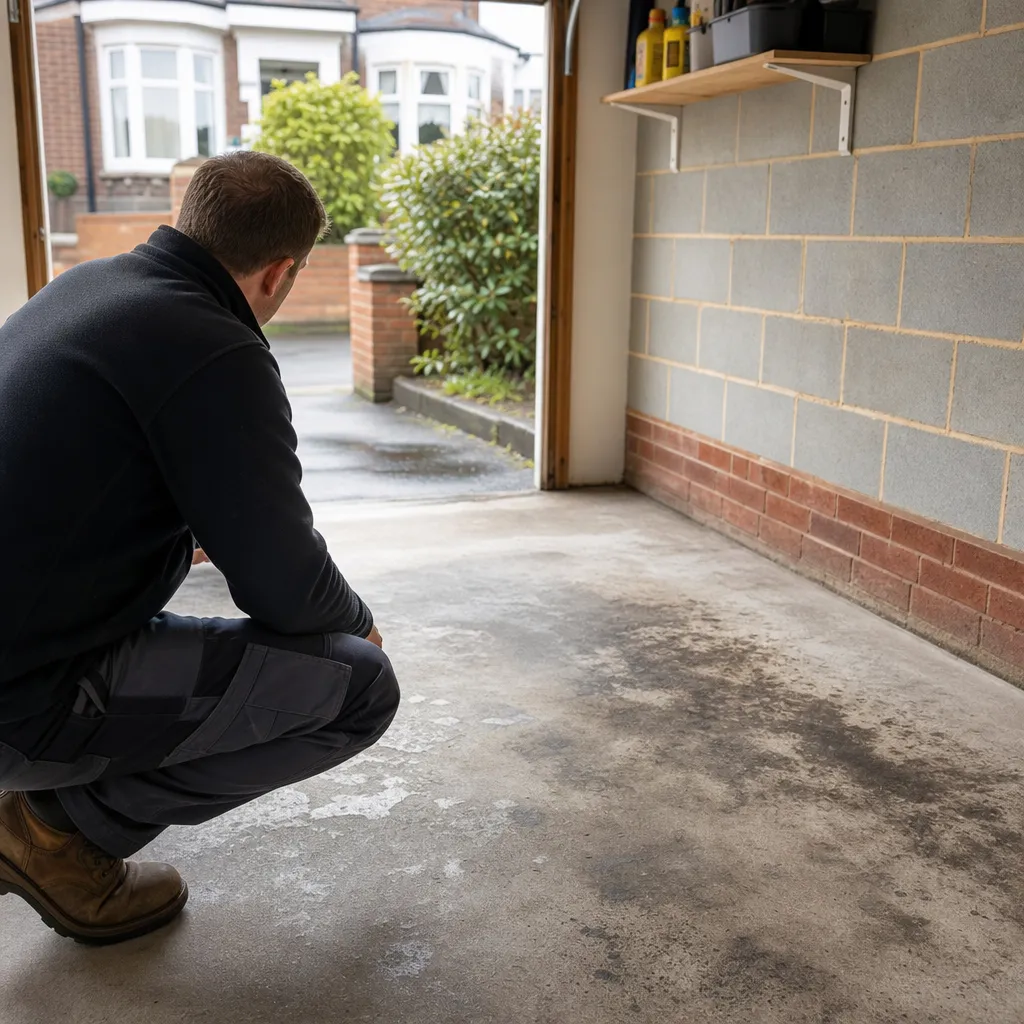
Understanding Concrete Garage Floor Discolouration: Causes and Solutions
Concrete garage floor discolouration in UK homes is most commonly caused by oil or fluid leaks, efflorescence (white mineral deposits from moisture), tyre rubber plasticiser transfer, algae or mould growth, or uneven curing during the original pour.
 Improvement & Build
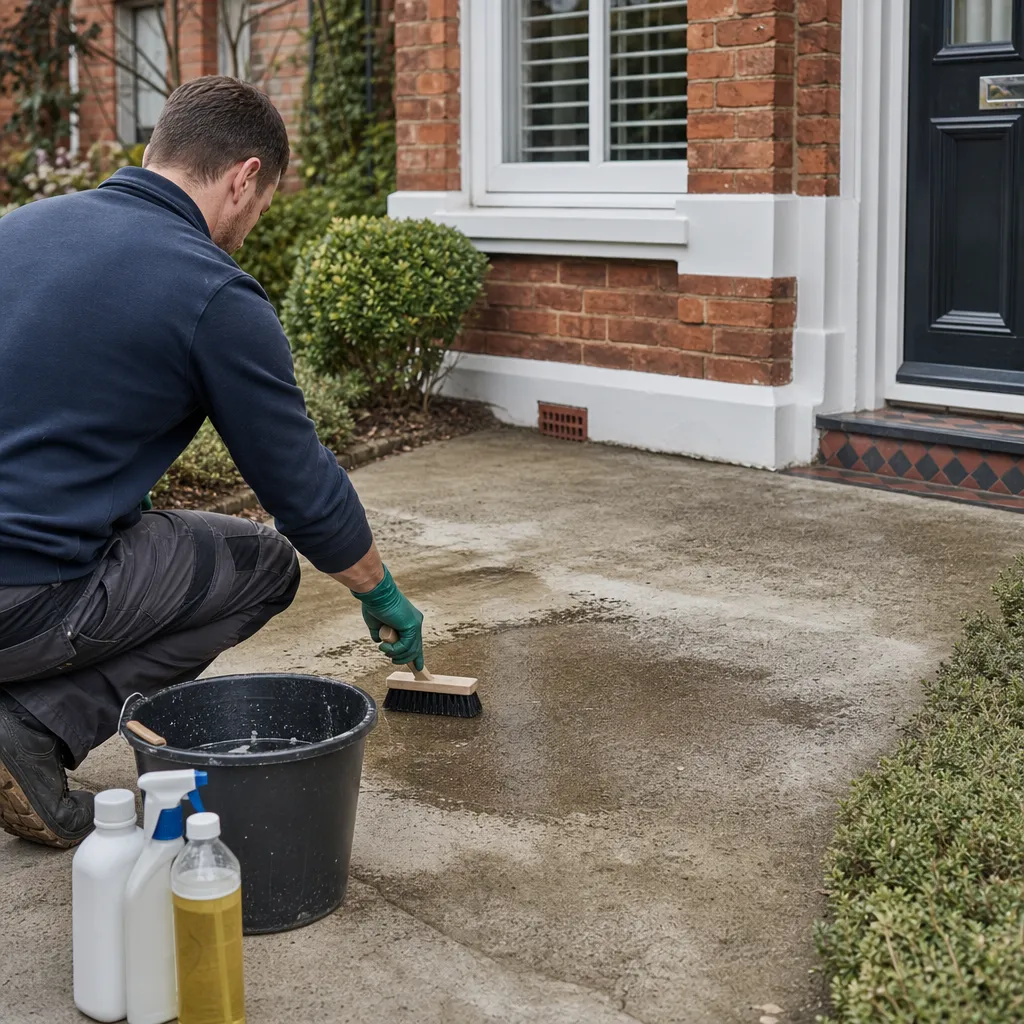
Methods for Removing Stains and Discolouration from Concrete
Concrete stains are best treated by type: use an alkaline degreaser for oil and grease, a diluted acid wash for efflorescence, and an oxalic acid-based remover for rust.
 Improvement & Build
Essential Steps for Driveway Installation
Installing a driveway in England requires planning permission only when using an impermeable surface (standard tarmac, concrete, or block paving) on a front garden area over 5 m².
 Improvement & Build
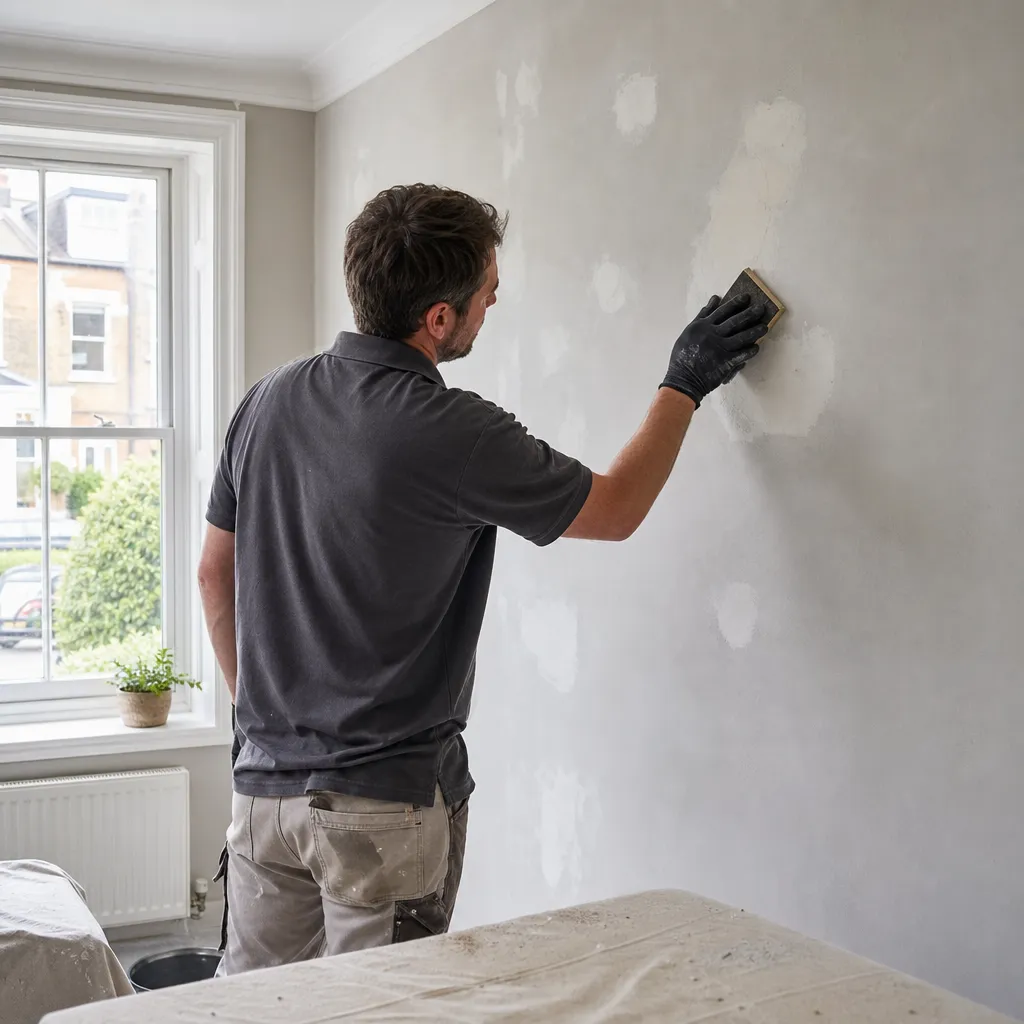
Preparing Walls for Patching: Surface Preparation Best Practice
Durable wall patching starts with removing all loose material, cutting back to a clean and stable edge, cleaning the substrate, and priming with a construction-grade PVA bonding agent before applying any filler or plaster.
 Improvement & Build
Window Screens and Insect Mesh: Options and Installation
UK window screens fall into four main types: fixed frame, roller retractable, pleated folding, and magnetic snap-fit.