Repair and Restoration Techniques for Architectural Concrete
By Housey · Last reviewed 25th of May 2026
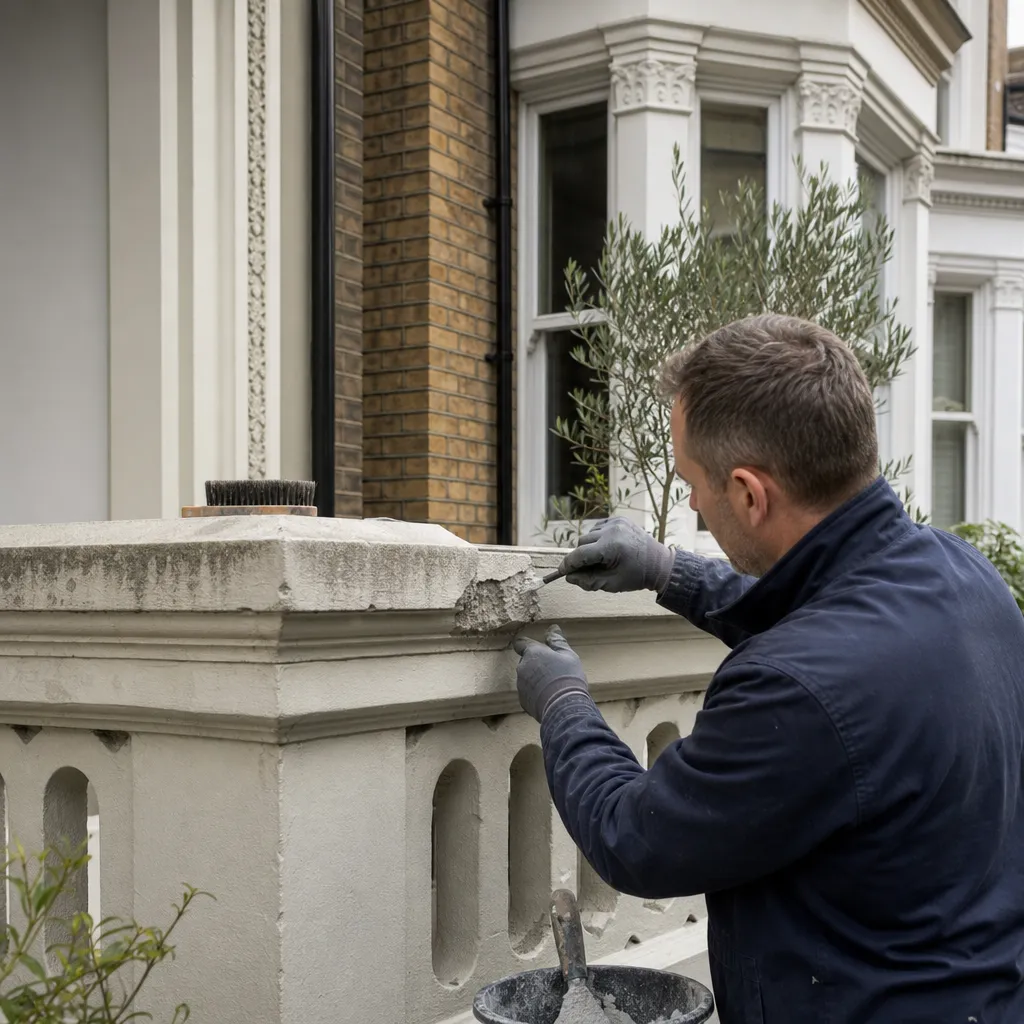
Repair and Restoration Techniques for Architectural Concrete
Architectural and decorative concrete — including fair-faced in-situ pours, exposed aggregate finishes, polished concrete floors, and precast panels — requires a more considered approach to repair than ordinary utility concrete. A mismatch in colour, texture, or mix design leaves visible ghost repairs that can be more distracting than the original defect. Many UK buildings from the 1950s to the 1990s used concrete prominently as a design material, and a number are now showing signs of age that call for careful, informed remediation.
Key points
- Repair products for architectural and structural concrete should conform to BS EN 1504, the European standard for concrete protection and repair, which classifies systems by repair principle and method.
- Colour and texture matching is the central challenge: cement type, aggregate, water-cement ratio, and formwork surface all affect final appearance, and fresh repair mortar will look different from weathered original concrete for months or years.
- Carbonation and chloride ingress are the two main causes of reinforcement corrosion and associated spalling in UK concrete; a correct diagnosis is essential before specifying a repair system.
- Repairs to structural elements — load-bearing walls, beams, flat roof slabs, and post-tensioned members — require structural engineering involvement and may trigger building control notification.
- Protective coating systems, including silane and siloxane penetrating sealers and anti-carbonation coatings, are typically specified after repair to extend the structure's service life in the UK climate.
Understanding the causes of deterioration
Effective repair starts with a correct diagnosis. The most common deterioration mechanisms in UK architectural concrete are:
Carbonation: Carbon dioxide in the atmosphere reacts with calcium hydroxide in the cement paste, gradually reducing the pH. Once the pH falls low enough, the protective passivation layer on reinforcing steel breaks down, corrosion begins, and the expanding rust products cause cracking and spalling. Buildings constructed before durable cover specifications became standard in the 1980s are particularly susceptible.
Chloride ingress: In coastal locations or where de-icing salts are used — car park decks, bridge soffits, exposed walkways — chloride ions penetrate the concrete and initiate corrosion at lower pH levels than carbonation. This requires a different repair specification.
Freeze-thaw damage: UK climates with repeated freeze-thaw cycles can cause surface scaling and disaggregation in porous concrete or concrete with insufficient air entrainment.
Alkali-silica reaction (ASR): In certain UK regions, reactive aggregates in older mixes produce characteristic map cracking. Repairs alone do not stop ASR; engineering assessment of the mechanism and its extent is needed first.
Shrinkage and settlement cracks: May be cosmetic or structural depending on width, depth, pattern, and location. Crack widths above 0.3 mm in structural elements warrant professional assessment.
Repair methods for architectural concrete
Repair type | Suitable for | Products and approach | Key notes |
|---|---|---|---|
Surface bug holes and blowholes | Cosmetic pinholes on fair-faced surfaces | Cementitious cosmetic mortar matched to original mix | Colour matching critical; test panels recommended |
Spalled patches with exposed rebar | Carbonation or chloride-induced corrosion | Break out to sound concrete, treat or replace rebar, apply corrosion inhibitor, reinstate with BS EN 1504-compliant mortar | Structural assessment needed for larger patches |
Dormant cracks | Settled, non-moving cracks | Low-viscosity epoxy resin injection or cementitious crack filler | Confirm crack is dormant before sealing |
Live or moving cracks | Active structural movement | Flexible sealant or movement joint | Investigate cause before repairing |
Large delamination or spalled areas | Extensive surface breakdown | Sprayed concrete (shotcrete) or formed concrete replacement | Requires specialist contractor and structural review |
Surface scaling | Freeze-thaw damage, surface porosity | Re-profiling mortar plus protective coating | Address root cause first |
Colour and texture restoration | Weathered or inconsistent appearance | Concrete staining, textured coatings, or decorative overlay | Product suitability varies by surface and finish target |
Which professional do I need?
Situation | Professional to involve |
|---|---|
Cosmetic cracks or bug holes on a house facade | Experienced concrete repair contractor; architect if aesthetics are critical |
Spalling on a parapet, soffit, or retaining wall with exposed rebar | Structural engineer for assessment; specialist concrete repair contractor for works |
Cracking on a load-bearing wall, column, or beam | Structural engineer — do not proceed without engineering sign-off |
Historic or listed building concrete | Conservation architect; Historic England guidance applies |
Large-scale facade or structural repair | Principal Designer (CDM 2015 may apply); structural engineer; specialist contractor |
Polished concrete floor restoration | Specialist concrete floor polishing contractor |
Suspected alkali-silica reaction (ASR) | Concrete petrographer for laboratory diagnosis |
Colour and texture matching: the key challenge
For fair-faced architectural concrete, the visual outcome of a repair often matters as much as the structural result. Matching the original appearance depends on several variables that are rarely documented on existing buildings:
- Cement type and source: White Portland cement, grey Portland cement, and blended cements produce different base colours. Historical mixes may use cement types no longer manufactured.
- Aggregate: Type, colour, size, and grading significantly affect surface appearance, particularly in exposed aggregate finishes.
- Water-cement ratio: Affects colour depth and surface density.
- Formwork texture: Board-marked or textured formwork creates a surface pattern that is very difficult to replicate in localised patches.
- Weathering: Original concrete has weathered to its current colour; fresh repair mortar will look conspicuously different until it weathers in, which can take months or years.
For significant architectural projects, specialist contractors prepare test panels approved by the architect or client before full repair commences. This is also good practice for prominent residential features such as board-marked concrete garden walls or architectural canopies.
What to ask before accepting a quote
- What diagnosis has been done to confirm the cause of deterioration, and will further investigation — carbonation depth testing, chloride testing, or half-cell potential survey — be carried out before the repair specification is finalised?
- Which BS EN 1504 repair principle and method are you proposing, and why is this appropriate for the diagnosed deterioration?
- How will colour and texture matching be achieved, and will test panels be produced for approval?
- Who will carry out the works, and what relevant experience and accreditations do they hold?
- Is a structural engineer involved in the design of this repair?
- Will the works trigger building control notification or require a completion certificate?
- What protective system, if any, is specified after the repair, and what is its design life?
- Is VAT included in the quote?
When to get professional help
Architectural concrete repair is not a mainstream DIY task. Seek professional assessment when:
- Cracking or spalling is on a structural element — column, beam, load-bearing wall, or flat roof slab.
- Rebar is exposed or rust staining is visible through the surface, particularly if accompanied by cracking along the bar line.
- The building is listed or in a conservation area.
- Crack widths exceed 0.3 mm or appear to be growing over time.
- Previous repairs have failed or the same defects keep recurring.
How Housey can help
Housey connects UK homeowners with vetted contractors for concrete and driveway works. If you need an assessment of a concrete surface or a quote for repair or restoration, visit our driveway installers and concrete specialists page to compare professionals in your area.
Frequently asked questions
Do concrete repairs require building control approval?
Cosmetic repairs to non-structural elements generally do not require building control notification. Structural concrete repairs — particularly to load-bearing elements, or where the repair changes how a structure performs — may trigger a notification obligation under the Building Regulations. If in doubt, check with your local building control body or a structural engineer before proceeding.
How long do architectural concrete repairs last?
A correctly specified and executed repair using BS EN 1504-compliant materials, with appropriate protective coating applied afterwards, should have a design life of 20–30 years or more. Poor diagnosis, incorrect product selection, or inadequate surface preparation are the most common reasons repairs fail well before that point.
Can I repair fair-faced concrete myself?
Small cosmetic repairs — filling surface bug holes, touching up minor chips — are within the capability of a careful homeowner using appropriate proprietary repair products. Any repair involving exposed reinforcement, structural elements, or significant spalling should be carried out by a professional with relevant experience and BS EN 1504-compliant materials.
What causes white deposits to appear on concrete?
White deposits are usually efflorescence — soluble salts that migrate to the surface with moisture and are deposited as the water evaporates. It is common in new concrete and in conditions of high moisture movement, and is typically a cosmetic issue. Persistent efflorescence may indicate ongoing water ingress that is worth investigating professionally.
Sources and further reading
- BS EN 1504: Products and systems for the protection and repair of concrete structures — British Standards Institution (BSI)
- Concrete repair guidance and technical reports — The Concrete Society
- Concrete in historic buildings — Historic England
- Construction Design and Management Regulations 2015 — Health and Safety Executive (HSE)
Useful next reads
 Improvement & Build
Methods for Removing Stains and Discolouration from Concrete
Concrete stains are best treated by type: use an alkaline degreaser for oil and grease, a diluted acid wash for efflorescence, and an oxalic acid-based remover for rust.
 Improvement & Build
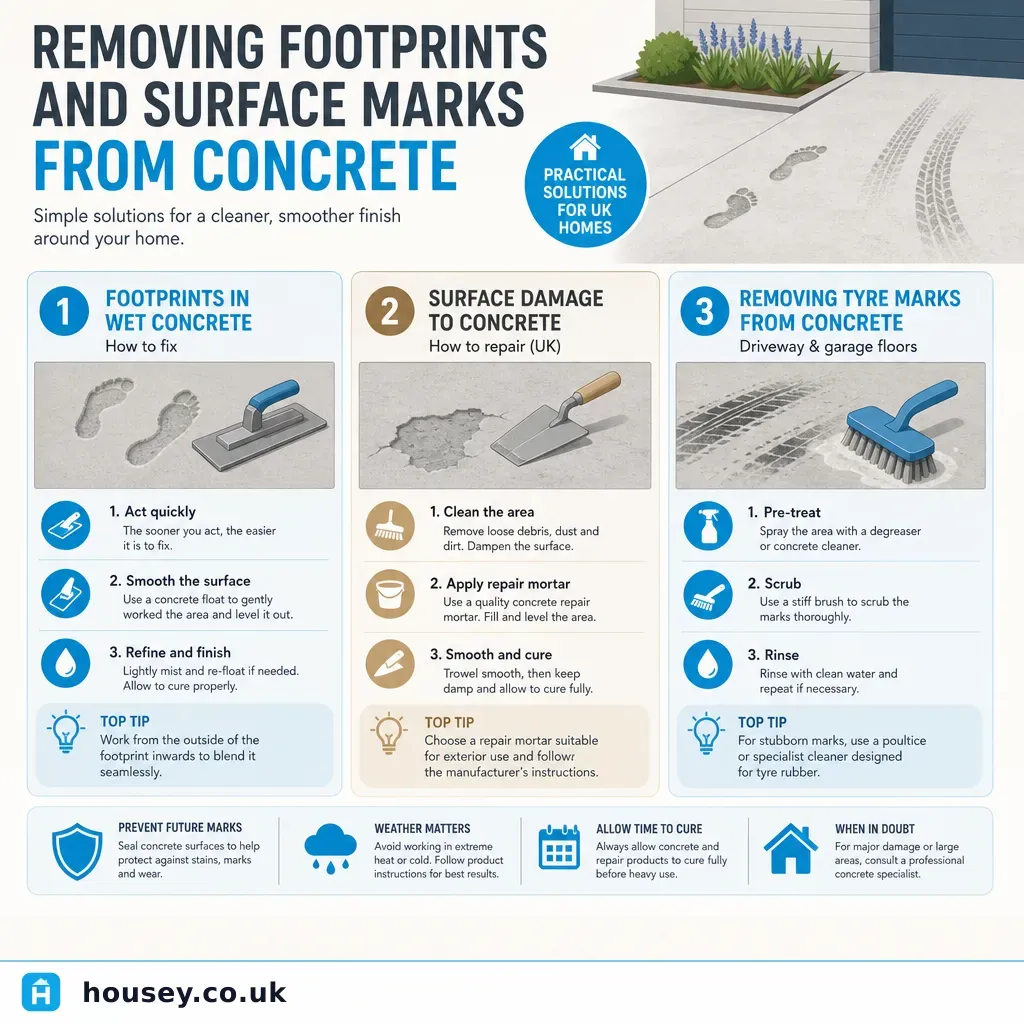
Removing Footprints and Surface Marks from Concrete
Footprints and marks in fresh concrete under 4–6 hours old can often be re-floated or trowelled smooth by a skilled finisher before initial set occurs.
 Improvement & Build
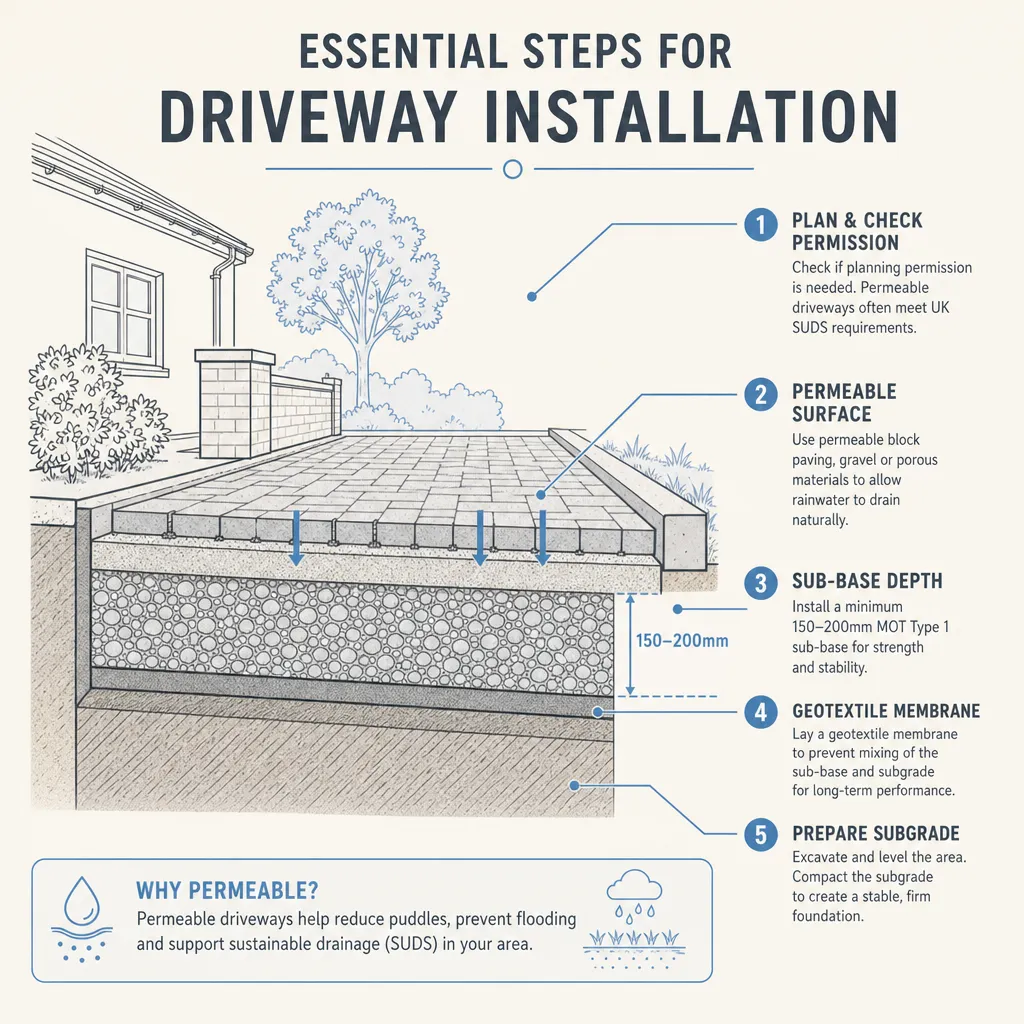
Essential Steps for Driveway Installation
Installing a driveway in England requires planning permission only when using an impermeable surface (standard tarmac, concrete, or block paving) on a front garden area over 5 m².
 Improvement & Build
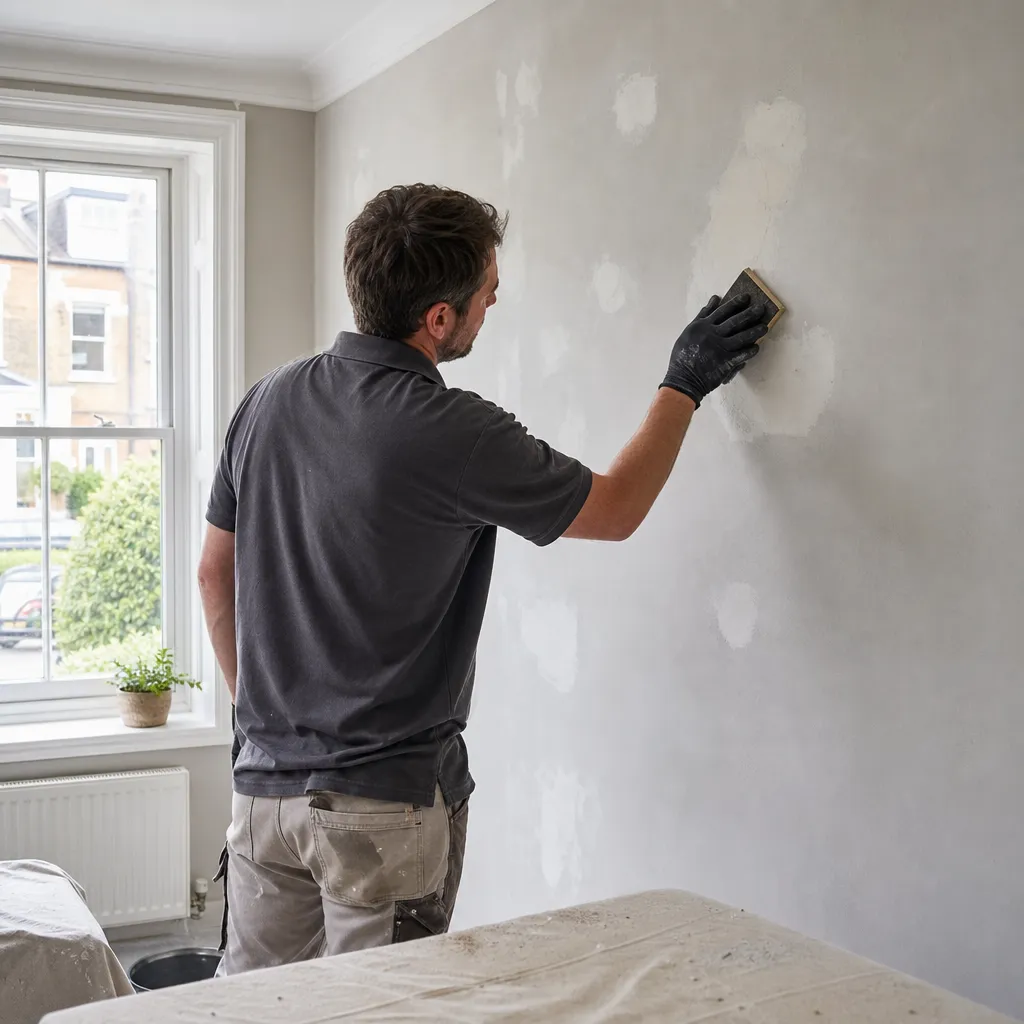
Preparing Walls for Patching: Surface Preparation Best Practice
Durable wall patching starts with removing all loose material, cutting back to a clean and stable edge, cleaning the substrate, and priming with a construction-grade PVA bonding agent before applying any filler or plaster.
 Improvement & Build
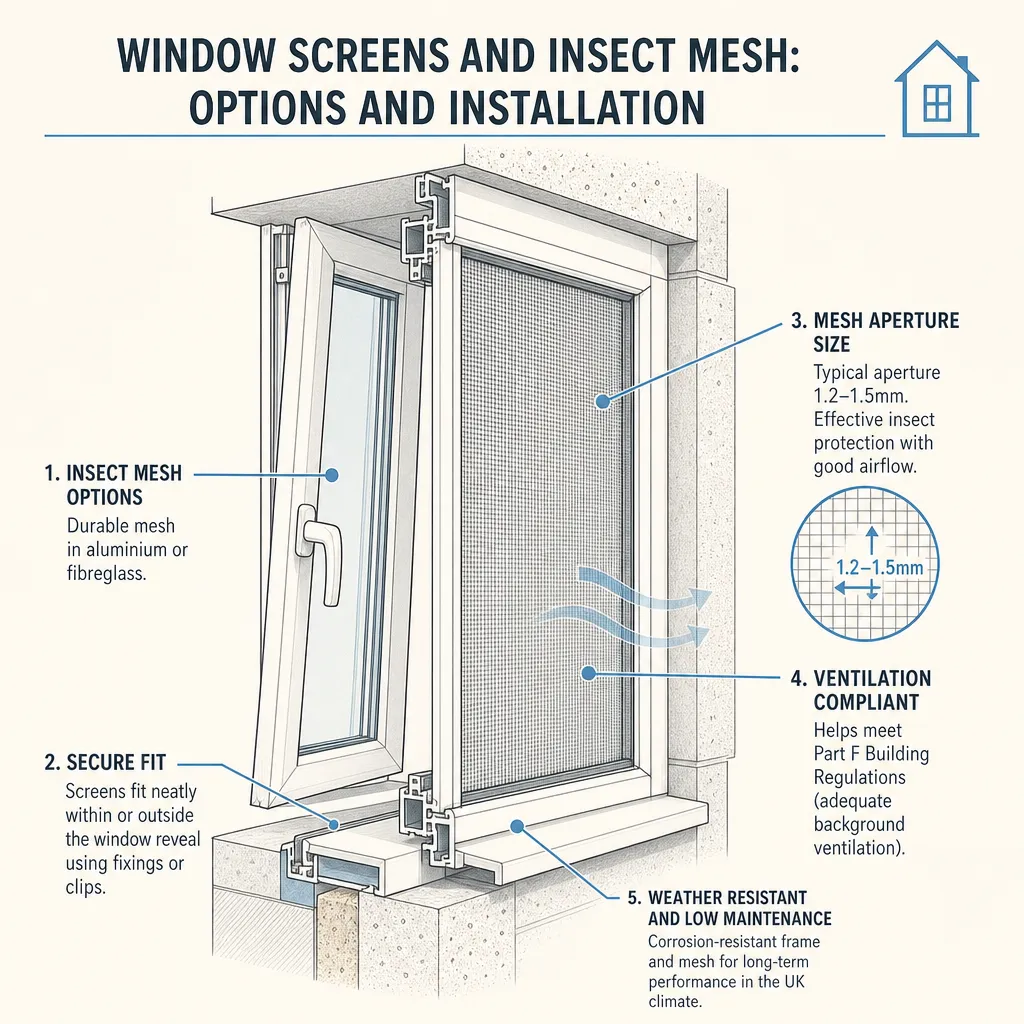
Window Screens and Insect Mesh: Options and Installation
UK window screens fall into four main types: fixed frame, roller retractable, pleated folding, and magnetic snap-fit.