Removing Stains from Indian Sandstone Paving: Cleaning Methods and Products
By Housey · Last reviewed 4th of May 2026
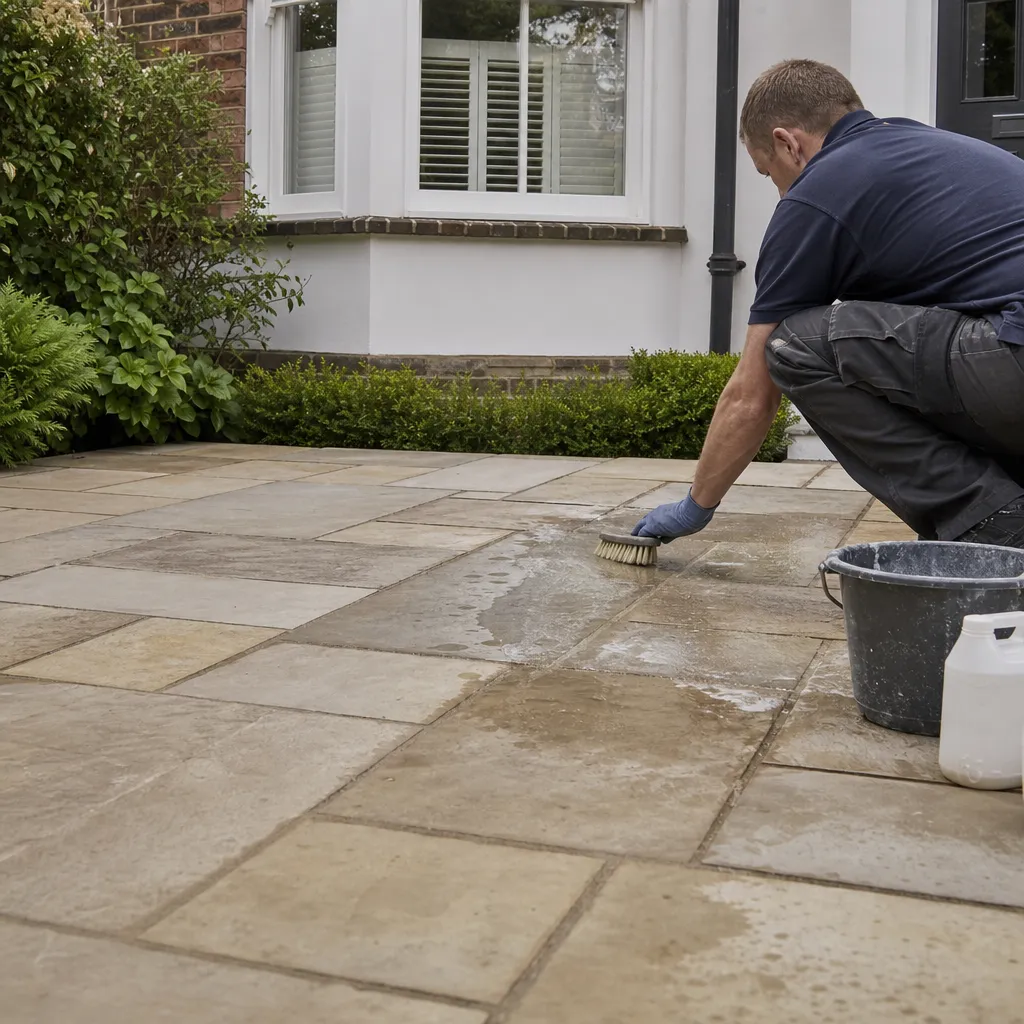
Removing Stains from Indian Sandstone Paving: Cleaning Methods and Products
Indian sandstone is among the most popular natural stone paving choices for UK gardens and patios, valued for its warm colour variation and natural texture. Its porous surface, however, readily absorbs organic matter, oil, and mineral deposits — and the UK's damp, temperate climate accelerates algae and moss growth. Knowing which cleaning methods are safe for the stone, and which cause lasting damage, determines whether a patio can be fully restored or ends up permanently discoloured and surface-worn.
Key points
- Indian sandstone is porous and pH-sensitive: acidic cleaners — including bleach, vinegar, and brick acid — etch the surface and permanently alter the stone's colour and texture.
- Algae and moss (the most common staining complaint on UK patios) respond best to a dedicated biocide pre-treatment; pressure washing without pre-treatment spreads spores and accelerates regrowth.
- Efflorescence (white powdery salt deposits) on new or recently re-pointed paving should be treated with a dry brush followed by a diluted proprietary efflorescence remover formulated for natural stone — not vinegar or acid.
- Oil stains require an alkaline degreaser formulated for natural stone; solvent cleaners and washing-up liquid leave residue in the pores and attract further dirt.
- Applying an impregnating (penetrating) sealer after a thorough clean significantly reduces future staining and makes routine maintenance considerably easier.
Understanding stain types on Indian sandstone
Using the wrong product on a stain can set it permanently or cause surface damage. The table below covers the most common stain types seen on UK patios and the appropriate first response for each.
Stain type | Appearance | First response | Products to avoid |
|---|---|---|---|
Algae / green slime | Green or dark green film; slippery surface | Biocide pre-treatment, leave to dwell, then rinse | Bleach, vinegar, pressure washing without pre-treatment |
Moss and lichen | Thick green or grey growth, often near joints | Biocide application, then stiff-bristled brush | Wire brushes (scratch stone), undiluted bleach |
Efflorescence | White powdery deposits; common on new paving | Dry brush first, then proprietary efflorescence remover | Strong acid, vinegar |
Oil or grease | Dark spreading patch, may enlarge if wetted | Absorbent material, then alkaline stone degreaser | Solvent cleaners, washing-up liquid |
Rust | Orange-brown streaking near metalwork or fixings | Stone-safe dedicated rust remover | Acid-based rust removers not rated for natural stone |
Tannin or leaf staining | Brown-black marks near trees or planters | Oxygen-based stain remover or diluted hydrogen peroxide | Bleach, pressure washing alone |
Paint or adhesive | Solid splatter or dried patch | Careful mechanical removal, then stone-safe solvent | Sanding, abrasive pads |
Safe cleaning products for Indian sandstone
The critical rule for Indian sandstone is pH-neutral or mildly alkaline — strongly acidic products cause permanent damage.
Products generally safe for Indian sandstone:
- Dedicated natural stone patio cleaners specifically labelled for natural or porous stone
- pH-neutral multi-surface cleaners diluted to the manufacturer's stated guidelines
- Oxygen-based cleaners, which are effective on organic staining including tannin and algae
- Impregnating sealers, applied after cleaning for ongoing protection
Products to avoid on Indian sandstone:
- Bleach (sodium hypochlorite) — discolours stone and weakens jointing mortar
- White wine vinegar — widely suggested online but acidic; causes surface damage over time on sandstone
- Sodium hypochlorite-based patio cleaners — check the label carefully for compatibility with natural stone before use
- Brick acid or muriatic (hydrochloric) acid — will etch and permanently discolour sandstone
- Standard pressure-washer detergents not formulated for natural stone
Always test any cleaning product on a small, inconspicuous area and allow 24 hours before treating the full paved surface.
How to remove algae and moss from Indian sandstone
Algae and moss are the most common patio staining complaints for UK homeowners given the damp climate and shaded garden conditions.
- Sweep the dry surface to remove loose debris and leaves.
- Apply a proprietary patio biocide labelled as safe for natural stone, diluted to the manufacturer's stated instructions.
- Leave to dwell — typically 30 minutes to 4 hours for heavy growth; some products benefit from an overnight dwell.
- Scrub with a stiff-bristled brush (not wire bristles, which scratch the stone).
- Rinse thoroughly with clean water, directing run-off away from planted areas.
- For heavy or persistent growth, a second application is often needed.
- Once fully dry, apply an impregnating sealer to slow future regrowth.
If the surface remains slippery after cleaning and drying, the underlying conditions — persistent shade, poor drainage, or overhanging vegetation — should be addressed alongside the cleaning programme.
Removing oil and grease stains from Indian sandstone
Oil penetrates the pores of sandstone rapidly, so acting quickly significantly improves the outcome.
- Absorb excess oil immediately using cat litter, dry sand, or baking soda. Leave for several hours, then sweep up carefully.
- Apply an alkaline degreaser formulated for natural stone — not washing-up liquid or a solvent-based product.
- Work the degreaser into the stain with a stiff brush and leave for the manufacturer's recommended dwell time.
- Rinse thoroughly with clean water.
For older, dried-in stains, a poultice treatment is often more effective: mix an absorbent powder (diatomaceous earth or a purpose-made poultice powder) with the stone-safe degreaser to form a thick paste, apply generously over the stain, cover with plastic sheeting, and leave for 24–48 hours. As the paste dries, it draws the oil out of the stone pores. Repeat if needed for deeply embedded staining.
Removing rust stains from Indian sandstone
Rust staining typically comes from metal garden furniture legs, plant pot bases, steel fixings, or — in areas with a high-iron water supply — from irrigation run-off.
- Use a rust remover specifically formulated for natural or porous stone — standard rust removers often contain oxalic or phosphoric acid that will etch sandstone.
- Apply carefully to the affected area only, allow the recommended dwell time, and rinse fully.
- If the source of rust is not removed or protected, staining will recur. Use rubber or plastic feet under metal furniture and plant pots to prevent direct contact with the stone.
Sealing Indian sandstone after cleaning
Sealing is strongly recommended after any thorough clean. Choose an impregnating (penetrating) sealer, not a topical (surface) sealer. Impregnating sealers enter the stone's pores and repel liquids from within, without altering surface appearance or creating a slip hazard. Topical sealers sit on the surface, can peel or yellow over time, and may trap moisture beneath — particularly problematic for external paving in the UK climate.
Allow the stone to dry completely before sealing — at least 48–72 hours of dry weather after cleaning. Apply as per the manufacturer's instructions, typically one or two coats using a lint-free applicator or roller.
Impregnating sealers on external paving typically need reapplying every three to five years, or whenever water stops visibly beading on the stone surface.
Homeowner maintenance checklist
When to get professional help
Most Indian sandstone staining can be addressed with the right proprietary products and some patience. Consider instructing a professional stone cleaning or hard landscaping contractor if:
- Staining covers a large area and two or three DIY treatment attempts have not produced satisfactory results.
- The stone surface appears to have been damaged by a previous incorrect treatment — etching, pitting, whitening, or surface delamination.
- Efflorescence is very heavy, persistent, or worsening — this can indicate an underlying moisture or substrate problem that requires investigation beyond surface treatment.
- Patio flags are loose, sinking, or cracking — cleaning alone will not address structural or installation failures.
- You are uncertain which product to use and do not want to risk further damage to an expensive natural stone surface.
How Housey can help
If your patio needs more than a thorough clean — for example, flags need relaying, joints need repointing, or the original installation has drainage problems — Housey can help you find qualified hard landscaping professionals. Visit Housey to request quotes from experienced paving and landscaping contractors in your area.
Frequently asked questions
Can I use a pressure washer on Indian sandstone?
Yes, with care. Use a fan jet rather than a pencil jet, keep pressure below around 1,500 PSI, and hold the nozzle at least 30 cm from the surface. High-pressure washing can erode sandstone and damage jointing mortar over time. Always pre-treat algae and moss with a biocide before pressure washing — washing alone spreads spores and promotes faster regrowth.
Is bleach safe to use on Indian sandstone?
No. Bleach (sodium hypochlorite) is harmful to sandstone — it can discolour the stone, weaken jointing mortar, and degrade any existing sealer. Use a dedicated biocide or a patio cleaner specifically labelled as safe for natural or porous stone instead.
How do I remove white marks from Indian sandstone?
White marks are usually efflorescence — mineral salts migrating through the stone as it dries — or calcium deposits from hard water. For efflorescence, brush the surface when dry, then apply a proprietary efflorescence remover formulated for natural stone. Avoid acidic products. Hard water deposits can be treated with a pH-neutral limescale remover approved for natural stone.
How long should I wait before sealing Indian sandstone after cleaning?
The stone must be completely dry before sealing — residual moisture trapped under the sealer causes cloudiness, white marks, or adhesion failure. In typical UK conditions, allow at least 48–72 hours of dry weather after cleaning before applying any impregnating sealer.
Why does my Indian sandstone keep going green?
Persistent algae and moss growth is usually caused by a combination of shade, retained moisture, and an unsealed or worn stone surface. Regular biocide treatment and proper sealing will slow regrowth, but addressing the root cause — improving drainage, pruning overhanging vegetation, or improving air circulation — produces the most lasting result.
Sources and further reading
- Stone Federation Great Britain: Natural stone care and maintenance — Stone Federation Great Britain
- Historic England: Cleaning stonework guidance — Historic England
- RHS: Dealing with algae and moss on hard surfaces — Royal Horticultural Society
- HSE: Biocidal products regulation guidance — Health and Safety Executive
Useful next reads
 Improvement & Build
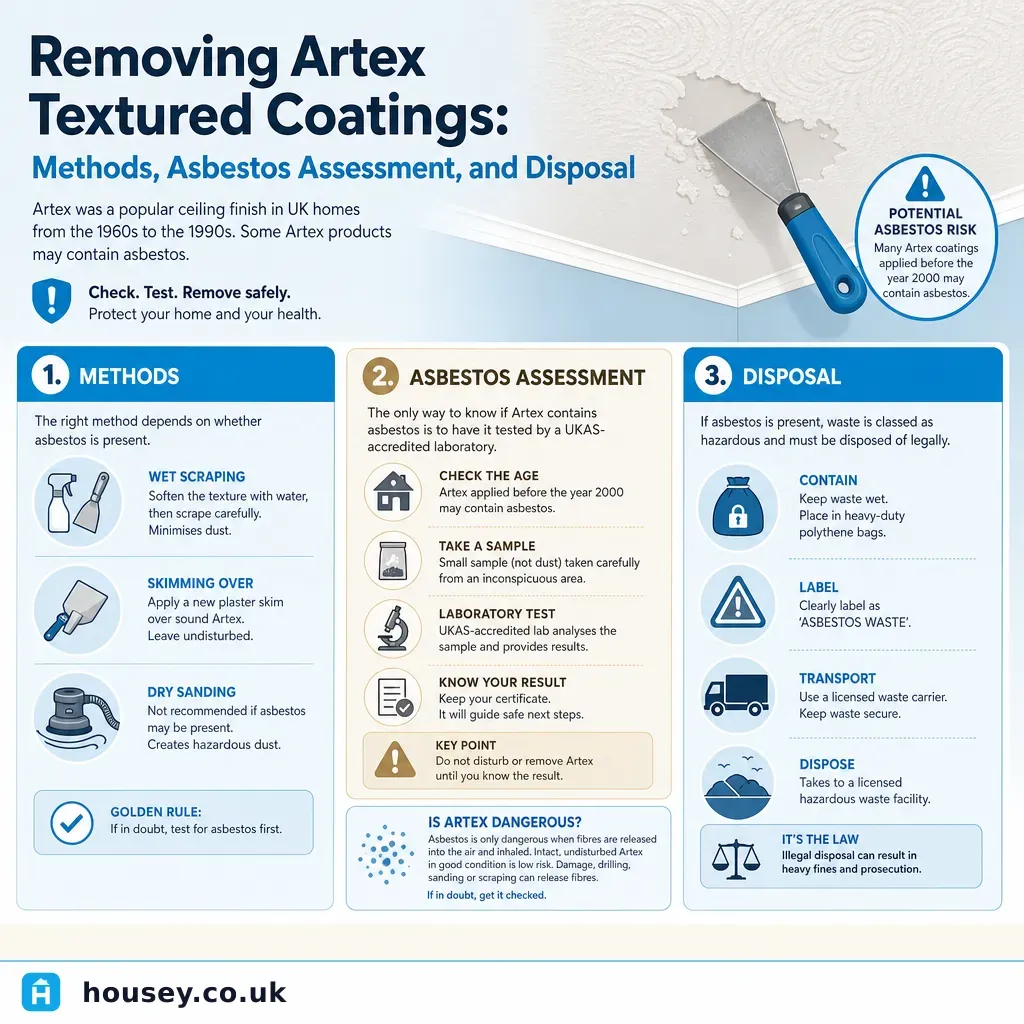
Removing Artex Textured Coatings: Methods, Asbestos Assessment, and Disposal
Before disturbing any textured ceiling coating in a pre-2000 UK home, have it tested for asbestos by a UKAS-accredited analyst.
 Improvement & Build
Why Painting Your Driveway Isn't the Answer: Proper Driveway Maintenance
Driveway paint and sealants cannot fix structural cracks, sub-base failure, or freeze-thaw damage — they mask symptoms temporarily.
 Improvement & Build
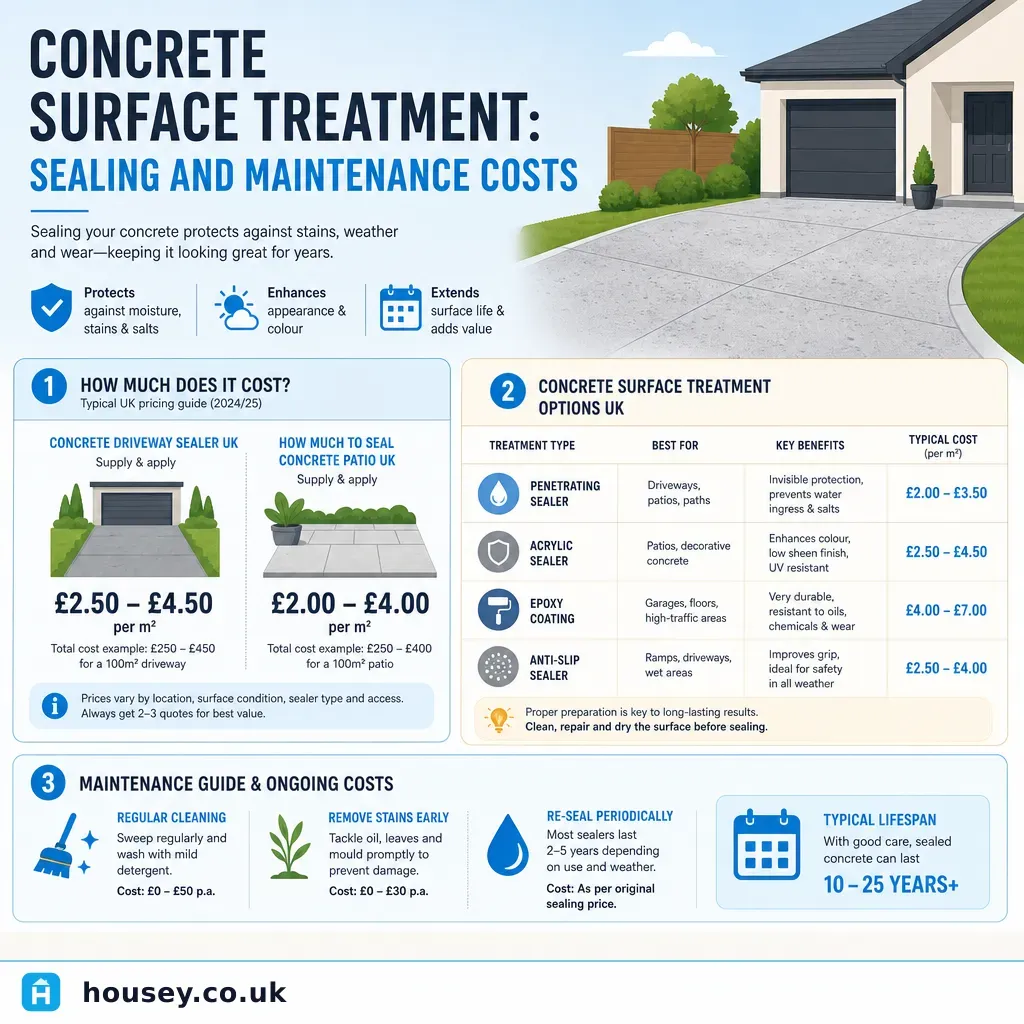
Concrete Surface Treatment: Sealing and Maintenance Costs
Sealing concrete in the UK typically costs £300–£1,200 for a standard driveway or patio, depending on area size and sealer type.
 Improvement & Build
Tile Reglazed: Refreshing Bathroom and Kitchen Surfaces
Tile reglazingreglazing applies a specialist bonded coating to existing ceramic or porcelain tiles, refreshing their appearance without the cost and disruption of full tile removal.
 Improvement & Build
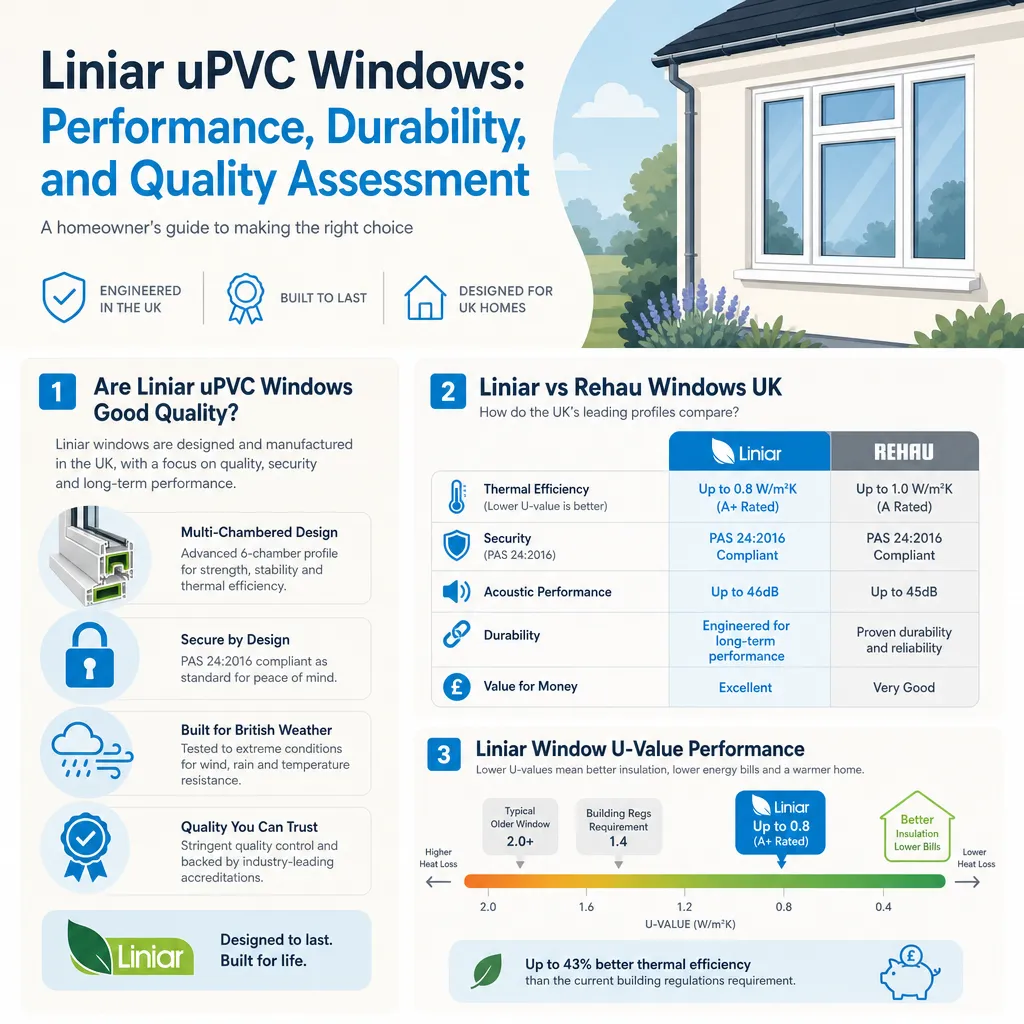
Liniar uPVC Windows: Performance, Durability, and Quality Assessment
Liniar uPVC window profiles are manufactured in the UK using multi-chambered, foamed frames.