Renovating a Repossessed Property: Strategic Planning and Assessment
By Housey · Last reviewed 18th of May 2026
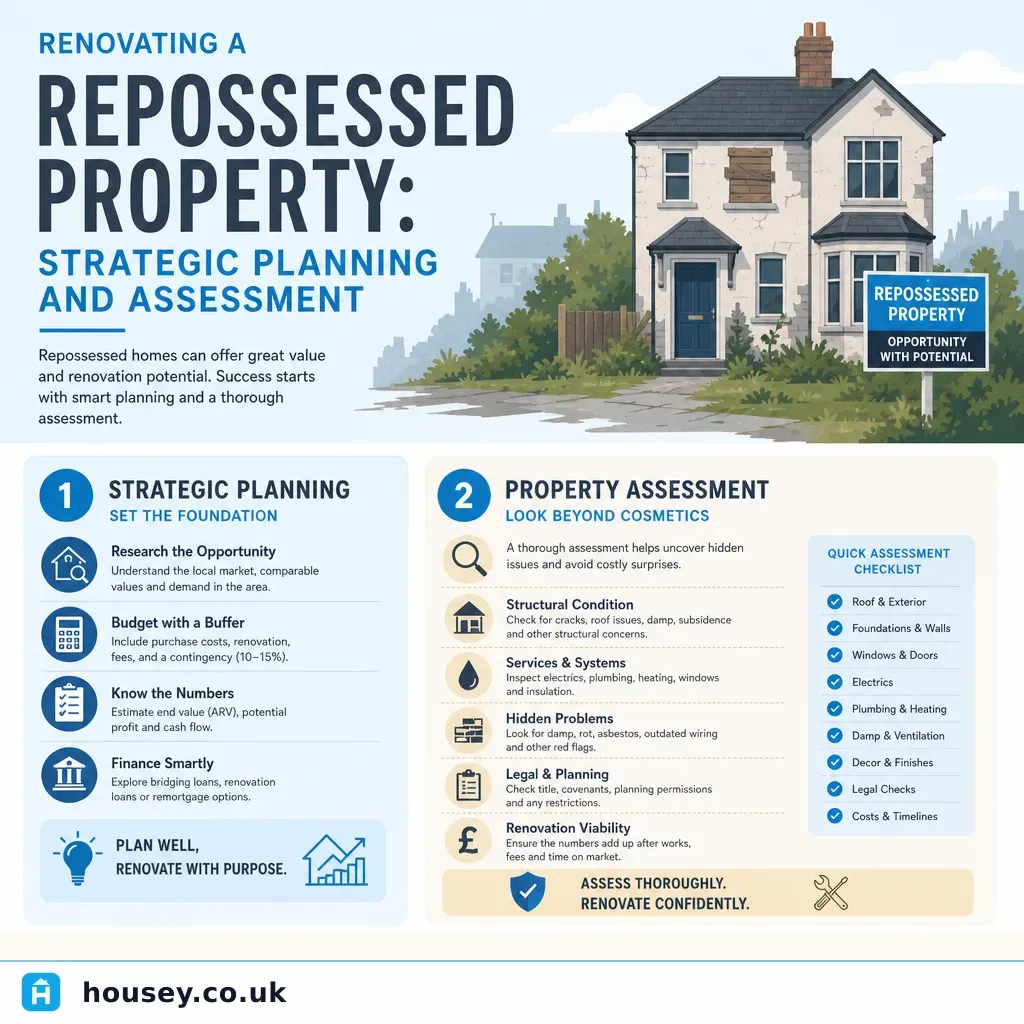
Renovating a Repossessed Property: Strategic Planning and Assessment
Repossessed and distressed properties represent a significant share of the UK's discounted property market, particularly following periods of sharply rising mortgage costs. They attract buyers seeking below-market prices, but the standard protections available in a normal purchase — seller disclosure, completed property information forms, and a negotiated chain — are largely absent. Understanding what you are buying, what consents exist, and what the building actually needs before contracts are exchanged is the foundation of a successful renovation project, not an afterthought.
Key points
- Repossessed properties in England and Wales are sold by the mortgage lender with no obligation to complete a TA6 Property Information Form, TA10 Fittings and Contents Form, or answer enquiries about the property's condition and history.
- A RICS Level 3 Building Survey is strongly recommended for any repossessed property; a RICS Level 2 survey is unlikely to provide sufficient detail where the property has been unoccupied, unmaintained, or deliberately damaged.
- Building Regulations approval is required for structural alterations, extensions, loft conversions, new electrical circuits, boiler replacements, and certain drainage works — regardless of whether the previous owner obtained consent.
- The Party Wall etc. Act 1996 applies to works affecting shared walls, party fences, or excavations within 3 metres of a neighbour's foundations, even during a distressed property renovation.
- Utility disconnections are common in repossessed properties; gas and electrical supplies require safety inspections by Gas Safe registered and NICEIC or NAPIT registered engineers respectively before reinstatement.
What makes a repossessed property different from a standard purchase
In a normal sale, the vendor completes a TA6 (Property Information Form), a TA10 (Fittings and Contents Form), and — for leasehold — a TA7. These documents disclose known planning consents, building control sign-offs, disputes, alterations, and service history. A mortgage lender selling a repossessed property has usually not occupied it and is legally exempt from many of these disclosure obligations. You may receive only the basic Land Registry title and, if fortunate, some historic documentation.
This creates a significant information gap:
- You cannot rely on the seller to confirm whether an extension was built with planning permission and building regulations sign-off.
- You cannot assume services are operational, safe, or legally compliant.
- You cannot verify that alterations such as a garage conversion or loft room have proper approvals without your own investigation.
This is why pre-purchase assessment carries disproportionate importance in repossessed property transactions.
Decision tree: which assessments do you need before purchase?
- Commission a RICS Level 3 Building Survey in all cases — repossessed properties frequently have hidden defects from deferred maintenance or deliberate damage that a Level 2 survey would not adequately report on.
- Instruct a structural engineer (in addition to the Level 3 survey) if the survey reveals movement, cracking, subsidence indicators, or evidence of previous underpinning or significant structural alteration.
- Commission a Type 2 asbestos Management Survey for any property built before 2000 before any demolition, cutting, or drilling begins. For properties built before 1985, treat all suspected materials as potentially asbestos-containing until proven otherwise by testing.
- Arrange a gas safety inspection by a Gas Safe registered engineer before any gas supply is reinstated. Do not use gas appliances in a property that has been unoccupied without a full safety check.
- Arrange an EICR (Electrical Installation Condition Report, carried out by a NICEIC or NAPIT registered electrician) before relying on any existing electrical installation.
- Carry out a local authority search and planning history check to identify enforcement notices, unresolved planning consents, or Article 4 Directions that restrict permitted development rights.
- Appoint a building control consultant if you plan structural works, a change of use, or if the property has existing works without building control sign-off — a retrospective Regularisation Certificate application may be needed.
Red flags during the viewing and survey stage
Pay particular attention to the following during viewings and when reviewing survey reports:
- Evidence of stripped fittings, removed wiring, or fly-tipping — indicating deliberate damage after repossession. The remediation cost can be substantial and is rarely visible at viewing stage.
- Unexplained extensions or altered floor plans — particularly single-storey rear extensions, garage conversions, or loft rooms with no accompanying documentation. These may lack planning permission, building regulations sign-off, or both.
- Active water ingress or persistent damp — a property that has stood empty often shows accelerated damp penetration, roof failure, or burst pipe damage. The full extent may not be clear until stripping out begins.
- Missing or tampered utility meters — an indicator of deliberate damage or an illegal connection, both of which require formal inspection before reinstatement.
- Signs of subsidence — stepped cracking in brickwork, diagonal cracking from window or door corners, or frames that no longer sit square. Commission a structural engineer's assessment before proceeding.
- Oil tanks, underground storage, or suspected contamination — particularly relevant for rural properties or those previously in non-residential use.
Checking planning and building control history
Before any renovation work begins, establish what planning consents and building regulations approvals exist for the property as it stands:
- Search the local planning authority's public register online — most local authorities in England publish planning application history through their own portals or via the Planning Portal.
- Request a copy of the title register from HM Land Registry and examine the entries for charges, covenants, or restrictions.
- Ask your conveyancer to conduct a full local authority search, drainage search, and environmental search — and, where relevant, a coal mining or chancel repair search.
Where previous works lack building control approval, a Regularisation Certificate may be available from the local authority. Not all works qualify — structural alterations without approved documents or formal inspections are harder to regularise retrospectively. A building control consultant can advise on what is achievable for your specific property.
Budgeting realistically for unknown costs
Repossessed property renovations frequently encounter costs not visible at assessment stage. A realistic contingency for a distressed property project is 20–30% of the estimated works cost, compared with 10–15% for a standard renovation. Common unexpected items include:
- Hidden damp in solid walls or under floor coverings, only apparent after finishes are stripped out.
- Electrical wiring that fails EICR inspection and requires full rewiring rather than targeted repairs.
- Structural remediation beyond the survey's initial indication.
- Utility reconnection delays and associated enabling works costs.
- Hazardous materials remediation — asbestos or lead paint, particularly common in pre-1970s properties.
Important limitations
This article provides general guidance only and does not constitute legal, structural, or safety advice. Every repossessed property presents a different combination of condition, planning history, tenure, and regulatory context. Rules on permitted development, building regulations, and planning enforcement vary by local authority, property type, conservation area designation, and listed building status. A qualified professional should assess your specific property and circumstances before any renovation works begin.
What to ask a qualified professional
Before instructing surveyors, engineers, or contractors, ask:
- What is the scope of your survey report — does it cover structural movement, roof condition, drainage, and the safety of electrical and gas installations, or are these outside the scope?
- Is there evidence of prior alterations that may not have building regulations approval?
- Do you have specific experience with repossessed or long-unoccupied properties?
- What further specialist surveys would you recommend, and in what priority order?
- How should I approach budgeting for unknown risk, and what contingency level do you advise for this property?
- For a structural engineer specifically: is any movement active or historic, and what remediation would you recommend?
When to get professional help
Seek professional advice before exchange of contracts — not after completion. Engage a qualified professional if:
- The property has been unoccupied for more than six months.
- There is visible structural cracking, movement, or evidence of water damage.
- You cannot establish the planning and building control history of any extension or alteration.
- Gas or electrical supplies have been disconnected or tampered with.
- You suspect the presence of asbestos or lead paint.
How Housey can help
Housey can connect you with vetted building control consultants who can identify missing consents and advise on regularisation, and with experienced project managers who specialise in complex and distressed property renovations — helping you move from initial assessment to a managed programme of works.
Frequently asked questions
Do I need a survey if buying a repossessed property at auction?
Yes — and the survey should be completed before you bid, not after the hammer falls. Most auction properties are sold unconditionally; once you bid successfully, you are legally committed. Commission a RICS Level 3 Building Survey and, for properties that have been unoccupied or damaged, consider specialist reports on asbestos, electrical condition, and structural stability before the auction date.
Can I get a mortgage on a repossessed property in poor condition?
Many standard mortgage products require a property to be habitable at purchase — with a functioning kitchen, bathroom, and heating system. If the property fails this test, you may need bridging finance or a specialist renovation mortgage. Speak to a whole-of-market mortgage broker with experience of distressed properties before making an offer or committing funds.
What is a Regularisation Certificate and do I need one?
A Regularisation Certificate is issued by a local authority building control body to confirm that works carried out without building regulations approval now comply with the relevant standards. It is typically required when selling the property or when a lender requires evidence of compliance. Not all works can be regularised — a building control consultant can advise on what applies to your property.
How long does renovation of a repossessed property typically take?
Timescales vary considerably depending on the extent of works, planning requirements, and contractor availability. A moderate renovation of a three-bedroom repossessed property requiring new wiring, plumbing, kitchen, bathroom, and decoration might take 12–24 weeks once works begin. Budget for delays caused by unknown conditions uncovered during the strip-out phase.
Sources and further reading
- Title register and property searches — GOV.UK / HM Land Registry
- RICS Home Survey Standard — RICS
- Planning permission guidance — Planning Portal
- Gas safety guidance — Gas Safe Register
- Asbestos guidance for building work — HSE
- Party Wall etc. Act 1996 explanatory booklet — GOV.UK
Useful next reads
 Improvement & Build
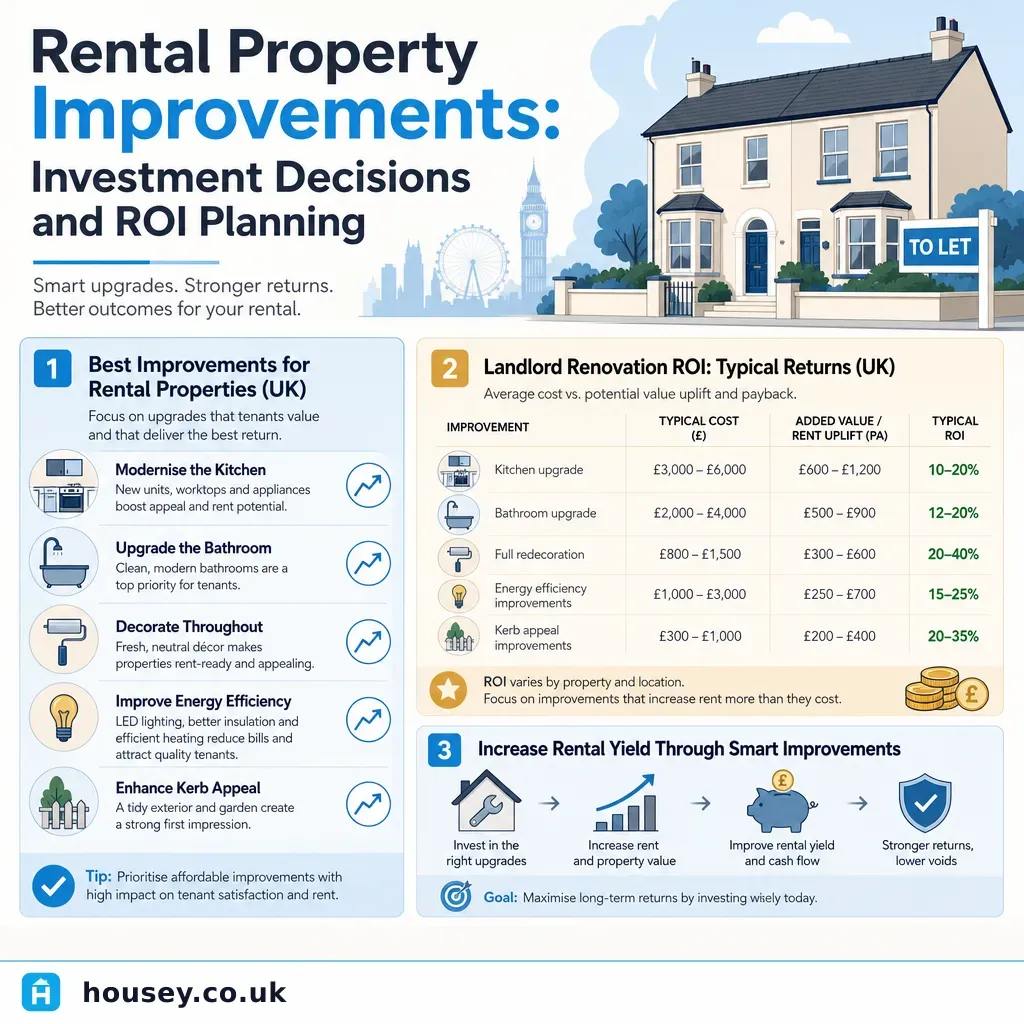
Rental Property Improvements: Investment Decisions and ROI Planning
Prioritise compliance-driven improvements first — a minimum EPC rating of E (with C proposed for new tenancies), annual Gas Safety Certificate, EICR every five years, and smoke and CO alarms on every storey.
 Improvement & Build
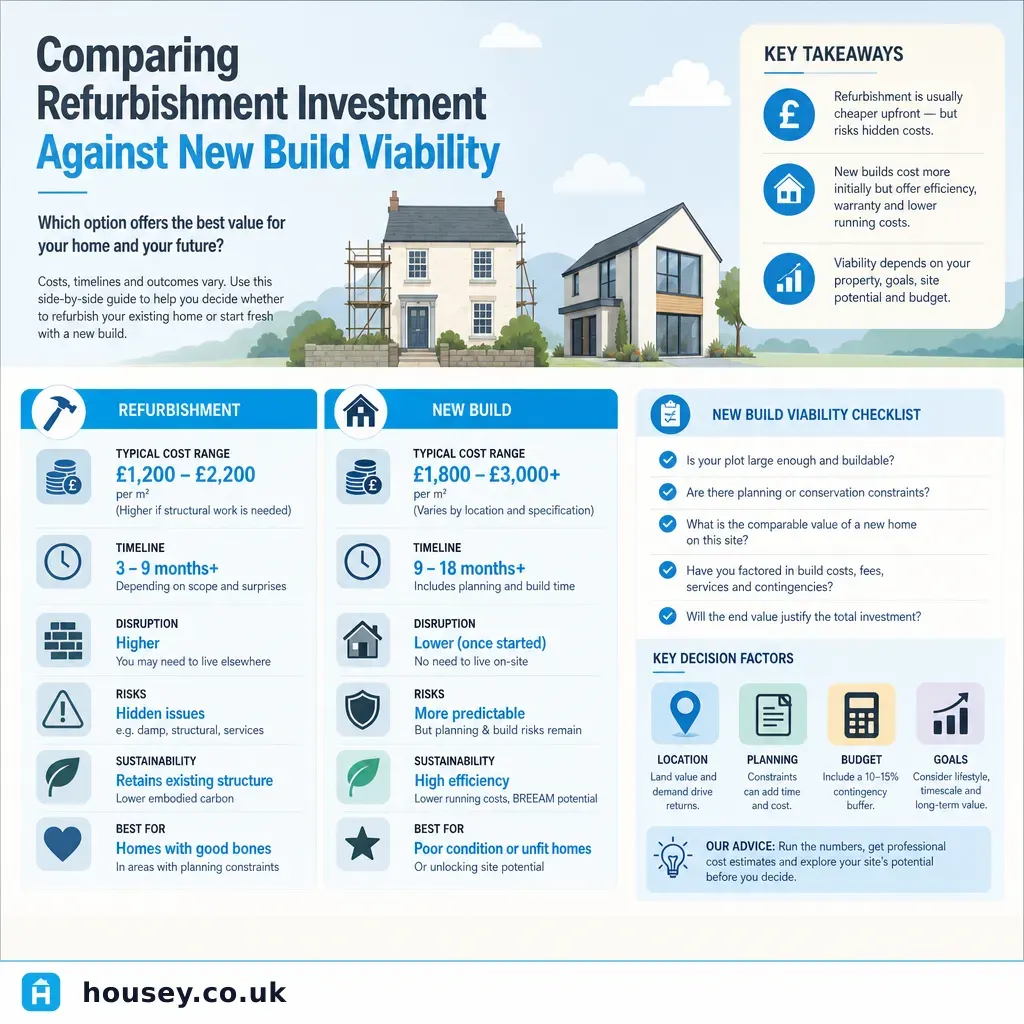
Comparing Refurbishment Investment Against New Build Viability
Whether refurbishment or new build is the better investment depends on the existing structure's condition, planning context, build costs, and your end goal.
 Improvement & Build
Strategic Home Improvements That Enhance Property Value
The home improvements most likely to add value in the UK are loft conversions (typically 10–20%), rear extensions (5–15%), and updated kitchens and bathrooms.
 Improvement & Build
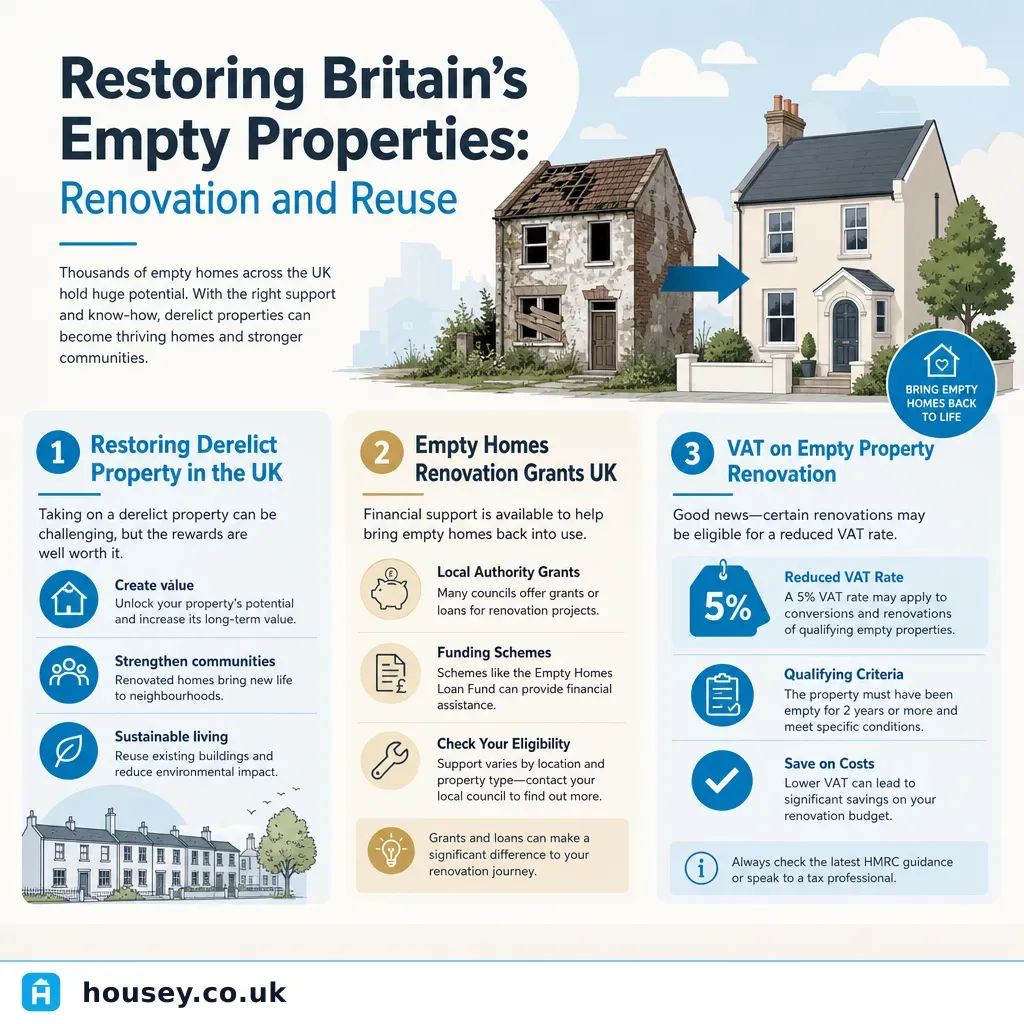
Restoring Britain's Empty Properties: Renovation and Reuse
Renovating an empty UK property requires a structural condition survey, building regulations approval, and a full programme of work covering roof, damp, services, and finishes.
 Improvement & Build
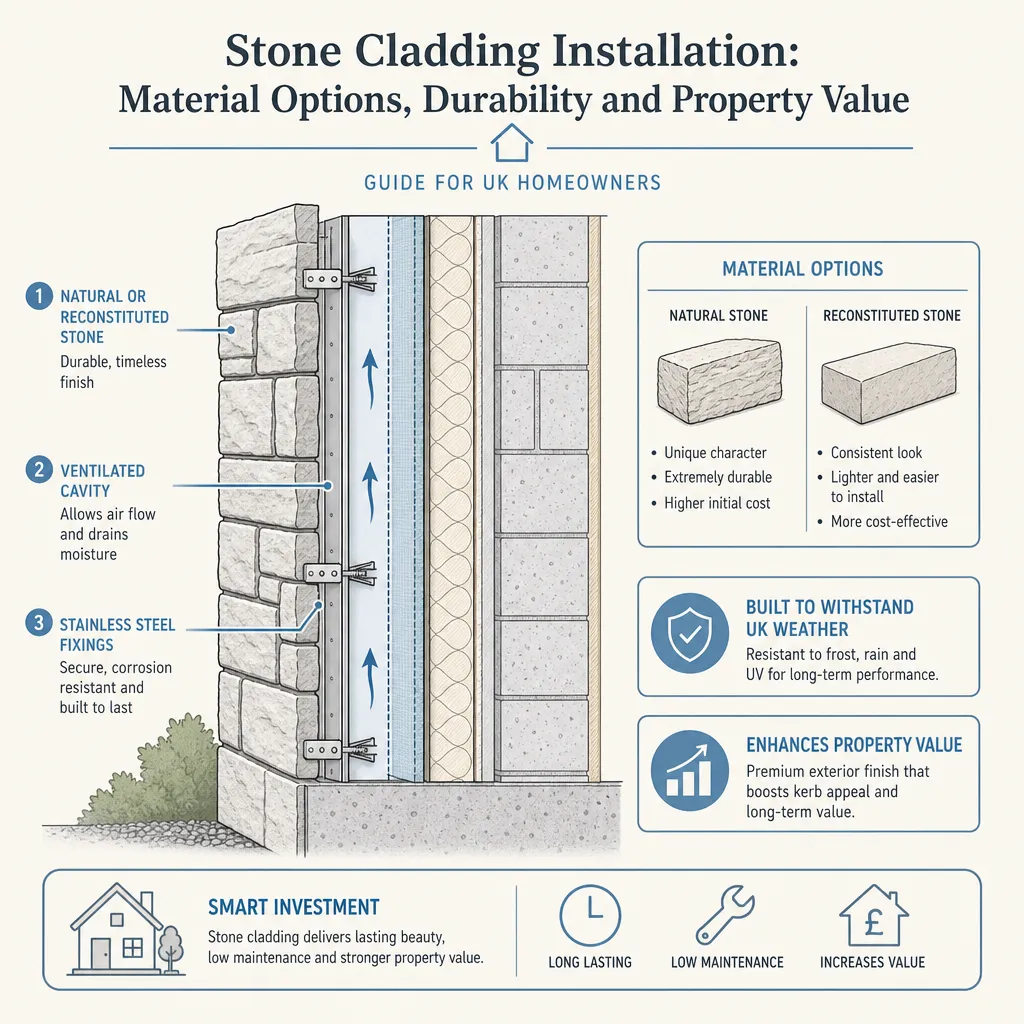
Stone Cladding Installation: Material Options, Durability and Property Value
Stone cladding adds texture and character to a UK property's exterior and can improve weather protection, but installation quality is critical — poorly fixed cladding can trap moisture and cause structural damage.