Restoring Britain's Empty Properties: Renovation and Reuse
By Housey · Last reviewed 8th of May 2026
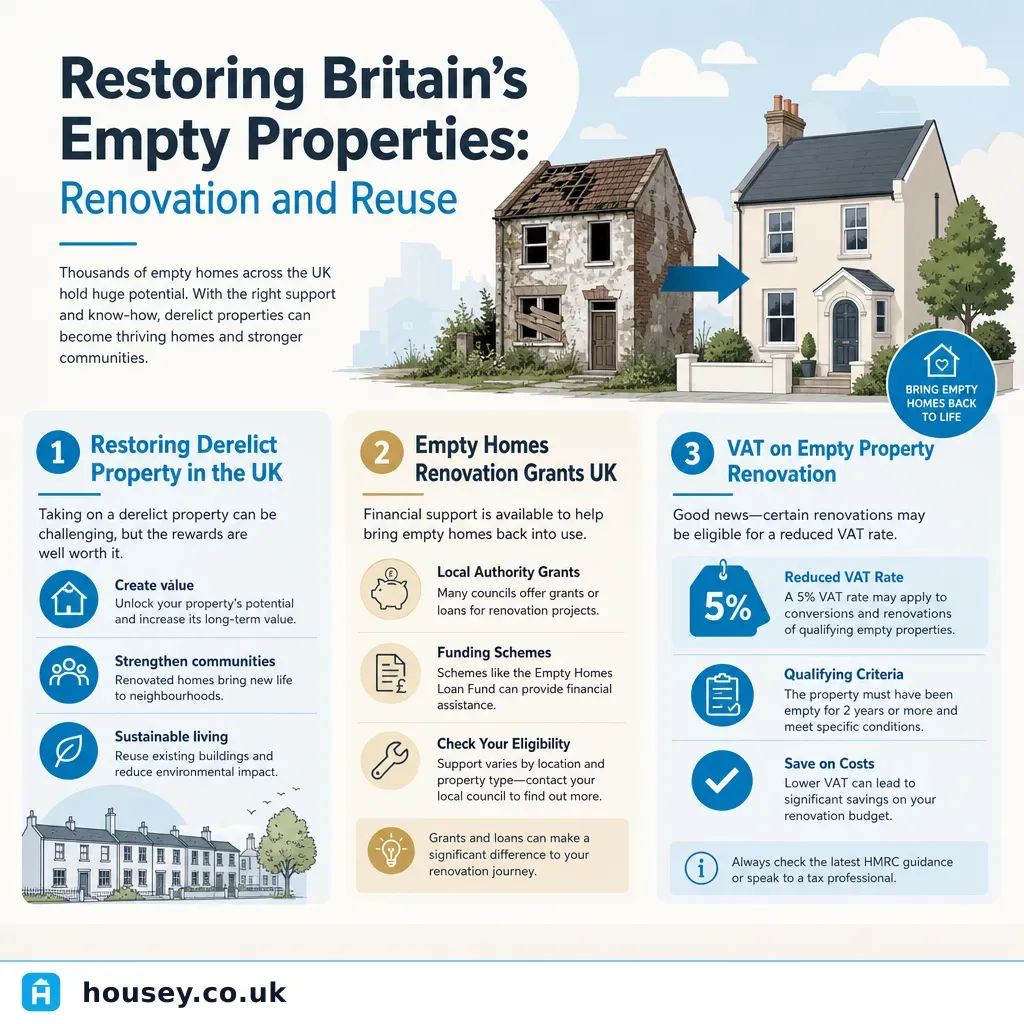
Restoring Britain's Empty Properties: Renovation and Reuse
England has around 676,000 long-term empty homes — a figure drawn from council tax records tracked by Action on Empty Homes. Despite persistent housing demand, properties fall into disuse through inheritance disputes, financial difficulty, and estate administration delays. Whether you have inherited a vacant house, spotted a derelict cottage at auction, or are exploring a council-promoted scheme, the renovation pathway involves specific financial, regulatory, and structural considerations that differ meaningfully from a standard refurbishment.
Key points
- Properties in England empty for more than two years are subject to a Council Tax premium of up to 100%, rising to 300% after ten years, under the Levelling-up and Regeneration Act 2023.
- VAT on renovation of a residential property empty for two or more years can be charged at the reduced 5% rate rather than the standard 20% — conditions apply; see VAT Notice 708 on GOV.UK.
- Building Regulations approval is required for structural repairs, replacement heating systems, rewiring, new drainage connections, and roof replacement covering more than 25% of the roof area.
- A RICS Level 3 Building Survey is strongly recommended before purchase; long-vacant properties commonly conceal roof failure, active damp, structural movement, and condemned services.
- Local councils in England have discretionary powers to issue Empty Dwelling Management Orders (EDMOs) and many operate grant or loan schemes to bring empty properties back into use.
What makes empty property renovation different
A property vacant for years presents different risks from one that simply needs updating. Without active heating and habitation, condensation and rising damp go unmanaged, roof and gutter deterioration proceeds unchecked, and services — gas, electricity, water — may be condemned or entirely absent.
Contingency budgets of 20–30% above estimated costs are normal for empty property projects; 40% is not unreasonable for severely derelict properties.
Condition assessment: what to expect at each level
Condition level | Typical features | Likely renovation scope |
|---|---|---|
Lightly neglected (vacant 1–5 years) | Dated décor, minor damp, blocked gutters, functional roof | Cosmetic redecoration, services update, minor damp treatment |
Moderately deteriorated (vacant 5–15 years) | Active damp, roof repairs needed, heating absent or condemned | Full redecoration, damp treatment, new heating system, partial rewire |
Severely derelict (vacant 15+ years or storm-damaged) | Structural movement possible, roof failure, unsafe floors | Near-total reconstruction; structural engineer assessment required |
Listed or in conservation area | Any condition above, plus heritage constraints | All of the above, plus heritage officer approval for materials and methods |
Always commission a RICS Level 3 Building Survey before exchange of contracts on any long-vacant property. For structurally suspect properties, a separate structural engineer's report may also be needed.
Building regulations and planning considerations
Restoring a property to its original residential use does not usually require planning permission, but Building Regulations approval is required for:
- Structural repairs (replacement lintels, underpinning, new beams)
- Replacement boilers and heating systems
- Full or partial rewiring
- New drainage connections or alterations
- Roof replacement where more than 25% of the covering is replaced
- Insulation upgrades triggered by Part L when the thermal envelope or heating system is replaced
Planning permission is required if you are changing the number of dwellings, extending the footprint, or making external alterations in a conservation area. Listed building consent is needed for most repairs affecting the character of a listed structure. Contact your local planning authority early — their pre-application advice service can identify constraints before you commit significant resource.
Grants, VAT relief, and financial support
Reduced rate VAT
Renovation of a residential property empty for at least two years immediately before works begin can qualify for the 5% reduced rate of VAT on eligible construction services and building materials. The contractor applies the reduced rate; you will need council tax records as evidence. Full conditions are in VAT Notice 708 on GOV.UK.
Empty homes grants and loans
Many English local councils operate schemes to bring empty properties back into use. Provision varies: some offer interest-free loans, others non-repayable grants of £5,000–£20,000, and a smaller number offer more substantial funding for severely derelict properties. Check your local council's website for empty homes schemes, or contact the Empty Homes Network for signposting.
Finance options
Standard residential mortgages are rarely available on properties in very poor condition. Options include renovation (stage-payment) mortgages, bridging loans refinanced on completion, and development finance for larger projects. Speak to a whole-of-market broker with experience in refurbishment lending.
Which professional do you need?
Professional | When you need them |
|---|---|
RICS surveyor (Level 3 Building Survey) | Before purchasing any long-vacant, derelict, or visibly deteriorating property |
Structural engineer | Visible cracking, suspected subsidence, missing structural elements, or compromised foundations |
Architect or architectural technologist | Layout changes, extensions, or complex planning and listed building applications |
Building control consultant | Managing Building Regulations submissions and inspections across multiple Parts |
Extension builder or main contractor | Large-scale structural restoration requiring multiple trades under a single contract |
Heritage specialist | Listed buildings or properties in designated conservation areas |
Asbestos surveyor | Before any intrusive works on properties built before 2000 — required under CDM regulations |
A building control consultant is particularly valuable on complex empty property projects, where works span structural, electrical, thermal, drainage, and fire safety requirements simultaneously.
Red flags when assessing an empty property
Stop and seek specialist advice before proceeding if you observe any of the following:
- Cracks wider than approximately 3mm, particularly stepped diagonal cracks through brickwork or cracks wider at the top than the bottom
- Sagging or visibly deflected roof structure or ridge line
- Floor joists that feel soft, springy, or bounce underfoot — signs of wet rot or insect attack
- Japanese knotweed, buddleia, or other vegetation growing through walls or floors, indicating structural penetration
- Any smell of gas inside the property — do not enter if the smell is strong; call the National Gas Emergency Service on 0800 111 999
- Pipe lagging, textured ceiling coatings, floor tiles, or roof sheets that may contain asbestos — do not disturb suspected materials; commission an asbestos survey before intrusive works begin
When to get professional help
Any empty property renovation beyond cosmetic redecoration should involve a qualified RICS surveyor before financial commitment and a building control consultant or architect before works begin. For properties with structural concerns, listed status, or complex planning histories, professional involvement is the primary means of cost control and risk management.
If a property has been empty for more than ten years, or shows signs of structural movement or water ingress at roof level, commission both a RICS Level 3 survey and a structural engineer's report before constructing any renovation budget.
How Housey can help
Housey connects homeowners and renovators with vetted UK professionals for every stage of an empty property project. Whether you need extension builders for a structural restoration or building control consultants to manage your compliance submissions, you can request and compare quotes from local professionals in one place.
Frequently asked questions
Do I need planning permission to renovate an empty house?
Not usually, if you are restoring the property to its original residential use without changing its external appearance or layout. Planning permission is required for extensions, material changes of use, or any external works affecting a listed building or property in a conservation area. Always confirm with your local planning authority before starting work.
What is the reduced rate of VAT on empty property renovation?
If a residential property has been empty for at least two years immediately before renovation works begin, the 5% reduced rate of VAT can apply to eligible construction services and materials. Your contractor applies the reduced rate; you will need council tax records or a statutory declaration as evidence. See GOV.UK VAT Notice 708 for the full conditions.
Can I get a grant to renovate an empty property?
Many local councils in England operate empty homes grant or loan schemes, though availability and funding levels vary significantly by area. Contact your local council's empty homes team or use the Empty Homes Network to find schemes near you. Energy-efficiency grants may also apply once the property is habitable.
What type of survey do I need before buying a derelict property?
A RICS Level 3 Building Survey is strongly recommended for any long-vacant or visibly deteriorating property. If there are signs of structural movement — cracking, subsidence, or damaged load-bearing elements — a separate structural engineer's assessment may also be needed before you can produce a reliable renovation cost estimate.
How long does it take to renovate an empty property?
Timescales vary considerably by condition and scope. A lightly neglected property might be habitable in three to six months; a severely derelict property could take twelve to twenty-four months including planning, procurement, and construction. Building regulations inspections and specialist subcontractor availability both affect the programme.
Sources and further reading
- Empty Homes: council tax premiums — GOV.UK
- VAT Notice 708: Buildings and construction — HMRC / GOV.UK
- Levelling-up and Regeneration Act 2023 — legislation.gov.uk
- RICS Home Survey Standard — RICS
- Empty Homes Network — Empty Homes Network
Useful next reads
 Improvement & Build
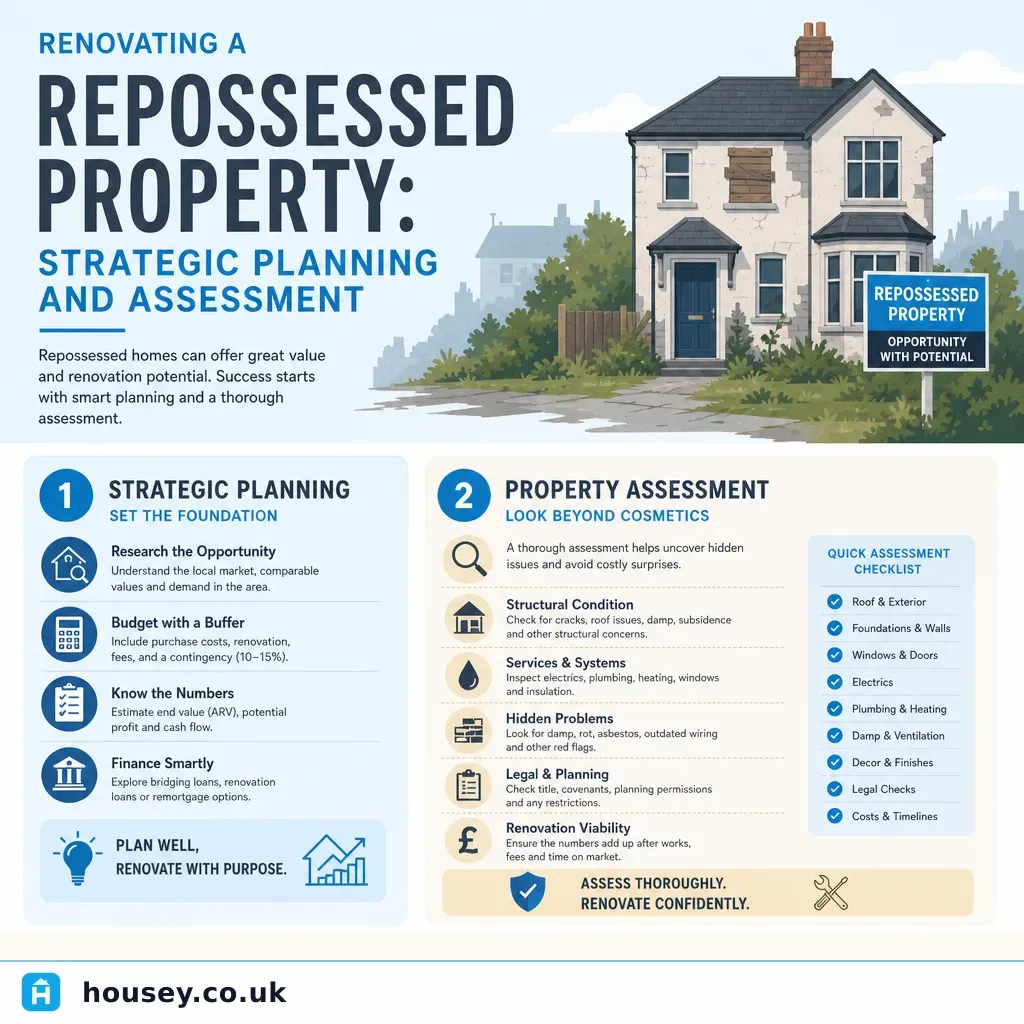
Renovating a Repossessed Property: Strategic Planning and Assessment
Repossessed properties are sold by the lender with no obligation to provide seller disclosure or property information forms.
 Improvement & Build
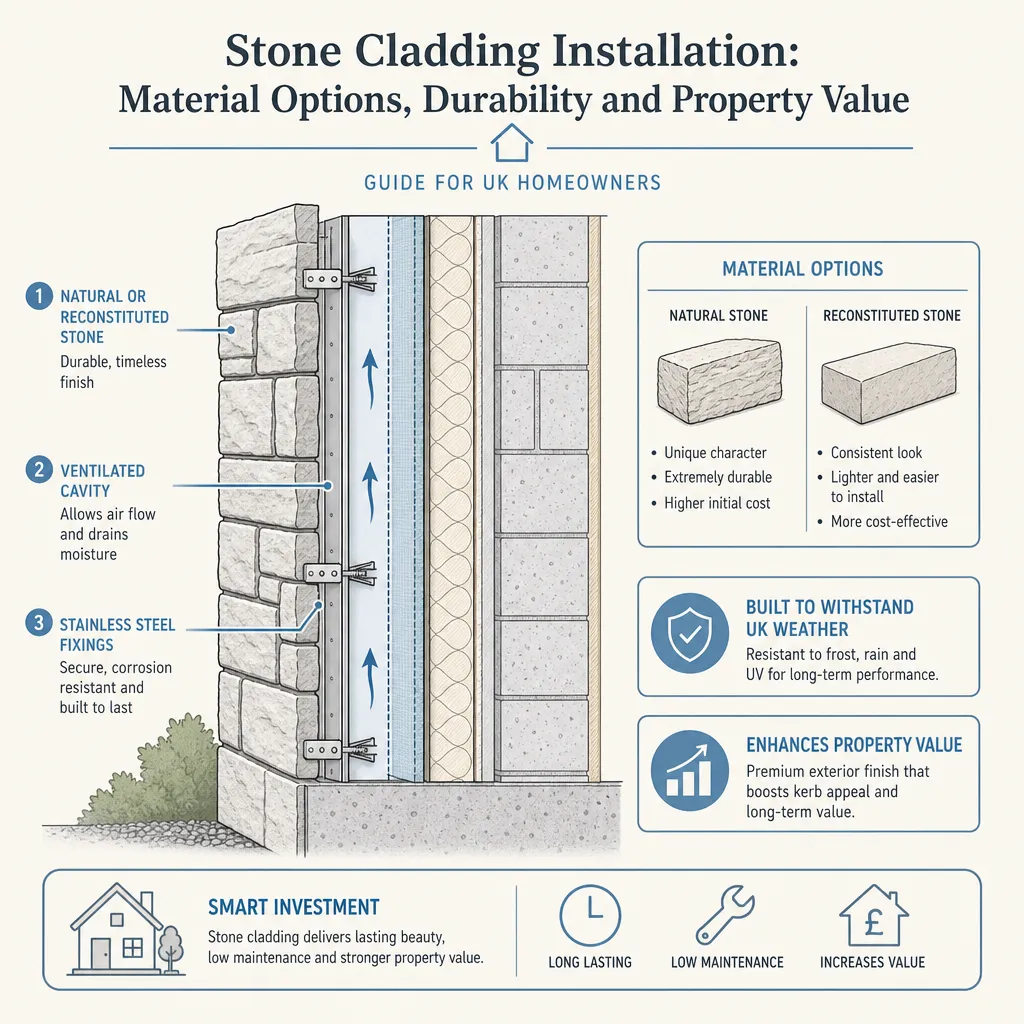
Stone Cladding Installation: Material Options, Durability and Property Value
Stone cladding adds texture and character to a UK property's exterior and can improve weather protection, but installation quality is critical — poorly fixed cladding can trap moisture and cause structural damage.
 Improvement & Build
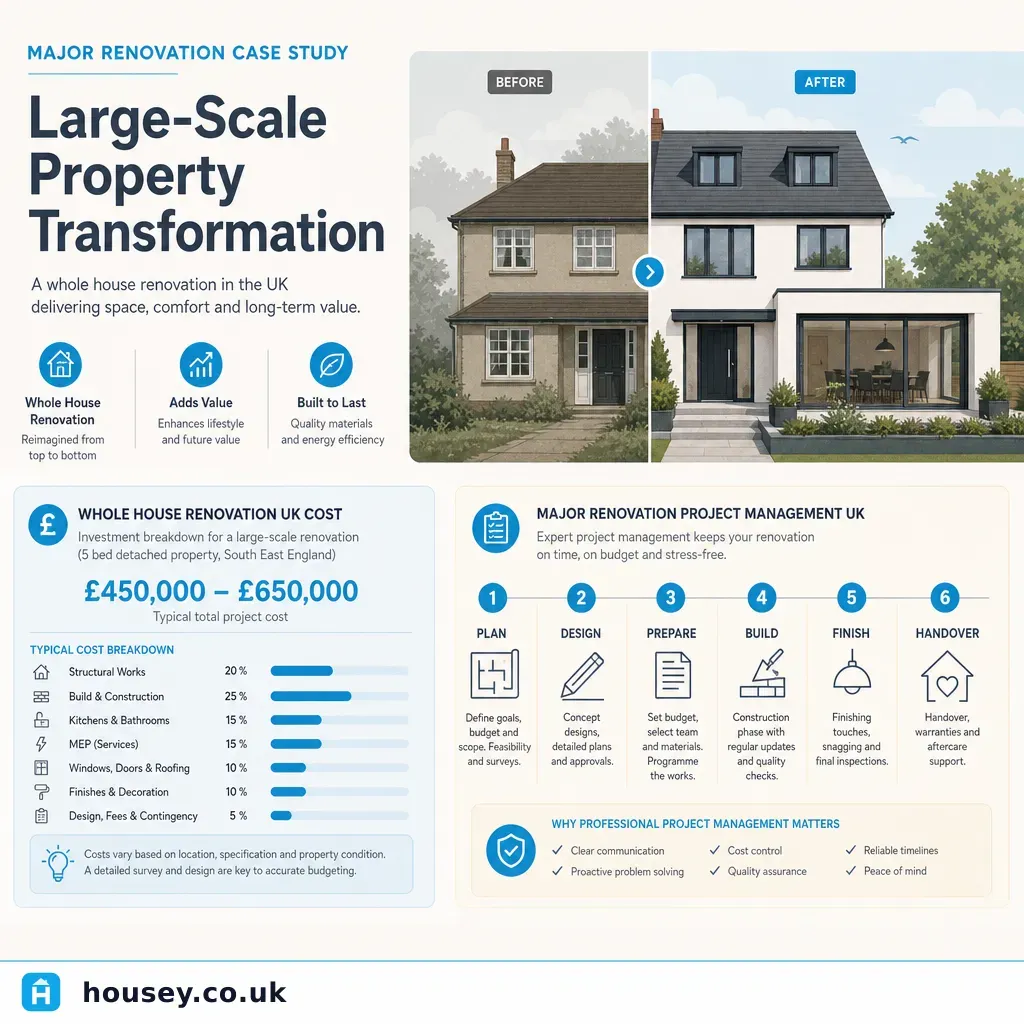
Major Renovation Case Study: Large-Scale Property Transformation
A large-scale UK home renovation typically involves an architect or design-and-build firm, Building Regulations approval, a main contractor, and a contingency budget of 15–20%.
 Improvement & Build
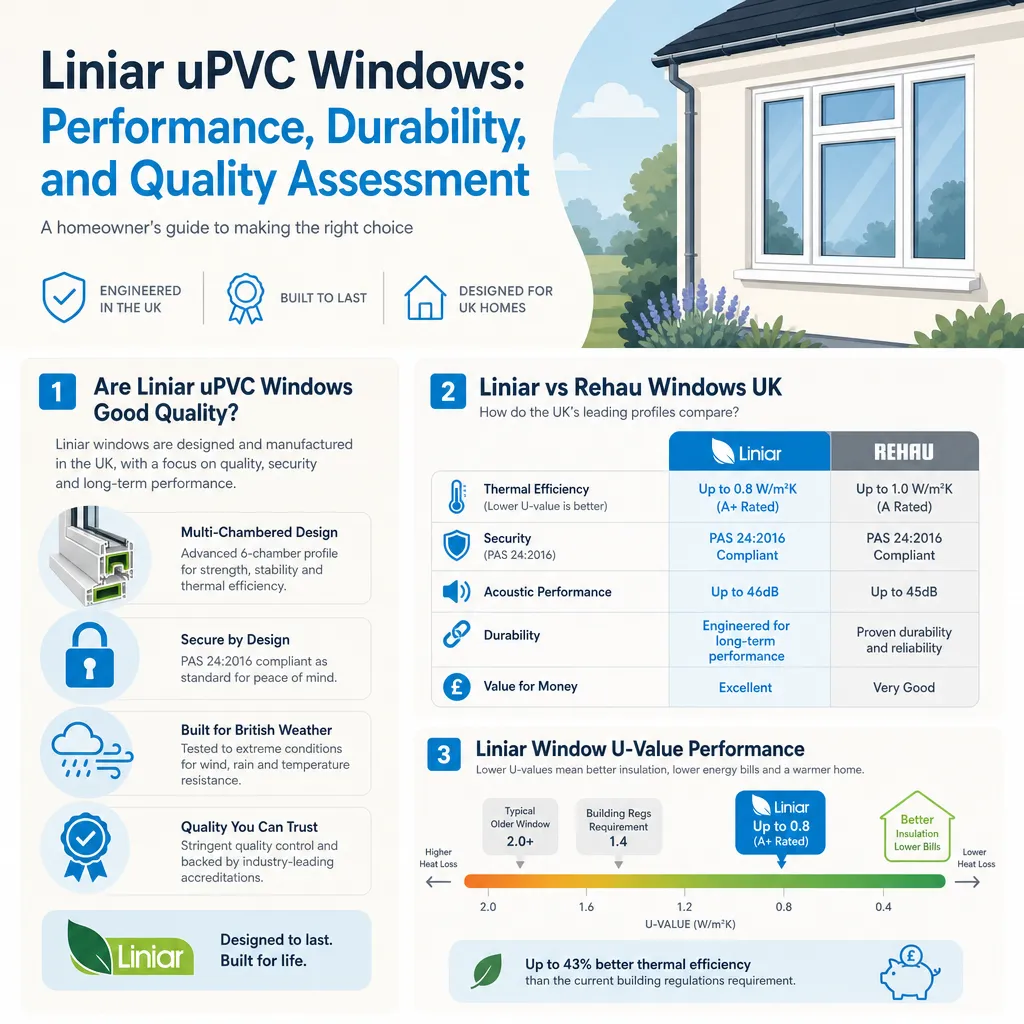
Liniar uPVC Windows: Performance, Durability, and Quality Assessment
Liniar uPVC window profiles are manufactured in the UK using multi-chambered, foamed frames.
 Improvement & Build
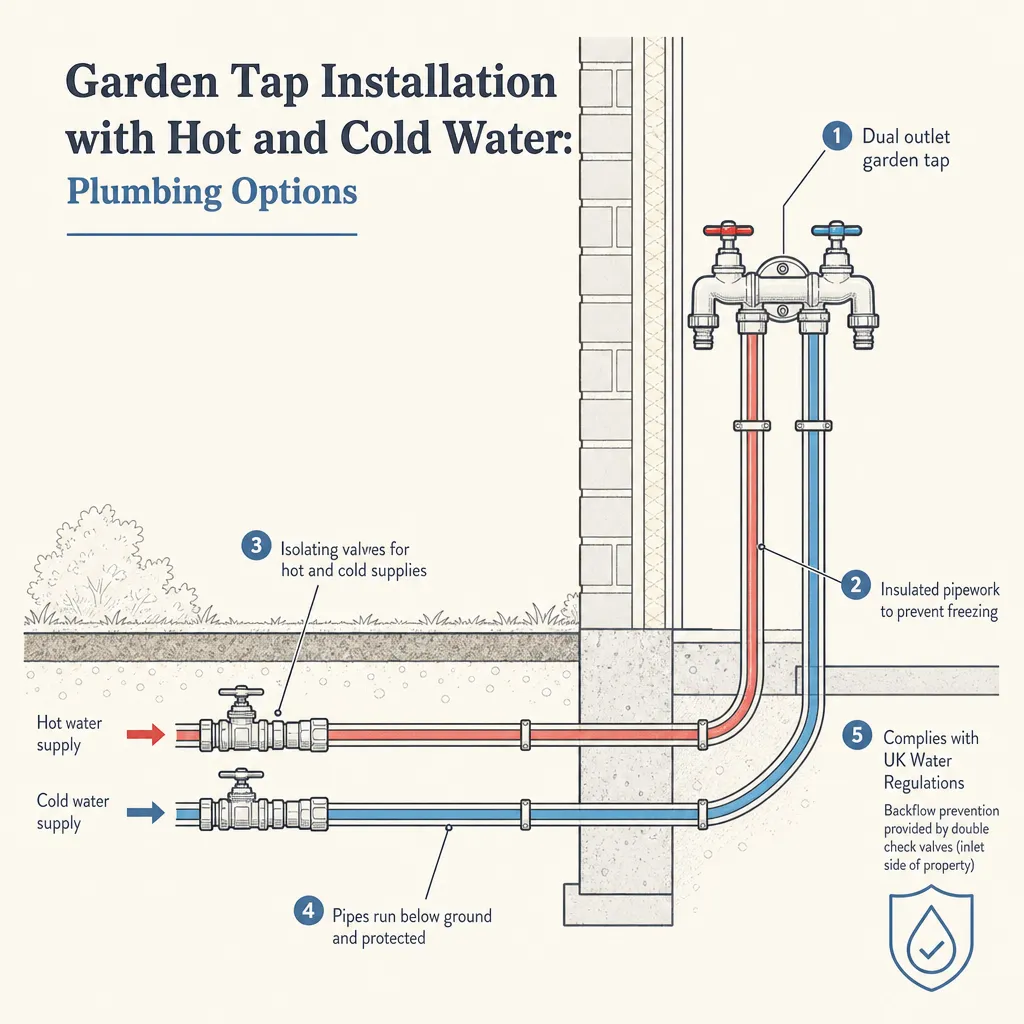
Garden Tap Installation with Hot and Cold Water: Plumbing Options
Adding a cold garden tap is a common DIY project, but routing hot water outdoors requires a plumber to connect to your domestic hot water system and comply with the Water Supply (Water Fittings) Regulations 1999.