Stone Cladding Installation: Material Options, Durability and Property Value
By Housey · Last reviewed 24th of May 2026
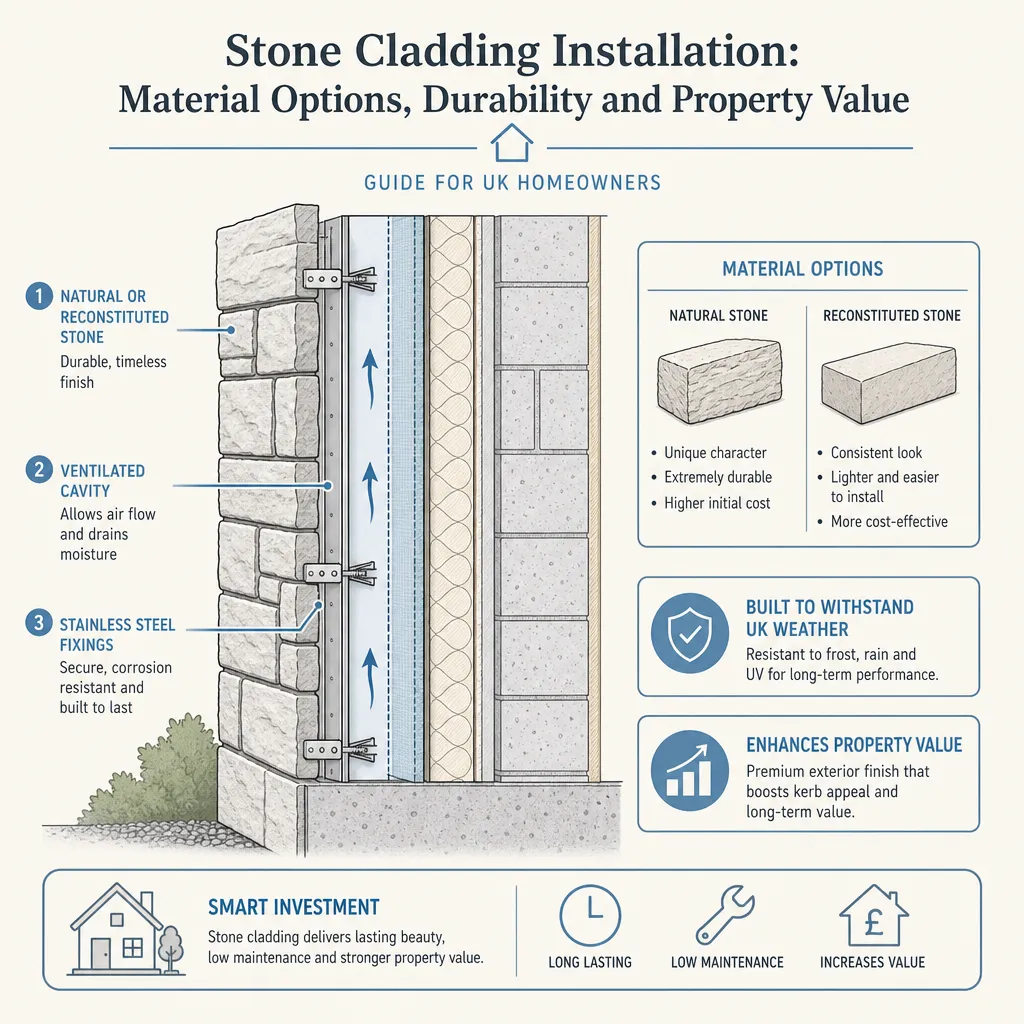
Stone Cladding Installation: Material Options, Durability and Property Value
Stone cladding is a finishing choice that sits at the intersection of aesthetics, weather protection, and property character. Homeowners typically consider it when updating an ageing render, adding texture to a plain brick elevation, or refreshing a 1960s or 1970s concrete-panel exterior. Done well, it transforms a façade; done poorly, it creates moisture problems that are expensive and disruptive to undo.
Key points
- Natural stone cladding typically costs £100–£200 per m² installed; reconstituted (cast) stone panels cost £80–£150 per m², depending on stone type, panel size, and fixing system. Indicative UK costs, last reviewed 2026-05-24.
- Changing the external appearance of a dwelling by cladding may require planning permission — particularly in conservation areas, on listed buildings, or where the proposed material does not closely match the existing façade under permitted development rules.
- Building Regulations Part L (conservation of fuel and power) may apply where cladding is combined with external wall insulation (EWI) — an approved building control inspector should confirm requirements before work starts.
- Moisture management is the critical installation variable: a drainage cavity or breathable membrane behind the stone prevents water trapping, which can cause damp penetration and structural damage to the substrate.
- Mechanical fixings (stainless steel ties or anchors into masonry) are required for most natural stone panels over 600 mm × 600 mm — adhesive-only fixing is insufficient for large-format or thick stone above low-level application.
Natural stone vs reconstituted stone cladding
Feature | Natural stone cladding | Reconstituted stone cladding |
|---|---|---|
Appearance | Unique, varied; weathers naturally over time | Uniform; can mimic natural stone convincingly |
Weight | Heavy (often 50–80 kg/m²) | Lighter (25–50 kg/m²); easier to handle and fix |
Durability | Very long lifespan if correctly fixed | 20–40 years typical; some colour fade over time |
Installed cost | £100–£200/m² | £80–£150/m² |
Planning sensitivity | Sometimes flagged in conservation areas | Often preferred where natural stone appearance is needed without weight penalty |
Sustainability | Quarried; long transport chain from non-UK sources common | Lower transport emissions; can incorporate recycled aggregate |
Fixing system | Mechanical fixings often required above low level | Adhesive plus mechanical fixings typical |
Maintenance | Low if sealed; occasional repointing | Inspect for cracks every 5–10 years |
Indicative UK costs and performance data, last reviewed 2026-05-24.
Planning permission and building regulations
Permitted development rights in England allow many changes to a house's external appearance. Cladding in a material of similar appearance to the existing exterior is generally permitted. However:
- Properties in a conservation area typically require planning permission for any change to external materials.
- Listed buildings require listed building consent for any external alteration, however minor it appears.
- Where cladding is combined with external wall insulation (EWI), Building Regulations Part L applies and building control sign-off is required.
- Part B (fire safety) may be relevant for buildings above 11 m in height — always check if the property is a flat or part of a higher-density dwelling.
Check with your local planning authority (LPA) before instructing any installer. The Planning Portal householder guidance sets out the permitted development rules for dwellinghouses in detail.
How stone cladding is installed
1. Substrate assessment
The existing wall is inspected for structural soundness, dampness, and adequate fixing depth. Cladding should not be applied to a substrate with active water ingress — any underlying damp must be resolved first.
2. Fixing system selection
- Adhesive-only: suitable for small, lightweight tiles at low level on sound masonry.
- Adhesive plus mechanical stainless steel fixings: required for panels over 600 × 600 mm, above 1 m height, or where wind loading is a concern.
- Railed or sub-frame systems: used for large-format natural stone or where a ventilated cavity is specified.
3. Moisture management
A drainage cavity or breathable membrane between the cladding and the wall prevents water accumulation. On solid-wall properties especially, this detail is critical to prevent condensation and damp bridging into the structure.
4. Installation and pointing
Panels are fixed from the base upward, with level checks throughout. Joints are pointed with mortar or a weatherproof sealant rated for external use, to shed water and prevent ingress.
5. Finishing and sealing
Many natural stones benefit from a penetrating sealer to reduce staining and algae growth in the UK climate. Some reconstituted stone products are pre-sealed by the manufacturer.
What to ask before accepting a quote
- What fixing system do you recommend for my wall type, and why?
- Will you install a drainage cavity or breathable membrane?
- Have you checked whether planning permission is required for this property?
- What surface preparation is included — cleaning, treating damp, repairing the substrate?
- What guarantee covers the fixing system and pointing?
- Is VAT included, and are there access costs such as scaffold or MEWP hire?
- What qualifications or trade memberships does your team hold?
- Who is responsible for obtaining building control sign-off if required?
When to get professional help
Stone cladding is not a DIY project for most homeowners — it involves working at height, heavy panel handling, and knowledge of structural fixing requirements. Always use a qualified installer with experience in external stone cladding systems.
Red flags to watch for:
- An installer who does not mention moisture management or a ventilated cavity.
- Adhesive-only fixing proposed for large or high-level panels.
- No mention of planning permission or permitted development checks.
- Very low quotes that exclude scaffold — working at height on exterior cladding requires proper access equipment.
- No written specification of fixing type, panel origin, or joint material.
Consult a structural engineer if the substrate is unusual (timber frame, SIP panel, or lightweight blockwork), panels are large-format, or you suspect the existing wall has structural issues before work begins.
How Housey can help
Housey connects UK homeowners with experienced extension builders and renovation specialists who can assess your property, advise on fixing systems and planning requirements, and deliver compliant stone cladding installations.
Frequently asked questions
Does stone cladding add value to a property?
Well-executed stone cladding in keeping with the property's character and neighbourhood can enhance kerb appeal and perceived quality. However, poorly chosen or badly applied cladding — particularly on mid-century or modern homes where stone is incongruous — can have a neutral or negative effect on value. A RICS valuer considers the whole property in context.
How long does stone cladding last?
Natural stone cladding, if correctly fixed and maintained, can last the life of the building — 50 years or more. Reconstituted stone typically performs for 20–40 years before signs of colour fade or surface weathering appear. Both types benefit from periodic inspection of fixings, joints, and sealant.
Does stone cladding need maintenance?
Yes. Joints should be inspected every 5–10 years and repointed where cracked or receding. Natural stone benefits from resealing every 3–5 years. Biological growth such as algae or lichen should be treated with a biocide appropriate for stone — pressure washing can damage softer stone types.
Can I clad just part of an exterior wall?
Yes — partial cladding, such as a feature chimney breast, porch, or entrance bay, is common and often very effective. Ensure the junction between cladded and uncladded sections is properly weathered and detailed to prevent water ingress at the exposed edge.
Sources and further reading
- Permitted development rights for householders: technical guidance — GOV.UK
- Common projects: householder guidance — Planning Portal
- Approved Document L: Conservation of fuel and power — GOV.UK
- Exterior wall insulation and cladding guidance — Historic England
Useful next reads
 Improvement & Build
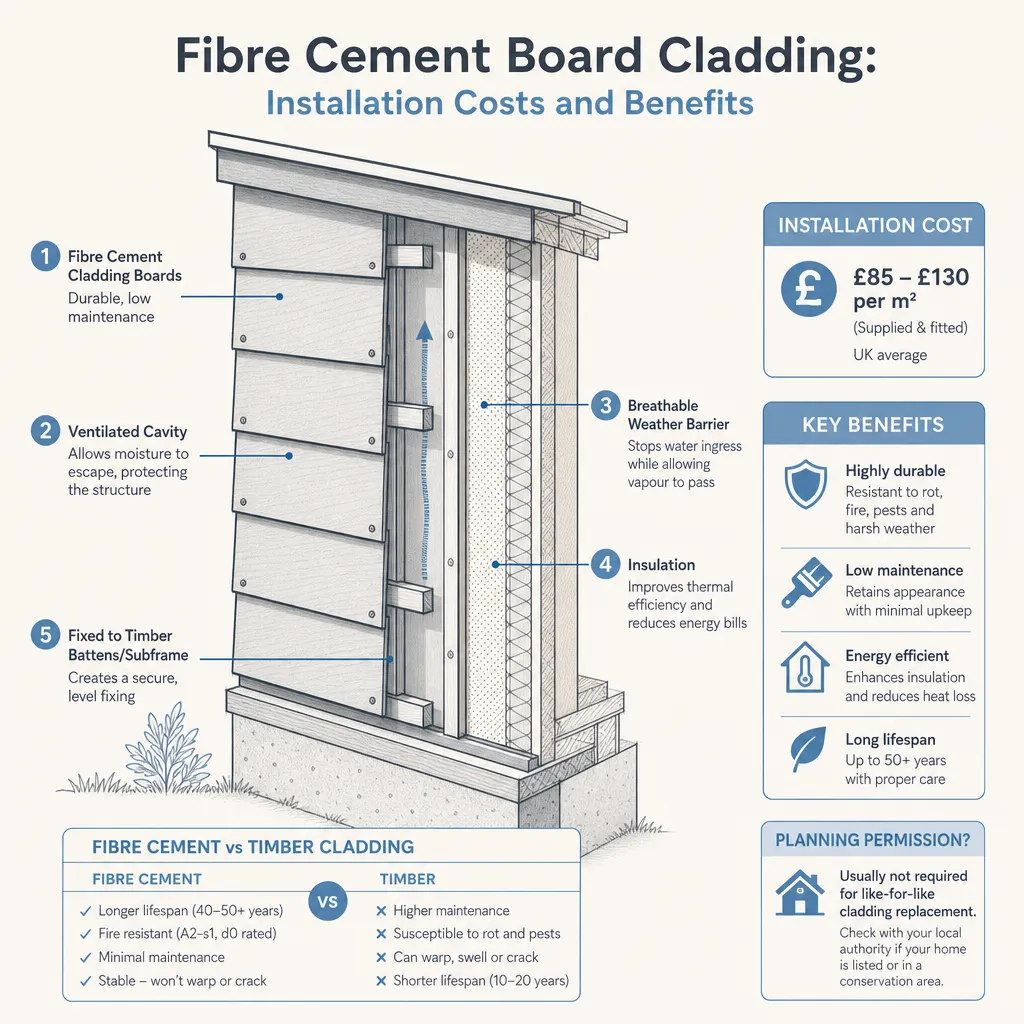
Fibre Cement Board Cladding: Installation Costs and Benefits
Fibre cement board cladding typically costs £80–£180 per m² installed in the UK, including boards, battens, breather membrane, and labour.
 Improvement & Build
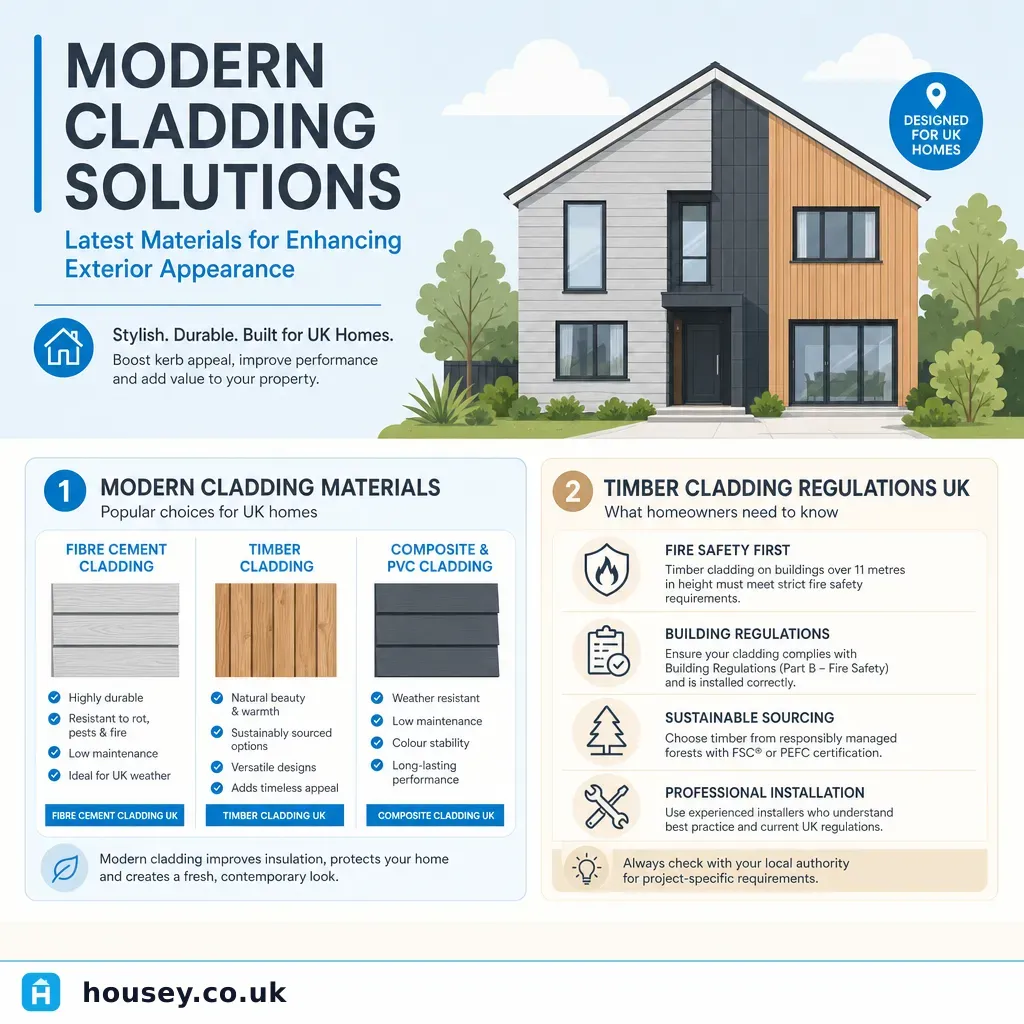
Modern Cladding Solutions: Latest Materials for Enhancing Exterior Appearance
Modern cladding options for UK homes include fibre cement, timber, brick slips, render, and metal.
 Improvement & Build
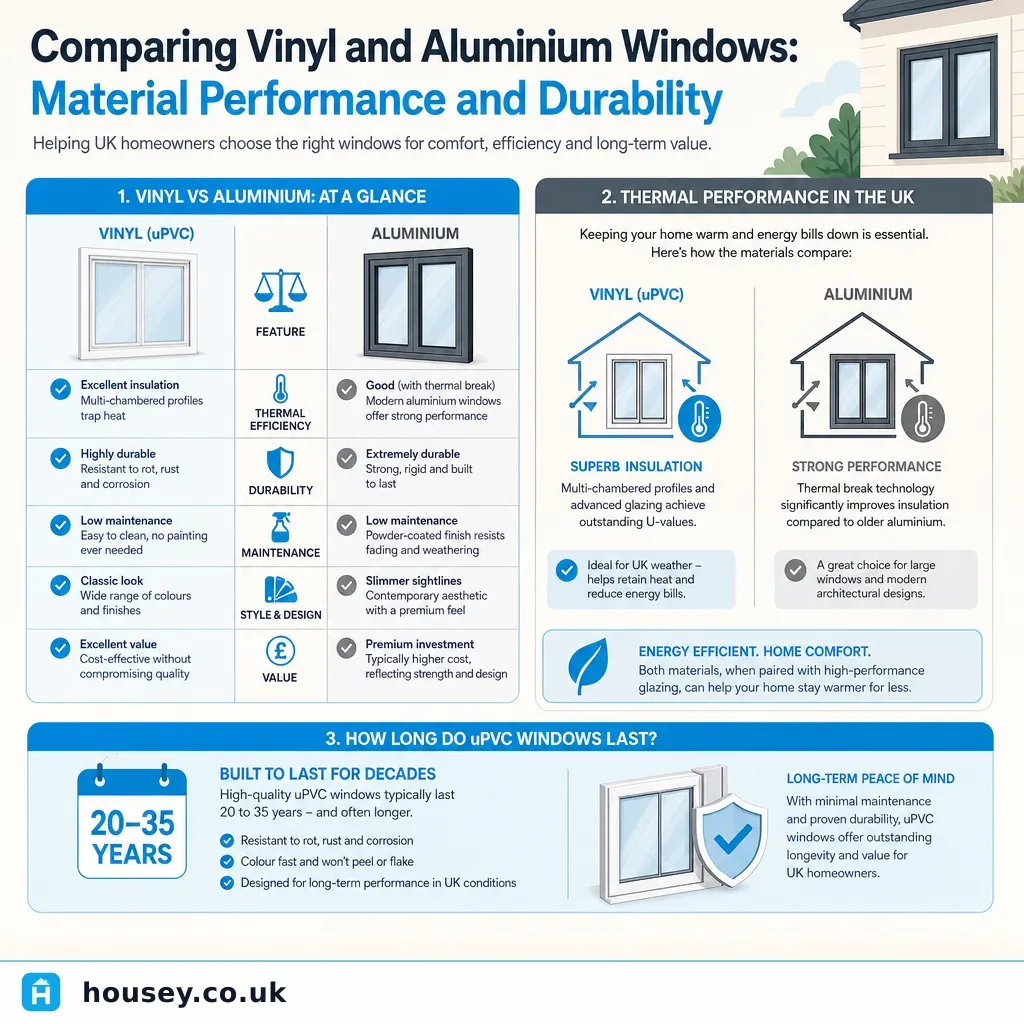
Comparing Vinyl and Aluminium Windows: Material Performance and Durability
uPVC (vinyl) and aluminium windows both meet UK Building Regulations Part L when properly specified.
 Improvement & Build
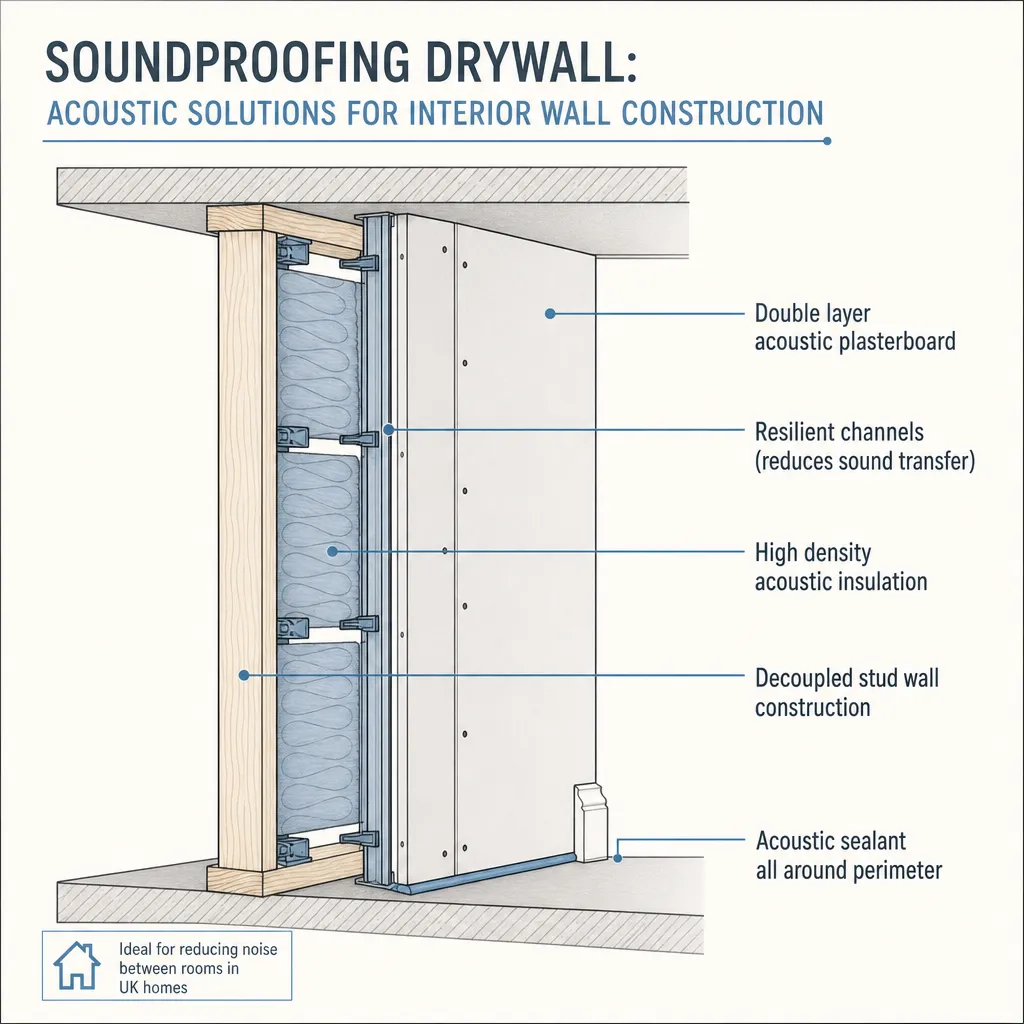
Soundproofing drywall: acoustic solutions for interior wall construction
Soundproofing drywall in UK homes typically combines acoustic plasterboard, resilient bar fixings, and mineral wool cavity fill to reduce airborne and structure-borne noise.
 Improvement & Build
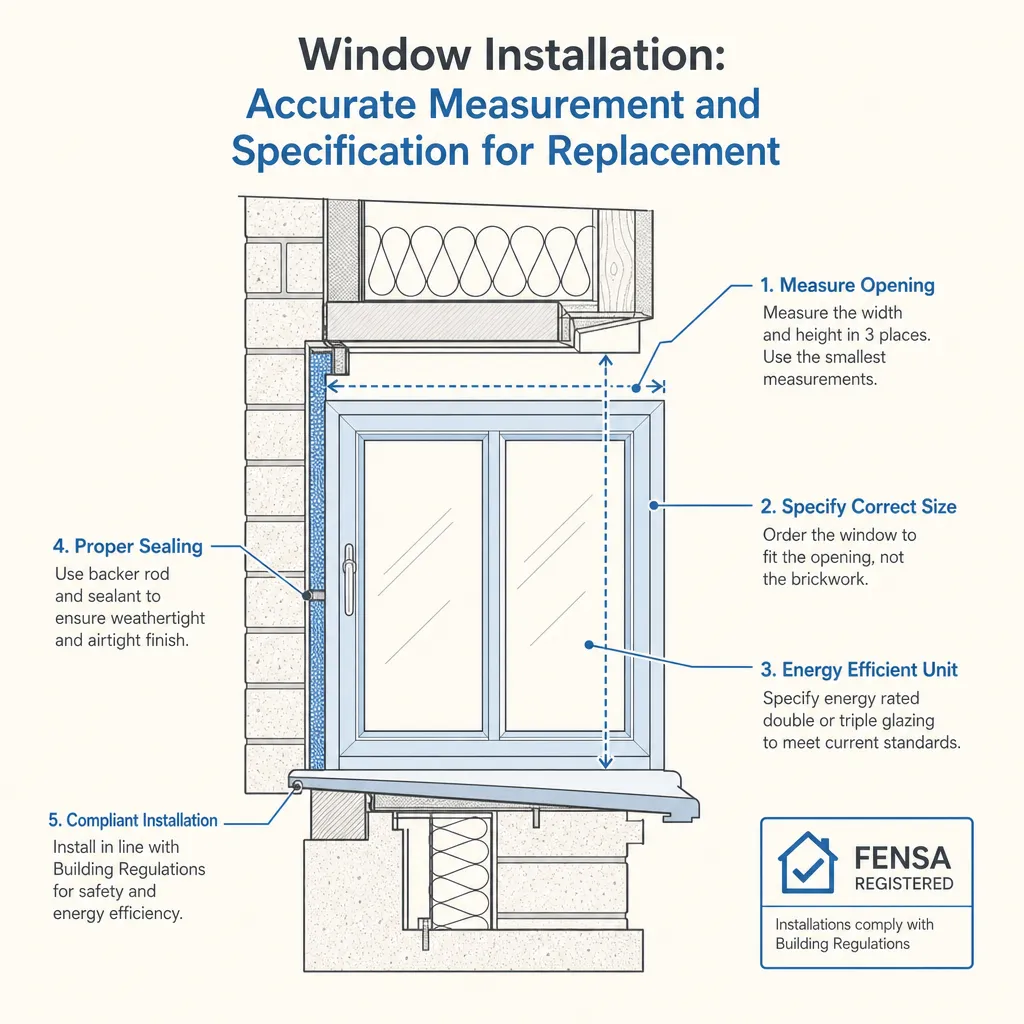
Window Installation: Accurate Measurement and Specification for Replacement
Accurate window measurement for replacement means recording the width and height of the existing frame opening in at least three places, noting the smallest dimension, and providing a full specification to your installer — including frame material, glazing type, opening style, and trickle ventilators.