Renovation Scheduling: Should You Paint Before or After Laying Flooring?
By Housey · Last reviewed 1st of June 2026
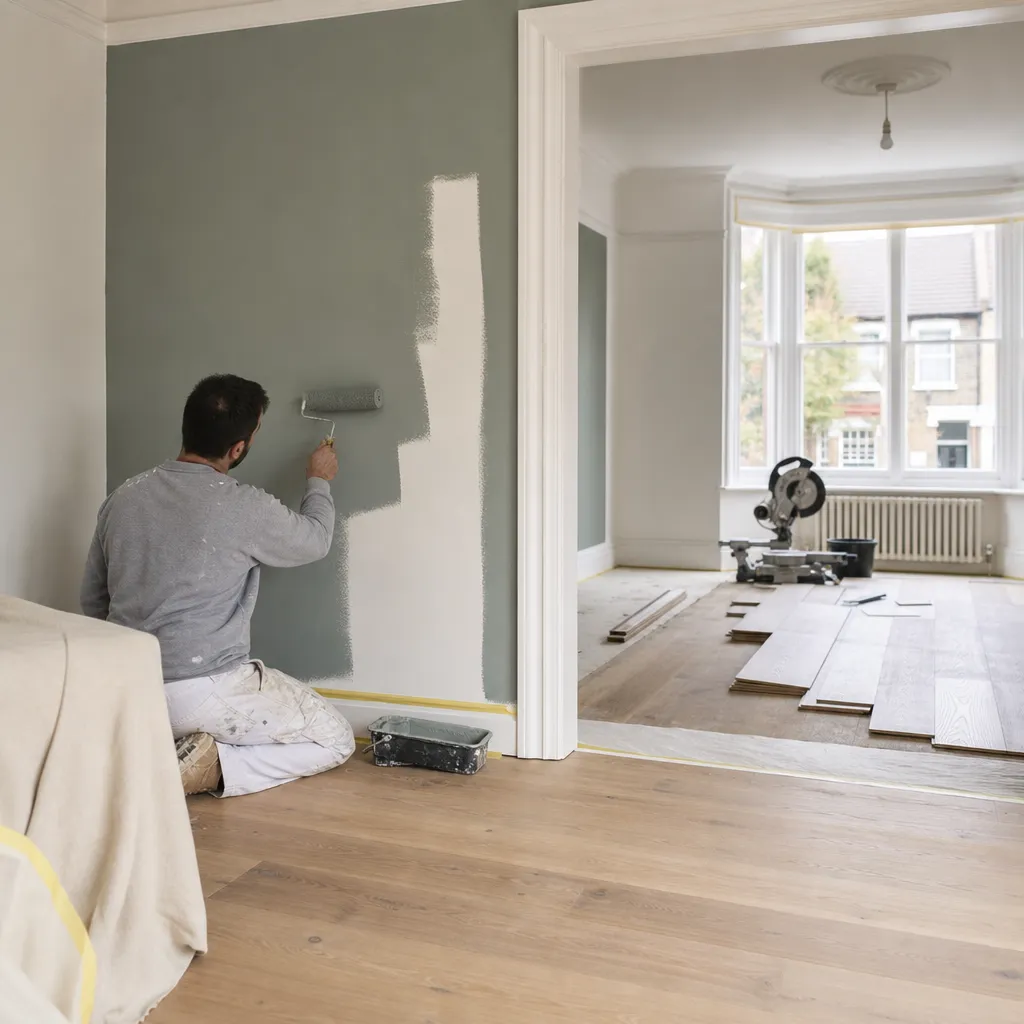
Renovation Scheduling: Should You Paint Before or After Laying Flooring?
Most UK homeowners hit the same question partway through a renovation: your decorator is ready to start and your floor fitter is available next week — but which trade should go first? Getting the sequence wrong means either protecting new floors from paint splashes or touching up skirting boards after flooring has been laid. The stakes are higher than they appear, particularly when multiple trades share a tight booking window on a Victorian terrace, 1930s semi, or new-build flat.
Key points
- Carpet must always be fitted after painting is complete — wet paint can contaminate gripper rods and the carpet pile, and fitters need bare floor edges to tuck and secure the carpet correctly
- The standard renovation sequence for most rooms is: plasterwork → first-fix painting (mist coat and emulsion) → flooring → second-fix painting (skirting gloss, touch-ups, architraves)
- Where new skirting boards are being fitted, hard flooring — laminate, engineered wood, LVT — goes down first so the skirting sits on top of the floor edge and covers the expansion gap
- Ceramic and porcelain wall tiles should be fixed before floor tiles to establish the correct junction line; painting above the tile line follows after tiling is complete
- Polished concrete and resin screed floors generate significant dust during finishing — always schedule these last, after all painting is complete
The standard sequence: paint walls before laying flooring
For the majority of UK renovation projects — rooms receiving carpet, LVT, or engineered wood — the standard trade sequence runs:
- Structural and first-fix work (partition walls, boxing-in, plumbing or electrical rough-in)
- Plastering and boarding
- First-fix painting — mist coat on new plaster, followed by one or two coats of emulsion on walls and ceilings
- Flooring installation
- Second-fix painting — final coats on skirting boards, architraves, and window boards; touching up any marks from the floor fitters
Painting before flooring lets the decorator roll close to the floor without needing to protect a new surface. Cutting in at the skirting line is cleaner when the floor is bare. Even minor splashes near the base of the wall are typically hidden once skirting boards and flooring are in place. The Painting and Decorating Association recognises this two-stage decoration approach as standard practice on renovation projects, with the floor layer working between the decorator's first and second visits.
When to lay flooring first: the main exceptions
The standard sequence has important exceptions worth establishing before you book trades.
New skirting boards being fitted: If old skirting is being removed and replaced — a common step in full renovations — hard flooring goes down first. The new skirting is then scribed or cut to sit on top of the floor surface, covering the expansion gap at the perimeter. The decorator returns after the floor fitters to paint or gloss the new skirting boards.
Polished concrete and resin floors: Grinding and polishing concrete, or applying a two-part resin, generates significant dust and fumes. These processes must come after all other work, including painting. Schedule concrete and resin finishing as the final trade before the room is cleaned and furnished.
Solid wood strip flooring being site-sanded: If solid timber boards will be sanded and lacquered on site rather than supplied pre-finished, the sanding process deposits fine dust on nearby surfaces. Budget for a touch-up painting visit after sanding is complete.
Flooring type guide: which sequence applies?
Flooring type | Paint first? | Reason |
|---|---|---|
Carpet | Yes — both coats before fitting | Gripper rods and tucking require bare floor edges; paint splashes will not affect fitting |
LVT / vinyl sheet (glued) | Yes | Adhesive applied to bare subfloor; decorating first avoids costly floor protection |
LVT / vinyl (floating click) | Yes — then fit skirting on top | Floating floors need an expansion gap; new skirting covers the perimeter edge |
Laminate (floating) | Yes — then fit new skirting after | Same expansion gap principle; skirting is fitted after flooring |
Engineered wood (nailed or glued) | Yes | Skirting rebedded against fitted floor; second-fix painting follows |
Ceramic or porcelain tiles (floor) | Wall tiles first, then floor tiles | Wall tile base sets the floor tile cut line; avoids uneven grout joints at the junction |
Solid wood strip (site-finished) | Paint first, touch up after sanding | Sanding dust settles on painted surfaces; allow for a touch-up coat after sanding |
Polished concrete or resin screed | All painting first; floor finishing last | Grinding and curing generate dust and fumes; must be the final finishing process |
Indicative UK trade practice, last reviewed 2026-06-01. Sequence may vary depending on contractor method and room configuration.
Bathroom and kitchen sequencing: tiles change the order
In bathrooms, en suites, and wet rooms, tiles dominate the sequencing decision. A typical bathroom renovation follows this order:
- First-fix plumbing and electrical
- Tanking and waterproofing membrane
- Wall tiling
- Floor tiling and grouting
- Second-fix plumbing and electrical (basin, shower, radiator connections)
- Painting above the tile line
- Any non-tiled flooring outside the wet zone
Wall tiles establish the datum line at the floor junction. Tiling floors first risks misaligned grout joints where floor tiles meet unfixed wall tiles. Painting walls above the tile line is always the final decoration step — wet tile adhesive and grout can damage freshly painted surfaces, and steam from early use of a shower can lift new emulsion before it has fully cured.
In kitchens, wall tiling behind hobs and worktops typically follows unit installation rather than preceding it, as units determine the final tiled area height.
Trade coordination: a practical decision tree
Use this guide before booking trades to agree the sequence in advance.
- Fitting carpet? → Book decorator first; carpet fitters book after the final paint coat has dried for at least 24 hours.
- Fitting hard flooring and replacing skirting boards? → Book floor fitters first; decorator returns after new skirting is fitted to paint or gloss.
- Keeping existing skirting and fitting a floating floor? → Decorator first, then floor fitters undercut or butt up to existing skirting.
- Tiling floors and walls? → Wall tiler first, then floor tiler, then decorator paints any untiled wall areas.
- Having polished concrete or resin flooring? → All painting completes first; concrete or resin finisher is the final trade before furnishing.
- Unsure who books first? → Ask each trade directly before signing anything — reputable contractors will state their preferred working order and flag any scheduling conflicts.
When to get professional help
Most sequencing decisions can be resolved by talking to your trades before work starts. Consider involving a project manager or principal contractor when:
- Multiple trades are working across several rooms simultaneously and schedules are interdependent
- The renovation includes structural alterations, rewiring, or replumbing that affect first-fix timing
- You are working on a listed building or in a conservation area where material choices may require listed building consent
- You have experienced scheduling conflicts or costly rework on a previous renovation and want an experienced programme coordinator
How Housey can help
Housey connects UK homeowners with vetted local tradespeople — from decorators and floor fitters to project managers and renovation contractors. Whether you need a single trade or help coordinating a full renovation programme, Housey makes it straightforward to compare quotes from professionals who understand the correct sequencing for your project type.
Frequently asked questions
Can you paint a room after carpet has already been fitted?
Yes, but it is more awkward and risks damaging the carpet pile with paint splashes or ladders. You will need to protect the carpet carefully with dust sheets and tape, and cutting in at the skirting line is harder with carpet in the way. Where possible, it is always preferable to paint before carpet is fitted.
Should skirting boards be fitted before or after flooring?
It depends on whether you are replacing the skirting. If keeping existing skirting, hard flooring is usually butted up to it or the skirting is undercut. If fitting new skirting, lay the hard flooring first and fit the skirting on top so it covers the expansion gap at the perimeter — then the decorator paints or glosses the new skirting boards.
How long should you wait after painting before laying flooring?
Water-based emulsions are touch-dry within an hour, but floor fitters usually prefer at least 24 hours for the final coat to fully cure. Oil-based gloss on skirting boards takes longer — allow 24 to 48 hours. Building this drying time into your booking schedule avoids scuffing freshly painted skirting boards during flooring installation.
What happens if a decorator and floor fitter are booked on the same day?
One trade will likely need to stand down, which can incur call-out charges. The simplest solution is to leave at least a full working day between trades — decorator completes first, floor fitter arrives the following morning. Build this buffer into your renovation schedule from the outset and confirm the sequence when booking each trade.
Sources and further reading
- Painting and Decorating Association — trade guidance and best practice for decorators
- Contract Flooring Association — consumer advice — installation standards and trade practice
- CITB Construction Skills — construction trade sequencing and training standards
Useful next reads
 Improvement & Build
Evaluating And Planning Renovations For Properties Requiring Modernisation
Start by commissioning a condition survey — RICS Level 3 for pre-1919 properties — to identify structural defects, damp, and services issues before finalising a budget.
 Improvement & Build
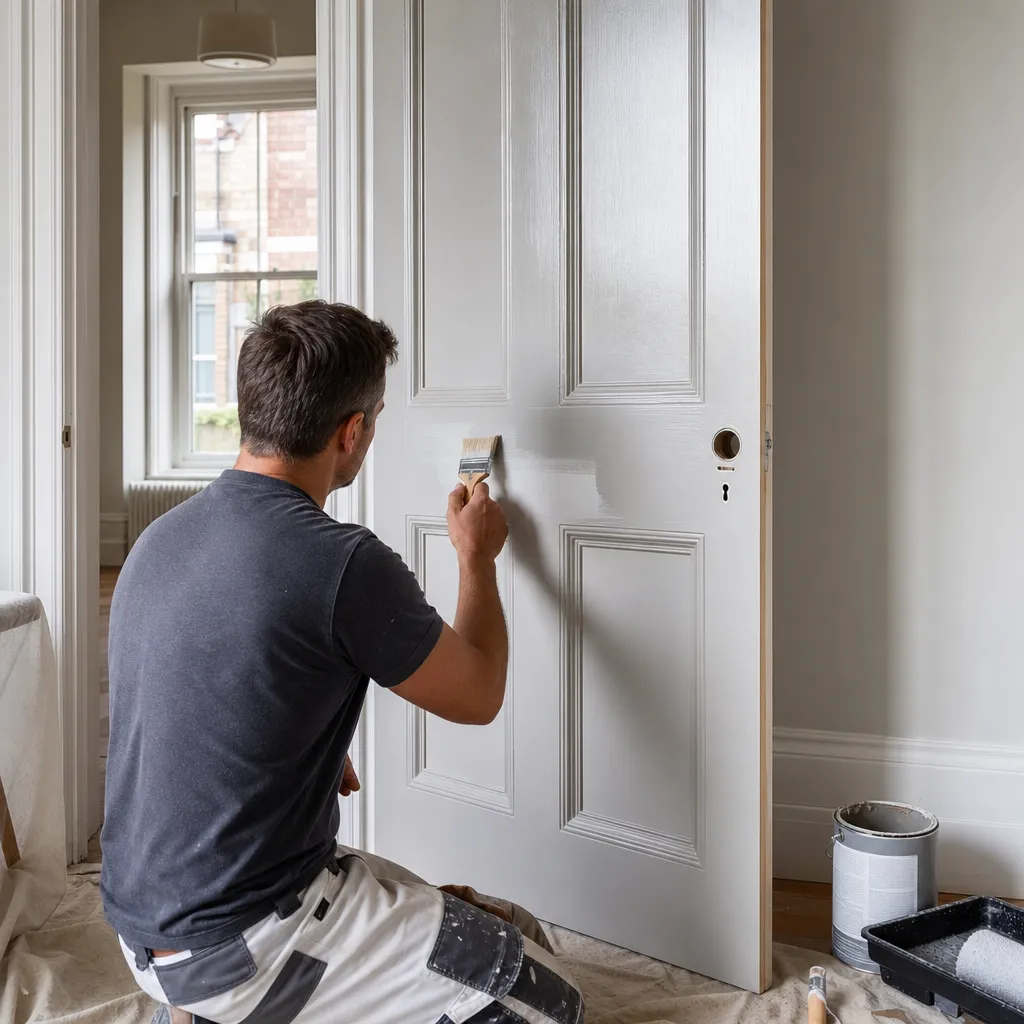
Painting Interior Doors: Preparation and Technique
Painting interior doors well depends on preparation rather than paint choice.
 Improvement & Build
Home Extension Costs: Budget Planning Guide
A single-storey rear extension in the UK typically costs £1,500–£2,500 per square metre to build.
 Improvement & Build
Painting Brick Fireplaces: Preparation, Materials and Technique
Painting a brick fireplace requires thorough cleaning, a masonry-specific primer, and heat-resistant paint rated to at least 200°C for the firebox area.
 Improvement & Build
Stress-Free Home Renovation: Project Planning and Contractor Management Tips
The home renovations that stay on budget and on time share one characteristic: clear upfront planning.