Rental Property EPC Standards: Compliance Costs and Retrofit Requirements
By Housey · Last reviewed 18th of May 2026
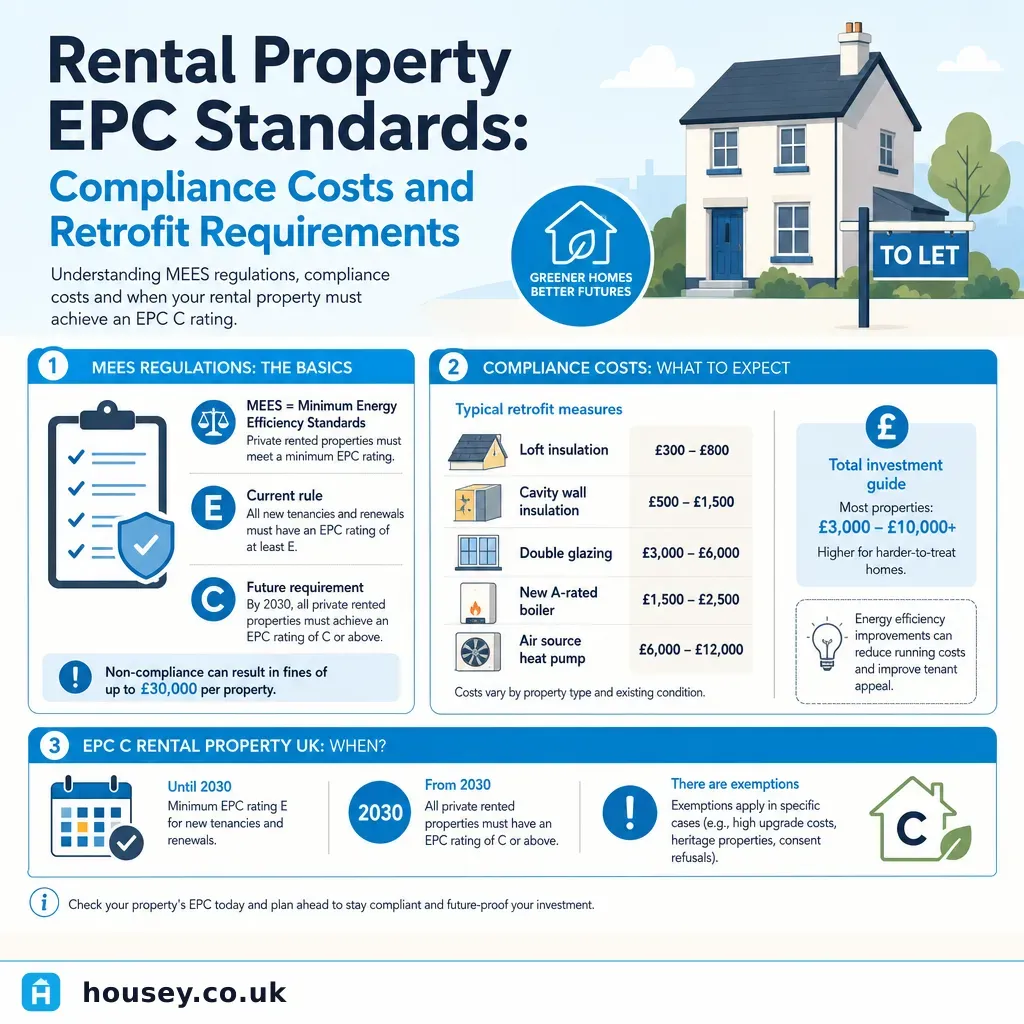
Rental Property EPC Standards: Compliance Costs and Retrofit Requirements
England's Minimum Energy Efficiency Standards (MEES) mean that landlords cannot legally let most privately rented residential properties without a valid Energy Performance Certificate (EPC) showing a rating of at least E. Compliance has been a live issue for landlords since the regulations came into force in 2018, and the government has signalled its intention to raise the minimum standard to EPC C — a threshold that will require significant retrofit investment across a large proportion of the existing private rental stock.
Key points
- Under the MEES Regulations 2018 (as amended), all privately rented homes in England and Wales must hold a minimum EPC E rating; a property rated F or G cannot lawfully be let without a valid exemption registered on the PRS Exemptions Register.
- Penalties for non-compliance can reach £5,000 per property in England and Wales, with higher fines possible for continued or unreported breaches.
- Landlords may register an exemption where all relevant improvements would exceed the current cost cap of £3,500 (including VAT) and EPC E still cannot be achieved, or where consent, devaluation, or planning constraints apply.
- The UK government's Warm Homes Plan includes proposals to require EPC C for rental properties in England, with a 2030 target; this is not yet law and is subject to further consultation and primary legislation.
- An EPC is valid for ten years and must be carried out by an accredited domestic energy assessor (DEA); a landlord may commission a fresh assessment at any time after improvements have been made.
What the law currently requires
The Energy Efficiency (Private Rented Property) (England and Wales) Regulations 2015, amended in 2019, apply to most privately rented residential properties. From April 2020, the EPC E minimum applied to all existing tenancies, not only new lets.
The current legal position:
- EPC E is the minimum required for all residential lettings in England and Wales, with limited exemptions.
- Scotland operates under separate legislation; landlords with Scottish properties should consult the relevant Scottish Government guidance on the Private Rented Housing Panel and energy efficiency standards.
- Northern Ireland has its own EPC regime; MEES does not apply there.
- Certain tenancy types — short holiday lets under a licence, properties let with a long lease of more than 99 years, some listed buildings — may be exempt from MEES. Check the GOV.UK landlord guidance for your specific tenure before assuming an exemption applies.
What EPC C would mean for landlords — and the retrofit cost
If the government legislates EPC C as the new minimum for the private rented sector, a large proportion of the existing stock will require improvement. The English Housing Survey indicates that many privately rented dwellings currently sit below EPC C, with older and solid-wall properties presenting the highest upgrade costs.
Typical retrofit costs to raise EPC rating (indicative UK costs, last reviewed 2026-05-18; costs vary by property size, type, and location — always obtain quotes from accredited installers):
Current EPC | Likely required measures | Indicative cost range |
|---|---|---|
EPC E (close to D boundary) | Loft insulation, heating controls | £500–£2,500 |
EPC D to reach C, cavity walls | Cavity wall insulation, boiler upgrade | £1,500–£6,000 |
EPC D to reach C, solid walls | Internal or external solid wall insulation | £6,000–£22,000 |
EPC E–F (poor baseline, multiple deficiencies) | Fabric measures, heating system, controls | £5,000–£25,000+ |
These ranges are illustrative; the actual cost depends on property size, construction type, existing heating system, and the specific measures an accredited assessor recommends for the individual property.
The cost cap and exemptions
Under the current MEES regime, a landlord is not required to spend more than £3,500 (including VAT) per property to achieve EPC E. If the property still cannot reach EPC E after reaching this cost cap, or if no appropriate improvement can be made, the landlord may register a relevant exemption.
Valid exemption types include:
- High cost exemption: all relevant improvements would cost more than £3,500 (incl. VAT) and EPC E is still not achievable.
- All improvements made exemption: all possible measures have been installed up to the cost cap and EPC E has not been achieved.
- Consent exemption: a tenant, superior landlord, or mortgage lender has refused consent for works.
- Devaluation exemption: a RICS-registered valuer confirms that improvements would reduce the market value by more than 5%.
- Listed building or conservation area exemption: planning or listed building consent is required for the recommended measures and has been refused, or the improvements would unacceptably alter the building's character.
Exemptions generally last five years and must be renewed. They must be registered before the let continues — not after a penalty notice has been issued.
Which improvements make the most difference to an EPC rating?
EPC ratings are calculated using the Standard Assessment Procedure (SAP) and are influenced by insulation levels, heating system efficiency, glazing, hot water provision, and lighting. The measures that typically improve ratings most cost-effectively are:
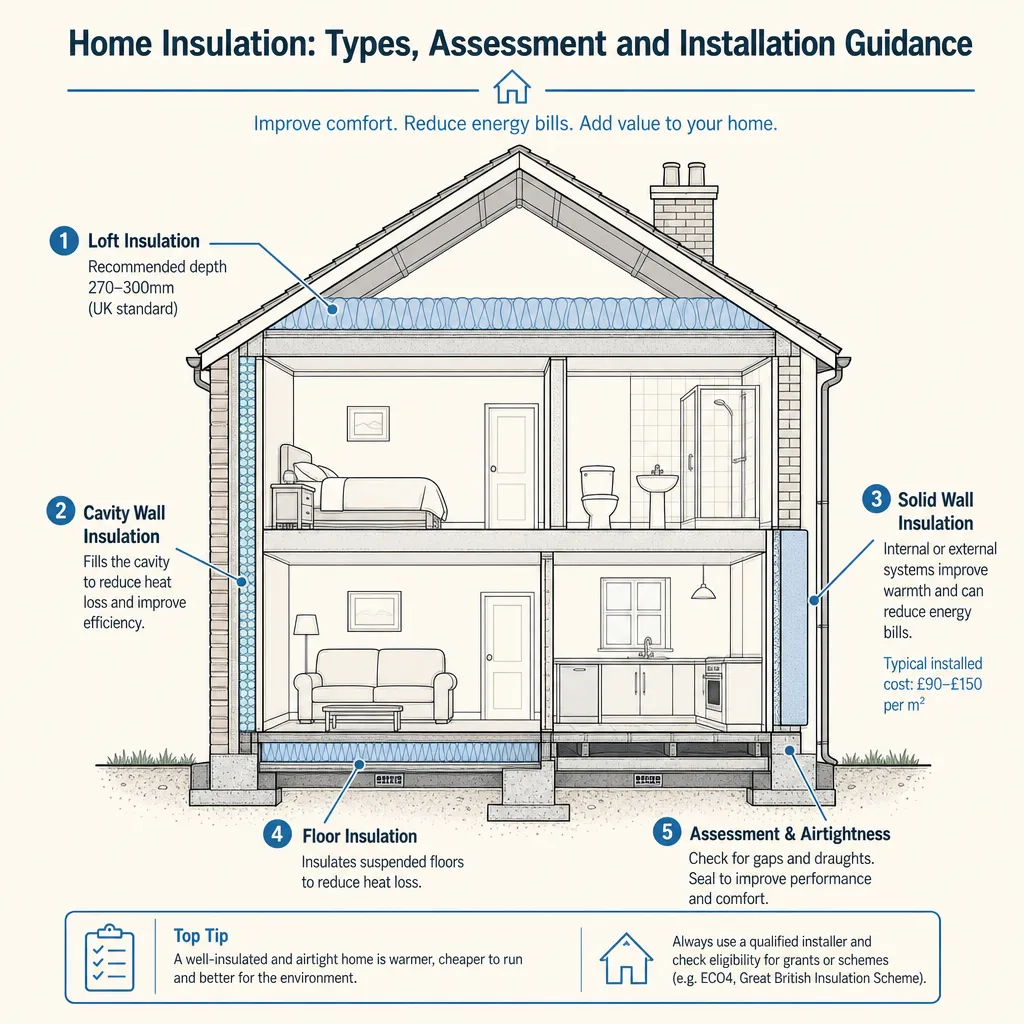
- Loft insulation (if currently uninsulated or below the recommended depth of 270 mm)
- Cavity wall insulation (where walls are of cavity construction, generally post-1920 stock)
- Upgrading to a more efficient heating system (modern condensing gas boiler, or a heat pump)
- Installing heating controls (room thermostat, thermostatic radiator valves, time programmer)
- Secondary glazing or upgraded double or triple glazing
For solid-wall properties — common in Victorian and Edwardian terraces and most pre-1920 stock — EPC improvement is considerably more costly. Cavity wall insulation is not applicable; solid wall insulation (internal or external) is typically required, and costs are substantially higher.
Landlord compliance checklist
Before starting any new tenancy, or when reviewing an existing portfolio:
Grant funding for landlord retrofit
Landlords are not automatically excluded from retrofit grant schemes, but eligibility depends on the individual programme:
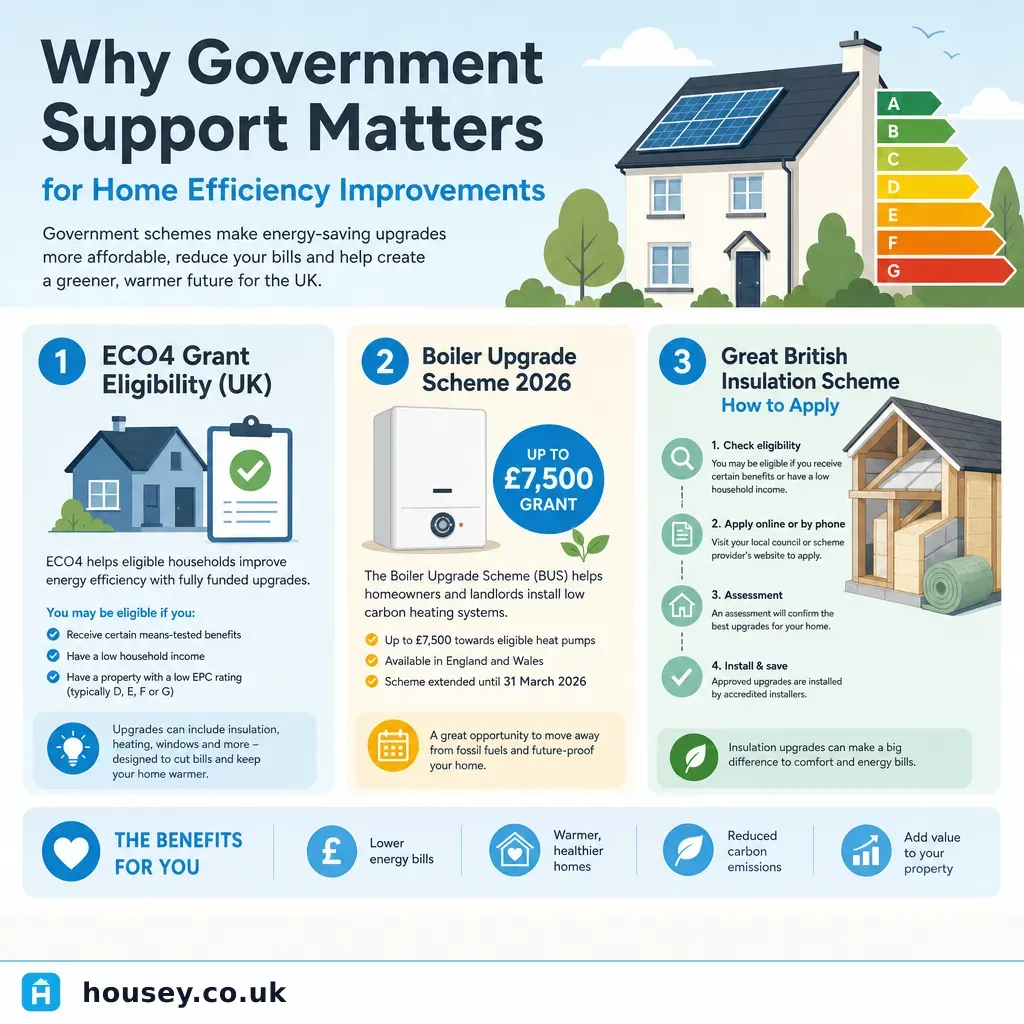
- ECO4: covers works in privately rented properties where the tenant meets the income or benefit criteria. The landlord must give consent and may need to contribute towards costs above what the scheme funds.
- GBIS: similar tenant-eligibility rules apply to privately rented properties, focused on insulation measures.
- Boiler Upgrade Scheme (BUS): open to landlords for heat pump replacements, subject to the same conditions as owner-occupiers including a valid EPC with no outstanding insulation recommendations.
- Local Authority and Warm Homes Local Grant schemes: may include privately rented properties; check with your local council for availability in your area.
An energy-efficiency consultant can advise on which grant routes apply to specific properties in your portfolio and help you navigate application processes.
Important limitations
This article provides general information about EPC regulations for private landlords in England. Regulations differ in Scotland, Wales, and Northern Ireland. Proposed changes — including a move to EPC C as the mandatory minimum — have not yet been enacted and remain subject to government consultation and primary legislation. Penalty enforcement is carried out by local housing authorities, whose approach and activity levels vary across England. This article is not legal advice; if you are uncertain about your compliance obligations for a specific property or tenancy type, consult a solicitor or a qualified energy assessor.
What to ask a qualified professional
Before commissioning EPC assessments, retrofit works, or registering exemptions, ask:
- Is the assessor accredited on a UKAS-approved scheme such as Elmhurst, Stroma, or DCEAS?
- Does the current EPC reflect recent improvements, or was it produced before works were carried out?
- What specific measures would raise this property to EPC C, and in what recommended sequence?
- Are there any planning or listed building constraints that would limit which improvements can lawfully be installed?
- Does this property or its current tenant qualify for ECO4, GBIS, or another grant scheme?
- What evidence do I need to retain to demonstrate compliance or to support a valid exemption application?
When to get professional help
Seek specialist advice promptly if:
- Any of your properties are currently let at EPC F or G without a valid registered exemption — this is an active legal breach that local authorities can act on.
- You own properties of non-standard or historic construction where the improvement pathway to EPC C is unclear.
- You are considering major retrofit works such as solid wall insulation or heat pump installation and need to understand planning implications and financing options.
- You are unsure whether a proposed exemption is valid for your circumstances or how to register it correctly on the PRS Exemptions Register.
A retrofit assessment by a PAS 2035-qualified assessor is a practical starting point for understanding a property's current position and the realistic cost of reaching EPC C.
How Housey can help
Housey connects landlords with accredited EPC assessors, retrofit assessors, and insulation assessors who can survey your properties, confirm compliance status, and provide a clear improvement roadmap — whether you have a single rental or a growing portfolio.
Frequently asked questions
Can I still let a property with EPC F or G if I register an exemption?
Yes, provided you register a valid exemption on the PRS Exemptions Register before continuing the let — not retrospectively after a penalty notice. Exemptions are time-limited, typically five years, and must be renewed on expiry. Each exemption type has specific evidence requirements; check the GOV.UK landlord guidance on MEES before applying to ensure your circumstances qualify.
Do EPC requirements apply to short-term holiday lets?
Most short-term holiday lets — particularly those let under a licence rather than an assured or assured shorthold tenancy — are currently exempt from MEES. Regulations in this area are evolving and the status of short-term lets is subject to ongoing government review. Take legal advice if you are uncertain about your specific tenure type or letting arrangement.
How much does it cost to get an EPC for a rental property?
An EPC from an accredited domestic energy assessor typically costs £60–£120 for a standard residential property, though prices vary by size, location, and assessor. Multi-property discounts are sometimes available for landlords with larger portfolios. Always use an assessor accredited on a UKAS-approved scheme. Indicative UK costs, last reviewed 2026-05-18.
If a tenant refuses access for retrofit works, can I still comply with MEES?
If a tenant refuses consent for works required to meet MEES, you may be able to register a consent exemption on the PRS Exemptions Register, valid for five years. Once the tenancy ends or is renewed, you should seek access again — the exemption does not permanently remove your compliance obligation, and you will need to demonstrate the refusal was genuine.
Sources and further reading
- Domestic private rented property: minimum energy efficiency standard — landlord guidance — GOV.UK
- PRS Exemptions Register — GOV.UK
- The Energy Efficiency (Private Rented Property) (England and Wales) Regulations 2015 — legislation.gov.uk
- Warm Homes Plan — GOV.UK
- EPC register and accredited assessor search — EPC Register (GOV.UK)
Useful next reads
 Energy & Retrofit
Improving thermal efficiency of sliding glass doors in your home
Sliding glass doors lose heat through the glazing unit, the frame, and air gaps in worn seals.
 Energy & Retrofit
Why Government Support Matters for Home Efficiency Improvements
UK homeowners and landlords can access several government-backed schemes to fund energy efficiency improvements, including ECO4, the Boiler Upgrade Scheme, and the Great British Insulation Scheme.
 Energy & Retrofit
Home Insulation: Types, Assessment and Installation Guidance
Home insulation reduces heat loss through walls, roofs, and floors.
 Energy & Retrofit
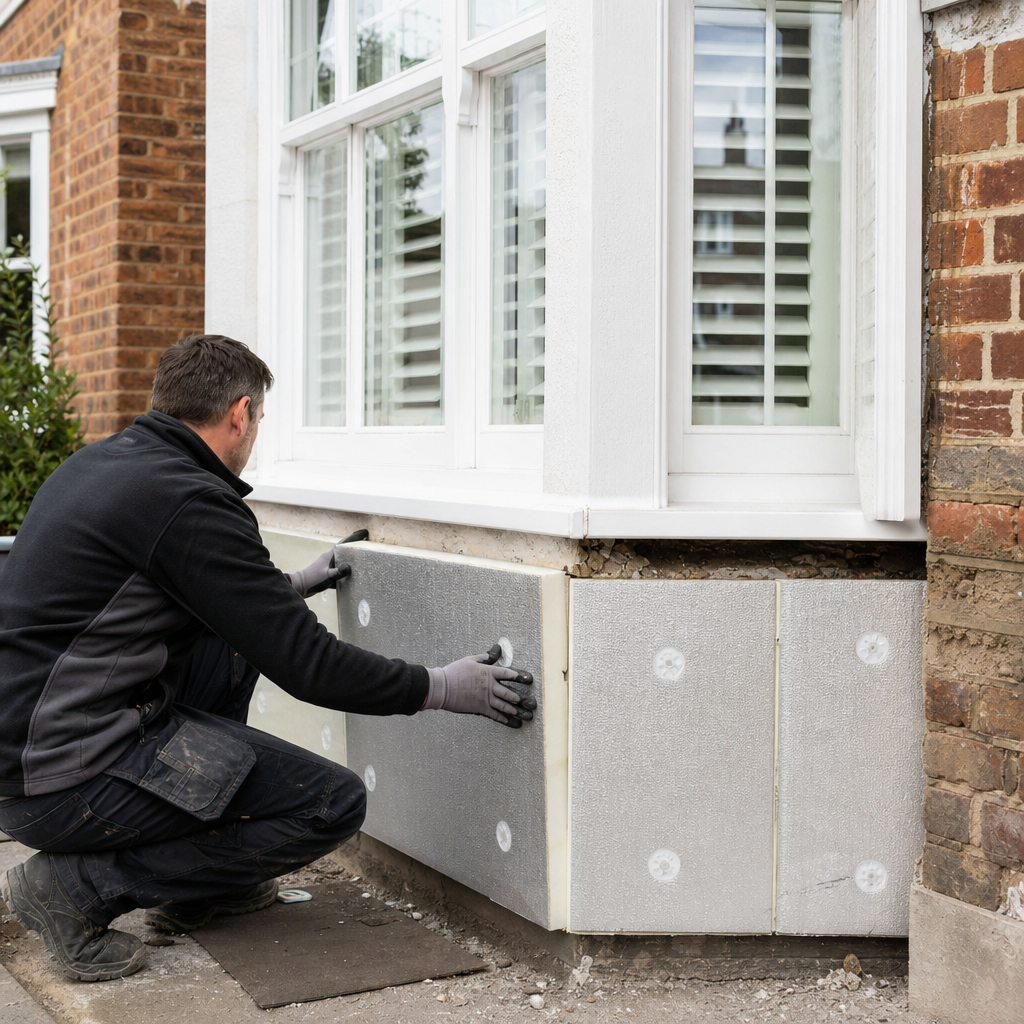
Insulating Solid Masonry Walls Under Bay Windows: Technical Guidance
Insulating solid masonry walls under bay windows requires specialist detailing at angled wall faces, window reveals, and the bay floor and ceiling junctions.
 Energy & Retrofit
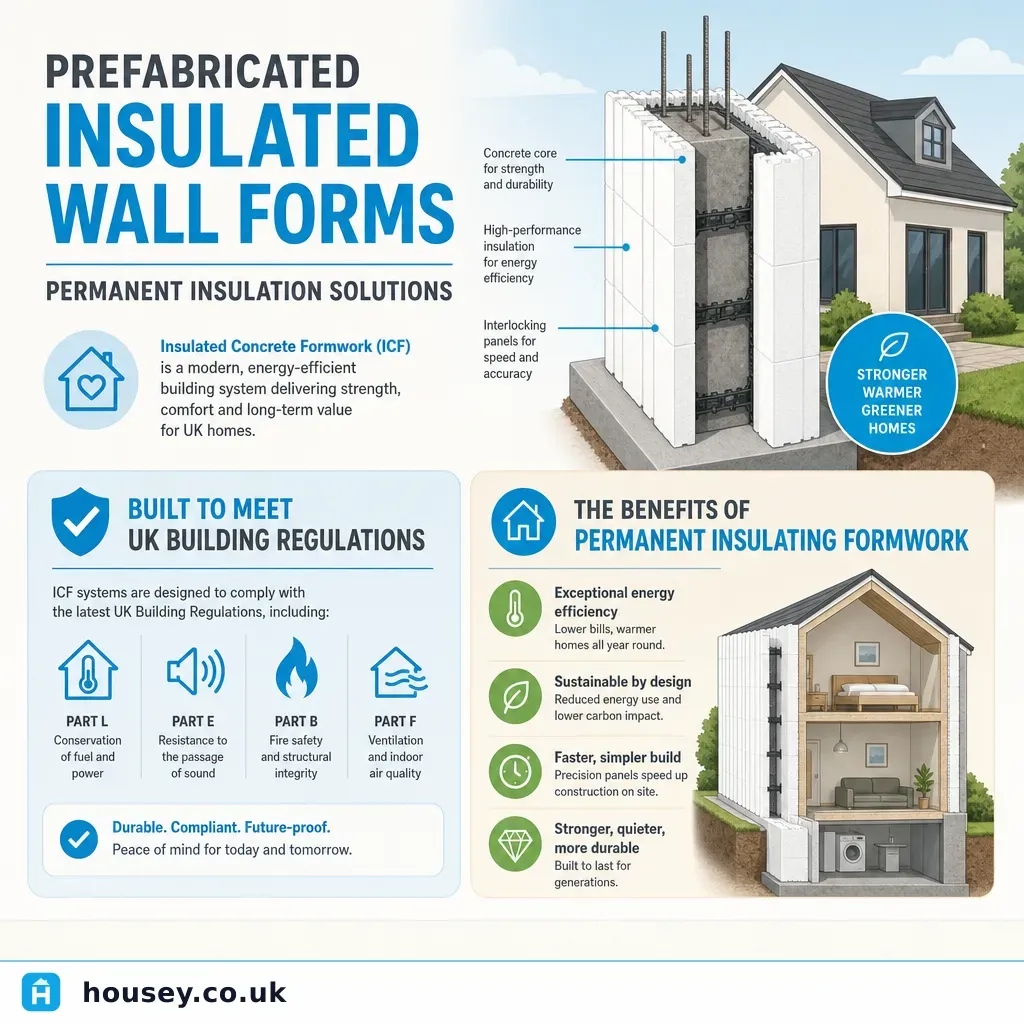
Prefabricated Insulated Wall Forms: Permanent Insulation Solutions
Prefabricated insulated wall forms — including ICF and SIPs systems — deliver high thermal performance by combining permanent insulation with structural concrete or timber in a single wall assembly.