Renting and Landlord Responsibilities: Understanding Maintenance Obligations
By Housey · Last reviewed 19th of May 2026
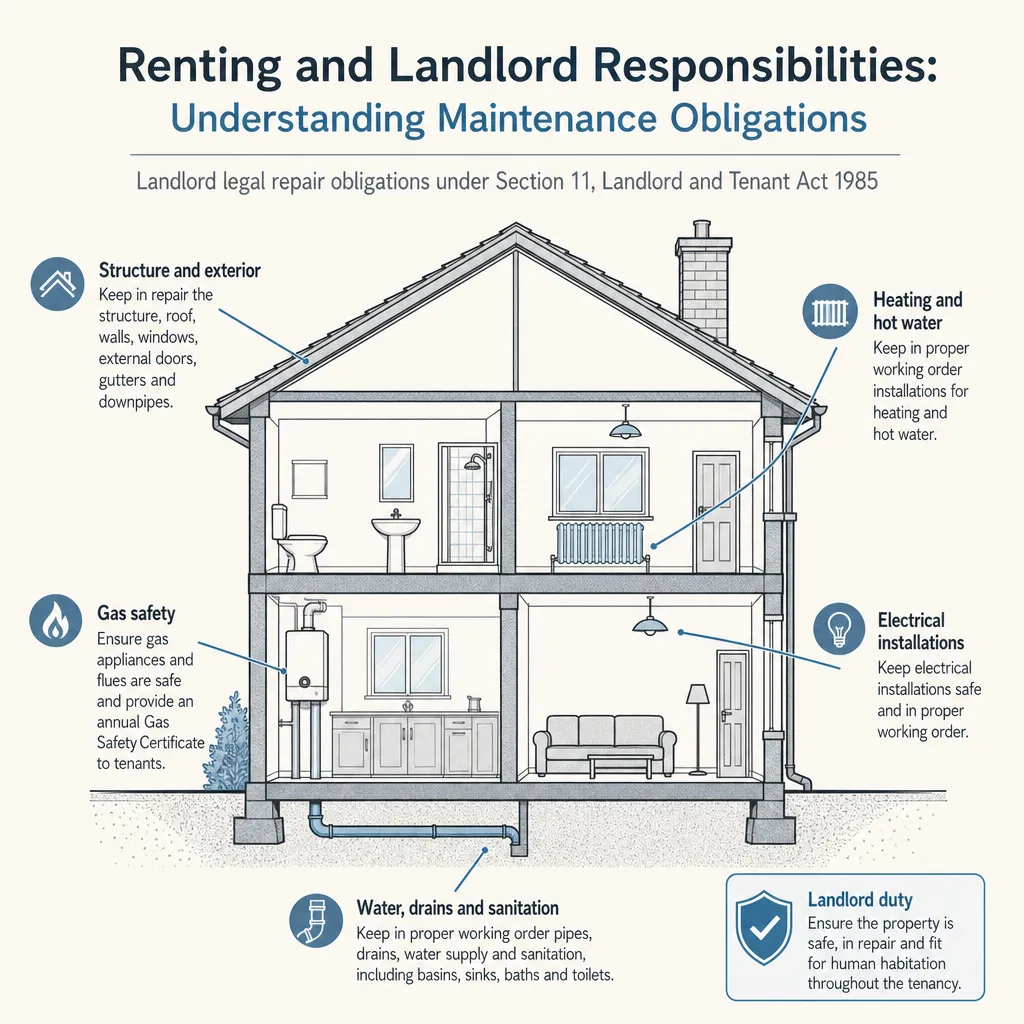
Renting and Landlord Responsibilities: Understanding Maintenance Obligations
Maintenance disputes are among the most common sources of conflict in the UK private rented sector. For landlords, clarity about what the law requires — and what falls to the tenant — reduces the risk of council enforcement, civil claims, and deteriorating assets. For tenants, knowing these obligations helps them pursue repairs effectively and protects their health and comfort in their home.
Key points
- Section 11 of the Landlord and Tenant Act 1985 places a statutory repair duty on landlords for the structure, exterior, and core service installations of most rented properties let on tenancies under seven years.
- Landlords must arrange an annual gas safety check by a Gas Safe registered engineer and provide tenants with the Gas Safety Record (CP12) within 28 days of the check, or before a new tenancy begins.
- The Electrical Safety Standards in the Private Rented Sector (England) Regulations 2020 require electrical installations to be inspected every five years and an Electrical Installation Condition Report (EICR) provided to tenants within 28 days.
- The Housing Health and Safety Rating System (HHSRS), under the Housing Act 2004, gives local councils enforcement powers to require remediation of 29 categories of hazard, including damp and mould, excess cold, and fire risks.
- Under the Smoke and Carbon Monoxide Alarm (Amendment) Regulations 2022, landlords must install smoke alarms on every storey used as living accommodation and CO alarms in rooms with a fixed combustion appliance, excluding gas cookers.
What are landlords legally required to maintain?
Section 11 of the Landlord and Tenant Act 1985 is the statutory baseline for repair obligations in most assured and assured shorthold tenancies. The landlord's duty covers:
Structure and exterior:
- Roof, gutters, downpipes, and external drains
- Walls, foundations, and structural floors
- Windows and external doors (frames and glazing)
Installations for utilities:
- Gas supply equipment and pipework
- Electrical installation and wiring
- Heating and hot water systems (boiler, radiators, immersion heater)
- Water supply, drainage, and sanitation
Landlord-supplied appliances: items provided by the landlord as part of the let (such as a fitted boiler or kitchen appliances) must be kept in working order.
Section 11 does not make the landlord responsible for:
- The tenant's own belongings or furniture
- Redecoration unless directly caused by structural disrepair
- Damage caused by the tenant's negligence or deliberate misuse
- Garden maintenance in most cases (check the tenancy agreement)
Landlord vs tenant responsibility at a glance
Item | Landlord's responsibility | Tenant's responsibility |
|---|---|---|
Roof and external walls | Yes | No |
Windows (frames and glazing) | Yes | Minor draught-proofing (check tenancy agreement) |
Boiler and central heating system | Yes | Reporting faults promptly; allowing access for repairs |
Gas appliances (landlord-supplied) | Yes | Not tampering; not blocking access for checks |
Electrical installation | Yes | Not overloading circuits; reporting faults |
Drains and gutters | Yes | Not blocking with tenant-caused waste |
Smoke and CO alarms | Yes — installation and replacement | Testing at start of each tenancy |
Internal decoration | Usually tenant | Returning to agreed condition at end |
Garden maintenance | Tenancy agreement determines | Often tenant under the agreement |
Tenant's own white goods | No | Yes |
Mandatory safety certificates
Beyond structural repair, landlords must hold and maintain specific safety documentation:
Gas Safety Record (CP12)
- Annual check by a Gas Safe registered engineer
- Provided to existing tenants within 28 days; to new tenants before occupation
- Records must be kept for at least two years
Electrical Installation Condition Report (EICR)
- Every five years (or at a shorter interval if the inspector specifies)
- Carried out by a qualified electrician (NICEIC, NAPIT, or equivalent)
- Provided to existing tenants within 28 days; to new tenants before occupation
- C1 (danger present) or C2 (potentially dangerous) findings must be remedied within 28 days or sooner if specified
Energy Performance Certificate (EPC)
- Required before marketing; minimum E rating for lettings in England and Wales (F and G ratings are unlawful without a registered exemption on the PRS Exemptions Register)
- Valid for 10 years
Smoke and Carbon Monoxide Alarms
- Smoke alarms on every storey used as living accommodation
- CO alarms in rooms with a fixed combustion appliance (gas cookers excluded)
- Required under the Smoke and Carbon Monoxide Alarm (Amendment) Regulations 2022 (England)
The HHSRS and council enforcement
The Housing Health and Safety Rating System (HHSRS) is the primary tool available to local councils for addressing property hazards. Environmental health officers can inspect on a tenant's request — or proactively — and assess 29 categories of hazard:
- Category 1 hazards (most serious): excess cold, damp and mould growth, falls on stairs, fire, and electrical hazards
- Category 2 hazards: lower-severity risks that are still recorded and may prompt advisory action
On finding a Category 1 hazard, the council must take enforcement action. Options include:
- Improvement notice: requires the landlord to carry out specified works within a set timescale
- Prohibition order: restricts or prohibits use of part or all of the property
- Emergency remedial action: the council carries out works and recharges the landlord
- Civil penalty: up to £30,000 per offence
Tenants who cannot get repairs done can request an HHSRS inspection from their local council. Shelter and Citizens Advice both provide detailed guidance on this route.
Important limitations
This article summarises English landlord and tenant law as at May 2026. Scotland, Wales, and Northern Ireland operate under separate legislative frameworks: in Scotland, the Private Housing (Tenancies) (Scotland) Act 2016 governs most private tenancies; in Wales, the Renting Homes (Wales) Act 2016 applies. Rules also vary with tenancy type, lease terms, and property age. Nothing in this article constitutes legal advice. Landlords or tenants facing disputes should consult Citizens Advice, a housing solicitor, or a specialist landlord advisory service.
When this becomes urgent
Seek professional advice promptly if:
- An improvement notice has been served following an HHSRS inspection
- Damp, mould, or structural damage is worsening despite attempted repairs
- A tenant has withheld rent citing disrepair or made a formal disrepair claim
- You have received a civil claim or letter before action relating to property condition
- An EICR has returned a C1 or C2 result requiring urgent remediation
- Gas or electrical installations have been condemned by a Gas Safe engineer or qualified electrician
What to ask a qualified professional
Before instructing a surveyor or housing solicitor:
- Which specific obligations apply to my property type and tenancy agreement?
- Is the defect claimed by the tenant a Section 11 obligation or the tenant's own responsibility?
- What standard of repair does the law require — reinstatement to original specification, or serviceable working order?
- If an HHSRS hazard has been identified, what works are required and within what timescale?
- What documentation should I retain in the event of a disrepair claim?
When to get professional help
Commission a professional inspection whenever:
- A reported defect's cause or extent is uncertain — a specific defect survey can identify whether damp is condensation, penetrating damp, or rising damp and recommend the correct remediation approach
- You are buying a property intended for letting and want to understand its condition and likely maintenance liability before exchange — a RICS Home Survey provides a structured, independent assessment
- An improvement notice has been served and the scope of required works needs independent scoping
Red flags requiring immediate professional action:
- New or widening structural cracks in walls or ceilings
- Gas smell or suspected leak reported by a tenant
- Electrical fault, repeated tripping, or burning smell at the consumer unit
- Significant water ingress or roof failure causing internal damage
How Housey can help
Housey connects landlords with qualified surveyors and inspectors. A RICS Home Survey gives you a detailed, independent condition report before purchase or when preparing a property for let. For a targeted investigation of a specific reported defect — damp, cracking, or drainage failure — a specific defect survey provides a focused report with remediation recommendations, helping you prioritise works and respond to tenant repair requests with evidence.
Frequently asked questions
How quickly must a landlord carry out repairs?
There is no single statutory timescale for all repairs, but courts and councils apply a reasonableness test. Emergency repairs — gas leaks, total loss of heating in winter, burst pipes — should be addressed within 24 hours. Urgent but non-emergency issues typically within a few days. Routine repairs are generally expected within 28 days. An improvement notice will specify a compliance deadline.
Can a tenant withhold rent if the landlord refuses to carry out repairs?
Rent withholding is legally risky and rarely the right first step. Tenants who stop paying rent may face possession proceedings even where disrepair exists. Recommended routes are: request repairs in writing; report to the council's environmental health team; apply to the First-tier Tribunal (Property Chamber); or pursue a disrepair claim through the civil courts. Citizens Advice and Shelter can advise on the appropriate route.
Are landlords responsible for appliances left in the property?
If appliances listed in the tenancy agreement as part of the let fail through fair wear and tear, the landlord is generally responsible for repair or replacement. If breakage results from tenant misuse, the cost typically falls to the tenant. Ensure the inventory clearly records all landlord-supplied items to avoid disputes at the end of the tenancy.
What is the difference between disrepair and fair wear and tear?
Disrepair is deterioration of the property's fabric or installations that the landlord must remedy. Fair wear and tear is the normal, gradual deterioration of finishes and fittings from reasonable everyday use — carpet flattening, paint fading, minor scuffs. Landlords cannot deduct from deposits for fair wear and tear; they can for damage beyond that standard, provided the inventory supports the claim.
Sources and further reading
- Section 11, Landlord and Tenant Act 1985 — legislation.gov.uk
- Landlord responsibilities: repairs — GOV.UK
- Electrical safety standards in the private rented sector — GOV.UK
- Gas safety: a guide for landlords — GOV.UK
- Housing Health and Safety Rating System (HHSRS) — GOV.UK
- Repairs in rented housing — Shelter England
Useful next reads
 Surveys & Inspections
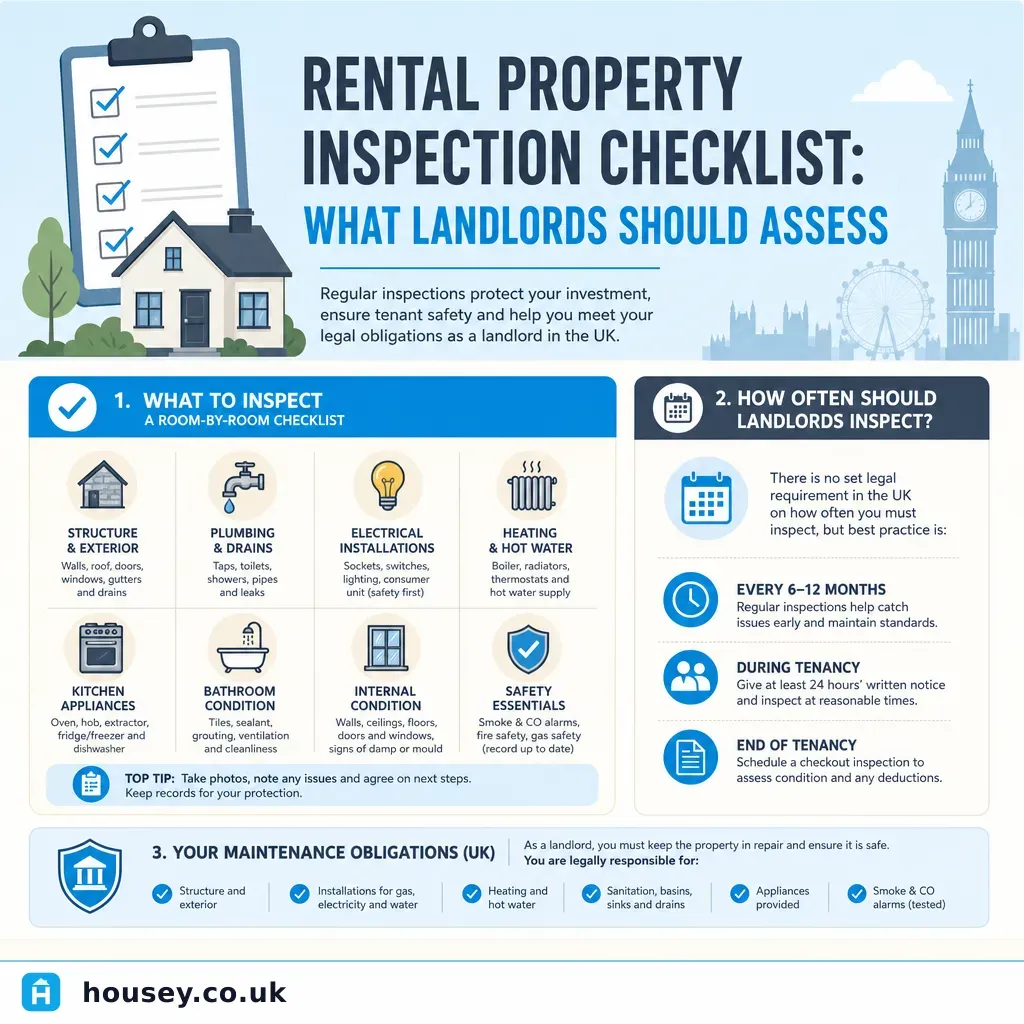
Rental Property Inspection Checklist: What Landlords Should Assess
A landlord inspection should cover statutory safety checks (gas, electrical, smoke alarms), structural condition, services, and interior fabric.
 Surveys & Inspections
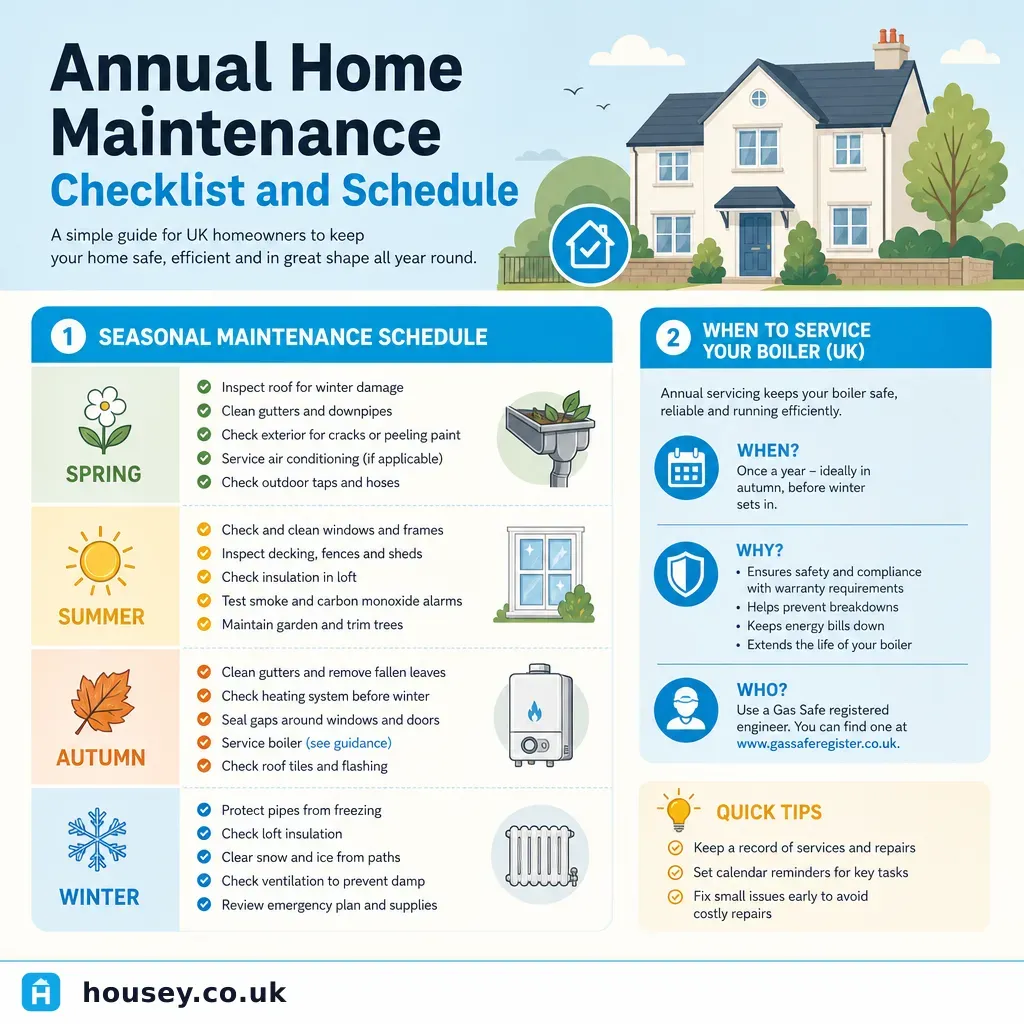
Annual Home Maintenance Checklist and Schedule
A structured annual maintenance schedule helps UK homeowners catch small problems before they become costly repairs.
 Surveys & Inspections
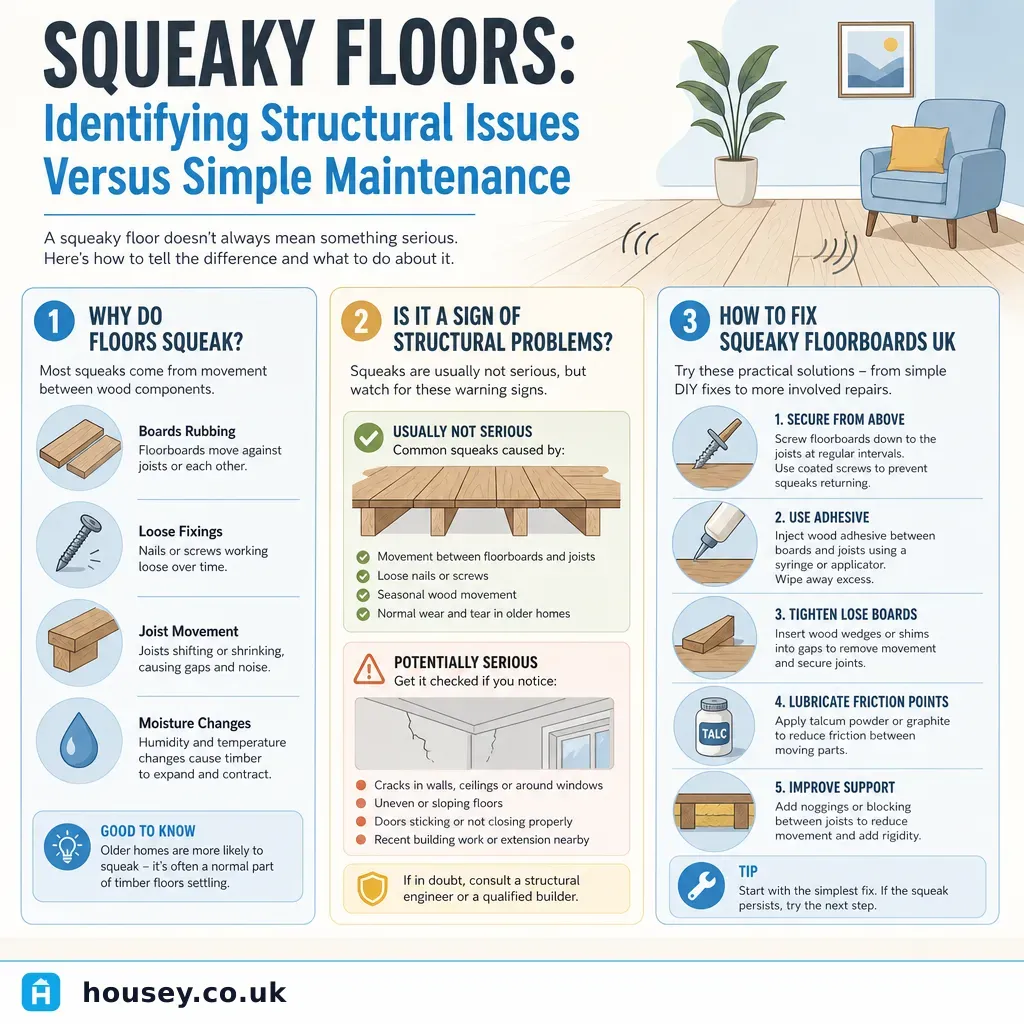
Squeaky Floors: Identifying Structural Issues Versus Simple Maintenance
Most squeaky floors in UK homes are caused by floorboards rubbing against each other or against fixings as they expand and contract — a maintenance issue rather than a structural one.
 Surveys & Inspections
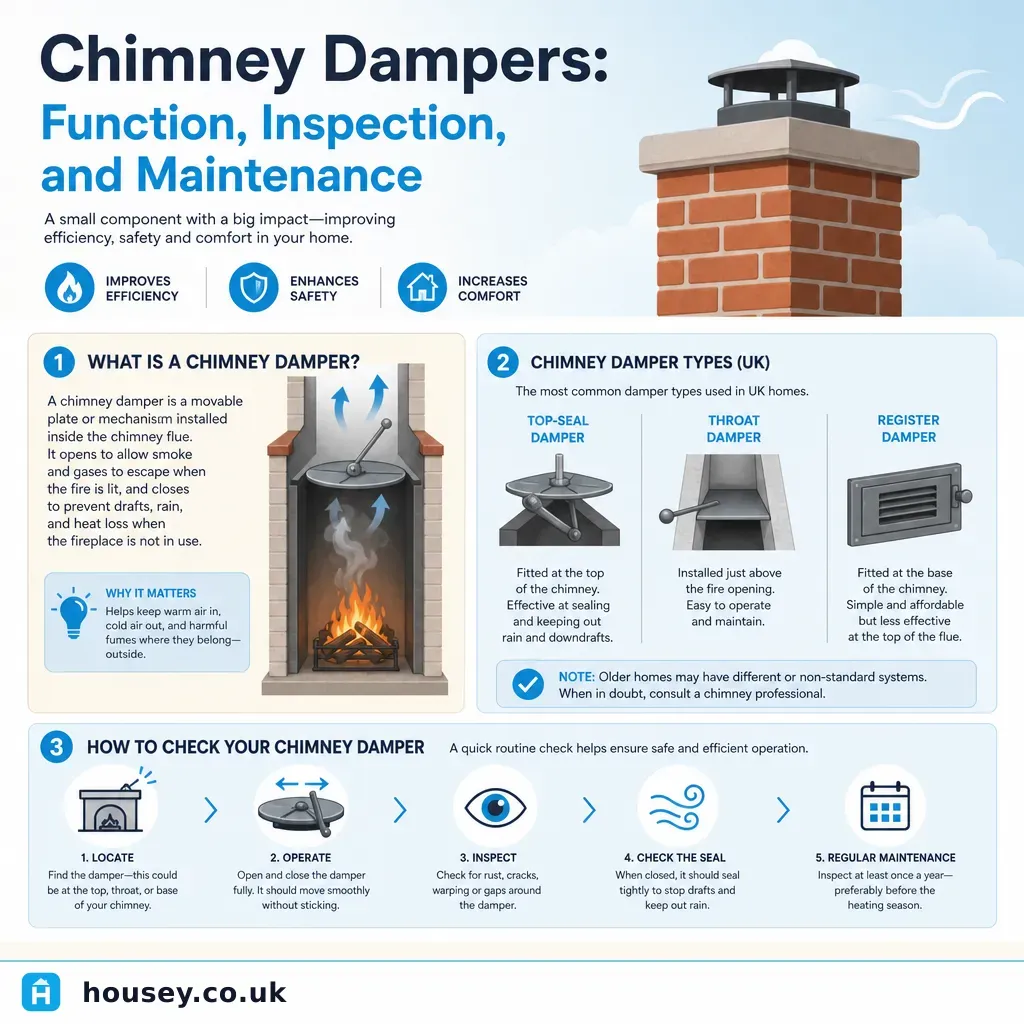
Chimney Dampers: Function, Inspection, and Maintenance
A chimney damper is a movable plate or valve in the flue that controls airflow when the fire is lit and seals the chimney when it is not.
 Surveys & Inspections
Identifying Unpleasant Odours in Your Home
Unpleasant smells in a UK home often point to damp, mould, a drainage fault, or — in the most urgent cases — a gas leak.