Why incorrect roof repairs lead to masonry water damage
By Housey · Last reviewed 11th of May 2026
Why incorrect roof repairs lead to masonry water damage
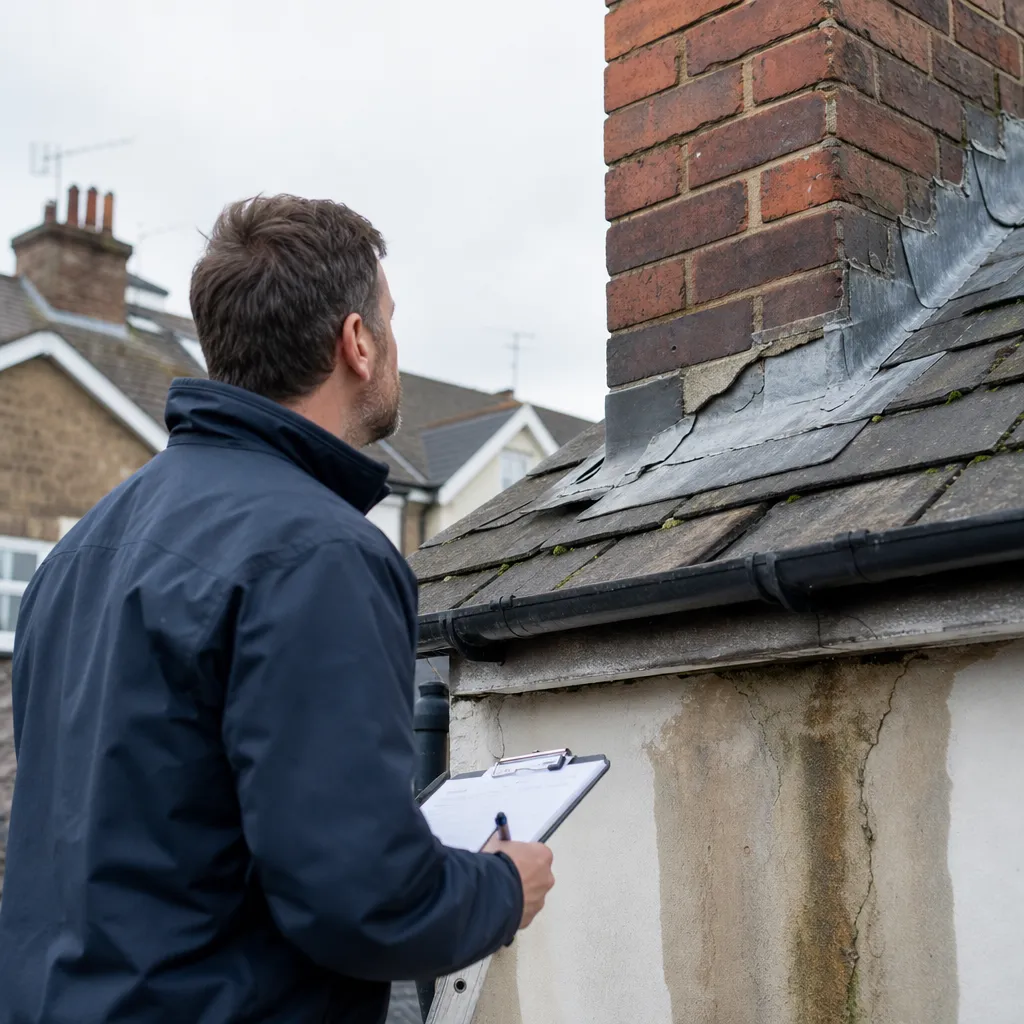
Water damage to masonry walls is one of the more insidious consequences of poor roof workmanship, because the link between a failed repair and its downstream effects is rarely obvious at first. A poorly rebedded ridge tile, an incorrectly lapped flashing, or a chimney repointed with the wrong mortar can allow rain to track silently through the roof structure for months before it appears as staining, spalling, or damp patches on internal or external walls. By the time the damage becomes visible, the root cause may have been attended to — or misidentified entirely.
Key points
- Building Regulations Approved Document C requires roofs and external walls to resist moisture penetration; poor workmanship that causes water ingress may constitute a failure to meet this standard.
- The most common single point of failure in residential roofs is defective flashing — particularly at chimney stacks, abutments, and valleys — where mortar-only details or inadequate code lead allow water to enter wall cavities or the building structure.
- Sulphate attack on chimney mortar can accelerate when older lime brickwork is repointed with ordinary Portland cement (OPC); the wrong mortar is a frequent consequence of uninformed repairs.
- PAS 2035:2019 identifies moisture risk as a primary concern in any repair or retrofit work; any intervention that disrupts the roof's drainage hierarchy without restoring it correctly creates a moisture trap.
- A damp and timber survey by a RICS-accredited or PCA-trained assessor should be used to distinguish roof-related water ingress from rising damp, condensation, or plumbing leaks before committing to remediation.
How incorrect roof repairs create water pathways
The roof is a system of overlapping components — tiles or slates, underlays, battens, flashings, mortar beds, valleys, and verges — designed to move water away from the building in a controlled sequence. When a repair disturbs part of this sequence and fails to restore it correctly, water can enter at the repair point and travel along unexpected routes through the structure.
Flashing failures
Lead or code-metal flashing at chimney stacks, dormer cheeks, and wall abutments is the most common failure point. Mortar-only flashings — pointing without proper lead soakers or stepped flashing — are a known poor practice on traditional roofs. They crack with thermal movement, allow water behind the flashing, and direct it into the gap between roof structure and masonry. From there, moisture can saturate the inner leaf or cavity insulation and may not appear inside the building for weeks or months.
Incorrect mortar on chimney stacks
Older brick chimneys — found in Victorian and Edwardian properties throughout the UK — were built with lime mortar, which is relatively soft and sacrificial by design. Repointing with ordinary Portland cement (OPC) creates a hard, impermeable joint that does not flex with thermal movement. Moisture migrates instead through the softer brick face, causing spalling, efflorescence, and in freezing conditions, frost damage. Water penetrating through the damaged brick face then tracks into the wall below the roofline.
Incorrectly bedded ridge and hip tiles
Ridge tiles mortar-bedded without adequate thickness, or with the wrong mix, crack and lift during frost cycles. Gaps in the ridge bed allow wind-driven rain to enter the roof structure, saturating rafters and masonry below gable copings. A repair that simply re-beds a ridge without checking the mortar specification or weathering details leaves the underlying risk unchanged.
Underlay and breathability
Where a repair involves stripping and re-laying a section of roof covering, failure to reinstate a breathable underlay correctly — or substituting a non-breathable felt — can trap condensation within the roof space, leading to moisture accumulation on timber and masonry surfaces over time.
How water tracks from roof into masonry
Water follows the path of least resistance. In cavity wall and solid masonry construction, this often means it tracks horizontally and diagonally through the structure before appearing indoors, sometimes at a point some distance from the entry.
Entry point | Typical water pathway | Common signs in masonry |
|---|---|---|
Failed chimney flashing | Behind outer leaf, down into cavity or solid wall | Damp patches on chimney breast or adjacent internal wall |
Cracked ridge mortar | Along rafters and wall plate, into gable or parapet | Damp in upper corners, spalling on gable face |
Abutment flashing failure | Between lean-to roof and main wall | Damp band on internal wall at roof junction level |
Verge mortar failure | Wind-driven rain behind bedded verge, into gable masonry | Efflorescence or damp patch on gable face |
Flat roof edge detail failure | Water behind parapet coping or party wall | Persistent damp stripe on wall at roof level |
Red flags: signs a past roof repair may have caused masonry damage
The following signs — particularly where they appeared or worsened after roof work was carried out — warrant investigation by a qualified professional:
- Damp patches on internal walls at or below the roofline, especially near chimney breasts or gable walls.
- Efflorescence (white salt deposits) on external brickwork that was not present before the roof works.
- Spalling or flaking brick faces on a chimney stack or parapet wall.
- Staining to ceilings or upper walls that does not correspond to a known pipe run or plumbing fitting.
- A smell of damp or visible mould on plasterwork near an external wall where the roof meets the building.
- Cracks in internal plasterwork following the line of the roof slope or abutment.
- Timber decay in door frames, floor joists near external walls, or loft timbers close to the area of previous repair.
Important limitations
This article provides general information on the mechanisms by which roof repairs can cause masonry water damage. It does not constitute a diagnosis of any specific property. The cause of damp or water damage in any given building depends on construction type, repair history, local climate, and many other variables. A qualified professional must inspect the property in person before any remediation is planned. Treating masonry for damp without identifying and rectifying the moisture source is likely to be ineffective and may cause further damage.
What to ask a qualified professional
Before instructing a roofer, damp specialist, or surveyor, ask:
- Will you inspect the full roof system — including flashings, ridges, valleys, verges, and guttering — not just the area of the reported repair?
- What diagnostic tools will you use: damp meter, borescope, thermal imaging, or scaffold and cherry-picker access?
- Can you confirm whether moisture is coming from roof penetration, condensation, or another source?
- If flashing is the issue, what specification of lead and fixing method will you use for the replacement?
- If mortar repointing is needed, what mix will you use and how will it be matched to the existing masonry?
- Will the repair include a written warranty, and what does it cover?
- Will you provide a written report with photographs of the defect and the completed repair?
- Do you hold relevant accreditation — NFRC membership for roofing, or PCA membership for damp assessment?
When to get professional help
Do not attempt to re-flash a chimney, re-bed a ridge, or treat penetrating damp as a DIY project where a previous roof repair may have caused structural moisture damage. The interaction between water, masonry, mortar chemistry, and timber is complex — an incorrect remediation can seal moisture in, accelerating decay behind a dry surface. Instruct a RICS-accredited surveyor, a National Federation of Roofing Contractors (NFRC) member roofer, or a Property Care Association (PCA) member assessor for diagnosis before any repair work is commissioned.
How Housey can help
Housey connects you with vetted professionals for roofers experienced in repair and reroofing, damp proofing specialists who can treat moisture damage correctly, and damp and timber surveys to diagnose the source before any work begins. Submit your concern to compare quotes from accredited local professionals.
Frequently asked questions
How long after a roof repair can water damage show in masonry walls?
It varies. Active water ingress through a flashing or mortar failure may produce visible damp patches within weeks of wet weather. Where moisture is slowly saturating cavity insulation or solid masonry, the damage may take months or years to appear internally. If damp patches appear after roof work was completed, ask a surveyor to assess the likely timeline.
Does homeowners' insurance cover masonry damage from roof leaks?
Most buildings insurance policies cover sudden and accidental damage, including from storm damage or sudden roof failure. Gradual water ingress resulting from poor workmanship or maintenance failure is often excluded. Check your policy wording carefully. Where damage followed identifiable poor workmanship, you may have a claim against the contractor rather than your insurer.
How do I find out if a previous roof repair caused my damp?
A damp and timber survey by a RICS-accredited surveyor or PCA-trained assessor is the most reliable way to diagnose the moisture source. The assessor uses a damp meter and visual inspection to map moisture patterns against the building structure, assessing whether they are consistent with roof-related ingress, rising damp, or condensation. Photographs of the previous roof repair work help establish a likely timeline.
Can I repair masonry water damage myself?
Surface treatment such as cleaning efflorescence or repainting is within most homeowners' abilities. However, repointing chimneys, replacing flashings, or treating structural moisture damage should be carried out by qualified tradespeople. Using the wrong mortar mix or a surface sealant that traps moisture can worsen the underlying condition. Always identify and fix the source before treating the symptoms.
Sources and further reading
- Building Regulations Approved Document C: resistance to contaminants and moisture — GOV.UK / MHCLG
- Historic England: Practical Building Conservation — Roofing — Historic England
- Property Care Association: guidance on penetrating damp — Property Care Association
- NFRC: find a reputable roofing contractor — National Federation of Roofing Contractors
- BRE: assessment of moisture in buildings — BRE Group
- PAS 2035:2019 — Retrofitting dwellings for improved energy efficiency — BSI
Useful next reads
 Improvement & Build
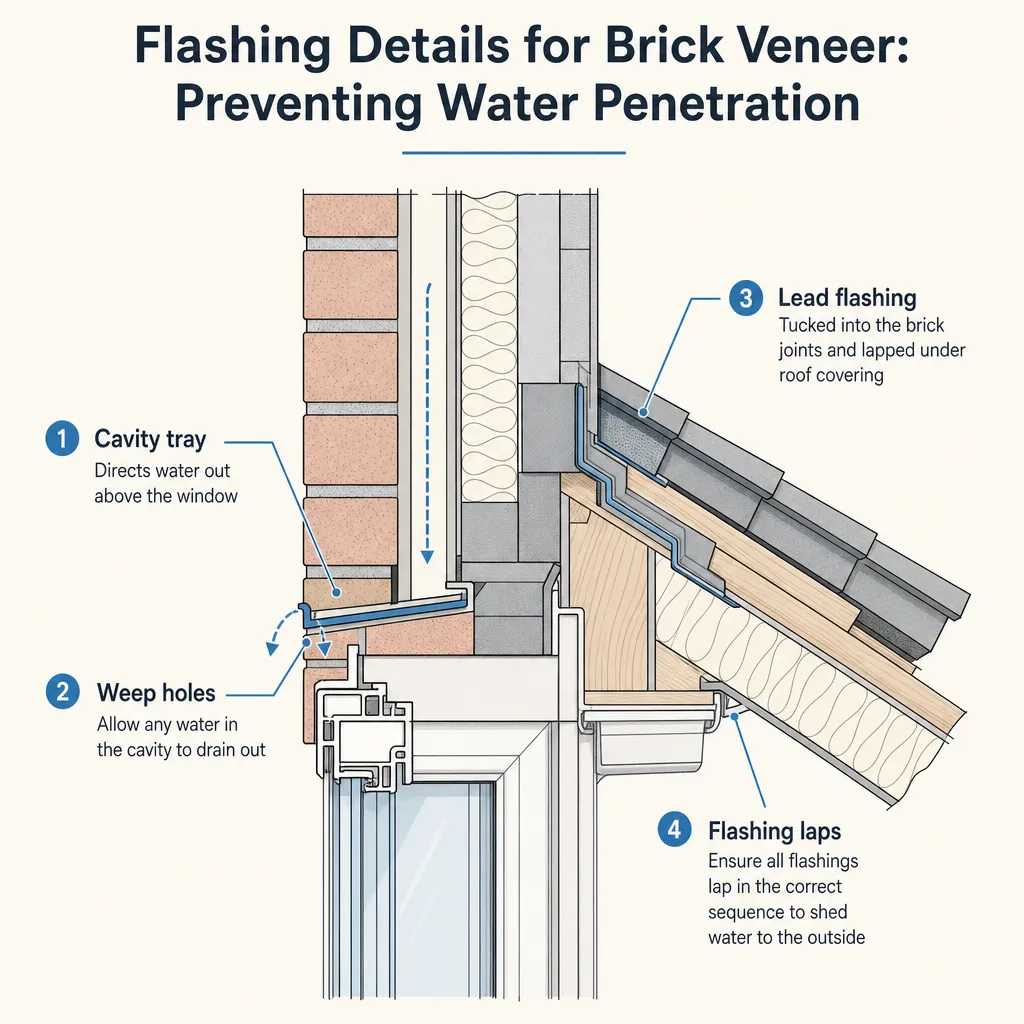
Flashing Details for Brick Veneer: Preventing Water Penetration
Brick veneer facades are designed to allow water into the cavity and drain it away through cavity trays and weep holes before it reaches the inner leaf.
 Improvement & Build
Guide to Roof Repair and Maintenance
Regular roof inspections every 3–5 years, prompt repair of damaged tiles and failed flashings, and annual gutter clearance are the core of effective UK roof maintenance.
 Improvement & Build
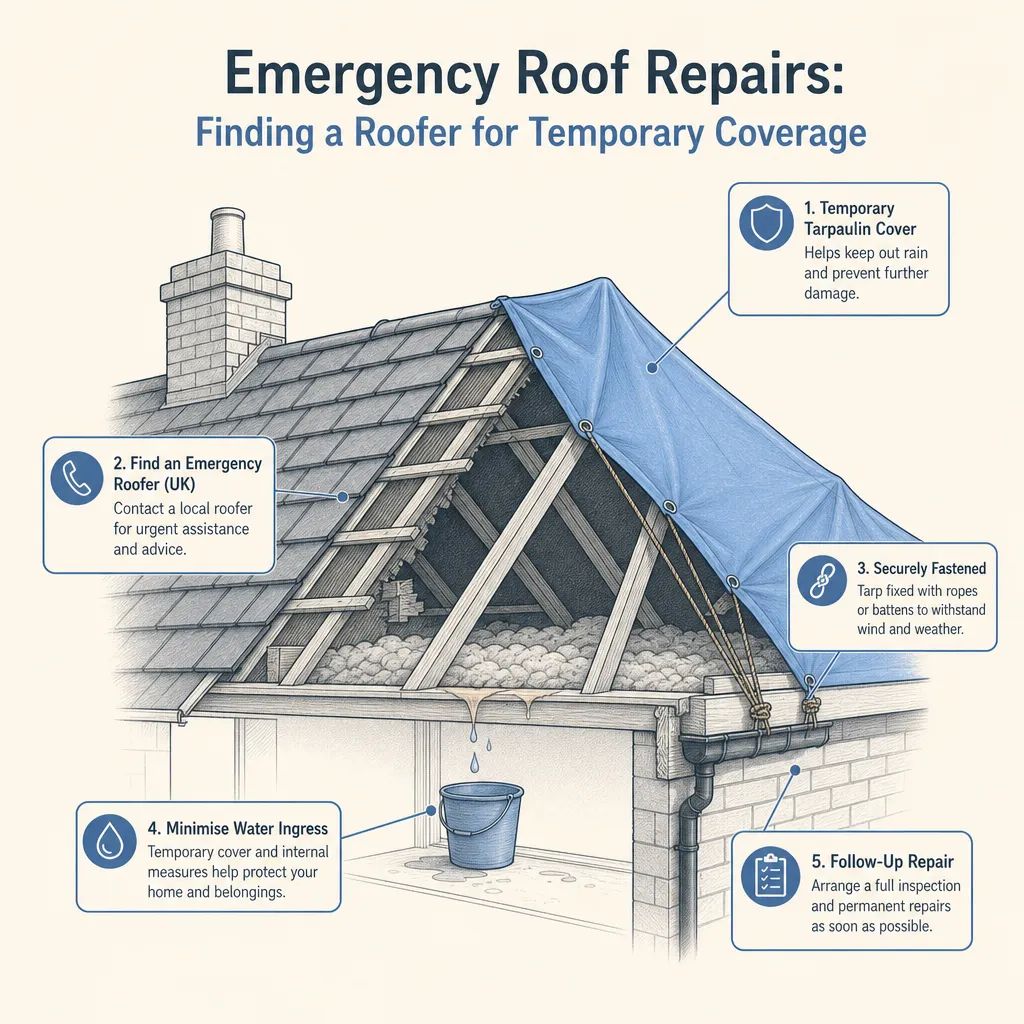
Emergency Roof Repairs: Finding a Roofer for Temporary Coverage
After storm or impact damage, the immediate priority is weatherproofing, not a permanent repair.
 Improvement & Build
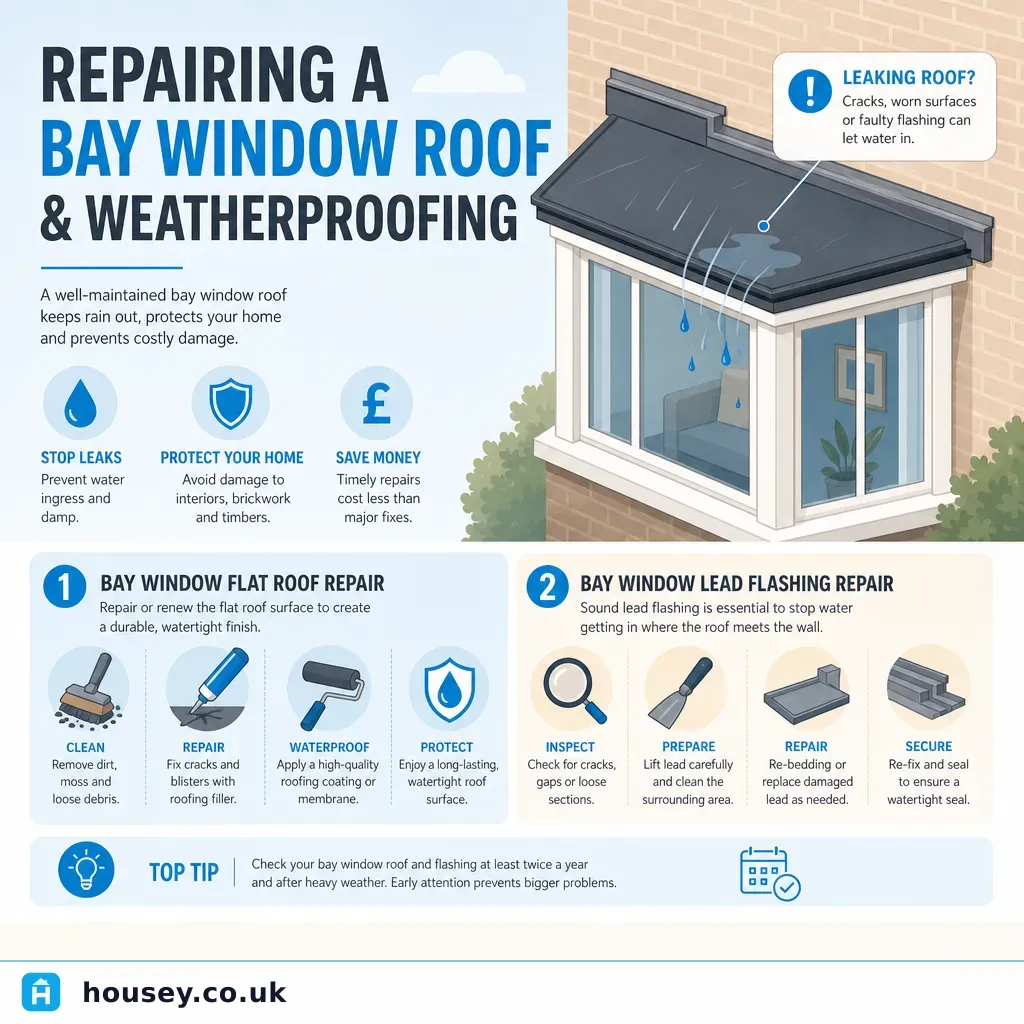
Repairing a Bay Window Roof and Weatherproofing
A bay window roof typically uses felt, lead, or EPDM rubber as its waterproof covering.
 Improvement & Build
Roof Repair: Damage Assessment and Costs
Most roof repairs — replacing slipped tiles, re-bedding ridge tiles, or patching flashing — are straightforward maintenance jobs that do not require planning permission.