Replacement Expenses for Kitchen Taps and Sink Fittings
By Housey · Last reviewed 6th of May 2026
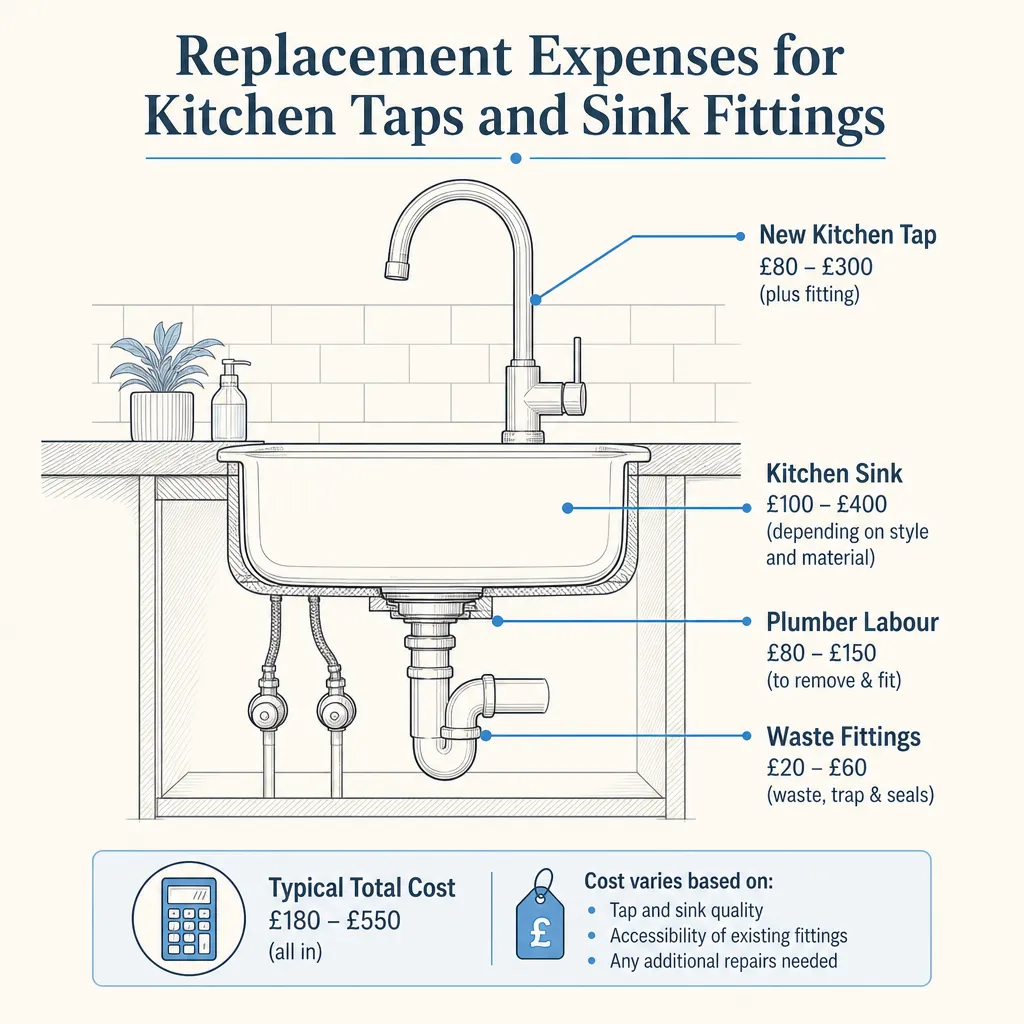
Replacement Expenses for Kitchen Taps and Sink Fittings
Kitchen taps and sink fittings see daily use, and eventual failure — whether a persistent drip, stiff handle, or cracked fitting — is common in UK homes of all ages. The question of replacement cost most often arises during a kitchen refurbishment, when buying a property with outdated fittings, or when a tap simply reaches the end of its useful life. Costs vary significantly depending on the tap specification, the condition of existing pipework, and how easily a plumber can reach the under-sink connections.
Key points
- Replacing a standard kitchen mixer tap — including a mid-range product and one to two hours of plumber labour — typically costs £150–£350 all-in (indicative UK costs, last reviewed 2026-05-06).
- Plumber labour in the UK typically runs £50–£120 per hour; regional variation, call-out charges, and job complexity all affect the rate.
- VAT at 20% applies to most plumbing labour and materials from VAT-registered contractors — always confirm whether quotes are inclusive or exclusive of VAT.
- Water Supply (Water Fittings) Regulations 1999 require that tap fittings connected to the mains comply with specified standards; non-compliant work can affect insurance and future liability.
- WaterSafe-approved plumbers are trained and assessed on water regulations compliance — using an approved contractor is recommended for mains-connected work.
What drives the cost of kitchen tap replacement?
The tap itself
Kitchen taps vary widely in price, and the product cost can represent a significant share of the total bill.
Tap type | Typical product cost | Notes |
|---|---|---|
Budget monobloc mixer | £30–£80 | Basic chrome finish; functional but shorter lifespan |
Mid-range mixer tap | £80–£250 | Better finish quality; wider style choice |
Premium mixer or pull-out spray | £250–£600+ | Designer brands; pull-out head or integrated filter option |
Instant boiling water tap | £300–£900+ (unit only) | Requires a separate boiler unit installed under the sink |
Separate hot and cold pillar taps | £40–£200 per pair | More common in period or older properties |
Indicative UK retail prices, last reviewed 2026-05-06. Prices vary by retailer and specification.
Labour and access
Labour often equals or exceeds the cost of the tap itself. Several factors extend installation time:
- Under-sink access — cramped or poorly designed sink units slow the job considerably.
- Isolator valve condition — corroded or absent isolator valves may require the plumber to isolate the mains supply, adding time to the job.
- Flexible hose condition — deteriorated braided hoses should be replaced at the same time, typically costing £5–£15 each plus fitting time.
- Pipework type — copper compression, push-fit, and older lead or iron connections each carry different requirements and access challenges.
Replacing the sink at the same visit
If the sink is also dated or incompatible with a new tap design, combining both jobs in a single visit avoids a second call-out charge.
Sink type | Typical product cost | Approximate installation add-on |
|---|---|---|
Stainless steel inset | £50–£250 | £80–£150 labour |
Composite (granite-effect) inset | £150–£500 | £100–£200 labour |
Undermount ceramic or fireclay | £200–£800+ | £150–£300 labour |
Belfast or butler sink | £200–£700 | £150–£350 labour (may require worktop modification) |
Indicative UK costs including materials and labour, last reviewed 2026-05-06.
What to ask before accepting a quote
- Is VAT included in the quoted price?
- Does the quote include flexible hoses, isolator valves, and all fixings — or are these additional?
- Who supplies the tap: you or the plumber? (Supplying your own may reduce cost but can affect warranty coverage.)
- What is the plumber's WaterSafe or CIPHE registration number?
- Is the existing pipework compatible with the new tap, or may modifications be needed?
- What happens if additional problems are found once the old tap is removed — such as corroded pipework or a seized valve?
- Is there a call-out charge in addition to the hourly rate?
Homeowner checklist before the plumber arrives
When to get professional help
Most kitchen tap replacements warrant a qualified plumber. Do not attempt this yourself if:
- No isolator valves are present and the mains stopcock is difficult to operate or has not been used in years.
- Pipework appears corroded, discoloured, or shows signs of past leaks — look for blue-green staining around copper joints or water marks inside the cupboard.
- You are fitting an instant boiling water tap, which also requires a correctly earthed electrical connection.
- The sink itself needs cutting, lifting, or repositioning under a worktop.
For boiling water taps with an integrated electrical supply, both a qualified plumber and a Part P-registered electrician may be required, or a specialist installer accredited for both trades.
How Housey can help
Housey makes it straightforward to describe your project and receive quotes from qualified local plumbers. Whether you need a simple tap swap or a full sink and fitting replacement, you can compare quotes in one place and choose a contractor with confidence.
Frequently asked questions
How much does it cost to replace a kitchen tap in the UK?
A standard kitchen mixer tap replacement — mid-range tap plus one to two hours of plumber labour — typically costs £150–£350 all-in. Budget replacements on straightforward pipework can come in under £150; premium taps or difficult access can push the total above £400. Always request at least two itemised quotes and confirm whether VAT is included. Indicative UK costs, last reviewed 2026-05-06.
Can I replace a kitchen tap myself?
If isolator valves are present under the sink, you are comfortable working with pressurised water systems, and the replacement tap matches existing connections, a DIY swap is feasible. If valves are seized, pipework looks corroded, or you are not confident, a qualified plumber is the safer choice. Water Supply (Water Fittings) Regulations 1999 apply to mains-connected fittings, and non-compliant work can create problems with future insurance claims.
How long does a kitchen tap replacement take?
A straightforward like-for-like tap swap typically takes one to two hours for a competent plumber. Replacing both the sink and tap, dealing with corroded fittings, or working in a cramped under-sink space can extend the job to three to four hours. Always build in some cost contingency if the existing pipework is old or has not been accessed recently.
What is a WaterSafe-approved plumber?
WaterSafe is the UK's national register of plumbing businesses trained and assessed in the Water Supply (Water Fittings) Regulations 1999. Using an approved contractor provides assurance that mains-connected work meets regulatory requirements and reduces liability if problems arise later. You can search the register at watersafe.org.uk to find approved contractors in your area.
Should I supply my own tap or let the plumber supply it?
Supplying your own tap gives you control over the product and price, and is common practice in the UK. However, when a plumber supplies the tap, they typically take responsibility for compatibility and may offer a combined warranty on parts and labour. Some plumbers charge a small surcharge for customer-supplied materials — discuss this before booking to avoid surprises on the final invoice.
Sources and further reading
- Water Supply (Water Fittings) Regulations 1999 — legislation.gov.uk
- WaterSafe: Find an approved plumber — WaterSafe
- Chartered Institute of Plumbing and Heating Engineering — CIPHE
- Citizens Advice: Your rights when getting work done on your home — Citizens Advice
Useful next reads
 General property advice
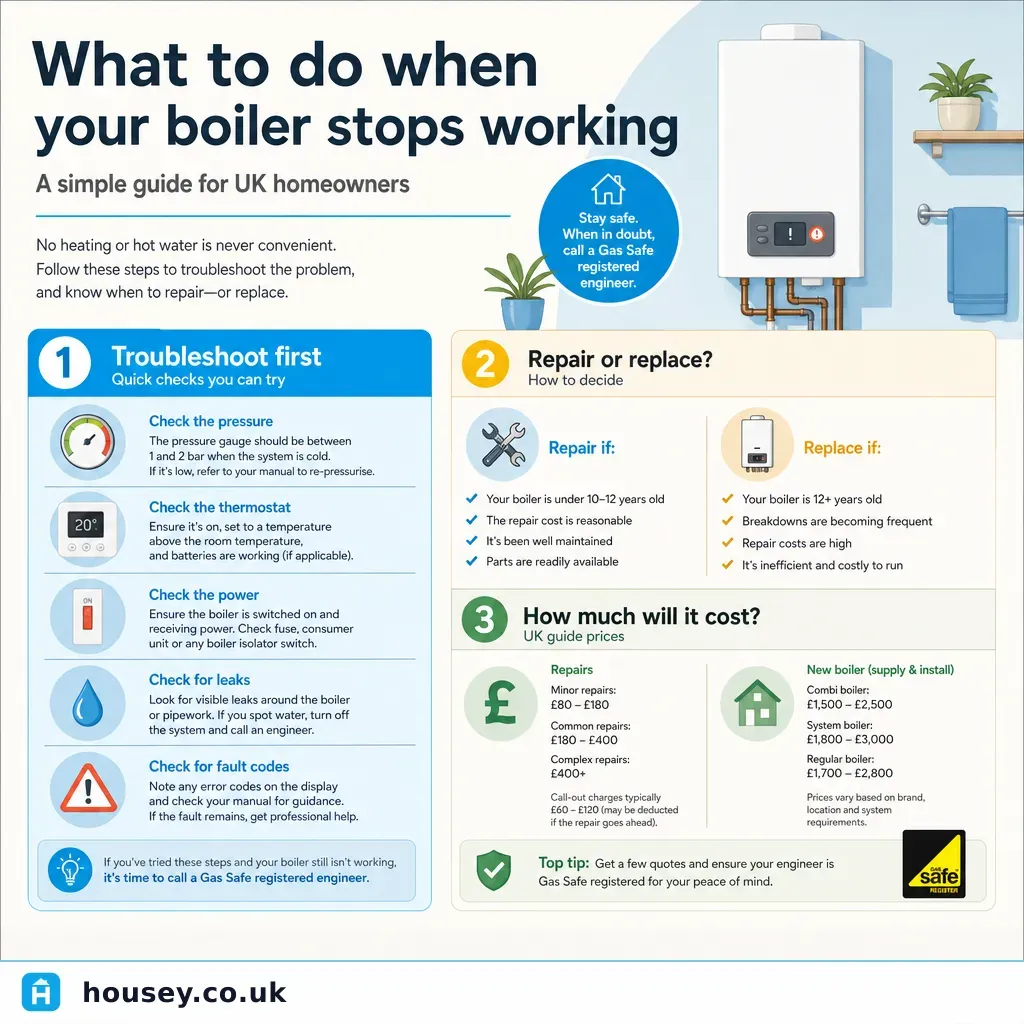
What to do when your boiler stops working
When your boiler stops working, check the pressure gauge (should read 1–1.
 General property advice
Property Market Trends: Activity Growth and Price Movements
UK property market activity is measured through completed sale registrations (HM Land Registry), lender mortgage data, and transaction volumes from HMRC.
 General property advice
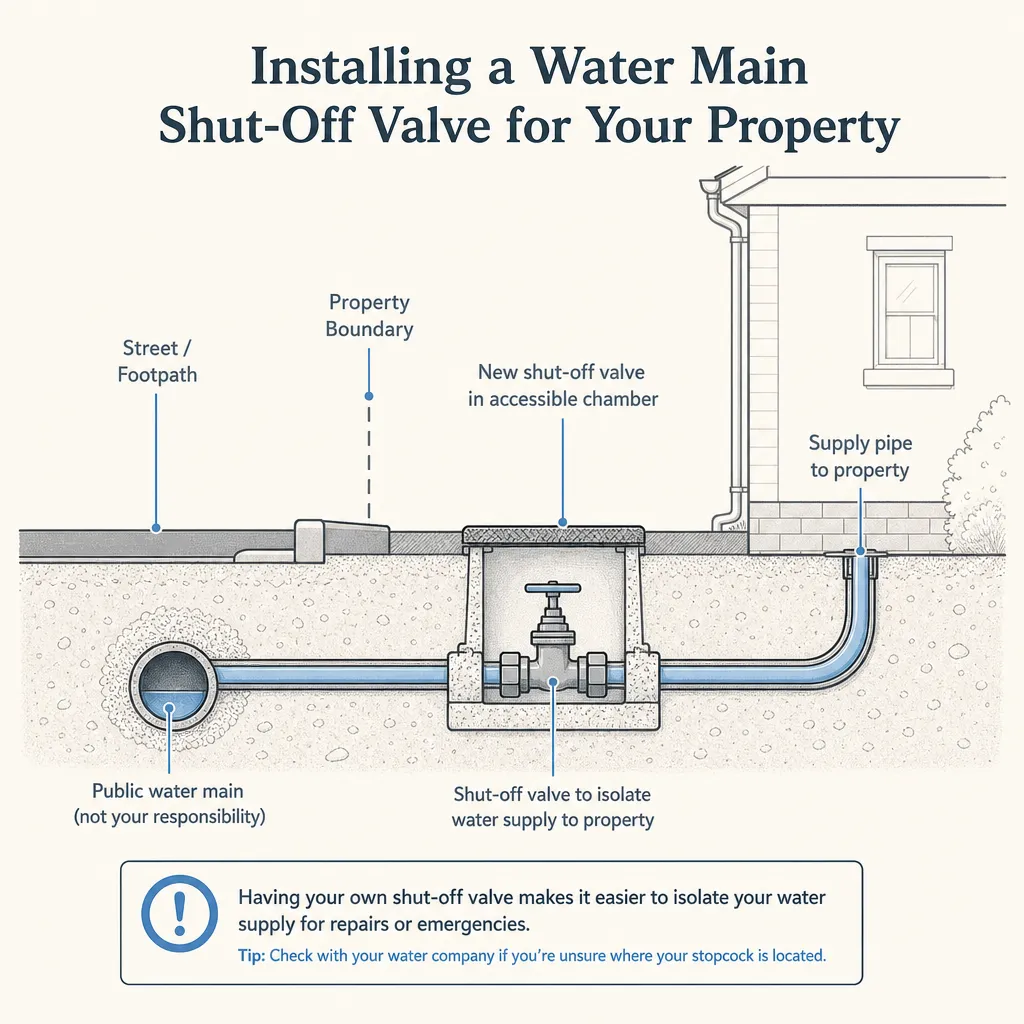
Installing a water main shut-off valve for your property
A water main shut-off valve — commonly called a stopcock — controls all water entering your home from the mains.
 General property advice
Monthly House Price Index: August Market Report and Analysis
The UK House Price Index is published monthly using completed Land Registry transaction data, meaning August figures typically reflect sales agreed months earlier.
 General property advice
Scottish Property Market: Activity and Regional Trends
Scotland's property market operates under distinct legal rules: sellers must provide a Home Report before marketing, transactions become legally binding at conclusion of missives rather than exchange of contracts, and Land and Buildings Transaction Tax replaces Stamp Duty.