Replacement and Removal Costs for Radiators and Heating Pipes
By Housey · Last reviewed 6th of May 2026
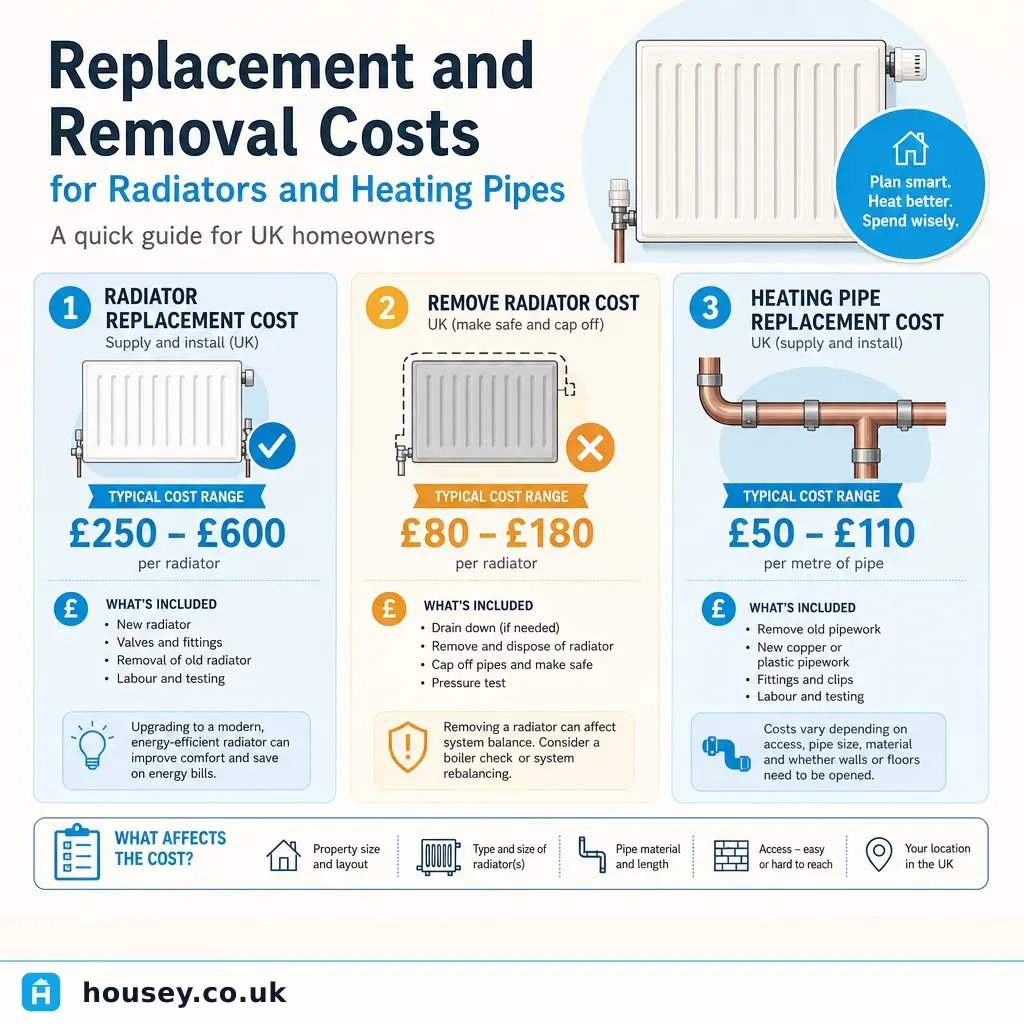
Replacement and Removal Costs for Radiators and Heating Pipes
Questions about heating system costs typically arise when radiators start to leak, stop heating evenly, or when homeowners are planning a renovation or upgrading from older copper pipework to modern plastic systems. Whether you are refreshing individual radiators or overhauling pipework throughout a Victorian terrace or 1970s semi, understanding what drives the cost will help you compare quotes and plan your budget realistically.
Key points
- Replacing a single standard panel radiator typically costs £150–£600 installed, including labour; designer or bathroom radiators cost more (indicative UK costs, last reviewed 2026-05-06).
- Removing a radiator without replacing it usually costs £50–£150 per unit; capping off the pipes properly is essential to prevent leaks.
- Any work modifying gas pipework or boiler connections must be carried out by a Gas Safe registered engineer — a legal requirement under the Gas Safety (Installation and Use) Regulations 1998.
- Full heating pipe replacement for a whole house typically costs £3,000–£10,000+, depending on property size, pipe material, and access.
- VAT at 20% applies to most plumbing labour and materials unless specific reduced-rate conditions apply under HMRC VAT Notice 708/6.
What affects the cost of replacing a radiator?
Several factors push costs up or down significantly.
Type and size. Standard double-panel convector radiators are the most affordable. Column radiators, designer panels, and plumbed towel rails cost more to supply and install.
Location and access. A ground-floor radiator with clear pipework access is quick to swap. One behind fitted furniture, in a loft conversion, or requiring floorboard removal will take longer and cost more in labour.
System flushing and balancing. When radiators are replaced, it is often advisable to powerflush the system to remove sludge and debris. A powerflush costs around £300–£600 for a typical UK home (indicative, last reviewed 2026-05-06).
Pipework compatibility. If existing pipe connections can be reused, replacement is faster. New pipework drops add material and labour costs.
Indicative radiator replacement costs (UK, 2026)
Radiator type | Supply cost | Typical installed cost |
|---|---|---|
Standard single-panel (small) | £30–£80 | £150–£300 |
Standard double-panel (medium) | £60–£200 | £200–£450 |
Column or designer radiator | £150–£600+ | £350–£800+ |
Heated towel rail (electric) | £80–£300 | £200–£500 |
Heated towel rail (plumbed) | £100–£400 | £250–£600 |
Indicative UK costs, last reviewed 2026-05-06. Costs vary by region and contractor. Obtain at least three quotes.
Cost of removing radiators
Radiator removal without replacement is common before room renovations, loft conversions, or heating reconfigurations. Pipework must be properly capped — uncapped pipes are a common source of water damage during subsequent building work.
- Single radiator removal and pipe capping: £50–£150
- Multiple radiators on a day-rate basis: £200–£400 per day (may cover several units)
Confirm with your contractor whether old radiator disposal is included before work starts.
Heating pipe replacement costs
Replacing heating pipes is significantly more invasive than swapping radiators. It usually involves lifting floorboards, chasing through walls, and rebalancing the system afterwards.
Common reasons pipes need replacing:
- Lead or iron pipework in pre-1970 properties
- Heavily corroded or chronically leaking copper pipes
- Upgrading to underfloor heating, which uses a separate pipe layout
- Extending or reconfiguring the system after building works
Property size | Indicative cost range |
|---|---|
1–2 bedroom flat | £2,000–£5,000 |
3-bedroom semi-detached | £4,000–£8,000 |
4–5 bedroom detached | £7,000–£15,000+ |
Indicative UK costs, last reviewed 2026-05-06. Highly dependent on layout, access, and materials. These figures exclude replastering, decoration, or floor reinstatement — budget for these separately.
Gas Safe: when it is a legal requirement
Standard radiator and pipe replacement is plumbing work and does not normally require a Gas Safe engineer. However, if the project involves modifying gas supply pipes, adjusting boiler connections, or fitting a new boiler, only a Gas Safe registered engineer may legally do that work under the Gas Safety (Installation and Use) Regulations 1998. Check an engineer's registration at the Gas Safe Register website.
What to ask before accepting a quote
- Is VAT included in the price?
- What radiator make and specification is included — can I supply my own?
- Will the system be flushed and balanced after the work?
- Is pipe capping or re-routing included if needed?
- Who disposes of the old radiators?
- What guarantee applies to labour and parts?
- Are you a CIPHE member or hold equivalent accreditation?
- Is any gas work involved, and if so, are you Gas Safe registered?
When to get professional help
Always use a qualified plumber for anything beyond a simple like-for-like swap. Get specialist advice if:
- Persistent cold spots remain after bleeding — may indicate sludge or a failing pump
- Pipes are leaking at joints or showing visible corrosion
- The property is pre-1970 and may have lead or iron pipework
- You are planning underfloor heating — this requires a heat loss calculation and correctly specified manifold
- Boiler pressure keeps dropping — investigate before radiator work proceeds
How Housey can help
Housey connects UK homeowners with qualified plumbers and heating engineers. Whether you need a single radiator swapped or a full pipework overhaul, you can use Housey to request and compare quotes from vetted local professionals — making it easier to plan your budget and find someone with the right experience for your property.
Frequently asked questions
Can I replace a radiator myself?
Draining a central heating system and swapping a like-for-like radiator is technically possible for a competent DIYer, but mistakes — including leaks, incorrect pipe connections, or poor system balancing — can cause water damage and reduce heating efficiency. Unless you are confident working with plumbing systems, it is usually safer and more cost-effective to use a qualified plumber.
Do I need a Gas Safe registered engineer to replace a radiator?
Not for a standard radiator swap — that is plumbing work. However, if any part of the project involves the gas supply, boiler connections, or modifications to gas pipework, a Gas Safe registered engineer is legally required under the Gas Safety (Installation and Use) Regulations 1998.
How long does it take to replace all radiators in a house?
A full radiator replacement for a typical three-bedroom house usually takes two to three days, depending on the number of radiators, access conditions, and whether the system needs flushing or rebalancing. Adding new radiators to extended rooms will take longer if new pipework runs are needed.
Is it worth replacing old heating pipes?
In most cases, replacing heavily corroded or repeatedly leaking pipes is worthwhile before they cause water damage. In pre-1970 properties with iron or lead pipework, replacement is often recommended as a matter of safety and long-term reliability. A qualified plumber can assess whether repair or full replacement is the more cost-effective option.
Sources and further reading
- Gas Safe Register — Gas Safe Register
- Chartered Institute of Plumbing and Heating Engineering (CIPHE) — CIPHE
- Gas Safety (Installation and Use) Regulations 1998 — legislation.gov.uk
- Central heating costs and advice — Which?
- Heating your home — Energy Saving Trust
Useful next reads
 General property advice
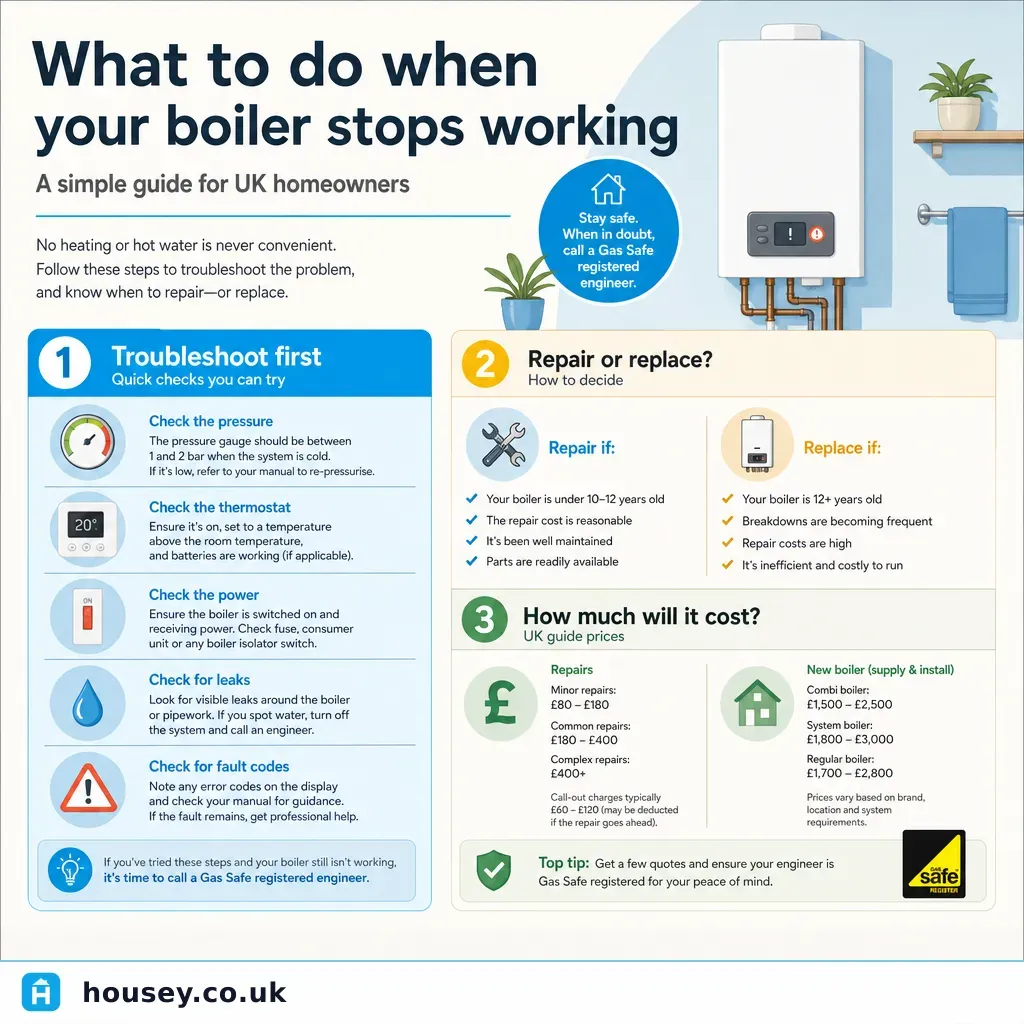
What to do when your boiler stops working
When your boiler stops working, check the pressure gauge (should read 1–1.
 General property advice
Property Market Trends: Activity Growth and Price Movements
UK property market activity is measured through completed sale registrations (HM Land Registry), lender mortgage data, and transaction volumes from HMRC.
 General property advice
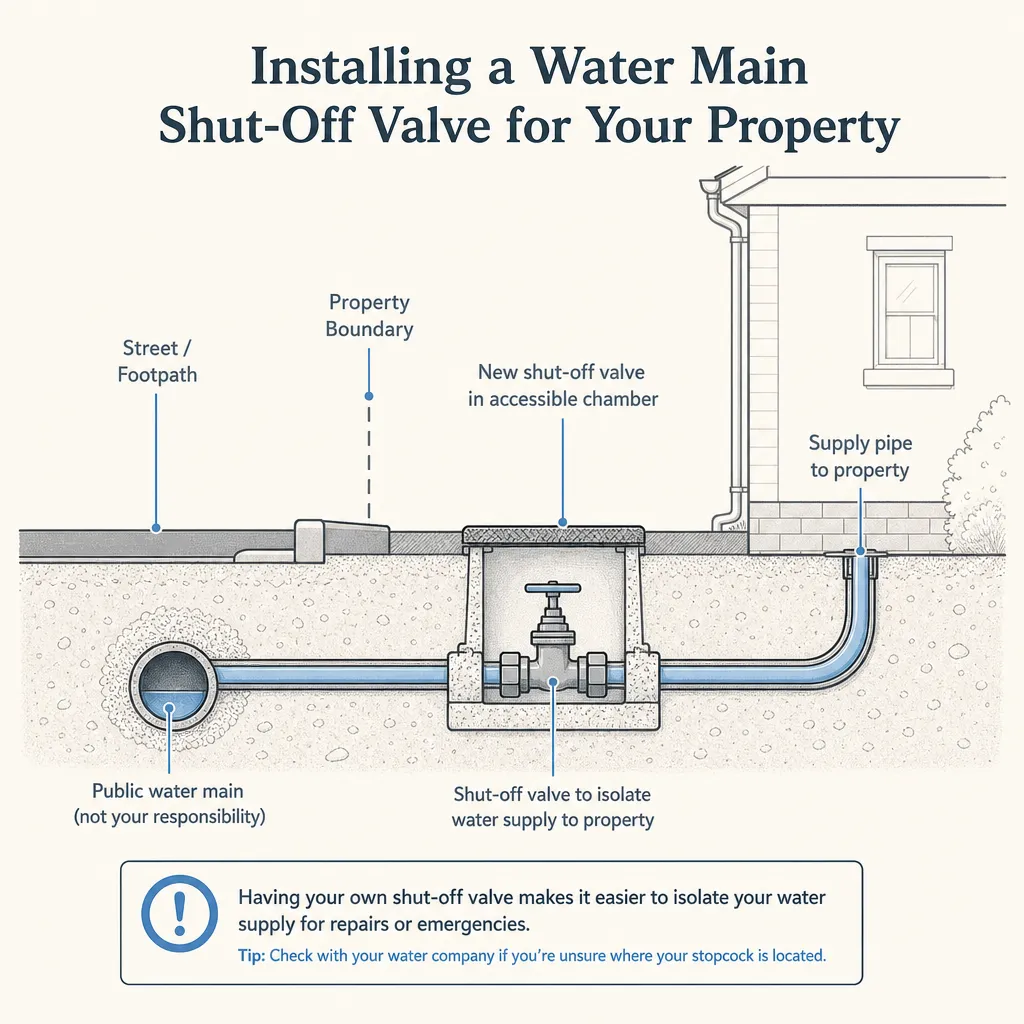
Installing a water main shut-off valve for your property
A water main shut-off valve — commonly called a stopcock — controls all water entering your home from the mains.
 General property advice
Monthly House Price Index: August Market Report and Analysis
The UK House Price Index is published monthly using completed Land Registry transaction data, meaning August figures typically reflect sales agreed months earlier.
 General property advice
Scottish Property Market: Activity and Regional Trends
Scotland's property market operates under distinct legal rules: sellers must provide a Home Report before marketing, transactions become legally binding at conclusion of missives rather than exchange of contracts, and Land and Buildings Transaction Tax replaces Stamp Duty.