Repointing Brickwork: Restoring Mortar Joints for Structural and Weather Protection
By Housey · Last reviewed 18th of May 2026
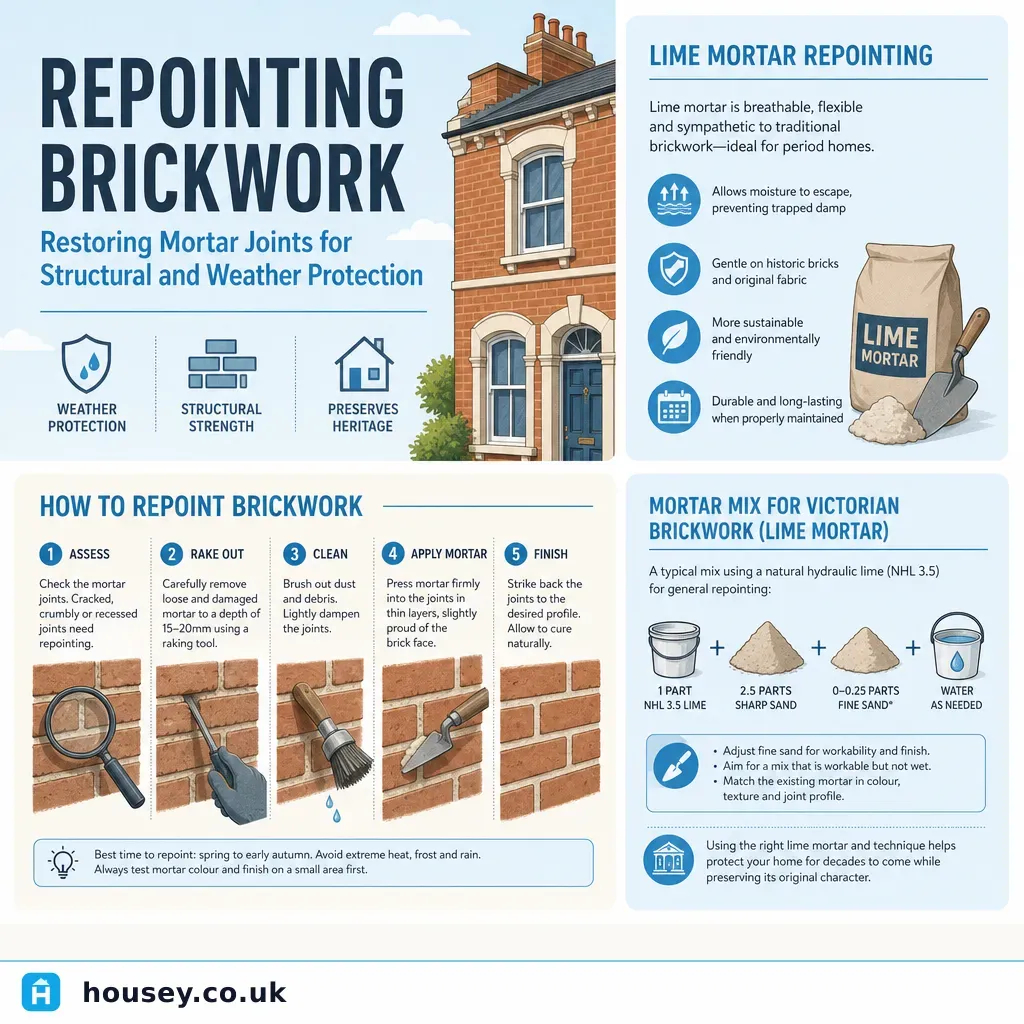
Repointing Brickwork: Restoring Mortar Joints for Structural and Weather Protection
Deterioration of mortar joints is among the most common — and most often overlooked — maintenance issues on UK homes. In Victorian terraces, 1930s semis, and post-war estates alike, weathered mortar allows water into the wall fabric, accelerating frost damage, driving damp internally, and in serious cases weakening the structural bond between bricks. Repointing before joints fail completely is nearly always far less expensive and disruptive than the remedial masonry work needed once bricks begin to spall or water penetrates the cavity.
Key points
- Mortar joints must be raked to a minimum depth of 15–20mm before repointing — shallower work produces a weak, poorly bonded repair that will fail quickly and may look worse than the original.
- Pre-1919 UK properties originally used lime-based mortars, typically 1 part lime to 2.5–3 parts sand; repointing with modern OPC (ordinary Portland cement) can be stronger than the bricks themselves, causing spalling and irreversible damage per Historic England's Practical Building Conservation guidance.
- All external repointing above ground level involves work at height; contractors must comply with the Work at Height Regulations 2005 (HSE) and homeowners should confirm contractors hold appropriate public liability insurance.
- In conservation areas or on listed buildings, the local planning authority may require a specific mortar specification — using an incompatible mix can be a criminal offence under the Planning (Listed Buildings and Conservation Areas) Act 1990.
- Indicative UK costs, last reviewed 2026-05-18: repointing a standard semi-detached house typically costs £1,500–£4,000 depending on scaffold requirements, extent of deterioration, and location; chimney stacks alone often cost £500–£1,500 due to access complexity.
When does brickwork need repointing?
Joints deteriorate at different rates depending on exposure, original mortar quality, and the age of the property. The following signs indicate assessment is overdue.
Red flags: signs that repointing should be assessed
- Mortar joints are visibly recessed more than 5–10mm below the brick face
- Mortar crumbles or rubs out easily when pressed with a key or screwdriver
- Powdering, friable, or dark discoloured mortar on exposed elevations
- Internal damp patches on external walls with no obvious penetration route via gutters, pipes, or windows
- Frost damage: brick faces spalling or flaking, particularly on chimney stacks, parapet walls, and north-facing corners
- Moss, algae, or lichen concentrated along mortar lines rather than across brick faces — indicating joints are wetter than the surrounding brickwork
- Stepped or diagonal cracking through mortar joints — this may indicate differential settlement and should be assessed by a RICS-chartered structural engineer before any repointing proceeds
Mortar mix selection: the most important decision
Using mortar harder than the bricks forces movement stresses into the brickwork rather than absorbing them in the joints — causing brick faces to spall and trapping moisture that accelerates freeze-thaw damage.
Property type | Era | Typical original mortar | Recommended repointing mix | Key notes |
|---|---|---|---|---|
Victorian/Edwardian terrace | Pre-1919 | Lime putty : sand (1:2.5–3) | NHL 3.5 hydraulic lime or non-hydraulic lime putty : sharp sand | OPC must be avoided; specify to Historic England guidance |
1920s–1940s semi | 1920–1945 | Lime-based with some early OPC | 1:1:6 cement:lime:sand (Mortar Designation iii) | Lean towards lime-richer mixes if original specification is uncertain |
Post-war to 1980s estate | 1945–1990 | OPC-based mortar | 1:1:5–6 cement:lime:sand or proprietary ready-mixed repointing mortar | Match mortar colour carefully to avoid a patchy finish |
Modern brick veneer | Post-1990 | OPC or proprietary mix | As original specification; check builder or manufacturer guidance | New-build brick is often harder and more dimensionally uniform |
Listed building or conservation area | Any | Varies — must be assessed by testing | Lime mortar to specification agreed with LPA or Historic England | Always obtain conservation officer input before starting |
A test panel — a small area repointed and assessed for colour match, adhesion, and finish before committing to the full elevation — is strongly advisable.
The repointing process: what to expect
Repointing is methodical, labour-intensive work. For a typical domestic project:
- Joint preparation: deteriorated mortar is raked out using a mortar raking disc on an angle grinder (faster but higher risk of brick damage) or plugging chisel and hammer (slower, more controlled for softer or older bricks). Minimum depth: 15–20mm.
- Cleaning: joints brushed free of dust and loose material, then dampened to reduce suction before new mortar is applied.
- Mortar application: new mortar pressed firmly into joints in layers for deep voids, then tooled to the correct profile — flush, weatherstruck (sloped outward), or rodded — to match the original finish.
- Curing: lime mortars must be protected from frost, direct sun, and rapid drying for several days using damp hessian or polythene sheeting. OPC-based mortars need frost protection for at least 24–48 hours after application.
What to ask before accepting a quote
Before instructing a repointing contractor:
- What mortar specification will you use, and why is it appropriate for this property's age and construction?
- Will joints be raked by hand chisel or angle grinder? (Hand raking is safer for older and softer brickwork)
- How deep will joints be raked, and how will consistent 15–20mm depth be confirmed throughout?
- Does the price include erecting and striking scaffolding, or is access charged separately?
- How will mortar colour and joint profile be matched to the existing work?
- Is VAT included in the quoted price?
- What guarantee do you offer, and are you a member of a recognised trade association?
- Will you carry out a test panel before starting on the main elevation?
When to get professional help
All external repointing above low ground level involves work at height and should be carried out by a competent, insured contractor. Professional involvement is particularly important when:
- The property is listed or in a conservation area — conservation officer input is required
- Widespread brick spalling is already present — damaged bricks may need cut-and-replacement rather than repointing alone
- Stepped or diagonal cracking is visible — structural assessment should precede any repointing
- Chimney stacks or parapets are severely deteriorated — these are common failure points and can become dangerous if left untreated
- You are uncertain of the correct mortar specification for a pre-1919 property
How Housey can help
Repointing is often identified during a building survey or as part of a broader external renovation programme. Housey connects homeowners with vetted extension builders who can coordinate masonry repairs, repointing, and external fabric works as part of larger projects. Request multiple quotes through Housey to compare specification, experience, and price before committing.
Frequently asked questions
How long does repointing last?
Well-executed repointing with the correct mortar mix lasts 20–30 years in sheltered exposures and 15–20 years on highly exposed elevations such as chimney stacks and north-facing walls. Lime mortar is more flexible than OPC cement and often outlasts cement pointing on Victorian and Edwardian brickwork, where it is also the more appropriate material choice.
Can I repoint brickwork myself?
Small areas at ground level are achievable for a competent DIYer with the correct mortar specification, raking tools, and care to avoid scoring brick faces. Any work requiring scaffold or ladder access should be left to professionals complying with the Work at Height Regulations 2005. Using the wrong mortar mix on period brickwork can cause irreversible and costly damage to the bricks.
Does repointing need planning permission?
Routine repointing does not require planning permission in most cases. However, in a conservation area or on a listed building, using an incompatible mortar specification may constitute a criminal offence under the Planning (Listed Buildings and Conservation Areas) Act 1990. Always check with your local planning authority before proceeding on any protected property.
Why is my new repointing already cracking?
Premature cracking in new pointing is usually caused by mortar that is too high in cement content, rapid drying in direct sun or wind, application in temperatures below 5°C, or insufficient raking depth leaving shallow joints with poor bond. Wide cracks or debonding indicate a specification or application problem that should be assessed by a qualified masonry contractor.
What is the difference between repointing and rendering?
Repointing restores the mortar joints between individual bricks while leaving brick faces exposed. Rendering applies a continuous mortar or lime coat over the entire wall surface, covering bricks and joints together. They address different problems — repointing suits sound brickwork with deteriorated joints, while rendering is used where the whole wall face requires weatherproofing or brick surfaces are too damaged to remain exposed.
Sources and further reading
- Practical Building Conservation: Mortars, Renders and Plasters — Historic England
- Work at Height Regulations 2005 — legislation.gov.uk / HSE
- Planning (Listed Buildings and Conservation Areas) Act 1990 — legislation.gov.uk
- Technical advice on repointing masonry — Historic Environment Scotland
Useful next reads
 Improvement & Build
Concrete Sealing: Protecting and Maintaining Your Driveway
Sealing a concrete driveway protects against water ingress, freeze-thaw damage, oil stains, and surface wear.
 Improvement & Build
Repairing a Bay Window Roof and Weatherproofing
A bay window roof typically uses felt, lead, or EPDM rubber as its waterproof covering.
 Improvement & Build
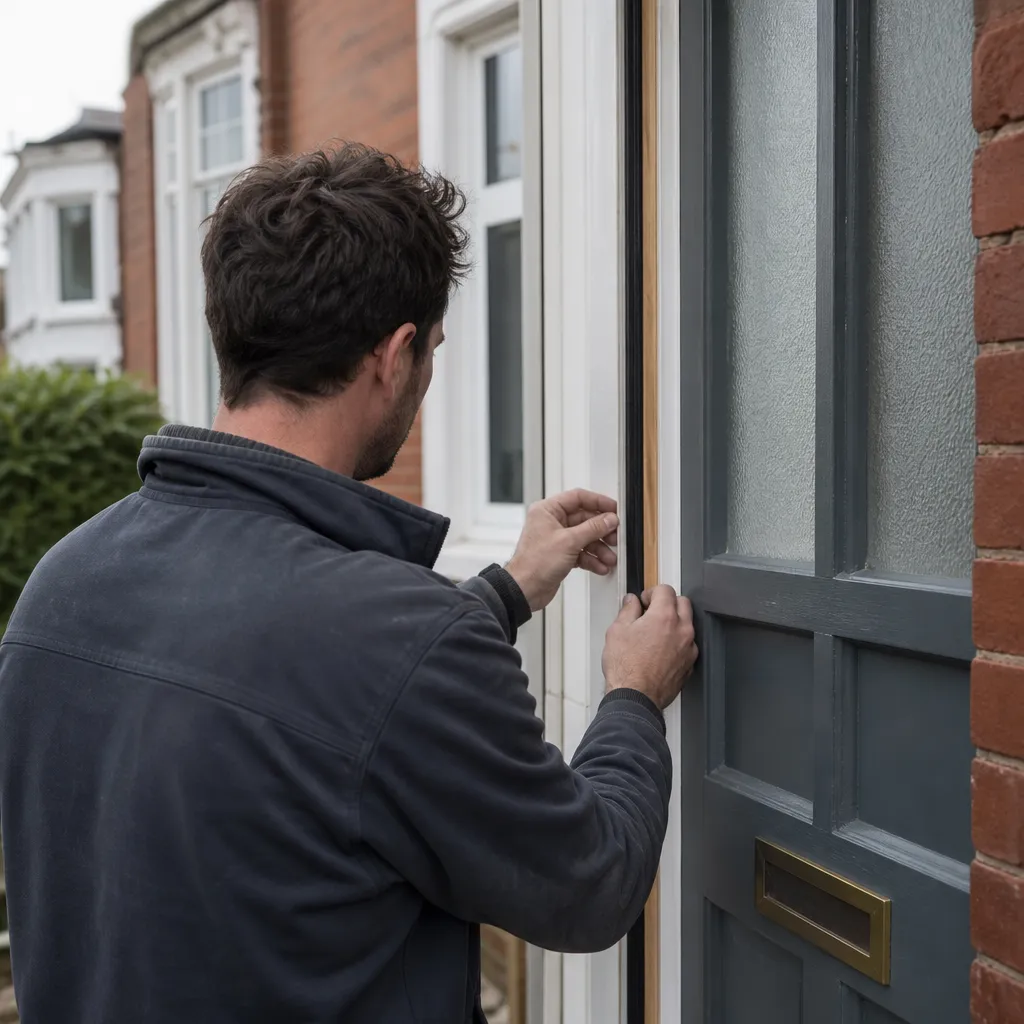
Door Weatherproofing And Sealing: Window And Door Contractors
Door weatherproofing involves fitting draught seals, threshold strips, letterbox brushes, and door sweeps to stop cold air and rain entering around the frame and threshold.
 Improvement & Build
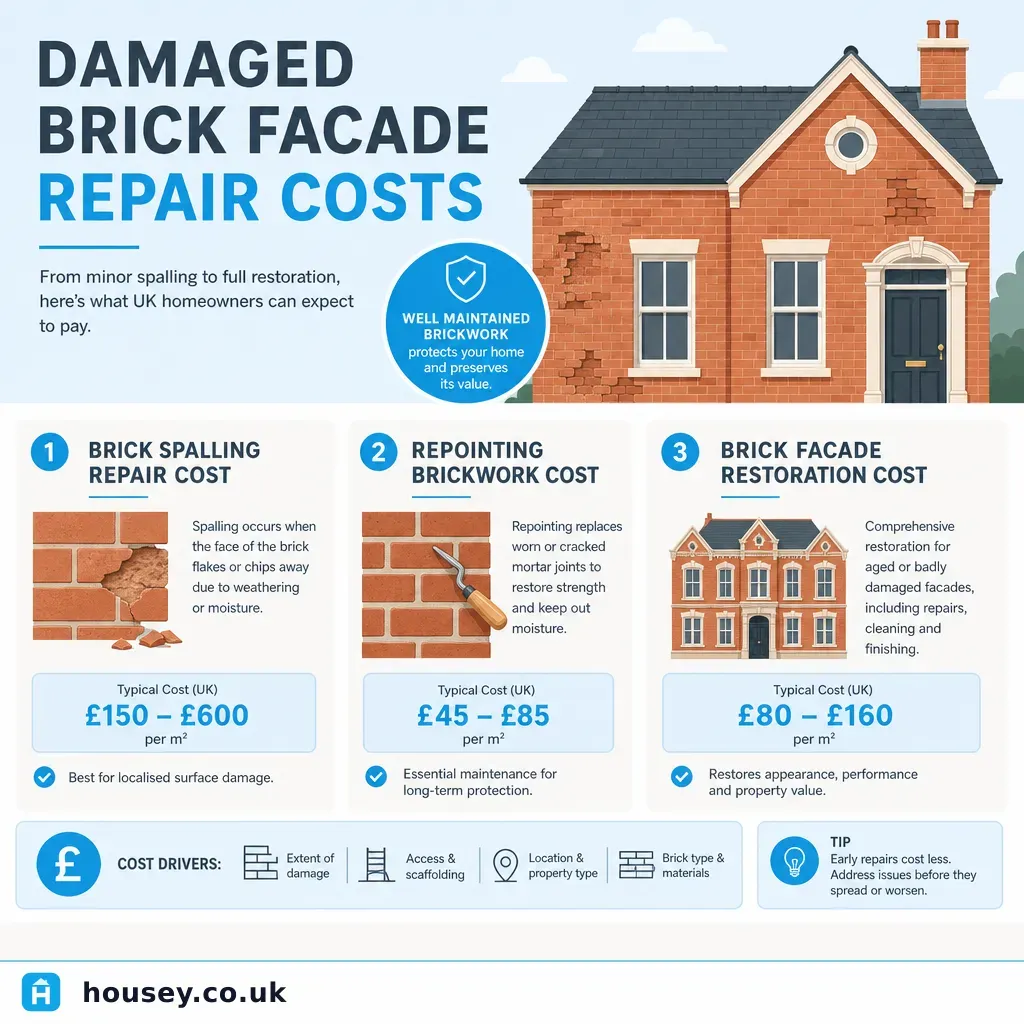
Damaged Brick Facade Repair Costs
Repairing a damaged brick facade in the UK typically involves repointing mortar joints, replacing spalled bricks, or full masonry restoration.
 Improvement & Build
How much does window sill replacement cost
Window sill replacement in the UK typically costs £100–£400 per sill for a standard installation, depending on the material — uPVC, timber, stone, or composite — and whether the sill is internal or external.