Resin-Bound Driveway Installation: Costs and Durability
By Housey · Last reviewed 10th of May 2026
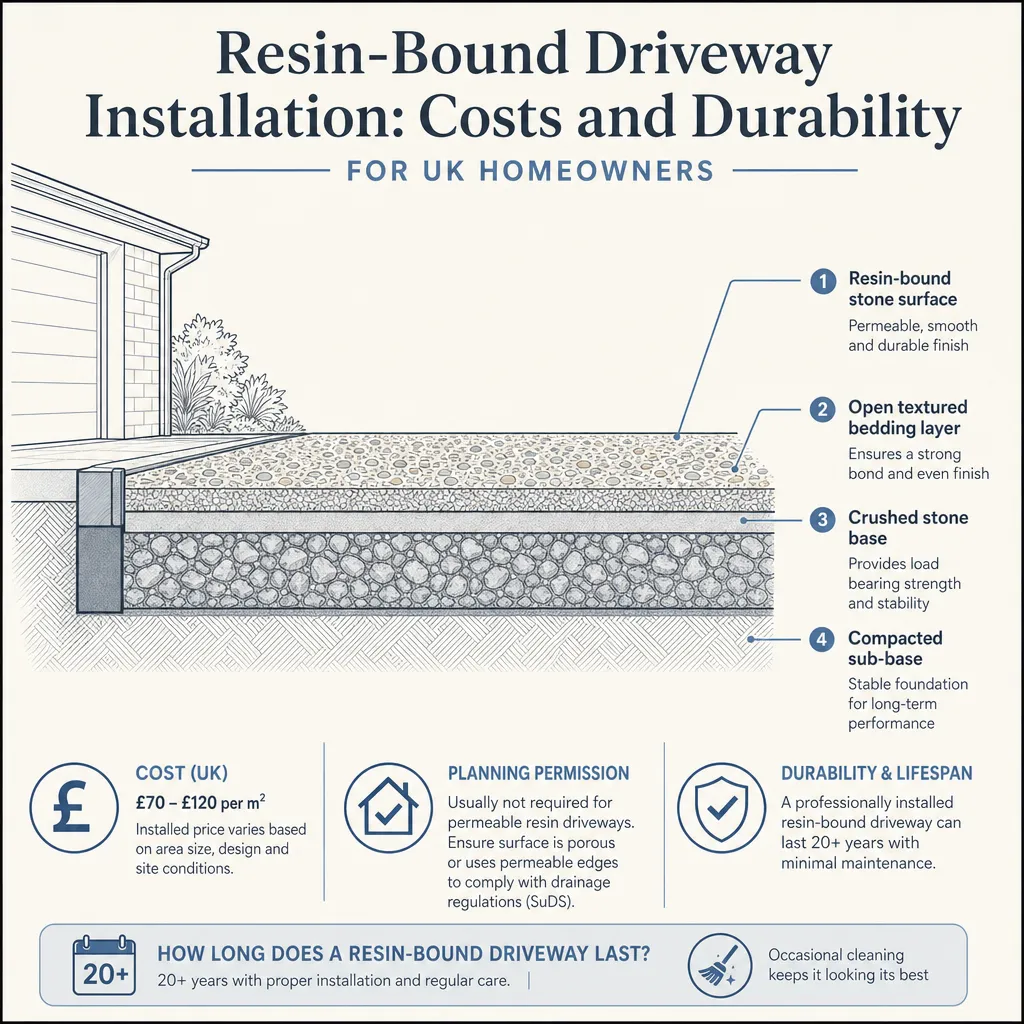
Resin-Bound Driveway Installation: Costs and Durability
A failing or crumbling driveway surface is one of the most common home-improvement triggers for UK homeowners, and resin-bound paving has become a popular alternative to tarmac and block paving over the past decade. Whether you are replacing a tired concrete surface on a 1930s semi or creating a new hardstanding from scratch, understanding how resin-bound systems work — and what makes them succeed or fail — will help you get the best result for your money.
Key points
- Resin-bound driveways are permeable (SuDS-compliant), meaning front driveways of any size typically do not require planning permission under permitted development rights in England.
- Typical installed costs range from £40 to £130 per m² in the UK, depending on aggregate type, base condition, depth of preparation work, and location. (Indicative UK costs, last reviewed 2026-05-10.)
- UV-stable aliphatic resin should always be specified; cheaper aromatic resins yellow within a year under UK sunlight.
- A correctly installed resin-bound surface over a sound base typically lasts 15–25 years with little maintenance beyond occasional jet washing.
- The structural integrity of the existing sub-base is the single biggest factor in longevity — laying resin over a failing base is the leading cause of premature cracking and delamination.
What is a resin-bound driveway, and how does it differ from resin-bonded?
These two terms are frequently confused, but the systems behave very differently in practice.
Feature | Resin-Bound | Resin-Bonded |
|---|---|---|
Method | Aggregate mixed into resin before laying | Resin spread on surface, aggregate scattered on top |
Surface texture | Smooth, flush, fully encapsulated | Rough; loose aggregate sits proud of surface |
Permeability | Permeable (SuDS-compliant) | Not permeable |
Planning (front garden, England) | Usually no permission needed | May need permission as non-permeable surface |
Typical lifespan | 15–25 years | 3–8 years before aggregate loosens |
Relative cost | Higher | Lower |
Best for | Driveways, paths, patios requiring durability | Short-term resurfacing, lower budgets |
For a driveway that will last and comply with current SuDS expectations, resin-bound is the correct choice. Resin-bonded can look similar on the day of installation but sheds aggregate underfoot and degrades significantly faster.
How much does a resin-bound driveway cost in the UK?
Costs depend on several variables: the size of the area, the condition and type of the existing base, the aggregate blend chosen, the system depth, and the contractor's location.
Indicative UK installed costs, last reviewed 2026-05-10:
Scenario | Approximate cost per m² |
|---|---|
Resin overlay on sound existing tarmac or concrete | £40–£65 |
Full installation with new MOT Type 1 sub-base | £75–£130 |
Premium aggregate (e.g., Balmoral granite, marble chip) | Add £10–£25 |
ACO or drainage channel installation | £60–£120 per linear metre |
For a typical 40 m² driveway, expect to pay approximately £2,000–£4,000 for a straightforward overlay on a sound base, or £3,500–£6,000 for a full dig-out and new base. Always obtain at least three itemised quotes.
Key cost drivers:
- Base condition: A sound, level existing surface makes an overlay significantly cheaper. Cracked, sunken, or contaminated bases need breaking out and replacing.
- Aggregate specification: Natural quartz and gravel are common mid-range choices; coloured glass, marble, or imported granites carry a premium.
- Access and logistics: Restricted access, skip hire, or disposal of contaminated material adds cost.
- Edging and drainage: Resin-bound systems require a firm edge restraint; drainage channels or ACO drains add to the total.
Does a resin driveway need planning permission?
In most cases, no. Under the Town and Country Planning (General Permitted Development) (England) Order 2015, you may hard-surface a front garden without planning permission provided the surface is permeable — or drainage is directed to a lawn or border rather than directly to the highway. Resin-bound paving qualifies as permeable and therefore typically falls within permitted development.
Exceptions to check:
- Properties in conservation areas may face additional restrictions.
- Listed buildings require listed building consent for external alterations.
- Scotland, Wales, and Northern Ireland operate under different planning frameworks with their own permitted development rules.
Always verify with your local planning authority (LPA) before starting work, particularly if your property is in a designated area.
Worked UK property scenario
Scenario: 1930s semi-detached, 40 m² front driveway, existing failing tarmac
The homeowner obtained three quotes:
- Quote A — £1,600: Proposed a resin overlay without base assessment or specification details.
- Quote B — £3,200: Included a full base inspection, localised patch repairs to the existing tarmac, aromatic resin system, and a three-year workmanship guarantee.
- Quote C — £4,100: Full dig-out to 150 mm, new MOT Type 1 sub-base, aliphatic resin with natural quartz aggregate, ACO drain channel connected to the existing drainage run, and a ten-year workmanship guarantee.
Quote A carried the highest risk: laying resin over a failing base typically results in cracking within two to three years as the base continues to move. Quote C offered the most durable long-term solution. Quote B was reasonable value if the scope of patch repairs was substantial — the homeowner requested an itemised repair schedule before deciding.
The homeowner chose Quote C. The installer also confirmed that the existing soakaway was serviceable, avoiding a costly drainage surprise after installation.
What to ask before accepting a quote
Not all resin-driveway contractors use the same quality of materials or laying technique. Use this checklist when comparing quotations:
- What resin system are you using — aliphatic or aromatic? (Aliphatic is UV-stable; aromatic yellows.)
- What is the resin-to-aggregate ratio, and what depth will be applied?
- Will the existing surface be cleaned, primed, and assessed before laying?
- What base preparation do you recommend, and why?
- What edge restraints or drainage channels are included in the price?
- What warranty do you offer on materials and on installation workmanship?
- Are you a manufacturer-approved applicator or a member of a recognised trade scheme?
- Is VAT included in the quoted price?
- What is the expected cure time before vehicle use, and what aftercare is recommended?
A good installer will always assess the existing base before quoting. Be cautious of very low prices that assume an overlay is possible without inspection.
When to get professional help
Most residential resin-bound driveway projects are straightforward for an experienced contractor. Seek specialist input if:
- The driveway is on a slope steeper than approximately 1:20, which may require an anti-slip additive or a different surface specification.
- You have an underground drainage system whose condition is unknown — a CCTV drain survey before laying new hard surfacing is advisable.
- The driveway abuts a highway — your local highways authority may have requirements about drainage and kerb transitions.
- You are in a conservation area or own a listed building.
- You suspect the sub-base has been affected by tree roots or previous subsidence.
How Housey can help
Housey connects UK homeowners with vetted driveway installers and groundworkers who can assess your existing base, provide itemised quotes, and complete the installation to a high standard. Submit your project details to receive quotes from local specialists.
Frequently asked questions
How long does a resin-bound driveway last?
A resin-bound driveway installed over a sound, well-prepared base using UV-stable aliphatic resin typically lasts 15–25 years. The main factors affecting lifespan are base integrity, quality of the resin system, and whether the surface was properly cured before vehicle use. Regular jet washing and occasional re-sanding of any worn edges will help maintain appearance.
Can I have a resin driveway laid over an existing concrete base?
Yes, provided the concrete is structurally sound, level, and free from significant cracking or movement. A contractor should assess the concrete for hollows, oil contamination, and drainage fall before quoting an overlay. Contaminated or cracked concrete may need localised repair or full removal before resin is applied.
Is a resin-bound driveway slippery when wet?
A correctly installed resin-bound surface with an appropriate aggregate size — typically 1–3 mm or 2–5 mm — provides good slip resistance in wet conditions and is generally safer than polished stone or smooth concrete. Ask your installer for the surface's BBA or slip-resistance data if this is a concern for elderly or mobility-impaired users.
Does a resin driveway need planning permission?
In most cases no, because permeable resin-bound systems comply with SuDS requirements and fall within permitted development for front gardens in England. However, rules differ in conservation areas, for listed buildings, and in Scotland, Wales, and Northern Ireland. Check with your local planning authority before starting work.
How soon can I drive on a new resin-bound driveway?
Most resin-bound systems cure sufficiently for foot traffic within 4–6 hours and for light vehicle use within 24–48 hours, depending on temperature and the specific product. Your installer should provide clear guidance; avoid driving on it in very hot weather during the first few weeks as the resin can soften slightly before fully curing.
Sources and further reading
- Town and Country Planning (General Permitted Development) (England) Order 2015 — legislation.gov.uk
- Sustainable drainage systems guidance — GOV.UK
- Planning permission: driveways and hardstanding — Planning Portal
- Non-statutory technical standards for sustainable drainage systems — GOV.UK
Useful next reads
 Improvement & Build
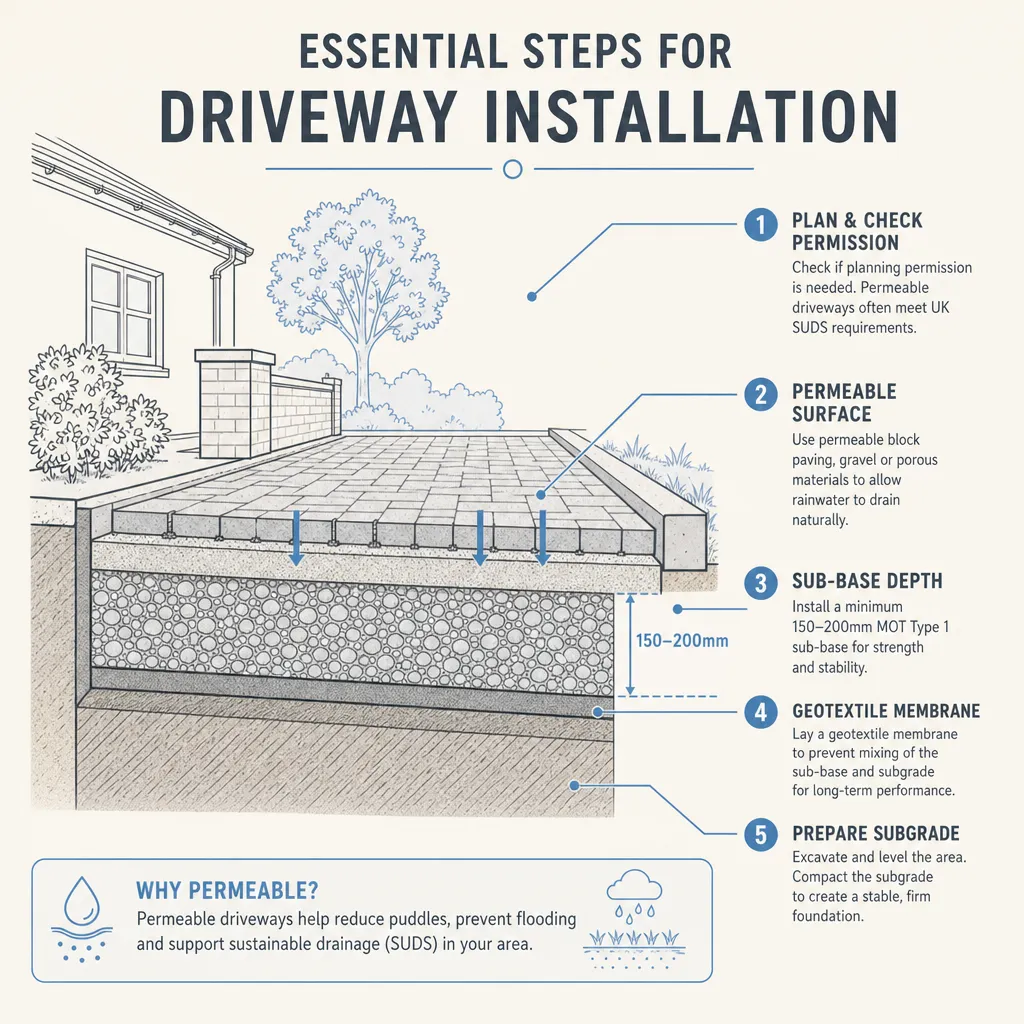
Essential Steps for Driveway Installation
Installing a driveway in England requires planning permission only when using an impermeable surface (standard tarmac, concrete, or block paving) on a front garden area over 5 m².
 Improvement & Build
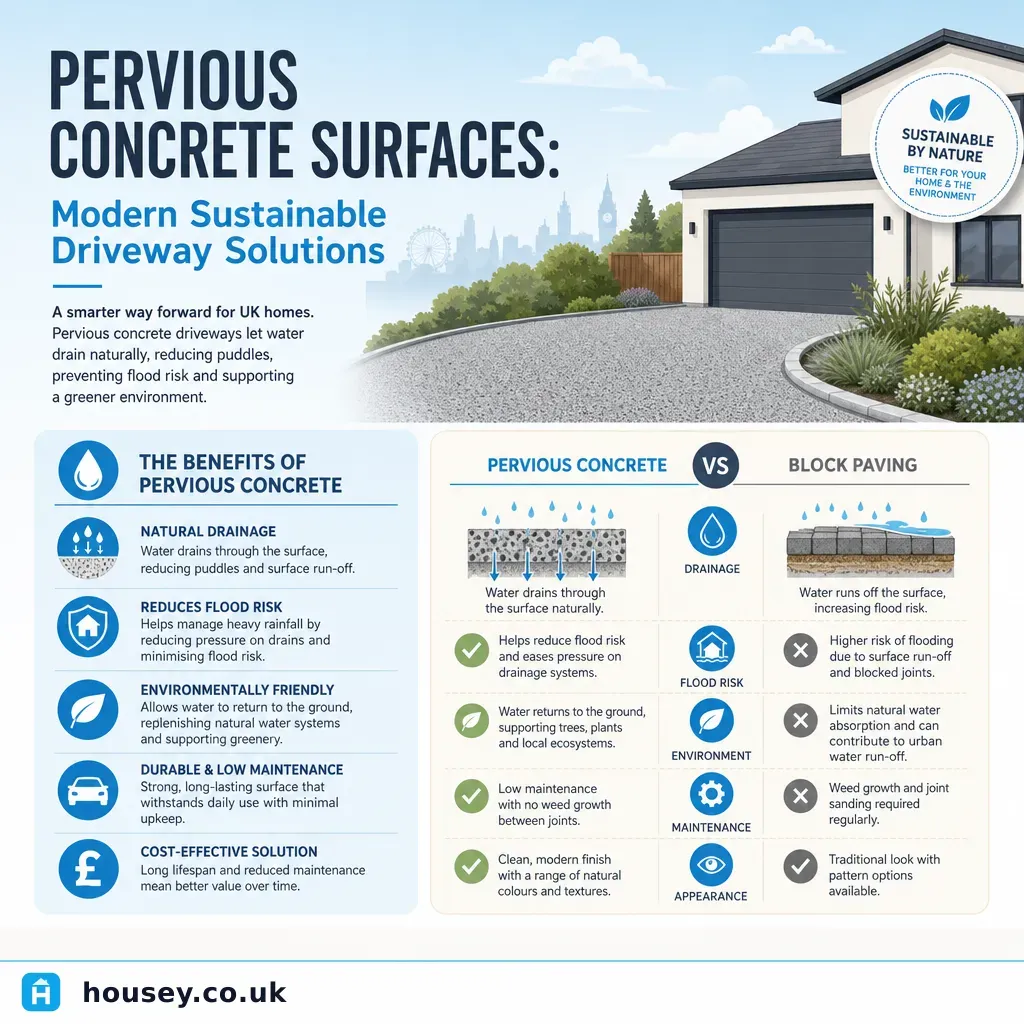
Pervious Concrete Surfaces: Modern Sustainable Driveway Solutions
Pervious concrete (also called porous or no-fines concrete) is a specialist concrete mix with large voids that allow rainwater to pass through the surface and into the sub-base below.
 Improvement & Build
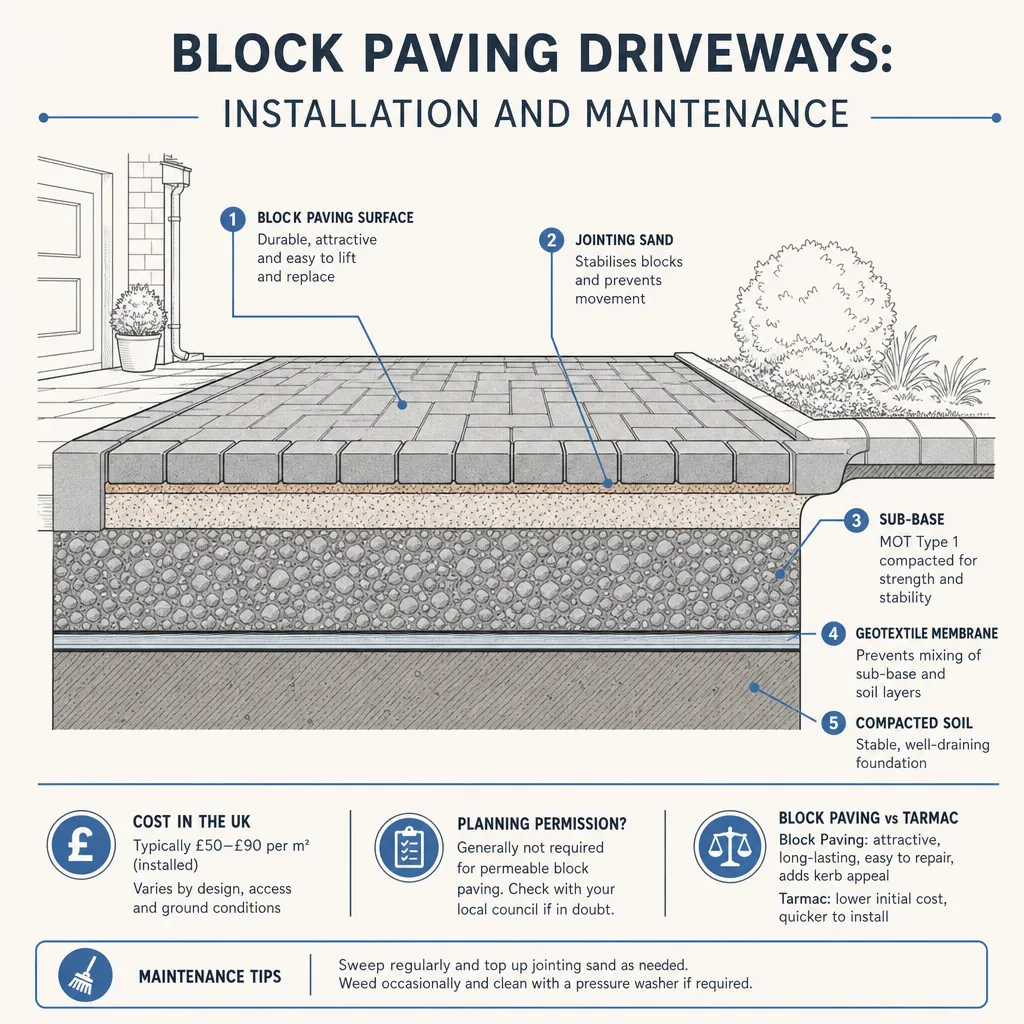
Block Paving Driveways: Installation and Maintenance
Block paving driveways typically cost £50–£120 per m² installed and last 20–30 years with good maintenance.
 Improvement & Build
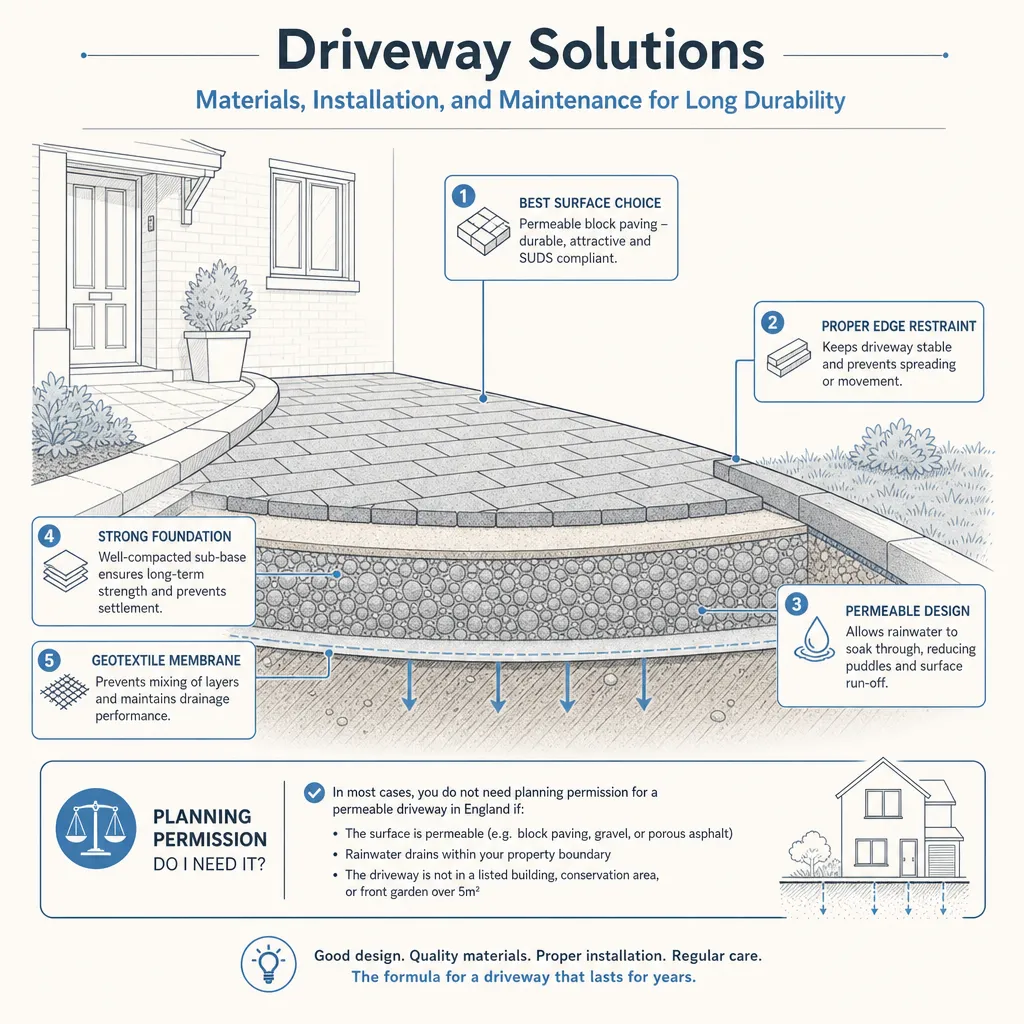
Driveway Solutions: Materials, Installation, and Maintenance for Long Durability
In England, driveways over 5 square metres need planning permission unless they use a permeable surface or drain to a lawn or border.
 Improvement & Build
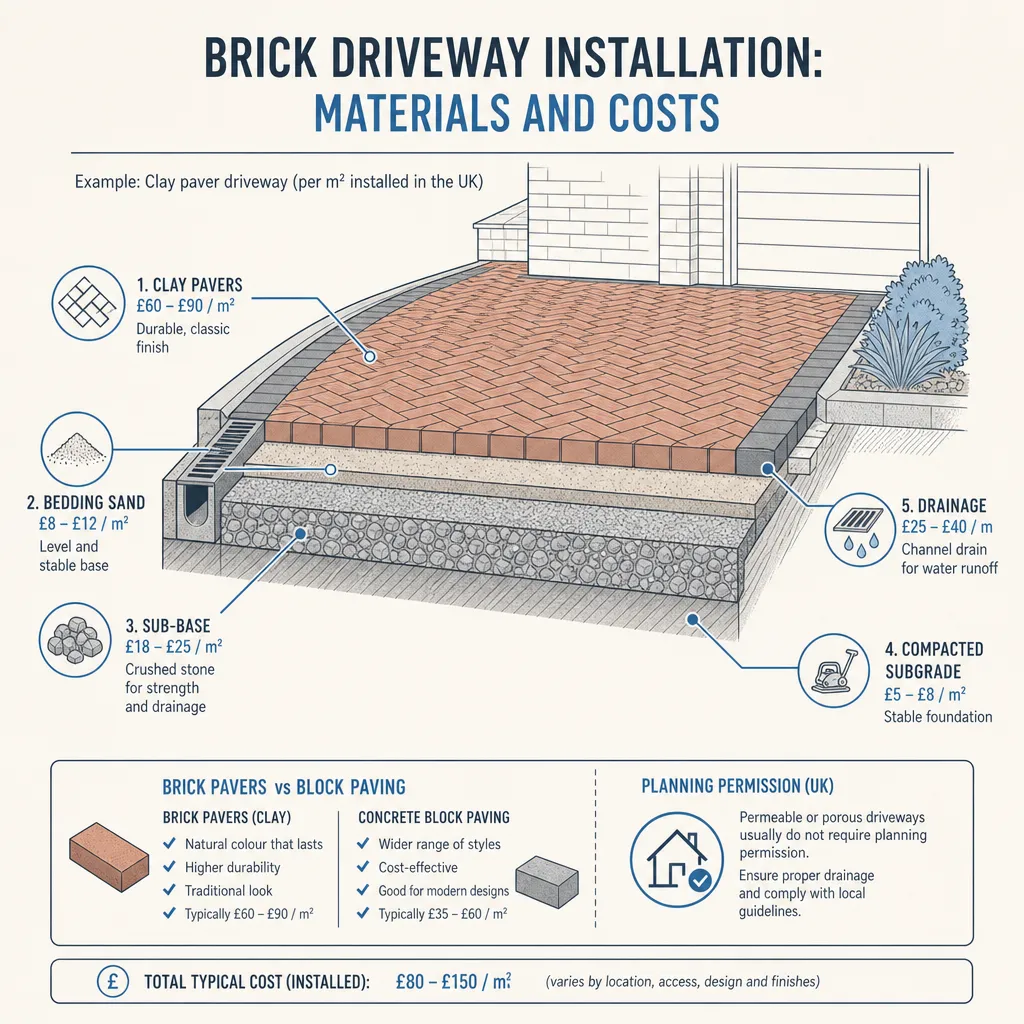
Brick Driveway Installation: Materials and Costs
A brick or clay paver driveway typically costs £90–£150 per square metre installed in the UK, depending on material grade, sub-base requirements, and regional labour rates.