Resolving stuck or difficult sliding glass doors: causes and fixes
By Housey · Last reviewed 1st of June 2026
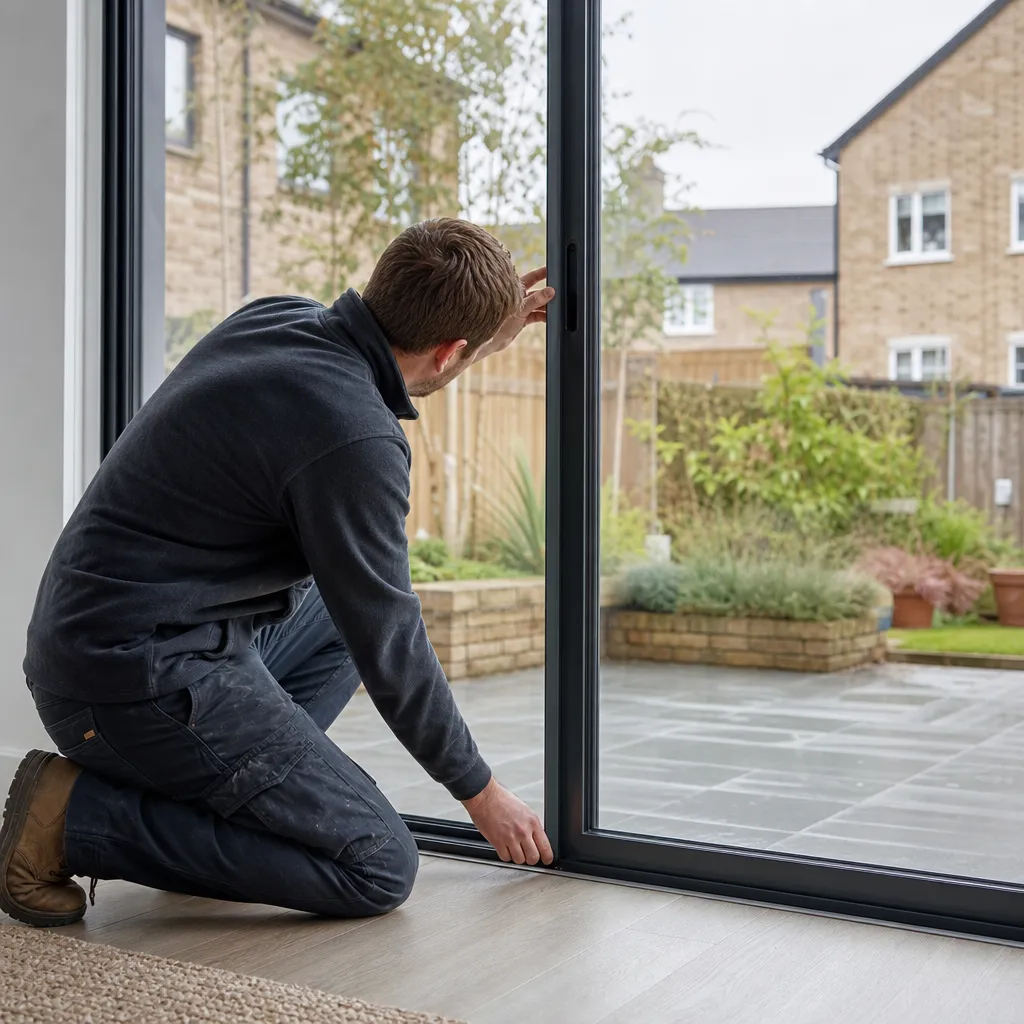
Resolving stuck or difficult sliding glass doors: causes and fixes
Sliding glass doors are a familiar feature of UK homes built from the 1970s onwards, commonly fitted between living rooms and gardens in everything from 1930s semis to modern new-build apartments. When the mechanism starts to drag, jump, or refuse to latch, the problem rarely resolves itself — and an increasingly stiff door can quickly become a security risk or allow draughts and moisture to penetrate the frame.
Key points
- Most sliding door problems originate in one of three areas: worn or corroded roller carriages, debris compacted into the bottom track, or a door frame shifted out of square by building settlement.
- UPVC sliding patio doors — the most common type in UK residential properties — typically have adjustable roller carriages accessible via a small adjustment screw on the door's bottom edge or face.
- Silicone-based spray lubricant is the appropriate product for sliding door tracks; petroleum-based products such as WD-40 attract grit and accelerate wear over time.
- A sliding door that lifts fully off its track under normal force is a safety concern, particularly where children are present; the top retaining guide should be the first component inspected.
- Replacement glazing units in doors must meet current safety-glazing requirements under Building Regulations Approved Document N — typically toughened glass to BS EN 12150-1 or laminated glass to BS EN ISO 12543.
Why sliding doors become difficult to operate
Most residential sliding glass doors in the UK run on a bottom-rolling system: two or more roller carriages sit inside a bottom track and bear the weight of the door panel. A secondary guide at the top keeps the door upright but carries little load.
Roller wear and corrosion are the most frequent causes of stiffness. Steel rollers — common in older aluminium-framed doors — rust if water sits in the track. UPVC doors usually use nylon or plastic rollers, which do not corrode but do crack and flatten with age, producing a grinding or skipping sensation. Replacement roller carriages for most UPVC patio doors cost £5–£25 per set (Indicative UK costs, last reviewed 2026-06-01) and are available from glazing merchants and online suppliers; compatibility requires knowing the door brand and series.
Track contamination is often underestimated. Soil, grit, leaves, and dried lubricant residue accumulate in the bottom channel over months and can physically prevent the rollers from turning. A stiff door that improves markedly after a thorough track clean often has rollers that are still serviceable.
Frame movement is a subtler cause. UK properties — particularly Victorian terraces, Edwardian semis, and 1930s houses on clay subsoil — experience seasonal ground movement. If the door frame has racked out of square by even a few millimetres, the door will bind at the top or bottom corner regardless of roller condition. This is a different problem requiring different remediation.
Weather seal compression can also contribute: older brush seals or compression seals around the perimeter of the door stiffen with age and increase the force needed to slide the door. Draught-stripping replacement is a separate, inexpensive maintenance task.
Decision tree: diagnosing your sliding door problem
Use this sequence to identify where to focus attention before spending money on parts or labour.
- Does the door feel gritty or grinding at the base? → Start with a track clean. Remove the door (most UPVC patio doors lift off the top guide and tip forward off the bottom track), vacuum the channel, and wipe with a dry cloth. Retest before doing anything else.
- Does cleaning improve it but stiffness returns within weeks? → Rollers are likely worn and no longer turning freely. Adjust or replace the roller carriages.
- Does the door bind at one corner and leave a visible gap at the other? → The frame is probably out of square, or the rollers on one side need height adjustment to level the door across its full width.
- Does the door feel smooth but fail to latch securely? → The multipoint lock keep — the plate on the frame that receives the lock bolts — may have shifted. Check that all lock points engage; the keep position is adjustable on most UPVC frames.
- Does the door lift partially off the track under normal force? → Inspect the top guide. If it is cracked, missing, or has excessive clearance, replace it before further use.
- Is the door frame visibly bowed, cracked at the corners, or showing daylight around the perimeter? → This is a frame or structural issue. Stop adjusting components and consult a window and door installer or a chartered surveyor.
- Ask a professional if the door has dropped so far the top edge contacts the top frame, or if the property is also showing sticking internal doors and cracks above other openings — these signs together suggest building movement beyond normal maintenance.
Adjusting roller height on a UPVC patio door
Most UPVC sliding patio doors allow roller height adjustment without removing the door, using a Torx or Phillips screw located on the bottom edge of the door slab or on the face of the bottom rail. Turning the screw clockwise typically raises the door; anti-clockwise lowers it.
Before adjusting, mark the current screw position with a pencil so you can return to the starting point if needed. Adjust in small increments — quarter turns — and test the door movement and latch engagement after each. Aim for even clearance along the bottom of the door relative to the sill.
Adjustment screws on older doors may be corroded or stripped. Forcing a stripped screw risks damaging the roller housing, which will then require full carriage replacement rather than a simple adjustment.
Cleaning and lubricating the track
- Vacuum loose debris from the bottom channel using a crevice attachment.
- Work a stiff-bristled brush along the channel to dislodge compacted grit, paying particular attention to the corners where debris accumulates.
- Wipe the channel with a damp cloth, then allow to dry fully before lubricating.
- Apply a thin bead of silicone spray lubricant along the bottom of the channel — not the roller carriage itself, which can attract more dirt if over-lubricated.
- Slide the door back and forth several times to distribute the lubricant evenly.
- Wipe any excess from the floor or sill to prevent a slip hazard.
The top guide track and any brush seals around the door perimeter can be lightly cleaned and lubricated with silicone spray at the same time.
When the glazing unit is the concern
Older sliding doors — particularly pre-2002 aluminium-framed units — may contain single glazing or early double-glazing units that do not meet current British Standards for safety glazing. If a glazing unit is cracked, fogged between the panes (indicating sealed-unit failure), or shows visible damage, arrange professional assessment rather than attempting repair.
Under Building Regulations Approved Document N, replacement glazing in doors must meet the impact-performance requirements for safety glazing — typically toughened glass to BS EN 12150-1 or laminated glass to BS EN ISO 12543. A glazing merchant or FENSA-registered installer can confirm which specification applies to your door frame.
Red flags: when to stop DIY and call a professional
- The door frame is visibly bowed, twisted, or has cracks running from the corners of the glazing unit into the surrounding wall.
- The door has dropped so far that the top edge contacts the top frame — this may indicate roller carriage failure or frame settlement beyond the range of adjustment screws.
- The lock mechanism no longer engages any of its locking points after adjustment of the keep plate.
- Water is tracking into the property along the bottom track despite clean, intact seals — this may indicate a failed sill or subframe requiring professional investigation.
- The glazing unit is cracked, shattered, or shows signs of spontaneous breakage.
- The property is in a conservation area or is listed, and any alterations may require listed building consent or compliance with local authority design guidance.
When to get professional help
A door that does not respond to cleaning, lubrication, and roller adjustment within two or three attempts is likely to have a frame, structural, or failing-component issue that warrants professional assessment. A qualified window and door installer can assess roller carriage condition, frame squareness, lock mechanism wear, and glazing unit integrity in a single visit, and usually carries the correct replacement parts for common door brands and series.
If the property is experiencing general building movement — sticking internal doors, cracks above windows, or sloping floors — a sliding door problem may be a symptom rather than the primary issue. In this case, a RICS-accredited surveyor should inspect the property before further remedial work is undertaken on individual components.
How Housey can help
If cleaning and adjustment have not resolved your sliding door problem, a window and door installer can diagnose roller, frame, and glazing issues and carry out repairs or like-for-like replacement to current Building Regulations standards. Use Housey to compare quotes from qualified local installers.
Frequently asked questions
Why does my sliding door keep jumping off the track?
The most common cause is a worn or broken top retaining guide that no longer holds the door upright under sideways force. A heavily worn or corroded bottom roller carriage can also cause the door to lift and derail. Inspect the top guide for cracks or missing sections first, as it is usually the quickest and cheapest component to replace.
Can I use WD-40 on my sliding door track?
WD-40 is a water-displacing solvent, not a long-term lubricant. It is not recommended for sliding door tracks because the petroleum-based carrier attracts grit and leaves a sticky residue that accelerates wear over time. Use a dry silicone-based spray lubricant instead, which leaves a slippery film without attracting dirt.
How often should I clean and lubricate a sliding glass door track?
For most UK homes, a light clean and lubrication twice a year — typically at the start of spring and before winter — is sufficient to prevent compacted grit from causing premature roller wear. Doors that open onto a garden with loose gravel or bark may benefit from more frequent attention.
My sliding door was fine and then suddenly became very stiff — what happened?
A sudden change usually indicates a roller has cracked or collapsed rather than worn gradually, or that debris — a stone, acorn, or fragment of damaged track — has lodged under a roller carriage. Remove the door if possible, inspect the rollers and track closely, and check for any visible obstruction before attempting further adjustment.
Does replacing a sliding patio door need building regulations approval?
A like-for-like replacement does not normally require a full Building Regulations application, but the replacement unit must comply with current energy-performance and safety-glazing requirements. In England, the work must be carried out by a FENSA-registered installer or notified to your local authority building control department. Check with your local authority or a registered installer before proceeding.
Sources and further reading
Useful next reads
 Improvement & Build
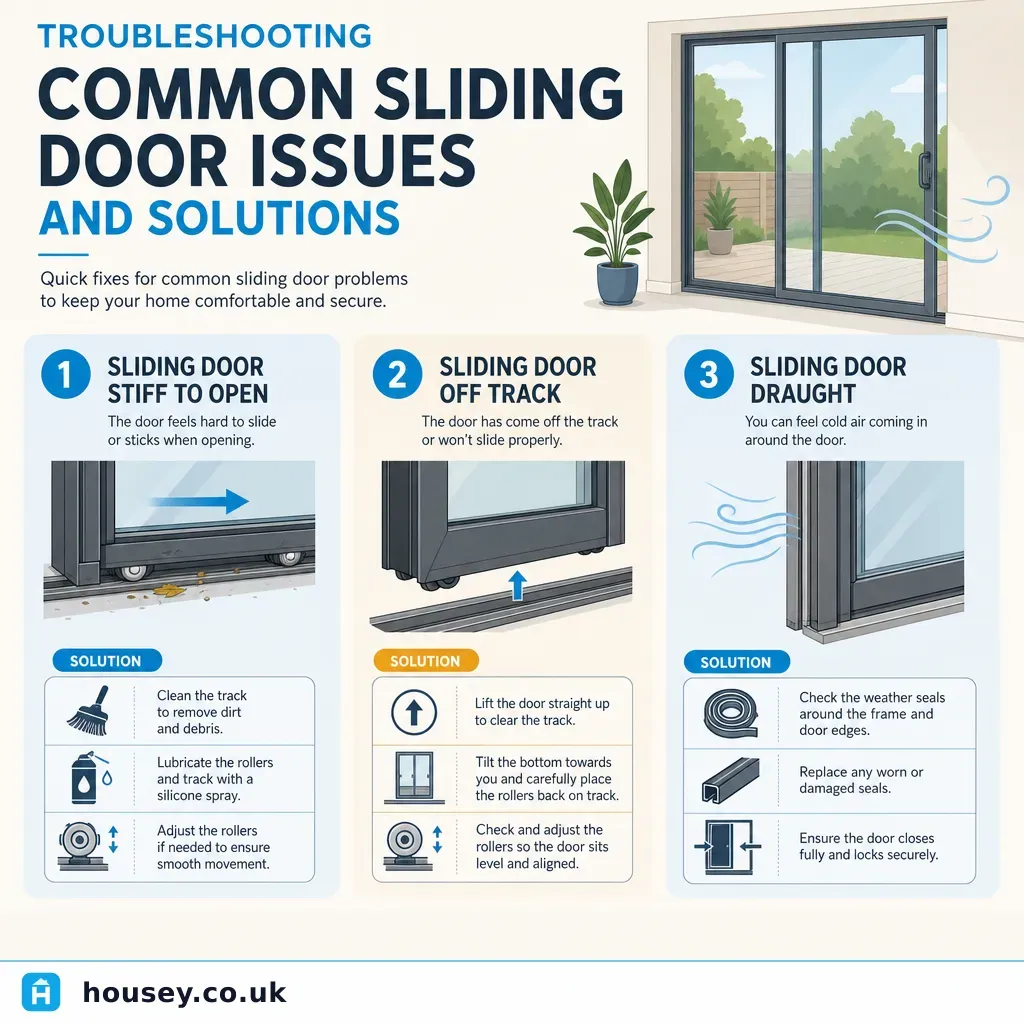
Troubleshooting common sliding door issues and solutions
Most sliding door problems — stiff operation, draughts, misalignment, or a faulty lock — have straightforward fixes.
 Improvement & Build
Outdoor lighting problems: solutions for common issues in gardens and driveways
Outdoor lighting problems in UK gardens commonly stem from water ingress, incorrect IP ratings, faulty transformers, poor earth connections, or corroded contacts.
 Improvement & Build
Repairing a Broken uPVC Door Lock: Replacement and Solutions
A broken uPVC door lock usually needs a new cylinder, a replacement multipoint mechanism, or both.
 Improvement & Build
Fixing Sticking uPVC Door Locks: Diagnosis and Solutions
A sticking uPVC door lock is usually caused by a dry or corroded cylinder, misaligned door frame, or a worn multipoint mechanism.
 Improvement & Build
Pocket Door Installation: Techniques and Best Practice Guidance
Pocket doors slide into a cavity within the wall, requiring a proprietary steel or timber frame kit installed during the rough carpentry stage.