Sash Window Restoration: Full Refurbishment Costs
By Housey · Last reviewed 10th of May 2026
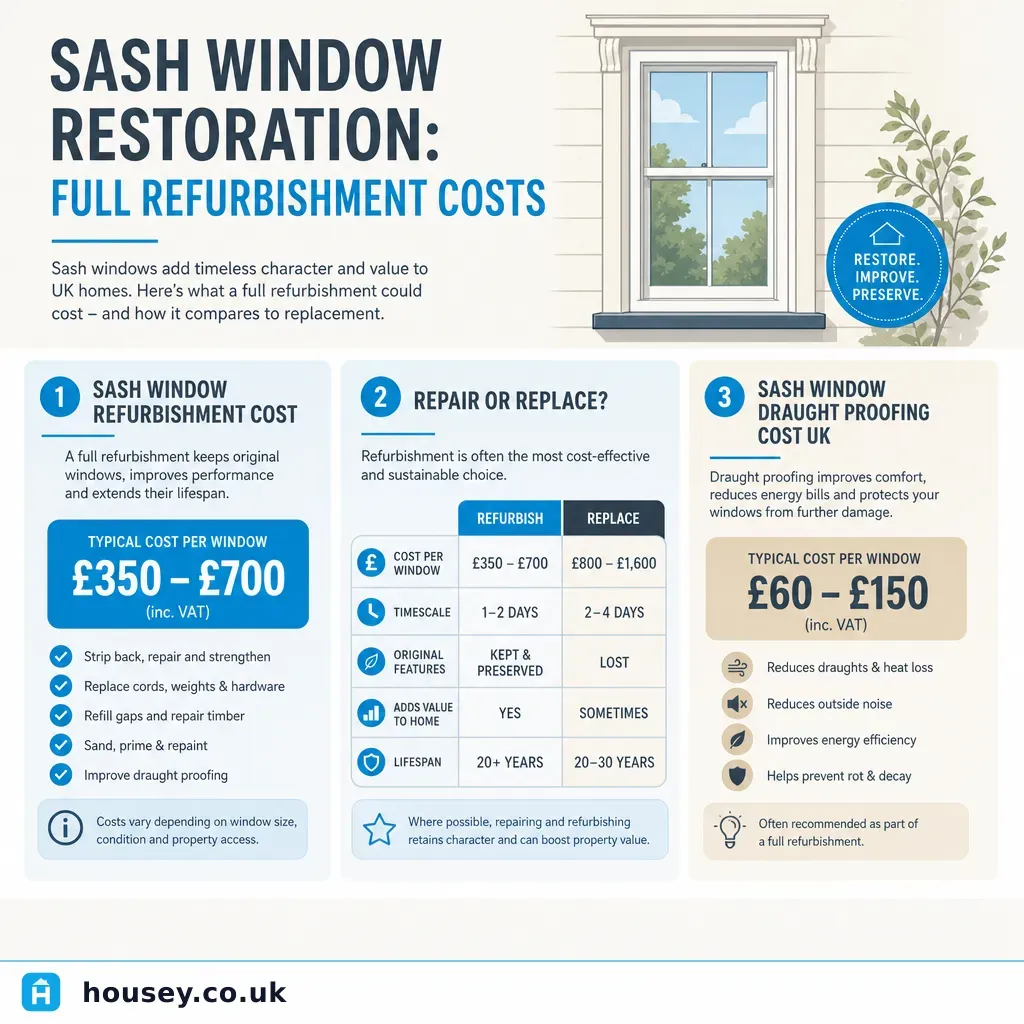
Sash Window Restoration: Full Refurbishment Costs
Sash windows are one of the most character-defining features of Georgian, Victorian, and Edwardian properties across the UK — and one of the most likely to become draughty, rattling, or rotten over time. Whether you have just bought a period home or are tackling a long-overdue maintenance backlog, understanding what restoration involves and what it costs helps you budget accurately and choose the right approach for your property.
Key points
- Draught-proofing a sash window using brush-pile or compression seals typically costs £150–£350 per window; a full restoration programme ranges from £700–£1,500 per window — indicative UK costs, last reviewed 2026-05-10.
- In a conservation area or listed building, replacing sash windows usually requires planning permission or listed building consent; local planning authorities generally prefer like-for-like restoration.
- Secondary glazing — an inner panel fitted behind the existing sash — is generally permitted in listed buildings and conservation areas where replacement double glazing would not be approved.
- FENSA certification applies to replacement windows, not to restoration or repair; a building control application may be needed if you change the window's opening configuration.
- Pre-1978 properties are likely to have lead-based paint on window frames; stripping must use appropriate dust-control measures and waste must be disposed of under the Hazardous Waste Regulations 2005.
What does sash window restoration involve?
A full restoration programme typically moves through these stages:
- Condition survey — a joiner or heritage specialist checks each window for rot, broken sash cords, failed glazing putty, and excessive paint build-up.
- Stripping and repair — old paint is removed carefully (particularly important in pre-1978 homes where lead paint is common), rotten timber is cut out and spliced or replaced in matching species, and sashes are re-weighted on new cords.
- Draught-proofing — a brush-pile or compression-seal system is fitted into the frame meeting rails and box frame to reduce heat loss without altering the window's appearance.
- Glazing repairs — cracked panes are replaced and glazing putty is raked out and repointed.
- Decoration — the frame and sashes are primed, undercoated, and painted, typically using a lead-free microporous paint suited to exterior timber.
The scope varies significantly depending on the degree of deterioration. A window with minor paint failure and a broken cord needs far less work than one with rotted sills and failed glazing throughout.
How much does sash window restoration cost?
Indicative UK costs, last reviewed 2026-05-10. Quotes vary by location, window size, access requirements, and condition.
Scope of work | Indicative cost per window | Notes |
|---|---|---|
Draught-proofing only | £150–£350 | Brush-pile or compression seals; minimal disruption |
Cord replacement and balance | £80–£200 | Sashes re-weighted on new cords; often combined with draught-proofing |
Partial restoration (repairs + redecoration) | £400–£900 | Localised rot repair, new putty, redecoration |
Full restoration (strip, repair, draught-proof, decorate) | £700–£1,500 | Assumes moderate condition; heavily deteriorated windows cost more |
Secondary glazing panel | £300–£700 | Inner panel; thermally effective; listed-building friendly |
Slim-profile double glazing insert | £500–£1,000 | Replaces glass only; existing sash must be structurally sound |
Full timber sash replacement | £1,000–£2,500+ | New bespoke unit in matching timber; planning consent may apply |
These are indicative ranges only. A specialist joiner or heritage window company should survey the windows and provide a detailed written quote before any work is commissioned.
Key cost drivers:
- Number of windows: most contractors price per window; a full Victorian terrace with eight or ten sashes costs significantly more than a mid-terrace with four.
- Access: upper-floor or bay windows may require scaffolding or a tower scaffold, adding to the total.
- Timber condition: deep rot extending to the sill or pulley stile requires more material and labour.
- Heritage requirements: listed buildings may specify particular timber species or original crown or cylinder glass.
- Lead paint: pre-1978 properties likely have lead-based paint; safe removal is slower and requires licensed waste disposal.
Repair vs replace: which is right for your sash windows?
The decision between restoring original sashes and replacing them depends on condition, planning status, and your thermal and aesthetic goals.
Factor | Lean towards restoration | Lean towards replacement |
|---|---|---|
Timber condition | Surface rot only; frames structurally sound | Deep rot throughout sills, pulley stiles, or linings |
Property type | Listed building or conservation area | Modern property with no planning constraints |
Budget horizon | Phased spend over time acceptable | Single capital outlay preferred |
Thermal goal | Draught-proofing and secondary glazing sufficient | Highest possible U-value required |
Authenticity | Original character and glass are important | Modern look acceptable |
Historic England's guidance on traditional windows notes that well-maintained timber sash windows with appropriate draught-proofing can achieve thermal performance close to that of standard double-glazed replacement units — while avoiding the embodied carbon and planning complications of full replacement.
Listed buildings and conservation areas
If your property is listed or within a conservation area, the rules governing sash windows are more restrictive than for unprotected properties.
Listed buildings: any alteration affecting the character of a listed building — including replacing windows — requires listed building consent from your local planning authority (LPA). Even changing single-pane to double-pane glass in an original sash typically requires consent. Restoration and like-for-like repair normally do not require consent.
Conservation areas: replacing windows with double-glazed units of different profiles or materials often requires planning permission. Permitted development rights that allow homeowners to replace windows without permission are frequently removed in conservation areas via an Article 4 Direction. Check with your LPA before ordering any replacement units.
Secondary glazing is widely accepted by conservation officers as a reversible intervention in listed and conservation area properties. It does not require consent in most cases, though confirming with your LPA is always advisable.
A heritage and conservation consultant can advise on what is and is not permissible before you commit to any approach.
Thermal performance and draught-proofing options
Draught-proofing is one of the most cost-effective thermal upgrades for period properties. The Energy Saving Trust notes that draughts through gaps in older homes can account for a meaningful share of heat loss.
Options for improving thermal performance without replacing sashes:
- Brush-pile draught strips — fitted into routed grooves in the meeting rail and box frame; effective and inconspicuous.
- Compression seals — similar in principle, slightly more visible but durable.
- Secondary glazing — a removable or hinged inner panel in slim aluminium or timber framing. Thermally effective and acoustically beneficial; usually qualifies as permitted development.
- Slim-profile double glazing inserts — a sealed unit fitted within the existing sash rebate; requires the sash to be structurally sound and the rebate to be deep enough (typically 28 mm minimum).
What to ask before accepting a quote
- Does the quote cover all windows, or is it priced per unit?
- Will the contractor remove and dispose of lead paint safely in compliance with the Hazardous Waste Regulations 2005?
- Is scaffold or tower access included in the price, or quoted separately?
- What timber species will be used for any replacement sections?
- Will the draught-proofing system affect the operation of the sashes?
- Does the contractor have experience with listed building or conservation area requirements?
- What guarantee is offered on workmanship and materials?
- Is VAT included in the quoted price?
When to get professional help
Sash window restoration is skilled joinery work. DIY draught-proofing kits are available for minor tasks, but significant repairs — especially those involving rot, lead paint, or heritage planning requirements — should be handled by a qualified specialist.
Seek professional help if:
- You find soft, spongy, or discoloured timber when probing the sills or frames.
- The window is in a listed building or conservation area and you are unsure what consent is needed.
- Paint stripping is required on a pre-1978 property where lead paint may be present.
- The window is on an upper floor without safe working access.
- The box frame or pulley stile is visibly cracked or has separated from the surrounding masonry.
How Housey can help
Housey connects you with experienced window and door installers who specialise in period timber sash windows, as well as heritage and conservation consultants who can advise on listed building and conservation area requirements before any work begins. Submit a single brief and compare quotes from vetted local specialists.
Frequently asked questions
Do I need planning permission to restore sash windows?
Restoration and repair of existing sash windows generally does not require planning permission. Replacing sash windows in a listed building requires listed building consent; replacing them in a conservation area often requires planning permission if an Article 4 Direction is in place. Always check with your local planning authority before starting any replacement work.
How long does a full sash window restoration take?
A single window can usually be completed in one to two days once access is arranged. A full house programme of six to ten windows typically takes two to three weeks, depending on the contractor's schedule and the condition of the frames. Heavily deteriorated windows or listed building requirements may extend the programme.
Can sash windows be made energy-efficient without replacing them?
Yes. Draught-proofing with brush-pile or compression seals, combined with secondary glazing, can significantly reduce heat loss through original sash windows. Historic England notes that restored and draught-proofed timber sash windows can achieve thermal performance close to that of standard replacement double glazing in many cases.
Is it worth restoring sash windows rather than replacing them?
In period properties — especially listed buildings and conservation areas — restoration is often the preferred and legally required approach. Well-restored sash windows retain the property's character, have lower embodied carbon than replacements, and perform well thermally when properly draught-proofed. Replacement is usually appropriate only where timber has deteriorated beyond practical repair.
How do I find a qualified sash window specialist?
Look for joiners or window restoration companies experienced in heritage timber windows. The Institute of Historic Building Conservation (IHBC) and the Traditional Windows Alliance are useful starting points. Housey's vetted network of window and door installers includes period property specialists who can quote on restoration work.
Sources and further reading
- Energy Efficiency and Historic Buildings — Windows — Historic England
- Planning permission for alterations to your home — GOV.UK
- Draught-proofing — Energy Saving Trust
- Listed buildings — GOV.UK
- Lead paint guidance for painters and decorators — Health and Safety Executive
Useful next reads
 Improvement & Build
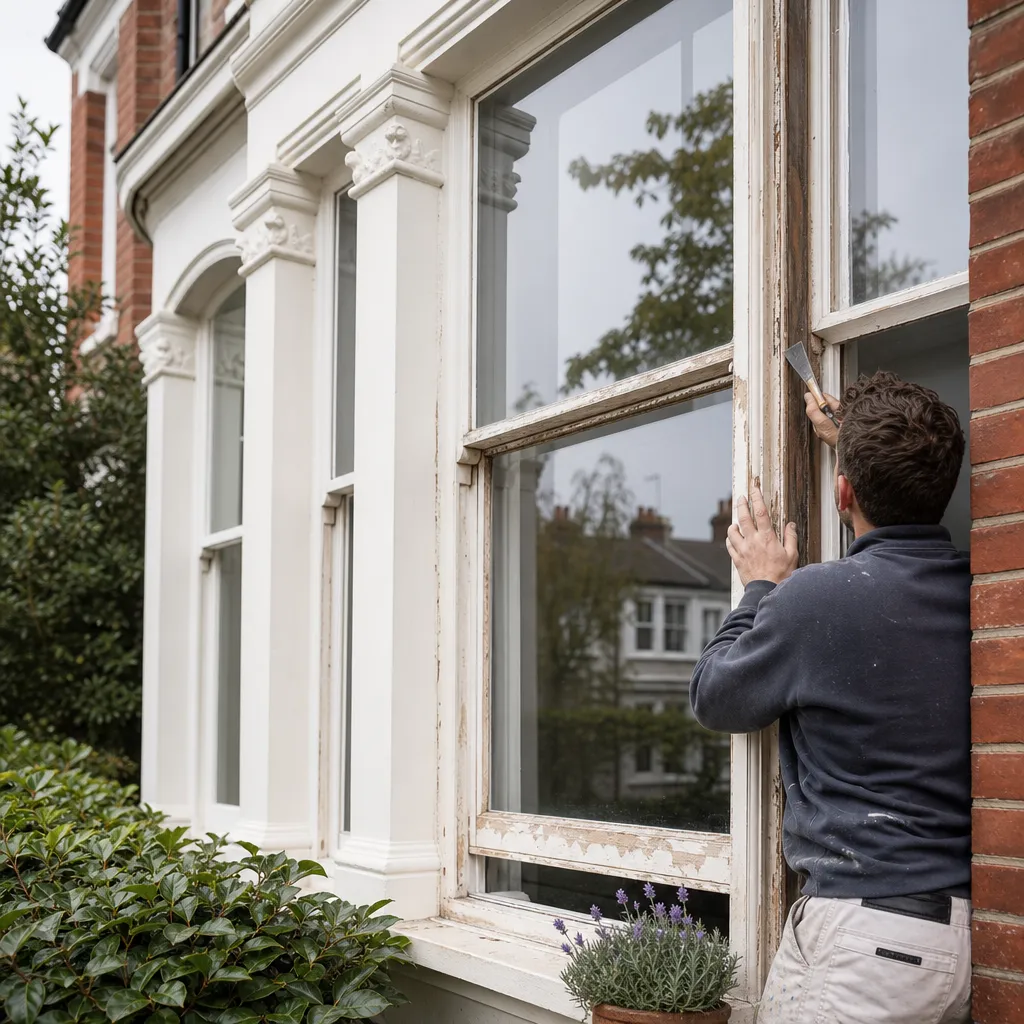
Restoring Historic Windows: Conservation Techniques and Materials
Historic window restoration involves repairing original timber or metal frames using like-for-like materials — often hardwood splices or epoxy consolidant — rather than replacing them outright.
 Improvement & Build
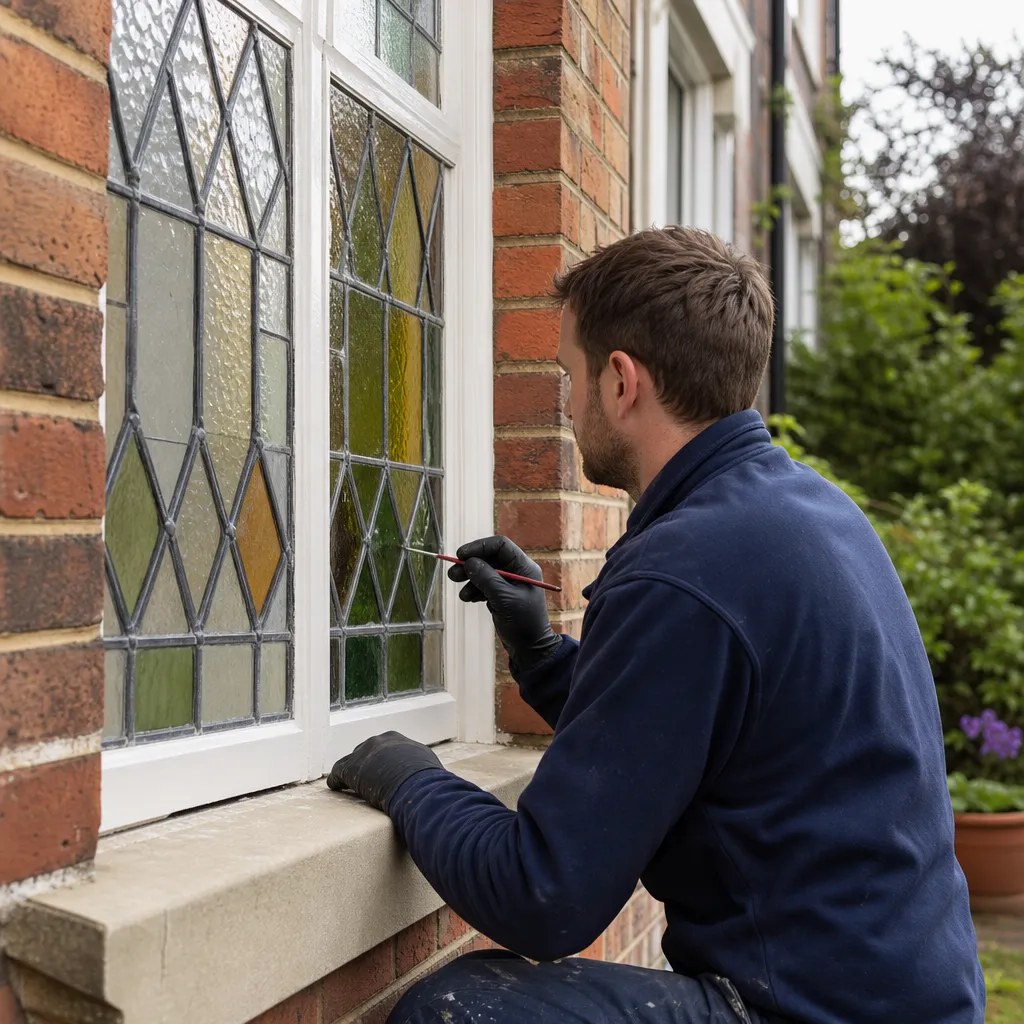
Sealing and Maintaining Historic Leaded Glass Windows: Preservation and Performance
Leaded glass windows are maintained using traditional linseed oil cement — not silicone or modern sealants, which prevent natural movement in the lead came.
 Improvement & Build
Guide to Replacing Timber Sash Windows with Authentic Restoration
Restoring a timber sash window typically costs £150–£400 per window; full replacement costs £800–£2,500.
 Improvement & Build
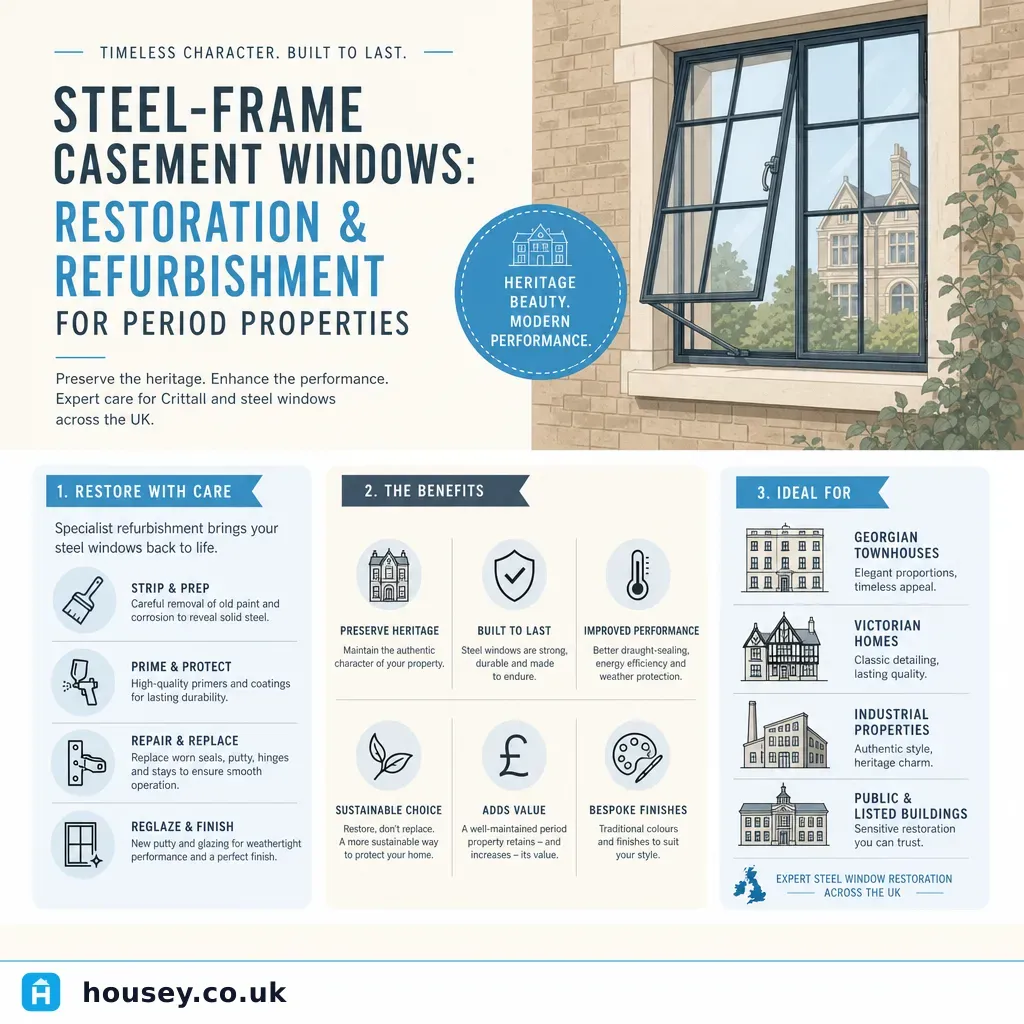
Steel-Frame Casement Windows: Restoration and Refurbishment for Period Properties
Original steel casement windows on listed buildings and conservation area properties should almost always be restored rather than replaced, as planning consent for alternative materials is usually refused.
 Improvement & Build
Understanding Wavy Glass in Historic Windows and Modern Replacements
The wavy distortion in old window glass results from the hand-blown manufacturing process — crown or cylinder glass — which produced panes of varying thickness that refract light unevenly.