Restoring Kitchen Cabinets: Refinishing Options and Costs
By Housey · Last reviewed 9th of May 2026
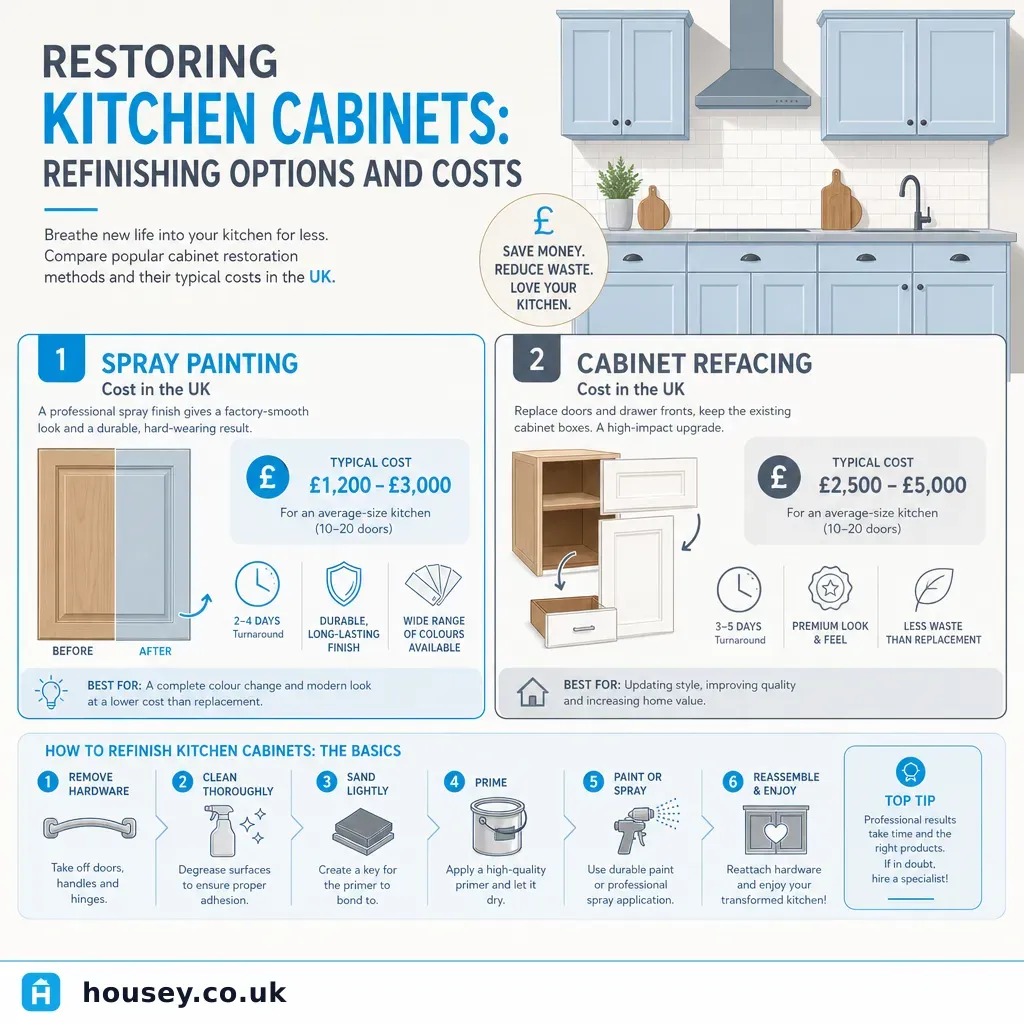
Restoring Kitchen Cabinets: Refinishing Options and Costs
Kitchen cabinets show their age through grease, scratches, and faded finishes, prompting many UK homeowners to weigh refinishing against the cost and disruption of a full replacement. The decision typically arises during a pre-sale refresh, a rental update, or a budget-conscious kitchen improvement where the carcasses are still structurally sound. Understanding what your doors are made of is the first step to choosing the right approach.
Key points
- Professional spray painting for an average UK kitchen typically costs £500–£2,500; cabinet refacing (new doors, same carcasses) usually falls between £1,500 and £5,000. Indicative UK costs, last reviewed 2026-05-09.
- No planning permission or building regulations approval is required for cosmetic cabinet refinishing.
- Solid wood and MDF doors take paint and lacquer reliably; vinyl-wrapped, thermofoil, and high-gloss acrylic doors are much harder to repaint successfully.
- Kitchen carcasses typically last 20–30 years if kept dry — if the structure is sound, refinishing avoids the waste and disruption of a full replacement.
Refinishing options compared
The right approach depends on your cabinet condition, door material, budget, and how long you want the result to last.
Option | Best for | Typical UK cost | Main risk |
|---|---|---|---|
DIY brush/roller repaint | Tight budgets; flat slab doors; interim fix | £50–£200 materials | Brush marks; poor adhesion; short lifespan |
Professional spray painting | Most UK kitchens; MDF or solid wood doors | £500–£2,500 | Poor prep leads to peeling within a year |
Cabinet refacing (new doors, same carcasses) | Sound carcasses; desire for a new door style | £1,500–£5,000 | Mismatched sizing if poorly measured |
Full kitchen replacement | Failing carcasses; layout change needed | £5,000–£25,000+ | Cost and disruption far exceed refinishing |
Indicative UK costs, last reviewed 2026-05-09. Costs vary by kitchen size, door count, door style, location, and trade rates.
What affects the cost of cabinet refinishing?
Kitchen size and unit count. A galley kitchen with 10 doors costs considerably less to spray than an open-plan kitchen-diner with 30 or more doors and island units.
Door material. MDF and solid wood sand and prime easily. Thermofoil and vinyl-wrapped doors often require replacement rather than repainting because paint adhesion is poor without specialist primers, and the wrap may already be lifting at edges.
Finish type. A two-part lacquer (2K) is harder and more durable than standard furniture paint but costs more in materials and requires professional spraying equipment. Most kitchen spray painters offer satin, eggshell, or gloss options in any RAL or Farrow & Ball colour.
Location. London and the South East typically attract higher day rates than the Midlands or North of England.
Spray painting vs DIY repainting: the realistic difference
DIY brush and roller repainting can produce acceptable results on flat slab doors, but kitchen environments are demanding. Heat, steam, grease, and daily wiping degrade a poorly applied finish quickly. Professional spraying with HVLP (high volume, low pressure) or airless equipment — covering degreasing, sanding, priming, and two or more coats of kitchen-grade lacquer — produces a far harder, more uniform result. Most professional jobs carry a 2–5 year workmanship guarantee where the preparation has been done properly.
Red flags when choosing a cabinet spray painter
- No written itemised quote before work begins. Never agree to work on a verbal estimate alone.
- No mention of preparation. Any sprayer who does not discuss degreasing and sanding is likely to deliver a finish that peels within a year.
- No examples of kitchen work. Furniture spraying is not the same as spraying cabinets in situ; ask for specific references or photographs.
- No dust control. Spraying indoors requires a spray tent or extraction; overspray in a kitchen is both a health and aesthetic problem.
- Cash-only with no paperwork. Always obtain a receipt and a written guarantee covering both the finish and the preparation method.
Homeowner checklist before booking cabinet refinishing
When to get professional help
Cabinet refinishing is low-risk for most UK kitchens, but seek professional advice if you suspect damp behind units before investing in a new surface finish, or if the kitchen is part of a wider renovation where trades need coordinating. A design-and-build firm can manage larger kitchen projects end-to-end, and extension builders can advise when the project involves structural or groundworks elements.
How Housey can help
If your project goes beyond a surface repaint — a new layout, open-plan conversion, or full kitchen refit within an extension — Housey can connect you with experienced design-and-build firms and extension builders. Submit a brief and receive quotes from relevant local firms.
Frequently asked questions
Can you paint vinyl-wrapped kitchen cabinet doors?
Technically yes, but results are unreliable without specialist adhesion primers. Vinyl wrap often has lifting edges and paint adhesion is poor. Most professional sprayers recommend replacing thermofoil and vinyl-wrapped doors with MDF equivalents that can then be spray painted reliably. Attempting to paint over lifting wrap typically results in peeling within months rather than years.
How long does professional spray painting last on kitchen cabinets?
A properly prepared two-part (2K) lacquer finish typically lasts 5–10 years with normal use. DIY brush finishes tend to show wear within 2–3 years in a busy kitchen. Ask any contractor specifically what preparation method is included and what the guarantee covers before committing to the work.
Do I need planning permission to refinish kitchen cabinets?
No. Repainting or refinishing cabinet doors is a cosmetic decorative change and requires no planning permission or building regulations approval. Wider kitchen works — moving drainage, installing an extractor through an external wall, or building an extension — may require separate consents, but surface refinishing does not.
What is the difference between cabinet refacing and cabinet refinishing?
Refinishing changes the colour or surface of existing doors through painting, staining, or lacquering. Refacing replaces the doors and drawer fronts entirely while keeping the carcasses. Refacing costs considerably more but delivers a new door style and profile; refinishing is the cost-effective choice when the door shape is acceptable but the surface is tired or dated.
Is it worth repainting kitchen cabinets before selling a house?
Often yes, particularly if the cabinets are structurally sound but visually dated. A professional spray job costing £800–£1,500 can make a kitchen appear significantly more modern and may add perceived value or speed up a sale. Neutral colours — off-whites, soft greys, and dark navy — photograph well and appeal to a broader range of buyers.
Sources and further reading
- Kitchen renovation costs and planning — Which?
- COSHH guidance for spray painting operations — Health and Safety Executive
- Technical advice on alterations to historic buildings — Historic England
Useful next reads
 Improvement & Build
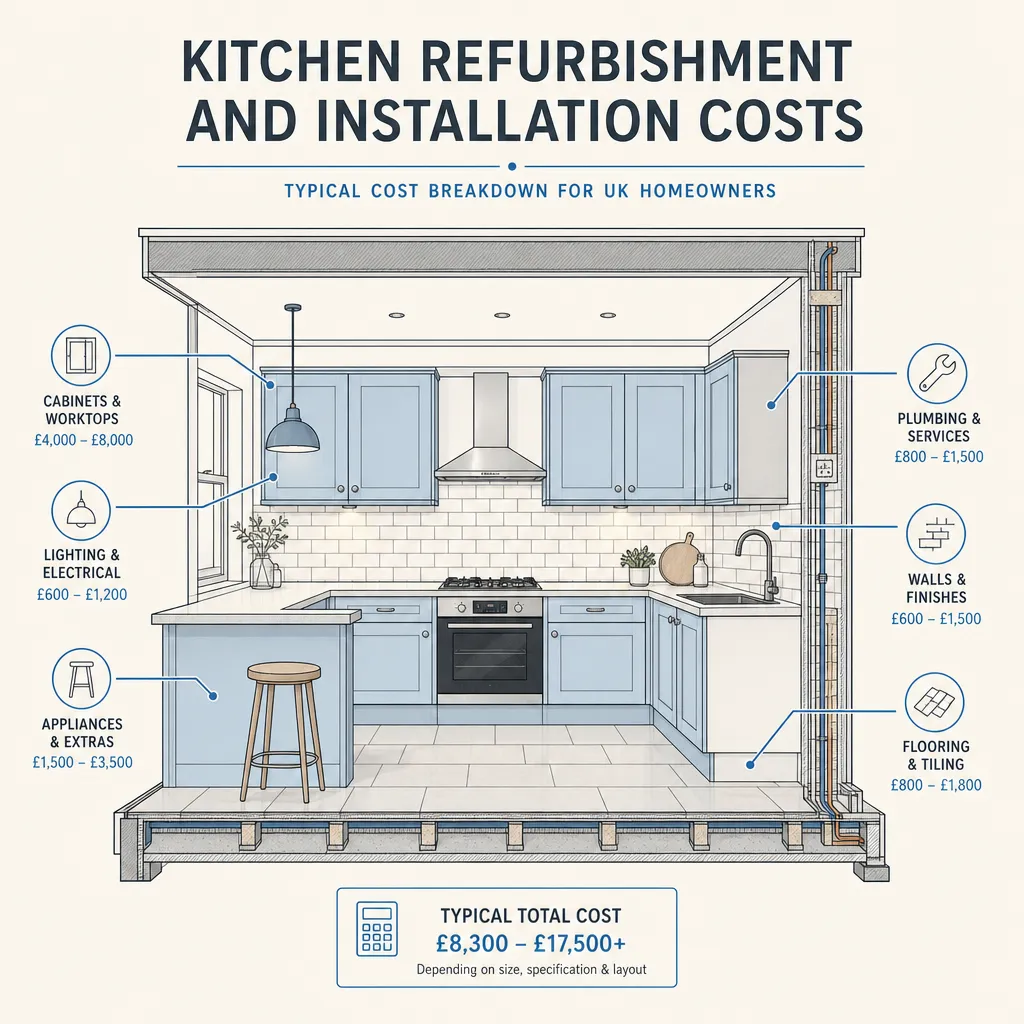
Kitchen Refurbishment and Installation Costs
A kitchen refurbishment in the UK typically costs between £3,000 and £40,000 or more, depending on whether you are replacing units only or carrying out a full design-and-build project.
 Improvement & Build
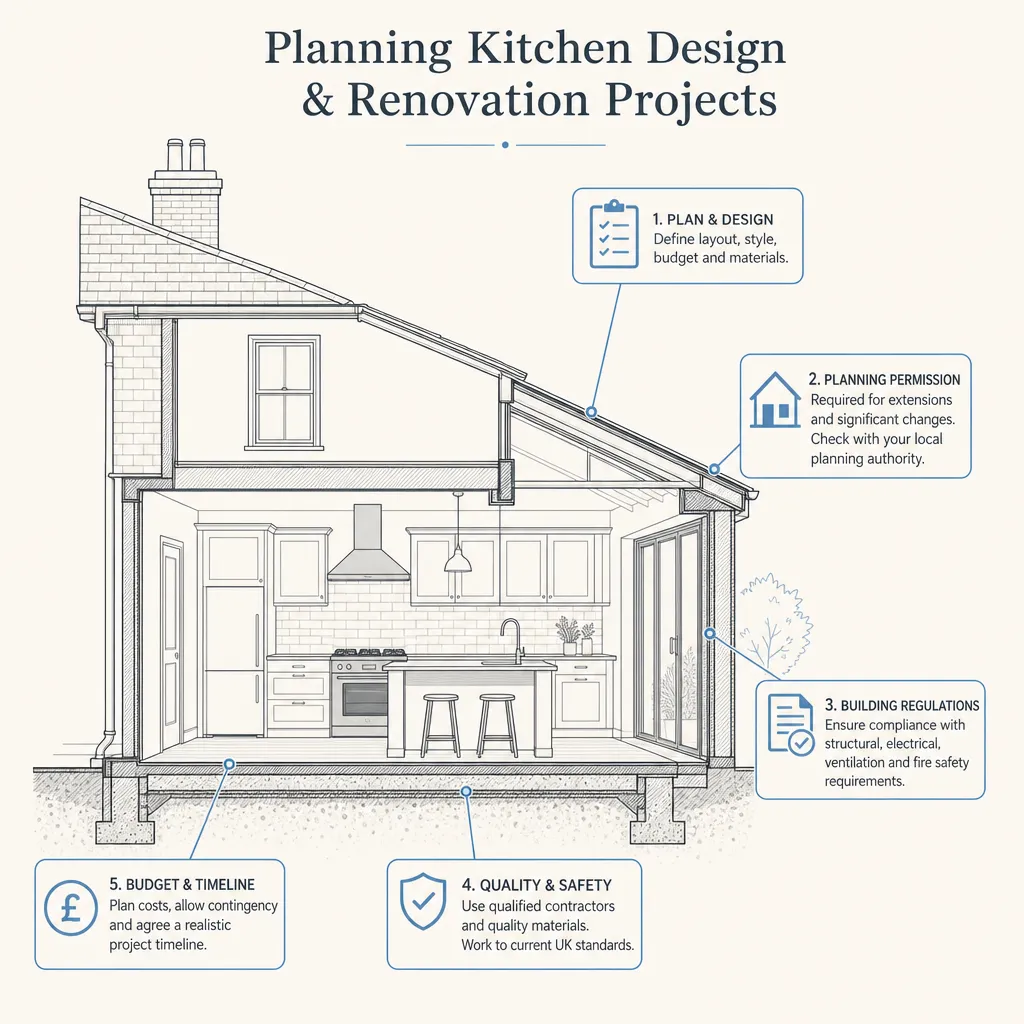
Planning kitchen design and renovation projects
Planning a kitchen renovation in the UK typically involves choosing a layout, setting a budget, deciding which contractors you need, and understanding which regulations apply.
 Improvement & Build
Kitchen Demolition and Removal: Step-by-Step Process for Renovation Projects
Kitchen demolition involves regulated services, potential asbestos in pre-2000 properties, and legal waste disposal obligations.
 Improvement & Build
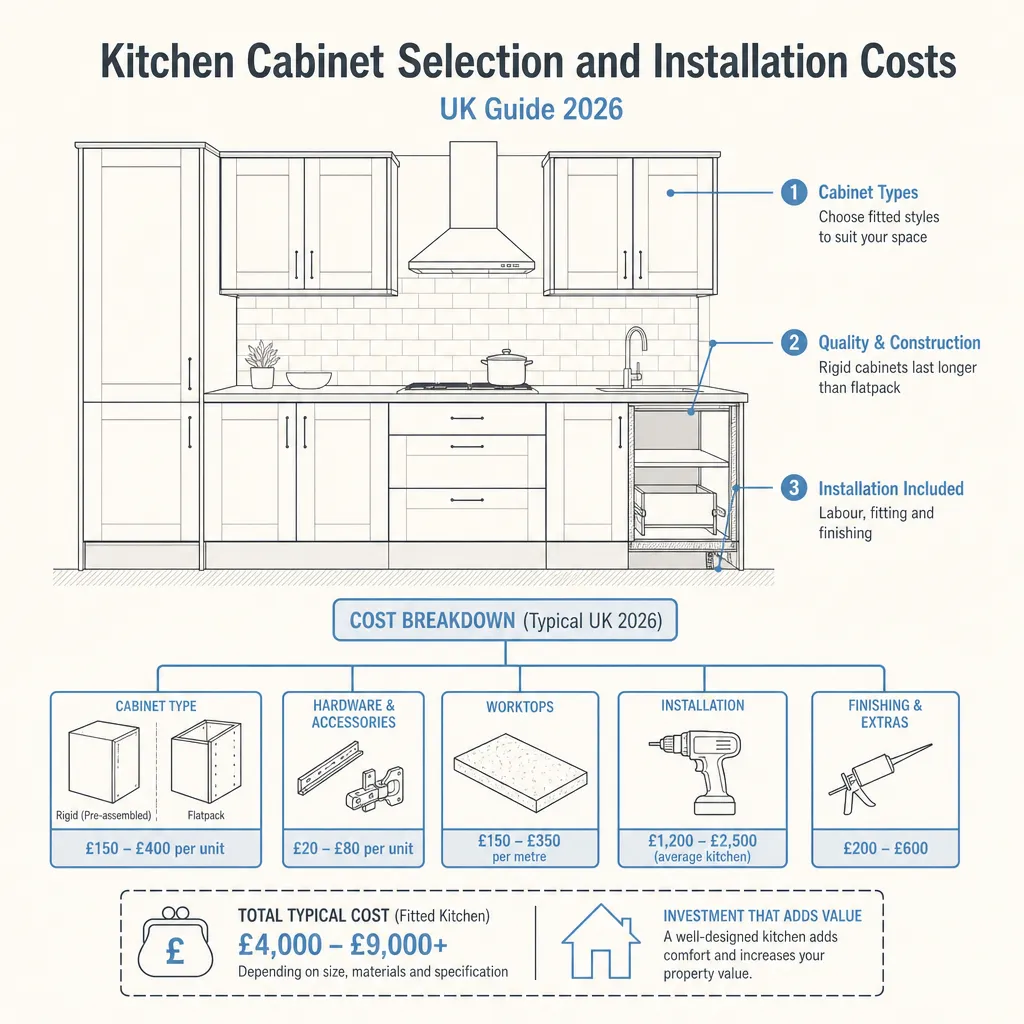
Kitchen Cabinet Selection and Installation Costs
Kitchen cabinet costs in the UK range from around £1,500 for flatpack units with self-installation to £15,000 or more for fully bespoke, professionally fitted kitchens.
 Improvement & Build
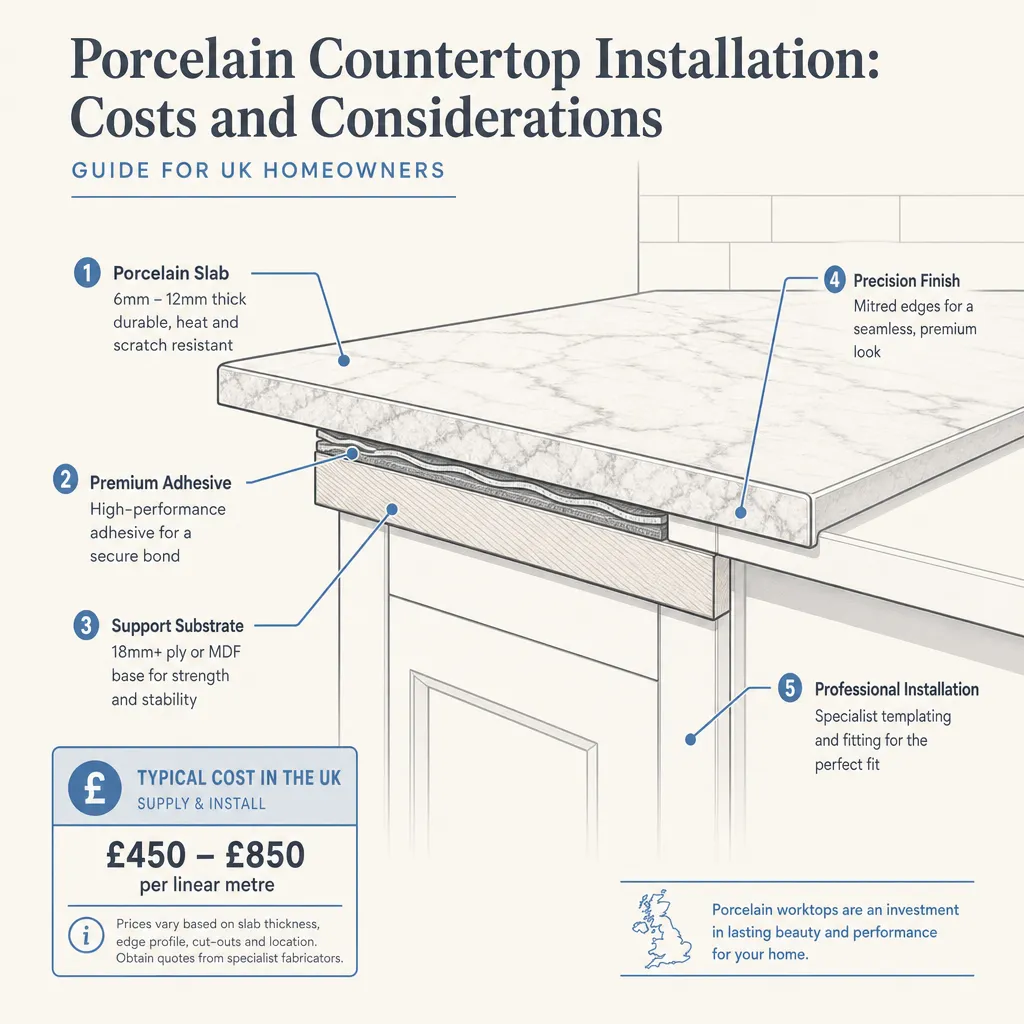
Porcelain Countertop Installation: Costs and Considerations
Porcelain worktop slabs are non-porous, heat-resistant, and require no sealing.