Resuming Renovation Work: Timing, Planning, and How to Restart Safely
By Housey · Last reviewed 10th of May 2026
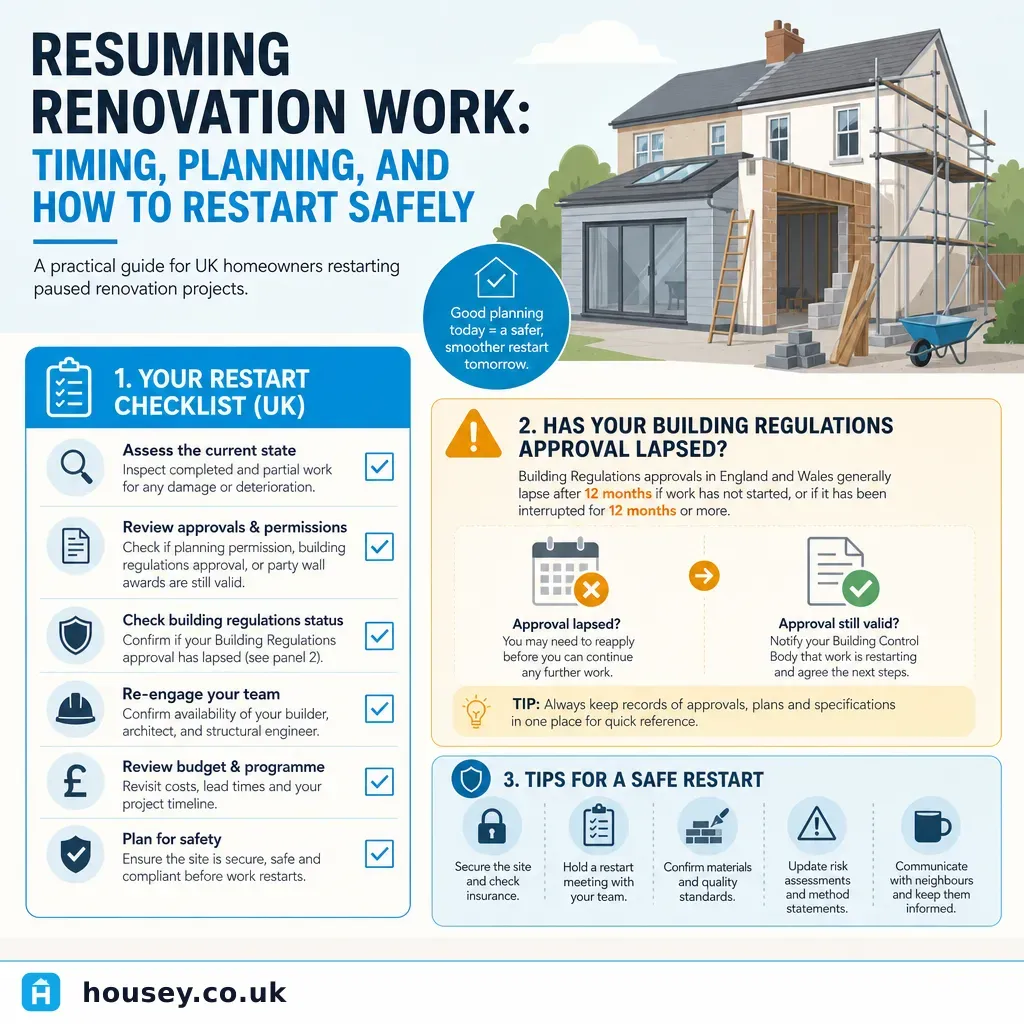
Resuming Renovation Work: Timing, Planning, and How to Restart Safely
Renovation projects stall for many reasons — builder insolvency, funding gaps, or personal circumstances. Restarting work after a pause is not as simple as picking up where you left off: regulatory approvals can lapse, materials exposed to the elements may need replacing, and your original contracts may no longer apply on the agreed terms. The longer the break, the more preparation is needed before tools return to site.
Key points
- Building regulations approvals in England last three years from the date of the decision notice; a lapsed approval means you must reapply before resuming notifiable work.
- Exposed structural timbers, roof coverings, and installed insulation can degrade significantly within one to two seasons if left unprotected against rain and frost.
- Builder contracts commonly include suspension clauses — if work paused beyond the agreed notice period (often 28–90 days), the original price and programme may no longer be binding.
- Party Wall Awards under the Party Wall etc. Act 1996 do not expire, but awards more than 12 months old may be disputed by adjoining owners if work has not commenced.
- Some renovation insurance policies become void if work stops for 30–60 days without notification to the insurer — check your policy before resuming.
Does your building regulations approval still apply?
In England, a full plans approval under the Building Regulations is valid for three years from the date of the decision notice. Commencement is evidenced by the first building control inspection, typically at foundations or groundworks stage. Contact your local authority building control (LABC) or approved inspector to confirm whether your application remains active before any notifiable work restarts.
For work within the scope of the Building Safety Act 2022 (higher-risk buildings of 18 metres or more), the requirements are more complex — speak to your building control body and principal contractor before resuming.
Before restarting, check:
- Whether your initial notice or full plans approval is still live — call your LABC or approved inspector directly.
- If lapsed, obtain a new application number before any notifiable work begins.
- Request all inspection records to date to confirm what has been formally signed off.
Assessing the condition of paused work
Work left in an exposed or partially complete state can deteriorate faster than most homeowners expect. The table below outlines typical risks by element.
Element left exposed | Typical risk after 3–6 months | Action before resuming |
|---|---|---|
Roof structure (rafters, ridge board) | Water ingress, timber rot if uncovered | Structural check; replace affected timbers |
Exposed masonry or cavity walls | Saturation, freeze-thaw spalling | Allow to dry fully; check for movement |
Rigid insulation boards | Moisture absorption; reduced thermal performance | Replace if compressed or visibly wet |
Basement excavation or groundworks | Standing water, heave, hydrostatic pressure | Structural engineer inspection recommended |
Stud walls without plasterboard | Low risk if dry; rodent ingress possible | Visual check before closing up |
Indicative risk assessment only. A professional inspection is advisable for any work paused longer than three months.
If your renovation involved a loft conversion, extension, or structural alterations, consider instructing a structural engineer or RICS-registered surveyor to inspect exposed elements before work resumes. Catching deterioration before walls are closed up is significantly cheaper than discovering it afterwards.
Reviewing your contracts and commercial position
Most JCT Minor Works or bespoke builder contracts include a suspension clause. If work has been suspended beyond the agreed period — typically 28–90 days — either party may have a right to terminate or renegotiate. Check your contract for: the definition of suspension and notice requirements; whether price fluctuations are capped; whether a revised programme is needed; and whether any retentions or staged payments are disputed.
If you are retendering with a new builder, treat this as a fresh procurement exercise. Provide a condition report on the existing work and a clear scope of the remaining works, and ask each contractor to price on the same basis.
What to ask a builder when taking over a paused project
- What is your assessment of the existing work left by the previous contractor?
- What remediation is included in your price, and what is held as a provisional sum?
- Will you carry out your own structural or damp check before providing a fixed price?
- Can you provide a phased programme with key building control inspection milestones?
- Are your material prices fixed, and for how long is that guaranteed?
- What insurance do you hold, and does it cover handover projects?
Planning permission: does it still apply?
Householder planning permission in England is valid for three years from the date of grant. Commencement for planning purposes means a material operation has begun — typically excavation for foundations. If your permission was granted more than three years ago and no material operation has taken place, you may need to reapply. Local plan policies and permitted development conditions may have changed, so do not assume a like-for-like approval will follow. Check the planning register for your local planning authority or the Planning Portal to confirm the current status.
Which path should you take?
- Restart on the original design if all approvals remain live, the structure is sound, and the scheme still meets your needs and budget.
- Seek revised quotes on the same design if approvals are live but costs have risen substantially.
- Consider a redesign if planning permission has lapsed, needs have changed, or the partially built structure has revealed unanticipated issues.
- Instruct a project manager if the original project failed due to management issues or you cannot oversee progress regularly.
- Consult a solicitor if there is a dispute with the original builder over defective work, withheld retention, or contract termination.
- Check with your insurer before any works resume if the site has been unoccupied or the renovation paused for an extended period.
When to get professional help
Seek professional advice before resuming if:
- The roof is not weathertight and timbers or insulation have been exposed to rain or frost.
- There is visible cracking, displacement, or movement in any structural element.
- Visible damp, staining, or biological growth is present on walls or floors.
- Your building regulations approval was issued more than two years ago and you are unsure whether it remains valid.
- The builder contract is disputed, partially performed, or the original terms are unclear.
- The project is within 3 metres of a neighbouring building or boundary and a party wall agreement was not previously obtained.
How Housey can help
Housey helps you request quotes from vetted extension builders and roofers experienced with handover projects. For complex schemes where the original build broke down, a project manager can oversee the restart from condition assessment through to completion. Where damp has penetrated the structure during the pause, a damp proofing specialist can assess the damage before walls are closed up.
Frequently asked questions
Does planning permission expire if building work stops partway through?
Planning permission does not automatically expire once materially commenced. However, conditions attached to the permission may require specific elements to be completed within set periods. Check all conditions on your decision notice. If uncertain whether commencement has occurred in a legally sufficient sense, seek advice from your local planning authority or a planning consultant before resuming.
Who owns materials left on site by a previous builder?
Ownership depends on the contract. Materials fixed to the building generally become part of the property; unfixed materials on site may still belong to the contractor. For high-value items such as windows or structural steel, seek legal advice before removing or disposing of anything to avoid a dispute.
Can I use the same building control inspector when I restart?
Yes, if the original application is still live. Contact your LABC or approved inspector to confirm and to check which inspections remain outstanding. If the approval has lapsed, a new application is required and you can choose any building control body at that point.
How long does a building regulations approval last in England?
A full plans approval lasts three years from the decision notice date, provided work commences within that period. Commencement is evidenced by the first building control inspection, typically at foundations. If work has not commenced within three years, a new application is required before notifiable work can resume.
Sources and further reading
- Building regulations: get approval — GOV.UK
- Party Wall etc. Act 1996 explanatory booklet — GOV.UK / DLUHC
- Planning Portal: planning permission FAQs — Planning Portal
- Building Safety Act 2022 overview — GOV.UK
- JCT Minor Works Building Contract — Joint Contracts Tribunal
Useful next reads
 Improvement & Build
Evaluating And Planning Renovations For Properties Requiring Modernisation
Start by commissioning a condition survey — RICS Level 3 for pre-1919 properties — to identify structural defects, damp, and services issues before finalising a budget.
 Improvement & Build
Home Extension Costs: Budget Planning Guide
A single-storey rear extension in the UK typically costs £1,500–£2,500 per square metre to build.
 Improvement & Build
Stress-Free Home Renovation: Project Planning and Contractor Management Tips
The home renovations that stay on budget and on time share one characteristic: clear upfront planning.
 Improvement & Build
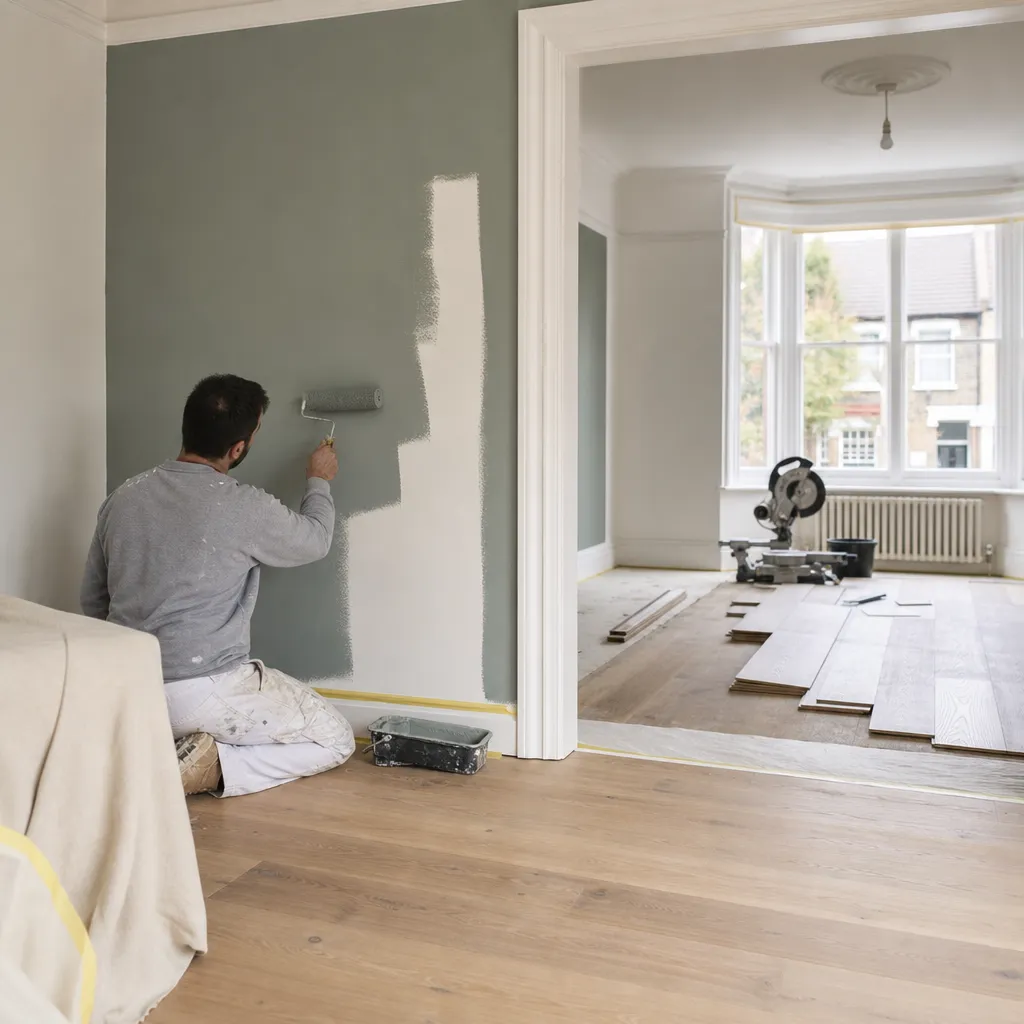
Renovation Scheduling: Should You Paint Before or After Laying Flooring?
In most UK renovation projects, paint the walls first, then lay the flooring.
 Improvement & Build
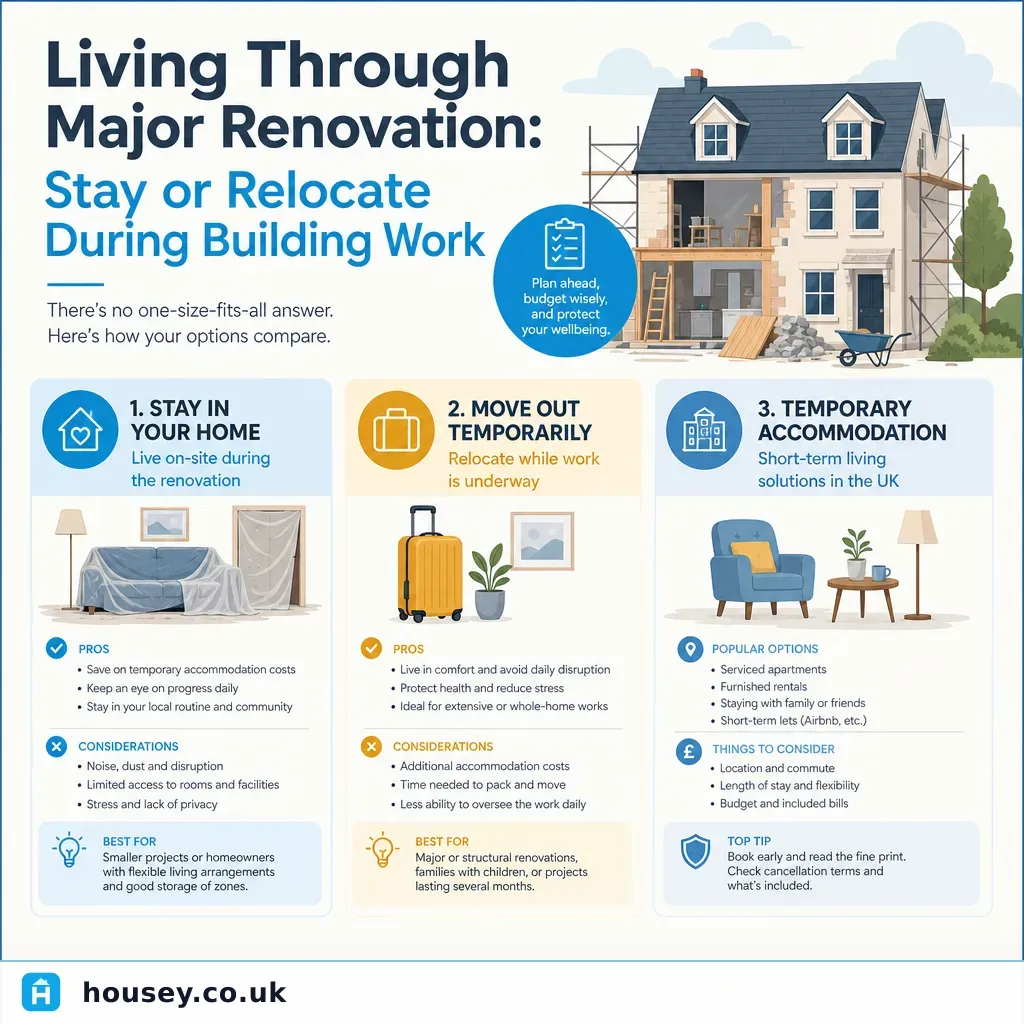
Living Through Major Renovation: Stay or Relocate During Building Work
Whether to stay in your home or relocate during major building work depends on the project scope, programme, and your household's circumstances.