Guide to resurfacing concrete driveways and patios
By Housey · Last reviewed 5th of May 2026
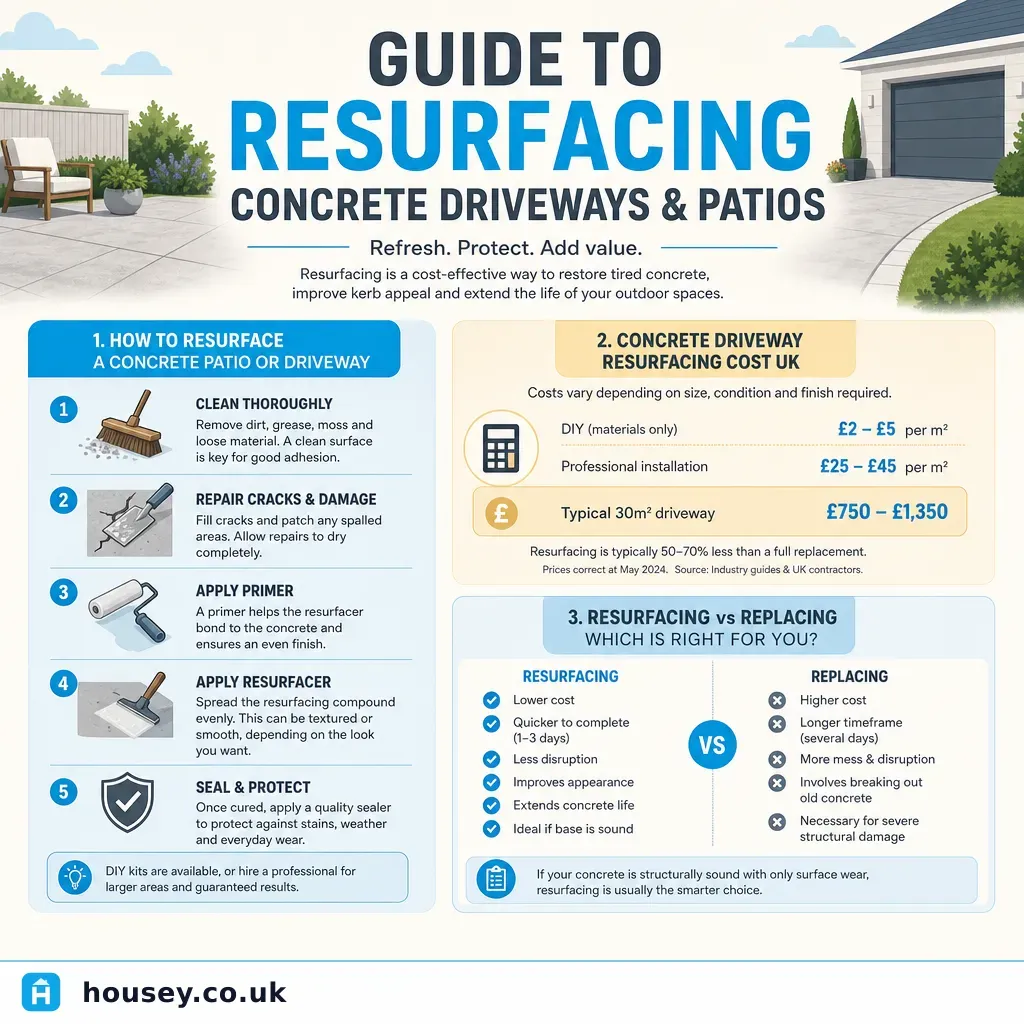
Guide to resurfacing concrete driveways and patios
Concrete driveways and patios are built to last, but decades of freeze-thaw cycles, vehicle loading, and weathering take their toll. Cracks, surface spalling, and a crumbling finish are common in UK homes built from the 1950s onwards, when concrete became the default choice for external hard standing. Resurfacing can restore a tired surface without the cost and disruption of a full dig-out and relay — but only if the underlying slab is sound enough to support a new layer.
Key points
- A bonded overlay for a driveway needs to be at least 50mm thick to carry vehicle loads without cracking away from the base slab.
- Surface preparation — removing loose material, repairing cracks, and applying a bonding primer — is the single most important factor in overlay longevity.
- Polymer-modified microtoppings (3–6mm) suit patios and foot-traffic areas only; they are not rated for car or van loading.
- Indicative UK resurfacing costs: bonded overlays £30–£60/m²; full concrete replacement £80–£150/m² (last reviewed 2026-05-05; costs vary by location, access, and specification).
- Resurfacing within an existing footprint does not usually require planning permission, but adding an impermeable surface to a front garden over 5m² may do — check the GOV.UK guidance on householder permitted development.
When does concrete resurfacing make sense?
Resurfacing is worth considering when the existing slab is structurally intact but the surface has deteriorated. Signs that the base is sound include: cracks that are stable and narrow (under 5mm), no significant differential settlement between adjoining slabs, and concrete that passes a hammer-tap test — a hollow sound suggests delamination beneath the surface layer.
If the slab has sunk, heaved, or broken into loose sections, resurfacing will fail quickly because the overlay bonds to a moving substrate. In those cases, a full replacement — or at minimum, targeted slab lifts followed by a full overlay — is the more cost-effective long-term choice.
Decision tree — resurfacing vs replacement
- Choose resurfacing if the slab is structurally intact, cracks are hairline to 5mm and stable, drainage is functioning, and the surface is cosmetically worn rather than mechanically failed.
- Choose partial repair then resurfacing if an isolated section has settled but the majority of the slab is sound; individual slabs can be lifted and re-laid before applying an overlay across the whole area.
- Choose full replacement if multiple slabs have failed, there is significant settlement or heave, tree root damage has disrupted the base, or drainage is blocked beneath the slab.
- Ask a groundworker or driveway specialist if you are unsure which category applies, or if the surface must carry vehicles over 3.5 tonnes (a higher specification is required and a standard residential overlay will not suffice).
What resurfacing methods are available?
Method | Min. thickness | Best for | Not suited to | Approx. cost/m² |
|---|---|---|---|---|
Bonded concrete overlay | 50mm | Driveways, car parks, light commercial | Failed or moving slabs | £35–£60 |
Polymer-modified screed | 25–40mm | Patios, garden paths, light foot traffic | Vehicle loads | £25–£50 |
Microtopping / decorative overlay | 3–6mm | Patios, courtyards, cosmetic refresh | Any vehicle loading | £40–£80 |
Tarmac overlay on concrete | 40–60mm | Driveways, access roads | Listed buildings or conservation areas (check with your LPA) | £30–£55 |
Resin-bound overlay | 15–18mm | Decorative driveways (light vehicles), footpaths | Heavy vehicle areas | £60–£110 |
Indicative UK costs, last reviewed 2026-05-05. Prices vary significantly by region, site conditions, and specification. Always obtain at least three written quotes for your specific project.
How surface preparation works
Preparation is where most resurfacing jobs succeed or fail. A competent contractor will typically follow this sequence:
- Clean the surface — pressure washing or shot blasting removes oil, algae, moss, and loose material that would prevent the bonding agent from adhering properly.
- Repair cracks and spalls — deep cracks are routed (widened into a V or U profile) and filled with a flexible polyurethane or epoxy repair mortar; shallow surface spalls are ground back and filled flush.
- Check falls and drainage — the existing drainage pattern should be preserved or improved. If resurfacing raises the finished level, drainage channels and inspection covers will need to be adjusted accordingly.
- Apply bonding agent — a PVA-based or epoxy bonding primer is applied to the clean, dry surface and allowed to become tacky before the overlay is placed. Skipping this step is a leading cause of overlay delamination.
- Place and finish the overlay — the new layer is poured, tamped, screeded, and finished to the specified surface texture. Control joints (saw cuts) are placed at regular intervals to allow thermal movement and reduce the risk of random cracking.
- Cure — concrete overlays typically need at least 7 days of damp curing before foot traffic and 28 days before vehicle loads, depending on mix design and weather conditions.
Planning and drainage considerations
Resurfacing an existing driveway within its existing footprint does not usually require planning permission. However, if resurfacing raises the finished level enough to alter drainage patterns — or if the original surface was permeable and you are replacing it with an impermeable material — different rules may apply.
Under the Town and Country Planning (General Permitted Development) (England) Order 2008, any new or extended hard standing in a front garden over 5m² must use a permeable surface or drain to a lawn, border, or soakaway — not directly to the road. If you are resurfacing within the original footprint with a like-for-like material, this requirement is less likely to be triggered, but confirm with your local planning authority (LPA) if you are in any doubt. Scotland, Wales, and Northern Ireland have their own permitted development frameworks and you should check with the relevant devolved authority before proceeding.
Homeowner checklist — before you sign a contract
Red flags to watch for
- A contractor who does not mention surface preparation, or who proposes applying an overlay directly over dirty or cracked concrete without any repair work.
- Very low per-m² prices that do not appear to account for preparation costs — these often reflect corners cut on bonding agent application, curing time, or overlay thickness.
- Requests for large cash payments upfront with no written contract or specification document.
- No written statement of overlay thickness — "we'll put enough on" is not a professional answer for a load-bearing driveway surface.
- Advice to skip crack repair because "the overlay will cover it" — substrate cracks typically reflect through most overlays within one or two winters of freeze-thaw cycling.
When to get professional help
For cosmetically worn but structurally sound concrete, an experienced driveway contractor can usually manage the full resurfacing project. Seek structural or civil engineering input before proceeding if:
- Cracks are widening over time or show stepped displacement between adjacent slabs.
- There is visible heave or sinking suggesting sub-base failure or tree root intrusion.
- The driveway serves a commercial property or regularly carries vehicles over 3.5 tonnes.
- Ground investigation, drainage repair, or foundation underpinning is suspected to be needed before any surface treatment can be applied.
How Housey can help
Housey can connect you with vetted driveway installers and experienced groundworkers who can assess your existing concrete, specify the right resurfacing method, and provide written itemised quotes. Request quotes through Housey to compare prices and qualifications from contractors in your area.
Frequently asked questions
How long does a resurfaced concrete driveway last?
A well-prepared bonded concrete overlay typically lasts 15–25 years on a residential driveway with normal car use. Thinner decorative overlays on patios may need maintenance or renewal after 10–15 years, depending on the product and exposure. Longevity depends heavily on preparation quality, overlay thickness, and curing conditions.
Can you resurface a concrete driveway in winter?
Most cementitious overlays should not be placed when temperatures are below 5°C or when frost is forecast within 48 hours of laying. Some polymer-modified products have lower application thresholds, but your contractor should confirm suitability for the forecast conditions. Resin-bound surfaces have similar cold-weather restrictions.
Does resurfacing add value to a home?
A well-finished driveway generally contributes to kerb appeal, which can influence how quickly a property sells. However, there is no standard valuation uplift figure for driveway resurfacing — the benefit is primarily cosmetic and functional rather than a directly measurable property value increment.
Do I need to inform my buildings insurer before resurfacing?
Routine resurfacing of an existing driveway is unlikely to affect your buildings insurance, but it is good practice to notify your insurer of any material changes to your property. If the project involves significant groundworks or drainage alterations, inform your insurer before work starts.
Sources and further reading
- Permitted development rights for householders: technical guidance — GOV.UK
- Town and Country Planning (General Permitted Development) (England) Order 2008 — legislation.gov.uk
- Interpave: The Precast Concrete Paving and Kerb Association — Interpave
- British Association of Landscape Industries (BALI) — BALI
Useful next reads
 Improvement & Build
Removing Pebbledash Rendering from Exterior Walls
Removing pebbledash involves chiselling or grinding off the render and base coat, then inspecting and repairing the masonry before applying a new finish.
 Improvement & Build
Paint Removal with White Spirit: Effectiveness and Application
White spirit dissolves uncured, freshly applied oil-based paints and is useful for cleaning brushes and removing fresh drips, but has very limited effect on fully dried or cured paint films.
 Improvement & Build
Plastering Over Existing Paint and Wallpaper: Surface Prep and Technique
Whether you can plaster over existing paint or wallpaper depends on surface condition and adhesion.
 Improvement & Build
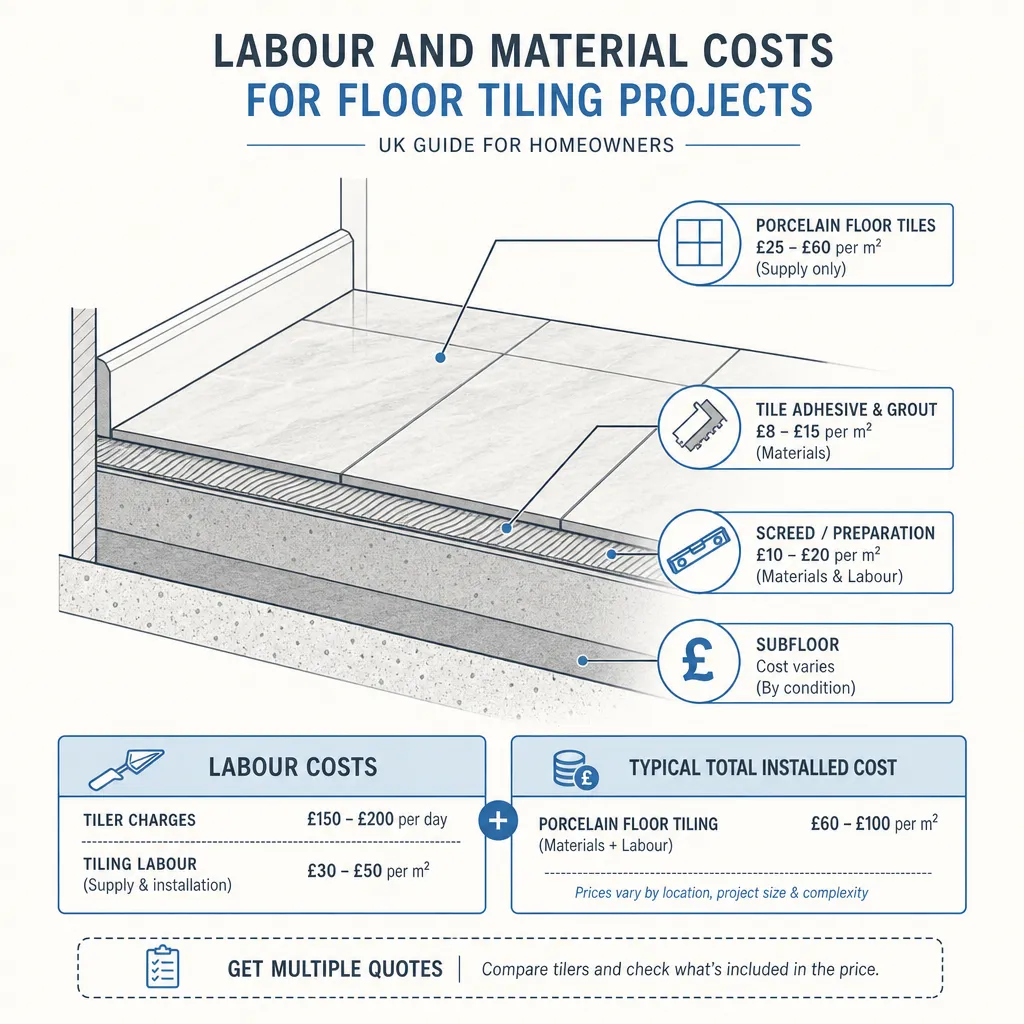
Labour and material costs for floor tiling projects
Floor tiling in the UK typically costs £30–£60 per m² in labour, plus materials ranging from £10–£40/m² for ceramic to £50–£150+/m² for natural stone.
 Improvement & Build
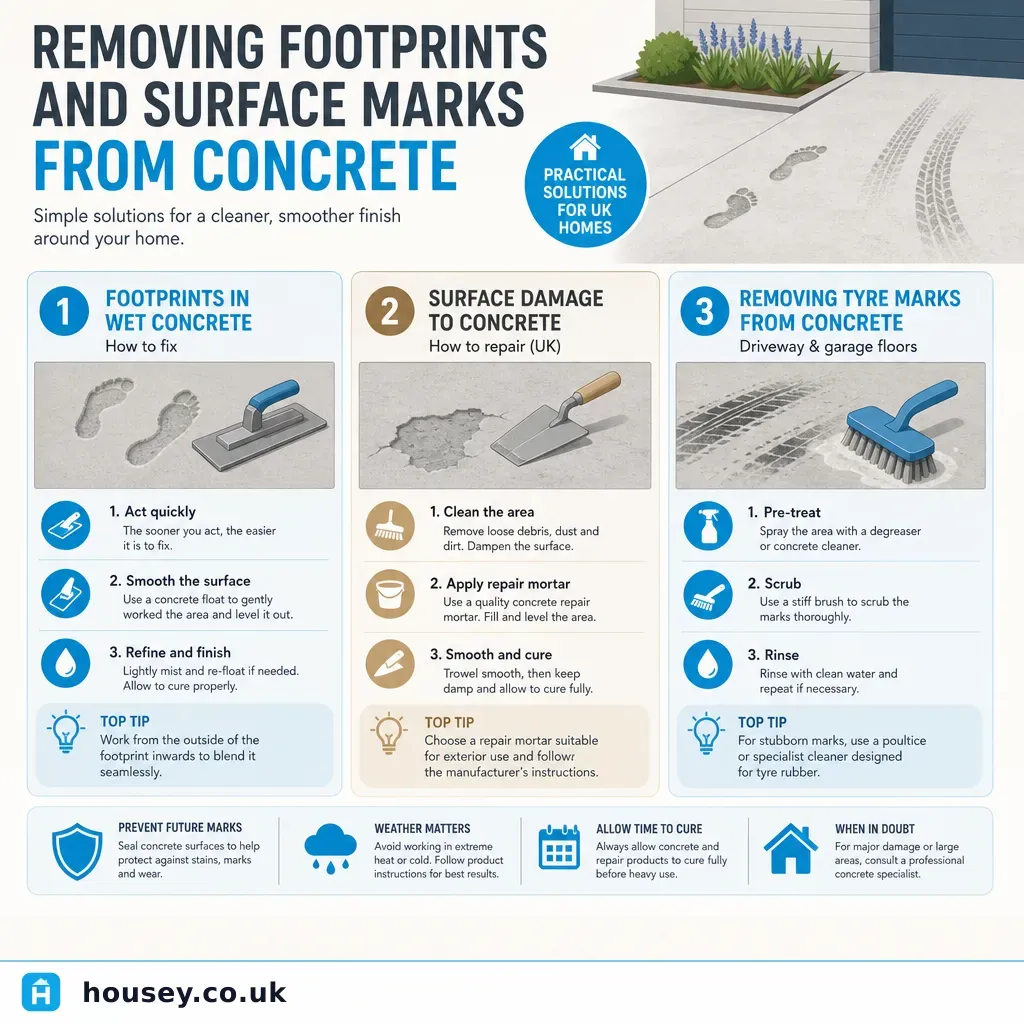
Removing Footprints and Surface Marks from Concrete
Footprints and marks in fresh concrete under 4–6 hours old can often be re-floated or trowelled smooth by a skilled finisher before initial set occurs.