Retaining Wall Construction: Costs and Engineering
By Housey · Last reviewed 10th of May 2026
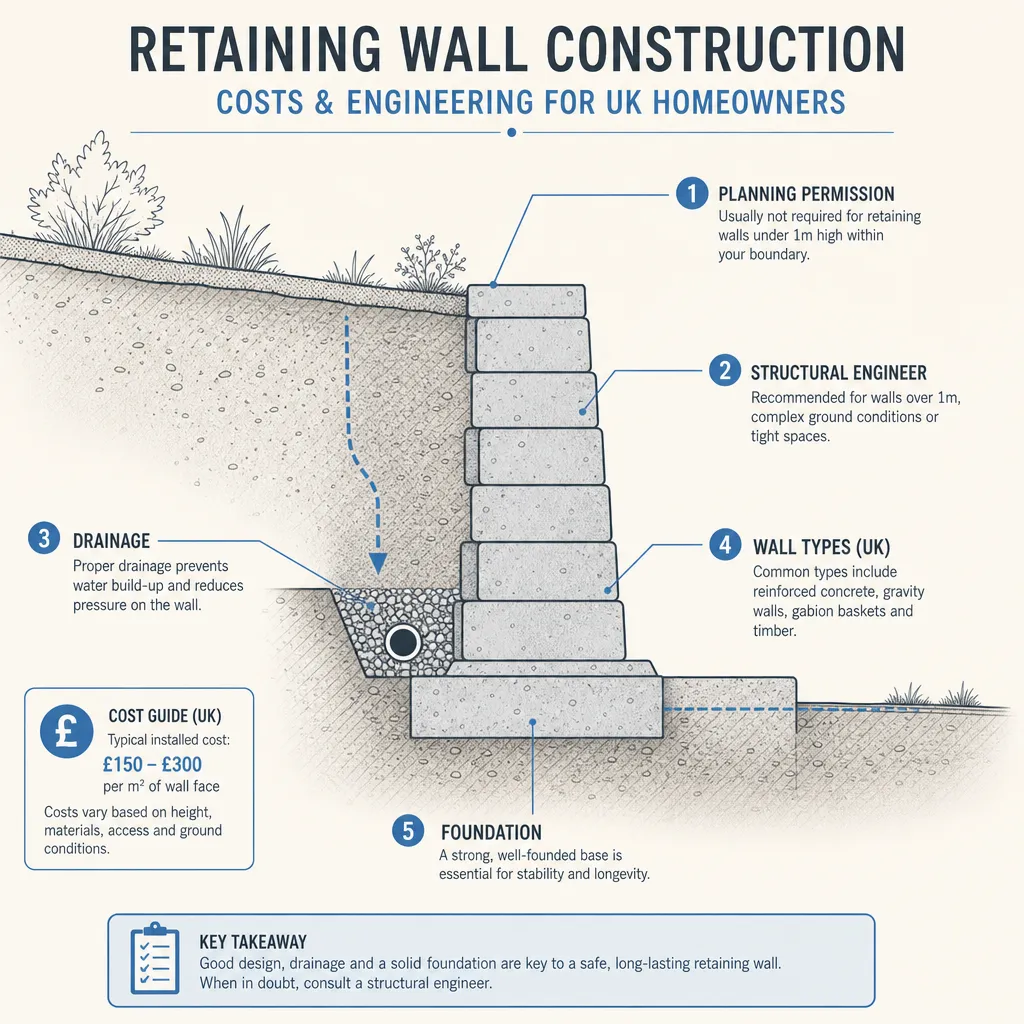
Retaining Wall Construction: Costs and Engineering
Retaining walls are called for when a garden slopes sharply, when a new driveway or patio changes ground levels, or when soil erosion threatens a boundary or adjacent structure. They range from modest sleeper-edged beds to engineered reinforced-concrete systems holding back several metres of earth — and the gap between a wall that stands for generations and one that fails within years almost always comes down to whether the drainage and engineering were done properly from the outset.
Key points
- Retaining walls with a retained height above approximately 1 m generally require structural engineering input; any height with significant surcharge (parked vehicles, outbuildings, sloped ground above) or variable ground conditions warrants engineering assessment regardless of height.
- Under Schedule 2, Part 2 of the Town and Country Planning (General Permitted Development) (England) Order 2015, walls up to 1 m adjacent to a highway and up to 2 m elsewhere are typically permitted development — but conservation areas, listed buildings, and Article 4 directions can remove these rights.
- Hydrostatic pressure from waterlogged soil behind the wall is the most common cause of retaining-wall failure; weepholes, granular backfill, and a land drain at the base are essential in UK conditions.
- Typical costs range from £200 to £800+ per linear metre depending on retained height, material, site access, and drainage specification. (Indicative UK costs, last reviewed 2026-05-10.)
- Timber sleeper walls have the lowest upfront cost but a shorter lifespan (15–25 years) compared with masonry or reinforced-concrete alternatives.
Important limitations
This article provides general guidance on retaining wall types, cost ranges, and engineering principles. It is not a substitute for site-specific structural or geotechnical assessment. Retaining-wall failures can cause serious injury, property damage, and subsidence to neighbouring land. A qualified structural or civil engineer should assess any wall retaining more than 600 mm of soil, any wall adjacent to a building or highway, any situation involving surcharge loads, and any site with made ground or variable soil conditions.
When this becomes urgent
Seek immediate professional help if you notice:
- An existing wall that is leaning, bulging, cracking, or showing signs of outward movement.
- Soil or water emerging from the base or face of an existing wall.
- Cracks in an adjacent building or paved surface that appear linked to ground movement behind the wall.
- A new-build project requiring significant cutting into, or loading of, a slope near a boundary or structure.
Retaining wall types: comparison
Wall type | Typical retained height | Approx. cost per linear metre | Typical lifespan | Engineering input? | Best suited to |
|---|---|---|---|---|---|
Treated timber sleepers | Up to 1.2 m | £150–£350 | 15–25 years | Usually not below 1 m | Informal gardens, modest budgets |
Concrete block / dense block masonry | Up to 2 m | £250–£500 | 50+ years | Yes above 1 m | Driveways, hard landscaping |
Brick or facing brick | Up to 2 m | £300–£600 | 50+ years | Yes above 1 m | Formal gardens, visible boundaries |
Gabion baskets (stone-filled wire cages) | 0.5–3 m | £200–£450 | 25–50 years | Yes above 1.5 m | Naturalistic or rural settings |
Reinforced concrete (poured or precast) | 1–5 m+ | £500–£1,200+ | 75+ years | Always | High-load, highway-adjacent, engineered |
Concrete interlocking block systems | 0.5–3 m | £300–£600 | 40+ years | Yes above 1 m | Graduated DIY approach at lower heights |
Indicative UK costs, last reviewed 2026-05-10. Costs exclude excavation of existing fill, spoil disposal, or structural engineer fees.
When do you need a structural engineer?
Use this decision tree before work begins:
- Groundworker or landscaper only — if the retained height is under 600 mm, the location is not near a building or highway, and ground conditions are straightforward with no surcharge.
- Involve a structural engineer — if the retained height exceeds 1 m; the wall is within 3 m of a building, boundary structure, or highway; the site has made ground or fill; or there is any surcharge load from vehicles, outbuildings, or steeply sloping ground above.
- Involve a civil or geotechnical engineer — if the retained height exceeds 2 m; the wall is adjacent to a public highway or footpath; or there is a risk of slope instability or ground failure.
- Check with your local planning authority — if the wall is in a conservation area, adjoins listed building curtilage, or the ground slopes toward a neighbour's land in a way that could affect drainage or stability.
Drainage: the most overlooked factor
The most frequent cause of retaining-wall failure in the UK is hydrostatic pressure from water trapped behind the wall face. Given typical UK rainfall, this is not a theoretical risk — it is a near certainty without deliberate drainage provision.
Every retaining wall should include:
- Weepholes — typically 75–100 mm diameter, spaced at 900–1,500 mm centres at the base of the wall, to allow water to escape freely.
- Granular free-draining backfill — clean angular stone (not clay or mixed excavation spoil) placed immediately behind the wall face to at least 300 mm width.
- Land drain or perforated pipe — at the base of the granular backfill, directed to a soakaway, drainage ditch, or existing drainage system with sufficient fall.
- Geotextile membrane — separating the granular backfill from native soil to prevent silting of the drainage layer over time.
Omitting drainage, or using impermeable clay backfill, can double or triple the lateral pressure acting on the wall within a few years as saturated clay expands and loses strength.
How much does a retaining wall cost in the UK?
Indicative UK costs for a 10-metre run of wall, last reviewed 2026-05-10. Obtain itemised quotes before committing.
Scenario | Approximate total cost |
|---|---|
600 mm timber sleeper wall, new installation with drainage | £1,500–£3,500 |
1.2 m concrete block wall with granular backfill and land drain | £3,500–£7,500 |
2 m reinforced block wall, structural design, full drainage | £9,000–£20,000+ |
Replacement of failed 1 m brick wall (includes demolition and disposal) | £5,000–£12,000 |
Key cost drivers:
- Retained height: Engineering requirements, material volumes, and drainage complexity all increase significantly with height.
- Access: Restricted access for plant, machinery, or concrete delivery adds time and cost.
- Soil type: Clay or made ground requires more careful drainage design; rock may need breaking out.
- Disposal: Excavated soil and demolished materials must be removed via licensed waste carriers.
- Engineer's fees: Structural or civil engineer fees for a residential retaining wall typically range from £500 to £2,500+ depending on the complexity of design required.
What to ask a qualified professional
Before instructing a contractor or engineer, ask:
- What is the retained height, and does this trigger Building Regulations notification or require a structural design certificate?
- What soil investigation will inform the design — trial pit, visual assessment, or laboratory testing?
- How will drainage be provided, and where will water ultimately discharge?
- What backfill specification is proposed, and will a geotextile membrane be used?
- Will the structural design be certified by a Chartered Structural or Civil Engineer (MIStructE, CEng, or equivalent)?
- Is planning permission or Building Regulations approval required, and will you manage the submission?
- Are weepholes and land drains included in the quoted price, and what size and spacing?
- What warranty or professional indemnity cover does the design and installation carry?
When to get professional help
Any retaining wall project above minimal height warrants professional involvement. In particular:
- Engage a structural engineer or civil engineer before starting any wall over 1 m in retained height, near a building, or on a slope with uncertain ground conditions.
- Do not assume a landscaper's or groundworker's quote includes engineering design — ask explicitly, as the two are often separate appointments.
- If an existing wall is showing signs of movement, commission an assessment now rather than waiting for failure.
How Housey can help
Housey connects homeowners with experienced groundworkers, structural engineers, and civil engineers who can assess your site, produce a safe design, and manage the installation. Submit your project to receive quotes from qualified local specialists.
Frequently asked questions
Do I need planning permission for a retaining wall?
Most garden retaining walls do not require planning permission under permitted development rights. In England, walls up to 1 m adjacent to a highway and up to 2 m elsewhere are generally permitted development under Schedule 2, Part 2 of the Town and Country Planning (General Permitted Development) (England) Order 2015. Exceptions apply in conservation areas, for listed buildings, and in Article 4 direction areas. Always check with your local planning authority if in doubt.
Does a retaining wall need Building Regulations approval?
A freestanding garden retaining wall does not usually need Building Regulations approval in isolation. However, if the wall is structurally connected to a building, or retains soil against a building's foundations, Building Regulations may apply. A structural engineer can advise on whether a building notice or full plans submission is needed for your specific situation.
How long does a retaining wall last?
Lifespan depends on material and drainage quality. A well-constructed masonry or reinforced-concrete wall with proper drainage can last 50–100 years or more. Timber sleeper walls typically last 15–25 years depending on species and preservative treatment. Premature failure is almost always linked to inadequate drainage behind the wall or structural under-design for the retained height.
What causes retaining walls to fail?
The most common causes are: inadequate or absent drainage leading to hydrostatic pressure build-up; insufficient structural design for the retained height and surcharge; use of impermeable clay backfill; tree root intrusion; and substandard materials. A wall that has failed once is likely to fail again unless the root cause — usually drainage — is properly addressed in the rebuild.
Can I build a low retaining wall myself?
Low retaining walls under 600 mm in retained height, in non-sensitive locations, using interlocking concrete blocks or treated timber sleepers are within the capabilities of a competent DIYer provided drainage is correctly installed. Anything taller, near a building or boundary, or on made ground should be designed by a qualified engineer and built by an experienced contractor.
Sources and further reading
- Town and Country Planning (General Permitted Development) (England) Order 2015 — legislation.gov.uk
- Planning permission: fences, gates and garden walls — Planning Portal
- HSE guidance on excavations and ground support — Health and Safety Executive
- Institution of Structural Engineers — IStructE
- CIRIA guidance on embedded retaining walls (C580) — CIRIA
Useful next reads
 Improvement & Build
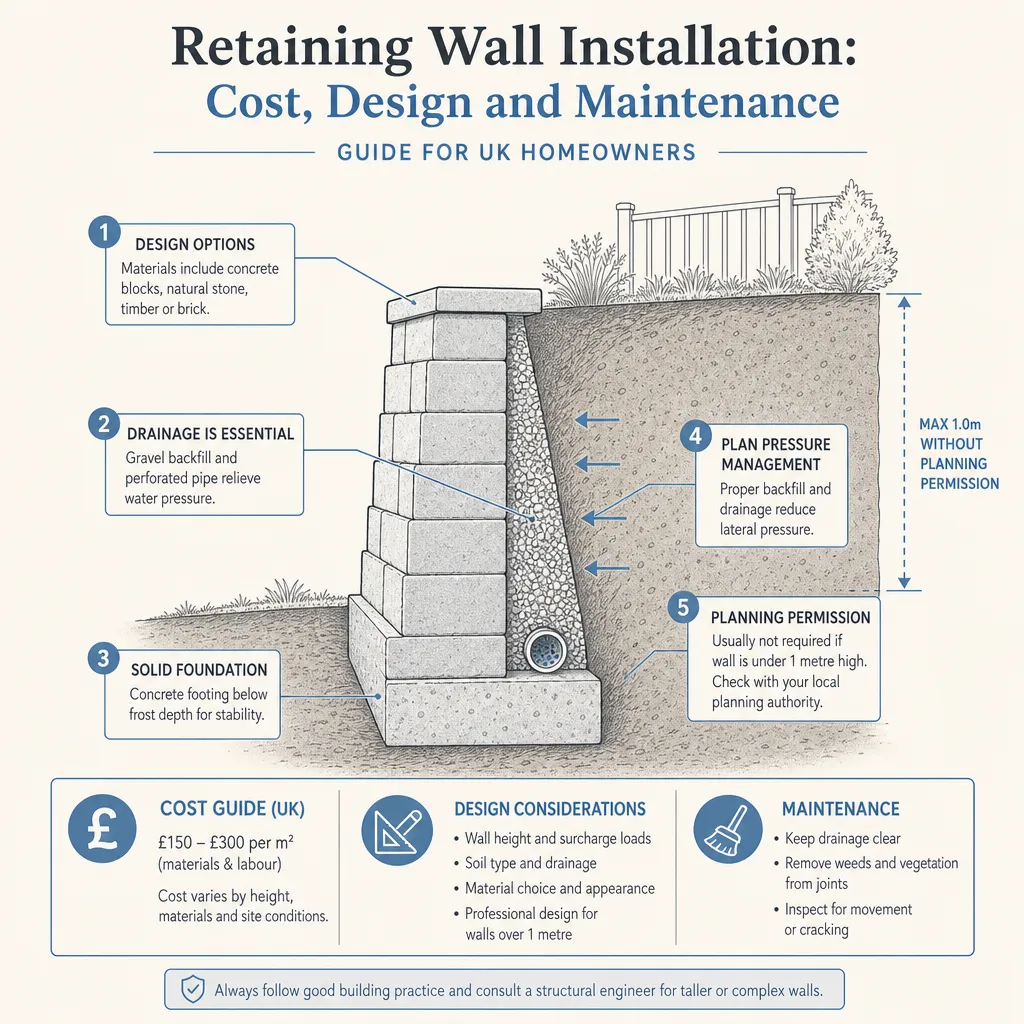
Retaining Wall Installation: Cost, Design and Maintenance
A retaining wall holds back soil on a sloped or banked site.
 Improvement & Build
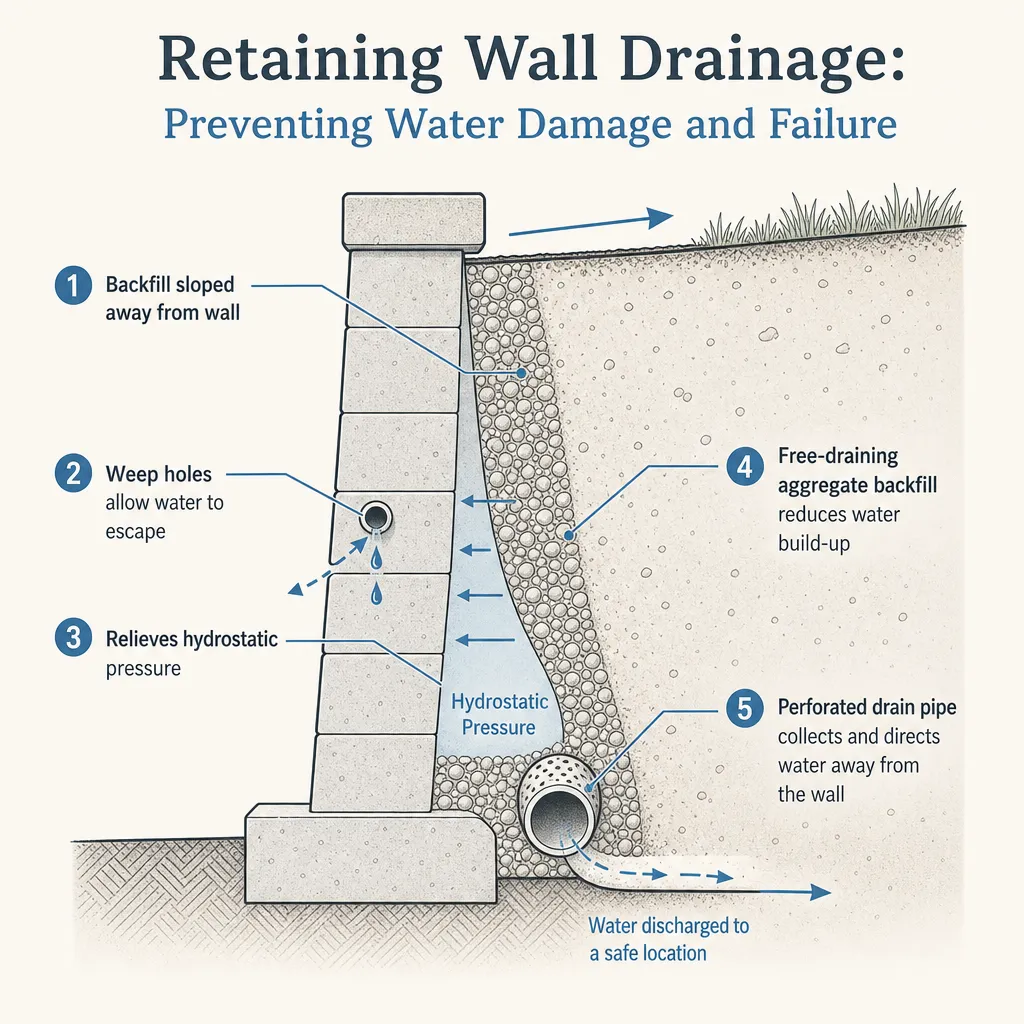
Retaining Wall Drainage: Preventing Water Damage and Failure
Retaining wall drainage fails when hydrostatic pressure builds behind the structure due to poor drainage layers, blocked weep holes, or impermeable backfill.
 Improvement & Build
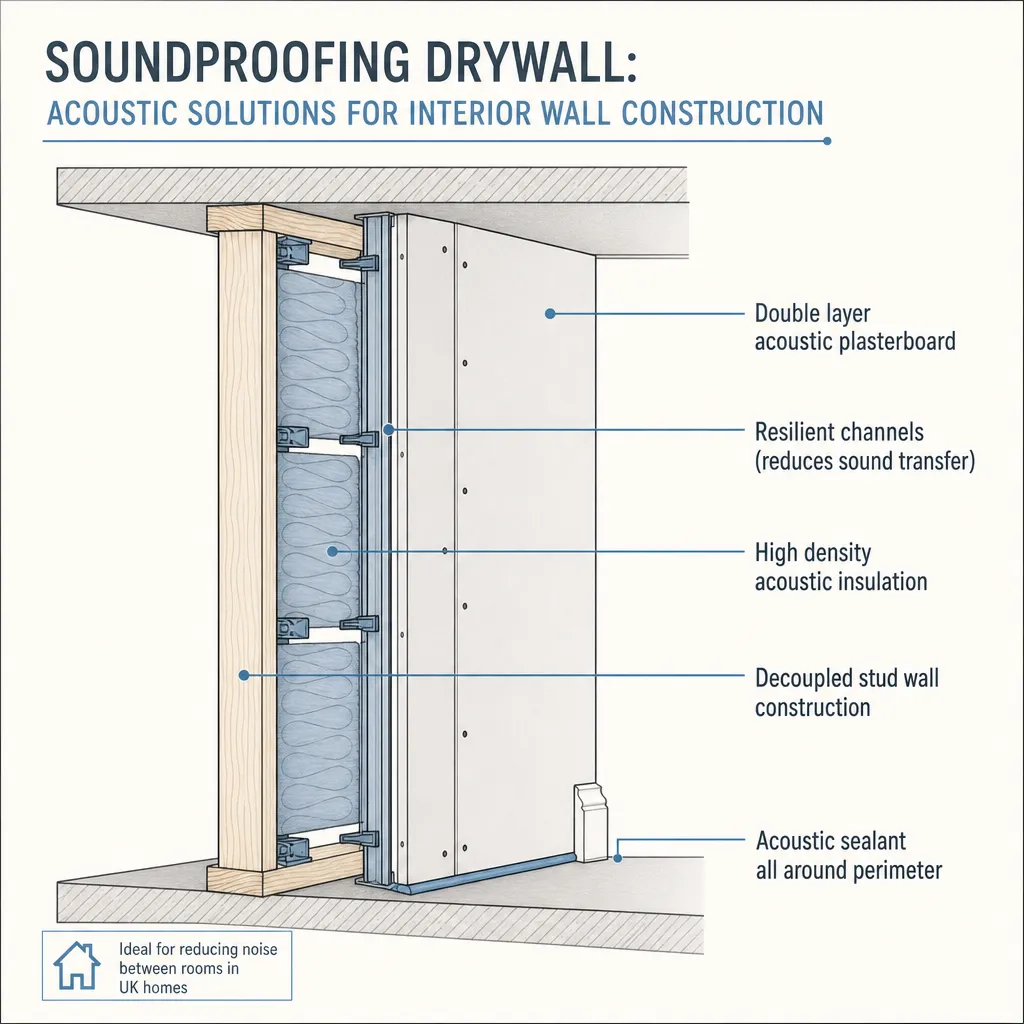
Soundproofing drywall: acoustic solutions for interior wall construction
Soundproofing drywall in UK homes typically combines acoustic plasterboard, resilient bar fixings, and mineral wool cavity fill to reduce airborne and structure-borne noise.
 Improvement & Build
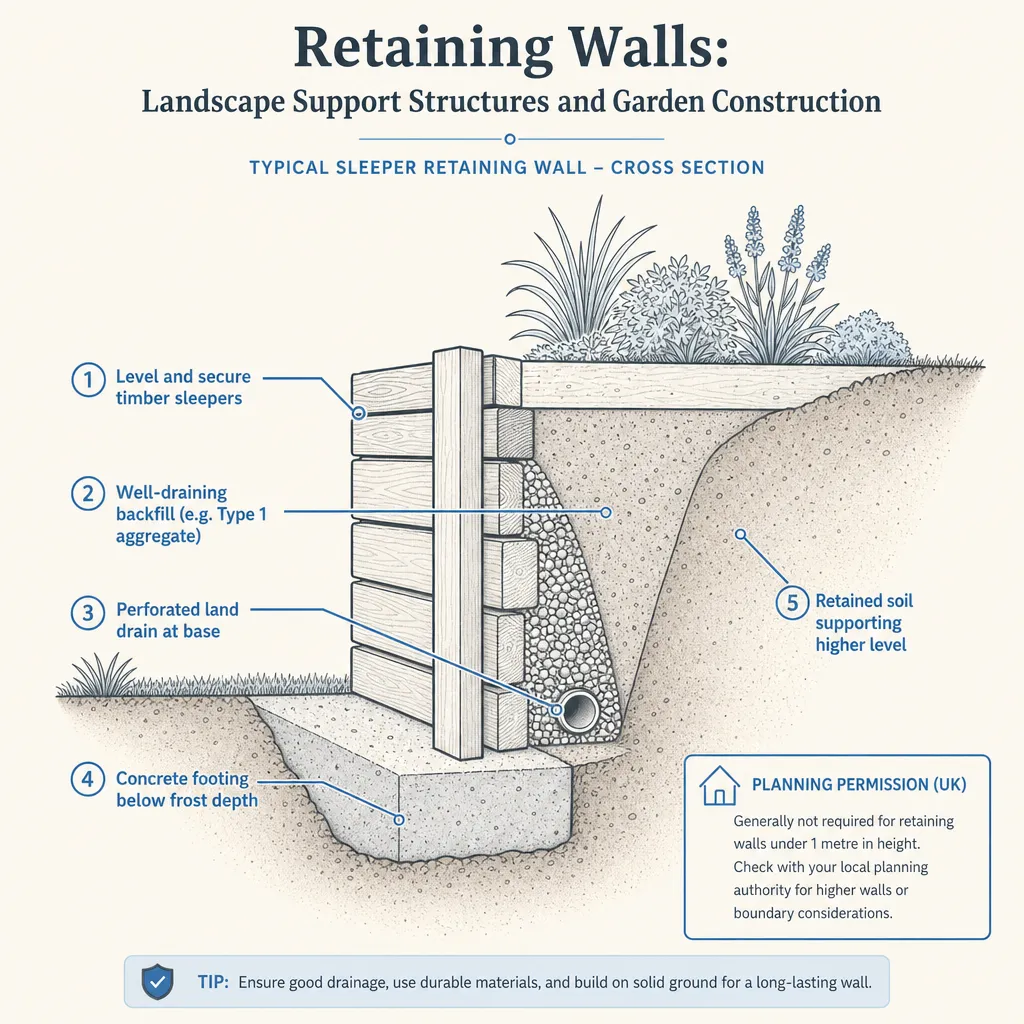
Retaining Walls: Landscape Support Structures and Garden Construction
A domestic retaining wall under 1 metre in height, away from buildings and boundaries, can usually be built by a landscaper or groundworker without structural calculations.
 Improvement & Build
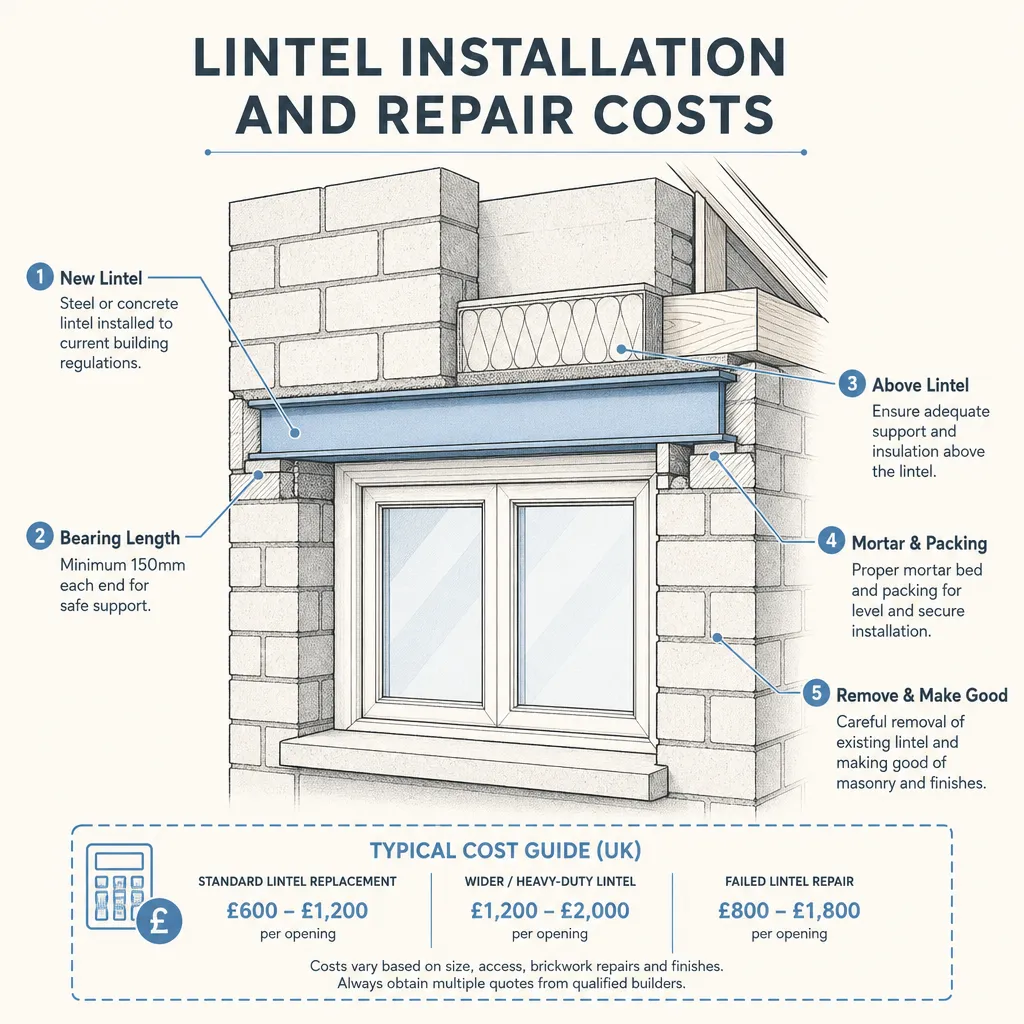
Lintel Installation and Repair Costs
Replacing or installing a lintel in the UK typically costs £400–£1,500 for a standard residential opening, covering supply of a steel lintel and a day's skilled labour.