Retaining Wall Design and Structural Stability for Residential Properties
By Housey · Last reviewed 24th of May 2026
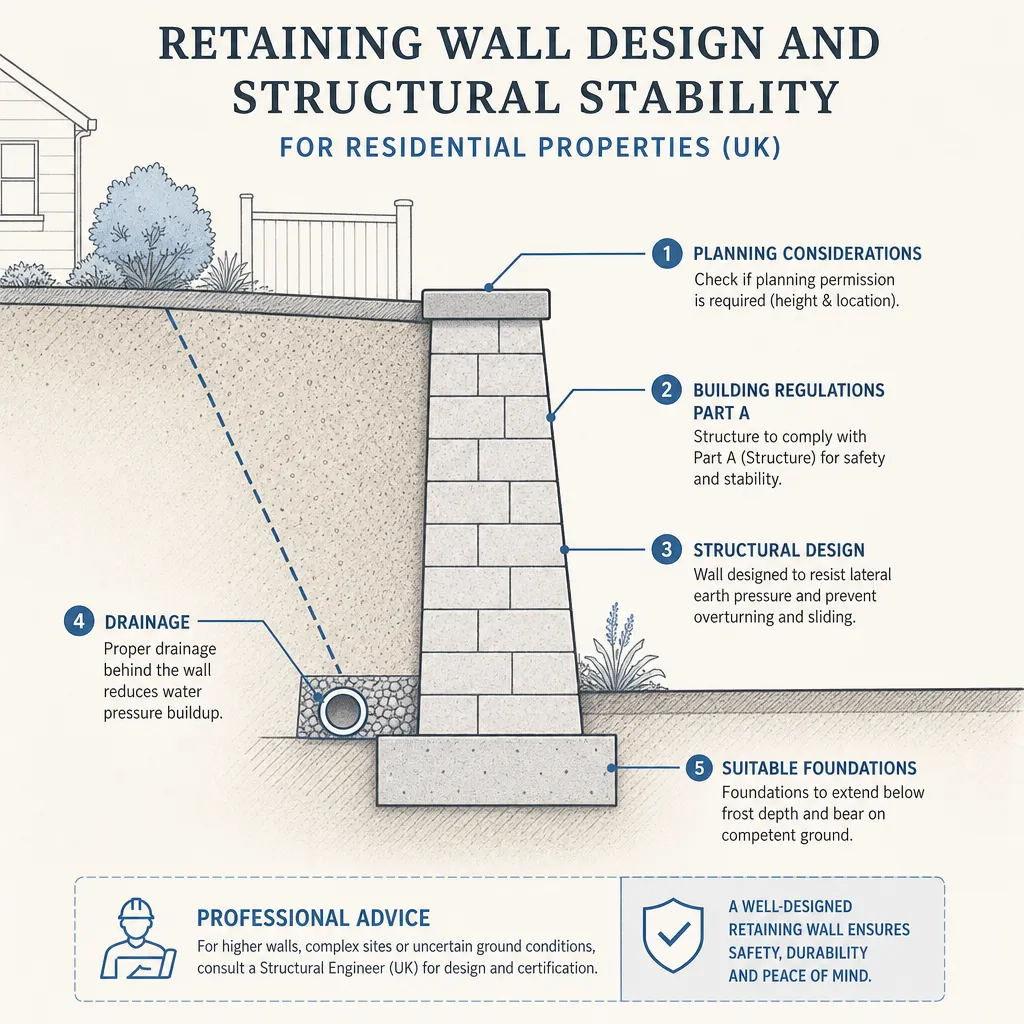
Retaining Wall Design and Structural Stability for Residential Properties
Retaining walls appear in many residential settings — a cut into a sloped garden, a raised terrace, a basement excavation, or a level change between neighbouring plots. When they fail, the consequences can be serious: soil collapse, foundation damage to adjacent buildings, blocked drainage runs, and personal injury. Understanding when a retaining wall needs professional design, which regulatory approvals apply, and what construction method suits your ground conditions is essential before any excavation begins.
Key points
- Any retaining wall over approximately 1 m in height should be assessed by a structural engineer; walls over 2 m virtually always require a formal structural design and building control approval.
- Planning permission is required for walls exceeding 1 m adjacent to a highway used by vehicles, or 2 m elsewhere, under the Town and Country Planning (General Permitted Development) (England) Order 2015 (Schedule 2, Part 2, Class A).
- Building Regulations Part A (Structure) applies where a retaining wall affects the stability of any building; many domestic retaining walls also require building control notification even when freestanding.
- Drainage behind the wall is as critical as the wall itself — hydrostatic pressure from saturated soil is a leading cause of retaining wall failure.
- If a retaining wall is on or near a shared boundary and involves excavation within 3 m of a neighbour's foundation, the Party Wall etc. Act 1996 may require a formal notice before work begins.
When do you need a retaining wall?
A retaining wall holds back soil, rock, or fill material on one side while presenting a vertical or near-vertical face. Situations where homeowners typically need them include:
- Sloped garden terracing — creating level lawn or patio areas on a gradient.
- Basement or underpinning works — retaining ground while excavating below existing floor levels.
- Driveway cut-and-fill — levelling ground for access or parking.
- Boundary walls on unequal ground — where one side of a boundary is significantly higher than the other.
- Flood or erosion management on sloped sites near watercourses.
For very small changes in level (under 300–500 mm) on stable ground, an engineered solution may not be required. However, the cumulative load from saturated soil, garden furniture, vehicles near the edge, or surcharge from adjacent foundations can exceed what an informal stack-stone or untied block wall can safely carry.
Planning permission and building regulations
Planning permission
Under the Town and Country Planning (General Permitted Development) (England) Order 2015 (Schedule 2, Part 2, Class A), permitted development allows gates, fences, walls, and other means of enclosure up to:
- 1 m if adjacent to a highway used by vehicular traffic.
- 2 m in all other cases.
Heights above these thresholds require a householder planning application. In conservation areas, Article 4 directions may remove permitted development rights even below these limits. Listed buildings require listed building consent for wall works within their curtilage. Scotland, Wales, and Northern Ireland have separate permitted development frameworks.
Building regulations
Building Regulations Part A applies when a retaining wall affects the stability of any building. Even where the wall is freestanding, if it could affect foundations, drainage, or an adjacent structure if it failed, building control notification may be needed. In practice:
- Walls up to around 1 m on stable ground away from buildings: building control may not be required, but check with your local authority.
- Walls 1–2 m, especially near buildings: building control approval is often required.
- Walls over 2 m, near basements, or adjacent to existing structures: building control approval and a structural engineer's design are almost always required.
Types of retaining wall: a comparison
Wall type | Best for | Indicative height | Key requirement |
|---|---|---|---|
Mass gravity wall (concrete block, stone) | Low walls on stable ground | Up to ~1–1.5 m | Sufficient base width; drainage essential |
Cantilever concrete wall | Medium walls in urban gardens | 1–4 m | Structural engineer design; reinforced base slab |
Gabion (wire cages, stone fill) | Rural, garden, erosion control | 1–3 m | Drainage behind; flexible, tolerates settlement |
Sheet pile (steel or timber) | Basement excavations, soft or waterlogged ground | Variable | Specialist installer; often used as temporary works |
Reinforced soil / geogrid | Large embankments, commercial sites | Up to 10 m+ | Geotechnical assessment; specialist design |
Sleeper wall (timber railway sleepers) | Light garden terracing | Up to ~1 m | Limited design life; timber decay risk over time |
Indicative heights only — always confirm suitability with a structural engineer for your specific site conditions.
Drainage: the critical factor
Hydrostatic pressure from water-saturated soil is one of the most frequent causes of retaining wall failure. Saturated soil can exert forces several times greater than dry soil against the same wall face.
Good practice includes:
- Granular backfill (coarse gravel or crushed stone) directly behind the wall to a minimum depth of 300 mm, preventing fine soils from blocking the drainage path.
- Weep holes or a perforated drainage pipe (land drain) at the base of the wall to allow water to escape freely.
- Geotextile membrane between native soil and granular backfill to prevent migration of fines.
- Surface water drainage directing rainwater away from the top of the retained area.
A structural engineer's design for walls above 1.5 m will typically specify drainage as part of the engineered solution. Do not omit drainage to reduce costs.
Which professional do I need?
- Structural engineer: required for walls over ~1 m in height, or any wall near a building, basement, or boundary. Will produce a design with dimensions, reinforcement schedules, and a drainage specification.
- Geotechnical engineer: required where ground conditions are poor, expansive (clay), waterlogged, or where a detailed ground investigation (borehole or trial pit) is needed before design can proceed.
- Planning consultant: if your wall exceeds permitted development limits or is within a conservation area, listed curtilage, or subject to an Article 4 direction.
- Groundworker or specialist contractor: carries out excavation and construction to the engineer's specification; should have direct experience in retaining structures and drainage installation.
Decision tree: does your retaining wall need professional design?
- Wall under 500 mm high on stable ground, away from buildings and boundaries — light garden landscaping; standard horticultural guidance may be sufficient.
- Wall 500 mm – 1 m high — structural engineer assessment strongly recommended; check planning and building control requirements with your local authority.
- Wall over 1 m OR adjacent to a vehicular highway — structural engineer design required; planning permission is very likely needed adjacent to any highway.
- Wall over 2 m OR near a building, basement, or shared boundary — structural engineer design and building control approval essential; Party Wall Act notice may be required.
- Soft ground, high water table, or any history of slope movement on site — commission a geotechnical ground investigation before any design work begins.
Important limitations
This article is general guidance only. Retaining wall design depends on site-specific factors including soil bearing capacity, groundwater conditions, surcharge loads, proximity to foundations, and local authority requirements. Rules vary across England, Wales, Scotland, and Northern Ireland.
This article is not a substitute for assessment by a qualified structural engineer. Do not excavate or construct retaining structures adjacent to existing buildings without professional structural advice.
When to get professional help
Consult a structural engineer or geotechnical engineer before work begins if:
- The wall will be over 1 m in height.
- The wall is within 3 m of any building, boundary structure, or drainage run.
- The site has made ground, fill material, clay, or a history of slope movement.
- There are visible signs of instability: cracks, tilted trees, bulging ground, or evidence of previous slip.
- The wall supports a driveway, patio, or area subject to vehicle loading.
- A neighbouring property is at a significantly higher or lower level on the other side of the wall.
What to ask a qualified professional
Before instructing a structural engineer or groundworker for a retaining wall project:
- What ground investigation do you recommend before designing the wall?
- What wall type and material do you propose, and why is it suited to my ground conditions?
- How will drainage be incorporated into the design?
- Does this wall require building regulations approval, and will you provide structural calculations for submission?
- Does the height or location require planning permission?
- Does the Party Wall etc. Act 1996 apply, and do I need to serve notice on my neighbour?
- What supervision or inspection will be carried out during construction?
- Is VAT included in your fee, and what drawings or design certificate will I receive?
How Housey can help
Housey connects homeowners with experienced structural engineering services professionals who can assess your site, produce a compliant retaining wall design, and advise on planning and building control requirements. For the construction itself, our network of groundworkers has experience in retaining structures, drainage installation, and cut-and-fill work.
Frequently asked questions
Does a garden retaining wall always need planning permission?
Not always. Under permitted development rules in England, walls up to 2 m do not generally require planning permission, except adjacent to a vehicular highway where the limit is 1 m. Conservation area restrictions, Article 4 directions, and listed building status can remove these permitted development rights. Always check with your local planning authority before starting work.
Can I build a retaining wall myself without a structural engineer?
For very low walls (under 500 mm) on stable ground away from buildings, informal landscaping may be sufficient. Once a wall exceeds around 1 m in height, or is near a building or boundary, engineering assessment is advisable. Above 2 m, a structural engineer's design is almost always needed to comply with Building Regulations Part A.
How does the Party Wall etc. Act 1996 affect retaining walls?
If your retaining wall involves excavating within 3 m of a neighbouring building's foundation (or 6 m under certain conditions), you may need to serve a party wall notice under the Party Wall etc. Act 1996. This is separate from planning and building control. A party wall surveyor can advise whether a notice is required for your specific project.
What causes retaining walls to fail?
The most common causes are: inadequate drainage leading to hydrostatic pressure build-up behind the wall, insufficient base width or embedment depth, poor foundation conditions, overloading from vehicles or structures above the retained area, and material deterioration such as timber decay or mortar erosion. A properly engineered wall with good drainage should give decades of reliable service.
Sources and further reading
- Town and Country Planning (General Permitted Development) (England) Order 2015 — legislation.gov.uk
- Approved Document A: Structure — GOV.UK
- Party Wall etc. Act 1996: explanatory booklet — GOV.UK
- Institution of Structural Engineers — IStructE
- CIRIA Report C580: Embedded Retaining Walls — CIRIA
Useful next reads
 Planning & Pre-Build
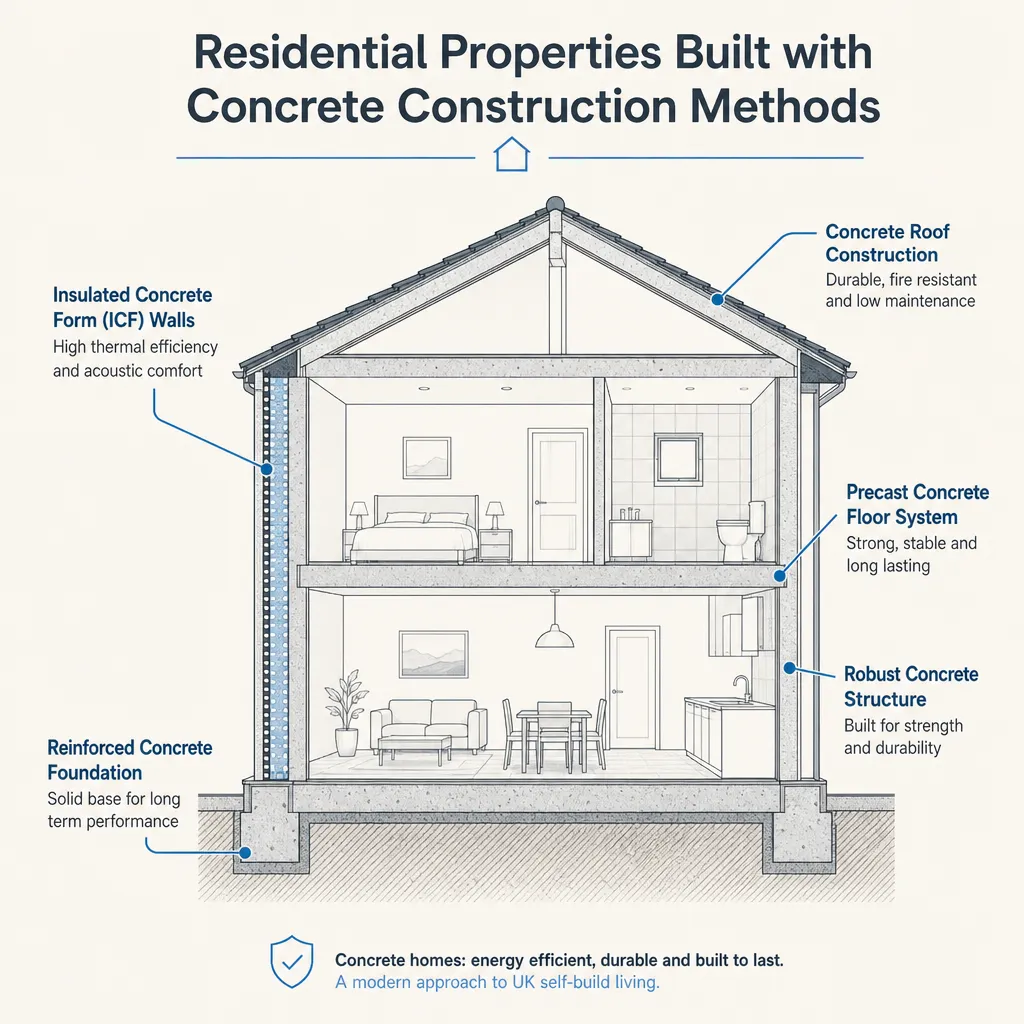
Residential Properties Built with Concrete Construction Methods
UK homes are built using several concrete methods: in-situ cast concrete, precast panel systems, insulating concrete formwork (ICF), and older non-traditional types such as Wimpey No-Fines and Laing Easiform.
 Planning & Pre-Build
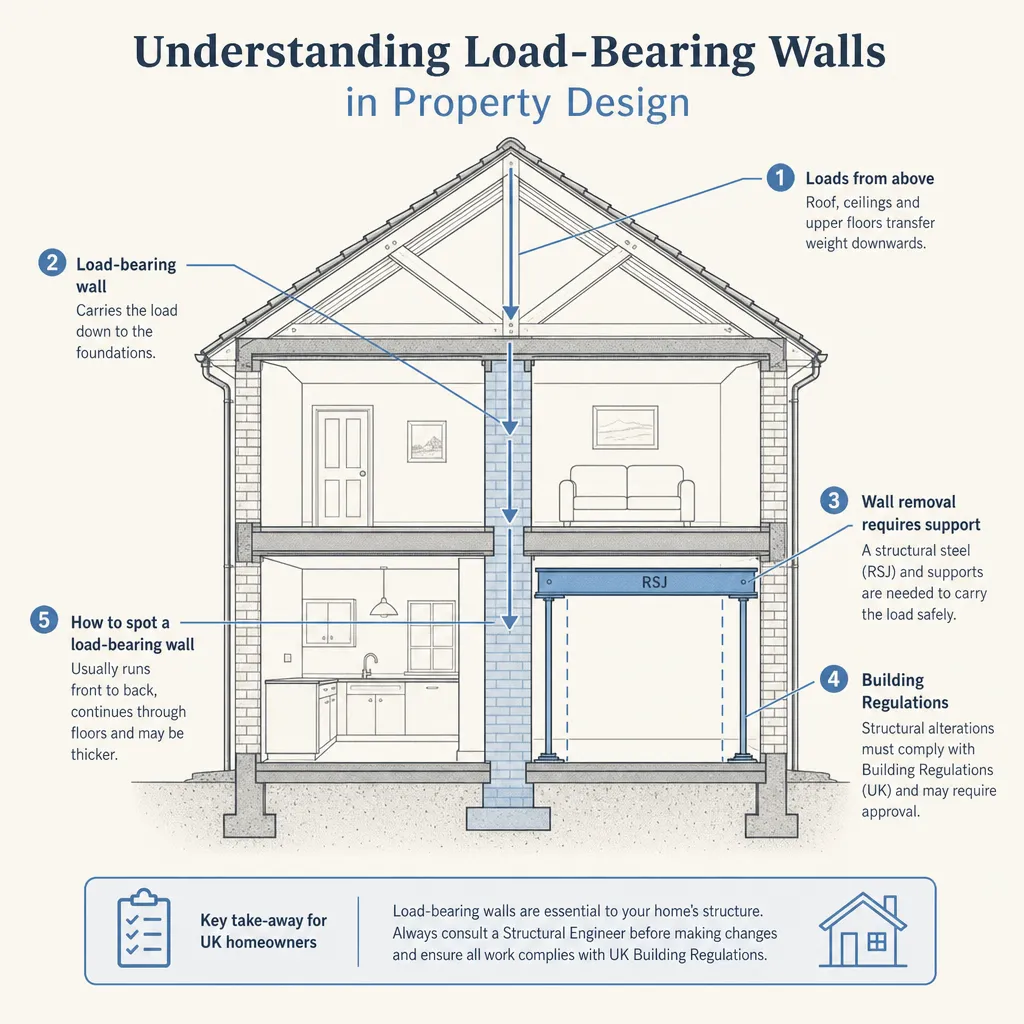
Understanding Load-Bearing Walls in Property Design
A load-bearing wall carries the weight of floors, roofs, or other walls above it down to the foundations.
 Planning & Pre-Build
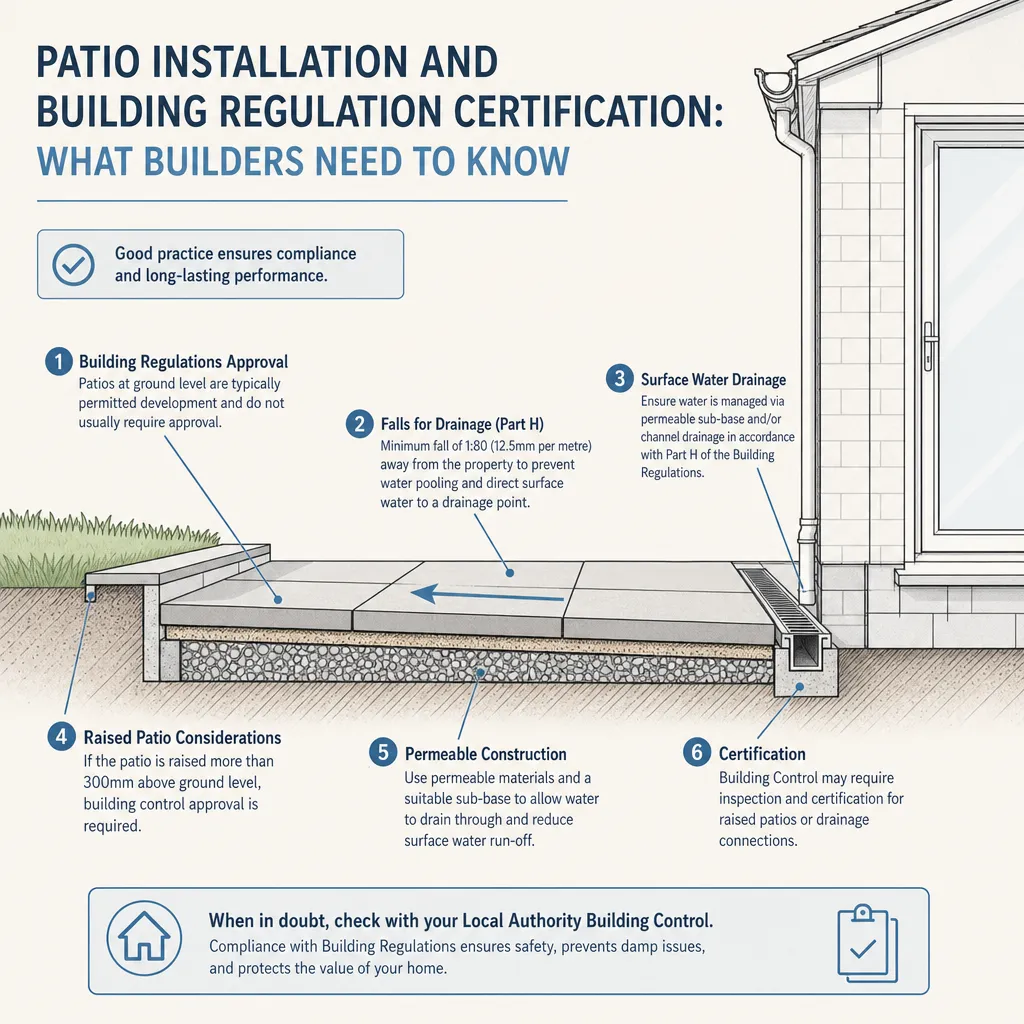
Patio Installation and Building Regulation Certification: What Builders Need to Know
Most ground-level patios in England do not require building regulations approval.
 Planning & Pre-Build
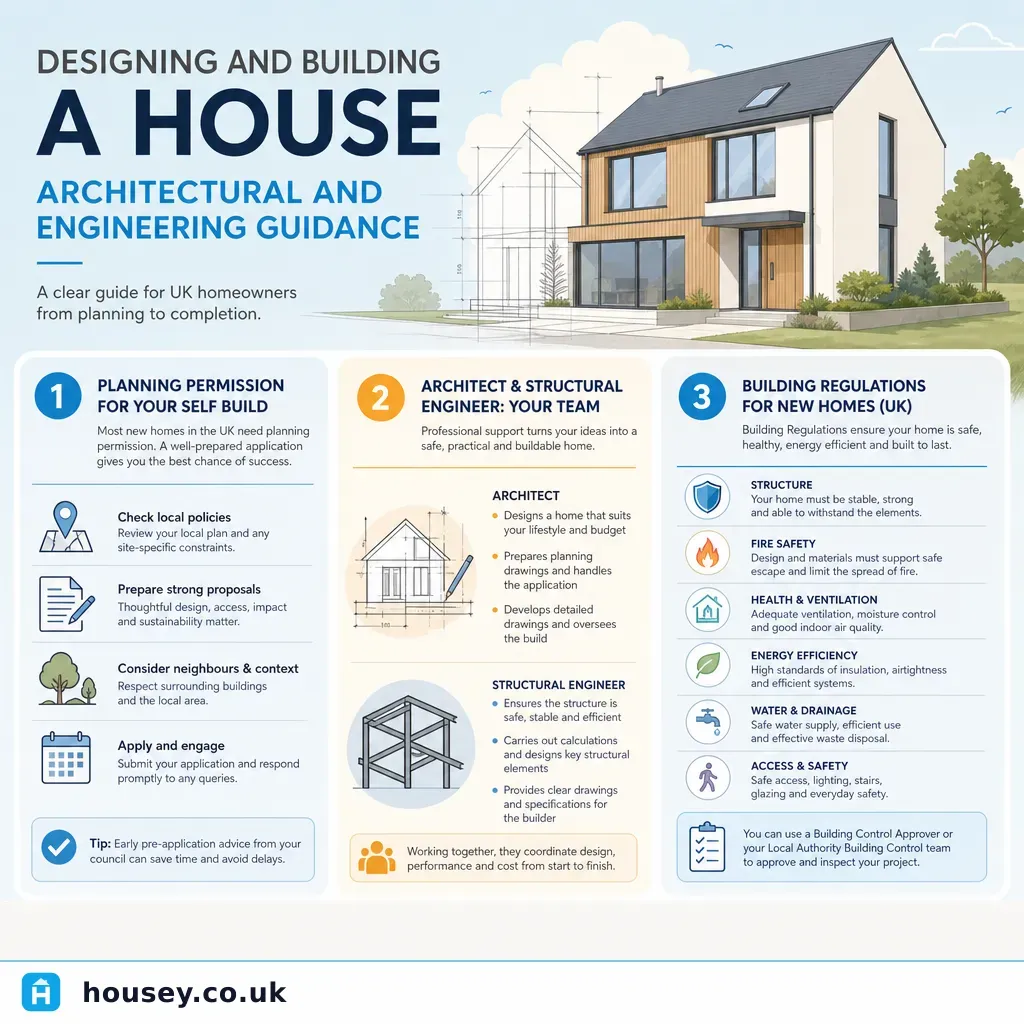
Designing and Building a House: Architectural and Engineering Guidance
Building a new house in the UK requires separate planning permission and Building Regulations approval, a professional team typically including an ARB-registered architect, a structural engineer, and often a civil or geotechnical engineer.
 Planning & Pre-Build
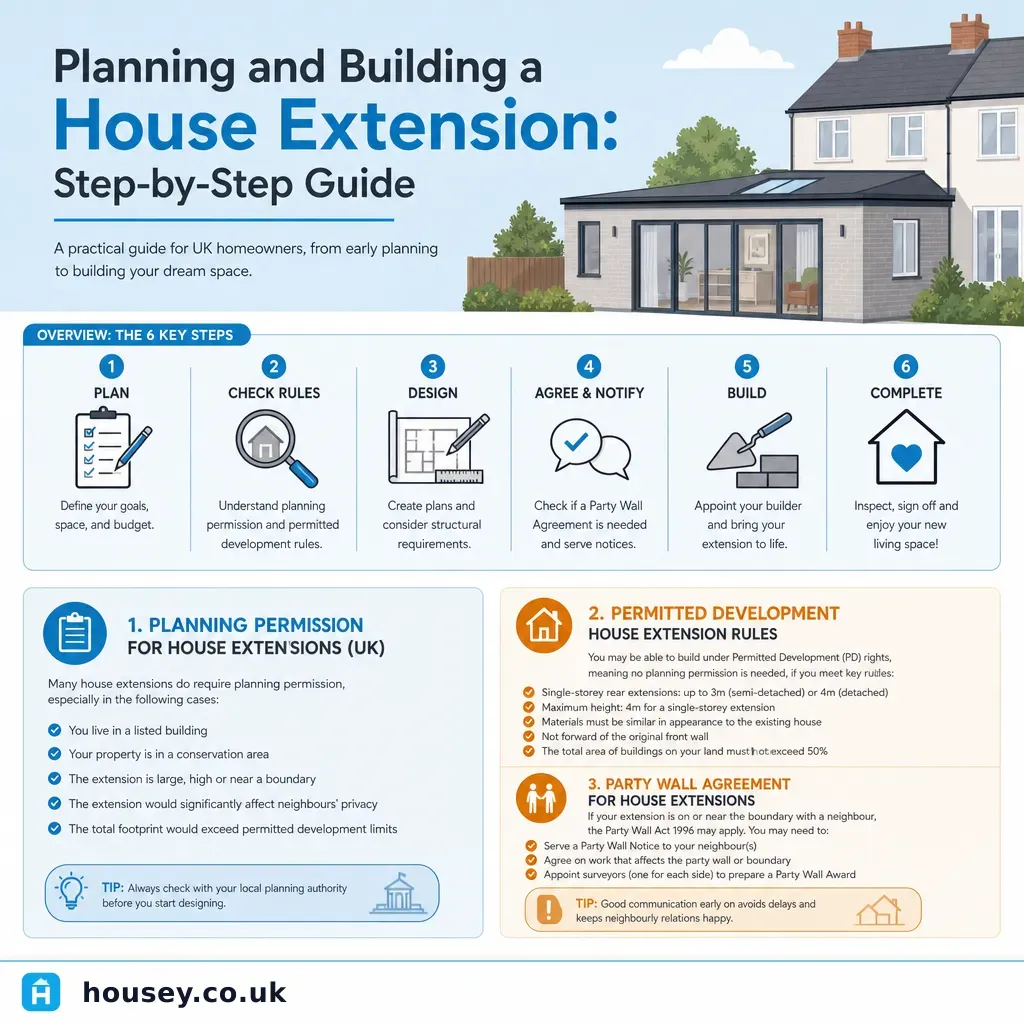
Planning and Building a House Extension: Step-by-Step Guide
A house extension in the UK usually requires either planning permission or confirmation of permitted development rights, Building Regulations approval, and — where work affects a shared wall or boundary — compliance with the Party Wall etc.