Retrofit Insulation Installation and Investment
By Housey · Last reviewed 10th of May 2026
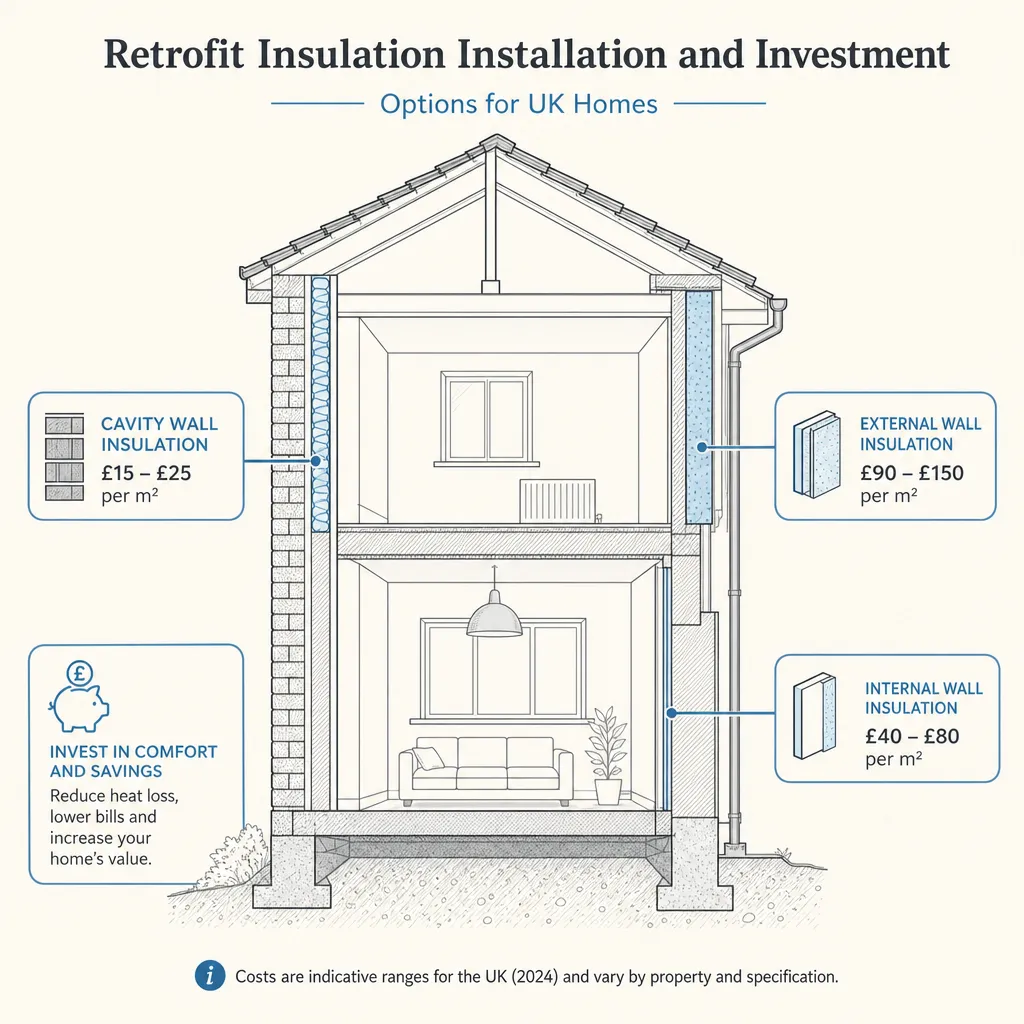
Retrofit Insulation Installation and Investment
Insulation is usually the first retrofit measure UK homeowners consider, and often the one with the best long-term return — but the right type depends on construction, ventilation, and moisture conditions that vary considerably between properties. A Victorian solid-brick terrace needs a fundamentally different approach to a 1970s cavity-wall semi, and installing the wrong insulation in the wrong sequence can cause condensation and damp that costs significantly more to remedy than the original energy loss. Getting an insulation or retrofit assessment before works begin is strongly recommended for any property with solid walls, existing damp, or unusual construction.
Key points
- There are five main types of domestic insulation retrofit in UK homes: loft insulation, cavity wall insulation (CWI), external wall insulation (EWI), internal wall insulation (IWI), and floor insulation — each with different costs, risks, and suitability conditions.
- Solid-wall properties — typically pre-1940 construction — cannot have CWI; they require EWI or IWI, both of which carry higher moisture risk and significantly higher cost.
- All insulation works funded under ECO4 or the Great British Insulation Scheme must comply with PAS 2030 (the installation standard) and PAS 2035 (the whole-house retrofit standard).
- Cavity wall insulation installers should be registered with the Cavity Insulation Guarantee Agency (CIGA), which provides a 25-year product guarantee on completed works.
- Solid wall insulation (EWI or IWI) requires Building Regulations approval under Approved Document L (conservation of fuel and power); a building control application must be made before works begin.
Types of retrofit insulation: a comparison
Insulation type | Best suited to | Indicative cost (semi-detached, 2026) | Moisture risk | Planning or Building Regs needed? |
|---|---|---|---|---|
Loft insulation (mineral wool) | Most property types with accessible loft space | £300–£700 | Low | No (usually) |
Cavity wall insulation (CWI) | Properties with unfilled cavities, broadly post-1920 | £400–£1,200 | Low to moderate | No (usually) |
External wall insulation (EWI) | Solid-wall, timber-frame, or failed CWI properties | £8,000–£20,000+ | Moderate if poorly specified | Building Regs (Part L); planning may be needed in conservation areas |
Internal wall insulation (IWI) | Solid-wall where EWI is not feasible due to planning or aesthetics | £5,000–£16,000 | Higher — ventilation critical | Building Regs (Part L) |
Floor insulation (suspended timber) | Older properties with accessible suspended timber ground floors | £800–£2,500 | Low to moderate | No (usually) |
Indicative UK costs, last reviewed 2026-05-10. All costs vary by property size, location, material specification, and site conditions. Obtain at least three quotes and check current grant eligibility before committing.
Cavity wall insulation: what to check first
Cavity wall insulation is generally the most cost-effective and lowest-risk insulation measure available in UK homes. It is typically suitable for properties built between roughly 1920 and 1990 with an unfilled cavity of at least 50mm. However, it is not universally appropriate:
- Check cavity condition first. Previous partial filling, rubble contamination, or significant moisture ingress from failed pointing can make CWI unsuitable or require remediation work before insulation is installed.
- Check exposure rating. Properties in high-exposure zones — coastal locations, hillside settings, or elevations facing prevailing wind — may be unsuitable for standard full-fill CWI; specialist products or EWI may be preferable.
- Beware failed previous CWI. There are documented cases of earlier scheme-funded CWI causing damp and interstitial moisture problems. If this is suspected, arrange an investigation and possible extraction before reinstalling.
- Confirm CIGA registration. Ensure the installer is registered with the Cavity Insulation Guarantee Agency and will provide the 25-year product guarantee on completion.
A pre-installation cavity wall survey using borescope inspection is good practice for any property where cavity condition is uncertain, and some installers include this as standard.
External and internal wall insulation: the solid-wall challenge
Approximately eight million UK homes have solid-wall construction — most Victorian and Edwardian terraces, pre-1920 cottages, and many early 1930s properties. These cannot have CWI; the two options are EWI (insulation cladding fixed externally) or IWI (boards fixed to internal wall faces, reducing floor area).
External wall insulation (EWI):
- Significantly changes the external appearance of a property — planning permission may be required in conservation areas or for listed buildings; check with your local planning authority before proceeding.
- Requires Building Regulations approval under Approved Document L and, where relevant, Approved Document C (site preparation and moisture resistance).
- Should use breathable insulation materials on solid-brick walls to allow residual moisture to escape and avoid interstitial condensation building up within the wall.
- Must be installed by a PAS 2030-certified installer working within a PAS 2035-compliant programme.
- May be eligible for ECO4 funding for qualifying households.
Internal wall insulation (IWI):
- Reduces internal floor area by typically 70–100mm per wall insulated — significant in smaller rooms or narrow hallways of a Victorian terrace.
- Carries a higher risk of interstitial condensation than EWI if vapour control layers are incorrectly specified or installed.
- Requires careful detailing around window reveals, skirting boards, electrical sockets, and service penetrations to avoid cold bridging.
- Best specified by a retrofit assessor or designer who can model vapour diffusion and dew-point risk for the specific wall construction and internal conditions.
Red flags: when to pause before installing insulation
Pause and seek further professional advice before proceeding if any of the following apply:
- Existing damp or mould — adding insulation to a damp wall will trap moisture and worsen the problem. Identify and resolve the source of damp before any insulation is specified or installed.
- Failed pointing, cracked render, or roof defects — water ingress through the external envelope must be repaired before insulation is added to the building fabric.
- Listed building or conservation area — listed building consent may be required; some insulation types are incompatible with heritage requirements. Check with your local planning authority and consult Historic England guidance for traditional buildings.
- Previous insulation has caused damp — if an earlier scheme's CWI or EWI is suspected to have caused problems, arrange an independent investigation before installing further measures.
- Installer cannot provide PAS 2030 certification or TrustMark registration — only use certified and registered installers for any grant-funded works.
- No ventilation assessment has been carried out — adding insulation without reviewing background ventilation increases the risk of poor indoor air quality and surface condensation on cold wall faces.
Grants and funding for insulation
Several UK government schemes may reduce the cost of insulation, depending on household income, EPC rating, and property type:
- ECO4 — funded by energy suppliers; available to low-income households and those receiving certain benefits. Covers CWI, EWI, IWI, loft insulation, and floor insulation among other measures. All delivery must comply with PAS 2035.
- Great British Insulation Scheme (GBIS) — broader eligibility than ECO4; typically focused on single-measure installations for homes with EPC ratings D–G.
- Local Authority Flexible Eligibility (LA Flex) — allows councils to extend ECO4 eligibility to households that do not meet the standard income or benefit criteria; check with your local authority.
- Home Upgrade Grant (HUG2) — targeted at low-income households in off-gas-grid areas; covers insulation alongside low-carbon heating measures.
Grant eligibility and scheme rules change; check GOV.UK for current details and contact your energy supplier or local authority to begin an application.
Important limitations
This article describes insulation types, typical costs, and relevant standards as they apply to domestic properties in England and Wales. Rules, standards, and grant eligibility differ in Scotland (where Warmer Homes Scotland operates) and Northern Ireland. Listed building controls and conservation area requirements vary by local authority. Moisture risk and suitability for any specific property can only be assessed by a qualified retrofit assessor or surveyor who has inspected the property in person. Nothing in this article constitutes a recommendation that any specific insulation measure is appropriate for your home.
When to get professional help
Seek a qualified retrofit assessor, insulation assessor, or chartered surveyor before proceeding if:
- Your property was built before 1920 or has solid external walls.
- There is any existing damp, mould, or condensation on internal surfaces.
- A previous insulation measure has caused or is suspected to have caused problems.
- The property is listed or sits within a conservation area.
- You are planning to combine insulation with a heat pump installation.
- An installer has advised that no assessment or specification is required before works start.
What to ask a qualified professional
Before commissioning any insulation works, ask:
- Is my property suitable for this type of insulation, and what survey or evidence supports that conclusion?
- What are the moisture and ventilation implications of this measure, and how will they be managed?
- Are you PAS 2030-certified and TrustMark-registered?
- For CWI specifically: are you CIGA-registered and will I receive the 25-year guarantee certificate on completion?
- Will Building Regulations approval be needed, and who is responsible for making that application?
- Does this property require a PAS 2035-compliant retrofit assessment before works begin?
- What happens if damp, structural issues, or unsuitable cavity conditions are discovered once works have started?
How Housey can help
Housey connects homeowners with qualified professionals at every stage of an insulation project. Find insulation installers who are PAS 2030-certified and TrustMark-registered, arrange a retrofit assessment before committing to a specific measure, or speak to an energy-efficiency consultant about sequencing improvements across your whole property. For solid-wall or older properties, an insulation assessment before works begin can prevent costly and disruptive mistakes.
Frequently asked questions
What is the difference between PAS 2030 and PAS 2035?
PAS 2030 is the installation standard specifying how individual energy-efficiency measures, including insulation, must be installed. Installers must be certified to PAS 2030. PAS 2035 is the whole-house retrofit standard governing assessment, coordination, and design. For grant-funded projects both apply: the installer needs PAS 2030 certification; the coordinator must comply with PAS 2035.
Does cavity wall insulation require planning permission?
In most cases, no — CWI is usually permitted development. However, for properties in conservation areas, listed buildings, or those with permitted development rights removed, check with your local planning authority before works begin. An installer or your local authority planning department can confirm whether formal consent is needed for your specific property.
Can I get insulation installed for free?
Some households qualify for free insulation under ECO4 or the Great British Insulation Scheme, depending on income, benefit entitlement, and EPC rating. Your energy supplier or local authority can advise on eligibility. Not all insulation types are funded under each scheme — eligibility criteria, available measures, and local installer availability all vary by area.
How long does retrofit insulation last?
Loft insulation (mineral wool) typically lasts 40 or more years if undisturbed. Cavity wall insulation carries a 25-year CIGA guarantee. External and internal wall insulation systems are designed to last 25–30 years, though render or cladding finishes may require maintenance sooner. Lifespan in all cases depends heavily on correct installation and ongoing maintenance of the wider building envelope.
Sources and further reading
- PAS 2035:2023 and PAS 2030:2023 — retrofit and installation standards — BSI Group
- ECO4 scheme guidance for households — GOV.UK
- Great British Insulation Scheme — GOV.UK
- Cavity Insulation Guarantee Agency (CIGA) — CIGA
- Solid wall insulation guidance — Energy Saving Trust
- Approved Document L — conservation of fuel and power — GOV.UK
Useful next reads
 Energy & Retrofit
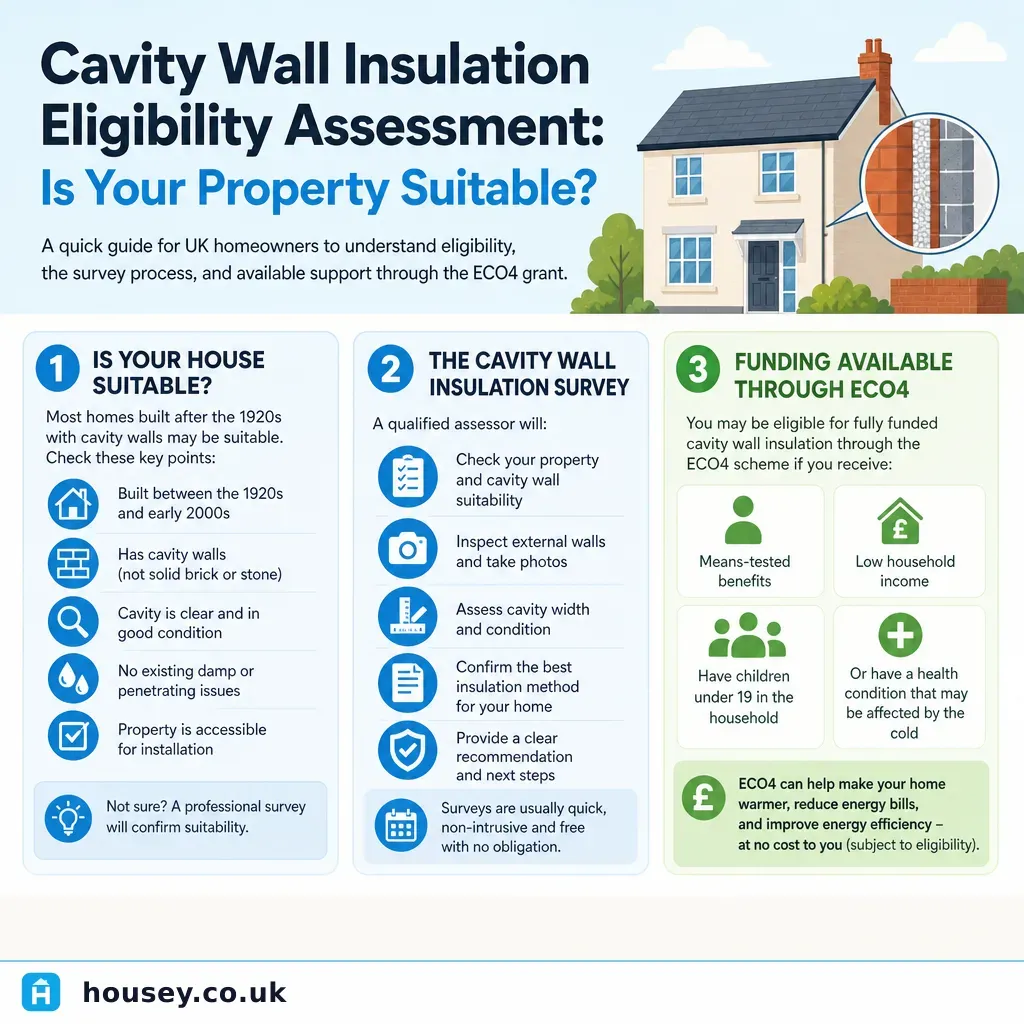
Cavity Wall Insulation Eligibility Assessment: Is Your Property Suitable?
Cavity wall insulation suits most UK homes built from around 1920 onwards with unfilled cavities at least 50mm wide in sheltered or moderately exposed locations.
 Energy & Retrofit
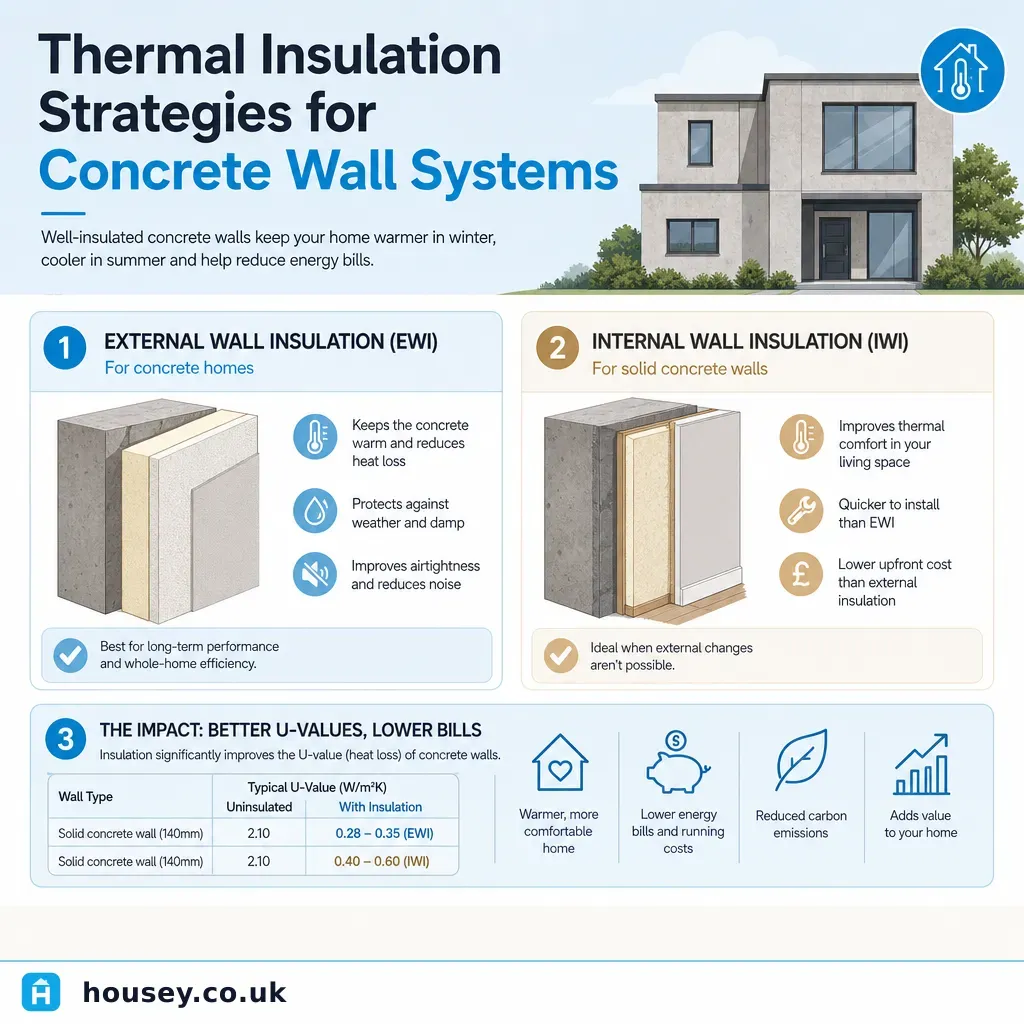
Thermal Insulation Strategies for Concrete Wall Systems
Concrete walls can be insulated using three main approaches: external wall insulation (EWI), internal wall insulation (IWI), or — where a cavity exists — cavity fill.
 Energy & Retrofit
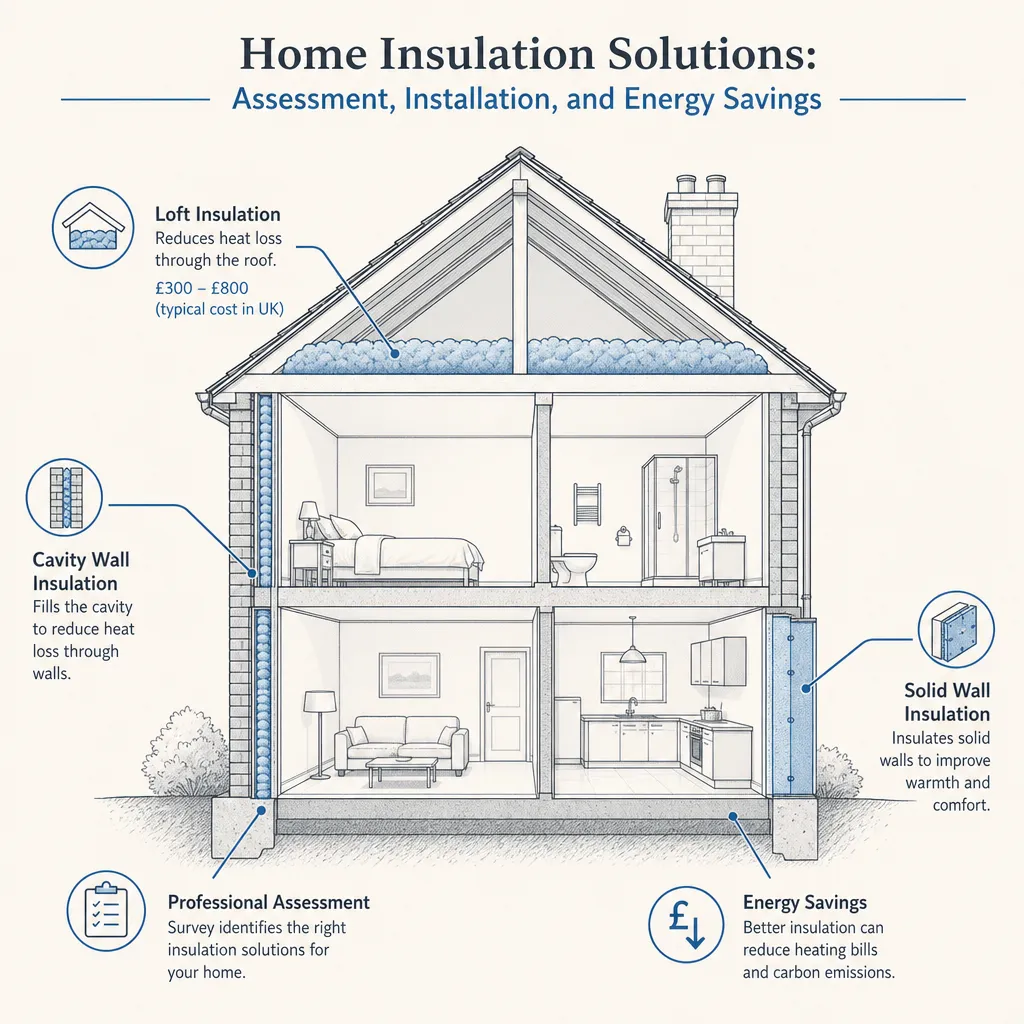
Home Insulation Solutions: Assessment, Installation, and Energy Savings
Home insulation in the UK covers loft, cavity wall, solid wall, and floor insulation.
 Energy & Retrofit
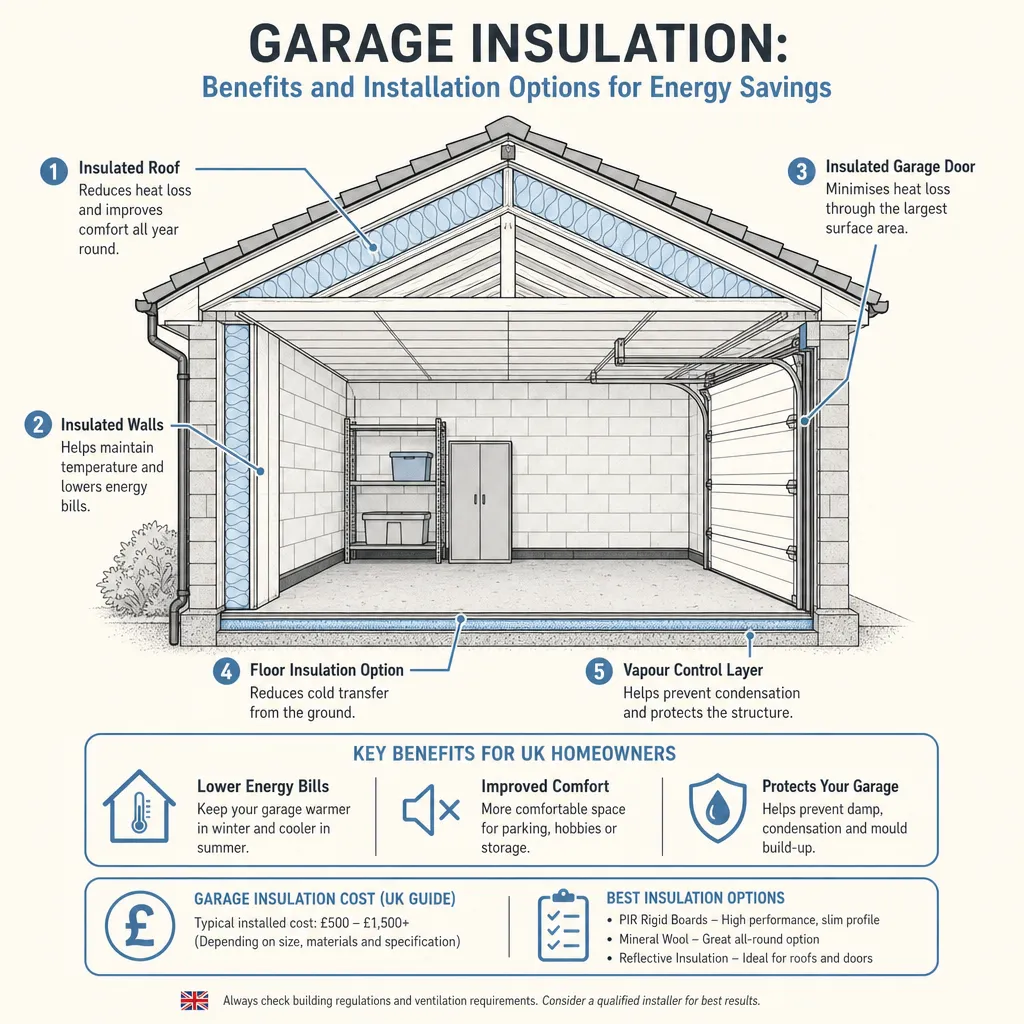
Garage Insulation: Benefits and Installation Options for Energy Savings
Insulating a garage reduces heat loss, lowers energy bills, and makes an attached garage more comfortable year-round.
 Energy & Retrofit
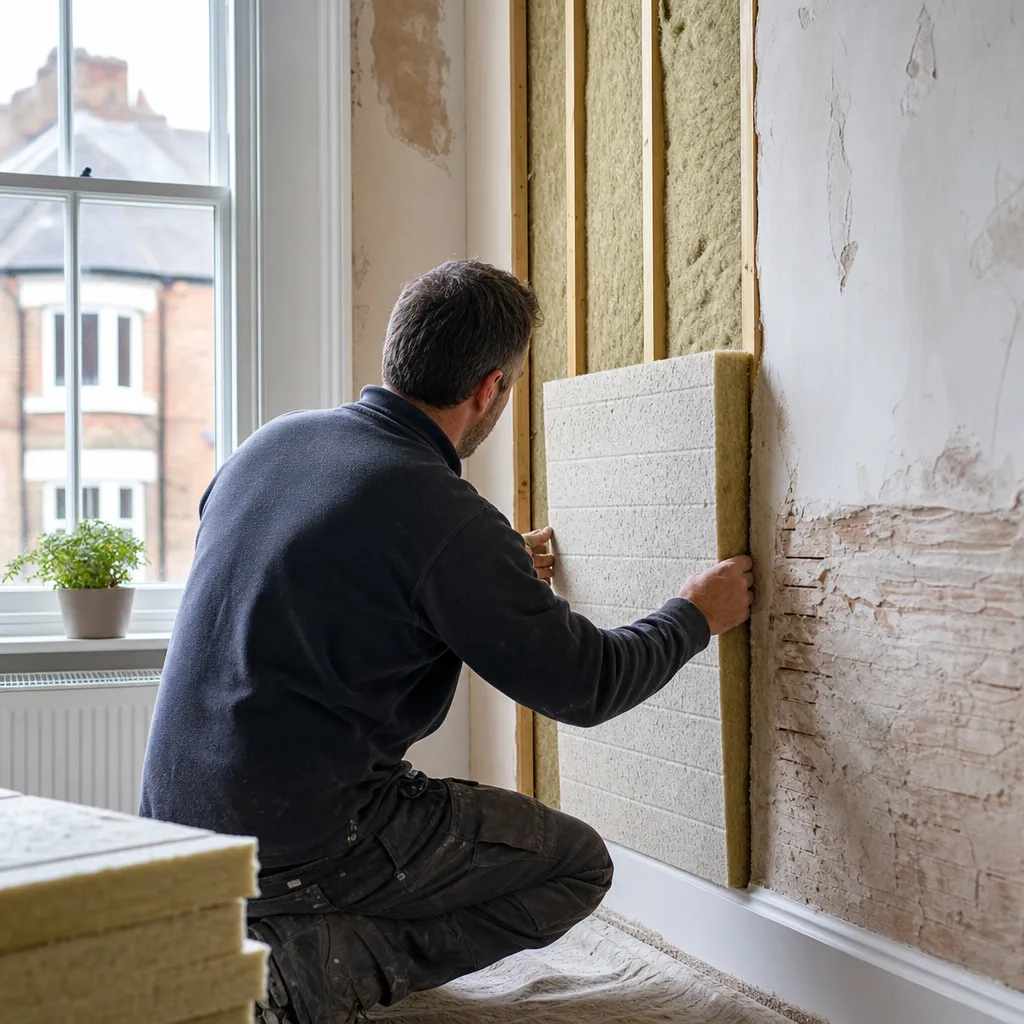
Insulating Original Plaster Walls: Methods and Considerations
Original plaster walls — particularly lime-based finishes in pre-1919 homes — require breathable insulation systems to avoid trapping moisture.