Roof Cleaning: Costs, Benefits, and Professional Services
By Housey · Last reviewed 31st of May 2026
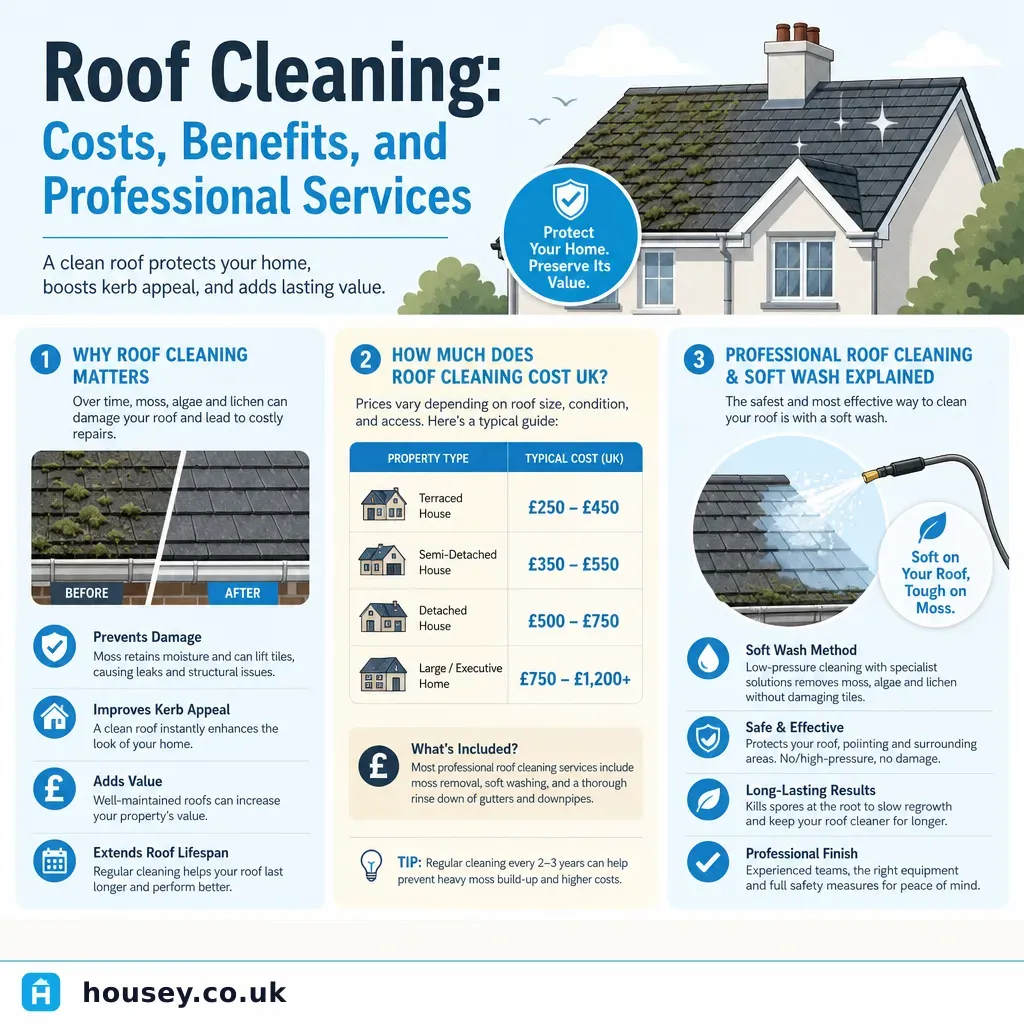
Roof Cleaning: Costs, Benefits, and Professional Services
Roof cleaning comes onto most homeowners' radar after noticing dark patches, green moss mats, or algae streaks creeping across tiles or slates. In the UK's damp climate, biological growth accumulates faster than in drier countries — and leaving it untreated can shorten the life of an otherwise sound roof. Whether you are preparing a property for sale, responding to a mortgage valuer's comments, or simply maintaining your home, understanding what professional cleaning involves helps you choose the right service and avoid unnecessary expense.
Key points
- Moss and lichen retain moisture against tile surfaces, accelerating frost spalling and crack formation during the freeze-thaw cycles common across most of the UK.
- High-pressure washing above approximately 100 PSI can fracture clay or concrete tiles and may void some manufacturer warranties — low-pressure or soft-wash techniques are generally safer.
- Biocide treatments applied after cleaning (such as sodium hypochlorite or benzalkonium chloride formulations) inhibit biological regrowth for approximately 2–5 years.
- The National Federation of Roofing Contractors (NFRC) recommends contractors carry public liability insurance of at least £2 million for roof access work.
- Roof cleaning does not normally require planning permission, but if your property is listed or in a conservation area, check with your local planning authority before applying chemical treatments.
What does professional roof cleaning involve?
A professional roof clean typically follows three stages: inspection, cleaning, and treatment. Before work begins, a roofer should assess the roof condition — looking for cracked, slipped, or missing tiles, deteriorated mortar on ridge and hip sections, and the state of lead flashings. Cleaning a structurally compromised roof without first noting defects can mask problems that need repair, and is money poorly spent.
The cleaning phase removes biological growth and debris. The treatment phase applies a biocide to kill remaining spores and slow regrowth. Most reputable contractors offer a follow-up visit to remove dead moss once it has dried and loosened — typically 6–12 weeks after the biocide application. Confirm whether this return visit is included in the quoted price or billed separately.
Which cleaning method is right for your roof type?
Not all methods suit every roof covering. The table below summarises the main options.
Method | Best for | Not ideal for | Key risk |
|---|---|---|---|
Soft wash (low-pressure + biocide) | Clay tiles, concrete tiles, natural slate | Roofs with loose, cracked, or delaminating tiles | Chemical runoff — protect gutters and garden planting |
Manual scraping + biocide | Fragile or aged slates, handmade clay tiles | Large roofs (labour-intensive) | Dislodged tiles if the contractor is not careful |
High-pressure washing | Modern concrete tiles in good condition | Old or handmade clay tiles, natural slate, flat roofs | Tile fracture; drives water beneath the tile lap |
Dry scraping only | Areas with sensitive water-catchment systems | Anywhere with established lichen (roots remain) | Rapid regrowth within 1–2 years without follow-up treatment |
Always confirm the proposed method with your contractor before work starts, especially on pre-1950s clay tiles or natural Welsh slate, which are more vulnerable to mechanical damage.
How much does roof cleaning cost in the UK?
Indicative UK costs, last reviewed 2026-05-31. Quotes vary significantly by region, roof pitch, size, and access method.
Costs are driven by roof area (measured in square metres), pitch steepness, scaffold or access equipment required, and the cleaning method used.
- Small terrace or semi (up to 70 m² roof area): approximately £300–£700 for a clean and biocide treatment.
- Average 3–4-bed detached (70–120 m²): approximately £500–£1,200.
- Larger homes or complex roof geometries: £1,000–£2,500+.
- Scaffold hire (where required): adds approximately £500–£1,500 depending on height and duration.
Always obtain at least three written quotes. Ask each contractor to specify what is included — inspection report, biocide product, waste removal, and a revisit to clear dead moss — as these affect comparability.
How often should you clean your roof?
The right cleaning interval depends on your location, roof pitch, and surrounding vegetation:
- Higher risk (north-facing roofs, properties near large trees, high-rainfall areas of Wales, Scotland, and the north-west): every 2–3 years.
- Average conditions (most UK suburban homes): every 3–5 years.
- Lower risk (steep-pitched, south-facing roofs in drier regions with no overhanging trees): every 5–7 years.
A biocide treatment applied after cleaning extends the interval between cleans. Annual visual checks from ground level — using binoculars if needed — help you judge when regrowth has re-established enough to warrant attention.
Homeowner checklist: before booking a roof clean
Red flags that suggest you need more than a clean
Some situations mean a clean alone will not address the underlying problem:
- Cracked, slipping, or missing tiles in multiple locations — repair or replacement is needed first; cleaning a failing roof can accelerate deterioration.
- Sagging or uneven roof planes — this is a structural issue requiring a roofer or structural engineer, not a cleaning contractor.
- Persistent internal damp stains at ceiling or wall junctions — likely to indicate lead flashing failure, mortar deterioration, or tile displacement rather than surface soiling that cleaning can fix.
- Heavy lichen with deep root penetration — biocide treatment alone may be insufficient; specialist removal and mortar re-pointing may be necessary.
- A roof over 30–40 years old with no recent professional inspection — consider commissioning a roof survey before investing in a clean, to confirm the covering is worth treating.
When to get professional help
If your roof shows signs of structural movement, persistent leaks, or widespread tile failure, arrange a professional inspection before booking any cleaning work. A roofer or chartered surveyor can confirm whether the roof is in a condition where cleaning is worthwhile, or whether repair or partial re-roofing is the more economical course of action.
For any work involving roof access, always use a contractor with appropriate insurance and a documented method statement for working at height, in accordance with the Work at Height Regulations 2005.
How Housey can help
Housey connects you with vetted local roofers who can carry out moss removal, biocide treatment, and follow-up cleaning visits. If you are unsure whether your roof needs cleaning or more substantial repair, a roof survey from a qualified professional provides an independent condition report before you commit to any expenditure.
Frequently asked questions
Does roof cleaning damage tiles?
It can, if the wrong method is used. High-pressure washing above approximately 100 PSI can crack aged clay or concrete tiles and drive water beneath the tile lap. Low-pressure soft washing combined with a biocide solution is generally safer for most UK roof coverings, including natural slate. Always ask your contractor which method they propose and why it suits your specific roof type.
Will roof cleaning stop leaks?
Roof cleaning removes moss and algae that can block gutters and retain moisture against tiles, but it does not repair cracked tiles, failed lead flashings, or deteriorated mortar — all of which can cause leaks. If you have active leaks, arrange a roof inspection first to identify the cause before investing in a clean.
Does a clean roof affect property value?
A clean, well-maintained roof is viewed positively by buyers and mortgage valuers. A heavily moss-covered roof can prompt survey recommendations or lead to mortgage retentions pending repair. Cleaning alone is unlikely to significantly increase market value — it is primarily a maintenance cost that prevents deterioration and protects what you already have.
Can I clean my own roof?
This is not recommended. Work at height above 2 m carries serious injury risk. The Work at Height Regulations 2005 require that roof access is properly planned and carried out by a competent person with appropriate equipment. Inappropriate cleaning methods can also damage tiles and may void manufacturer warranties. Always use a professional contractor with documented safe-access procedures.
Sources and further reading
- Work at Height Regulations 2005 — legislation.gov.uk
- National Federation of Roofing Contractors (NFRC) — NFRC: trade body guidance on finding registered roofing contractors
- Working at Height: A Brief Guide (INDG401) — Health and Safety Executive
- Planning permission: when you need it — GOV.UK
Useful next reads
 Surveys & Inspections
Roof Snow Removal: Safety and Structural Considerations
In the UK, most pitched roofs in good condition can tolerate typical snowfall without intervention.
 Surveys & Inspections
Roof Maintenance: Essential Care and Inspection Guidance
UK roofs should be visually inspected at least once a year — ideally in autumn before winter — and after any significant storm.
 Surveys & Inspections
Maintaining slate roofs: essential care and upkeep guidance
A well-maintained natural slate roof can last 80–150 years, but it relies on regular inspections, prompt replacement of slipped or cracked slates, clear gutters, and sound lead flashings.
 Surveys & Inspections
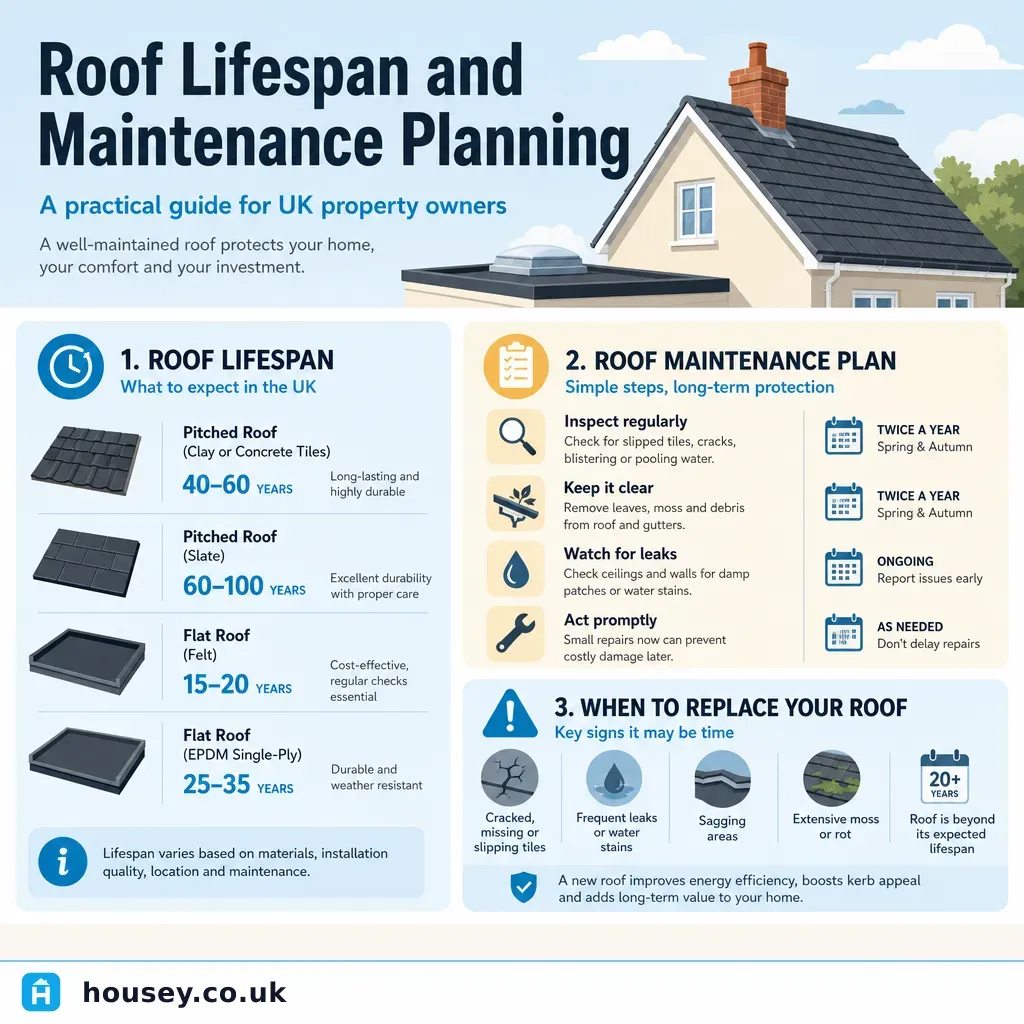
Roof Lifespan and Maintenance Planning for Property Owners
Most UK pitched roofs last 40–100+ years depending on covering material, with natural slate lasting longest and concrete tiles typically 40–60 years.
 Surveys & Inspections
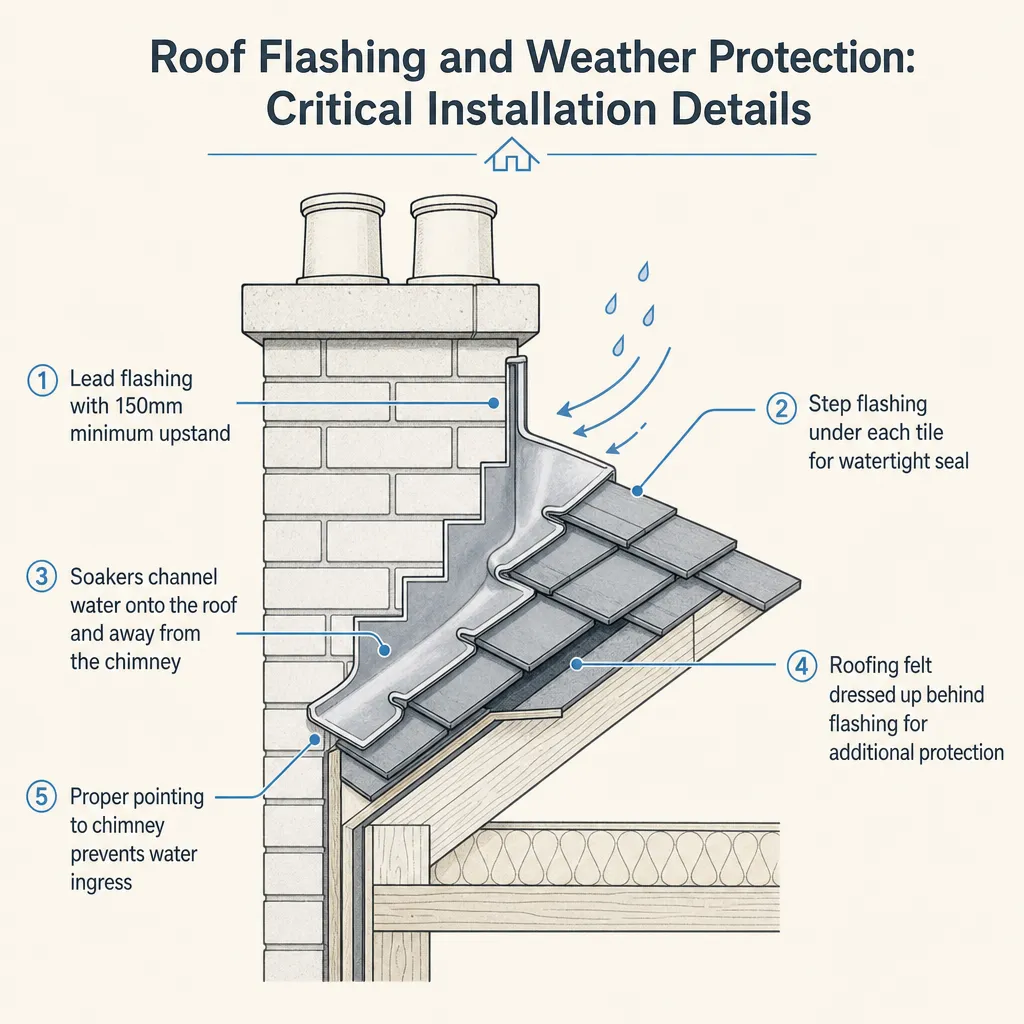
Roof Flashing and Weather Protection: Critical Installation Details
Roof flashing is waterproof material — usually lead or a metal alternative — installed at junctions between roof surfaces and vertical elements such as chimneys, dormers, and abutments.