Roof De-Icing and Heat Cable Installation
By Housey · Last reviewed 31st of May 2026
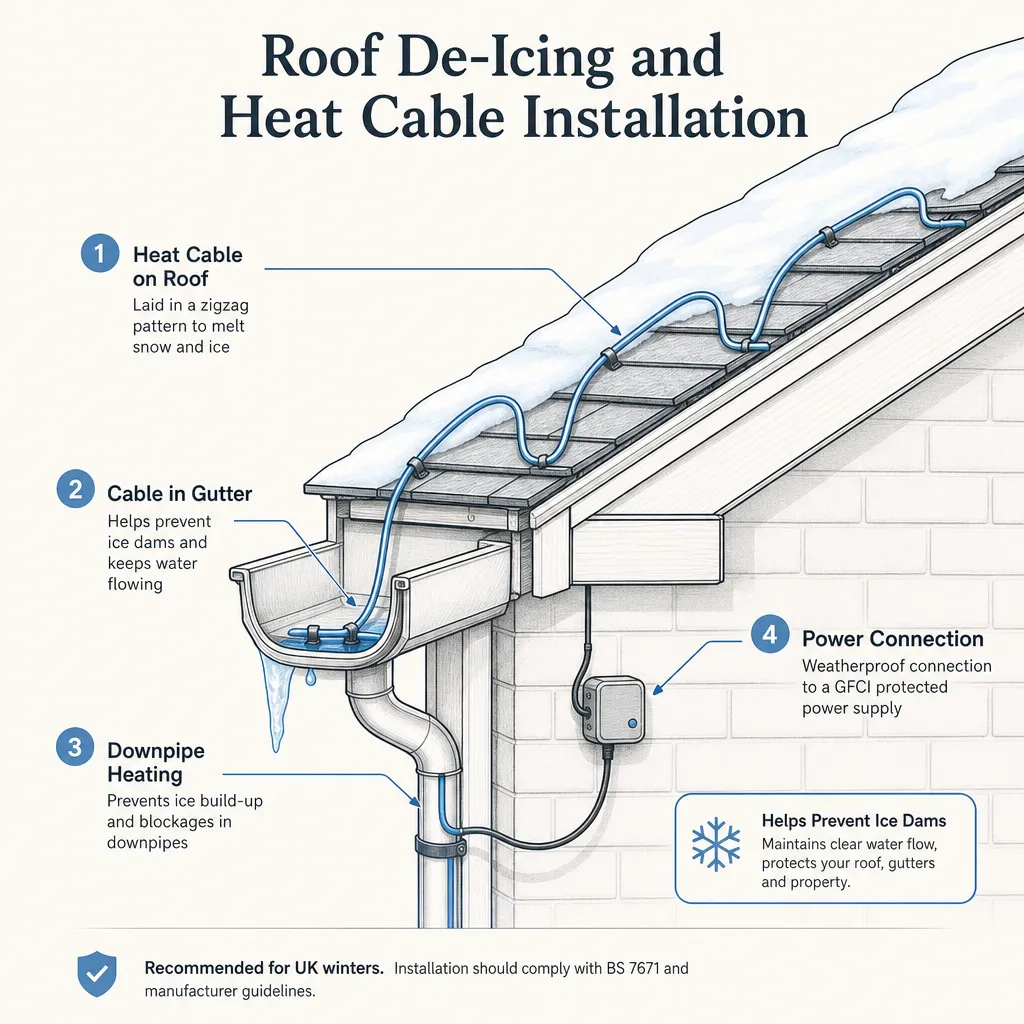
Roof De-Icing and Heat Cable Installation
Ice formation on roofs is less common in the mild UK climate than in Scandinavia or North America, but it does occur — particularly on flat roofs, cold-side valley gutters in pitched roofs, north-facing slopes, and in exposed upland regions across Scotland, Wales, and northern England. When ice forms, the consequences can include blocked gutters, ice dams forcing water back under tiles or slates, and structural loading from accumulated snow. Heat cables offer a reliable preventative solution when correctly specified and installed by a qualified contractor.
Key points
- Roof heat cables (trace heating) maintain a minimum surface temperature along gutters, valleys, and roof edges to prevent ice forming or re-freezing after snow melt.
- Self-regulating heat cables automatically reduce power output as the ambient temperature rises, making them more energy-efficient than constant-wattage alternatives over a winter season.
- Installation requires both a roofing contractor (for cable routing and fixings) and a Part P-registered electrician for the electrical connection to the consumer unit.
- Building Regulations Part P applies to all electrical work in dwellings; any new outdoor electrical circuit must be notified to building control or carried out by a registered competent-person scheme member such as NICEIC or NAPIT.
- Heat cables are not a substitute for adequate roof drainage and waterproofing — underlying drainage problems should be resolved before installation.
How do roof heat cables work?
Heat cables — also called trace heating, de-icing cables, or roof heating cables — are resistive electrical elements installed along the vulnerable sections of a roof. When the ambient temperature drops close to freezing, a thermostat with a moisture sensor activates the system, raising the surface temperature enough to prevent ice formation or encourage melt.
Three main types are available for domestic use:
Cable type | How it works | Best for | Energy efficiency |
|---|---|---|---|
Self-regulating cable | Resistance increases as temperature rises; output reduces in mild conditions | Most domestic retrofit applications — gutters, downpipes, valley gutters | Lower running cost; safer for long or complex runs |
Constant-wattage cable | Fixed heat output per metre regardless of ambient temperature | Short runs or isolated cold spots | Higher running cost; simpler to specify |
Roof panel heating mats | Pre-formed panels installed beneath a flat roof membrane | New flat roof builds or projects involving a full re-roof | Integrated solution; higher upfront cost |
Self-regulating cable is the most common choice for retrofit installations on UK pitched roofs because it handles fluctuating temperatures without overheating and typically uses less electricity across a winter season.
Where are heat cables typically installed?
Targeted installation rather than cabling an entire roof gives the best return on investment. The most common locations are:
- Eaves and gutters — the most frequent application, preventing gutters from filling with ice and blocking drainage
- Valley gutters — cold-formed valleys between two roof slopes are prone to ice bridging, which can force water under tiles or lead flashings
- Parapet-edged flat roofs — low-pitch or flat roofs with internal outlets can freeze solid, causing ponding and membrane damage
- Downpipes and hoppers — a frozen downpipe makes gutter heating ineffective; cables are often routed inside the pipe as well
- Ridge and hip lines (less common) — occasionally specified for severely exposed properties, but generally unnecessary in most UK locations
What does installation involve?
A typical heat cable installation on a pitched roof follows these stages:
- Survey and design — the contractor assesses the roof geometry, identifies vulnerable sections, and calculates cable length and total electrical load
- Cable routing — cables are clipped or bracketed to gutters, laid in valley gutters, or run inside downpipes using purpose-made fittings
- Thermostat and controller installation — most systems use a roof-and-gutter thermostat with a moisture sensor so the system activates only when needed (typically at 0–3°C with detected moisture)
- Electrical connection — a dedicated circuit from the consumer unit, protected by a residual current device (RCD), is required; this must be carried out by a Part P-registered electrician
- Testing and commissioning — the installer should test cable continuity, insulation resistance, and controller function before signing off the installation
Homeowner checklist before instructing a contractor
What to ask before accepting a quote
- What type of cable is specified — self-regulating or constant-wattage — and what is the estimated running cost per winter season?
- Is the thermostat or controller included, and does it feature a moisture sensor to prevent unnecessary activation in dry cold weather?
- Who will carry out the electrical connection, and are they registered with NICEIC or NAPIT?
- Will a building regulations notification be submitted for the electrical work, and who is responsible for doing this?
- What warranty does the cable manufacturer provide, and how long is the installer's workmanship guarantee?
- What assumptions does the quote make about roof access — is scaffold included, or will that need to be arranged separately?
- Is VAT included in the quoted price?
When to get professional help
Roof heat cable installation always requires professional involvement — working on a pitched roof carries serious fall risk, and the electrical connection must be made by a competent, registered electrician. Never attempt either task yourself. Consider arranging a professional survey if:
- Your flat roof has previously suffered from ponding water or frozen drainage outlets
- Valley gutters have overflowed during past cold spells
- Gutters have iced up and caused water ingress into the property
- You are unsure whether existing drainage is adequate before adding heat cables
All work at height beyond 2 m and all electrical connection work must be carried out by suitably qualified and insured professionals.
How Housey can help
Housey connects you with experienced roofers who can survey your roof, recommend the right de-icing solution for your property, and manage the full installation — including coordinating with a qualified Part P electrician for the electrical connection.
Frequently asked questions
Are roof heat cables common in the UK?
They are more common than many homeowners expect, particularly on flat-roofed extensions, older properties with lead valley gutters, and homes in Scotland, the Pennines, and exposed Welsh uplands. They are less necessary in southern England where sustained freezing temperatures are rare. A roofer familiar with your local climate can advise whether the investment is justified for your property.
How much do roof heat cables cost to install in the UK?
Indicative UK costs, last reviewed 2026-05-31. A basic gutter de-icing installation on a semi-detached house typically costs £400–£1,200, including cable, controller, and electrical connection. Larger properties, flat roofs, or installations requiring scaffold will cost more. Running costs depend on cable type and winter severity — self-regulating cables with a moisture-sensing thermostat typically cost £30–£120 per winter season to operate.
Do roof heat cables require planning permission?
In most cases, no. Roof heat cables are a surface-mounted accessory and do not constitute a material change to the building's appearance. However, if your property is listed or in a conservation area, any external fixings should be confirmed with your local planning authority before work begins. The electrical installation requires a Part P building regulations notification, whether self-notified or submitted by a registered competent-person scheme member.
How long do roof heat cables last?
Quality self-regulating heat cables typically carry a manufacturer's warranty of 10–20 years. Longevity depends on correct installation, UV protection — cables exposed to direct sunlight should be UV-rated — and whether the system uses appropriate end seals and connection kits. A good installer will specify outdoor-rated, UV-stable cable as standard and should be able to provide the product datasheet on request.
Sources and further reading
- Building Regulations Approved Document P (Electrical Safety) — GOV.UK
- NICEIC — find a registered electrician — NICEIC
- NAPIT — competent person scheme — NAPIT
- Energy Saving Trust — home energy guidance — Energy Saving Trust
Useful next reads
 Improvement & Build
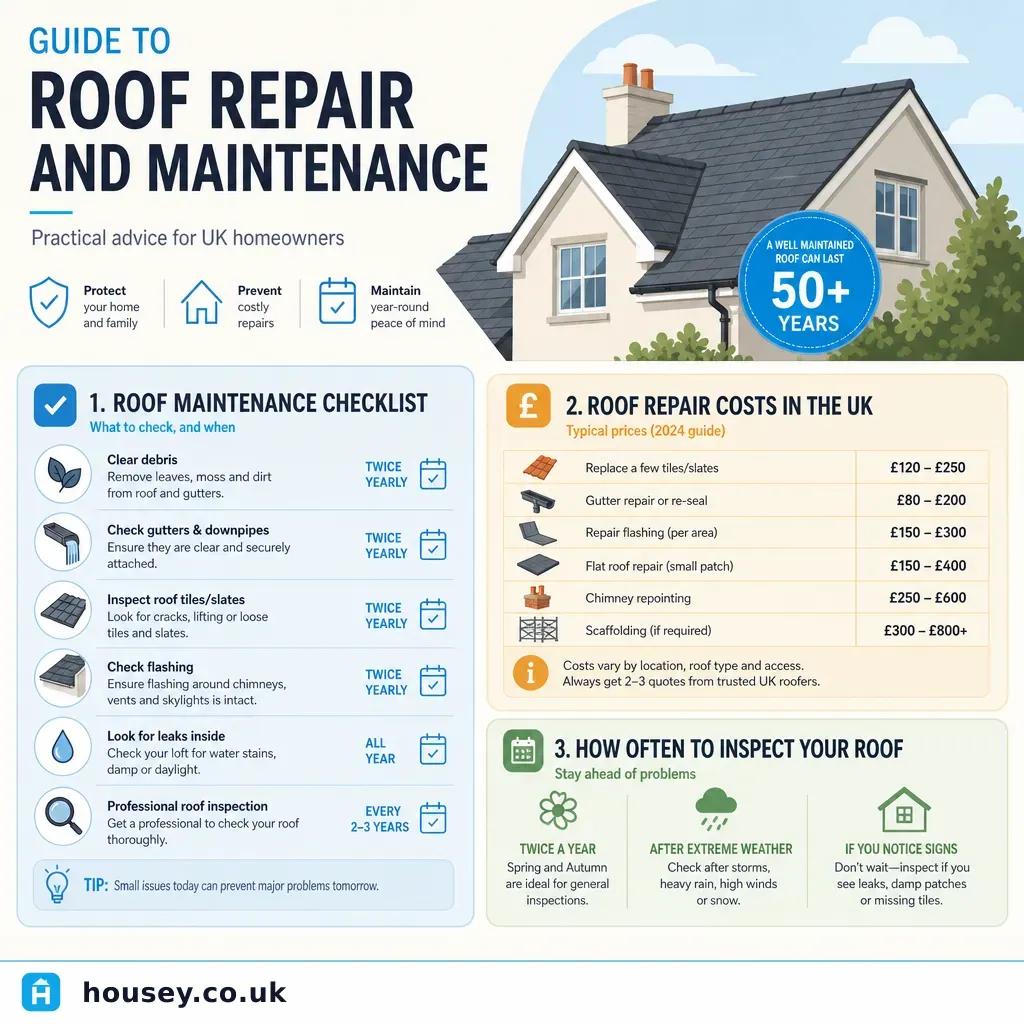
Guide to Roof Repair and Maintenance
Regular roof inspections every 3–5 years, prompt repair of damaged tiles and failed flashings, and annual gutter clearance are the core of effective UK roof maintenance.
 Improvement & Build
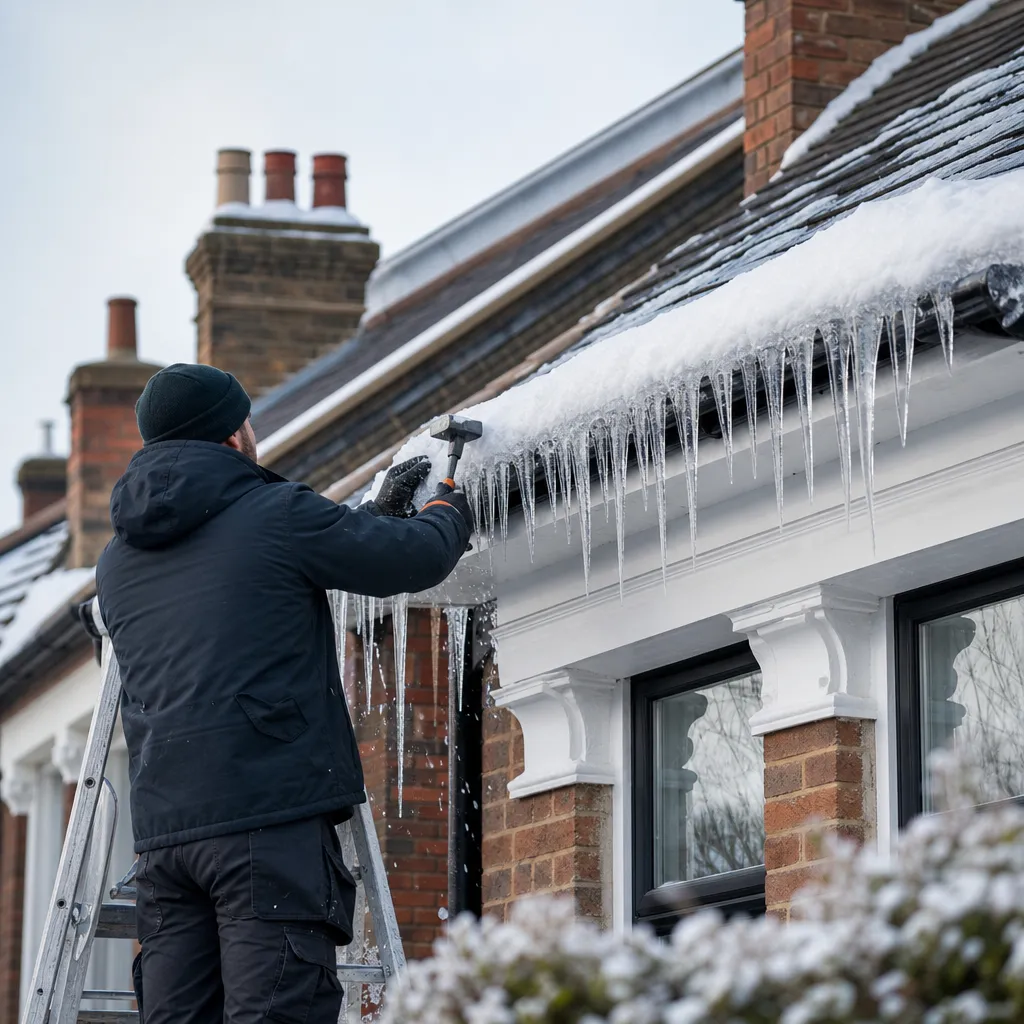
Ice Dam Removal and Roof Protection Services
Ice dams form when heat escaping through a poorly insulated roof melts snow, which refreezes at the colder eaves.
 Improvement & Build
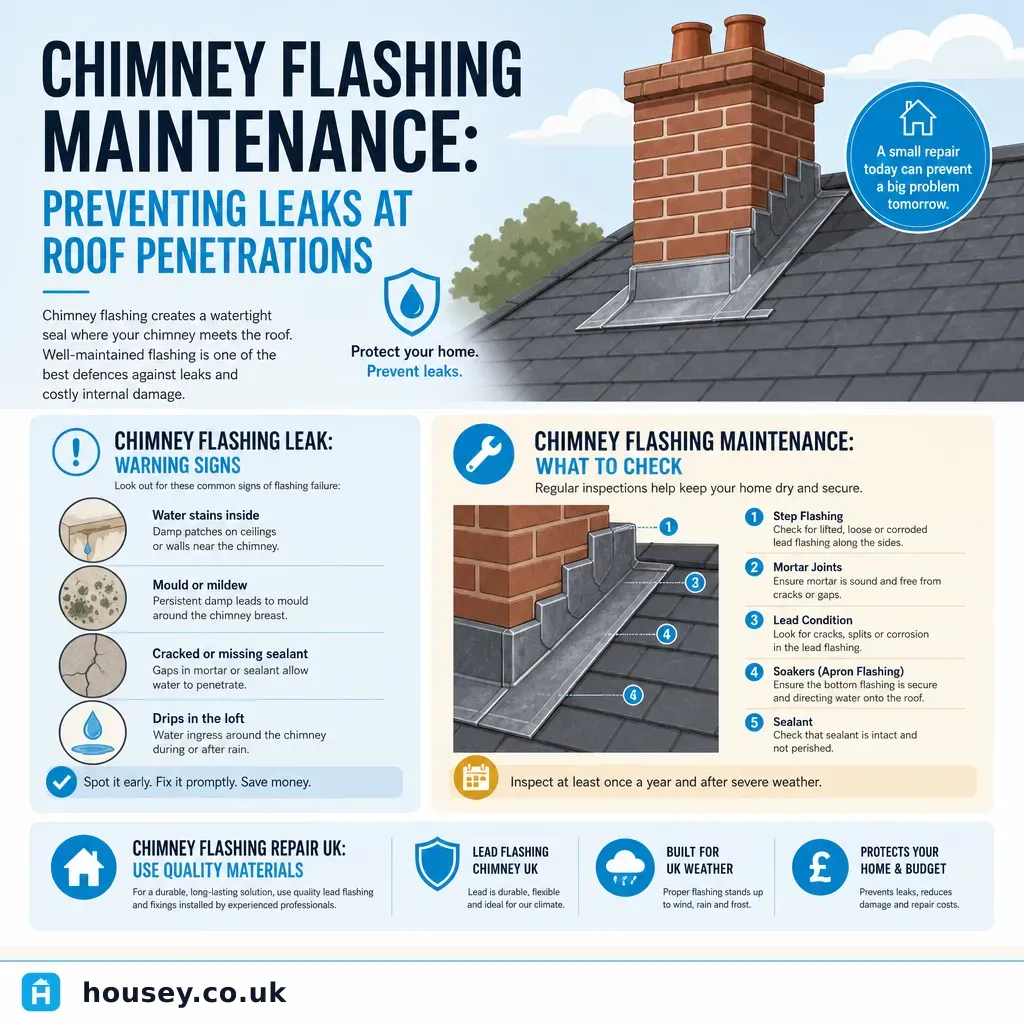
Chimney Flashing Maintenance: Preventing Leaks at Roof Penetrations
Chimney flashings most commonly fail at the raggle joint — where the mortar holding the counter flashing cracks — rather than through lead deterioration.
 Improvement & Build
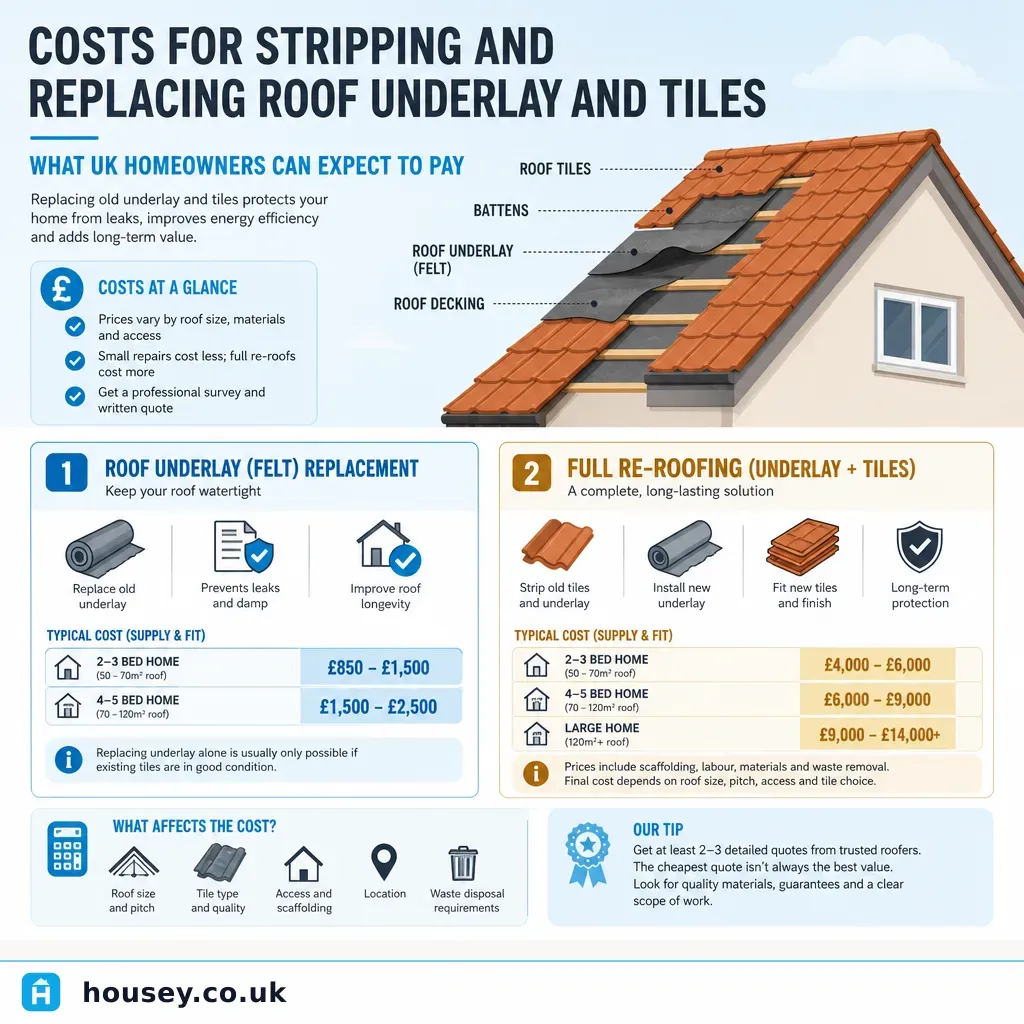
Costs for Stripping and Replacing Roof Underlay and Tiles
Stripping and replacing roof underlay and tiles on a typical UK semi-detached house costs £5,000–£12,000, depending on roof size, tile type, and access.
 Improvement & Build
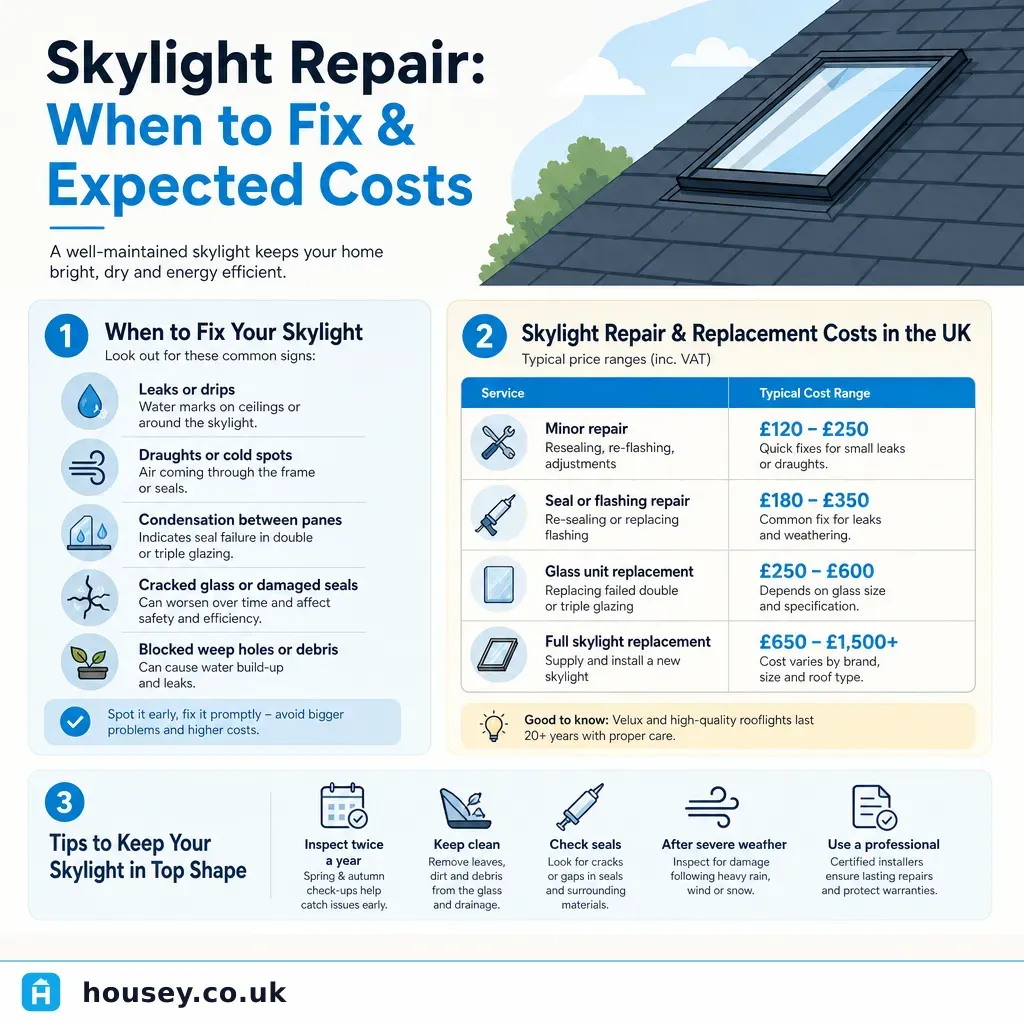
Skylight repair: when to fix and expected costs
Skylight repairs in the UK typically cost £150–£800 depending on the fault, while full replacement usually runs £500–£2,500.