Understanding Roof Design and Structural Specifications
By Housey · Last reviewed 1st of June 2026
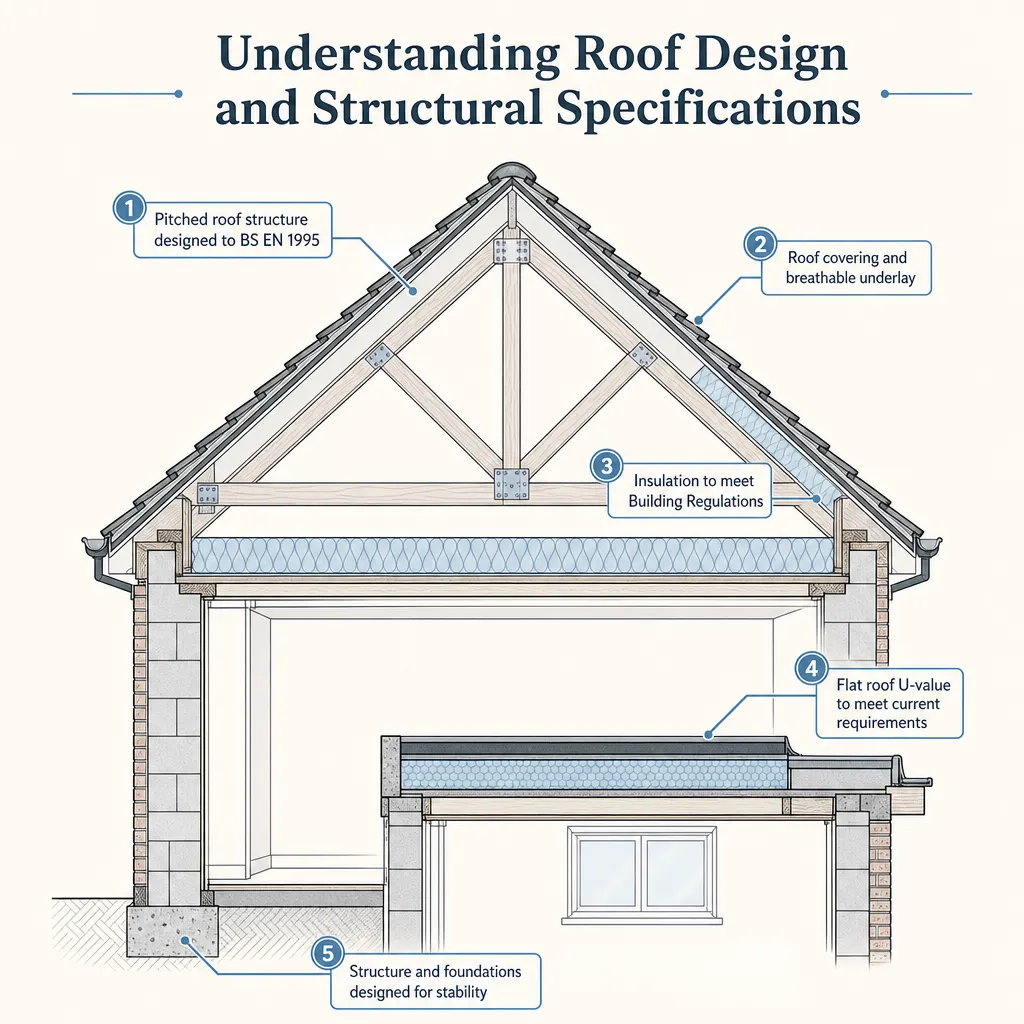
Understanding Roof Design and Structural Specifications
Whether you're planning a new roof, replacing an existing covering, or querying a flag in a surveyor's report, the way a UK roof is designed and specified has direct implications for structural safety, thermal performance, and regulatory compliance. Properties built before the 1960s typically have cut timber roofs — rafters, purlins, and ridges sized by a carpenter on site — while post-1960s homes increasingly use factory-engineered trussed rafters that carry specific restrictions on modification. Either way, understanding the structural and regulatory landscape helps you instruct the right professional and ask the right questions before work begins.
Key points
- Pitched roof tiles must be installed to the minimum pitch specified in BS 5534:2014+A2:2018 — most interlocking concrete tiles require at least 17.5°; natural slate typically requires 20° in exposed locations.
- Building Regulations Approved Document A (Structure) requires roof designs to account for dead load, imposed load (snow to BS EN 1991-1-3), and wind uplift calculated for the specific location and exposure zone.
- Part L of the Building Regulations sets a maximum roof U-value of 0.16 W/m²K for new dwellings; material alterations to existing roofs must also meet current Part L standards.
- Engineered roof trusses must never be cut, notched, or modified on site without a structural engineer's sign-off — this is a common cause of roof spread in 1970s–2000s estate houses.
- Building regulations approval is required for most new roofs, re-roofs with structural changes, flat roof replacements, and loft conversions — not just like-for-like tile replacement.
Roof types and their structural characteristics
UK residential roofs fall broadly into four main types, each with different structural and specification demands.
Roof type | Structure | Typical pitch | Common materials | Key regulatory concern |
|---|---|---|---|---|
Pitched cut roof | Rafters, ridge board, purlins, wall plates | 30–50° | Plain tiles, natural slate | Structural sizing to Eurocode 5; risk of roof spread without ceiling ties |
Trussed rafter roof | Factory-engineered trusses at 600 mm centres | 22.5–45° | Concrete or clay tiles | Must not be cut or modified without structural engineer sign-off |
Cold flat roof | Timber deck, joists, felt or single-ply membrane | 1:80 minimum fall | EPDM, GRP, built-up felt | Void ventilation required to prevent interstitial condensation; Part L compliance |
Warm flat roof | Insulation above deck, no ventilated void | 1:80 minimum fall | Single-ply TPO or PVC, green roof build-ups | Dew-point calculation essential; drainage design; U-value compliance |
Trussed rafter caution: Factory-engineered trusses are designed as a structural system. Cutting or notching any member — to create loft access, run services, or install a hatch — without engineering input can trigger progressive structural failure across the roof.
Load calculations and structural design
Every UK roof must be designed to resist three primary load types, set out in BS EN 1991 (Eurocodes):
- Dead load: the permanent weight of roofing materials. Plain clay tiles impose around 70 kg/m²; lightweight metal standing-seam systems weigh just 5–8 kg/m².
- Imposed load (snow): ground snow loads vary across the UK — higher in Scotland, northern England, and elevated areas. BS EN 1991-1-3 provides snow load maps for each UK location.
- Wind uplift and lateral load: coastal and elevated sites face substantially higher wind loads, affecting tile-fixing specification per BS 5534 and rafter or truss sizing.
For a standard pitched roof on a conventional post-war dwelling, a structural engineer or TRADA-certified timber designer can provide the required calculations. For unusual geometries, heavily loaded roofs (solar arrays, green roofs), or roofs showing signs of movement, an independent structural engineer's assessment is recommended before work starts.
Insulation specifications and Part L compliance
Building Regulations Part L applies whenever a new roof is constructed or an existing roof undergoes a material alteration. Current minimum standards in England (2026) are:
- New dwelling roof: maximum U-value of 0.16 W/m²K
- Existing dwelling — material alteration: 0.18 W/m²K target; 0.30 W/m²K as the limiting standard where achieving the target would be disproportionately costly
For cold pitched roofs, insulation sits at loft-floor level (cold loft) or between and over the rafters (warm roof). For flat roofs, the warm-roof configuration — insulation above the deck, beneath the waterproofing membrane — generally outperforms a ventilated cold deck on thermal performance and condensation risk. U-value calculations follow BS EN ISO 6946; condensation risk assessments use BS EN ISO 13788.
Which professional do I need?
Scenario | Professional to instruct | Why |
|---|---|---|
Like-for-like tile or slate replacement | Qualified roofer (NFRC member recommended) | Routine maintenance; check whether building control notification applies |
New pitched roof or re-roof with structural changes | Structural engineer + roofer | Structural calculations and building regulations approval required |
Flat roof replacement | Specialist flat roofer + building control | Membrane spec, drainage design, and Part L compliance |
Loft conversion to habitable space | Architect or architectural technologist + structural engineer | Full building regulations application; beam and floor design needed |
Suspected roof spread, ridge sag, or cracked purlins | Structural engineer first | Diagnosis must precede any remediation; propping may be needed immediately |
Suspected interstitial condensation in a flat roof | Building pathologist or specialist surveyor | Moisture mapping and build-up assessment before repair |
Roof design decision guide
- Choose a pitched trussed rafter roof if building new and speed and cost are priorities — pre-engineered and quick to erect for standard house loadings.
- Choose a cut timber pitched roof if you want habitable loft space now or in the future — trussed roofs cannot be cost-effectively converted later.
- Choose a warm flat roof if replacing a cold flat roof — better thermal performance and lower condensation risk than a ventilated cold deck.
- Commission a structural engineer if the roof shows signs of spread, the ridge is bowing, any truss member has been cut, or you are adding significant load such as solar panels or a green roof.
- Check building regulations approval requirements with your local building control body or an approved inspector before starting anything beyond like-for-like tile replacement.
Important limitations
This article provides general information about roof design principles and UK Building Regulations requirements. It cannot substitute for site-specific structural design, energy calculations, or professional inspection. Roof requirements vary with building type, age, location, geometry, and loading. Always instruct a qualified structural engineer, architect, or RICS-registered surveyor to assess your specific property before undertaking roof work beyond routine maintenance.
What to ask a qualified professional
Before instructing a roofer, structural engineer, or architect, ask:
- Are your calculations based on a site survey, or on assumed standard loading?
- Which edition of Building Regulations and which British Standard is the design produced to?
- Do I need full plans approval, a building notice, or does this work qualify as permitted development?
- Will you provide a structural calculations pack as well as a specification?
- Is the proposed insulation specification checked against a condensation risk (dew-point) calculation?
- Who is responsible for ensuring the completed work complies with building regulations?
- Will the roof structure be designed to accommodate future solar PV panels or a green roof?
When to get professional help
Contact a structural engineer or chartered surveyor promptly if you notice any of the following:
- A sagging or bowing ridge line when viewed from the ground
- Diagonal or stepped cracks in external walls near the eaves
- Internal cracking at ceiling-to-wall junctions in rooms below the roof
- Bowed external walls or gaps forming between the external leaf and the roof structure
- Evidence that a trussed rafter member has been cut, notched, or had a hatch installed through it without an engineer's assessment
- Persistent water staining on ceilings that cannot be traced to a tile slip or flashing failure
How Housey can help
Housey connects you with qualified professionals for any roof-related assessment. Request a roof survey to assess condition and identify defects, commission a structural survey for properties showing signs of movement, or find a vetted building control consultant to manage the approvals process. Compare quotes from local roofers for replacement or remedial work.
Frequently asked questions
Does replacing roof tiles require building regulations approval?
Like-for-like tile replacement on an existing roof does not normally require building regulations approval in England, provided the structure is unaltered and materials are equivalent in weight. However, if you are changing the roof covering type, adding insulation, or making structural alterations, a building regulations application is likely needed. Check with your local building control body before starting.
Can I add solar panels to any roof structure?
Not without a structural check first. Solar PV arrays typically add 15–25 kg/m² dead load that the existing roof must carry. A structural engineer should review rafter or truss sizes and existing fixings before installation. This is particularly important for post-1960s trussed rafter roofs, which are designed to specific load assumptions and must not be modified without engineering sign-off.
What is the minimum pitch for a flat roof?
A flat roof requires a minimum fall of 1:80 (approximately 0.75°) to drain water effectively, though 1:60 is more typical in practice to allow for deflection and construction tolerances. Falls shallower than 1:80 cause ponding water, which accelerates membrane deterioration and can compromise the roof's thermal performance and structural integrity over time.
What causes a sagging ridge line?
Ridge sag typically results from roof spread caused by damaged wall plates or missing ceiling ties, undersized rafters or purlins, rot in structural timbers, or the unauthorised cutting of trussed rafter members. It requires prompt assessment by a chartered surveyor or structural engineer. Do not delay — the condition can worsen rapidly under additional loading such as snow.
Sources and further reading
- Building Regulations Approved Document A (Structure) — GOV.UK
- Building Regulations Approved Document L (Conservation of Fuel and Power) — GOV.UK
- BS 5534:2014+A2:2018 — Code of practice for slating and tiling — BSI Group
- Party Wall etc. Act 1996 — legislation.gov.uk
- National Federation of Roofing Contractors — guidance for homeowners — NFRC
Useful next reads
 Surveys & Inspections
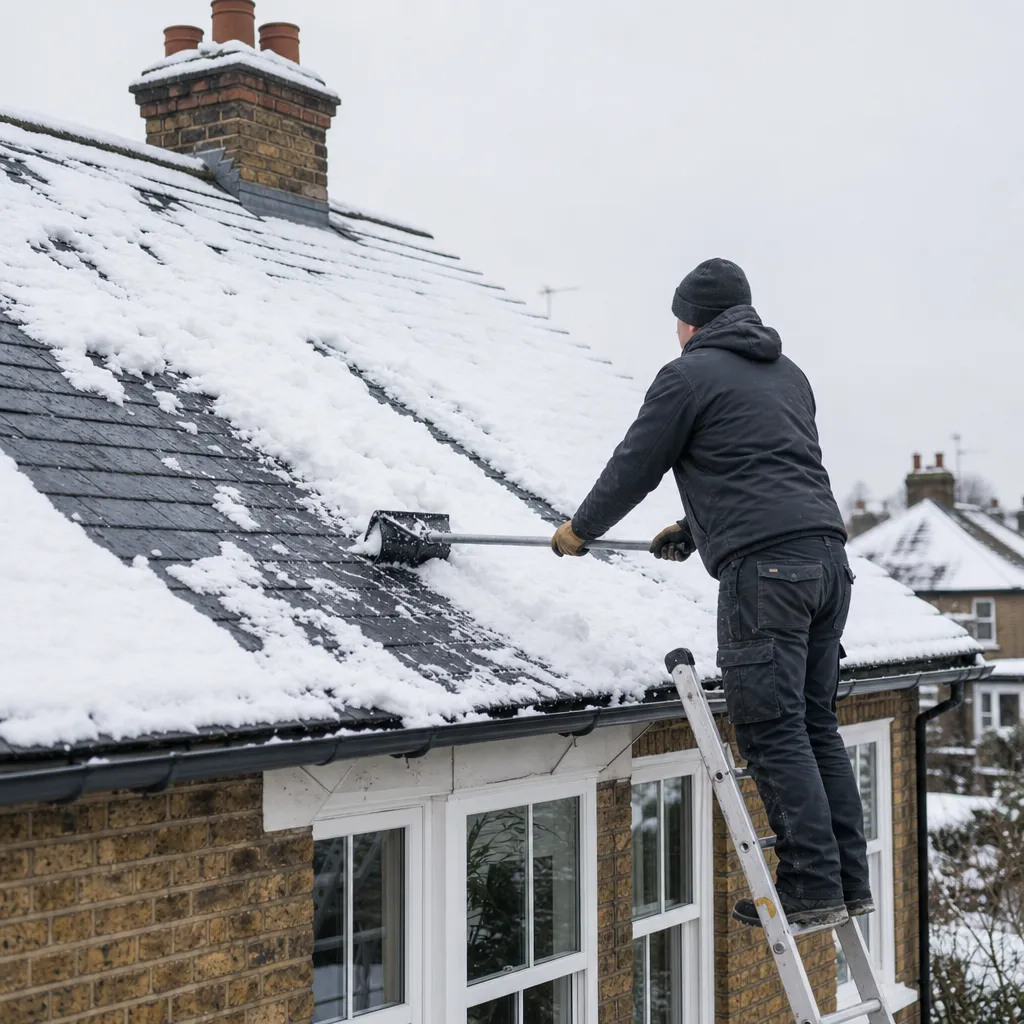
Roof Snow Removal: Safety and Structural Considerations
In the UK, most pitched roofs in good condition can tolerate typical snowfall without intervention.
 Surveys & Inspections
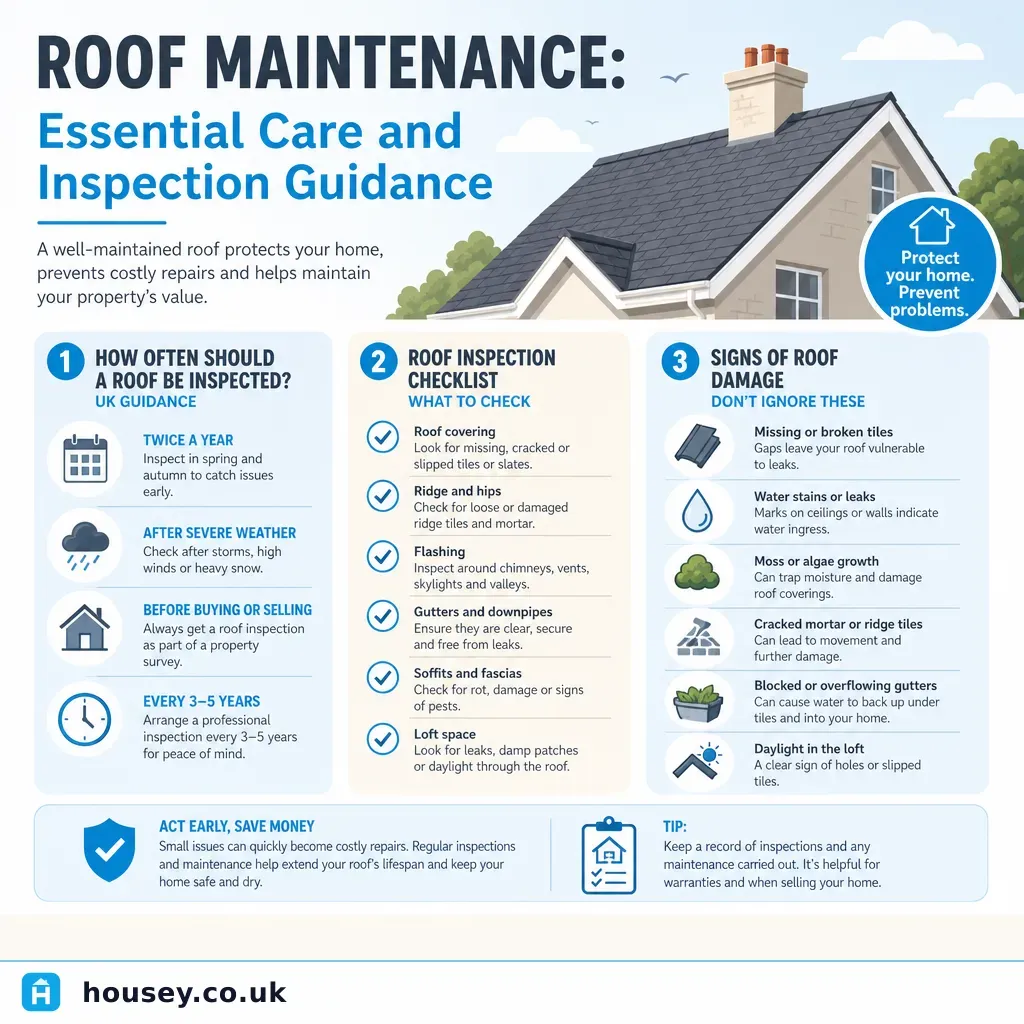
Roof Maintenance: Essential Care and Inspection Guidance
UK roofs should be visually inspected at least once a year — ideally in autumn before winter — and after any significant storm.
 Surveys & Inspections
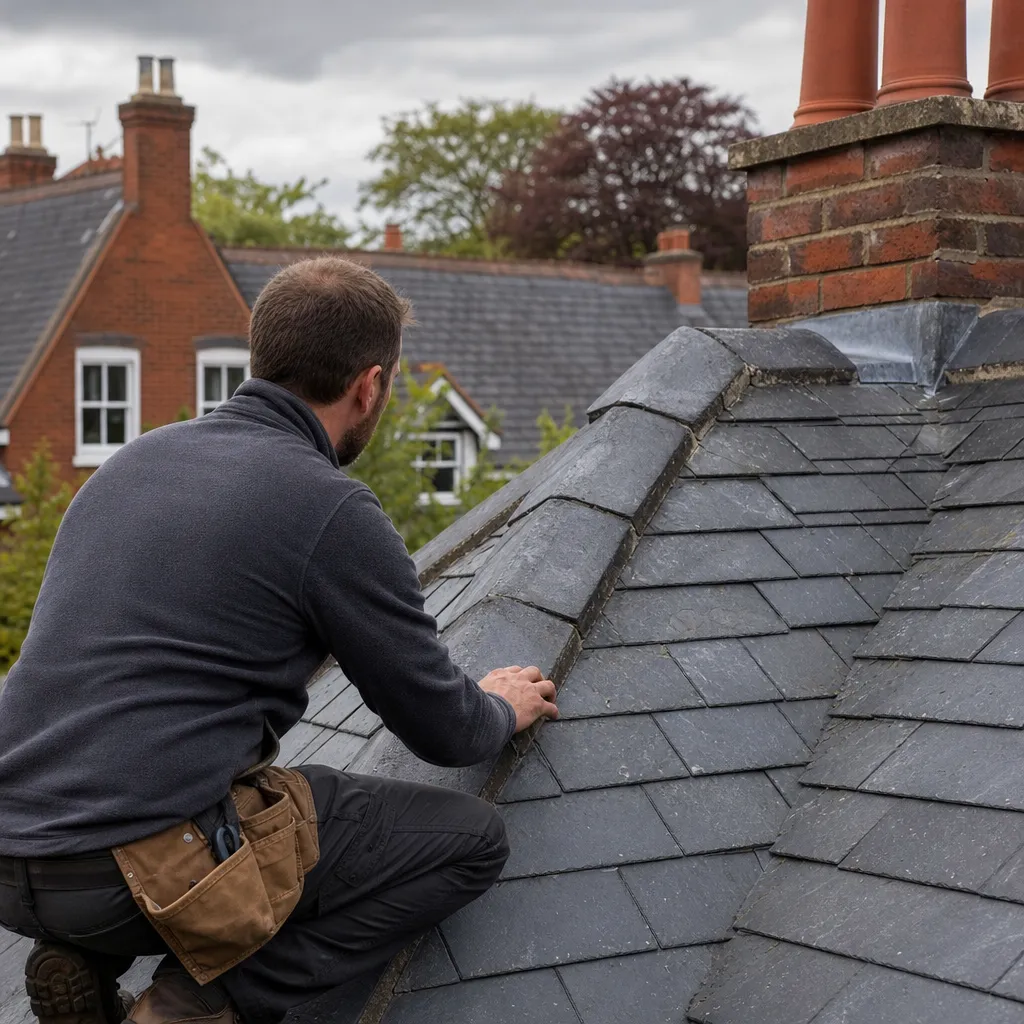
Maintaining slate roofs: essential care and upkeep guidance
A well-maintained natural slate roof can last 80–150 years, but it relies on regular inspections, prompt replacement of slipped or cracked slates, clear gutters, and sound lead flashings.
 Surveys & Inspections
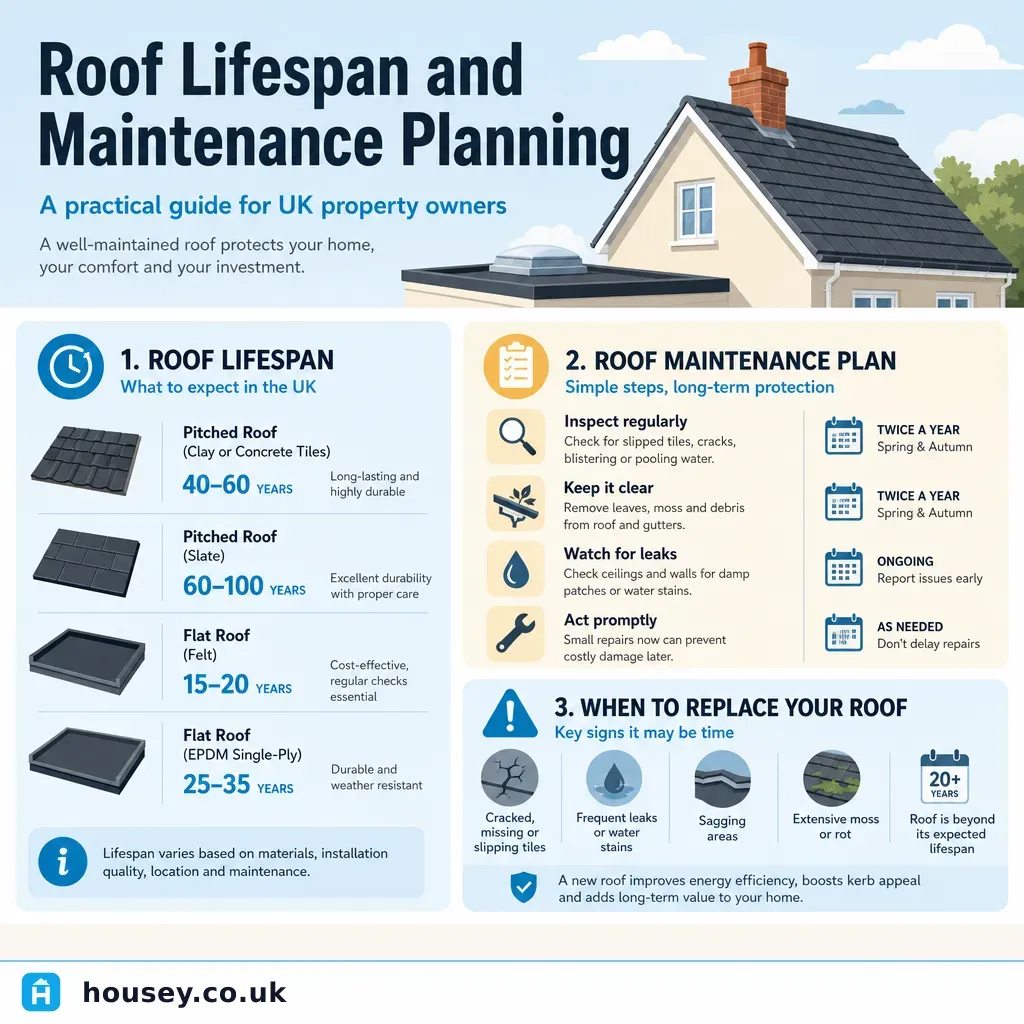
Roof Lifespan and Maintenance Planning for Property Owners
Most UK pitched roofs last 40–100+ years depending on covering material, with natural slate lasting longest and concrete tiles typically 40–60 years.
 Surveys & Inspections
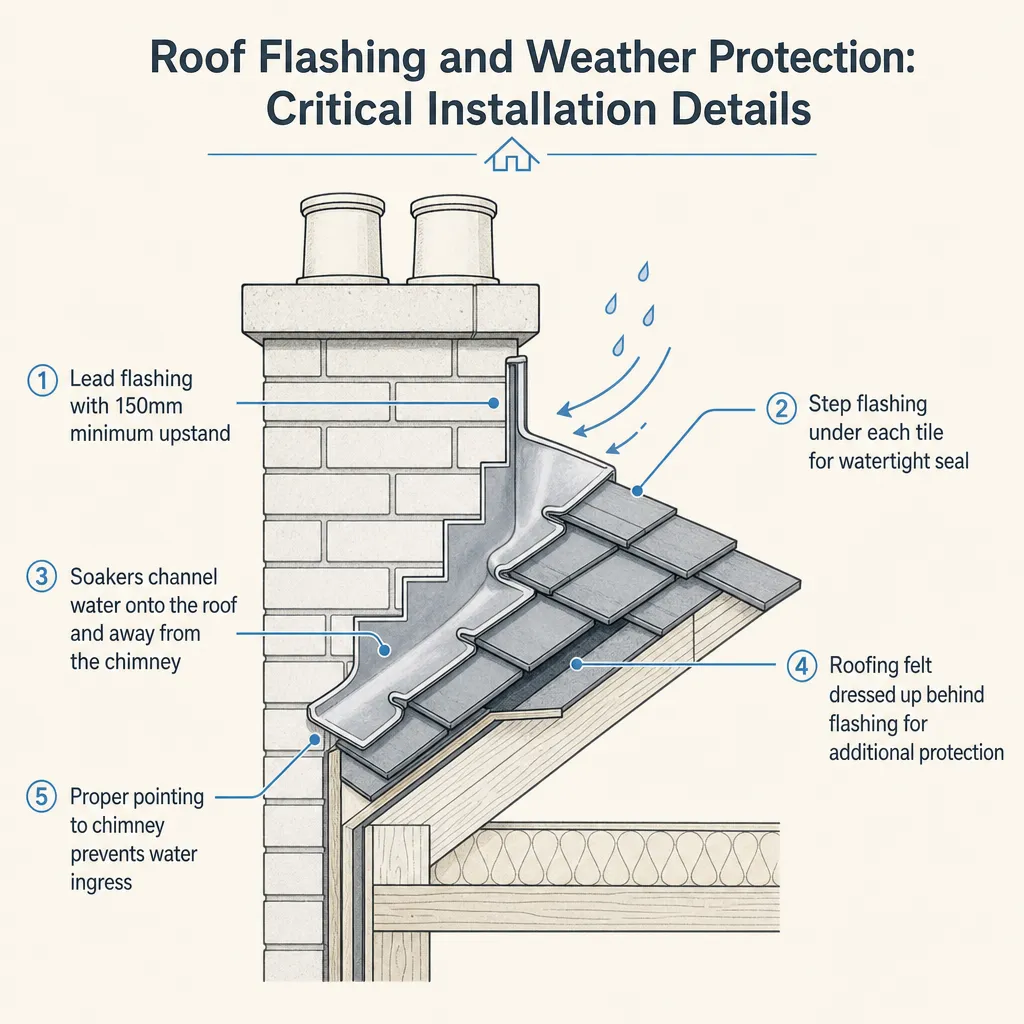
Roof Flashing and Weather Protection: Critical Installation Details
Roof flashing is waterproof material — usually lead or a metal alternative — installed at junctions between roof surfaces and vertical elements such as chimneys, dormers, and abutments.