Roof Eaves: Function, Design, and Maintenance
By Housey · Last reviewed 11th of May 2026
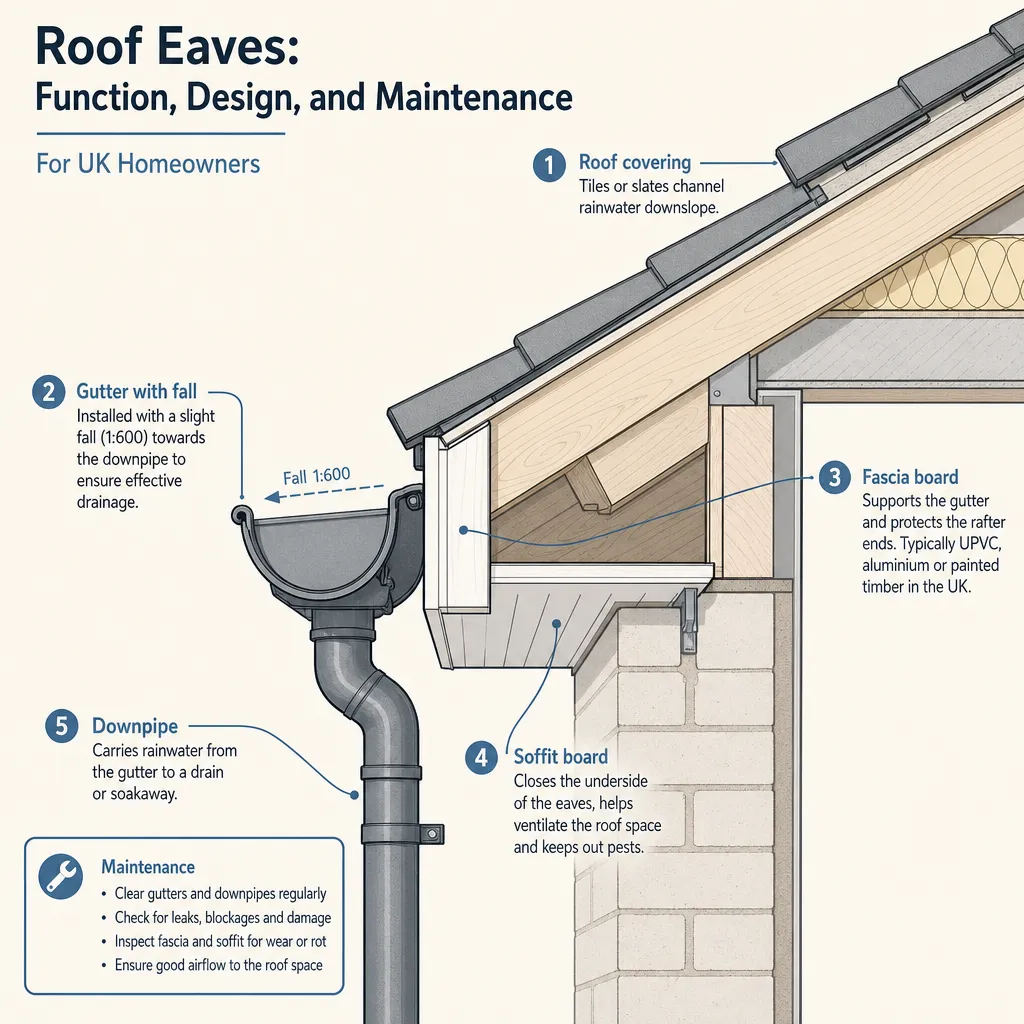
Roof Eaves: Function, Design, and Maintenance
The eaves are one of a roof's most hardworking zones — where the roof plane meets the top of the external wall — yet they are frequently overlooked until a blockage, rot, or leak makes them impossible to ignore. For UK homeowners managing a Victorian terrace, a 1930s semi, or a more recent extension, understanding what eaves do, how they are constructed, and how to keep them in good order can prevent costly water ingress and timber decay.
Key points
- The eaves overhang directs rainwater away from the wall face and into the gutter; a typical UK residential overhang is 150–300 mm, though contemporary designs may extend to 600 mm or more for a rain-screen effect.
- Fascia boards (the vertical board at the eaves to which gutters are fixed) and soffit boards (the horizontal board closing the underside of the eaves) are most commonly uPVC in post-1980s UK homes, though timber is standard in pre-war and period properties.
- Blocked or misaligned gutters are among the most common causes of penetrating damp in UK external walls; RICS surveys regularly cite defective rainwater goods as a significant maintenance issue.
- Building Regulations Approved Document C requires roofs and eaves to be designed to prevent moisture reaching the building fabric; adequate ventilation of the cold roof void through eaves is required to prevent interstitial condensation.
- Soffit vents — typically 25 mm continuous equivalent or discrete round vents at approximately 450 mm centres — are the primary ventilation path for cold roofs; blocked or absent vents can cause condensation and premature rafter decay.
What roof eaves actually do
Eaves serve three primary functions:
- Weather protection: by projecting beyond the wall face, eaves throw rainwater clear of the wall, reducing saturation of the wall fabric and the risk of penetrating damp.
- Gutter support: the fascia board at the eaves provides the fixing point for the gutter system — typically 112 mm half-round or 114 mm square uPVC in UK domestic construction.
- Roof void ventilation: the soffit provides a protected but open path for outside air to enter the roof void, essential in cold (uninsulated) loft constructions to prevent condensation build-up.
In some older UK homes — particularly pre-1919 solid-wall terrace houses — eaves were minimal or absent (flush eaves), with gutters fixed directly to rafter feet or a planted timber fillet. These designs offer less weather protection and can be harder to maintain and re-fix.
Types of roof eaves
Eaves type | Description | Common in | Maintenance notes |
|---|---|---|---|
Open eaves | Rafter feet exposed; no soffit board | Pre-1900 vernacular and agricultural buildings | Bird nesting risk; limited gutter fixing options |
Closed (boxed) eaves | Fascia and soffit board fully enclose the eaves | Most post-1950 UK houses | Standard uPVC or timber; ventilation via soffit vents |
Flush eaves | Roof plane runs to wall face with minimal overhang | Some Victorian terraces, flat-roof extensions | Water runs down wall face; higher penetrating damp risk |
Extended or deep eaves | Overhang of 400 mm or more | Contemporary builds, self-builds, barn conversions | Enhanced weather protection; requires structural rafter tail support |
Sprocket eaves | Rafter foot pitched at a shallower angle to throw water clear | Traditional UK vernacular and cottage-style roofs | Junction detail requires careful lead or GRP flashing |
Eaves construction: the key components
- Rafter feet: the lower ends of the roof rafters, projecting beyond the wall plate to create the overhang.
- Wall plate: the horizontal timber bedded on top of the masonry wall on which the rafters bear.
- Fascia board: the vertical board fixed to the rafter feet; supports the gutter and closes the rafter foot ends against weather and pests.
- Soffit board: the horizontal board closing the underside of the eaves between the fascia and the wall face.
- Bargeboard: the equivalent of a fascia running along the sloping verge of a gable — not strictly an eaves component but often replaced at the same time.
- Gutter: fixed to the fascia, usually at a fall of approximately 1:600 towards the downpipe.
- Eaves course: the lowest course of roof tiles or slates, which projects slightly over the gutter to direct water in rather than behind it.
Eaves maintenance checklist
Carry out this check at least annually, ideally in autumn before the main rainfall season:
Red flags that need professional attention
The following signs at the eaves suggest deterioration that warrants professional inspection or repair rather than a watching brief:
- Dark staining or tide marks on the wall below the gutter — persistent overflow or a failing joint causing sustained wall saturation
- Soft, spongy, or visibly rotted fascia or soffit — timber decay may extend to the rafter feet hidden behind the board
- Daylight visible into the loft through the eaves — missing soffit sections, displaced tiles, or open rafter foot joints allowing wind-driven rain
- Frost damage to pointing or brickwork directly below the eaves — a sign of repeated saturation from an overflowing gutter in winter
- Damp patches on the top-floor ceiling near an external wall — could indicate a failed eaves tile, damaged roofing felt at the rafter foot, or penetration at a flat-roof junction
- Signs of bird or bat activity at eaves — address pest proofing carefully; blocking a bat roost without a Natural England licence is a criminal offence under the Wildlife and Countryside Act 1981
When to get professional help
Gutter clearing and joint replacement are within scope for a confident DIYer working from a properly set-up ladder and following HSE guidance on working at height. However, any work above 2 m should use a stable access platform rather than a domestic stepladder, as HSE guidance makes clear.
Fascia and soffit replacement, reroofing of the eaves course, and any structural repair to rafter feet or wall plate timbers require a competent roofing contractor. A local roofer can inspect, specify, and carry out fascia, soffit, and gutter replacement, and will also check for any underlying rafter foot or wall plate decay that may not be visible from the ground.
How Housey can help
Housey connects homeowners with qualified roofers experienced in eaves repair, fascia and soffit replacement, and gutter system renewal. Submit a request to receive quotes from up to four vetted local professionals.
Frequently asked questions
How long do uPVC fascias and soffits last?
uPVC fascia and soffit boards typically last 20 to 40 years before they become brittle, discoloured, or structurally compromised, though poorly installed boards exposed to strong UV can deteriorate sooner. Regular cleaning with a uPVC cleaner can extend their appearance. Once boards begin to sag, crack, or pull away from fixings, replacement is usually more cost-effective than repair.
Do I need planning permission to replace fascias, soffits, and gutters?
Replacing like-for-like fascias, soffits, and gutters is generally permitted development for most houses and does not require planning permission. If your property is listed or in a conservation area and you are changing the material or appearance, check with your local planning authority first. Routine repairs and maintenance are almost always permitted without consent.
Can blocked gutters really cause damp inside the house?
Yes. A gutter blocked with leaves or a joint that has failed will overflow against the wall face during rain. On solid masonry walls, sustained saturation can drive moisture through to the internal surface, producing damp patches, staining, and in severe cases mould growth. RICS surveys regularly identify defective rainwater goods as a primary cause of penetrating damp in UK properties.
What is the correct fall for a domestic gutter?
The standard recommendation for domestic gutters is a fall of approximately 1 in 600 — around 3 mm per metre run — towards the outlet and downpipe. Too shallow and debris accumulates; too steep and the gutter may overflow at the low end in heavy rain. A roofer or installer can adjust bracket heights to achieve the correct fall when replacing the system.
Sources and further reading
- Approved Document C: Site preparation and resistance to contaminants and moisture — GOV.UK
- Working at height: a brief guide — Health and Safety Executive
- Bats: protection, surveys and licences — Natural England / GOV.UK
- RICS Home Survey Standard — RICS
- Approved Document F: Ventilation — GOV.UK
Useful next reads
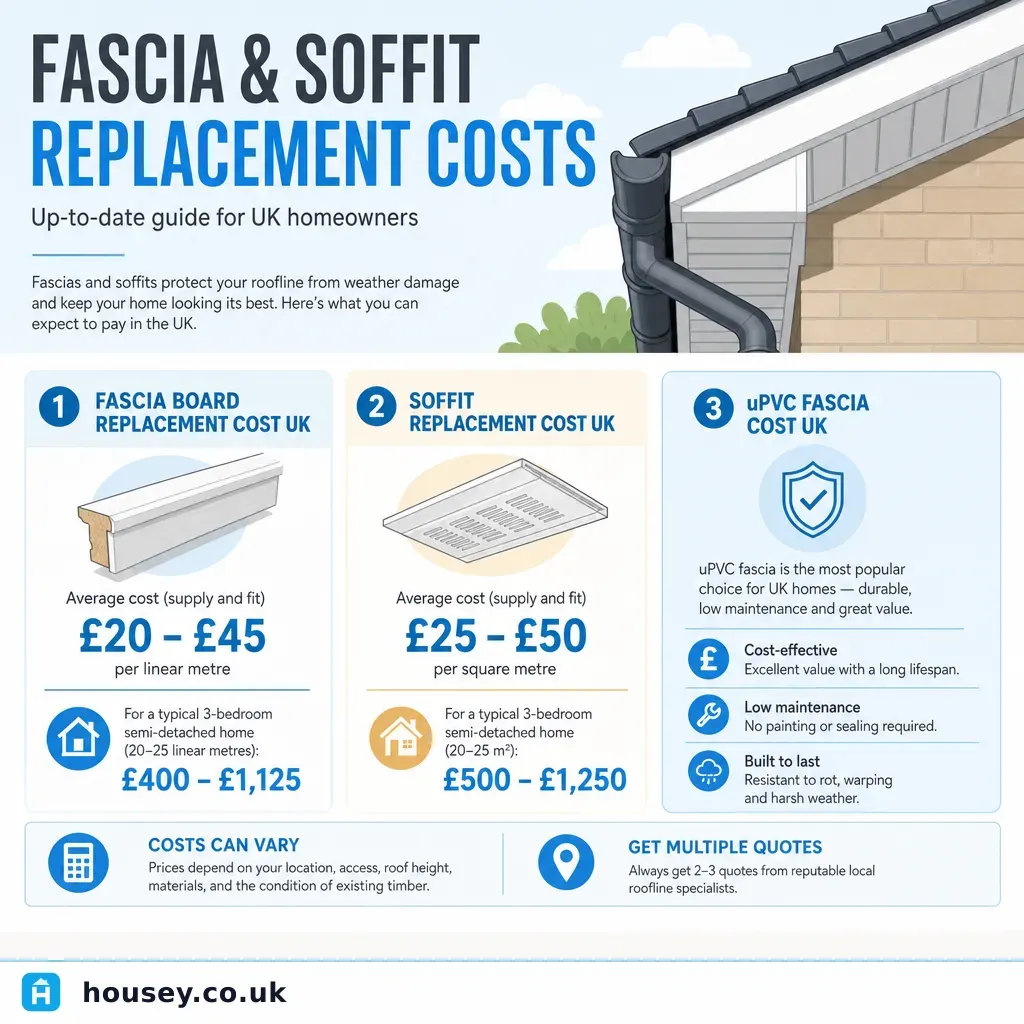 Improvement & Build
Fascia and Soffit Replacement Costs
Fascia and soffit replacement for a semi-detached house in the UK typically costs £1,800–£4,500 for uPVC boards and new guttering.
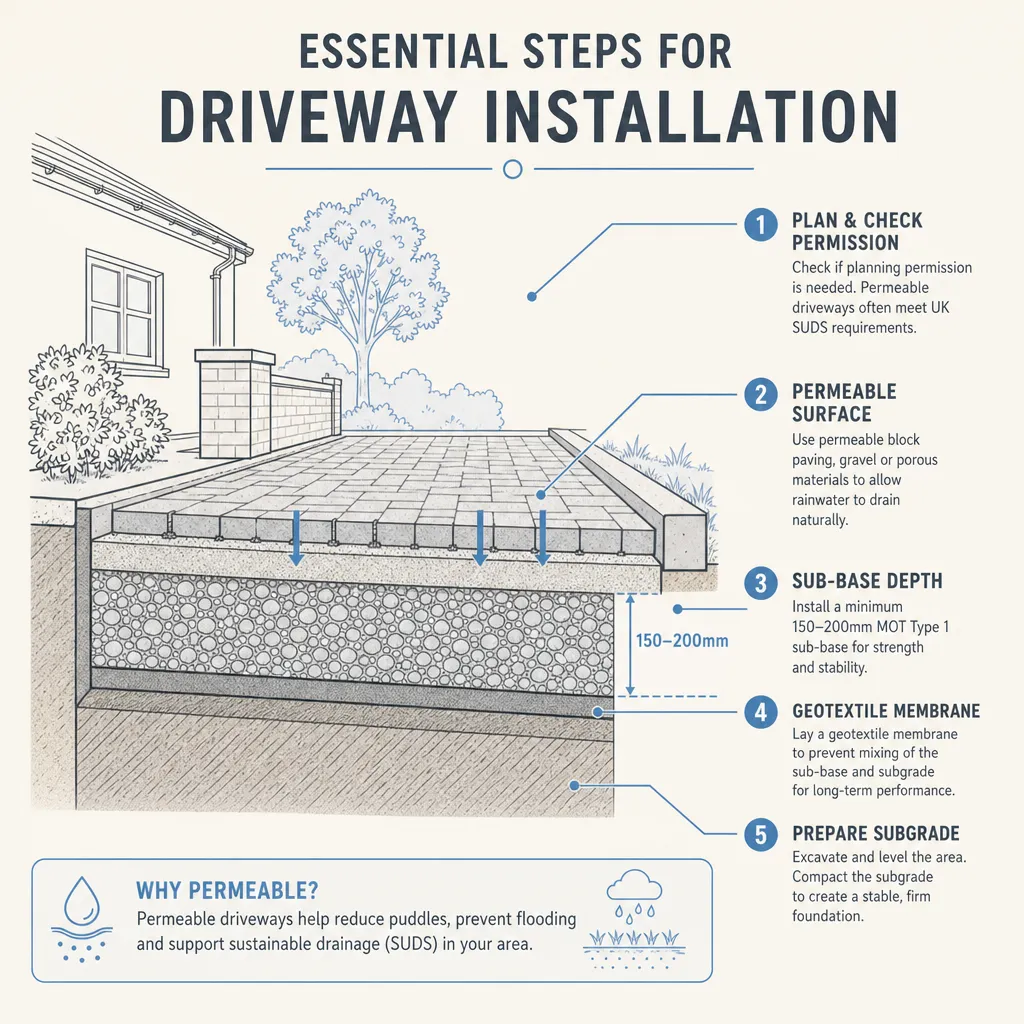 Improvement & Build
Essential Steps for Driveway Installation
Installing a driveway in England requires planning permission only when using an impermeable surface (standard tarmac, concrete, or block paving) on a front garden area over 5 m².
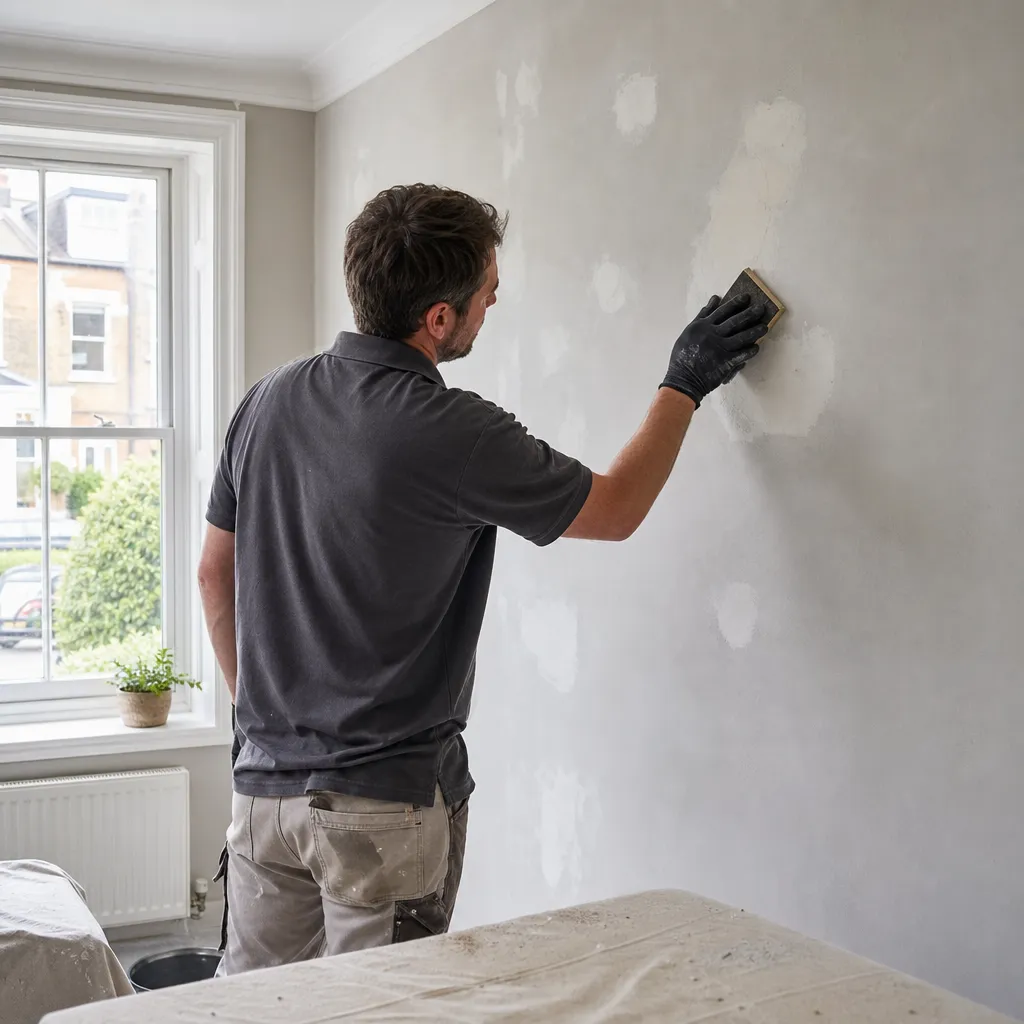 Improvement & Build
Preparing Walls for Patching: Surface Preparation Best Practice
Durable wall patching starts with removing all loose material, cutting back to a clean and stable edge, cleaning the substrate, and priming with a construction-grade PVA bonding agent before applying any filler or plaster.
 Improvement & Build
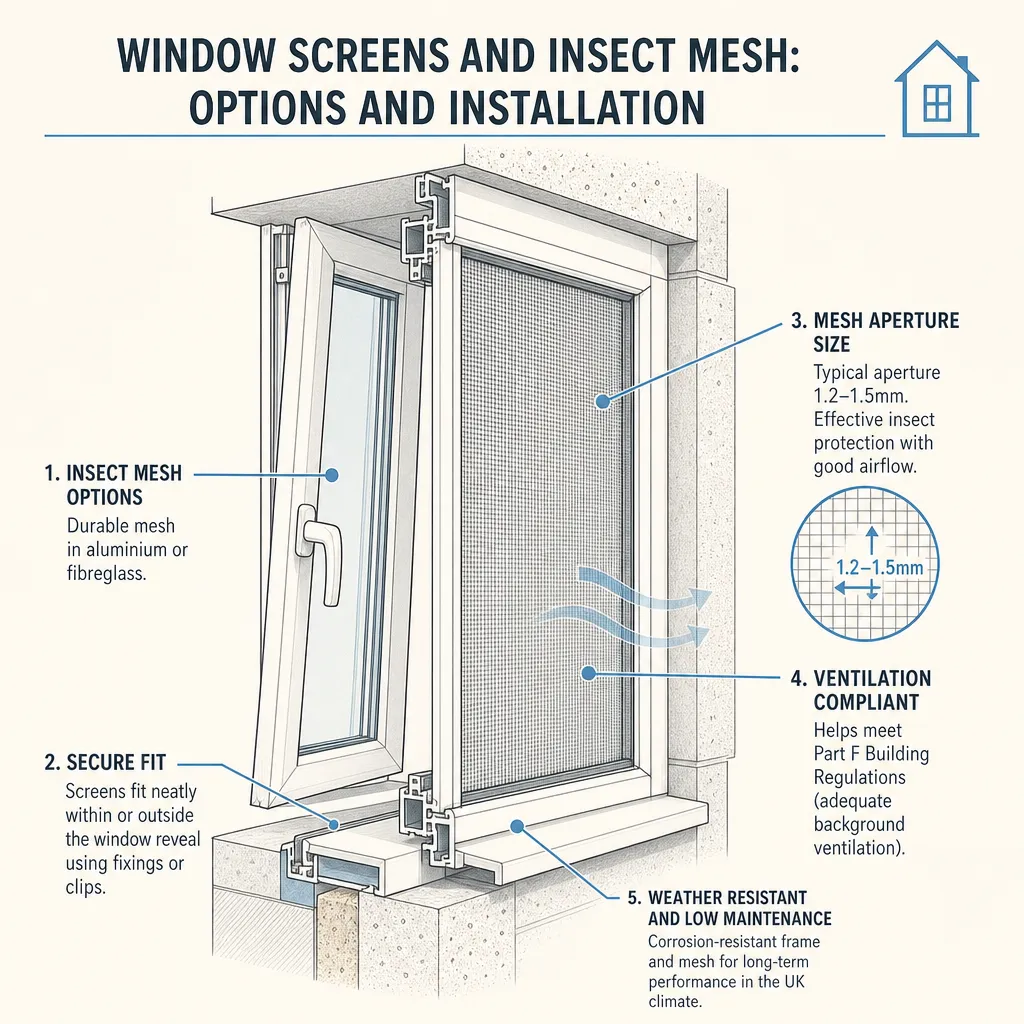
Window Screens and Insect Mesh: Options and Installation
UK window screens fall into four main types: fixed frame, roller retractable, pleated folding, and magnetic snap-fit.
 Improvement & Build
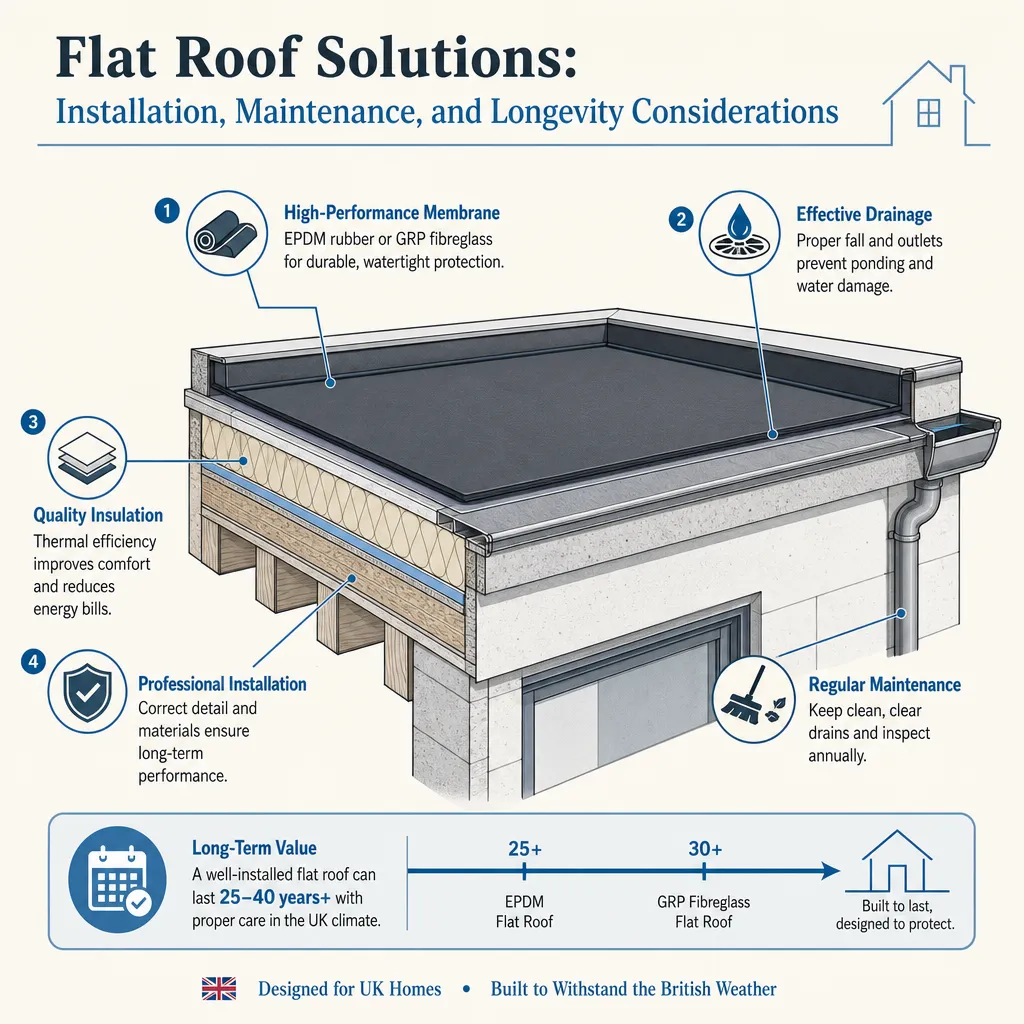
Flat Roof Solutions: Installation, Maintenance, and Longevity Considerations
Flat roofs use several waterproofing systems — EPDM rubber, GRP fibreglass, liquid-applied coatings, modified bitumen felt, lead, and zinc — each with different lifespans and installation requirements.