Roof Light Installation: Options and Investment
By Housey · Last reviewed 10th of May 2026
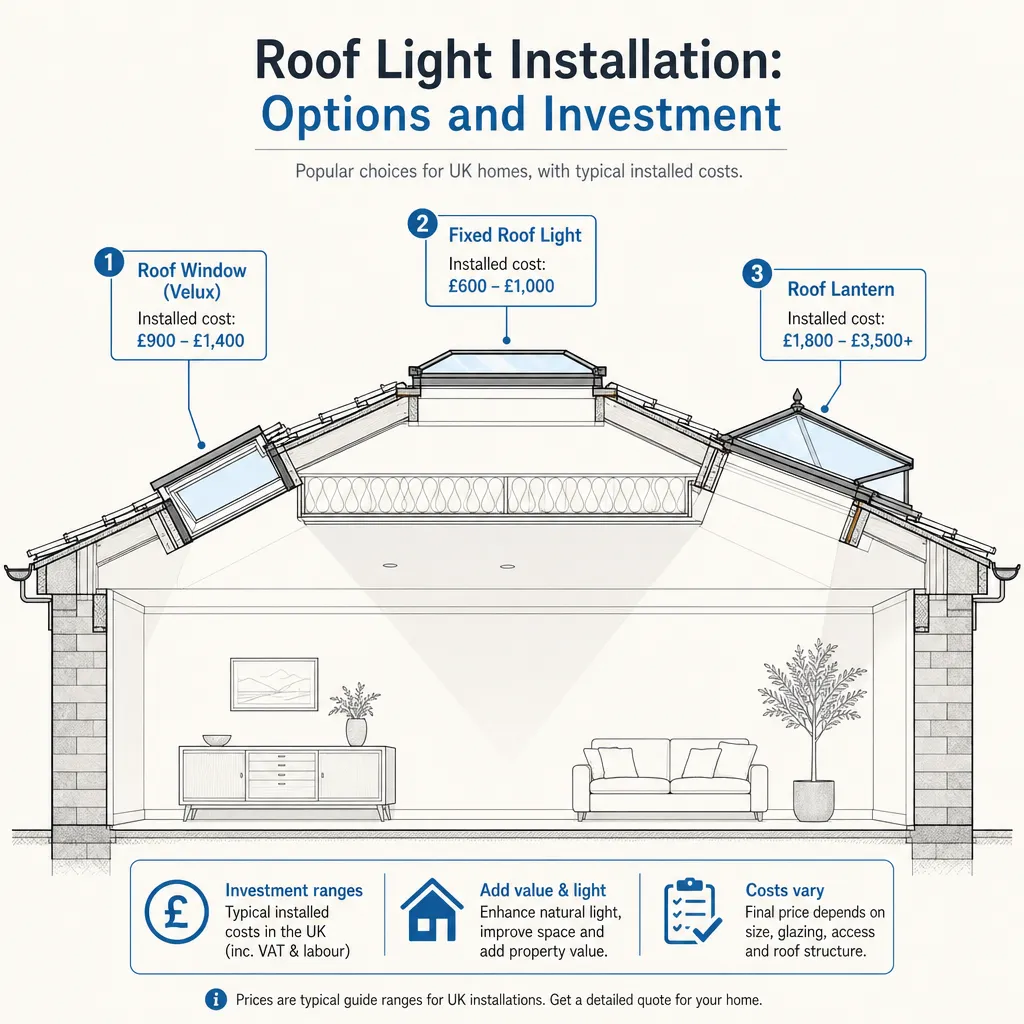
Roof Light Installation: Options and Investment
Adding natural light to a UK home through a roof light, skylight, or roof lantern can transform a previously dark room — whether in a loft conversion, a rear kitchen extension, or a ground-floor hallway that receives no direct daylight. The decision involves selecting the right product type for the roof structure, understanding the structural implications of cutting a new opening, and confirming whether planning permission or building regulations approval is required before work begins.
Key points
- Polycarbonate dome skylights cost £200–£800 installed; glazed flat roof lights for flat roof extensions typically cost £800–£3,500 installed (Indicative UK costs, last reviewed 2026-05-10).
- Pitched roof windows such as Velux or Fakro typically cost £500–£1,500 fully fitted; roof lanterns on flat roof extensions cost £2,000–£8,000+ installed depending on size and specification.
- Adding a roof light to an existing roof usually requires building regulations approval in England and Wales under Part A (Structure) and Part L (Energy Efficiency).
- Permitted development generally allows roof lights on pitched roofs provided they do not protrude more than 150mm above the existing roof plane and are not on the principal elevation facing a highway.
- Triple-glazed roof lights achieve centre-pane U-values as low as 0.5–0.7 W/m²K; a basic polycarbonate dome unit may be 1.6–2.0 W/m²K — glazing specification significantly affects long-term heat loss.
Types of roof light and what they cost
The market uses several overlapping terms — skylight, roof light, roof window, and roof lantern each describe a different product type.
Product type | Best for | Typical installed cost | Planning and building control notes |
|---|---|---|---|
Pitched roof window (e.g. Velux, Fakro) | Loft conversions, existing pitched roofs | £500–£1,500 | Usually permitted development; building regs apply |
Flat roof light (walk-on or non-walk-on glazed) | Flat roof extensions, kitchen extensions | £800–£3,500 | Building regs required; structural support must be checked |
Roof lantern (glazed ridge structure) | Flat roof extensions, orangeries | £2,000–£8,000+ | Building regs required; large units may need planning consent |
Polycarbonate dome skylight | Outbuildings, garages, utility rooms | £200–£800 | Simpler building regs process; lower thermal performance |
Sun tunnel (tubular daylight device) | Dark internal rooms and hallways | £500–£1,200 | Usually no planning required; building regs notification may apply |
Indicative UK costs, last reviewed 2026-05-10. Costs vary by size, glazing specification, access requirements, and contractor.
Which roof light type should you choose?
- Choose a pitched roof window (Velux or equivalent) if you have a pitched roof and want a ventilating or opening unit suitable for a loft bedroom, bathroom, or home office.
- Choose a flat roof light if you have a flat roof extension and want maximum daylight in a low-profile format — walk-on units are available where roof access is required.
- Choose a roof lantern if you have a flat roof extension and want a statement centrepiece that maximises light and ceiling height — particularly popular on single-storey rear extensions.
- Choose a sun tunnel if you need daylight in a room that does not sit directly below the roof, or where cutting a full structural opening is not practical.
- Ask a structural engineer if the planned opening exceeds approximately 1.2m × 1.2m, if the roof structure has not been recently assessed, or if the property is older and the timber condition is unknown.
Do roof lights need planning permission?
In England, adding a roof light to a pitched roof is generally permitted development provided:
- It does not protrude more than 150mm above the existing roof plane.
- It is not installed on the principal elevation of the dwelling where that elevation fronts a highway.
- The dwelling has not had permitted development rights removed by an Article 4 Direction and is not a listed building or flat.
For flat roof extensions and roof lanterns, permitted development rules depend on the extension's existing consent status and the overall glazed area. Where the lantern is large or visible from the road, check with your local planning authority (LPA) before proceeding.
Listed buildings require listed building consent for any roof light installation, as cutting a new opening is a material alteration to a protected structure.
Building regulations for roof lights
Building regulations approval is required for most roof light installations in England and Wales:
- Part A (Structure): the roof structure must support the dead load of the glazing unit plus wind and snow loads. Trimmer joists or structural steel headers may be needed around larger openings.
- Part L (Conservation of Fuel and Power): new openings must typically achieve a whole-unit U-value no worse than 1.6 W/m²K. Check the current edition of Approved Document L for your specific situation.
- Part F (Ventilation): opening roof lights can contribute to whole-house ventilation strategies, particularly in loft conversions where ventilation calculations are required.
Notify your local building control body before work starts, or use a Competent Person Scheme-registered installer where the scheme covers the specific work type.
What affects the cost of roof light installation?
- Unit size: larger glazed areas require more structural work and more expensive units.
- Glazing specification: triple glazing, self-cleaning coatings, solar control glass, and laminated safety glass improve long-term performance but add to unit cost.
- Structural work: cutting a new opening requires trimming rafters or joists and installing headers — typically £300–£800 for a standard opening, more for larger spans.
- Roof access and scaffold: pitched roof work usually needs scaffold or specialist ladders — add £500–£1,200 for a standard erection.
- Internal finishing: splayed plasterboard reveals, plastering, and repainting add to the total project cost.
- Location: London and South East labour rates are typically 20–30% higher than elsewhere in the UK.
What to ask before accepting a quote
- What glazing U-value and whole-unit U-value does the specified product achieve?
- Is the quote for supply only, or does it include structural trimming work and internal finishing?
- Who will notify building control, and is this included in the quoted price?
- Will you use a FENSA-registered or Competent Person Scheme-registered installer?
- What is the manufacturer's guarantee on the glazing unit?
- Is scaffold included in the quote or priced separately?
- Is VAT included?
When to get professional help
For small, straightforward pitched roof window installations in a loft with existing structural drawings available, a competent roofer or window installer can often manage the whole project. Escalate to additional professionals if:
- The planned opening is larger than approximately 1.2m × 1.2m — a structural engineer should assess the roof structure first.
- The property is listed or in a conservation area — planning advice is needed before cutting any new opening.
- There is any doubt about the integrity of the existing roof timbers.
- The installation forms part of a larger extension project — coordinate with extension builders from design stage.
- Building regulations requirements are unclear — a building control consultant can advise on compliance and handle the notification process.
How Housey can help
Housey connects homeowners with vetted trades and professionals for roof light projects of all sizes. Whether you need specialist extension builders to design and install a roof lantern as part of a rear extension, or building control consultants to guide you through the approvals process, you can compare quotes from qualified local professionals through the platform.
Frequently asked questions
Do I need building regulations approval for a roof light?
In most cases, yes. Installing a new roof light involves a structural opening covered by Approved Document A and changes to the building envelope that must meet energy efficiency standards under Approved Document L. Replacing a like-for-like unit may be simpler but should still comply with current standards. Check with your local building control body or use a Competent Person Scheme installer.
How much does a Velux window cost to install in the UK?
A standard Velux roof window (approximately 78cm × 118cm) typically costs £300–£600 for the unit and £200–£500 to install, depending on access, structural work required, and whether flashing kits are included. Total fitted cost for a straightforward loft bedroom installation is typically £500–£1,100. Indicative UK costs, last reviewed 2026-05-10.
Can I install a roof light myself?
Structural openings, weatherproofing, and building regulations compliance make DIY roof light installation high risk for most homeowners. Building regulations approval is required and work must be verifiable by a building control officer or Competent Person. Using a registered installer or a competent roofer who will notify building control is strongly advisable.
Will a roof lantern affect my home insurance?
Structural changes to a roof should be declared to your home insurer. A properly installed roof lantern with building regulations sign-off is unlikely to significantly affect premiums, but an undeclared or non-compliant installation could invalidate a claim. Notify your insurer before work starts and provide the completion certificate once issued.
Sources and further reading
- GOV.UK: Permitted development rights for householders — technical guidance on roof alterations and permitted development
- GOV.UK: Approved Document L — energy efficiency requirements for glazed roof openings
- GOV.UK: Approved Document A — structural requirements for new openings in roofs
- FENSA — Competent Person Scheme for window and glazing installation
Useful next reads
 Improvement & Build
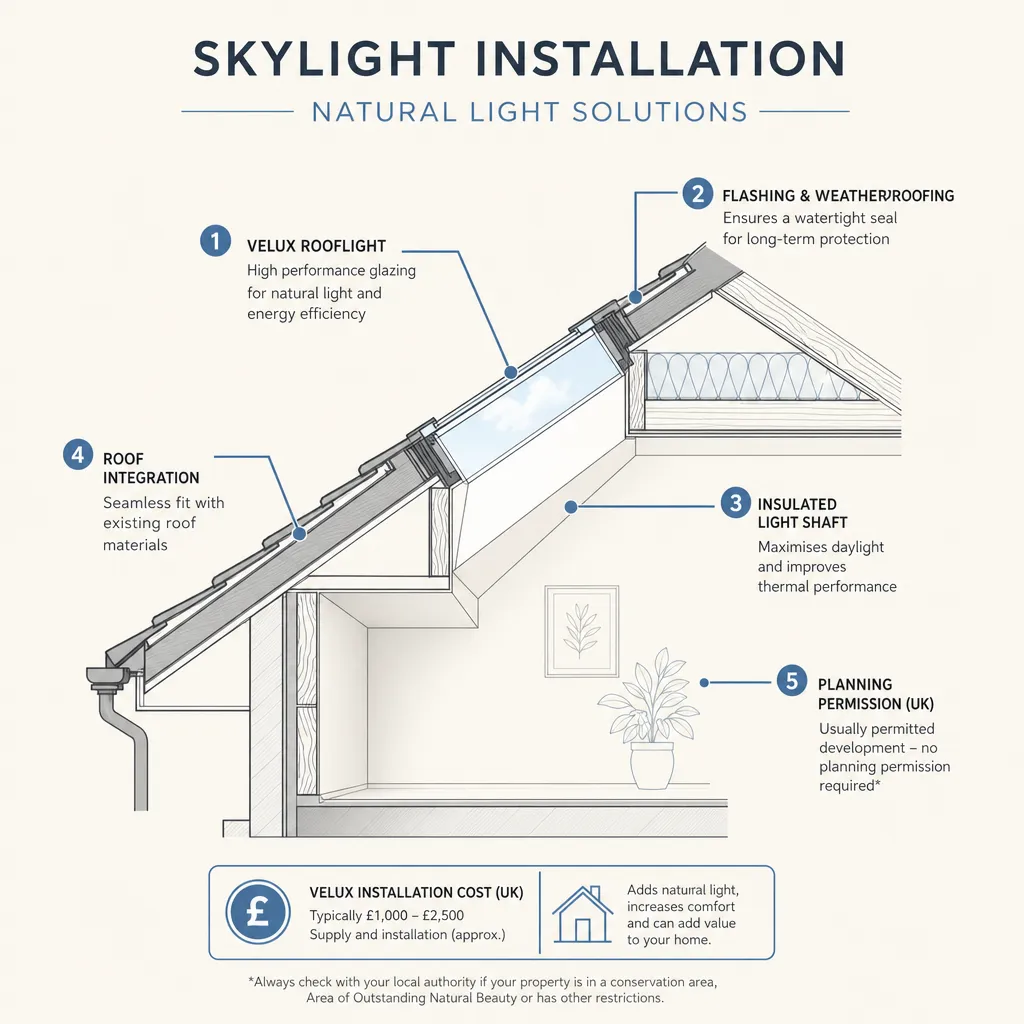
Skylight Installation: Natural Light Solutions
A standard pitched-roof skylight such as a Velux or equivalent roof window costs £800–£2,500 installed in the UK, including the unit and roofing work.
 Improvement & Build
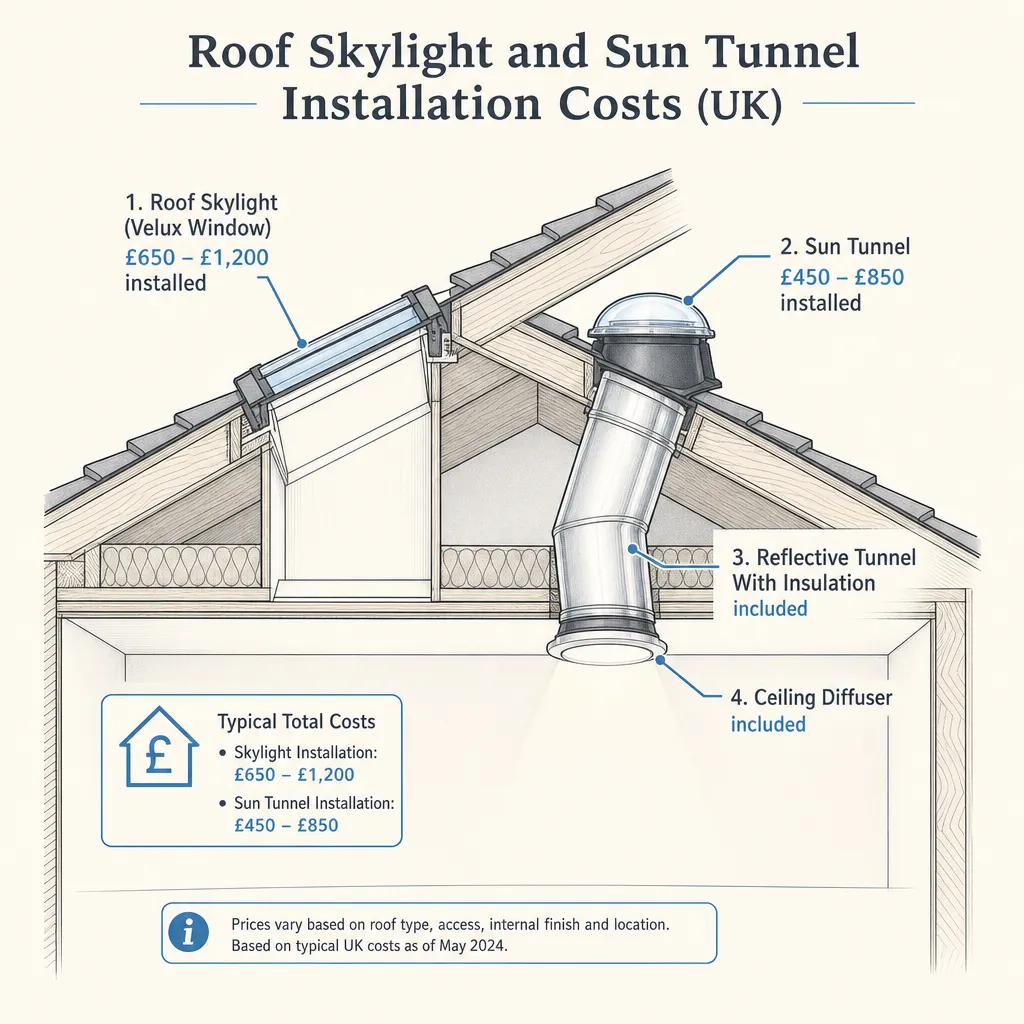
Roof Skylight and Sun Tunnel Installation Costs
A standard pitched-roof skylight costs £800–£3,000 installed in the UK, including flashings and basic making good.
 Improvement & Build
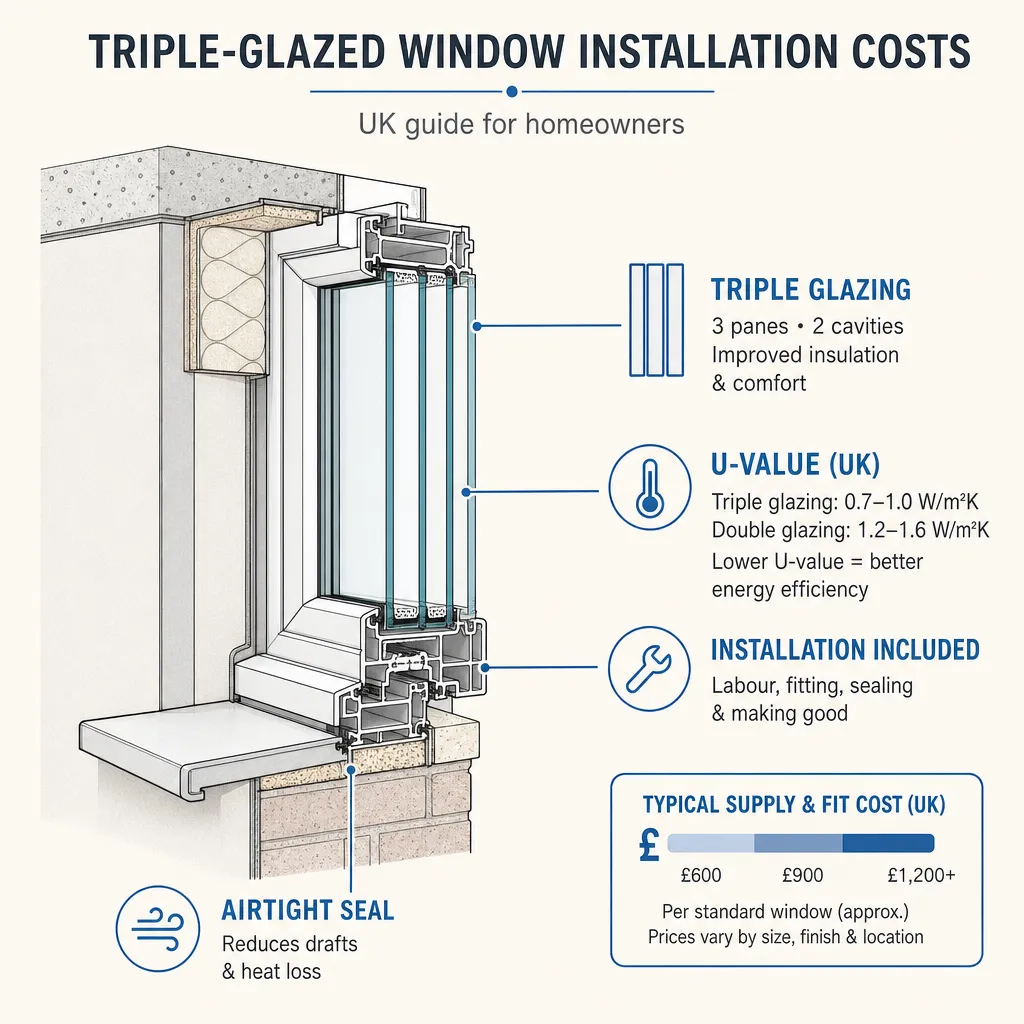
Triple-Glazed Window Installation Costs
Triple-glazed window installation in the UK typically costs £800–£1,800 per window, depending on size, frame material, and glazing specification.
 Improvement & Build
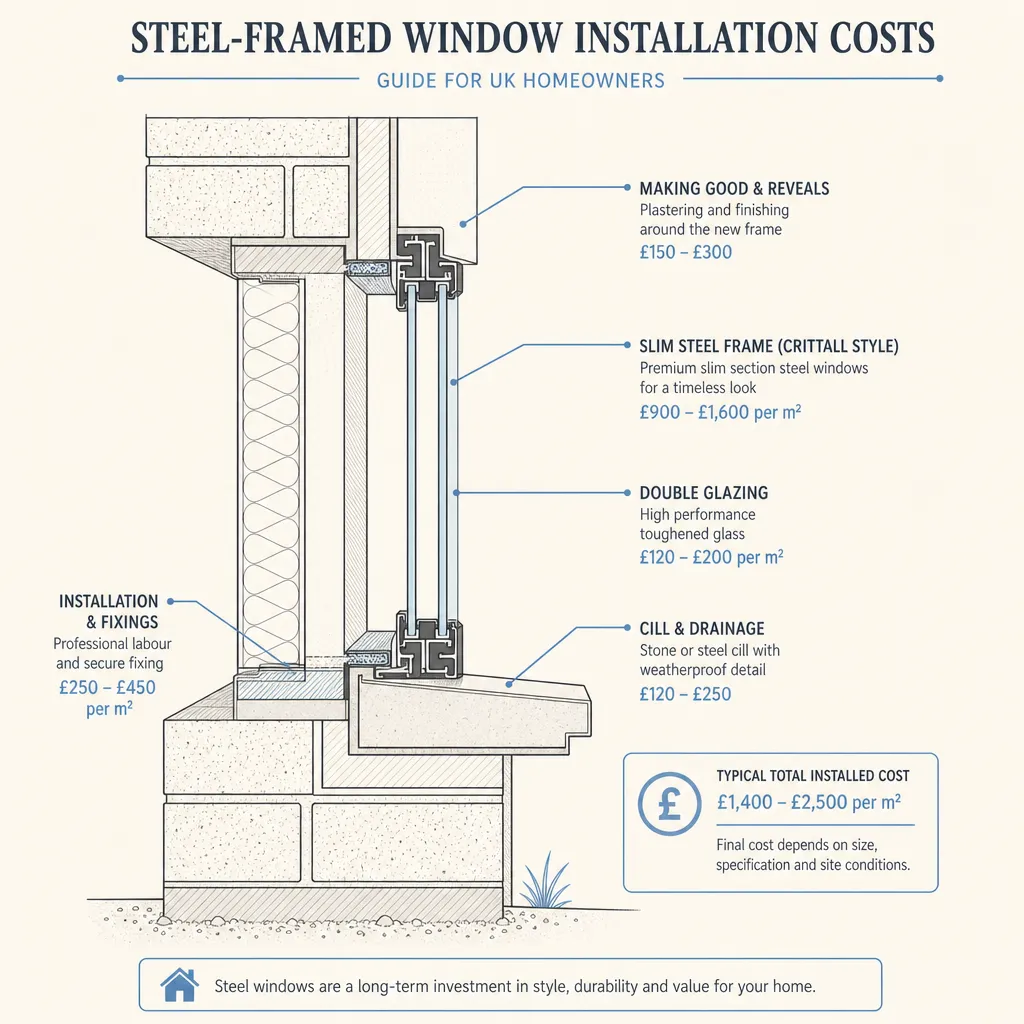
Steel-Framed Window Installation Costs
Steel-framed windows cost between £800 and £3,500 or more per window installed in the UK, depending on size, profile type, glazing specification, and whether old frames need removing.
 Improvement & Build
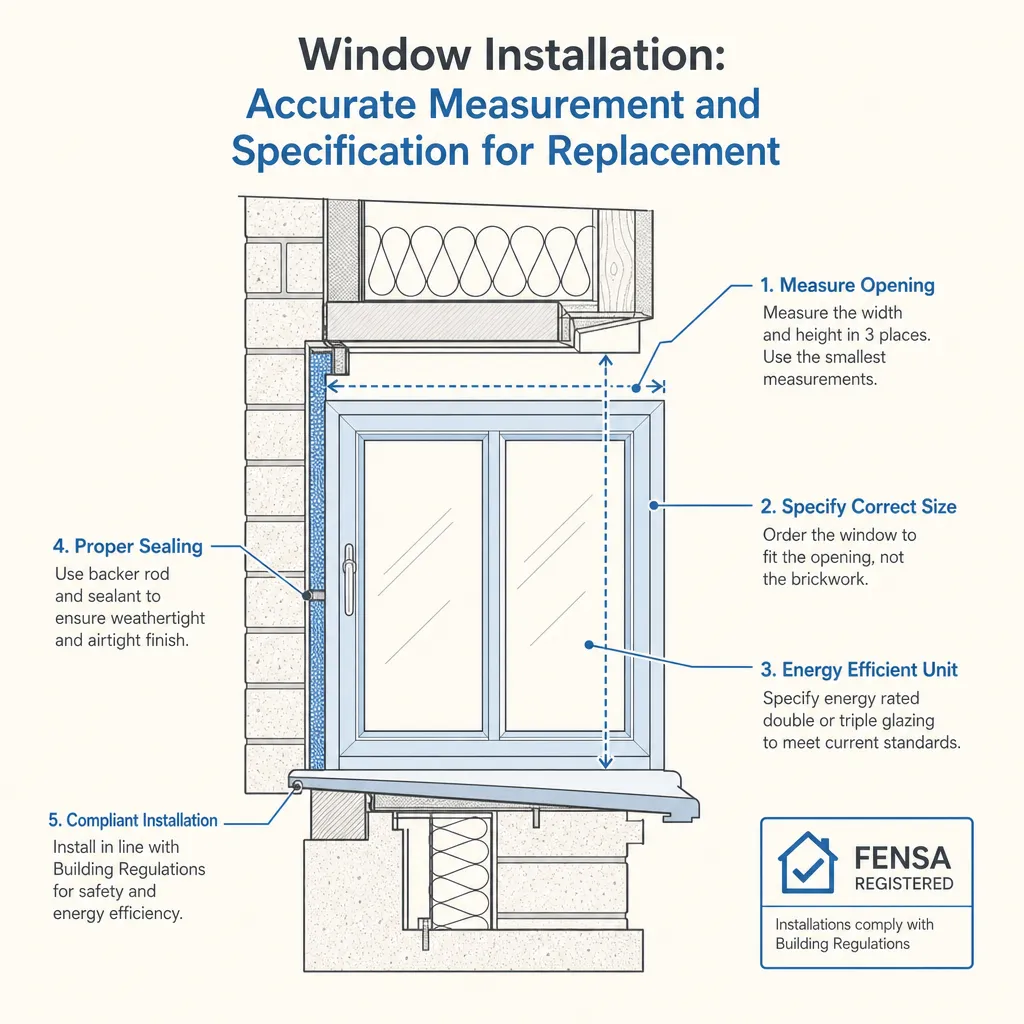
Window Installation: Accurate Measurement and Specification for Replacement
Accurate window measurement for replacement means recording the width and height of the existing frame opening in at least three places, noting the smallest dimension, and providing a full specification to your installer — including frame material, glazing type, opening style, and trickle ventilators.