Skylight Installation: Natural Light Solutions
By Housey · Last reviewed 10th of May 2026
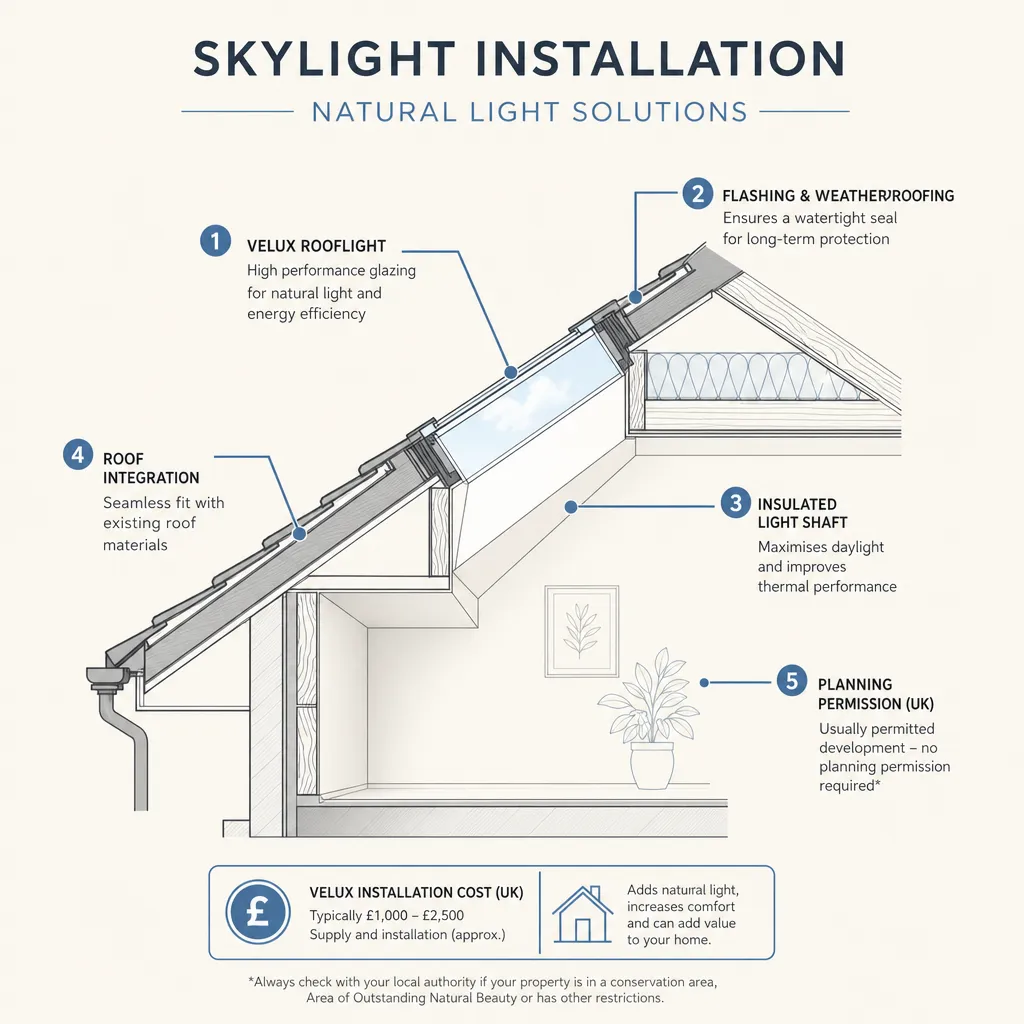
Skylight Installation: Natural Light Solutions
Roof windows and rooflights transform dim or poorly lit rooms — particularly in loft conversions, rear extensions, and north-facing spaces where wall windows deliver limited natural light. The decision to install a skylight often arises during a loft conversion, as part of a flat-roof extension, or as a standalone project to brighten a kitchen, bathroom, or landing. Getting it right involves more than choosing a unit: structural opening, weatherproofing, thermal performance, and planning status all need to be considered before work begins.
Key points
- Most pitched-roof skylights qualify as permitted development under the Town and Country Planning Act 1990, subject to size and location limits — conservation areas and listed buildings are exceptions.
- Under Approved Document L (2021 edition, applicable to England), new and replacement rooflights must achieve a centre-pane U-value of no worse than 1.6 W/m²K for existing dwellings.
- Indicative installed costs: £800–£2,500 for a standard pitched-roof rooflight; £1,200–£4,000 for a flat-roof rooflight or lantern (Indicative UK costs, last reviewed 2026-05-10).
- Any structural opening cut into a roof requires assessment — a trimmer joist or collar support may be needed depending on rafter size, span, and roof type.
- Building Regulations approval is required for structural alterations to a roof even where no planning permission is needed.
Types of skylight: which is right for your roof?
Type | Best for | Not ideal for | Typical installed cost (indicative, 2026-05-10) | Planning note |
|---|---|---|---|---|
Pitched roof window (e.g., Velux, Fakro) | Loft conversions, roof slopes at 15° pitch or steeper | Very low-pitch or flat roofs | £800–£2,500 | Permitted development in most cases |
Flat-roof rooflight (walk-on or non-walk-on) | Rear extensions, kitchen extensions, single-storey additions | Pitched roofs, high-traffic areas without walk-on spec | £1,200–£4,000 | Permitted development in most cases — check highway-facing positions |
Roof lantern | Kitchen-diner extensions, orangeries, open-plan spaces | Small rooms where the structure is disproportionate | £3,000–£10,000+ | May require planning permission for larger structures |
Sun tunnel or solar tube | Bathrooms, landings, hallways where a full rooflight is impractical | Rooms needing ventilation — tunnels do not open | £600–£1,500 | Usually permitted development |
Bespoke structural glazing | Contemporary architects' projects and extensions | Budget-constrained projects | £5,000+ | Often requires planning; structural engineer involvement essential |
Does skylight installation need planning permission?
Use this decision guide to determine your likely planning position before starting work:
- Use permitted development if the rooflight is on a rear or non-highway-facing pitch, does not protrude more than 150 mm above the roof plane when closed, does not exceed the highest point of the existing roof, and the property is not in a conservation area or listed.
- Check your local planning authority if the property is in a conservation area — rooflights on front elevations or visible from a highway typically require householder planning permission in designated areas.
- Apply for listed building consent if the property is listed — any new opening in a listed building's roof requires consent regardless of size or material, and the glazing specification may be restricted by the local conservation officer.
- Check for Article 4 directions if you are in a terrace or area where permitted development has been withdrawn — your local planning authority's website will confirm whether an Article 4 direction applies to your property.
- Consult the Planning Portal interactive householder guide if you remain uncertain — it provides a step-by-step check for permitted development eligibility covering roof alterations.
Even where no planning permission is required, Building Regulations approval is typically needed for any structural alteration to the roof.
How much does skylight installation cost in the UK?
Costs vary considerably by rooflight type, size, glazing specification, and structural complexity.
Unit cost: Standard Velux or equivalent pitched-roof windows cost approximately £300–£900 for the unit alone, rising significantly for larger, triple-glazed, or electrically operated models. Flat-roof rooflights start at around £400–£1,200 for the frame and glazing unit.
Installation labour: A roofer and associated trades — a joiner for internal lining and a plasterer for the reveal — typically add £500–£1,500 depending on complexity and location.
Structural work: If a rafter needs to be cut and a trimmer joist installed, a structural engineer may need to specify the opening — budget £300–£600 for the engineer's assessment plus the associated carpentry work.
Flashing kit: Correct manufacturer-specified flashing is essential for weathertightness. Flashing kits cost approximately £60–£200 and should be matched exactly to the rooflight model and tile or slate profile in use.
Scaffolding: Safe access to upper-floor roof slopes requires scaffolding or a tower — budget £500–£1,500 depending on height and roof configuration.
Indicative UK costs, last reviewed 2026-05-10. Obtain at least three itemised quotes from roofers experienced with the rooflight type you intend to specify.
The installation process: what to expect
A typical pitched-roof skylight installation follows this sequence:
- Specification and ordering — rooflight size, glazing specification, opening mechanism, and flashing kit confirmed; Building Regulations application submitted if required.
- Internal preparation — insulation and ceiling above the proposed opening inspected; rafter positions confirmed.
- Structural opening — rafter or rafters cut and trimmer joists installed to form the new opening; this is the most structurally critical stage of the project.
- Roofing works — tiles or slates removed around the opening, underfelt and battens cut back, rooflight unit and flashing kit installed and made weathertight.
- Internal finishing — reveals lined, plastered, or dry-lined; window board or internal blind fitting if required.
- Building control inspection — if a building notice or full plans application was submitted, the building control officer will inspect at structural and completion stages.
Homeowner checklist: preparing for skylight installation
Before work begins:
When to get professional help
Skylight installation involves structural, roofing, and building regulations work across multiple trades. Seek professional advice when:
- The roof uses trussed rafters rather than cut rafters — trussed rafters cannot be cut without a structural redesign by a qualified engineer.
- The property is listed or in a conservation area — specialist planning and heritage input is needed before specifying any glazing.
- Existing roof leaks or structural defects are present — installing into a compromised roof makes post-installation problems difficult to attribute and resolve.
- You are combining the skylight with a loft conversion — full Building Regulations compliance including fire escape, insulation, and structural assessment is required.
- The rooflight will serve as an emergency escape window — specific minimum dimension requirements apply under Building Regulations Approved Document B.
How Housey can help
Whether you are adding a single skylight to a kitchen extension or planning a bank of rooflights as part of a larger project, Housey can connect you with experienced roofers and extension builders who understand both the technical requirements and the Building Regulations process from first fix through to final inspection.
Frequently asked questions
Do skylights need planning permission in the UK?
Most pitched-roof skylights qualify as permitted development provided they do not protrude more than 150 mm above the roof plane, are not on the principal or side elevation facing a highway, and do not raise the roof height. Conservation areas restrict front-facing and highway-visible rooflights. Listed buildings require listed building consent for any new roof opening. Check GOV.UK's permitted development guidance or contact your local planning authority before commissioning any work.
How long does skylight installation take?
A single pitched-roof skylight installation by an experienced roofer typically takes one to two days, including cutting the structural opening, installing the flashing, and completing interior finishing. Flat-roof rooflights and roof lanterns are more complex and may require two to four days. Where a rafter opening requires trimmer joists or structural support, allow additional time for the structural work and any building control inspections.
What U-value does a skylight need to meet Building Regulations?
Under Approved Document L (2021 edition, England), new and replacement rooflights in existing dwellings must achieve a centre-pane U-value of no worse than 1.6 W/m²K. Whole-unit U-values of 1.8 W/m²K or better are preferred. Building Regulations requirements differ in Scotland, Wales, and Northern Ireland — check the relevant technical standards for your location before specifying a unit.
Can a skylight improve a room's energy efficiency?
High-performance double or triple-glazed rooflights lose less heat than older single-glazed lights, but any glazed roof area loses more heat per square metre than an insulated roof section. South-facing rooflights can provide useful passive solar gain in winter, partially offsetting heat losses. The net energy impact depends on orientation, glazing specification, and room use — an energy assessor can model the trade-off for your specific property.
Sources and further reading
- Permitted development rights for householders: technical guidance — GOV.UK
- Approved Document L: Conservation of fuel and power — GOV.UK
- Approved Document A: Structure — GOV.UK
- Planning Portal: Rooflights — Planning Portal
- Windows: repair and replacement in traditional buildings — Historic England
Useful next reads
 Improvement & Build
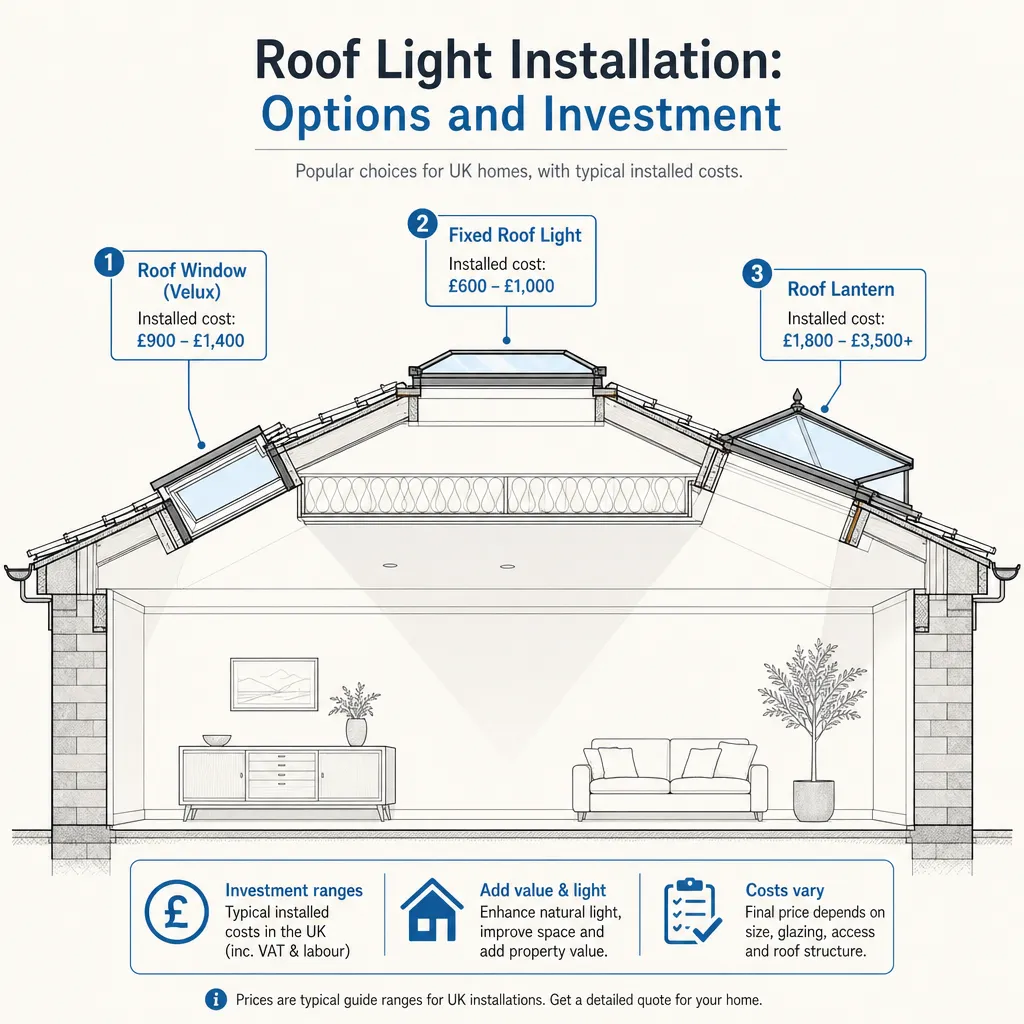
Roof Light Installation: Options and Investment
Roof light installation costs range from £500–£1,500 for a fitted pitched roof window to £2,000–£8,000 or more for a flat roof lantern.
 Improvement & Build
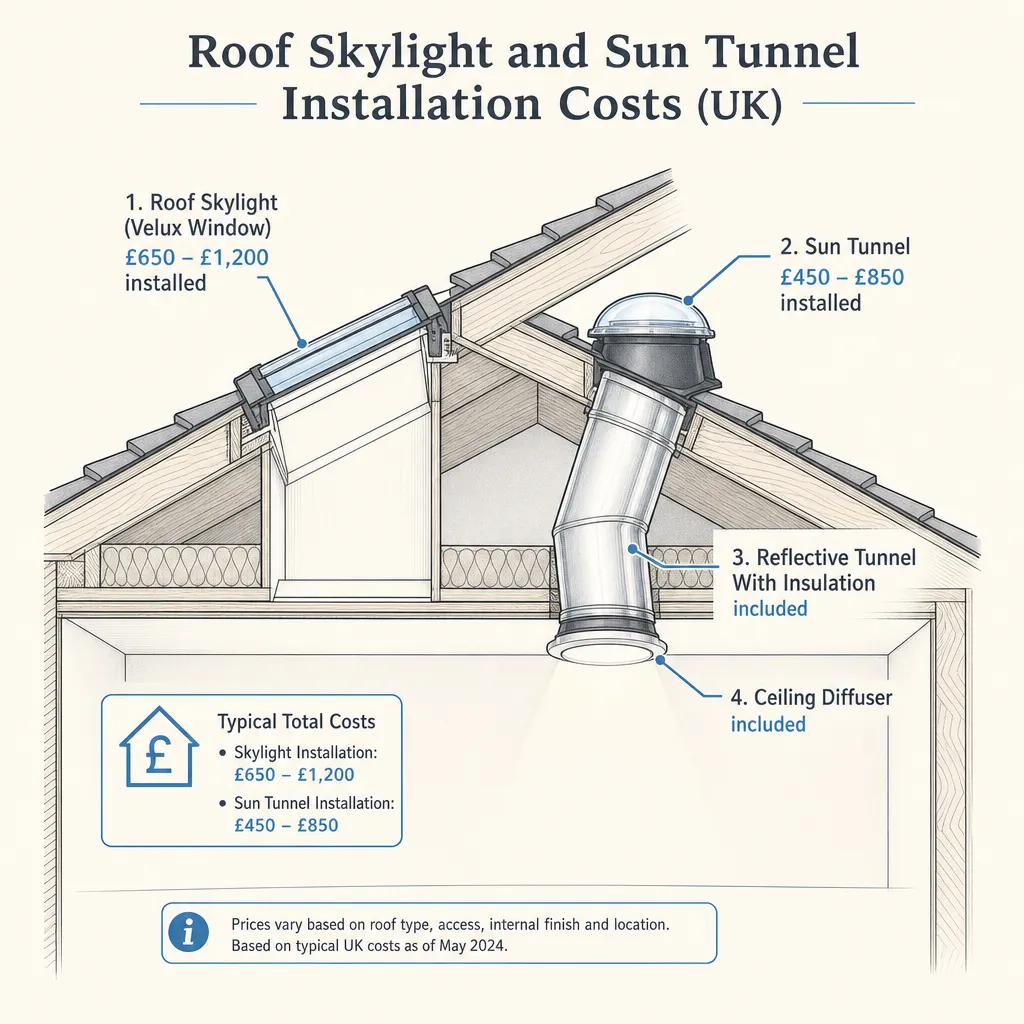
Roof Skylight and Sun Tunnel Installation Costs
A standard pitched-roof skylight costs £800–£3,000 installed in the UK, including flashings and basic making good.
 Improvement & Build
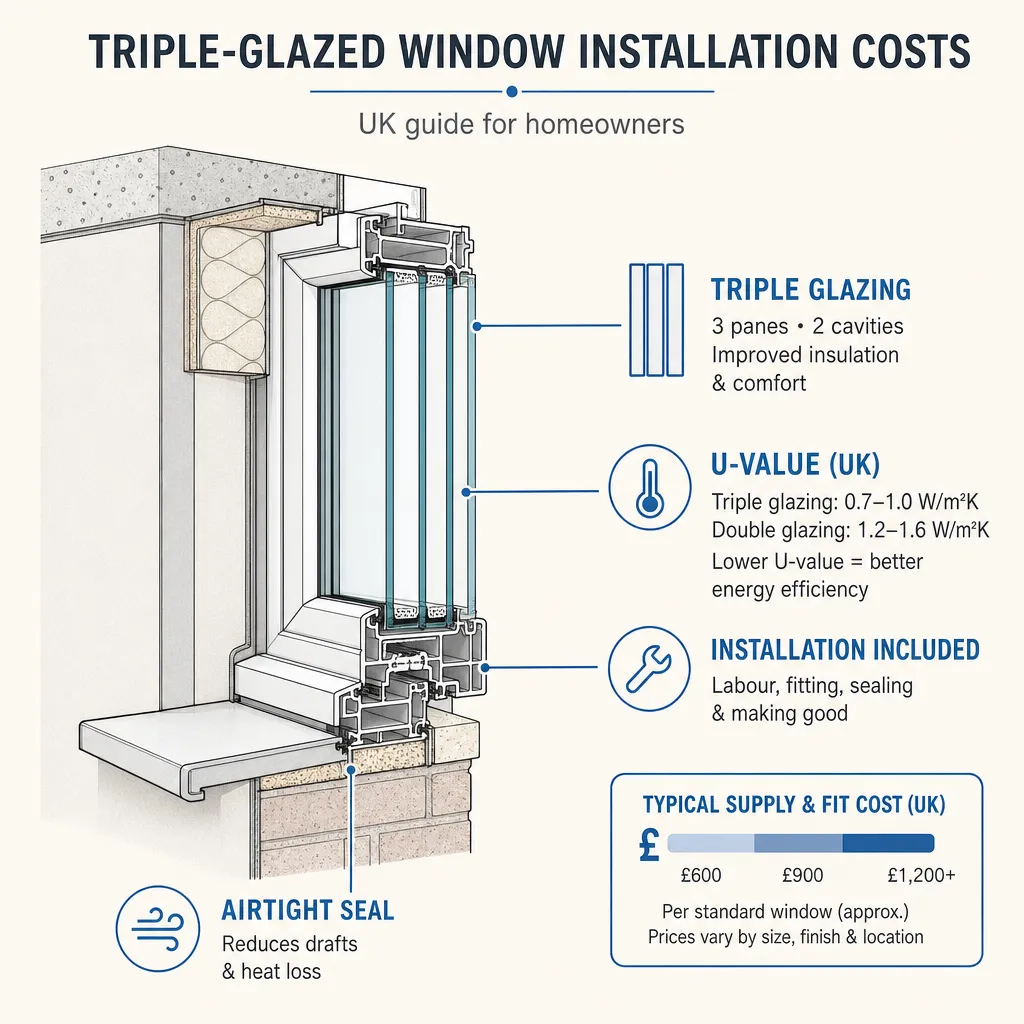
Triple-Glazed Window Installation Costs
Triple-glazed window installation in the UK typically costs £800–£1,800 per window, depending on size, frame material, and glazing specification.
 Improvement & Build
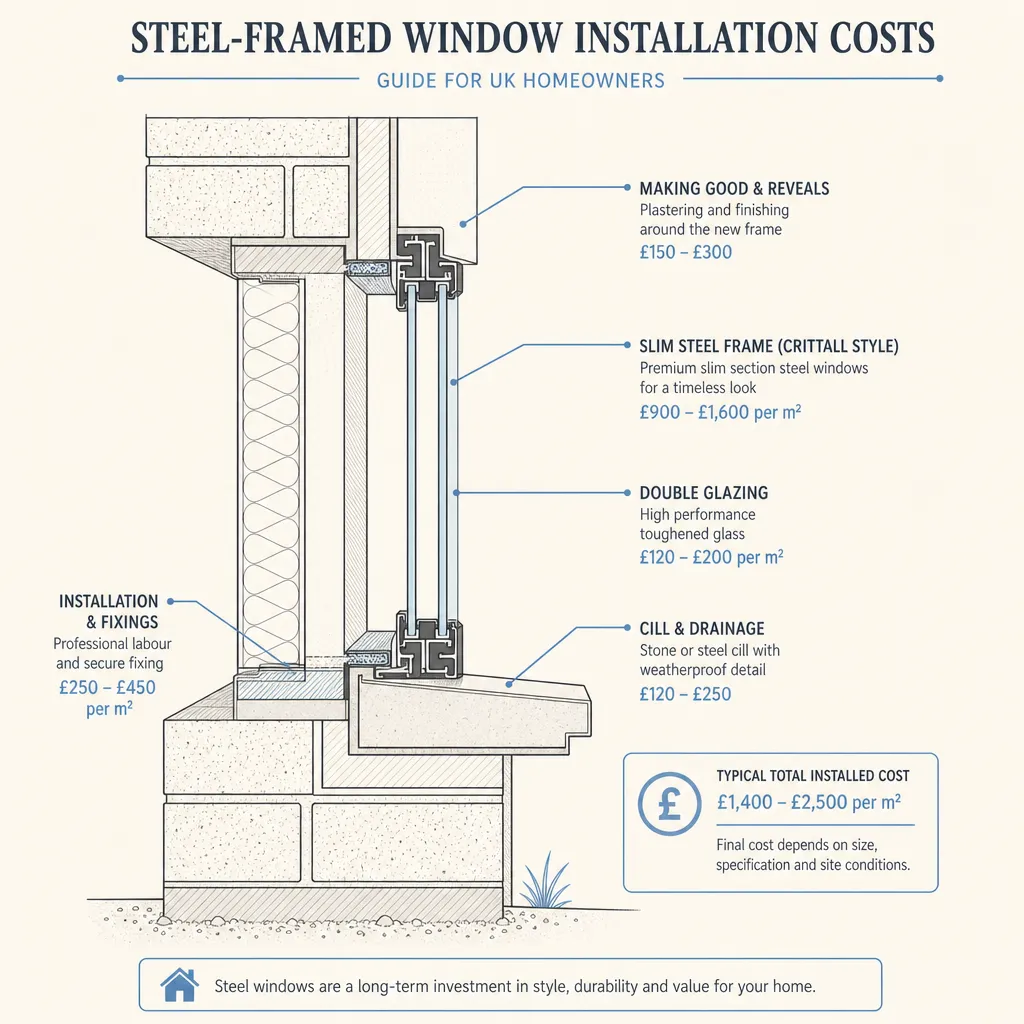
Steel-Framed Window Installation Costs
Steel-framed windows cost between £800 and £3,500 or more per window installed in the UK, depending on size, profile type, glazing specification, and whether old frames need removing.
 Improvement & Build
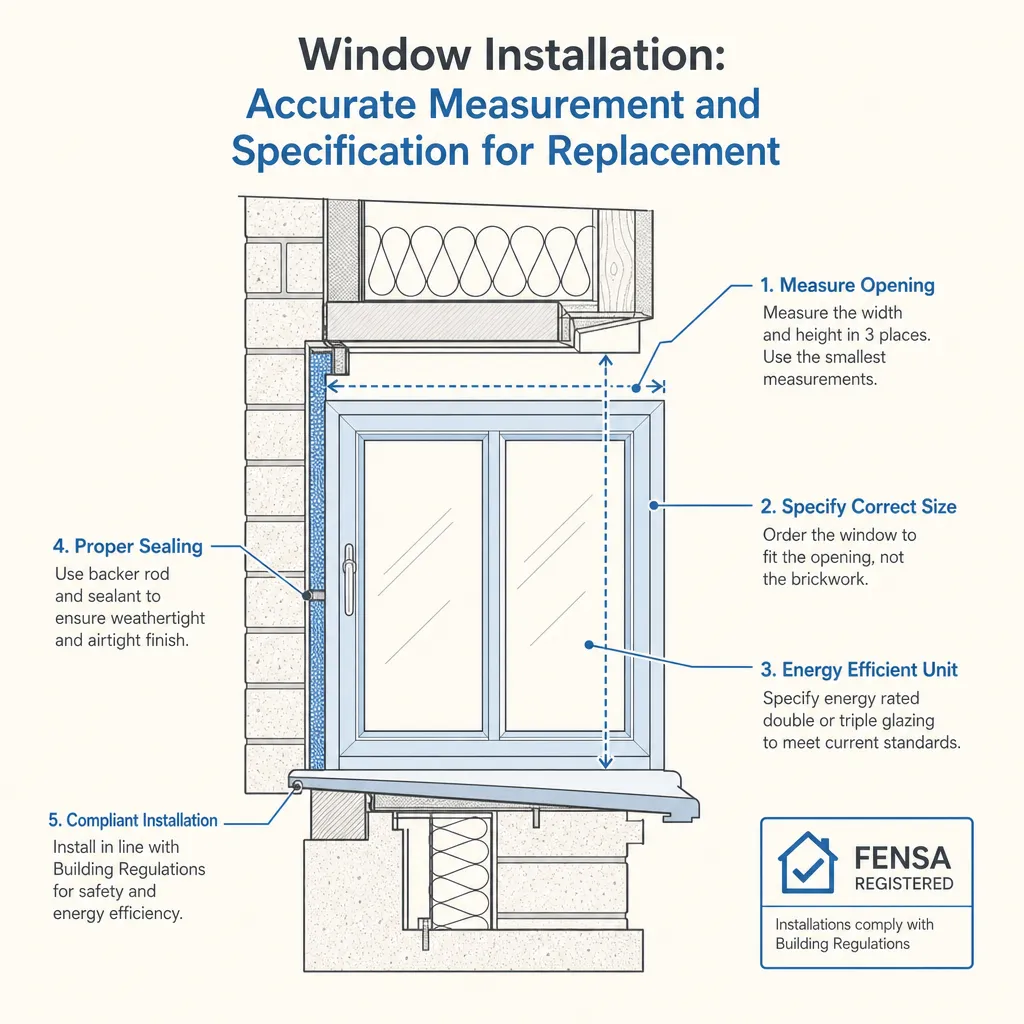
Window Installation: Accurate Measurement and Specification for Replacement
Accurate window measurement for replacement means recording the width and height of the existing frame opening in at least three places, noting the smallest dimension, and providing a full specification to your installer — including frame material, glazing type, opening style, and trickle ventilators.