Roof Replacement or Overlay: Which Option is Right for Your Home
By Housey · Last reviewed 17th of May 2026
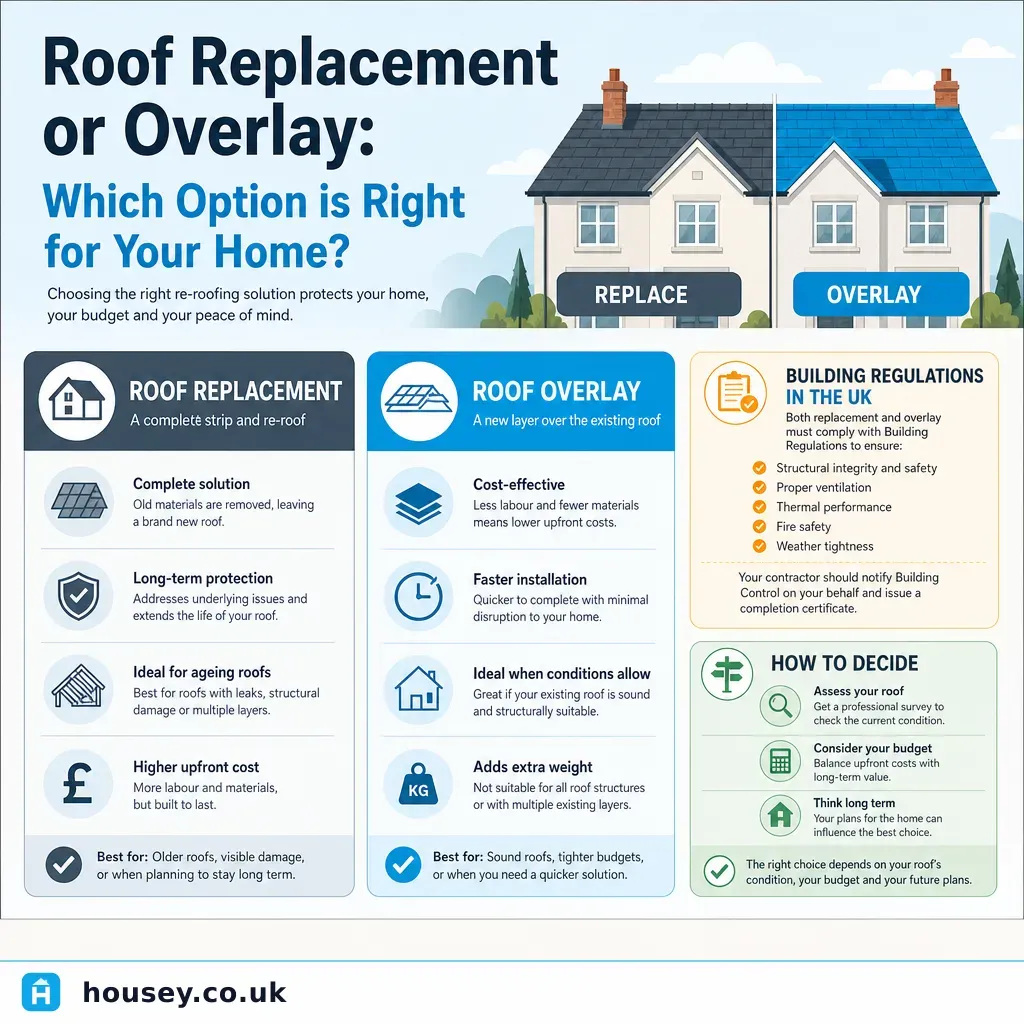
Roof Replacement or Overlay: Which Option is Right for Your Home
When a roof starts showing its age — cracked tiles, persistent leaks, or sagging sarking felt — the immediate question is whether to strip everything back and start fresh or lay new material over the existing surface. Both approaches have a place in UK roofing practice, but the decision carries structural, regulatory, and long-term cost implications that are easy to underestimate without a thorough inspection first.
Key points
- Building Regulations Part A (structure) limits additional loading on roof structures; adding a second layer of tiles without a structural assessment may exceed the original design load.
- BS 5534:2014+A2:2018 (code of practice for slating and tiling of roofs and vertical cladding) requires battens to be in sound, compliant condition — overlaying new tiles onto failed or decayed battens does not meet the standard.
- Most tile and slate manufacturers void or restrict their warranties when new materials are installed over existing battens rather than freshly laid, correctly graded replacements.
- A specialist roof survey or RICS Level 3 Home Survey can identify hidden timber decay, sarking felt condition, and batten state that are invisible from the ground or from a brief contractor inspection.
- For flat roofs, overlaying new EPDM, GRP, or liquid-applied membrane over failing felt is practised more widely than on pitched roofs, but retained moisture in existing layers must be ruled out by a capacitance survey before any overlay proceeds.
What is the difference between replacement and overlay?
Full roof replacement (strip and re-roof) means removing all existing tiles or slates, battens, counter-battens, and in most cases the sarking felt, inspecting the roof structure, replacing any failed or decayed timbers, installing new breathable membrane and battens to BS 5534, and fixing new tiles or slates. The result is a roof in a fully known condition with a complete warranty trail.
Roof overlay means laying new tiles, slates, or membrane material over the existing surface without stripping back to the structure. It is faster, generates less waste, and costs less upfront — but skips inspection of what lies beneath, and the hidden substrate becomes the new roof's weakest link.
Which option is right for your situation?
- Choose full replacement if the existing tiles are more than 30–40 years old; there is visible batten decay, failed sarking felt, or timber rot; persistent leaks have been present; the roof has not been inspected from inside the loft in over 15 years; or you are planning to upgrade insulation to comply with Part L.
- Consider overlay (pitched) if the existing battens are confirmed sound by a professional inspection; the tiles are failing cosmetically but the underlying structure and felt remain intact; and a structural engineer has confirmed the additional loading is within the roof's design capacity.
- Consider overlay (flat) if the existing flat roof deck is structurally sound and confirmed dry by moisture testing; retained water in existing layers has been ruled out by a capacitance survey; and the new membrane manufacturer permits overlay under their warranty terms.
- Always seek a structural engineer's opinion if the property was built before 1945; if a previous overlay is already in place; or if there are signs of roof spread, a sagging ridge, or deflecting rafters.
- Check with your local planning authority if the property is listed, in a conservation area, or subject to an Article 4 Direction — material changes to roof appearance may require planning consent even for like-for-like replacement.
Replacement vs overlay: comparison
Factor | Full replacement | Overlay |
|---|---|---|
Upfront cost | Higher | Lower |
Long-term value | Better — full known condition | Risk of hidden defects persisting |
Structural loading | No net change — old tiles removed | Adds weight; must be assessed |
Compliance with BS 5534 | Full compliance achievable | Limited — existing battens may not comply |
Manufacturer tile or slate warranty | Typically available | Often voided or restricted |
Building control sign-off | Achievable | Depends on scope and local authority |
Lifespan of outcome | Full material lifespan (30–60+ years) | Uncertain — limited by substrate condition |
Waste and disruption | Higher | Lower |
Indicative comparison — outcomes depend on specific property condition, materials chosen, and contractor workmanship.
What a roof survey reveals
Before committing to either option, a specialist roof survey will typically assess: tile, slate, or flat membrane condition; batten and counter-batten state; sarking felt integrity; structural members (rafters, purlins, ridge board) for decay or movement; lead flashings, valleys, and abutments; and penetrations such as chimneys and rooflights. A thermal imaging survey can identify hidden moisture ingress in flat roofs that would be invisible to the naked eye.
Where a RICS Level 3 Building Survey has recommended further investigation of the roof — common in older, altered, or visibly defective properties — that report should directly inform the roofing specification before any contractor is instructed.
Red flags that indicate full replacement is necessary
- Sarking felt that is cracked, torn, or admitting light when viewed from the loft.
- Battens that snap or crumble when pressed — a sign of wet rot.
- Widespread nail-sick, slipped, or cracked tiles, particularly common in pre-1960 clay plain tile roofs fixed with iron cut nails.
- Ridge or hip tile mortar bedding lost across large sections of the roof.
- Any previous overlay already in place — a second overlay is rarely acceptable to building control.
- Persistent ceiling staining or damp loft insulation indicating active water ingress.
When to get professional help
Roof decisions should not rest on a visual inspection from the ground or a brief contractor walk-round. Commission a specialist roof survey before agreeing a specification, and ask the report to distinguish clearly between what is visible and what would require opening up to confirm. Use the findings to brief at least three qualified local roofers on a like-for-like basis.
How Housey can help
Housey connects you with accredited roof survey specialists and experienced qualified local roofers who can quote for both replacement and overlay options, ensuring you compare proposals from contractors who have all reviewed the same condition evidence.
Frequently asked questions
Is roof overlay permitted under UK building regulations?
There is no blanket prohibition, but Building Regulations Part A (structural loading) and BS 5534 both set conditions on what constitutes an acceptable installation. Whether building control notification is required depends on the scope of work and whether structural elements are altered. Check with your local building control body before proceeding with any overlay work.
Will overlaying my roof invalidate my home insurance?
It may, if the work is not properly notified or documented. Always inform your insurer before major roofing work, confirm whether building control sign-off is needed, and ensure the contractor provides documentation of materials installed, their qualifications, and a valid public liability insurance certificate before work starts.
How much does a full roof replacement cost in the UK?
Costs vary significantly by property size, pitch, material, access, and region. Indicative UK costs, last reviewed 2026-05-17: a full strip-and-re-roof on a typical three-bedroom semi using concrete interlocking tiles might range from £5,000 to £12,000+, with natural Welsh slate or heritage clay tiles at the higher end. Always obtain at least three itemised written quotes.
Sources and further reading
- Building Regulations Approved Document A: Structure — GOV.UK (structural loading requirements)
- BS 5534:2014+A2:2018 — Code of practice for slating and tiling — BSI British Standards (installation standard for pitched roofs)
- RICS Home Survey Standard — RICS (survey levels and scope for residential properties)
- Planning Portal: Roofs and permitted development — Planning Portal (when planning consent is required for roof alterations)
Useful next reads
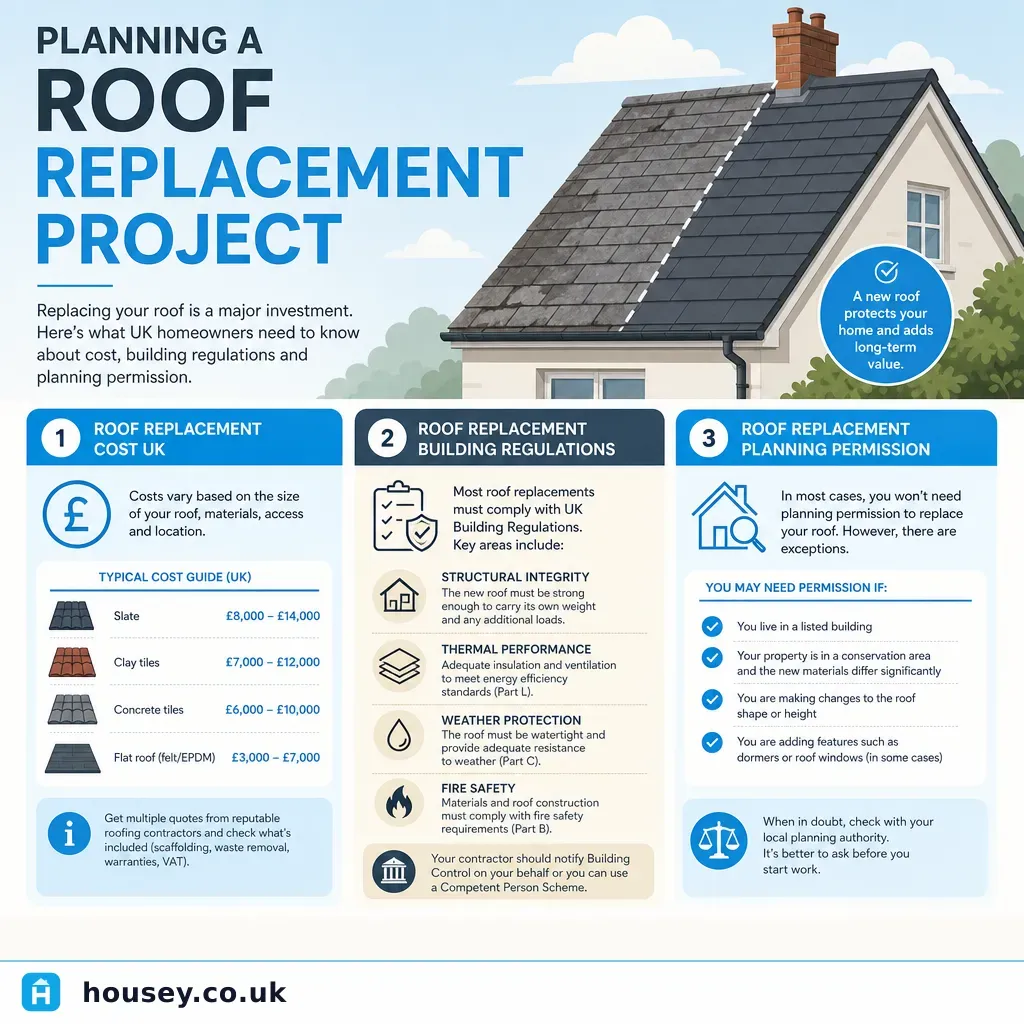 Improvement & Build
Planning a Roof Replacement Project
A roof replacement project involves stripping the existing covering, renewing the sarking felt and battens, and laying new tiles, slates, or a flat-roof membrane.
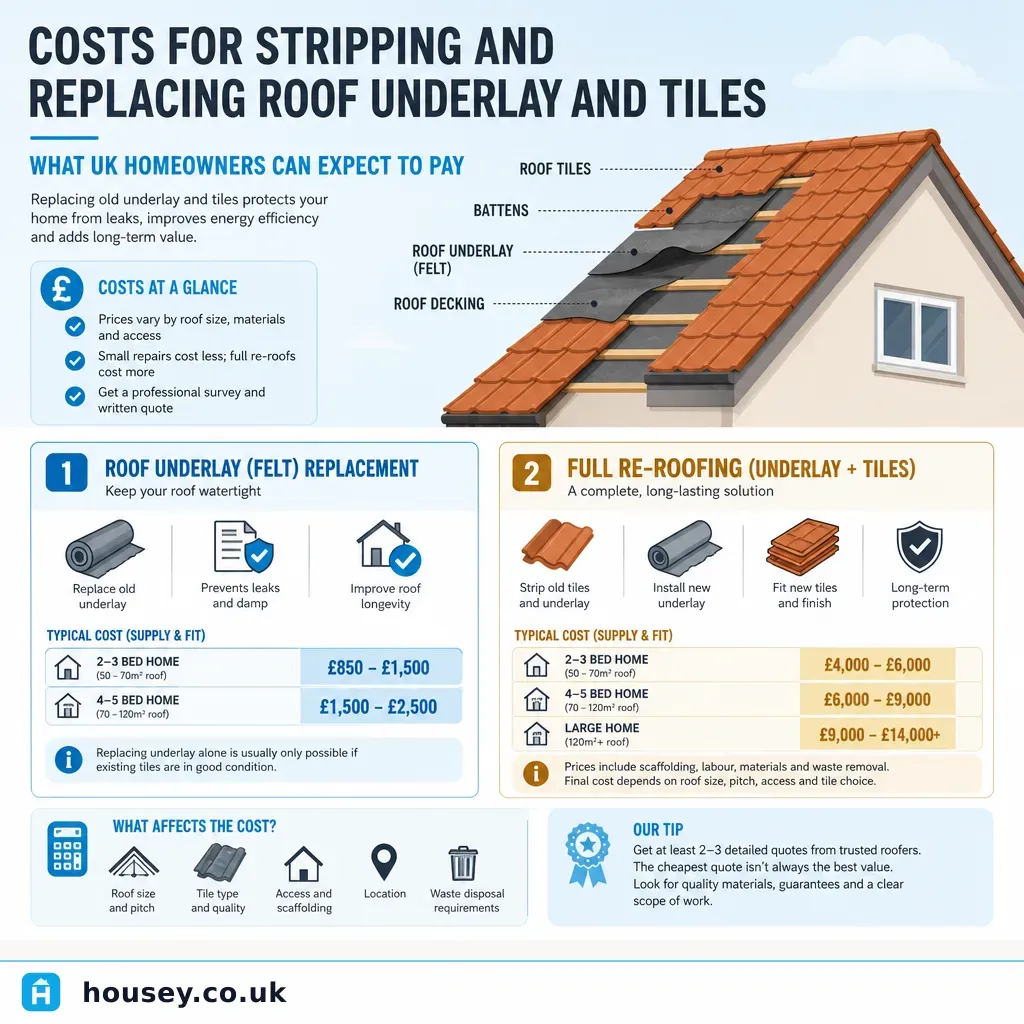 Improvement & Build
Costs for Stripping and Replacing Roof Underlay and Tiles
Stripping and replacing roof underlay and tiles on a typical UK semi-detached house costs £5,000–£12,000, depending on roof size, tile type, and access.
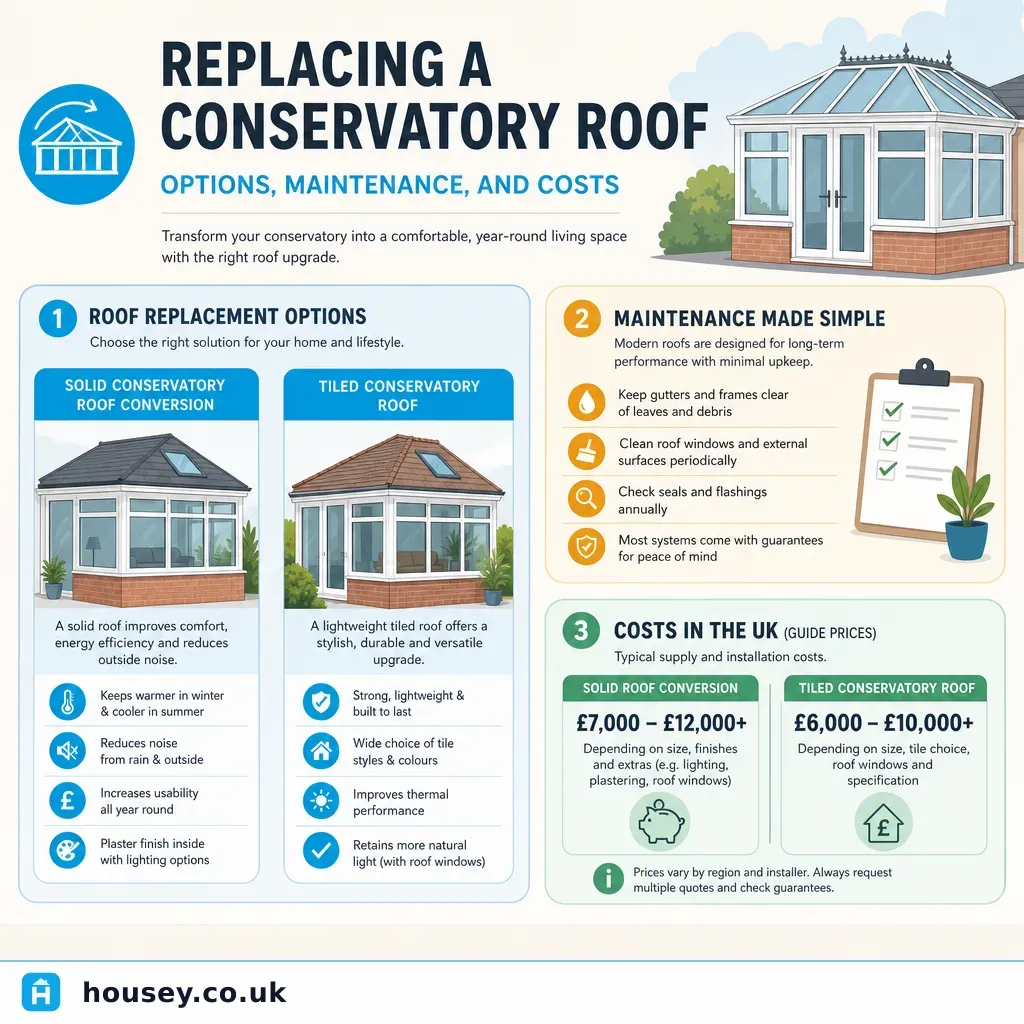 Improvement & Build
Replacing a Conservatory Roof: Options, Maintenance, and Costs
Conservatory roofs can be replaced with polycarbonate, glass, or solid tiled systems.
 Improvement & Build
Complete Roof Replacement: Materials and Labour Costs
A complete roof replacement on a typical three-bedroom semi-detached house costs between £5,500 and £14,000, depending on material, roof complexity, and region.
 Improvement & Build
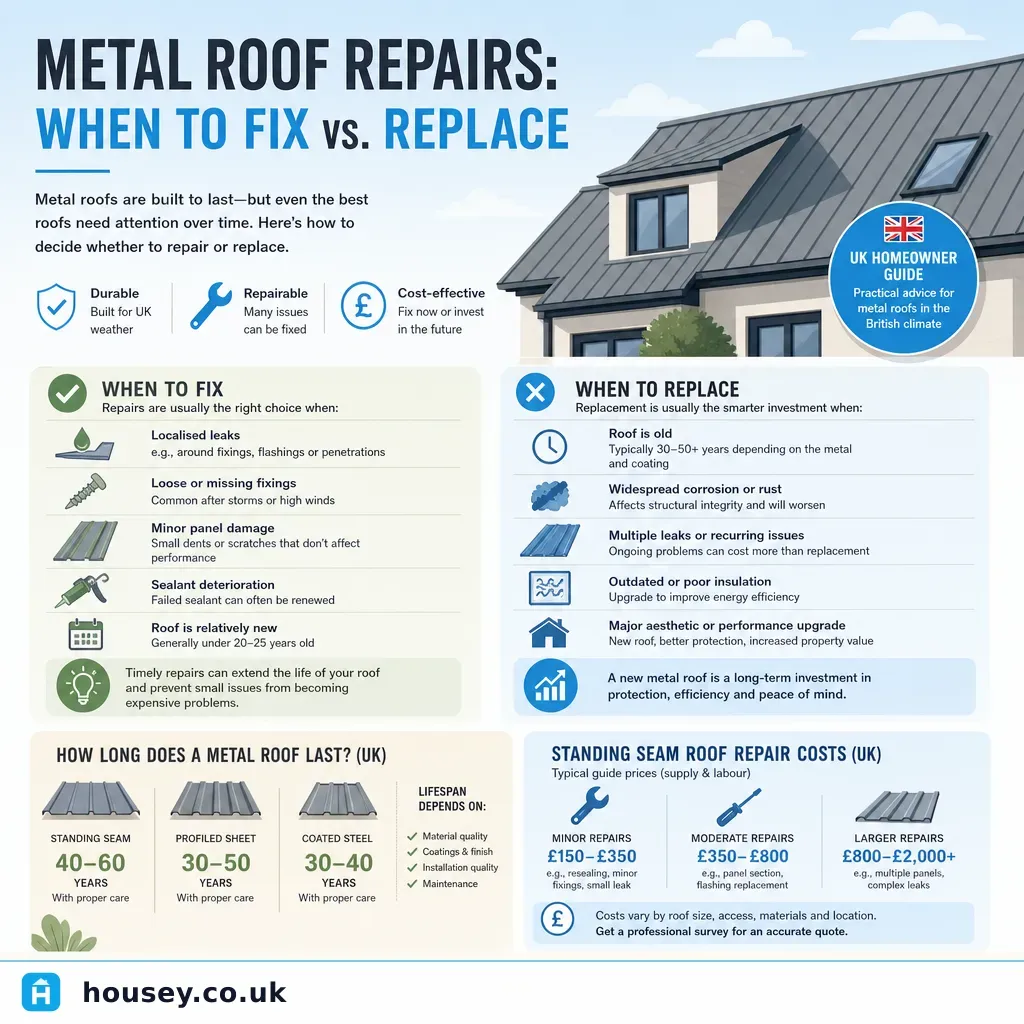
Metal Roof Repairs: When to Fix vs. Replace
For a metal roof, repair is usually right when damage is localised — a failed flashing, isolated corrosion, or one or two damaged panels.