Understanding Roof Shingles: Materials, Lifespan, and Selection
By Housey · Last reviewed 11th of May 2026
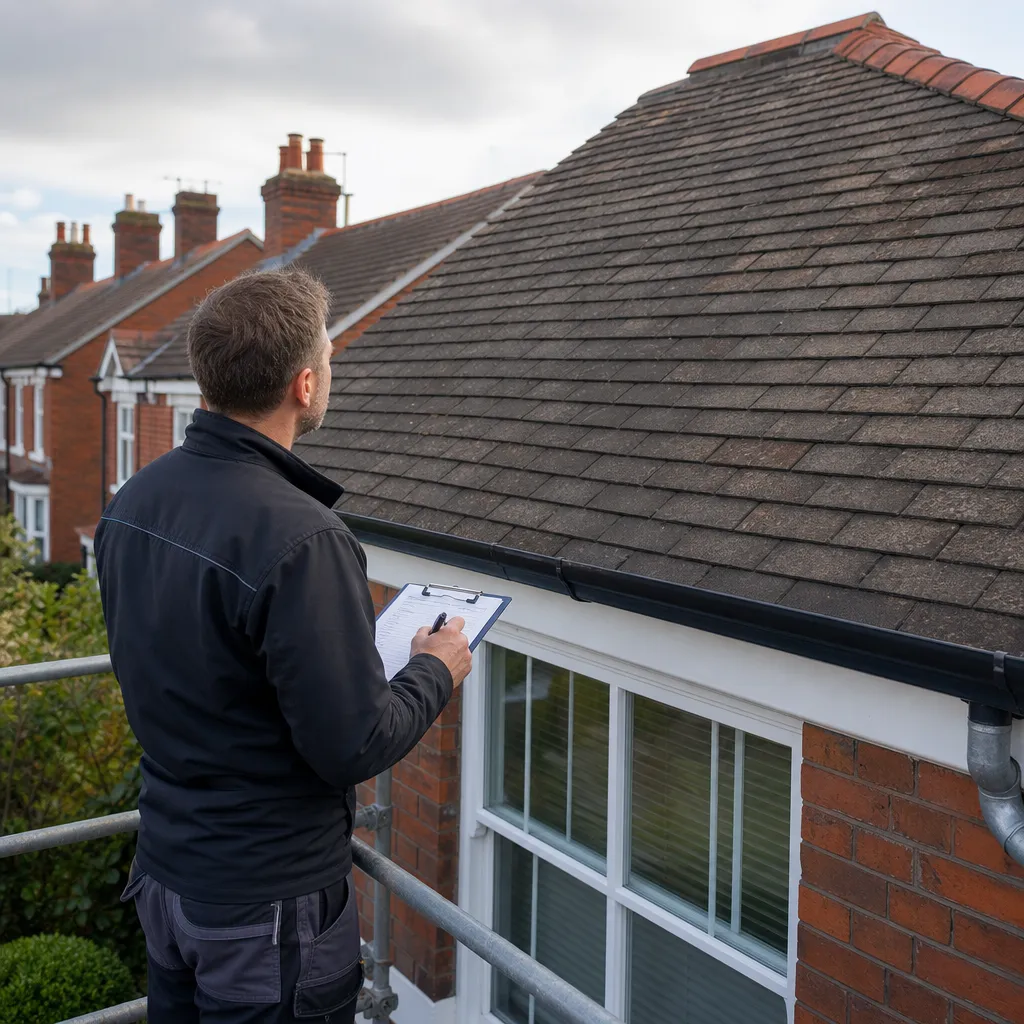
Understanding Roof Shingles: Materials, Lifespan, and Selection
Roof shingles crop up in UK renovation projects most often when an extension, outbuilding, or period property needs a roof covering that sits more softly in its surroundings than standard concrete or clay tiles. Whether a building survey has flagged an existing cedar roof as end-of-life, or you are specifying a new timber-framed garden room, the material you choose has significant consequences for longevity, maintenance, planning compliance, and long-term cost.
Key points
- Western Red Cedar shingles typically last 25–40 years in the UK; European Oak (cleft) shingles can exceed 50 years with correct installation and ventilation.
- Bitumen (asphalt) shingles — more common in North America — are available in the UK but carry a shorter lifespan of 15–30 years.
- Building Regulations Approved Document B (Fire Safety) restricts the use of untreated timber shingles within 6 metres of a relevant boundary; fire-retardant treatment or a higher-rated product resolves this in most cases.
- Most timber shingle products specify a minimum roof pitch of 17.5°; bitumen shingles can be installed at pitches above 12.5°.
- In conservation areas, AONBs, or on listed buildings, planning permission or listed building consent may be required before changing roofing materials.
What are roof shingles?
Roof shingles are thin, tapered pieces of material laid in overlapping courses from eaves to ridge, shedding water off each layer onto the one below. Unlike interlocking clay or concrete tiles — the standard covering on most UK homes — shingles rely on the correct pitch and overlap to remain weathertight rather than a mechanical interlock.
The term covers several distinct products:
Type | Material | Typical lifespan (UK) | Indicative installed cost |
|---|---|---|---|
Timber — Western Red Cedar | Sawn or split cedar | 25–40 years | £70–£130/m² |
Timber — European Oak | Sawn or cleft oak | 40–60+ years | £90–£160/m² |
Timber — Sweet Chestnut | Sawn chestnut | 30–50 years | £80–£150/m² |
Bitumen / asphalt | Fibreglass-reinforced asphalt | 15–30 years | £30–£65/m² |
Composite / synthetic | Rubber, plastic, or fibre cement | 30–50 years | £60–£120/m² |
Indicative UK costs, last reviewed 2026-05-11. Costs vary by region, roof complexity, access, and contractor. Always obtain at least three quotes.
Timber shingles: the UK's most established choice
Western Red Cedar is the most widely available timber shingle in the UK. Its natural oils provide inherent moisture and decay resistance; its straight grain makes it lightweight and straightforward to work with. A well-installed cedar roof on a ventilated counter-batten system, at adequate pitch, can last 30–40 years with modest maintenance: moss treatment and a preservative application every 7–10 years.
European Oak — particularly cleft (riven) oak — is used on heritage buildings and vernacular-style properties. Cleft oak follows the wood grain, shedding water more effectively than sawn timber. It is denser and heavier than cedar, so the roof structure should be assessed for load capacity before specifying it.
Fire spread (Approved Document B): Untreated timber shingles typically fall under Class 3 (National) or Class E (European) surface spread of flame. Building Regulations Approved Document B restricts their use within 6 metres of a relevant boundary. Fire-retardant treatment or specifying a Class B-rated product resolves this in most situations — confirm requirements with your local building control body before ordering.
Bitumen and composite shingles
Bitumen (asphalt) shingles are the dominant roofing material in North America and are increasingly available from UK suppliers. They are lighter than tiles, cheaper than timber, and suit lower pitches. Their main drawbacks — shorter lifespan and less distinctive appearance — mean they tend to be chosen for garden buildings, outbuildings, and dormer cheeks rather than main house roofs.
Composite and synthetic shingles are manufactured to resemble slate, cedar, or stone while offering greater dimensional stability. Quality varies considerably between manufacturers. Look for a BBA (British Board of Agrément) certificate or equivalent third-party certification before specifying a composite product, and confirm the product warranty terms — length, what it covers, and whether it is transferable.
Which shingle should you choose?
- Choose Western Red Cedar if you want a natural timber aesthetic with a well-established UK track record, your roof pitch is 17.5° or above, and you are working to a moderate budget.
- Choose European Oak (cleft) if the property is listed, in a conservation area, or needs a long-lived traditional vernacular material.
- Choose bitumen shingles if the structure is a garden room or outbuilding, the pitch is between 12.5° and 17°, and upfront cost takes priority over long-term lifespan.
- Choose composite shingles if you want the appearance of slate or stone without the weight, provided the product carries a BBA certificate and a 30-year or longer manufacturer's guarantee.
- Consult your local planning authority and an NFRC-member roofer if the property is listed, in a conservation area, or in an AONB before selecting any material.
Roof pitch and installation requirements
Minimum pitch requirements vary by product and must be followed for weathertight performance:
- Most timber shingles: 17.5° minimum (some allow 14° with increased overlap)
- Bitumen shingles: typically 12.5° minimum
- Composite shingles: follow the manufacturer's installation manual
Below the stated minimum, water backs up under the shingle laps and penetrates the deck. Cross-reference the product's installation manual with Building Regulations Approved Document C (resistance to moisture) and confirm requirements with your building control body before work starts.
Homeowner checklist: before you commission a shingle roof
When to get professional help
All reroofing work involves working at height — always instruct a qualified roofer. Seek specialist advice before proceeding if:
- The existing roof structure shows signs of sagging, rafter damage, or rot.
- The property is listed or within a conservation area and consent requirements are unclear.
- There are signs of previous poor ventilation — such as blackened roof timbers or condensation staining — that need addressing before the new covering is laid.
- You are specifying a heavy material such as cleft oak on an older or lightweight structure.
How Housey can help
Housey connects you with vetted local roofers who can inspect your existing roof covering, advise on suitable shingle products for your roof pitch and property type, and provide detailed, comparable quotes for the work.
Frequently asked questions
Do roof shingles need planning permission in the UK?
In most cases, replacing a roof covering with a like-for-like material is permitted development and does not need a planning application. However, if you are changing material type — for example, from clay tiles to cedar shingles — or the property is listed or in a conservation area, check with your local planning authority first. Listed building consent is required for any material changes to a listed building.
How long do cedar shingles last on a UK roof?
Western Red Cedar shingles typically last 25–40 years in UK conditions when correctly installed with adequate ventilation, sufficient pitch, and periodic maintenance. Exposure in wet or heavily shaded locations will shorten lifespan. Properties with good air movement and a south-facing aspect tend to achieve the longest service from a cedar roof.
Are bitumen shingles a good choice for a UK garden room?
Bitumen shingles can be a cost-effective option for garden rooms and outbuildings with a pitch above 12.5°. They are lightweight and straightforward to install but carry a shorter lifespan of 15–30 years compared with timber or composite alternatives. For a permanent, well-used structure, a composite or timber shingle usually offers better long-term value.
Can I fit roof shingles myself?
Small repairs to an existing shingle roof may be within the capability of a competent DIYer, but full installation involves working at height, correct nailing patterns, ventilation design, and in many cases building control compliance. Housey recommends instructing an NFRC-member roofer for any full or substantial reroofing project.
Sources and further reading
- Building Regulations Approved Document B (Fire Safety) — GOV.UK
- Building Regulations Approved Document C (Site Preparation and Moisture Resistance) — GOV.UK
- National Federation of Roofing Contractors (NFRC) — NFRC
- Planning Portal: Roofing and permitted development — Planning Portal
- British Board of Agrément (BBA) certification — BBA
Useful next reads
 Improvement & Build
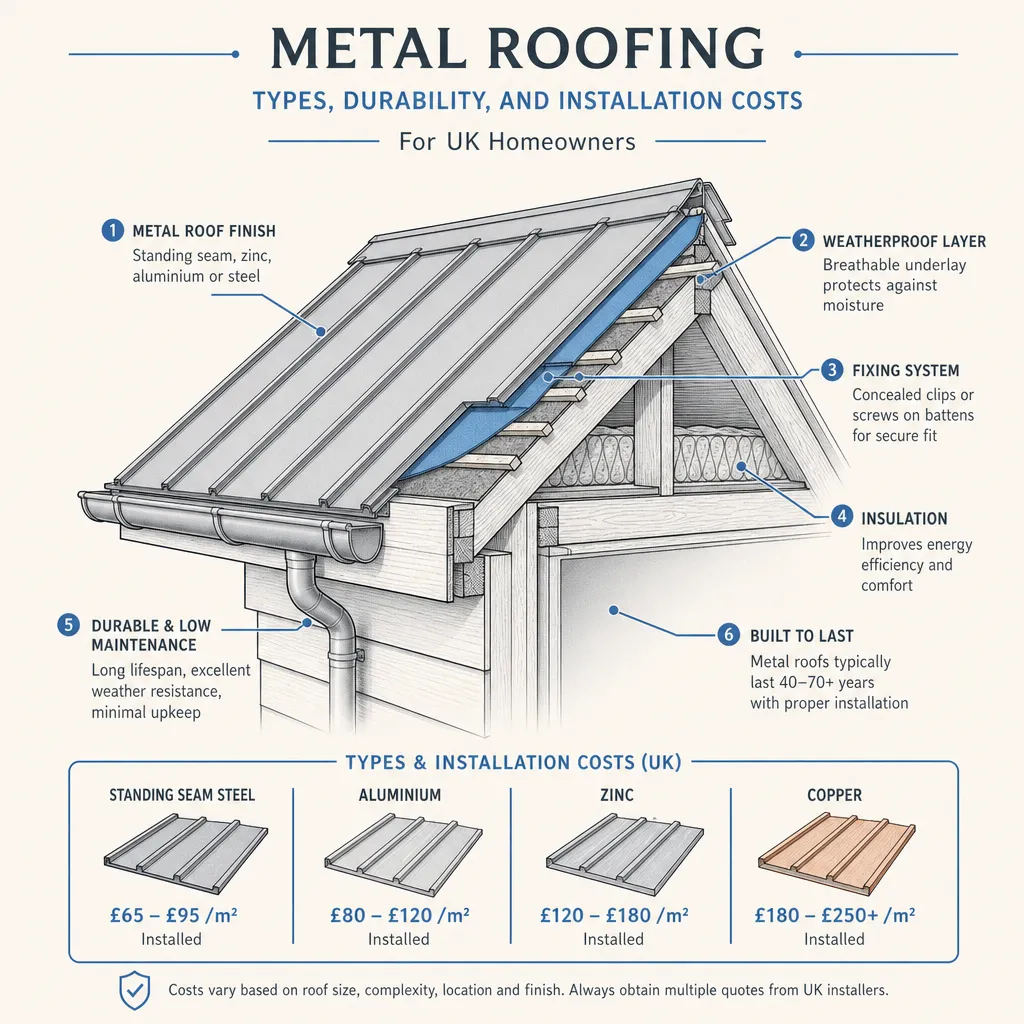
Metal Roofing: Types, Durability, and Installation Costs
Metal roofing in the UK includes standing seam, corrugated sheet, and metal tile systems in steel, aluminium, zinc, or copper.
 Improvement & Build
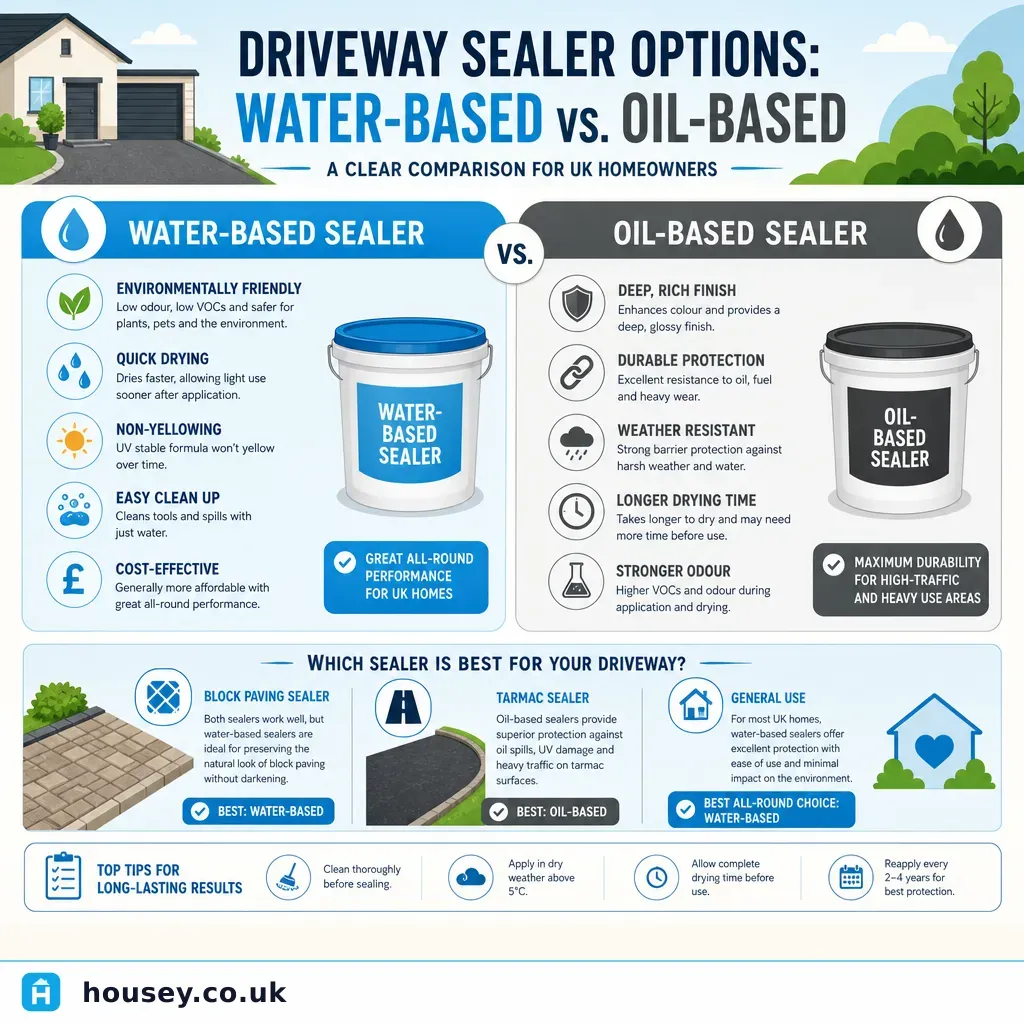
Driveway Sealer Options: Water-Based vs Oil-Based Comparison
Water-based driveway sealers are generally easier to apply, lower in VOCs, and suitable for most block paving and concrete surfaces.
 Improvement & Build
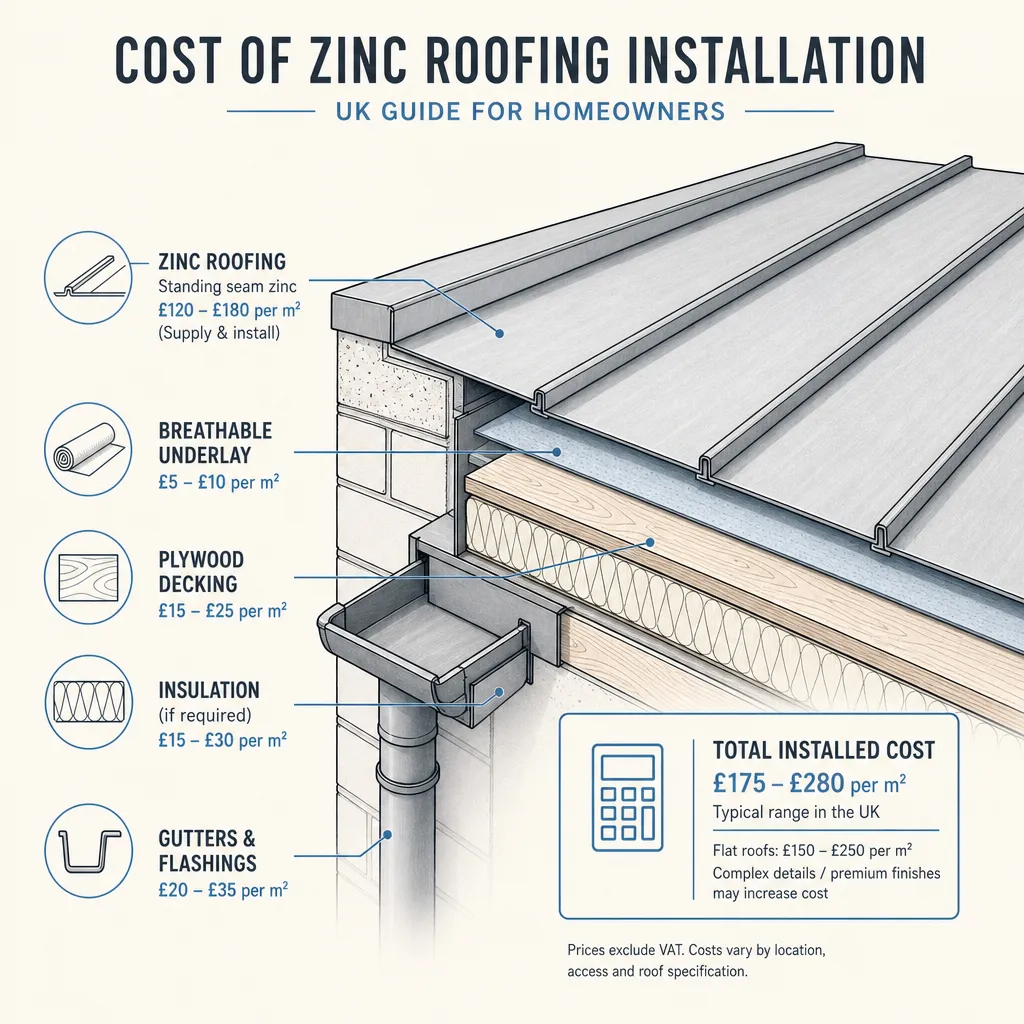
Cost of Zinc Roofing Installation
Zinc roofing typically costs £100–£200 per m² installed in the UK for standing seam systems, with flat roof applications ranging from £80–£160 per m².
 Improvement & Build
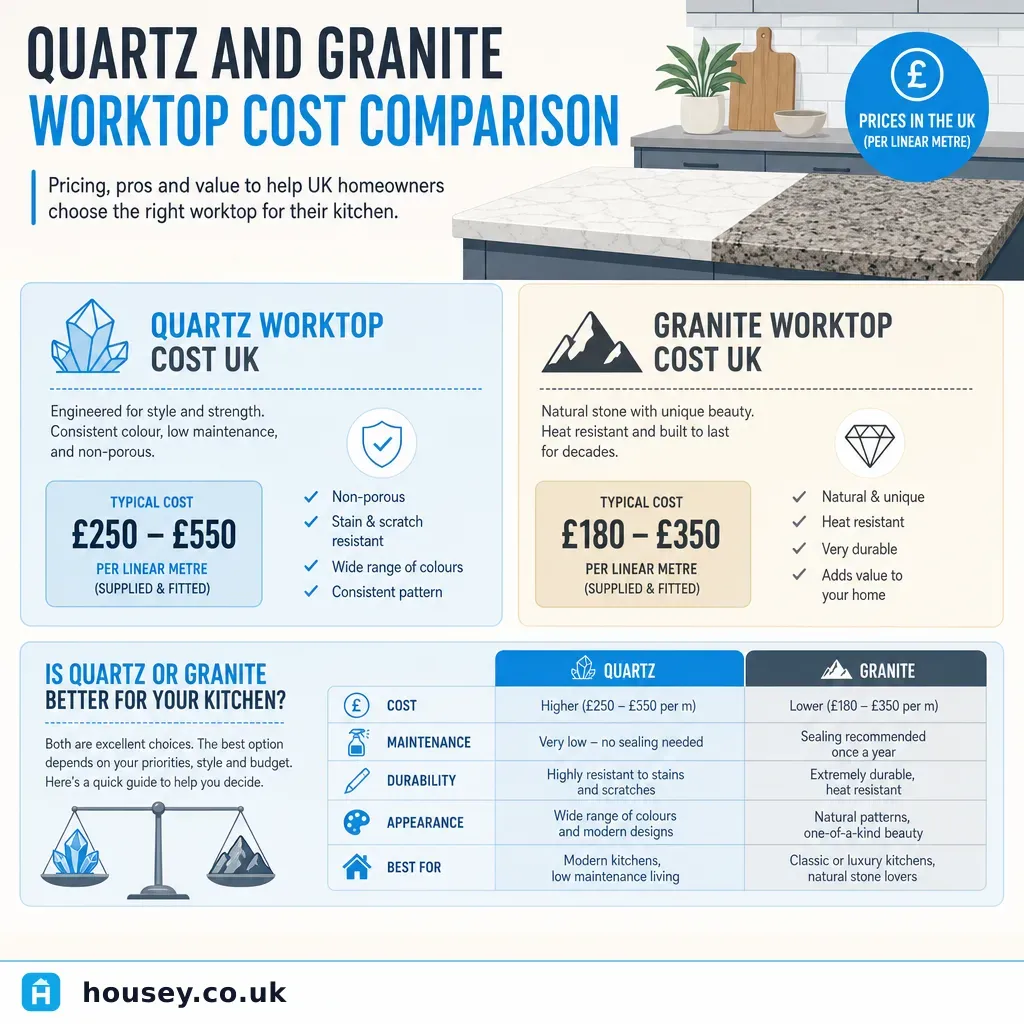
Quartz and Granite Worktop Cost Comparison
Quartz worktops in the UK cost £250–£650 per linear metre fitted; granite ranges from £200–£600 for standard slabs.
 Improvement & Build
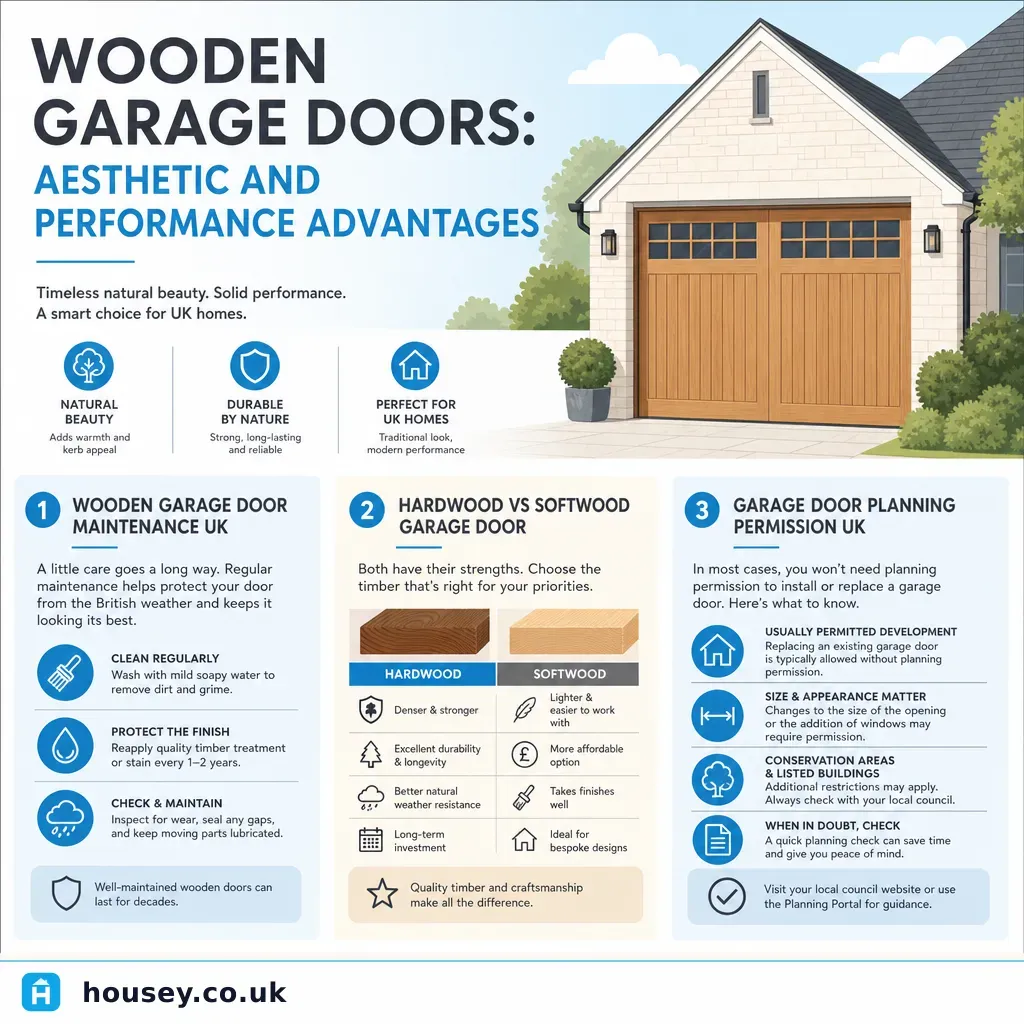
Wooden Garage Doors: Aesthetic and Performance Advantages
Timber garage doors offer a traditional appearance, strong repairability, and good planning acceptance — particularly for period homes, listed buildings, and conservation areas.