Roof Tile Options: Materials, Style and Durability for UK Properties
By Housey · Last reviewed 26th of May 2026
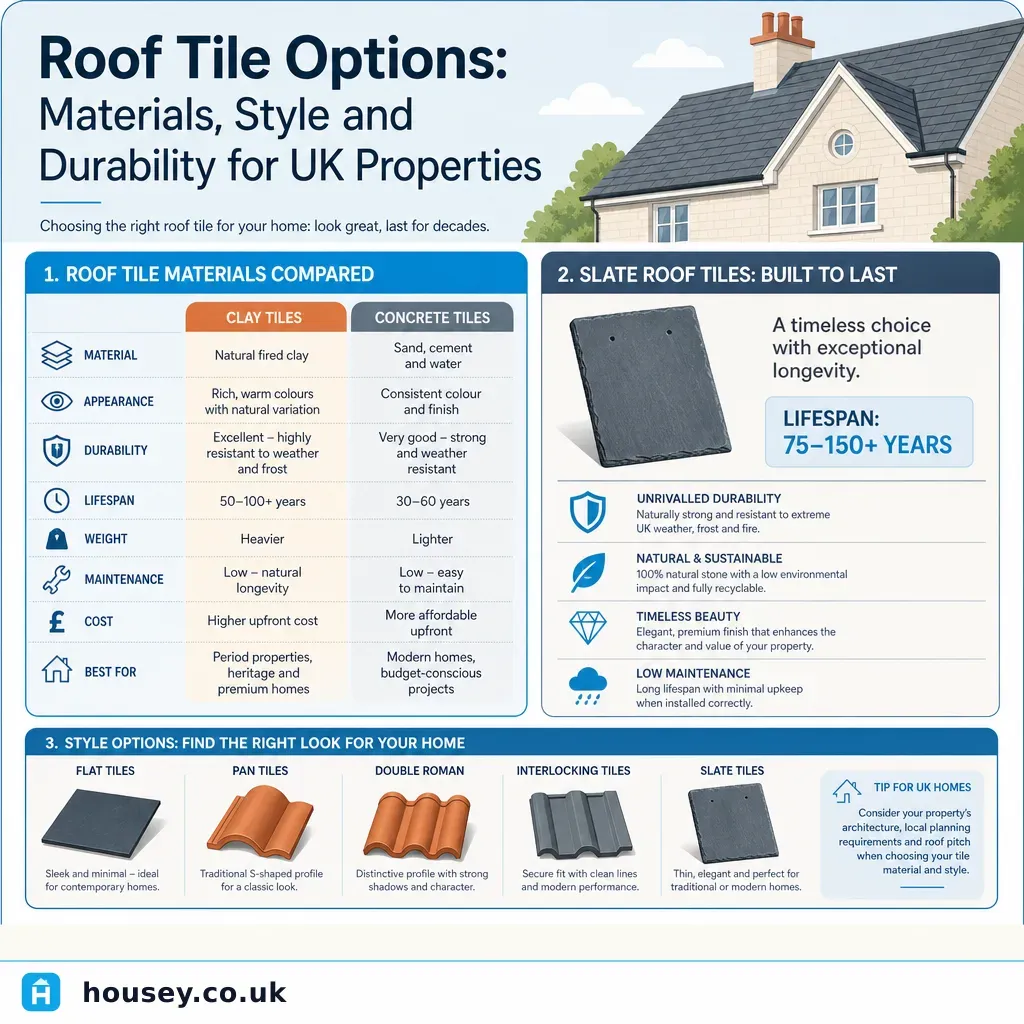
Roof Tile Options: Materials, Style and Durability for UK Properties
Choosing roof tiles is a decision most homeowners only face once or twice: during a full reroofing project, when replacing storm-damaged sections, or when adding an extension that must match the existing roof. The choice matters because tiles affect weatherproofing, structural load, thermal performance, and whether local planners or conservation officers will approve the result. In England and Wales, Building Regulations Part L sets minimum thermal standards for roof renovations, and many councils restrict tile choices in conservation areas or on listed buildings.
Key points
- Clay plain tiles have a typical lifespan of 60–100 years; concrete interlocking tiles last 30–50 years; natural slate can last 80–150 years.
- Building Regulations Approved Document L requires replacement roof coverings on existing dwellings to achieve a U-value of 0.18 W/m²K or better where reasonably practicable.
- Clay and natural slate tiles are significantly heavier than concrete alternatives — a structural check may be needed before switching materials, particularly on pre-1960s properties.
- Permitted development does not apply to listed buildings or most properties in conservation areas; check with your local planning authority before replacing tiles with a different material or colour.
- Contractors registered with the Competent Roofer scheme or the NFRC can self-certify compliance with Building Regulations for qualifying roofing work, avoiding a separate building control application.
Comparing the main roof tile materials
Material | Lifespan | Weight (approx.) | Min. pitch | Best for | Limitations |
|---|---|---|---|---|---|
Clay plain tile | 60–100 years | 40–55 kg/m² | 35°–40° | Period and conservation-area properties | Higher cost; heavy; requires adequate roof structure |
Concrete interlocking tile | 30–50 years | 40–50 kg/m² | 17.5°–22.5° | Modern housing, large roof areas | Can look less traditional; may fade over time |
Natural Welsh slate | 80–150 years | 25–35 kg/m² | 25°–30° | Victorian terraces, rural cottages | Premium cost; supply can vary; skilled fixing required |
Artificial/reconstituted slate | 30–60 years | 25–40 kg/m² | 20°–25° | Properties where natural slate is not viable | Variable quality between manufacturers |
Fibre cement slate | 25–40 years | 18–22 kg/m² | 15°–20° | Low-pitch roofs, budget reroofing | Less authentic appearance |
Indicative figures, last reviewed 2026-05-26. Weights and lifespans vary by product and manufacturer; always consult the manufacturer's technical data sheet.
Which tile should you choose?
Use this decision guide to narrow down your options:
- Choose clay plain tiles if your property is pre-1919, sits in a conservation area, or is listed — planners usually expect a like-for-like replacement in traditional materials.
- Choose concrete interlocking tiles if you have a post-1960s property with a low to moderate pitch and cost is a priority over maximum longevity.
- Choose natural Welsh slate if your property originally had natural slate and you want a faithful restoration with the longest possible lifespan; verify that your existing roof structure can carry the weight before ordering.
- Choose artificial or reconstituted slate if the budget does not stretch to natural slate but you need to match a slate aesthetic without triggering a planning objection.
- Choose fibre cement if you have a shallow-pitch roof (below 20°) where clay or slate is unsuitable, or if structural load capacity is a limiting factor.
- Ask a structural engineer if you are switching from concrete tiles to clay or natural slate — the extra weight may require additional rafter support or an upgraded truss specification.
- Check with your local planning authority before any reroofing in a conservation area, Article 4 direction area, or on a listed building.
How roof pitch affects your choice
Roof pitch is the angle of your slope and one of the most important constraints on tile selection. Manufacturers publish minimum pitch recommendations; installing tiles below the stated minimum voids any product warranty and risks water ingress through the roof covering.
Clay plain tiles generally require a pitch of 35° or steeper and rely on overlap and bedding to remain weathertight. Concrete interlocking tiles are engineered with interlocking profiles that allow lower pitches — some products are approved down to 12.5° with an appropriate breathable underlay. Natural slate performs well from around 25°, though steeper pitches reduce the risk of wind uplift and improve longevity.
If you are unsure of your roof's pitch, a roofer can measure it during a site visit. For new extensions, the pitch is usually set by the architect's drawings and must be agreed before tile selection begins.
Cost drivers for roof tile installation
Tile material cost is only part of the project budget. Other factors that significantly affect the final price include:
- Scaffolding: usually required for any reroofing project and can add £800–£2,500 depending on property size and access complexity. Indicative UK costs, last reviewed 2026-05-26.
- Battens and underlay: most reroofing projects require new treated timber battens and a breathable roofing membrane, which should appear as separate line items in any written quote.
- Ridge and hip tiles: clay or concrete ridge tiles, mortar bedding or dry-fix systems, and hip tiles all add material and labour costs that vary with roof geometry.
- Lead flashing and valleys: junctions at chimneys, dormers, and valleys require lead (or approved alternatives) — costs depend on linear metres involved.
- Structural repairs: if rafters are damaged, undersized, or need reinforcement for the new tile weight, this work is quoted separately and can substantially increase the total cost.
Always obtain at least three written, itemised quotes before instructing a roofer.
What to ask before accepting a quote
- What tile product (manufacturer name and product code) is included, and can you see a physical sample before committing?
- Does the quote include scaffolding, breathable underlay, treated battens, ridge tiles, hip tiles, and all lead flashings?
- Is VAT included in the quoted price?
- What qualifications or trade membership does the roofer hold (e.g., NFRC membership, Competent Roofer scheme registration)?
- Will the work be self-certified under the Competent Person Scheme, or will a separate Building Regulations application be required?
- What warranty is offered on materials and workmanship — stated separately?
- What is the agreed plan if rotten timbers, undersized rafters, or other structural defects are discovered once stripping begins?
When to get professional help
Most reroofing work should be carried out by a qualified roofer. Seek professional advice if:
- Your property is listed or in a conservation area and you are unsure which tile type the planning authority will approve.
- You want to change tile material and are unsure whether your existing roof structure can carry the new weight.
- You notice sagging, dipping, or spreading at the eaves — these can indicate structural problems that go beyond the tile covering itself.
- Ridge mortar is crumbling across a wide area, which is often a sign of age-related deterioration requiring full reroofing rather than localised patch repairs.
- You are planning an extension and need the new roof section to match the existing covering precisely in both material and appearance.
How Housey can help
Finding a reliable, qualified roofer is often the hardest part of a reroofing project. Housey connects you with vetted qualified roofers who can assess your roof, advise on tile choice for your property type and local planning requirements, and provide itemised quotes so you can compare like for like before committing.
Frequently asked questions
Do I need planning permission to replace roof tiles in the UK?
In most cases, replacing like-for-like roof tiles on a standard residential property does not need planning permission under permitted development rights. However, if your property is listed, in a conservation area, or subject to an Article 4 direction, any material change — including the tile type or colour — may require prior approval. Always check with your local planning authority before starting work.
How long do concrete roof tiles last compared to clay?
Concrete interlocking tiles typically last 30–50 years, while clay plain tiles usually last 60–100 years. The actual lifespan depends on exposure, local weather conditions, maintenance, and installation quality. Ridge bedding, mortar, and flashings often require attention well before the tiles themselves fail.
Can I walk on roof tiles to inspect them?
Walking directly on roof tiles — especially clay or natural slate — risks cracking them and causing water ingress. Use a roof ladder or crawl board to spread weight if access is unavoidable, and never work at height without appropriate safety equipment. For a professional inspection, hire a qualified roofer or use drone survey services.
What is the difference between dry-fix and mortar ridge systems?
Traditional mortar bedding uses cement mortar to fix ridge, hip, and verge tiles. Dry-fix systems use mechanical clips, ventilated ridge components, and flexible seals. Building Regulations and NHBC Standards now encourage dry-fix systems as they are more durable, require less maintenance, and allow ventilation at the ridge. Many roofers quote dry-fix as standard for new installations.
Sources and further reading
Useful next reads
 Improvement & Build
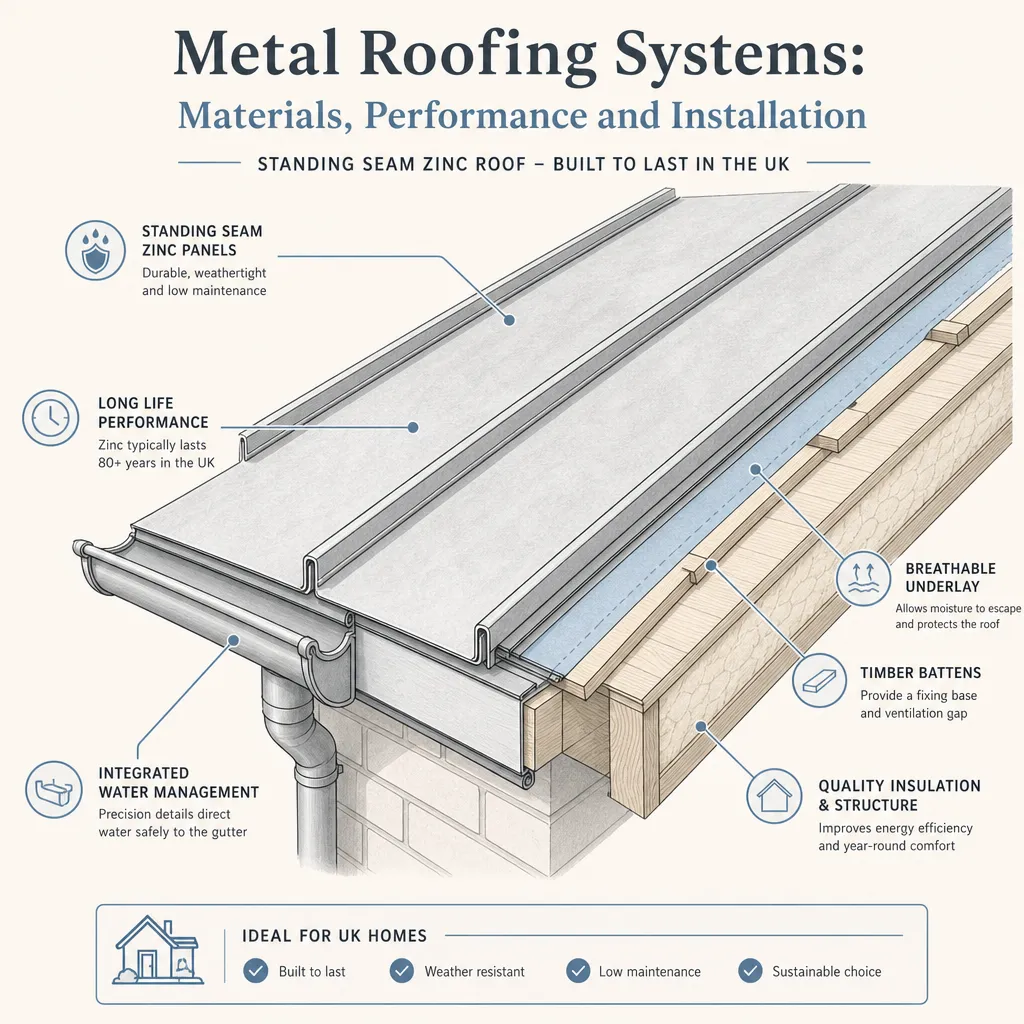
Metal Roofing Systems: Materials, Performance and Installation
Metal roofing systems in the UK include standing seam zinc, coated steel, aluminium, and copper panels, as well as profiled sheets.
 Improvement & Build
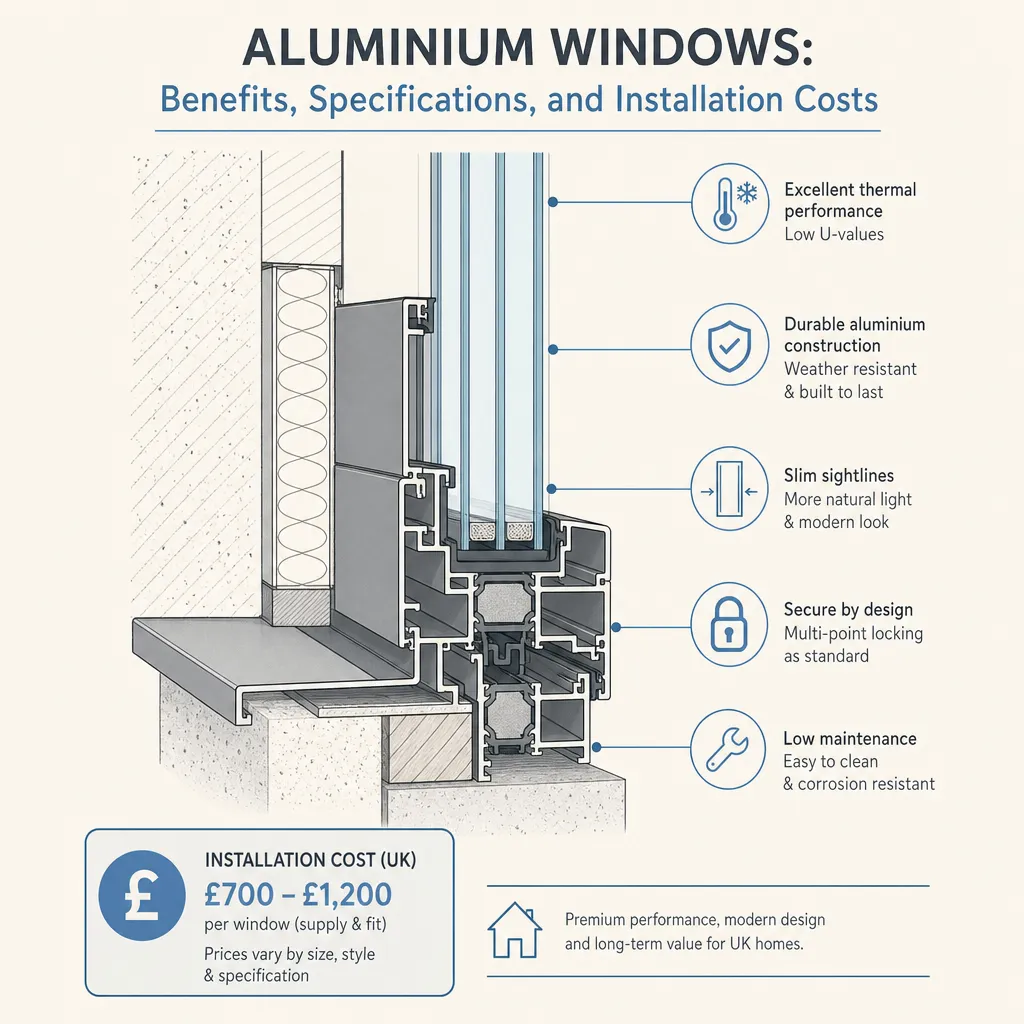
Aluminium Windows: Benefits, Specifications, and Installation Costs
Aluminium windows typically cost £600–£1,800 per window installed in the UK, depending on size and specification.
 Improvement & Build
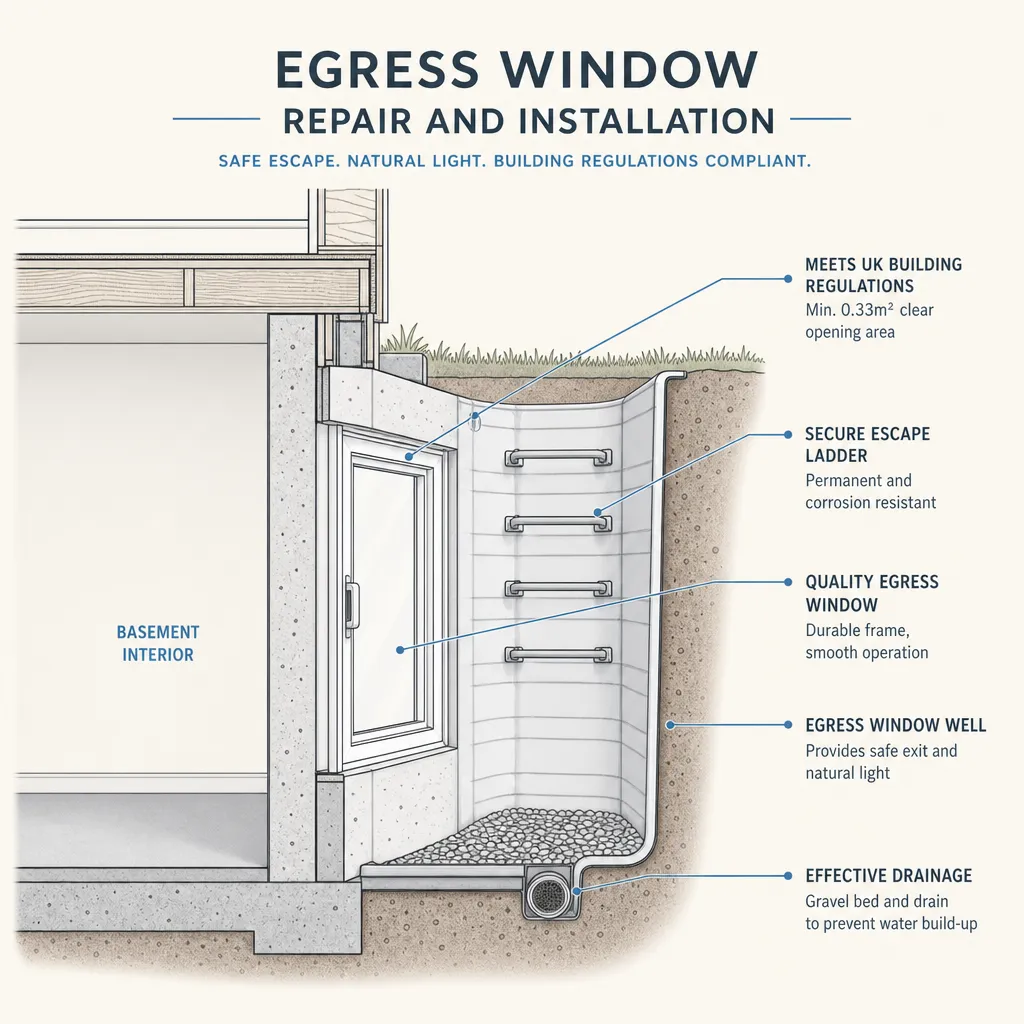
Egress Window Repair and Installation
An egress window is a window large enough to serve as an emergency escape route from a habitable room.
 Improvement & Build
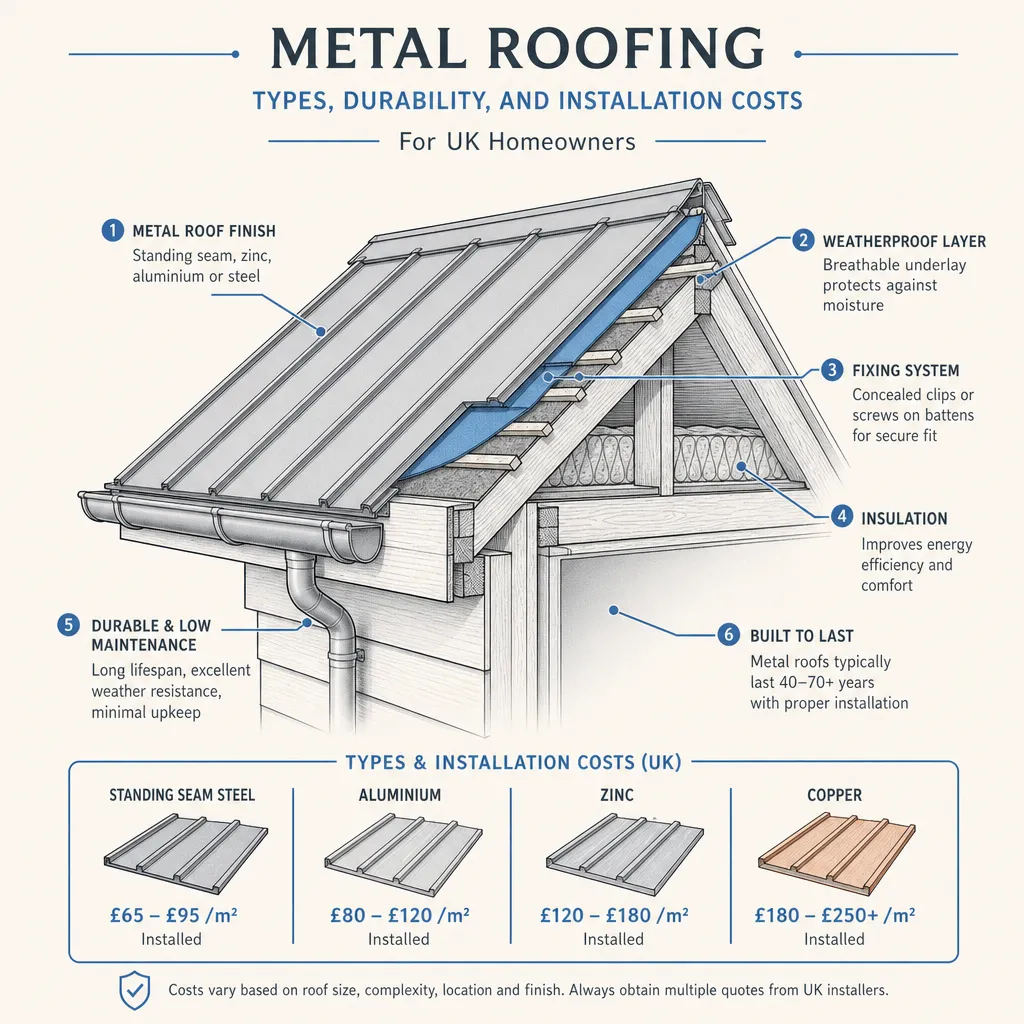
Metal Roofing: Types, Durability, and Installation Costs
Metal roofing in the UK includes standing seam, corrugated sheet, and metal tile systems in steel, aluminium, zinc, or copper.
 Improvement & Build
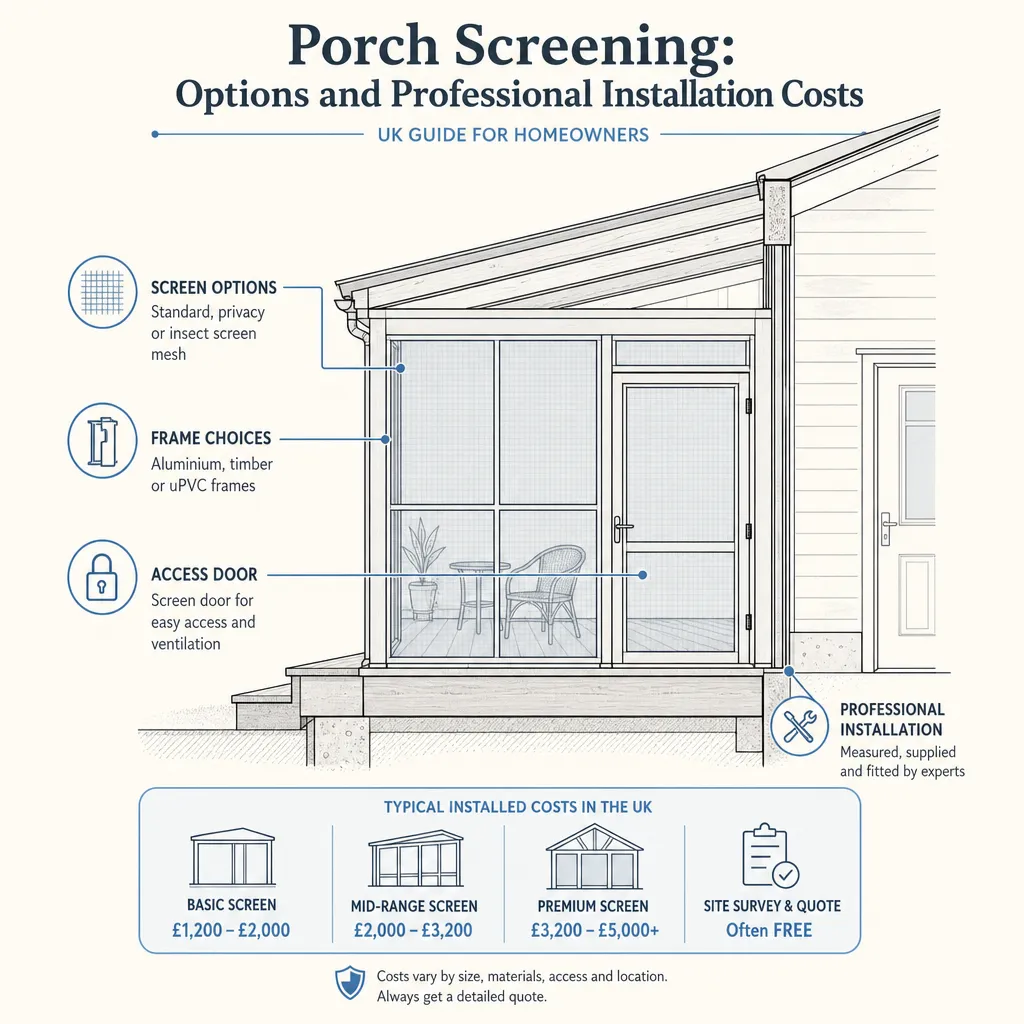
Porch Screening: Options and Professional Installation Costs
Porch screening ranges from simple insect mesh on a timber frame to bespoke aluminium-framed glazed enclosures.