Roof Truss Materials and Costs: Supporting Your Roof Structure
By Housey · Last reviewed 11th of May 2026
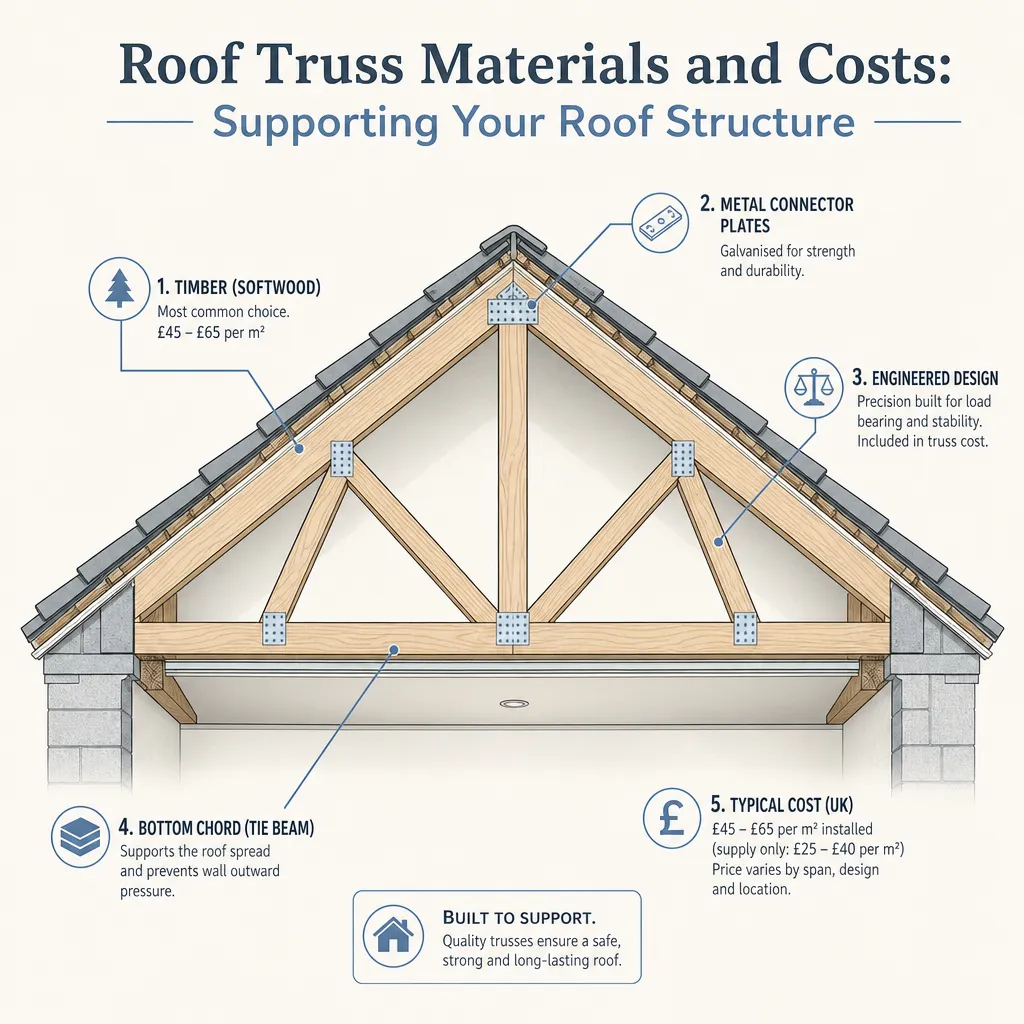
Roof Truss Materials and Costs: Supporting Your Roof Structure
Roof trusses form the structural skeleton of most modern UK roofs, distributing the combined weight of the roof covering, insulation, and imposed loads — including snow and wind — down to the external walls. Whether you are planning a new build, adding an extension, or investigating a roof structure problem flagged in a survey, understanding truss materials, configurations, and realistic costs helps you budget accurately and ask the right questions of the professionals involved.
Key points
- Most UK houses built after the 1960s use prefabricated engineered timber roof trusses, typically manufactured from C16, C24, or TR26 stress-graded softwood to BS EN 14250.
- Roof truss designs must be produced by a structural engineer or specialist truss designer and are generally verified to Eurocode 5 (timber structures).
- Steel trusses are specified for longer spans, heavy roof loads, or where timber section depth is insufficient — they are rarely cost-effective for standard domestic roofs.
- Indicative cost for a prefabricated timber truss set (semi-detached, supplied and installed): £2,000–£5,000; attic trusses for a habitable loft: £5,000–£12,000+ (Indicative UK costs, last reviewed 2026-05-11).
- Cutting, notching, or removing any member of a prefabricated trussed rafter is a structural alteration requiring a structural engineer's design and Building Regulations approval.
What is a roof truss?
A roof truss is a pre-engineered triangular structural frame that supports the roof covering — tiles, slates, or sheeting — and transfers loads to the building's walls. In UK domestic construction, two principal structural approaches are common:
- Traditional (cut) roofs: Constructed on site by a carpenter from individual rafters, ridge boards, purlins, and ceiling joists. Standard in pre-1960s properties and still used for complex or bespoke roof shapes.
- Prefabricated trussed rafter roofs: Factory-manufactured units delivered to site ready to erect. Standard in UK new-build construction since the 1970s.
Most UK houses sold in the last 50 years have prefabricated trussed rafter roofs. The roof void in these properties is a web of small-section timbers interconnected with pressed steel connector plates — cutting any member alters the load path and is potentially dangerous.
Roof truss material types: comparison
Material | Best for | Not ideal for | Typical span | Main structural risk |
|---|---|---|---|---|
Regularised softwood (C16/C24) | Most domestic roofs, extensions, new-build up to approximately 12 m span | Long spans or heavy loads without engineering review | Up to 12 m depending on configuration | Timber decay if roof ventilation is inadequate; notching by other trades |
TR26 stress-graded softwood | Prefabricated fink trusses for standard domestic roofs | On-site cut roof work | Up to 12 m | As C16/C24; grade is only valid for the complete truss system |
Glulam (glued laminated timber) | Exposed feature trusses, agricultural buildings, large spans | Projects with tight head-height constraints | Up to 30 m+ depending on section | Joint failure if connections are not properly specified |
Structural steel (hollow section or universal beam) | Long-span residential, commercial, or complex hip configurations | Standard domestic roofs — cost is disproportionate | Virtually unlimited with correct design | Corrosion if not adequately protected; fire performance requirements |
Engineered wood (LVL / I-joist) | Flat or low-pitch roof structures, floor-ceiling cassettes | Traditional pitched roof replacement | Varies by product | Dimensional sensitivity to moisture; not suitable for exposed conditions |
Timber grades: what C16, C24, and TR26 mean
Structural softwood in the UK is stress-graded to identify its load-carrying capacity. Grades are assigned by visual inspection or machine testing to BS EN 14081.
- C16: The standard grade for most domestic roof trusses. Sufficient for conventional spans and typical imposed loads.
- C24: Higher bending strength and stiffness; used for longer spans or where structural calculations require greater capacity.
- TR26: A truss-rafter specific grade, optimised for the slender sections used in prefabricated trusses and commonly specified by truss manufacturers.
Graded timber must be marked with the grade, species, standard, and certifying body. Unmarked timber is not suitable for structural use and should not be accepted on site.
How much do roof trusses cost in the UK?
Costs depend on truss configuration, pitch, span, timber grade, quantity required, and whether the project is a new roof, an extension, or a replacement following damage or defect.
Scope | Indicative materials cost | Indicative supply and install cost |
|---|---|---|
Truss set for two-bedroom semi (basic fink/W truss) | £700–£1,500 | £2,000–£4,000 |
Truss set for three or four-bedroom detached | £1,500–£3,500 | £3,500–£7,000 |
Attic trusses (room-in-roof configuration) | £2,500–£6,000 | £5,000–£12,000+ |
Partial replacement of damaged trusses | Varies significantly | £1,500–£5,000+ depending on extent |
Steel truss (per unit, long-span or commercial) | £500–£3,000+ per truss | Engineer and fabrication fees additional |
Indicative UK costs, last reviewed 2026-05-11. Costs exclude structural engineer fees, scaffolding, roof covering removal and reinstatement, Building Regulations application fees, and VAT. Always obtain written, itemised quotes.
Worked UK property scenario
Scenario: A developer is adding a two-storey rear extension to a 1970s three-bedroom semi-detached in the East Midlands. The extension footprint is 5 m × 6 m with a simple pitched roof matching the existing angle.
- A structural engineer's truss design is required. Typical engineer fee for a domestic extension roof: £500–£1,200.
- A specialist truss manufacturer produces a set of prefabricated TR26 fink trusses to the engineer's specification. Estimated materials: £600–£1,000.
- Installation by a roofing contractor, including erection and temporary bracing: estimated £800–£1,500.
- Building control inspects the structure before roof covering is fixed to confirm compliance with the approved design.
- Estimated total roof structure cost before covering, scaffolding, and VAT: £2,000–£4,000.
Costs rise materially for complex roof geometries (hips, valleys, dormers), larger spans, or where attic trusses are specified to create future habitable loft space.
What to ask a qualified professional
- Is the truss design certified by a structural engineer, and will I receive signed design calculations?
- What timber grade and species is specified, and what is the basis for that choice?
- Will the design be submitted as part of a Building Regulations application, and who manages that process?
- What truss configuration is proposed, and what does it mean for usable loft space?
- If modifying an existing trussed rafter loft, how will the existing structure be temporarily propped during works?
- What is the truss manufacturer's liability if a fabrication defect is identified after installation?
- Are connection details and permanent bracing schedules included in the design pack?
Important limitations
This article provides general information about roof truss materials and indicative costs. It does not constitute structural engineering advice. Every roof structure carries different loads, spans, conditions, and constraints. The information here should not be used as a substitute for:
- A structural engineer's assessment of your specific property and roof configuration
- A Building Regulations application and approval before any structural work begins
- A specialist survey if existing trusses show signs of damage, decay, pest infestation, or unauthorised alteration
For structural roof design, appoint a suitably qualified engineer — Chartered Member of the Institution of Structural Engineers (MIStructE) or Chartered Engineer (CEng) registered with a relevant professional body. Check registration via the IStructE or ICE member directories.
When to get professional help
Contact a structural engineer or RICS-regulated surveyor as a priority if:
- A structural survey or RICS home survey report has flagged roof structure concerns
- You can see sagging, spreading, or displaced timbers from inside the loft
- Truss members appear to have been cut, notched, or removed — common in properties where plumbers or electricians have passed services through structural timbers
- Any pressed steel connector plates appear to be detaching, corroded, or missing
- You are considering loft conversion work in a post-1960s property with a prefabricated trussed rafter roof
- A previous extension or conversion has altered the original roof load path in ways that are not clearly documented
How Housey can help
Housey connects homeowners with qualified roofers who work alongside structural engineers and building control bodies on domestic roof projects. Whether you are planning an extension roof, replacing a damaged structure, or preparing for a loft conversion, submit your project details to compare quotes from vetted local professionals.
Frequently asked questions
Do roof trusses need planning permission?
Replacing like-for-like roof trusses as a repair does not normally require planning permission, though it usually does require Building Regulations approval. Altering the roof form — changing pitch, adding dormers, or converting the loft — may require both planning permission and Building Regulations approval. Always check with your local planning authority and building control body before starting work.
Can I cut a roof truss to create loft storage?
No. Prefabricated trusses are engineered as complete triangulated systems — cutting any member alters the load path and can cause structural failure. Any modification requires a structural engineer's redesign, typically involving new steel or timber elements to replace the structural function of the removed members. This is a regulated building operation requiring Building Regulations approval.
How long do timber roof trusses last?
Properly installed and ventilated timber roof trusses can last the life of the building — 60 to 100 years or more. The primary risks are inadequate ventilation leading to moisture accumulation and decay, pest infestation particularly wood-boring beetles, and physical damage from maintenance operations or service installations. A RICS Level 3 Building Survey includes inspection of accessible roof timbers.
What is an attic truss?
An attic truss is a prefabricated truss designed with a clear rectangular void within its profile — created by vertical web members — to provide a habitable room space. Unlike a standard fink truss, the internal void is unobstructed by diagonal web members. Attic trusses cost significantly more than standard trusses due to the larger-section timber required and must be specified at the design stage.
Sources and further reading
- Approved Document A: Structure — GOV.UK
- Institution of Structural Engineers: Find an engineer — IStructE
- TRADA: Timber guidance for structural applications — TRADA
- Planning Portal: Building regulations guidance — Planning Portal
- BS EN 14250: Timber structures — product requirements for prefabricated structural members assembled with punched metal plate fasteners — BSI Group
Useful next reads
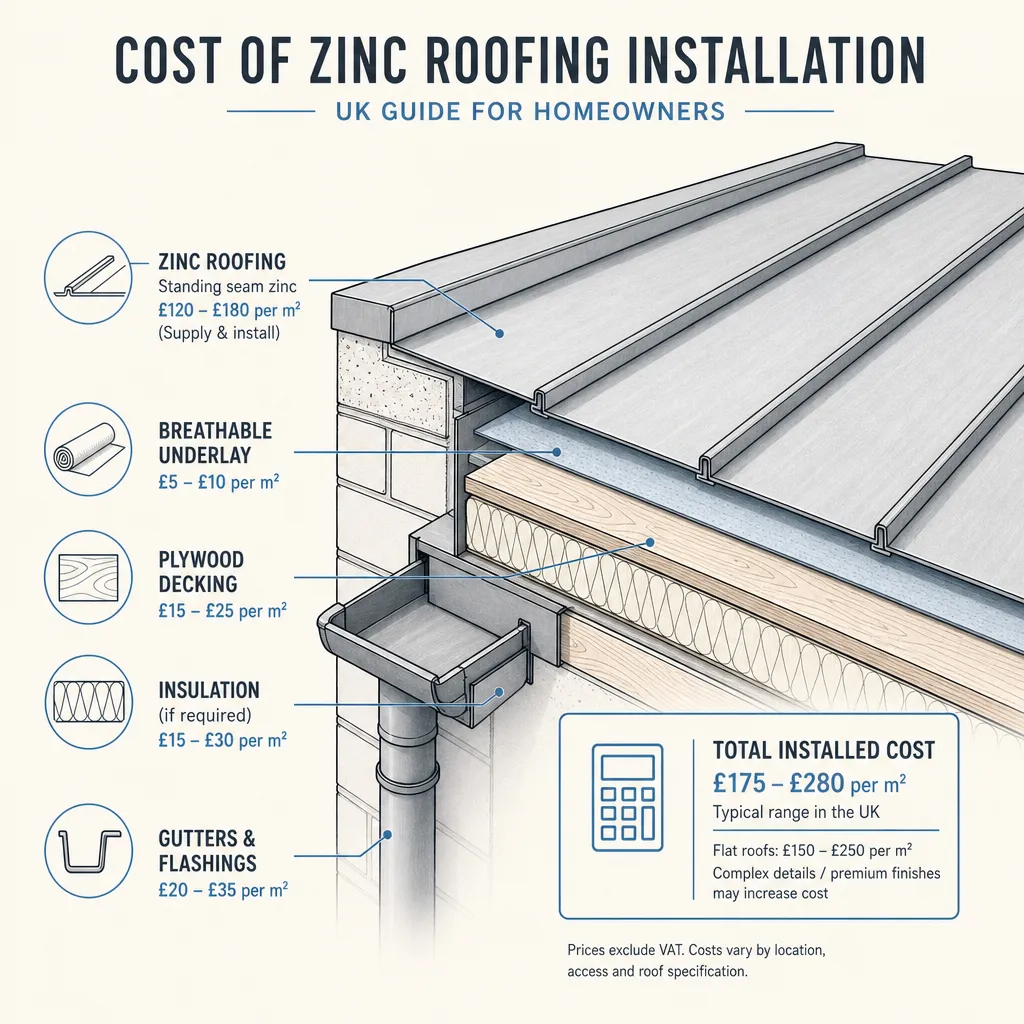 Improvement & Build
Cost of Zinc Roofing Installation
Zinc roofing typically costs £100–£200 per m² installed in the UK for standing seam systems, with flat roof applications ranging from £80–£160 per m².
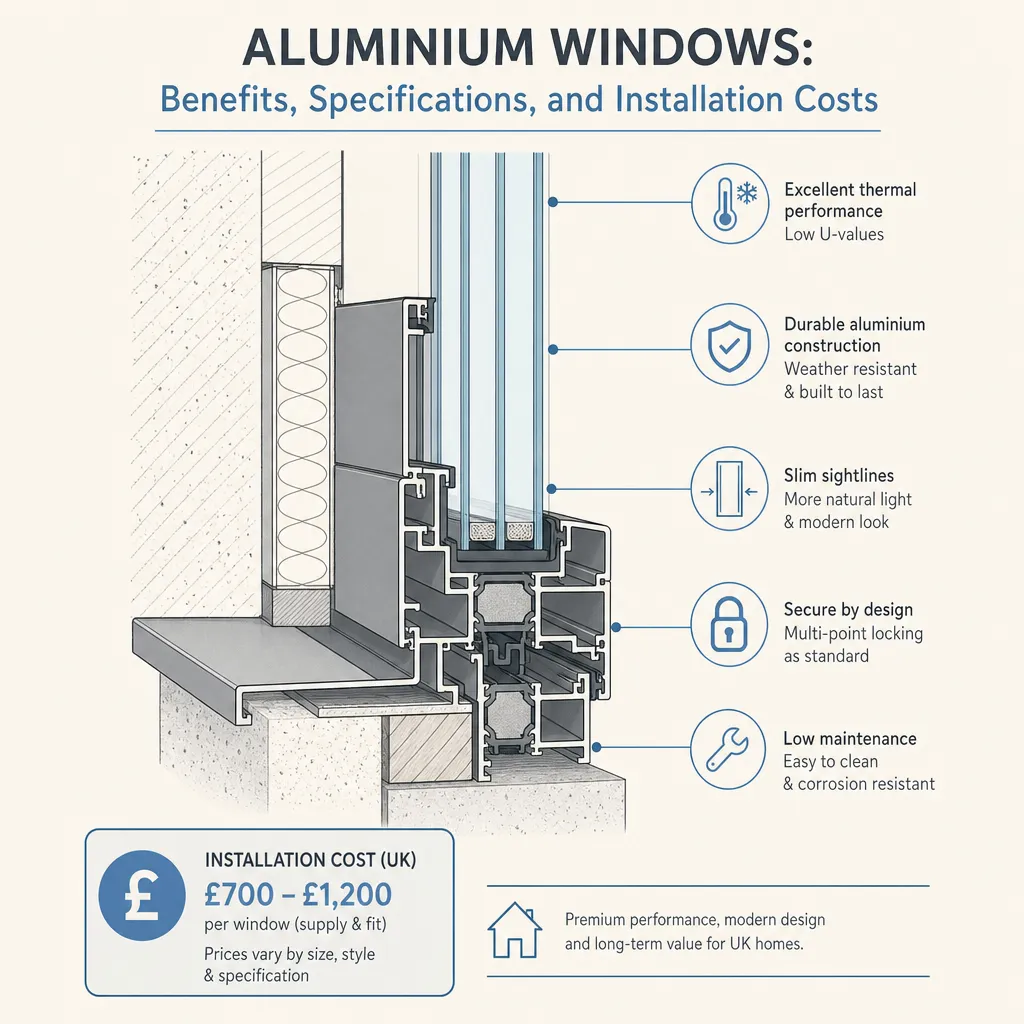 Improvement & Build
Aluminium Windows: Benefits, Specifications, and Installation Costs
Aluminium windows typically cost £600–£1,800 per window installed in the UK, depending on size and specification.
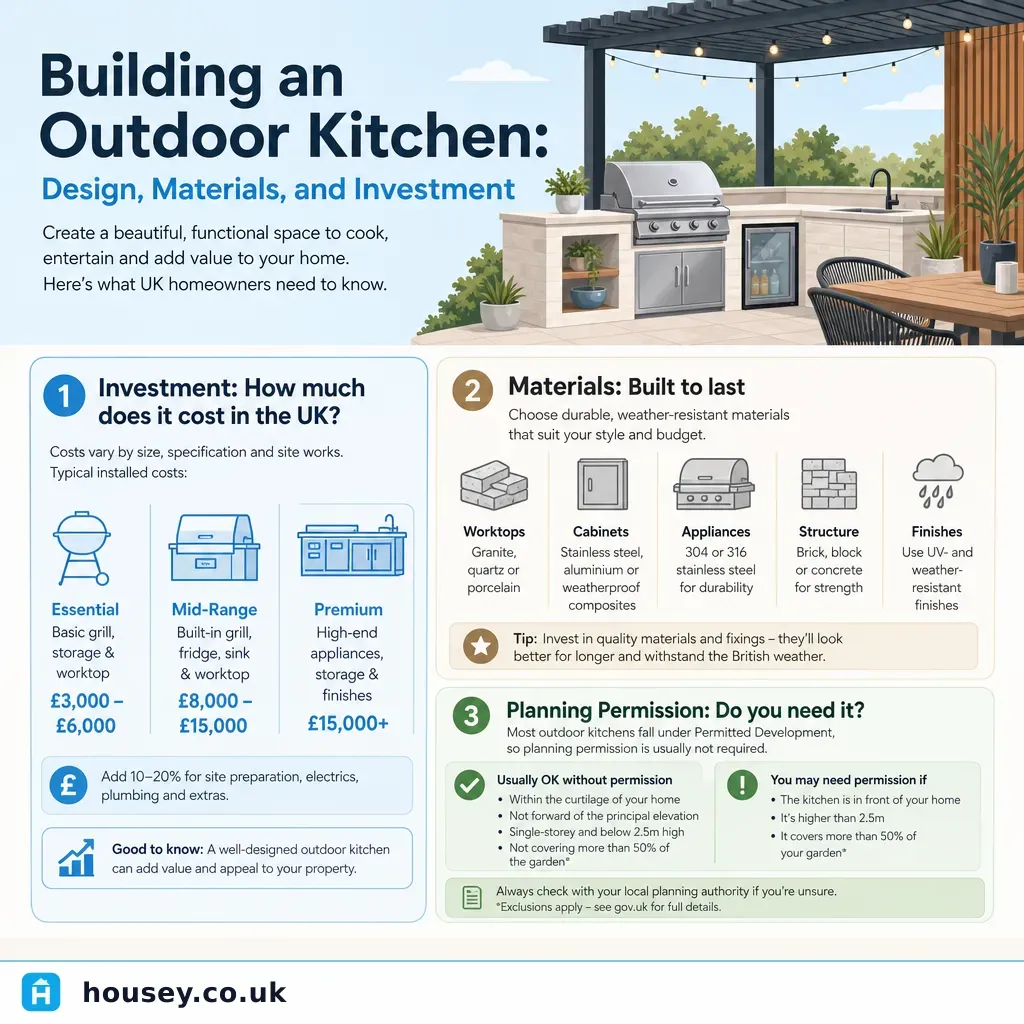 Improvement & Build
Building an Outdoor Kitchen: Design, Materials, and Investment
Building an outdoor kitchen in the UK costs roughly £3,000–£25,000 depending on size and materials.
 Improvement & Build
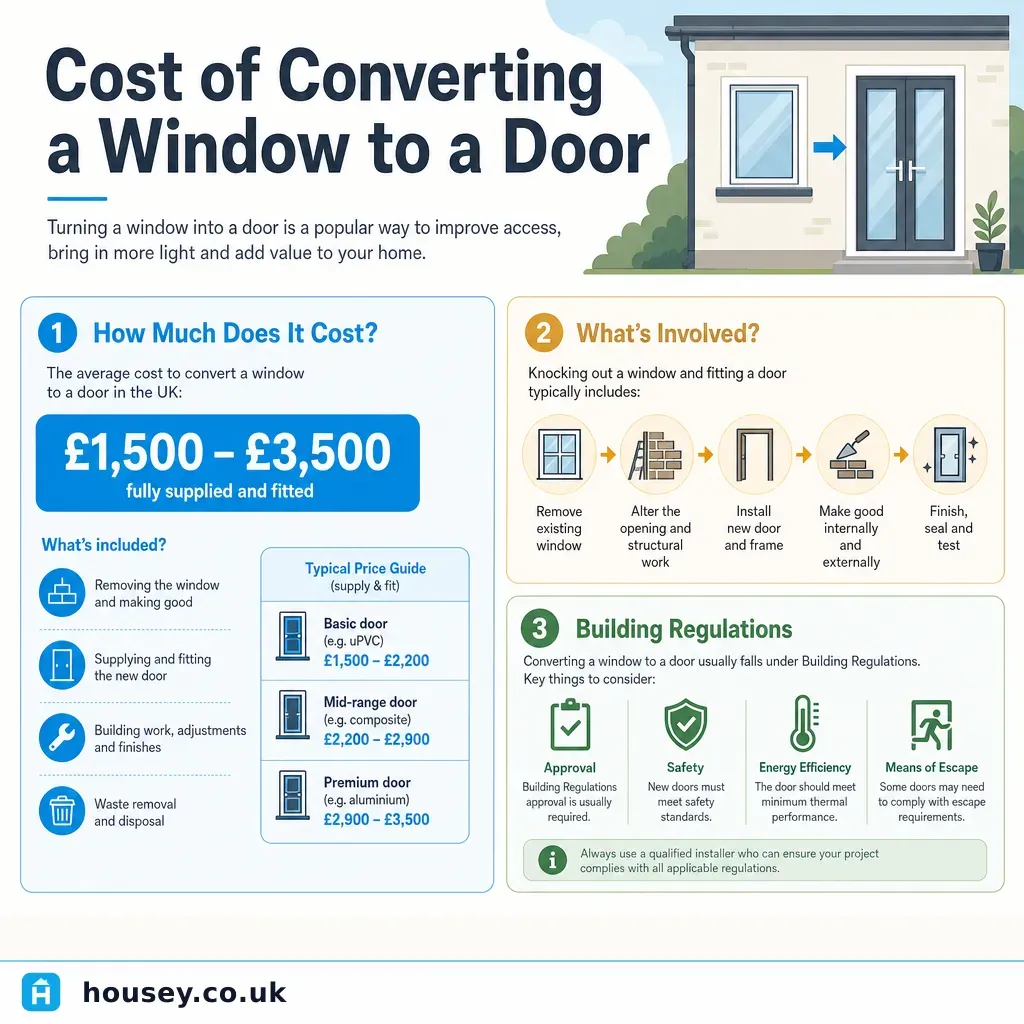
Cost of converting a window to a door
Converting a window to a door in the UK typically costs £1,500–£5,000 or more, depending on wall construction (cavity, solid, or timber frame), the type of door fitted, and whether a new or enlarged lintel is required.
 Improvement & Build
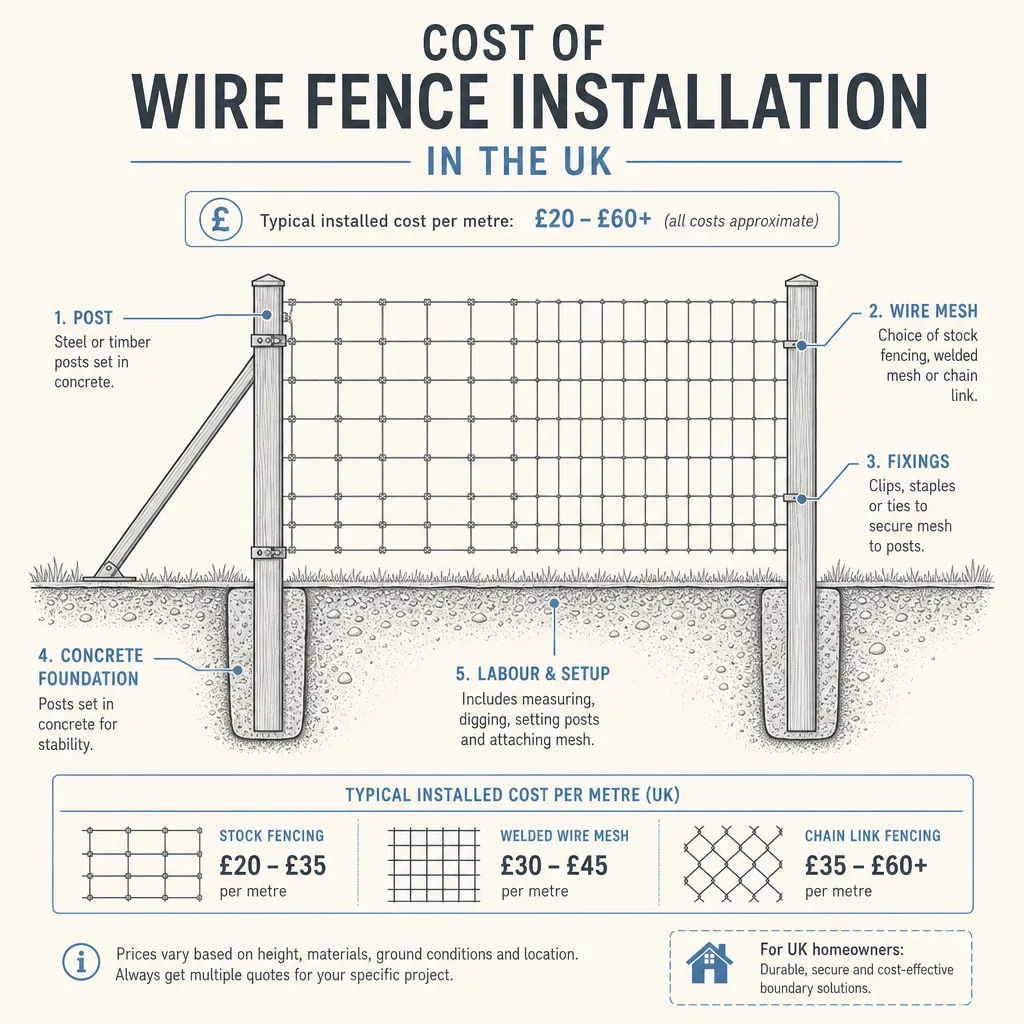
Cost of Wire Fence Installation in the UK
Wire fence installation in the UK typically costs £8–18 per metre for stock fencing, £15–35 per metre for chain-link, and £20–45 per metre for welded wire mesh panels, all installed.