Roof Ventilation Installation and Specialists
By Housey · Last reviewed 31st of May 2026
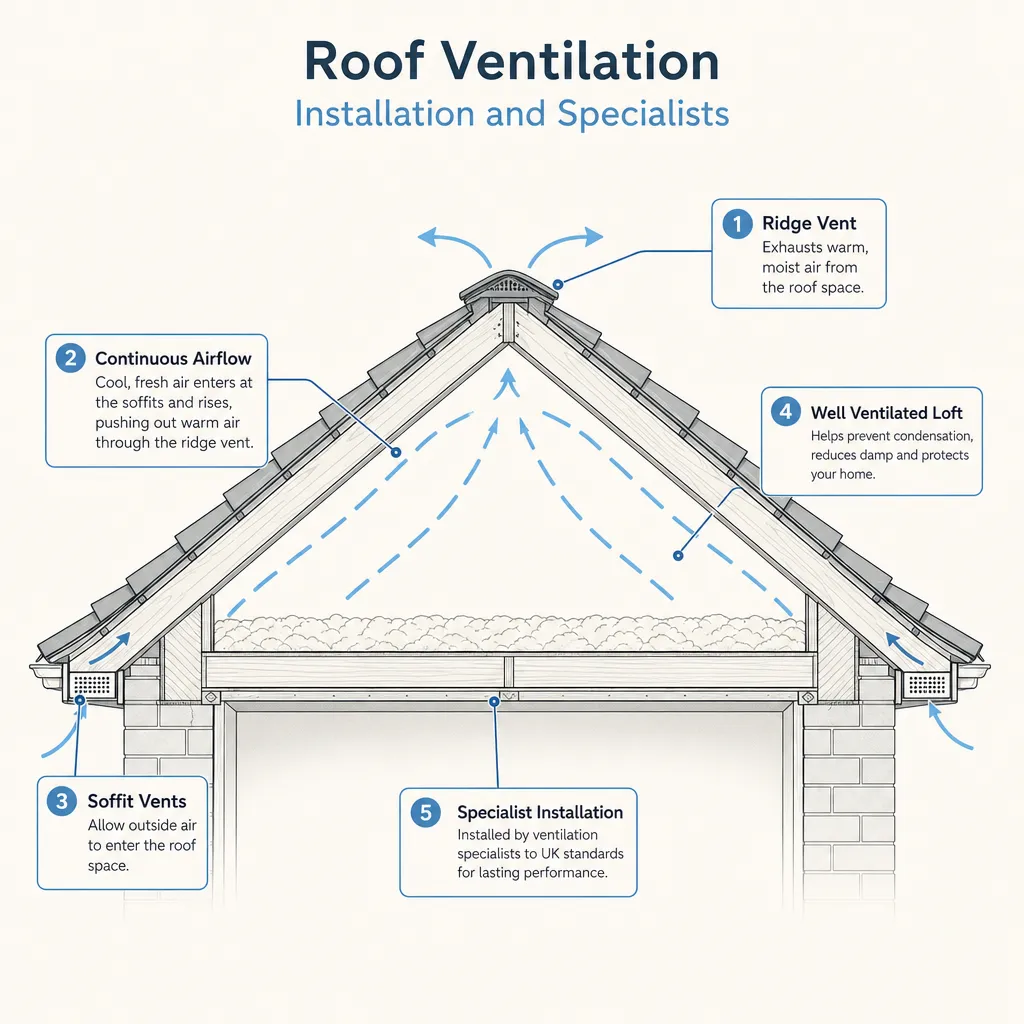
Roof Ventilation Installation and Specialists
Condensation in the loft space is one of the most common — and most underdiagnosed — causes of timber decay, mould, and structural deterioration in UK homes. It typically comes to light during a RICS survey or a loft inspection, where blackened or damp rafters, a musty smell, or staining on sarking boards indicate prolonged moisture build-up. The problem is almost always linked to inadequate ventilation, and it affects properties of all ages — from Victorian terraces to recent new builds where insulation was fitted without maintaining the required airflow path through the eaves.
Key points
- Building Regulations Approved Document C and BS 5250:2021 (Management of Moisture in Buildings) set minimum ventilation requirements for UK roofs.
- Pitched roofs with a cold loft space require cross-ventilation: a continuous 25 mm equivalent free area at eaves level and 5 mm at the ridge (or 25 mm at both sides for roof spans exceeding 10 m).
- Warm roof constructions — where insulation sits at rafter level rather than at loft floor level — have different and more demanding ventilation requirements; specialist advice is essential.
- Laying loft insulation without maintaining a clear airflow path at the eaves is one of the most common triggers of condensation problems in UK homes.
- A qualified roofer or ventilation specialist can carry out a condition survey and specify the correct products for your roof type and construction.
Why does roof ventilation matter?
Warm, moisture-laden air rises from living spaces into the loft through ceiling penetrations, gaps around the hatch cover, and imperfect airtightness. In a poorly ventilated loft, this air cools against the cold roof structure and condensation forms — particularly on the underside of the sarking (roofing felt), on timber rafters, and on the backs of tiles or slates.
Over time, the consequences include:
- Timber rot in rafters, ceiling joists, and wall plates
- Mould growth on structural timbers and boarding
- Staining and deterioration of the felt underlay
- In severe cases, structural weakening requiring remedial carpentry or engineering input before the roof can be made safe
Effective cross-ventilation — where fresh air enters at the eaves and exits at the ridge — keeps the loft space dry by continuously diluting moist air before it reaches its dew point.
Which type of roof vent do you need?
Vent type | Where installed | Best for | Key consideration |
|---|---|---|---|
Soffit vents (continuous strip or individual round vents) | Along the eaves soffit board | Most pitched roofs with accessible soffits | Must not be blocked by loft insulation; insulation baffles are required |
Tile and slate vents | Inset into the roof covering, typically near the ridge | Retrofitting ventilation without replacing fascias or soffits | Should match existing roof covering material and colour |
Ridge vents (continuous or individual) | Along the apex of the roof | Cross-ventilation exhaust — used with eaves inlet vents | Requires compatible ridge tiles or batten detail |
Gable vents | In the gable end wall | Gable-ended properties; supplementary or alternative ventilation | Less effective than full eaves-to-ridge cross-flow |
Felt lap vents | Between overlapping layers of roofing felt underlay | Older roofs with impermeable felt (Type 1F) where tile disturbance is to be minimised | Adds a below-felt ventilation path without major tile removal |
Vapour-permeable underlay (at re-roofing) | Replaces existing underlay during a full re-roof | Modern replacement roofs | Reduces felt-level condensation risk; consult BS 5250 for remaining vent requirements |
The correct combination for your property depends on its pitch, span, construction, and existing underlay type. A roofer or ventilation specialist should confirm the specification before any work proceeds.
How to tell if your loft is inadequately ventilated
A homeowner checklist for identifying potential ventilation problems:
If you can identify two or more of these signs, a professional roof ventilation survey is advisable before any further loft work — including insulation top-ups — proceeds.
Which specialist do you need?
- Choose a roofer if ventilation products need to be retrofitted into the existing roof covering — tile vents, ridge vents, and felt lap vents require roofing skills and appropriate fall-arrest equipment.
- Choose a ventilation specialist if the problem involves complex condensation assessment, interstitial condensation risk modelling, or the specification of vapour control layers.
- Ask for a condition survey first if your loft has visible damp, rot, or mould — the root cause must be confirmed before a remediation strategy is chosen, as new ventilation alone will not reverse existing structural damage.
- Consult a structural engineer if timbers show significant decay or weakening — a qualified engineer should assess load-bearing members before any remedial works begin.
What does roof ventilation installation involve?
A typical retrofit ventilation installation on a UK pitched roof follows these stages:
- Condition survey — inspecting the loft space to identify moisture sources, existing ventilation provision, and whether the eaves path is blocked by insulation or debris
- Specification — calculating the required free ventilation area in accordance with BS 5250:2021 and Approved Document C, accounting for roof pitch and span
- Installation — fitting tile or slate vents, soffit vents, ridge vents, or felt lap vents as appropriate, and clearing any blocked eaves
- Insulation baffles — ensuring that loft insulation does not obstruct the eaves vent path (required under Building Regulations)
- Check and sign-off — confirming that airflow is unobstructed and that the installed free area meets the calculated requirement
When to get professional help
Always instruct a professional for roof ventilation work — working on a pitched roof carries serious fall risk, and incorrect specification can make moisture problems worse rather than better. Seek professional assessment if:
- There is visible mould, rot, or water damage in your loft space
- Your property has received a survey report noting ventilation deficiency
- You have recently installed, or plan to install, additional loft insulation
- You have a warm roof or flat roof with a history of condensation
- You are planning a loft conversion, where ventilation requirements change significantly once the space becomes habitable
How Housey can help
Housey connects you with experienced roofers who can survey your roof and install the correct ventilation products for your construction type. If the problem involves suspected condensation or moisture risk, a ventilation and condensation assessment will give you a clear diagnosis and specification before any remediation work begins.
Frequently asked questions
How much does roof ventilation installation cost in the UK?
Indicative UK costs, last reviewed 2026-05-31. Fitting soffit vent strips on a semi-detached house typically costs £150–£500; individual tile or slate vents £200–£600; ridge vent installation £400–£1,000 or more. Full loft ventilation remediation — including clearing blocked eaves and fitting insulation baffles — can cost £500–£1,500 depending on property size and access. Obtain at least three quotes as prices vary by region and roof type.
Can I add roof vents myself?
Checking the loft space for problems is straightforward, but installing ventilation products into the roof covering involves working at height on a pitched surface — a serious fall risk — and requires knowledge of tile and felt systems to avoid inadvertently creating a leak. This is not a suitable DIY task. A qualified roofer should carry out all installation work on the roof itself.
Does roof ventilation affect my energy bills?
A small amount of heat is lost through a ventilated cold loft, but this is offset by the loft floor insulation beneath. Adequate ventilation does not noticeably affect heating costs when the loft floor is insulated to the recommended 270 mm mineral wool or equivalent. Blocking ventilation to reduce heat loss is counterproductive and will cause moisture damage and timber decay over time.
Do new-build homes need roof ventilation?
Modern homes with vapour-permeable (breathable) underlay may have reduced ventilation requirements compared with older properties using Type 1F impermeable felt. However, Building Regulations and BS 5250:2021 still require some level of ventilation in most pitched roof configurations. If you are unsure whether your new-build's roof ventilation is adequate, a roofer or ventilation specialist can inspect and advise.
Sources and further reading
- Building Regulations Approved Document C — GOV.UK
- BS 5250:2021 — Management of Moisture in Buildings — BSI Group
- Energy Saving Trust — loft insulation — Energy Saving Trust
- RICS Home Surveys — RICS
Useful next reads
 Improvement & Build
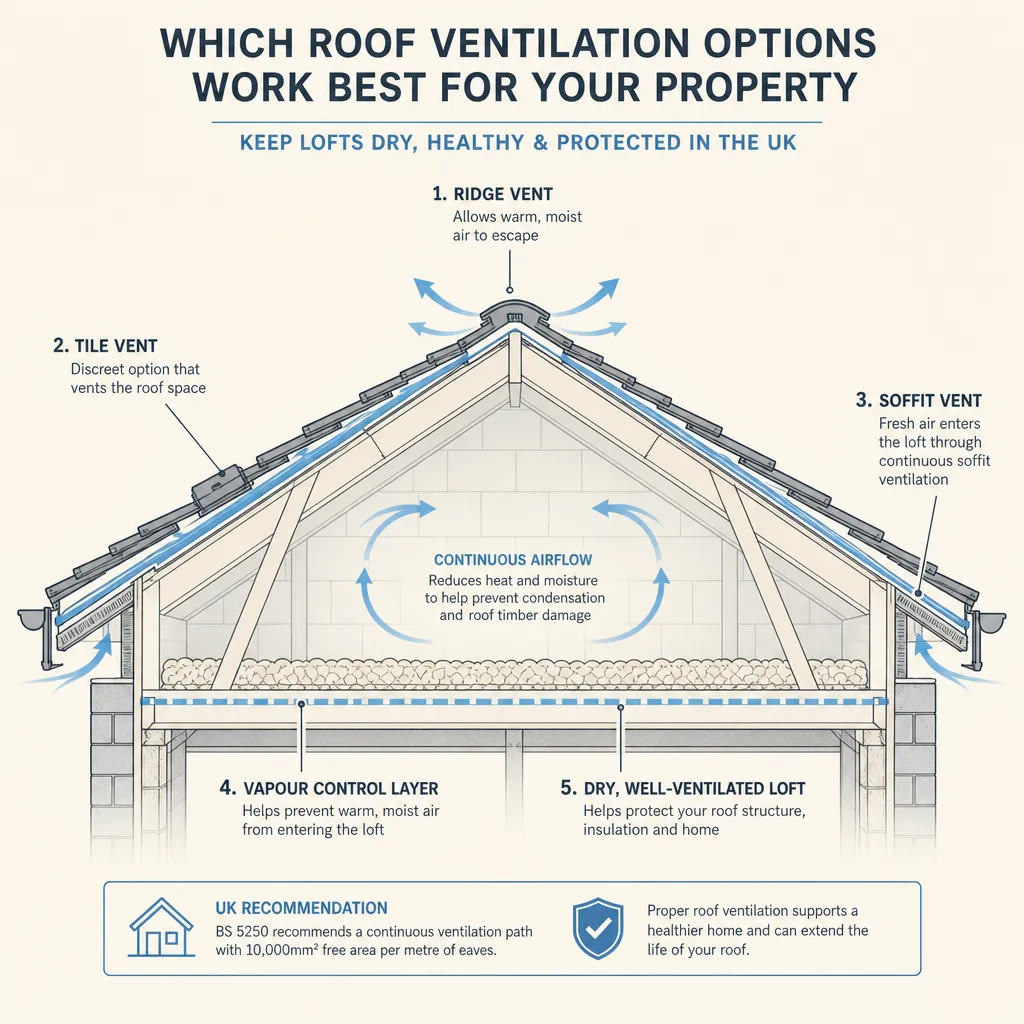
Which Roof Ventilation Options Work Best For Your Property
The right roof ventilation depends on your roof construction.
 Improvement & Build
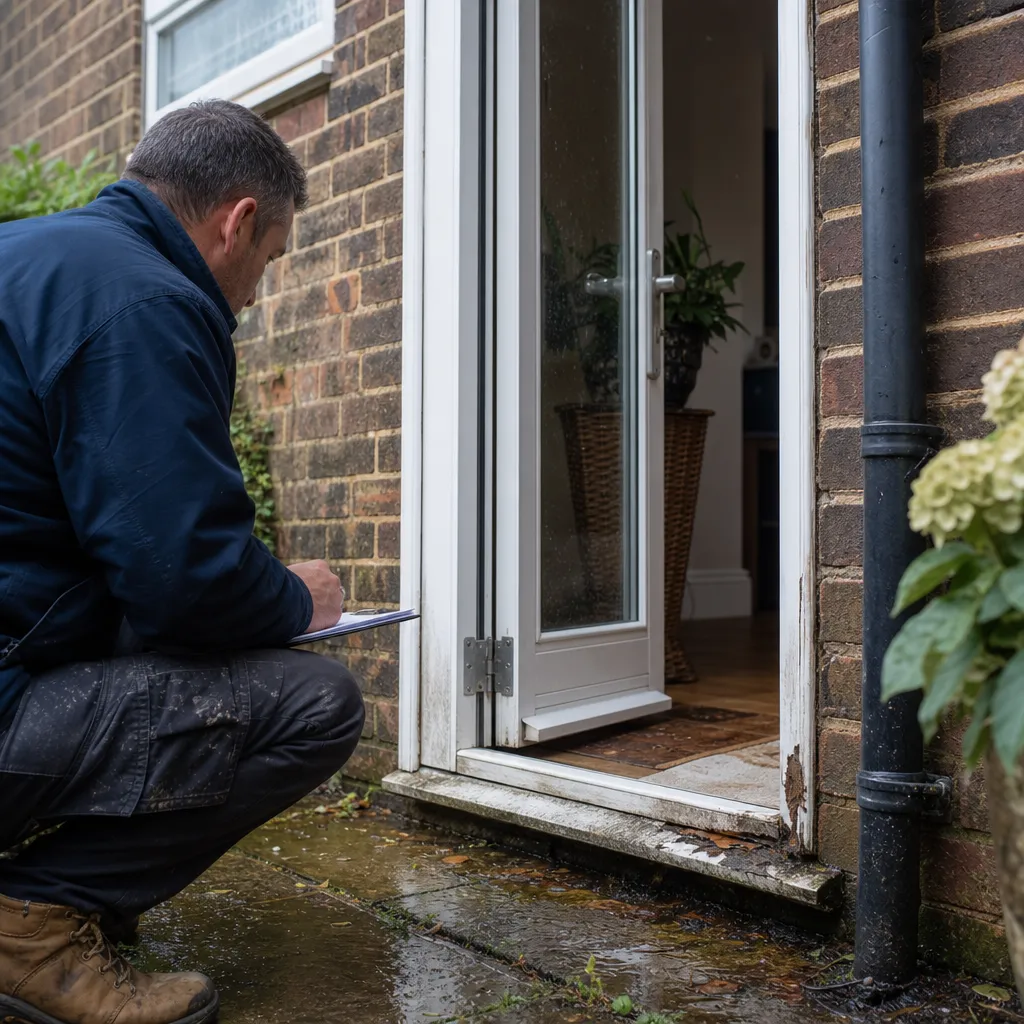
Fixing Leaking Back Doors and Water Ingress
Most leaking back doors in UK homes fail at one of three points: the threshold or door sill joint, the frame-to-masonry mastic seal, or the door weatherstrip.
 Improvement & Build
Who Provides House Demolition Services
House demolition in the UK is carried out by specialist demolition contractors, often members of the National Federation of Demolition Contractors (NFDC).
 Improvement & Build
Tree Branch Removal and Tree Surgeon Services
Tree surgery — from deadwooding and crown reduction to branch removal and felling — must be carried out by qualified, insured contractors in the UK.
 Improvement & Build
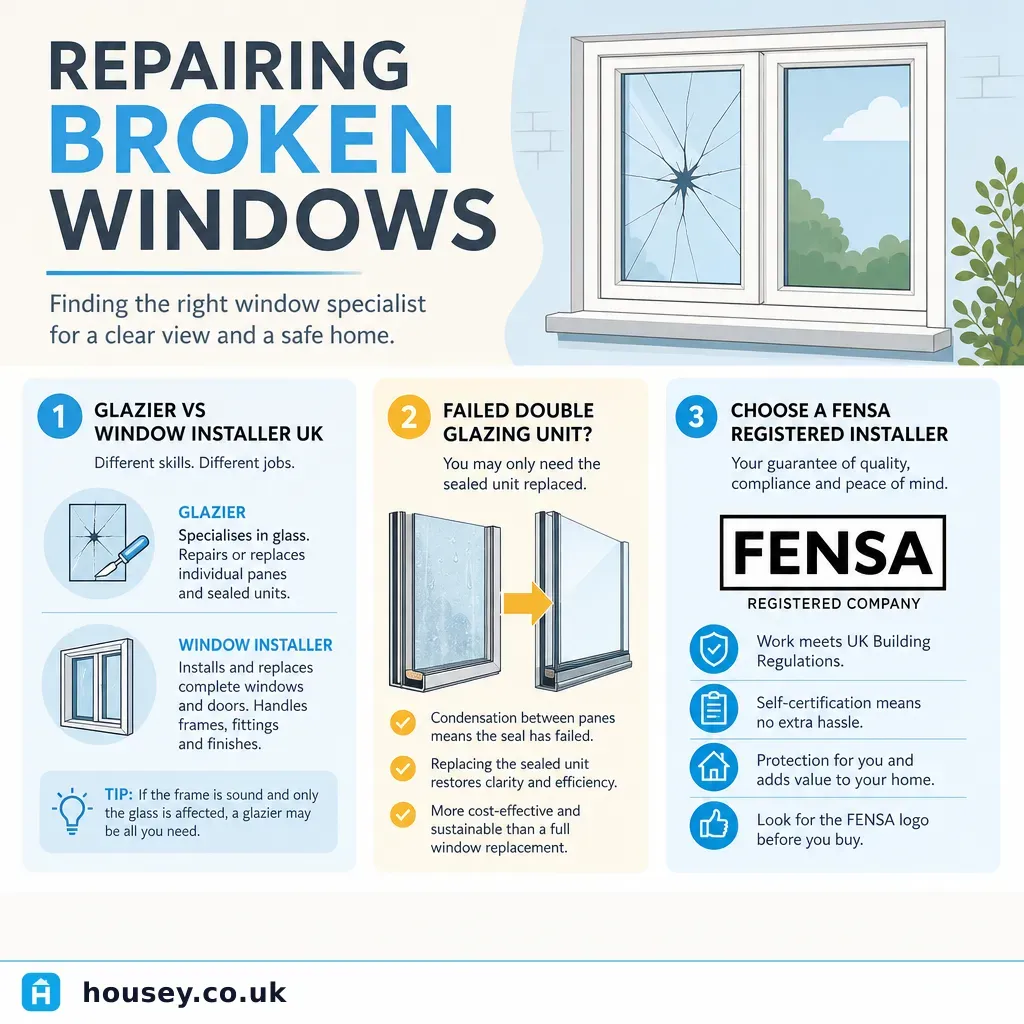
Repairing Broken Windows: Finding a Window Specialist
Repairing a broken window depends on the type of damage: a failed double-glazing unit (misted glass) needs the sealed unit replaced, cracked or broken glass needs a glazier, and frame damage may require a specialist joiner.