Roof Warranties: Understanding Coverage and Limitations
By Housey · Last reviewed 31st of May 2026
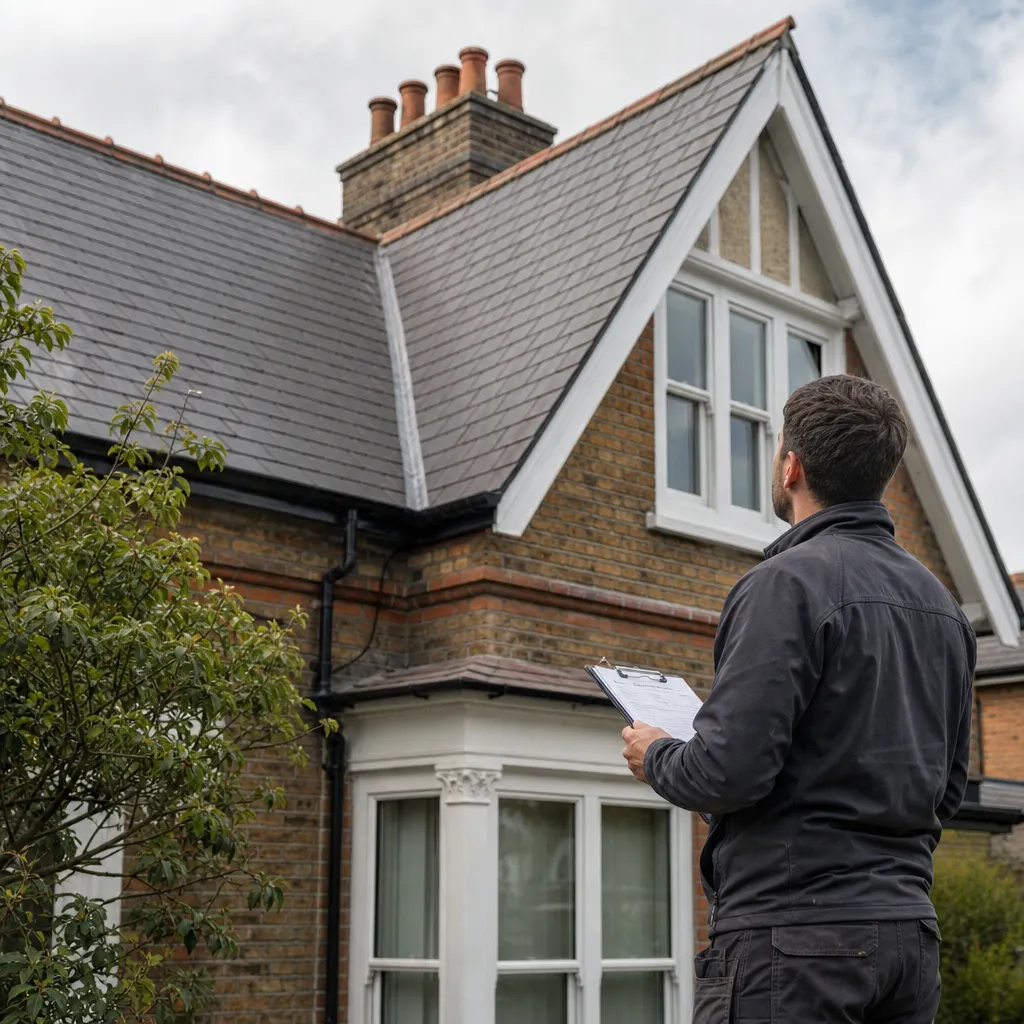
Roof Warranties: Understanding Coverage and Limitations
A roofing warranty is one of those documents most homeowners never examine until something goes wrong — and by then, the small print can be a source of significant frustration. Whether you are commissioning a new roof, replacing flat roofing on a 1930s semi, or buying a property and want to understand what protection the existing covering carries, knowing what UK roof warranties actually cover (and what they exclude) can save you thousands of pounds in disputed claims.
Key points
- UK roof warranties fall into two distinct categories: a manufacturer's product guarantee covering materials, and a contractor's workmanship guarantee covering the quality of installation.
- Manufacturer's guarantees on pitched-roof tiles typically run 10–30 years; EPDM and GRP flat-roof membrane systems often carry 20–25 year product guarantees from the manufacturer.
- Most warranties are voided by modifications carried out without the manufacturer's or installer's written consent — including satellite dishes, solar PV panels, and rooflights.
- Contractor workmanship guarantees without insurance backing are unsecured: if the company ceases trading, the guarantee has no practical value.
- Insurance-backed guarantees (IBGs) underwritten by regulated insurers — such as those offered through LABC Warranty or Guarantee Protection Insurance (GPI) — are transferable to future owners on sale of the property.
What types of roof warranty exist in the UK?
Manufacturer's product guarantee
Tile and slate manufacturers, along with membrane and felt suppliers, typically offer guarantees on the product itself — covering manufacturing defects, premature degradation, or failure to meet stated performance specifications. These are distinct from weathering guarantees: a tile may be guaranteed against structural defect for 30 years but not against normal colour fade or surface weathering.
Registration is often required at the point of installation, and some manufacturers condition the guarantee on the work being carried out by an approved contractor. Keep the registration documentation alongside your property records.
Contractor's workmanship guarantee
Issued by the roofing contractor separately from any product guarantee, a workmanship warranty covers the quality of installation — issues such as poor flashing detail, inadequate tile overlap, or incorrect fixings that lead to water ingress. Its value depends heavily on whether it is backed by insurance. An uninsured guarantee from a sole trader or small company is only as good as that business's continued trading status.
Insurance-backed guarantee (IBG)
An IBG is underwritten by a regulated insurer, meaning it remains valid even if the original contractor ceases trading. Providers such as LABC Warranty or specialist warranty insurers issue IBGs for roofing works. These are particularly valuable for flat-roof replacements, major re-roofing projects, and any works exceeding approximately £5,000. For new-build homes, the NHBC Buildmark warranty provides a 10-year insurance-backed cover for structural and weathering defects.
Roof warranty types compared
Warranty type | What it covers | Typical duration | Transferable on sale? | Insurance-backed? |
|---|---|---|---|---|
Manufacturer product guarantee | Material defects and premature failure | 10–30 years | Usually yes, with notice | No (separate product liability claim) |
Contractor workmanship guarantee | Installation quality and resultant leaks | 5–10 years | Sometimes, by arrangement | Only if IBG is purchased |
Insurance-backed guarantee (IBG) | Workmanship; continues if contractor folds | 10–20 years | Yes — automatic | Yes — regulated insurer |
NHBC Buildmark (new-build) | Structural and weathering defects | 10 years | Yes — automatic | Yes |
What do most UK roof warranties exclude?
Understanding exclusions is as important as reading the coverage terms. Common exclusions across product and workmanship warranties include:
- Storm damage — most warranties exclude damage caused by storms above a defined wind-speed threshold (often Beaufort Force 10, approximately 89 km/h sustained). Home insurance is the correct route for storm damage claims.
- Blocked gutters and drainage — water damage caused by debris build-up rather than failure of the roof covering itself is typically excluded.
- Unapproved modifications — fitting a satellite dish, aerial base, solar PV system, or rooflight without the manufacturer's or contractor's written consent usually voids the relevant guarantee.
- Inadequate maintenance — failure to carry out reasonable upkeep (keeping gutters clear, addressing visible moss build-up) may be cited as grounds for rejecting a claim.
- Pre-existing defects — if the substrate or structure was defective before installation, problems arising from this are typically excluded from both product and workmanship guarantees.
- Consequential interior damage — damage to ceilings, walls, or contents caused by a roof failure is not covered by a roofing warranty; that is a home insurance matter.
What to ask before accepting a roofing quote
- What manufacturer's guarantee applies to the proposed materials, and what are the registration requirements for it to be valid?
- Is a separate workmanship guarantee offered, and is it insurance-backed?
- Who underwrites the insurance-backed guarantee, and can you see the full policy wording before you commit?
- Does the warranty transfer automatically to a future buyer, or does written notice need to be given at the point of sale?
- What maintenance obligations does the warranty impose on you as the homeowner?
- Are there any activities — such as fitting solar panels or a satellite dish — that would void the warranty, and what approval process applies?
- What is the claims process if a defect appears: do you contact the contractor, the manufacturer, or the insurer directly?
Red flags when reviewing a roofing warranty
- No written warranty at all — verbal assurances carry no legal weight; always insist on a written document before work begins.
- Uninsured workmanship guarantee from a new or sole-trader company — if the business folds before the guarantee expires, the document is worthless.
- A workmanship guarantee of under five years on a major flat-roof replacement — industry practice for quality EPDM or GRP systems is typically 10–20 years.
- Warranty valid only if the contractor carries out paid annual maintenance visits — this can be legitimate, but check the frequency, cost, and whether it is optional or mandatory.
- No independent adjudication process — a reputable IBG provider should specify a clear, independent route for disputed claims, not simply referral back to the original contractor.
- Guarantee document names a company that has already dissolved — check Companies House if you are buying a property with an existing warranty.
When to get professional help
If you are buying a property with an existing roof warranty, commission a roof survey to confirm whether the roof is in the condition the warranty assumes. A RICS-qualified surveyor can assess whether visible defects might constitute warranty claims and advise whether the documentation is sufficient to rely upon.
If a warranty claim is disputed and the contractor is unresponsive, seek advice from Citizens Advice or a solicitor with experience in construction disputes before accepting a rejection.
How Housey can help
If you need a new or replacement roof and want to ensure you receive robust warranty documentation alongside the work, Housey can connect you with vetted roofers who provide written workmanship guarantees. For an independent view of an existing roof's condition — before purchase or before making a warranty claim — a roof survey from a qualified professional gives you an unbiased starting point.
Frequently asked questions
Do roof warranties transfer to a new owner when a property is sold?
It depends on the warranty type. Insurance-backed guarantees and NHBC Buildmark warranties are generally transferable to new owners, sometimes automatically and sometimes on written notification. Standard contractor workmanship guarantees may or may not transfer — check the documents carefully. Manufacturer product guarantees vary by brand: some transfer automatically, others require formal assignment at the point of sale.
How do I make a claim on a roof warranty?
First, identify which warranty applies — manufacturer's product or contractor's workmanship. Contact the relevant party in writing, describing the defect with photographs and dates. If the warranty is insurance-backed, contact the insurer directly if the contractor is unresponsive or has ceased trading. Keep copies of all correspondence, original invoices, and warranty certificates throughout the process.
What is the difference between a roof warranty and home insurance?
A roof warranty covers defects in materials or workmanship — problems arising from what was supplied or how it was installed. Home insurance covers accidental damage, storm events, subsidence, and similar perils. The two are complementary, not interchangeable. A leak caused by a manufacturing defect may be a warranty claim; the same roof damaged by a fallen tree is an insurance matter.
Is a warranty required when replacing a roof under Building Regulations?
Building Regulations approval certifies that the works comply with technical standards — it is not the same as a warranty. A warranty is a separate contractual document from the contractor or material supplier. For significant roofing works, you should seek both: building control sign-off confirming compliance, and a written warranty (ideally insurance-backed) covering materials and workmanship.
Sources and further reading
- Citizens Advice: your rights when work is done badly — Citizens Advice
- LABC Warranty — LABC Warranty: insurance-backed guarantees for new homes and conversion projects
- National Federation of Roofing Contractors (NFRC) — NFRC: guidance on roofing specification and contractor selection
- Building regulations approval: when you need it — GOV.UK
- NHBC Buildmark warranty — NHBC
Useful next reads
 Surveys & Inspections
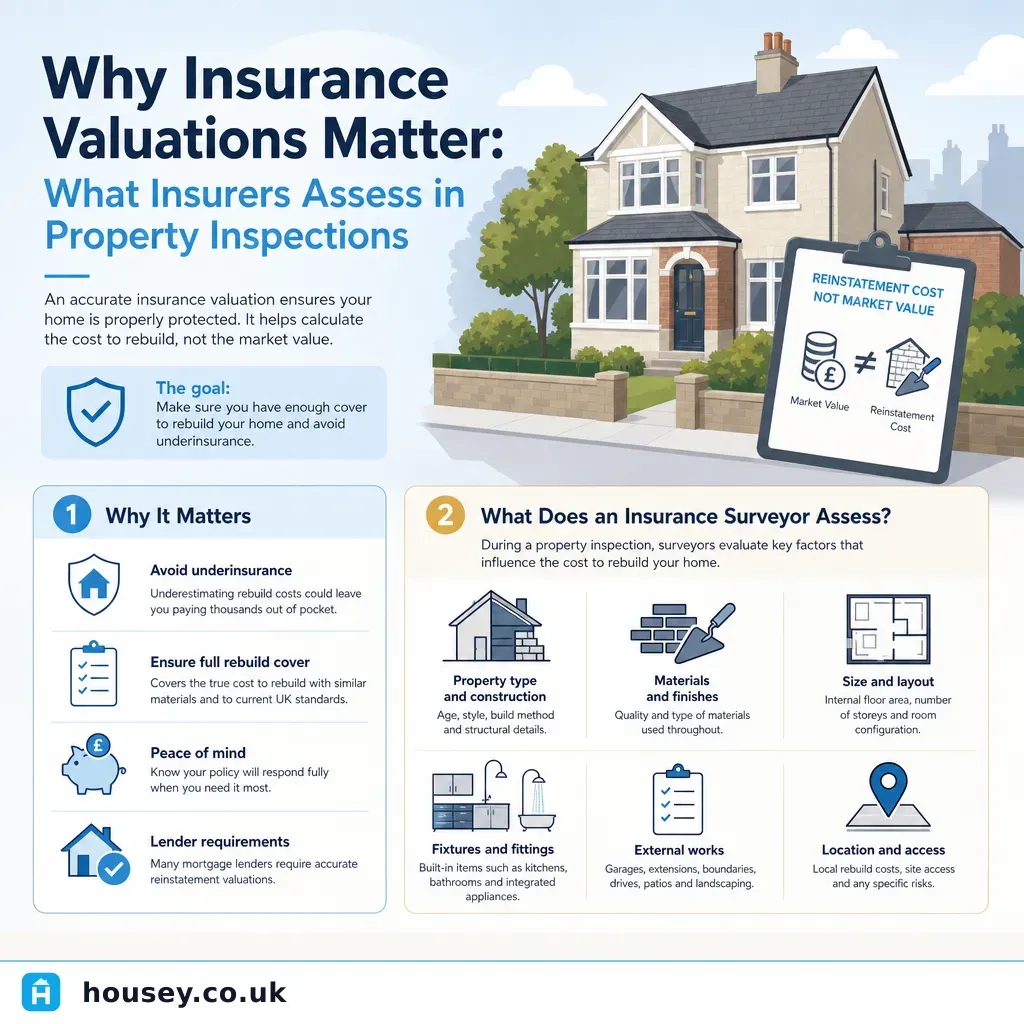
Why Insurance Valuations Matter: What Insurers Assess in Property Inspections
An insurance valuation establishes the reinstatement cost of your property — what it would cost to demolish and rebuild it — not its market value.
 Surveys & Inspections
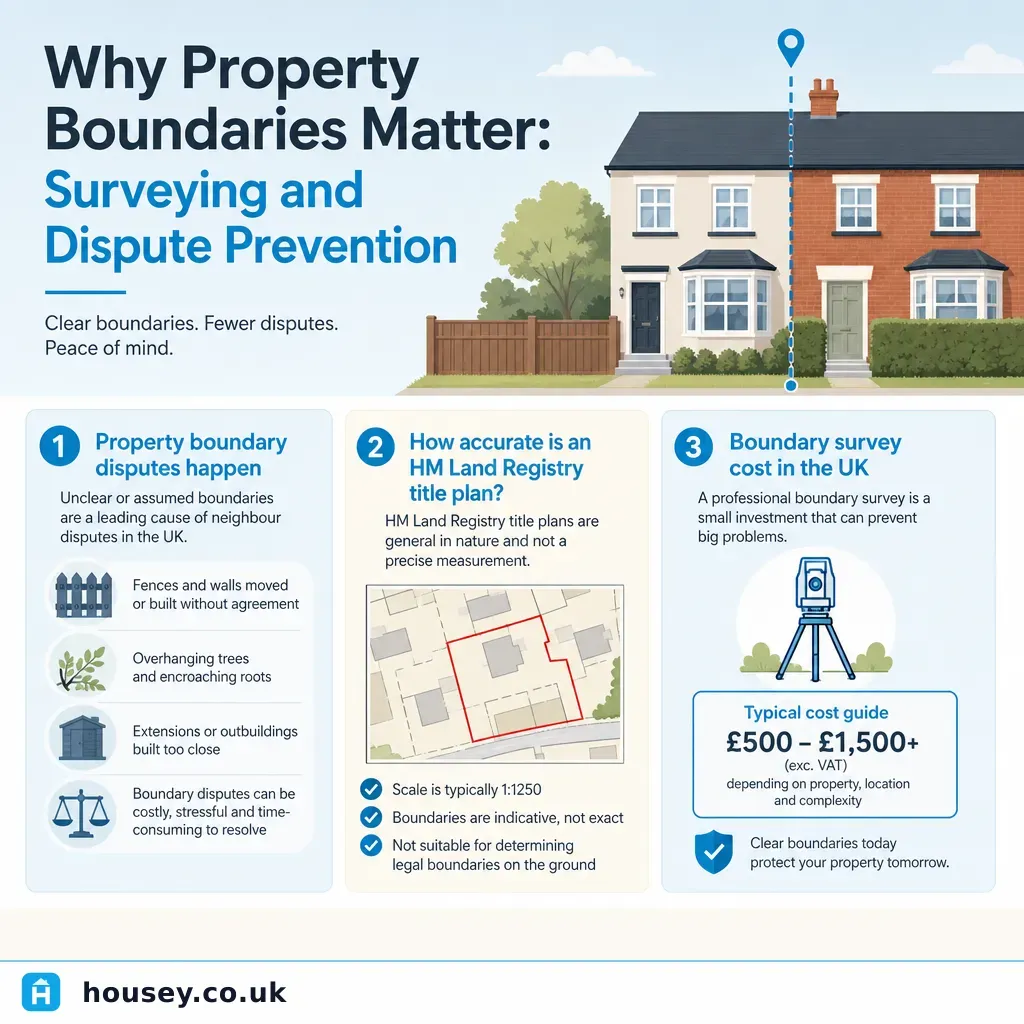
Why Property Boundaries Matter: Surveying and Dispute Prevention
Property boundaries in England and Wales are recorded as general boundaries by HM Land Registry — not precise measurements.
 Surveys & Inspections
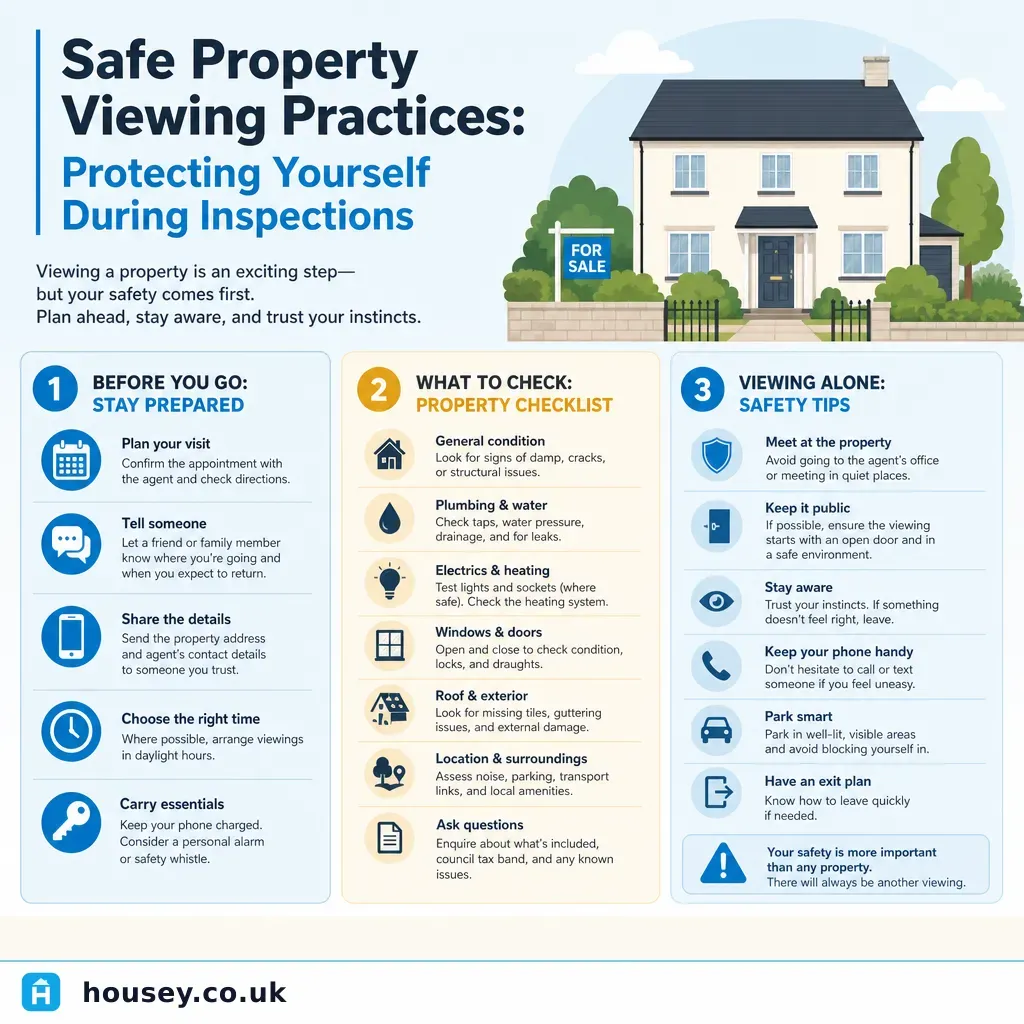
Safe Property Viewing Practices: Protecting Yourself During Inspections
When viewing a property in the UK, always tell someone where you are going and share the full address before you leave.
 Surveys & Inspections
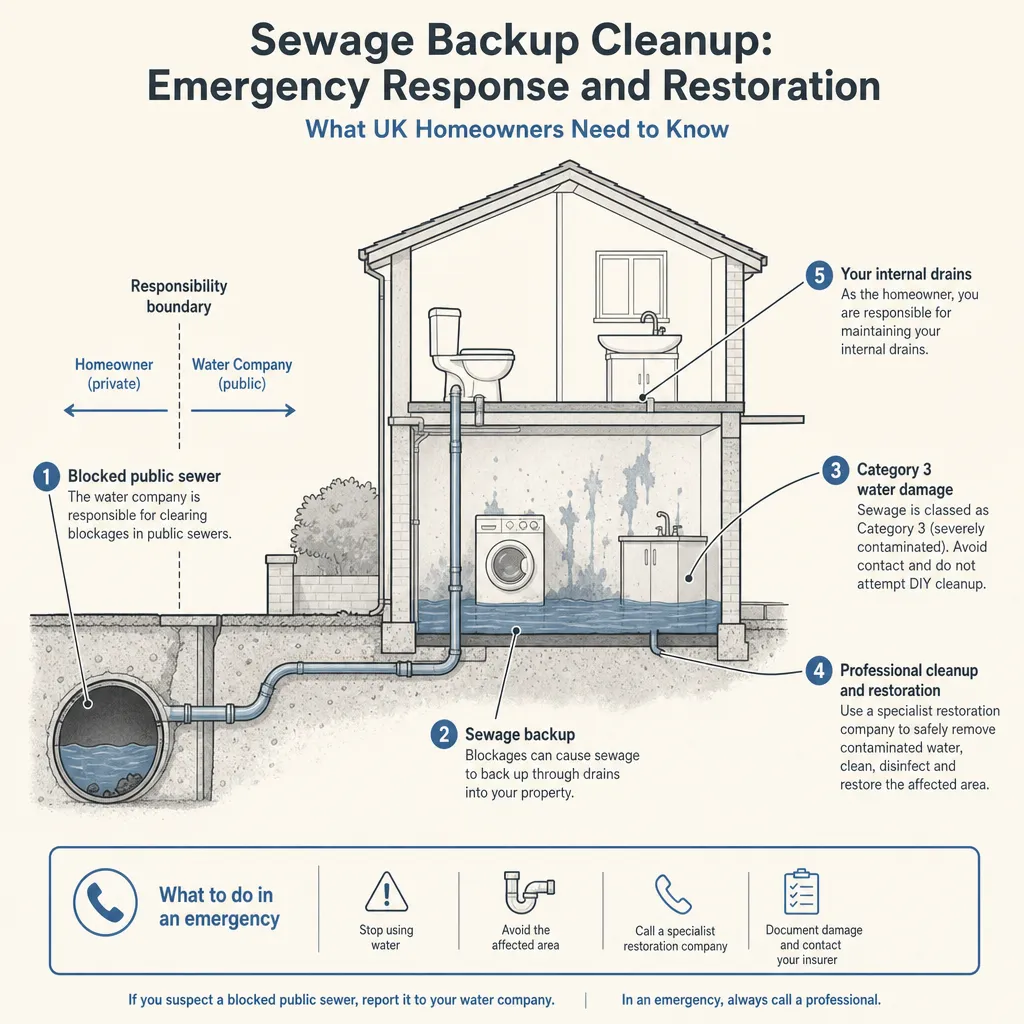
Sewage Backup Cleanup: Emergency Response and Restoration
A sewage backup should be treated as a Category 3 contamination event.
 Surveys & Inspections
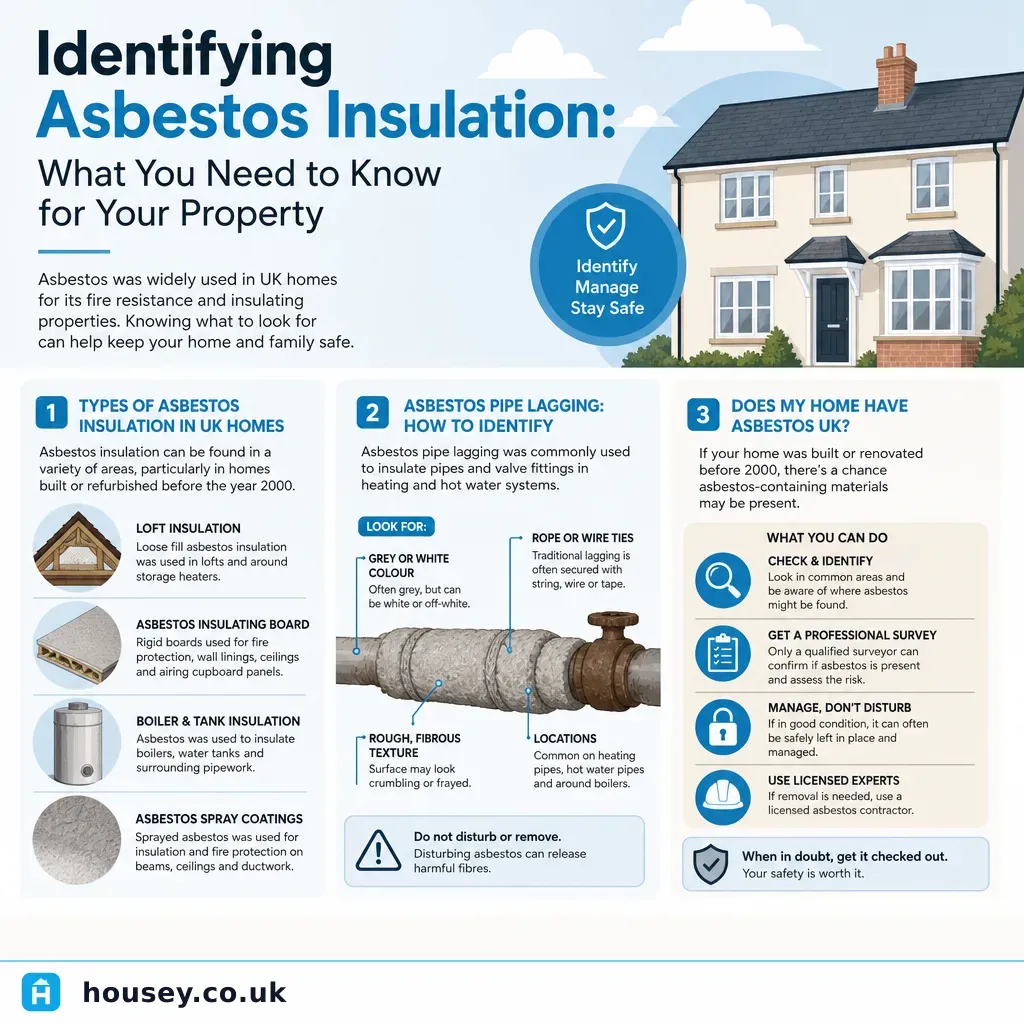
Identifying Asbestos Insulation: What You Need to Know for Your Property
Asbestos insulation was widely used in UK properties built before 2000, commonly found in pipe lagging, ceiling tiles, loose-fill loft insulation, and around boilers.