Roofing Contractors Explained: Expertise, Qualifications and What to Expect
By Housey · Last reviewed 30th of May 2026
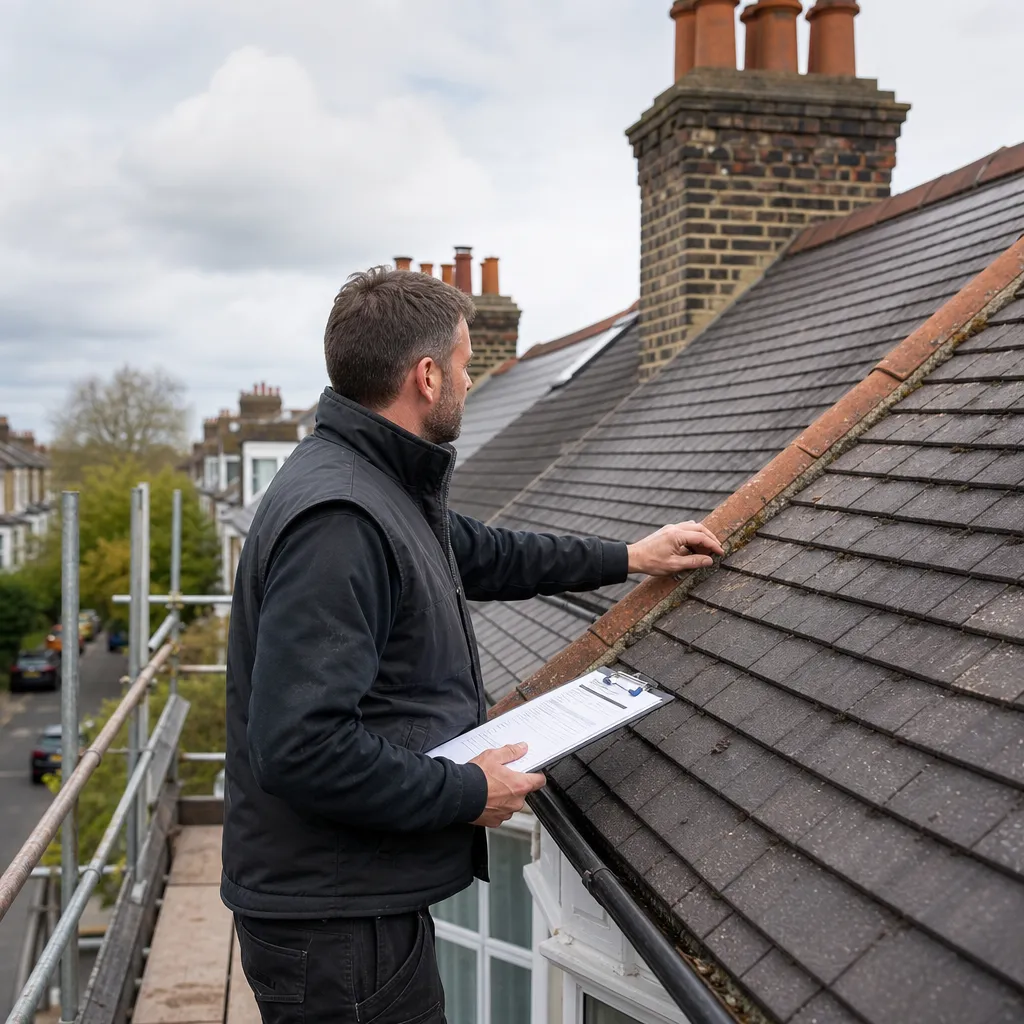
Roofing Contractors Explained: Expertise, Qualifications and What to Expect
UK roofs take a battering from the climate, and when something goes wrong — a slipped tile after a storm, a persistent leak over a bedroom, or a felt flat roof nearing the end of its life — finding the right contractor quickly becomes urgent. Knowing what a roofing contractor actually does, which qualifications matter, and what warning signs to avoid helps you commission work confidently rather than accepting the first quote that arrives.
Key points
- The National Federation of Roofing Contractors (NFRC) is the UK's largest roofing trade body; membership requires insurance, training, and adherence to its code of conduct.
- CompetentRoofer is a government-authorised competent person scheme: registered contractors can self-certify certain roofing work under Building Regulations without a separate building control application.
- Most residential roofing work does not require planning permission under permitted development rights, but listed buildings and conservation areas are exceptions.
- Public liability insurance of at least £2 million is a standard expectation for a UK roofing contractor; always request a copy of the certificate before work begins.
- Roof work at height is governed by the Work at Height Regulations 2005, which requires contractors to use appropriate access equipment and edge protection.
What does a roofing contractor do?
A roofing contractor manages the full cycle of a roofing project: assessing the existing roof, specifying materials, organising scaffolding, carrying out installation or repair, and clearing up on completion. Their typical scope includes:
- Pitched roof repairs and replacement — relaying slates or tiles, renewing battens and underfelt or breathable membrane, replacing ridge tiles and hip cappings.
- Flat roof installation — felt, EPDM rubber, fibreglass (GRP), or liquid-applied systems on extensions, garages, and bay windows.
- Lead and zinc work — valley liners, flashings around chimneys and dormer walls, soakers beside party walls.
- Fascias, soffits, and guttering — often carried out alongside roof work because access scaffolding is already in place.
- Chimney repairs — repointing, capping, removing redundant stacks, or relining flues.
Some roofers specialise in a particular material — such as natural Welsh slate, clay plain tiles, or heritage lead work — while others cover a broader range of systems. Verifying a contractor's specific experience is particularly important if your property has an unusual or heritage roof covering.
Types of roofing contractor: which specialist do you need?
Type of contractor | Typical work | Best for | Not ideal for |
|---|---|---|---|
General roofer | Tile and slate repair and replacement, new felt flat roofs, basic flashings | Standard pitched roofs on post-war and modern homes | Complex heritage or listed-building work |
Flat roofing specialist | EPDM, GRP, liquid-applied systems | Extensions, garages, bay windows | Pitched slate or tile work |
Lead specialist | Valleys, flashings, dormers, heritage details | Victorian terraces, listed cottages, conservation areas | Large-scale tile replacement |
Heritage and conservation roofer | Natural slate, clay plain tiles, lime pointing | Listed buildings, pre-1919 homes | Budget-focused modern repairs |
Flat and pitched combined contractor | Both systems | Extensions with a pitched main roof and a flat canopy | Highly specialist heritage details |
Qualifications and accreditations to look for
There is no single mandatory licence required to call yourself a roofer in England, Wales, or Scotland, which makes checking credentials particularly important.
NFRC membership is widely regarded as a reliable indicator of professionalism. Members must hold public liability insurance, provide a guarantee on their work, and comply with the NFRC's code of conduct. The NFRC's Find a Contractor tool allows you to verify membership before instructing anyone.
CompetentRoofer is a government-authorised competent person scheme run by the NFRC. Registered contractors can self-certify roofing work that falls within Building Regulations scope — such as re-roofing more than 25% of the roof area — without requiring a separate building control application. The contractor issues a certificate of completion, which you should retain for future property sales.
TrustMark is a government-endorsed quality scheme covering a broad range of tradespeople, including roofers. Registration requires vetting of technical competence, customer service standards, and trading practices.
For flat roofing systems, look for contractors who are approved installers for the specific product manufacturer — for example, Sarnafil, Bauder, or IKO. Manufacturer approval often unlocks an extended system guarantee of 20–25 years that would be void if the contractor is not on the approved installer list.
What to ask before accepting a quote
Before instructing a roofing contractor, ask the following:
- Are you a member of the NFRC or registered with CompetentRoofer?
- Do you hold public liability insurance of at least £2 million, and can I see a copy of the certificate?
- Who will carry out the work — you directly, or subcontractors?
- Will a building control notification be required, and if so, who handles it?
- What scaffolding or access equipment will be used, and who is responsible for its safety?
- What materials will you use — brand, specification, and manufacturer warranty?
- What guarantee do you offer on labour, and what does it cover and exclude?
- Will you clear all waste materials and leave the site tidy on completion?
- What payment terms do you require, and are staged payments tied to progress milestones?
- What could change the price once work starts — for example, discovering rotten rafters beneath the tiles?
Red flags to watch for
Avoid a roofing contractor who:
- Asks for full payment upfront — reputable contractors typically request a deposit of 10–25% and stage payments tied to progress milestones.
- Cannot provide proof of insurance — do not accept verbal assurances; ask to see the actual certificate.
- Approaches you unsolicited after a storm — uninvited cold-callers following storm events are a known pattern associated with rogue traders; always source quotes independently.
- Quotes verbally without inspecting the roof from close range — a proper quote requires a thorough inspection, usually from scaffolding or a cherry picker.
- Offers no written contract or guarantee — all significant roofing work should be covered by a written agreement.
- Cannot explain the building control or CompetentRoofer route for notifiable work — for re-roofing jobs, this should be a standard part of their process.
When to get professional help
For any work beyond minor repairs — replacing a handful of slipped tiles or reseating a ridge cap — obtain at least three written quotes from qualified contractors before proceeding. If you notice water ingress, a sagging roof structure, widespread tile failure, or damage following a storm, arrange a professional inspection promptly rather than waiting for the situation to worsen.
If your property is listed or in a conservation area, check with your local planning authority before instructing any contractor, as material and design restrictions may apply. The planning obligation rests with you as the property owner, not the contractor.
Do not attempt roofing inspections or repairs yourself if this involves working at height beyond 2 m — roof work is the single highest-risk category for fatal accidents in UK construction, according to HSE data on work-at-height incidents.
How Housey can help
Housey connects you with vetted roofing contractors near you across the UK. Submit your project details once and receive quotes from up to four local roofers, making it straightforward to compare credentials, guarantees, and pricing before you commit.
Frequently asked questions
Do I need planning permission for roof repairs or replacement in the UK?
Most like-for-like repairs and re-roofing work fall within permitted development rights and do not require planning permission. However, if your home is listed, in a conservation area, or if you are changing the roof materials or profile, you should check with your local planning authority before starting work, as restrictions may apply.
What is the difference between a CompetentRoofer and a standard roofer?
A CompetentRoofer is registered with a government-authorised competent person scheme run by the NFRC. This means they can self-certify notifiable roofing work — such as re-roofing more than 25% of the roof area — under Building Regulations without a separate building control application. They issue a completion certificate, which is important to retain for future property sales.
How many quotes should I get for roofing work?
Aim for at least three written quotes from NFRC members or CompetentRoofer-registered contractors. This gives you a realistic price range, helps you identify outliers, and allows you to compare specifications, guarantees, materials, and timescales before making a decision.
Is roofing work covered by Building Regulations?
Certain roofing work is notifiable under Building Regulations — in particular, re-roofing more than 25% of a roof's area and installing new roof windows or rooflights. A CompetentRoofer-registered contractor can self-certify this work. For minor repairs such as replacing a few slipped tiles, building control notification is not normally required.
Sources and further reading
- Find a Roofing Contractor — National Federation of Roofing Contractors (NFRC)
- CompetentRoofer: Competent Person Scheme — CompetentRoofer / NFRC
- TrustMark: Government-Endorsed Quality Scheme — TrustMark
- Work at Height Regulations 2005 — Health and Safety Executive (HSE)
- Permitted Development Rights for Householders: Technical Guidance — GOV.UK
Useful next reads
 Improvement & Build
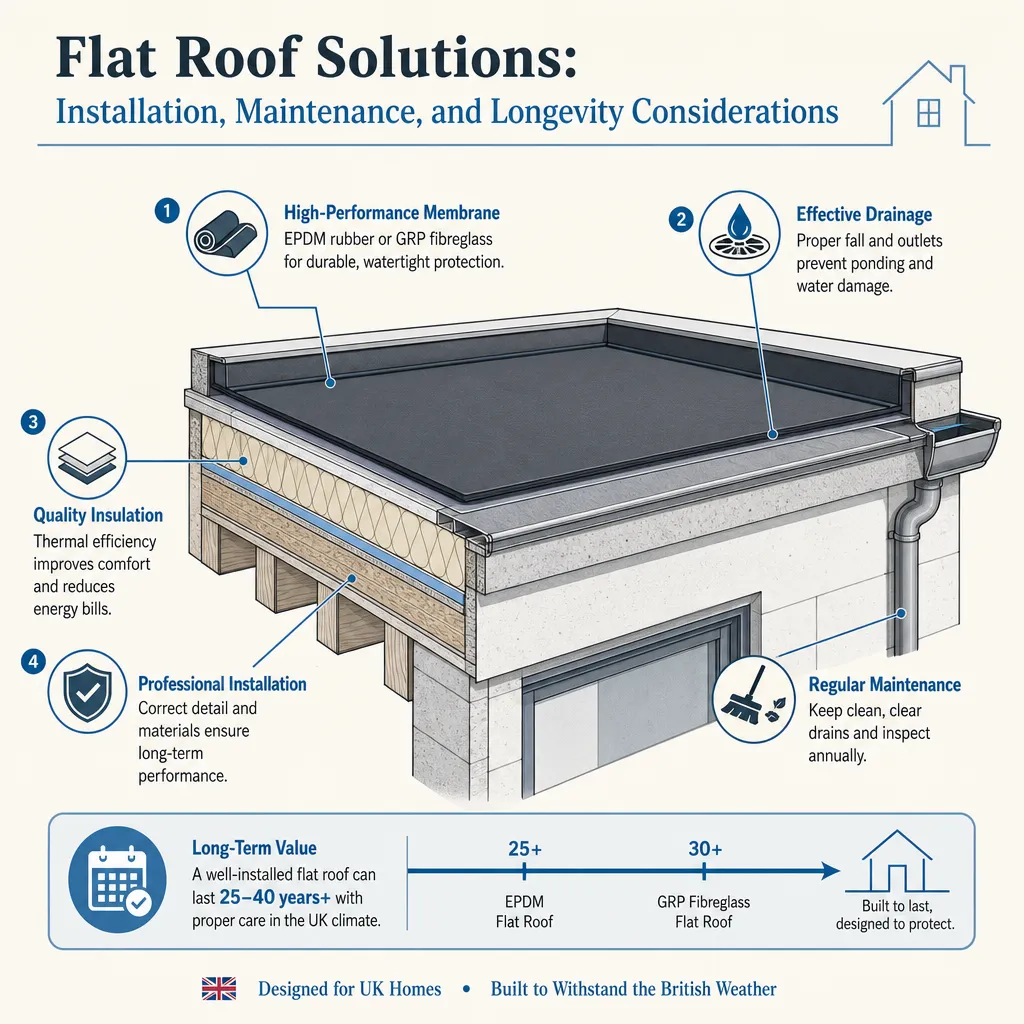
Flat Roof Solutions: Installation, Maintenance, and Longevity Considerations
Flat roofs use several waterproofing systems — EPDM rubber, GRP fibreglass, liquid-applied coatings, modified bitumen felt, lead, and zinc — each with different lifespans and installation requirements.
 Improvement & Build
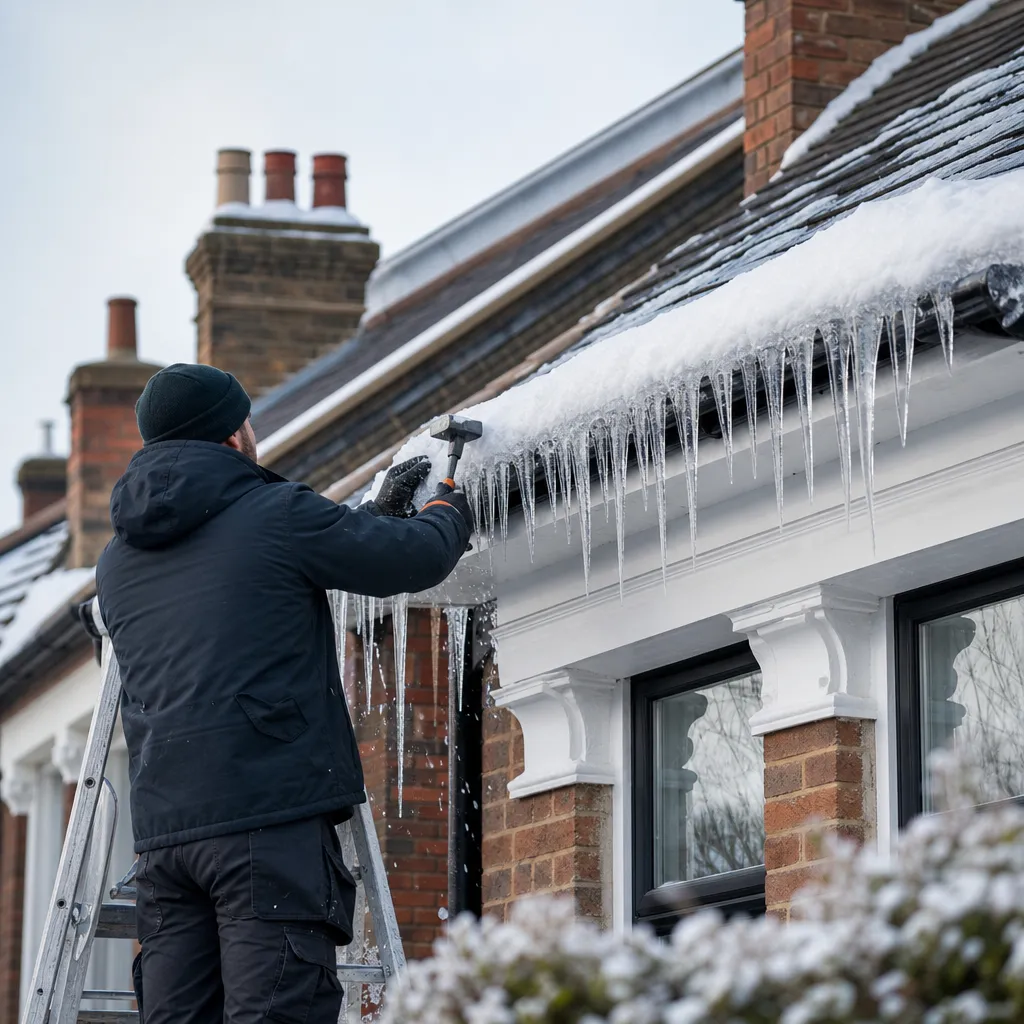
Ice Dam Removal and Roof Protection Services
Ice dams form when heat escaping through a poorly insulated roof melts snow, which refreezes at the colder eaves.
 Improvement & Build
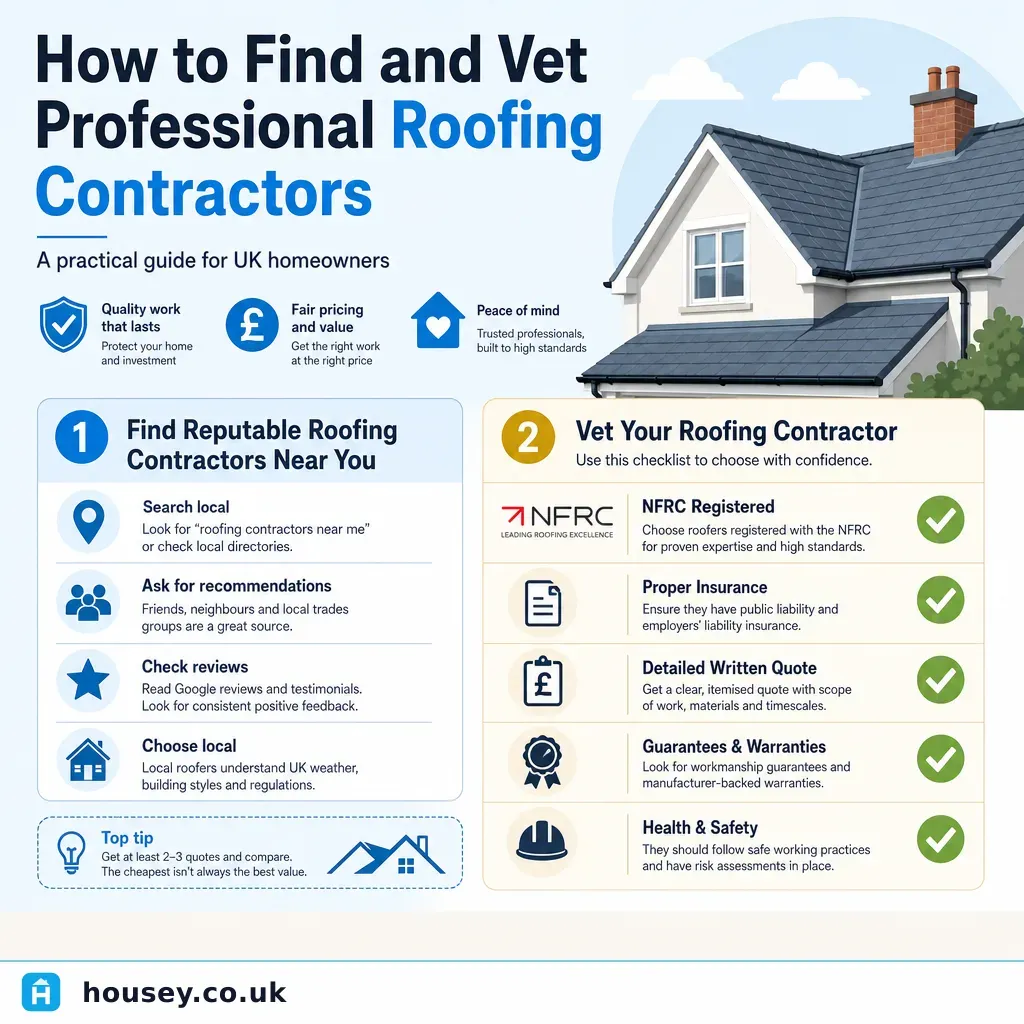
How to Find and Vet Professional Roofing Contractors
Professional roofing contractors should carry public liability insurance of at least £2m, provide a written workmanship guarantee, and hold accreditation from a recognised body such as the NFRC or the Competent Roofer scheme.
 Improvement & Build
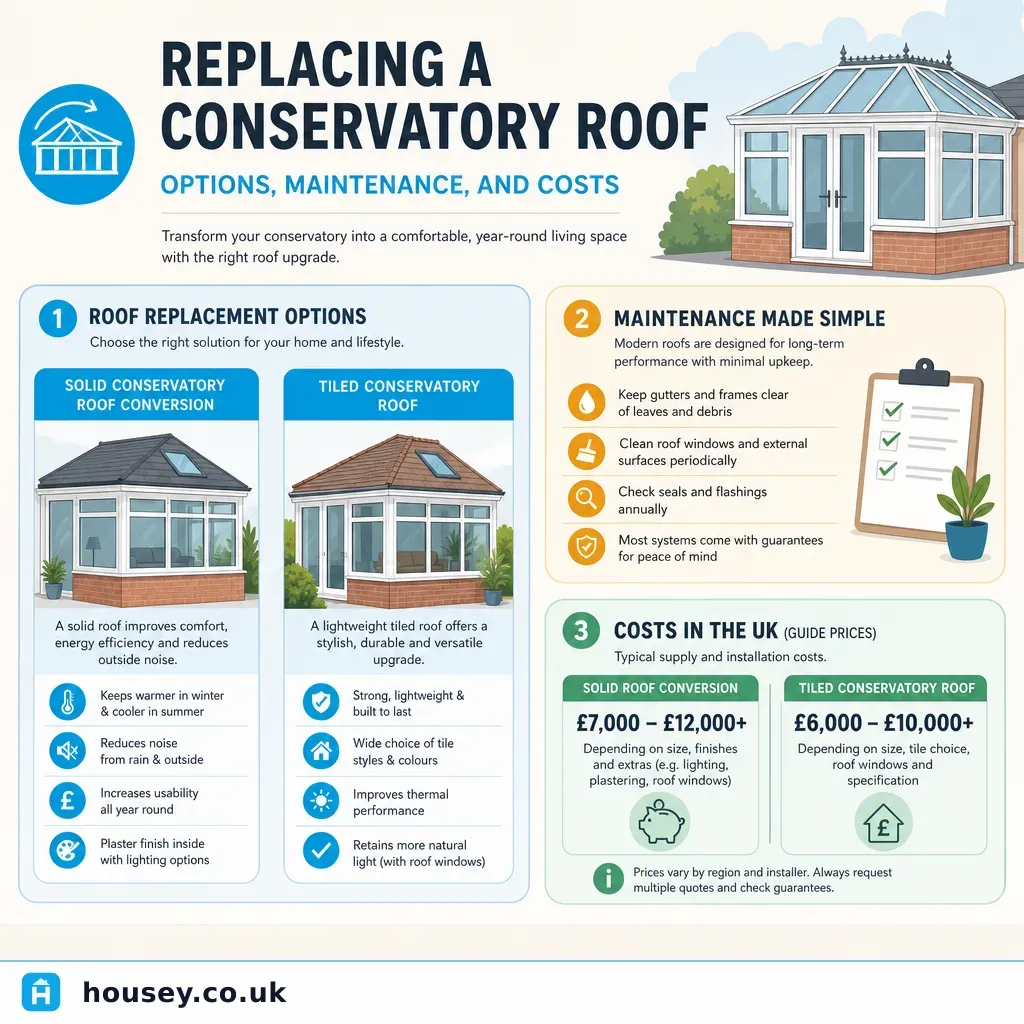
Replacing a Conservatory Roof: Options, Maintenance, and Costs
Conservatory roofs can be replaced with polycarbonate, glass, or solid tiled systems.
 Improvement & Build
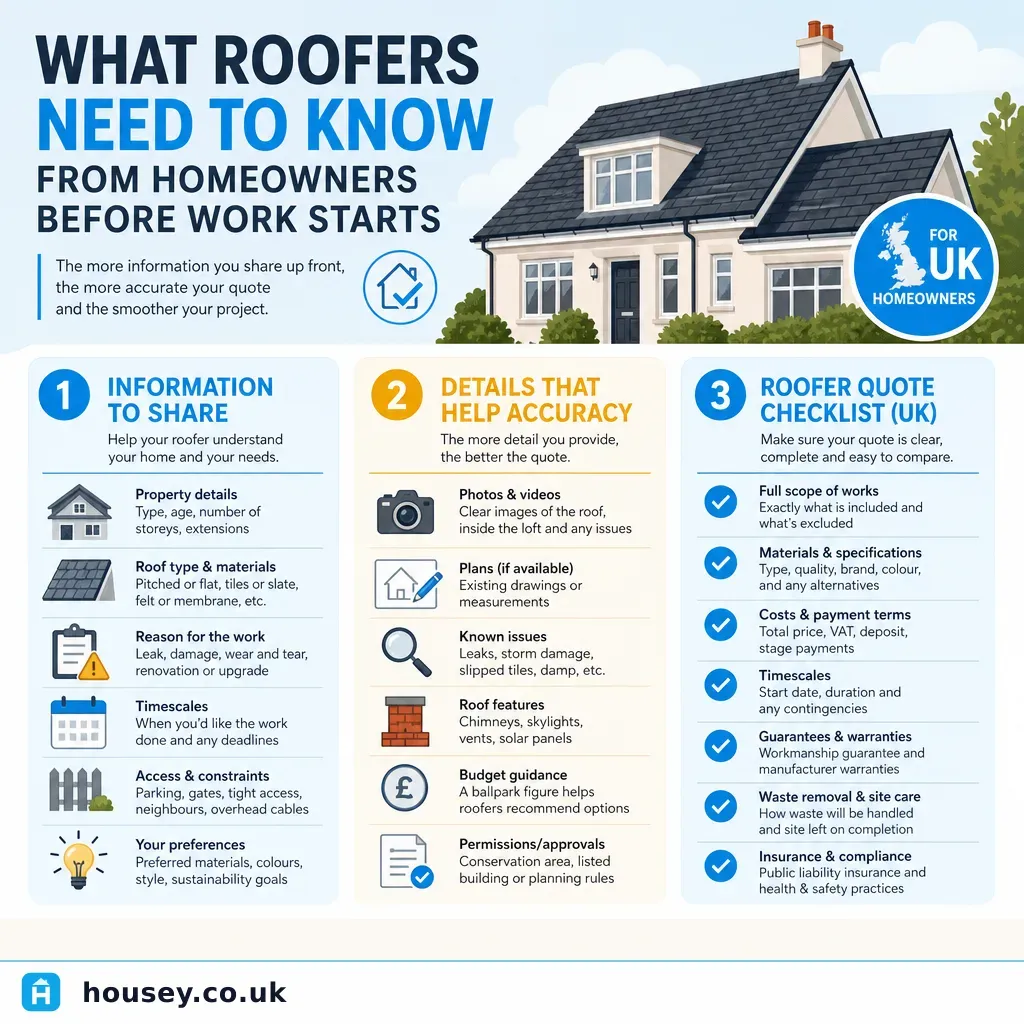
What Roofers Need to Know From Homeowners Before Work Starts
Before a roofer starts work, they need to know the property's age and roof construction, the full scope of damage or works required, whether the property is listed or in a conservation area, and access arrangements including scaffolding.