Roofing Installation Methods: Nail Gun vs Hand-Nailing for UK Roofs
By Housey · Last reviewed 1st of June 2026
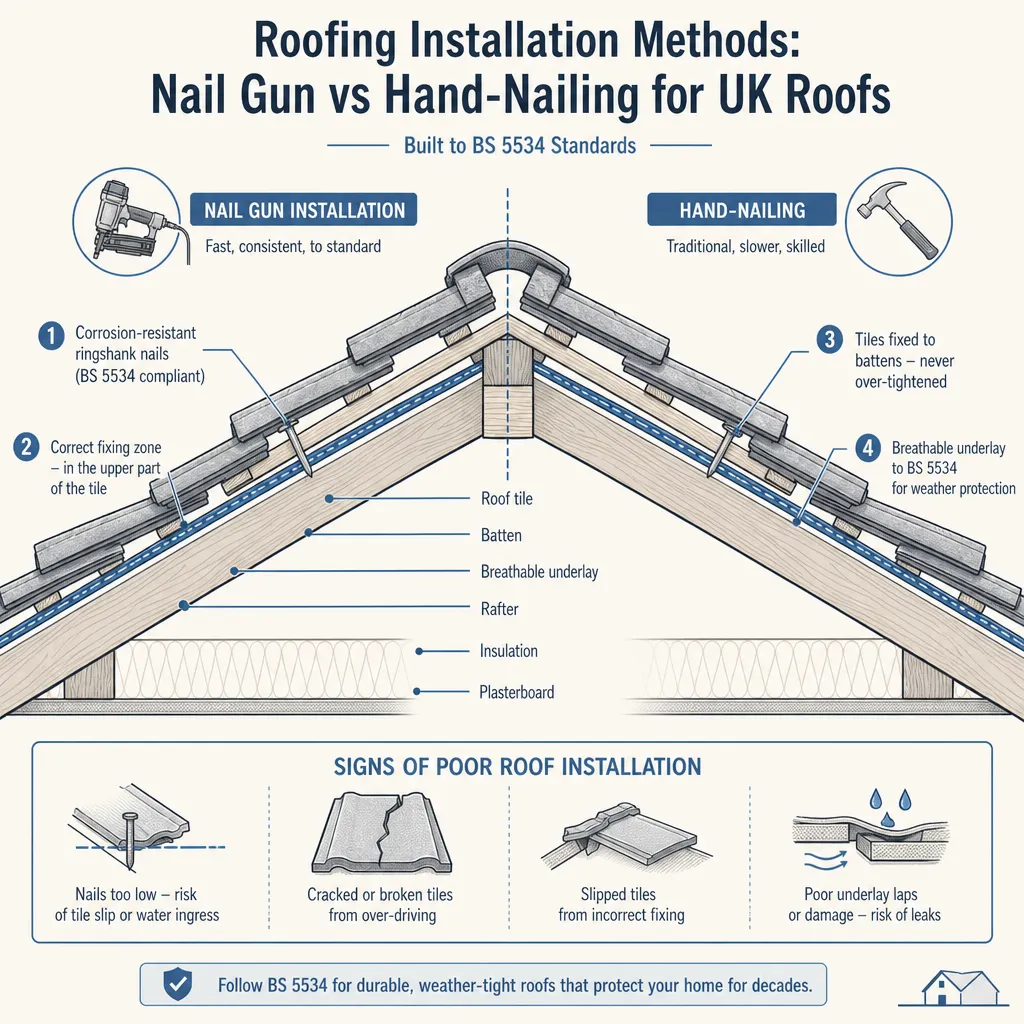
Roofing Installation Methods: Nail Gun vs Hand-Nailing for UK Roofs
When commissioning new roofing work on a UK property — whether replacing slates on a Victorian terrace or fitting concrete interlocking tiles on a 1930s semi — understanding how fixings are installed matters. The difference between a nail gun and hand-nailing is not just a question of speed; it directly affects whether tiles or slates meet the mandatory requirements of BS 5534, the British Standard for slated and tiled pitched roofs, and whether your roof will perform reliably through decades of UK weather.
Key points
- BS 5534:2014+A2:2018 is the mandatory code of practice for slating and tiling in the UK; it requires mechanical fixing for all tiles and slates on pitched roofs.
- Both nail guns and hand-nailing are acceptable methods under BS 5534, provided the correct nail specification, depth, and angle are achieved.
- Overdriven nails (sunk below the tile surface) can crack tiles, compromise fixings, or split timber battens — a common risk with a poorly calibrated nail gun.
- Underdriven nails (protruding above the tile surface) prevent tiles from sitting flush, creating wind-lift risk and potential water ingress.
- The National Federation of Roofing Contractors (NFRC) recommends that fixings are checked as work progresses, particularly on complex roof sections such as valleys, hips, and verges.
What do "nail gun" and "hand-nailing" mean in UK roofing?
In UK roofing practice, the distinction refers to how nails are driven into roof tiles, slates, cedar shingles, or bitumen felt shingles:
Nail gun (pneumatic or gas-powered): A powered tool that drives nails in rapid succession. Common on large residential projects to increase speed. Requires careful pressure calibration to avoid overdriving or underdriving fixings.
Hand-nailing: A hammer is used to drive each nail individually. Slower, but the operative has direct tactile feedback for each fixing, making it easier to judge depth and avoid splitting.
Neither method is inherently superior. Quality depends on the operative's skill, the correct nail specification for the material being fixed, and systematic checking during installation.
BS 5534 requirements: what the standard actually says
BS 5534:2014+A2:2018 (Slating and tiling for pitched roofs and vertical cladding — Code of practice) is the key British Standard covering roof tile and slate fixing in the UK. Key requirements relevant to nailing include:
- All tiles and slates must be mechanically fixed — relying on gravity or mechanical interlock alone is no longer acceptable for new or replacement pitched roofing work.
- Nail length and material must be appropriate for the tile or slate type and batten depth. Nails should typically penetrate at least 25mm into the batten.
- Nail angle should be perpendicular to the fixing surface; angled nails can split battens or reduce pull-out resistance under wind uplift.
- Double nailing is required in certain wind exposure zones (as defined by BS 8104 calculations) and at vulnerable roof areas such as verges and ridges.
BS 5534 was significantly updated in 2014, with amendments in 2016 and 2018, to tighten wind-uplift requirements following storm damage studies that identified widespread under-fixing on older UK roofs.
Nail gun vs hand-nailing: a comparison
Factor | Nail gun | Hand-nailing |
|---|---|---|
Speed | Faster — well suited to large or repetitive tile runs | Slower — better suited to intricate work or smaller areas |
Consistency risk | Higher — pressure miscalibration leads to over- or underdriving | Lower — tactile feedback gives operative more per-nail control |
Tile or slate cracking risk | Higher if gun is over-pressured | Lower with an experienced operative |
Suitability for natural slate | Requires care — slate cracks easily if overdriven | Preferred by many experienced slate roofers |
Suitability for concrete or clay tiles | Both methods used routinely | Both methods used routinely |
Quality assurance during work | Requires periodic depth-checks throughout installation | Easier to self-check with each individual fixing |
Which method suits different UK roof types?
Natural slate (Welsh, Spanish, or reclaimed)
Natural slate is brittle and often variable in thickness. Many experienced slate roofers prefer hand-nailing for this material, as overdriving a nail gun on thin or uneven slates risks cracking. If a nail gun is used, a depth-limiting collar should be fitted and test fixings checked on offcut pieces before work begins on the main roof area.
Concrete and clay interlocking tiles
The most common tile types on UK homes built since the 1950s. Both nail guns and hand-nailing are used routinely for these materials. The more uniform profile and greater thickness make both methods broadly reliable when the tool is correctly set up and depth is checked periodically during installation.
Cedar shingles and bitumen felt shingles
Cedar shingles — used on some specialist, heritage, or contemporary projects — require stainless steel or silicon bronze nails and careful depth control to avoid splitting. Hand-nailing is more common for cedar work. Bitumen felt shingles, often found on garden buildings or outbuildings, are generally more forgiving and are commonly fixed with ring-shank nails by gun.
Decision guide: choosing the right approach for your project
- Choose a contractor who hand-nails if your property has natural slate, reclaimed plain tiles, or heritage materials where cracking risk is higher.
- Ask about nail gun calibration if the contractor plans to use a gun on a large re-roof — confirm that depth checks are carried out at regular intervals during the work.
- Ask for a sample inspection at the verge or hip before final sign-off, regardless of which method is used.
- Ask a qualified roofer to re-inspect if you notice cracked tiles, raised tiles, or tiles that feel loose shortly after installation.
- Check with your local planning authority if the property is listed or in a conservation area — material specification and method may affect listed building consent requirements.
Red flags after roofing work
The following signs may indicate poor nail installation, regardless of which method was used:
- Tiles that rock or shift when gently pressed (underdriven nails or missing fixings)
- Cracked tiles near the nail hole (overdriven nails or incorrect nail gauge)
- Nails visible above the tile surface on plain tile or slate sections (underdriven fixings)
- Tiles that sound hollow when tapped along a run (loose fixings)
- Water ingress shortly after installation, particularly at ridge, hip, or verge
- Split or cracked battens visible at the eaves or rake edge
- Tiles that have slipped or displaced within 12 months of installation
When to get professional help
If you have had roofing work carried out and are uncertain about installation quality, a post-completion inspection by a qualified roofer or building surveyor can check for compliance with BS 5534 and identify loose or incorrectly fixed tiles before they result in a leak or storm-damage event.
Seek professional assessment if:
- Tiles have become loose or slipped within 12 months of installation
- You can see cracked tiles in the area of recent work
- Water staining appears inside the roof space after work is completed
- You are preparing to sell the property and wish to confirm the roof's condition
- The roofing contractor has not provided a workmanship guarantee or evidence of NFRC membership
How Housey can help
If you need a qualified roofer to inspect installation quality or carry out re-roofing work to BS 5534 standards, Housey can connect you with vetted roofing contractors across the UK who can assess your roof and provide a clear, itemised written quote.
Frequently asked questions
Does BS 5534 specify which nailing method must be used for UK roof tiles?
No. BS 5534:2014+A2:2018 specifies the required outcome — correct nail depth, penetration, angle, and material — rather than the tool used to achieve it. Both nail guns and hand-nailing are acceptable provided the fixing meets the standard's technical requirements. The installer's skill and ongoing quality checks during work matter more than the choice of tool.
What type of nails should be used for UK roof tiles and slates?
BS 5534 requires nails appropriate for the material and resistant to corrosion. Common specifications include 3.35mm x 65mm aluminium alloy nails for clay and concrete tiles, and stainless steel or silicon bronze nails for natural slate. Using the wrong type or gauge risks splitting tiles or premature corrosion of fixings, both of which can lead to tile loss in high winds.
How can I tell if my roof tiles have been poorly nailed after installation?
Look for tiles that rock or shift when touched, cracked tiles near the nail hole, nails visible above the tile surface, and tiles that sound hollow when tapped. From inside the loft space, split battens near fixing points can indicate overdriving. A post-installation inspection by a qualified roofer or RICS-registered building surveyor provides a more thorough assessment.
Is re-roofing work on an existing UK home subject to building regulations?
Re-roofing an existing dwelling in England and Wales is generally not notifiable under Building Regulations unless structural work, a change of roofline, or thermal insulation changes are involved. All roofing work should nonetheless comply with BS 5534. Work on new-build properties and extensions is subject to building control inspection.
Sources and further reading
- BS 5534: Slating and tiling for pitched roofs — BSI overview — British Standards Institution
- National Federation of Roofing Contractors (NFRC) — NFRC guidance on installation standards and contractor competence
- Approved Document A: Structure — GOV.UK, Ministry of Housing, Communities and Local Government
- Approved Document C: Site preparation and resistance to moisture — GOV.UK, Ministry of Housing, Communities and Local Government
Useful next reads
 Surveys & Inspections
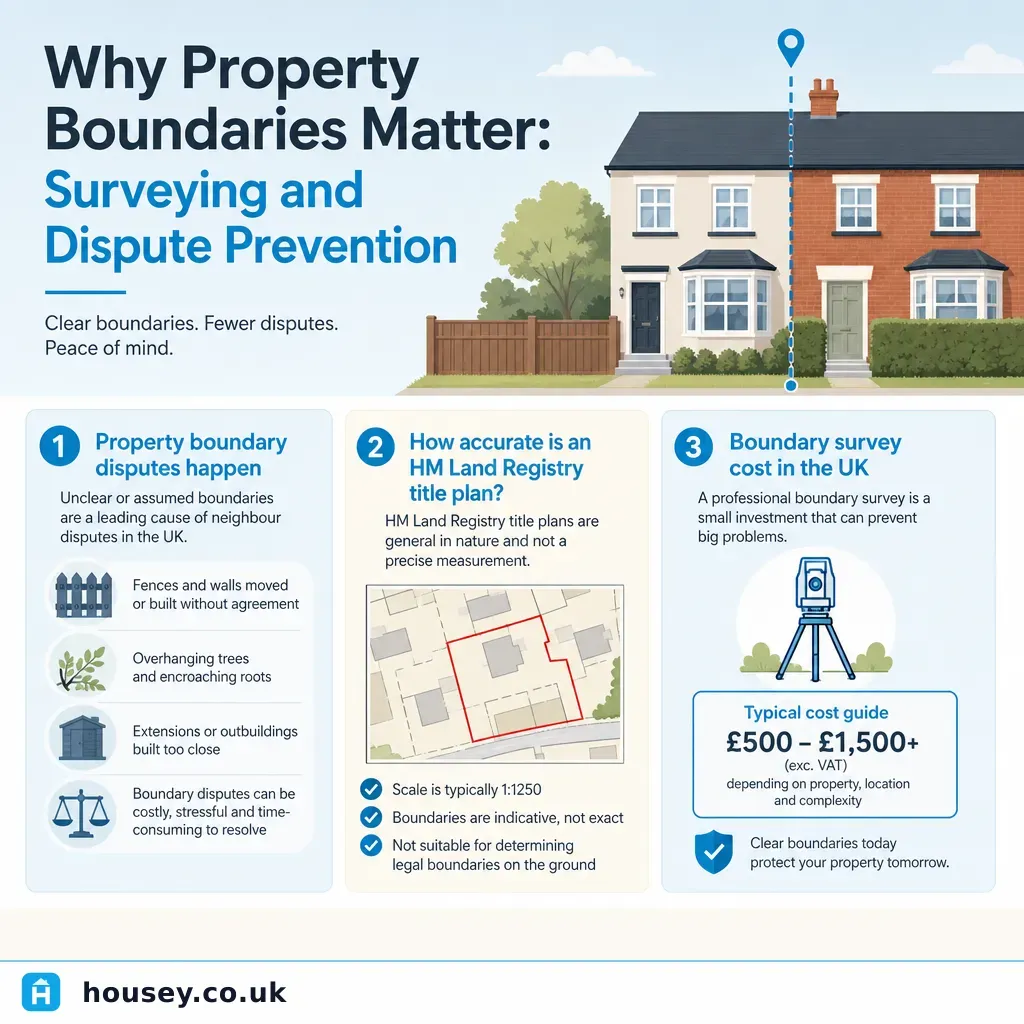
Why Property Boundaries Matter: Surveying and Dispute Prevention
Property boundaries in England and Wales are recorded as general boundaries by HM Land Registry — not precise measurements.
 Surveys & Inspections
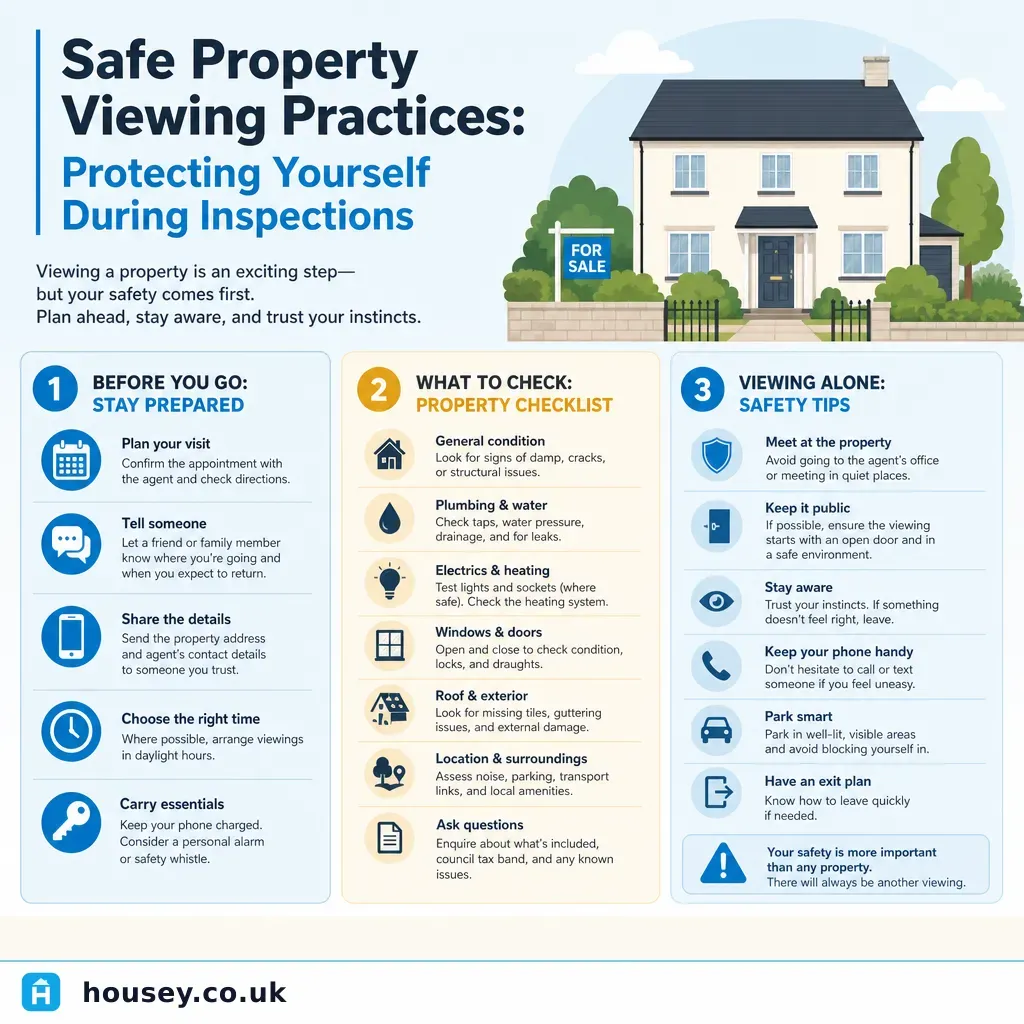
Safe Property Viewing Practices: Protecting Yourself During Inspections
When viewing a property in the UK, always tell someone where you are going and share the full address before you leave.
 Surveys & Inspections
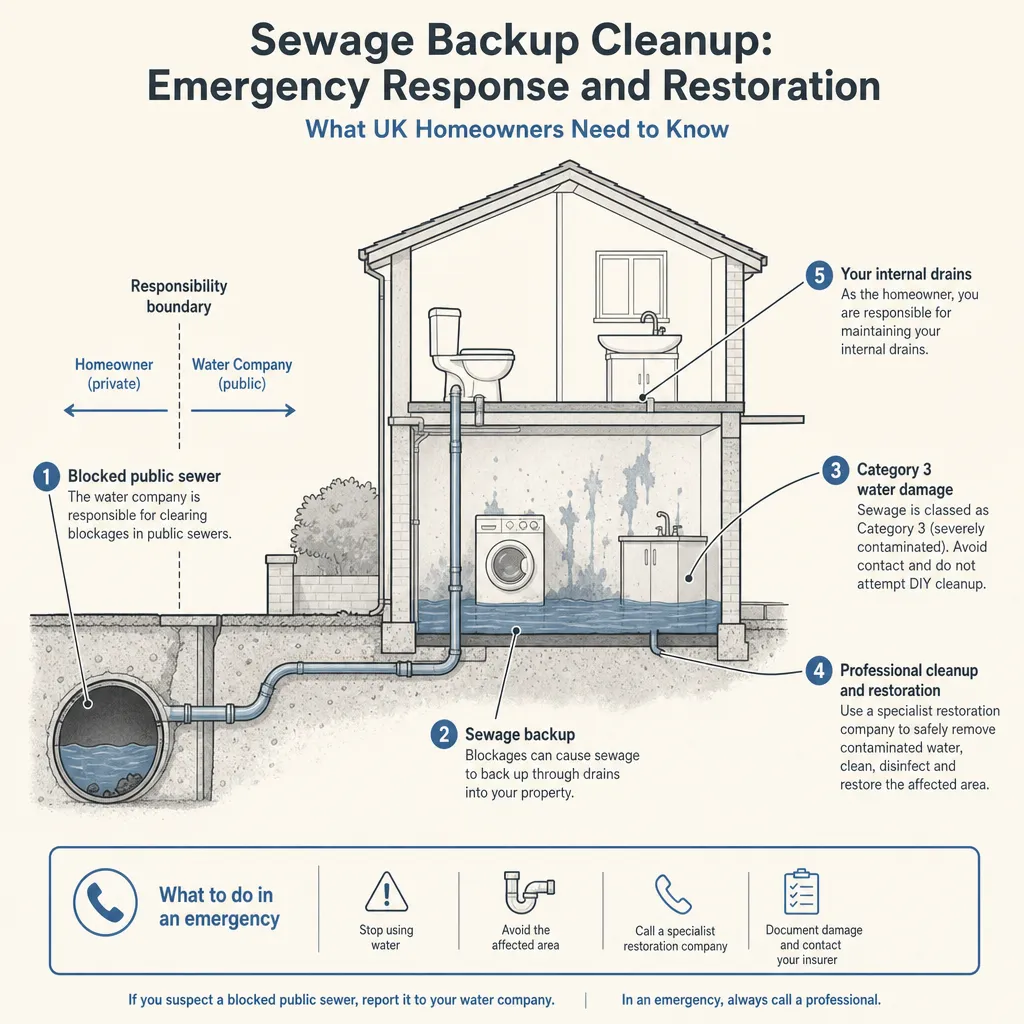
Sewage Backup Cleanup: Emergency Response and Restoration
A sewage backup should be treated as a Category 3 contamination event.
 Surveys & Inspections
Identifying Asbestos Insulation: What You Need to Know for Your Property
Asbestos insulation was widely used in UK properties built before 2000, commonly found in pipe lagging, ceiling tiles, loose-fill loft insulation, and around boilers.
 Surveys & Inspections
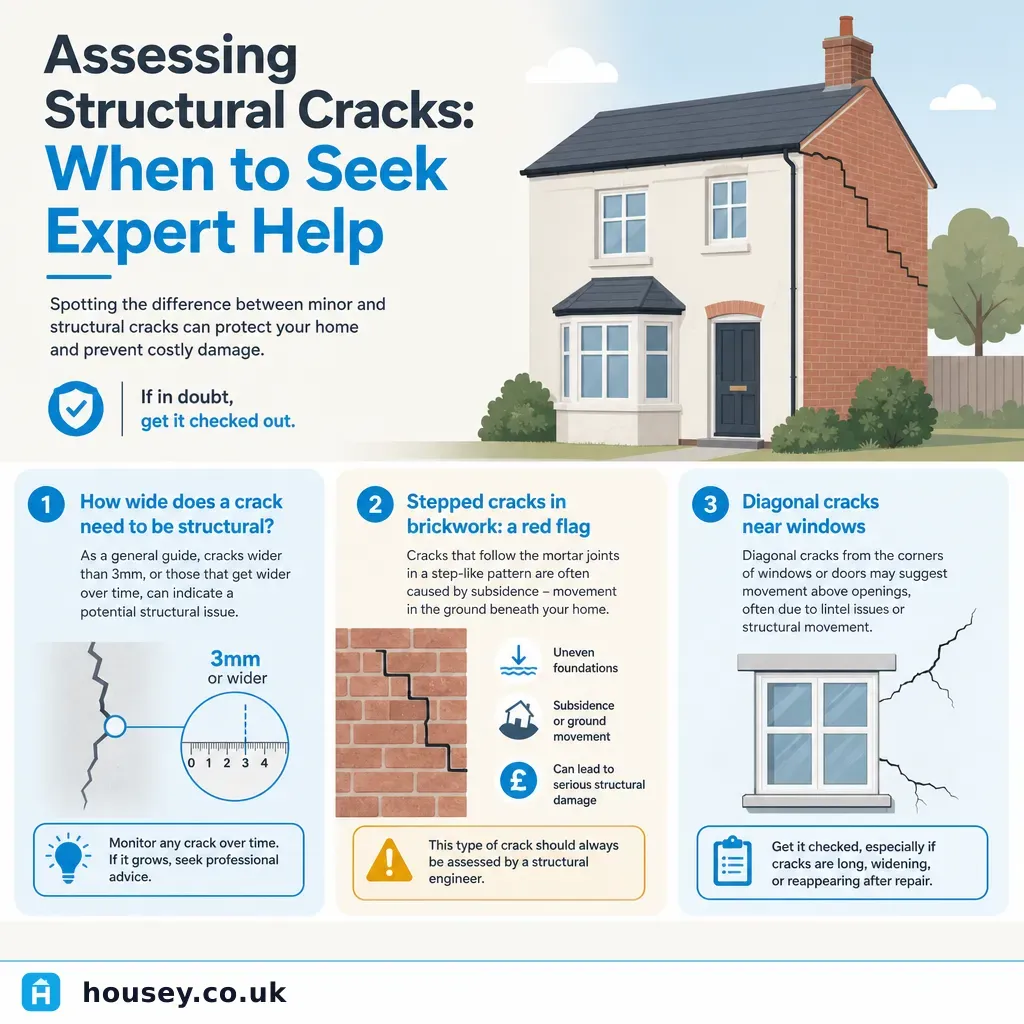
Assessing Structural Cracks: When to Seek Expert Help
Structural cracks range from harmless shrinkage hairlines to signs of subsidence or foundation movement.