Safe Removal and Disposal of Water Storage Tanks
By Housey · Last reviewed 6th of May 2026
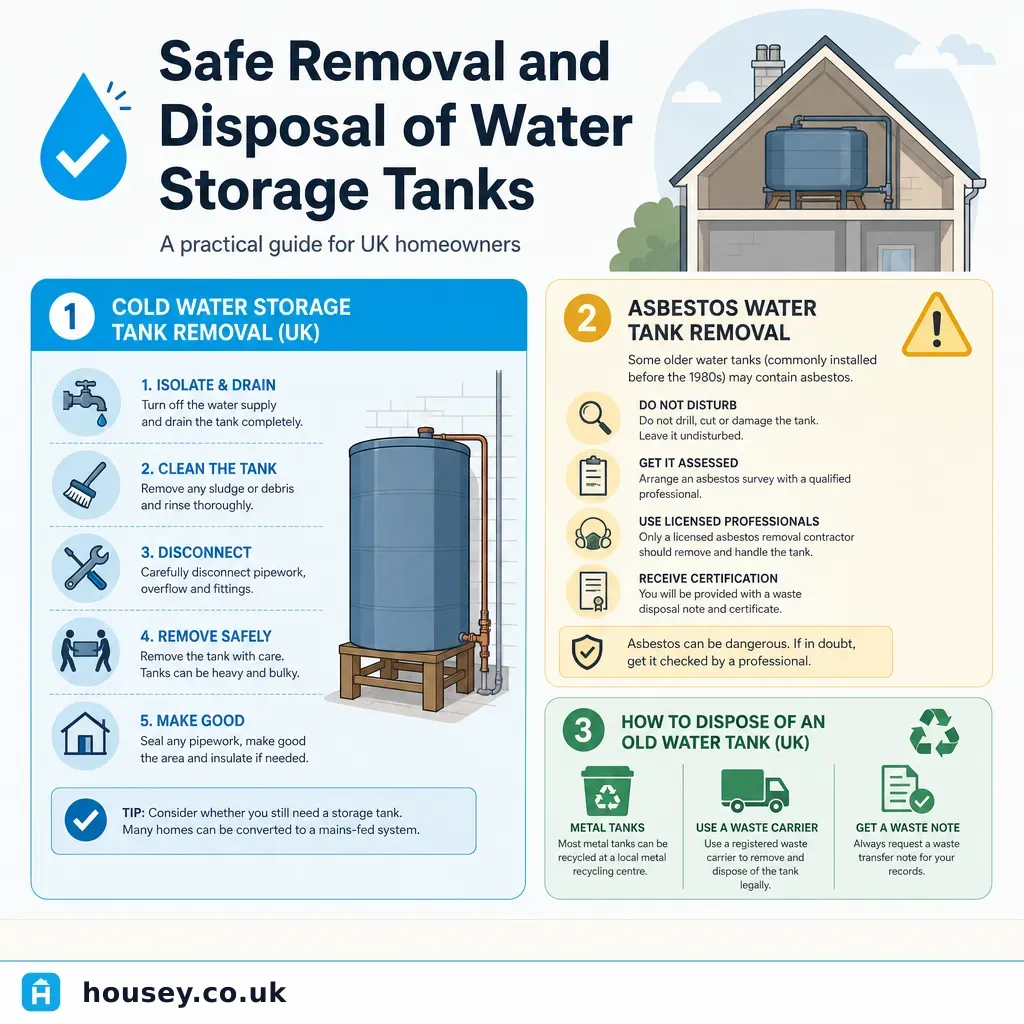
Safe Removal and Disposal of Water Storage Tanks
Cold water storage tanks and header tanks were standard in UK homes built before the 1990s, when gravity-fed hot water systems were the norm. Homeowners encounter them today when switching to a combi boiler, converting a loft, or buying an older property still running on a traditional cylinder system. The tank's age and material — which may include asbestos cement — determines whether removal is a routine plumbing job or a specialist operation carrying legal obligations.
Key points
- Tanks installed before approximately 1985 may be made from asbestos cement; treat any grey, heavy, or sectional tank as suspect until professionally tested.
- The Hazardous Waste (England and Wales) Regulations 2005 require asbestos cement tanks to be removed by a licensed contractor and disposed of with a consignment note.
- All tanks must be completely drained and all pipework disconnected and capped by a qualified plumber before removal work begins.
- Galvanised steel, lead-lined, and asbestos cement tanks cannot be disposed of as general household waste; each requires a specific disposal route.
- Stagnant water in a redundant tank held at 20°C–45°C creates a Legionella risk — important if you plan to delay removal.
Why old water storage tanks are still found in UK homes
Before combi boilers became mainstream in the late 1990s, most UK homes used a traditional open-vented hot water system requiring a cold water storage cistern — usually in the loft — and a smaller header tank for the central heating circuit. Properties built between the 1930s and the mid-1980s frequently still have at least one of these tanks in the loft or airing cupboard.
When homeowners install a combi boiler, upgrade to an unvented pressurised cylinder, or begin a loft conversion, these tanks become redundant. They need to be removed to free space, reduce structural loading, and eliminate the risk of stagnant water accumulating in an unused system.
Identifying your tank type and the asbestos risk
The material of the tank determines the risk level and legal requirements that apply.
Tank type | Approximate era | Asbestos risk | Disposal route |
|---|---|---|---|
Asbestos cement (grey, heavy, brittle) | Pre-1985 | High — do not cut or drill | Licensed asbestos contractor; consignment note required |
Sectional asbestos cement panels | 1960s–1980s | High | Licensed asbestos contractor |
Galvanised steel | 1940s–1980s | Low | Licensed waste transfer station or scrap metal dealer |
Lead-lined or lead tank | Pre-1960s | Low for asbestos; lead hazard present | Licensed hazardous waste contractor |
Polyethylene plastic (black or blue) | 1985–present | None | Civic amenity site — cut into sections first |
Fibreglass/GRP sectional | 1970s–1990s | Check fittings and seals | Civic amenity site once confirmed asbestos-free |
Asbestos cement tanks are typically dark grey, very heavy for their size, and may be brittle or chalky at the edges. Sectional tanks assembled from multiple panels in the loft are strongly associated with asbestos cement construction in UK properties built before 1985. If there is any doubt, commission a sample test from a UKAS-accredited laboratory or instruct a licensed asbestos surveyor before touching the tank.
The HSE advises that asbestos cement is a lower-risk form of asbestos compared with sprayed or lagged asbestos, but it still releases fibres when cut, drilled, broken, or abraded. Any asbestos cement tank in poor condition, or that must be cut for removal, requires a licensed contractor.
Safe removal of non-asbestos tanks
If the tank is confirmed as plastic or galvanised steel with no asbestos components, the following process applies. Stop at step one and call a professional if there is any doubt about the material.
- Isolate the mains supply. Close the stopcock — usually under the kitchen sink. Do not rely on the ball valve alone.
- Drain completely. Open the highest cold tap until flow stops; confirm the tank is visually empty.
- Disconnect pipework. A qualified plumber should disconnect supply, overflow, and distribution pipes, capping all open ends.
- Isolate associated electrics. If an immersion heater or connected cylinder is wired nearby, isolate at the consumer unit. Use an NICEIC or NAPIT registered electrician.
- Remove the tank. Plastic tanks can be cut into sections to pass through the loft hatch. Steel tanks may need dismantling at joints. Use two people for heavy tanks.
- Dispose correctly. See the disposal section below.
- Recommission the system. Have a qualified plumber confirm all pipework is capped and leak-free before restoring the supply.
Legal disposal routes
Incorrect disposal is an offence under the Environmental Protection Act 1990 and the Hazardous Waste (England and Wales) Regulations 2005.
- Asbestos cement: Double-bag in heavy-duty polythene, label as asbestos waste, use a licensed contractor with consignment note. Most skip operators do not accept asbestos waste.
- Galvanised steel: Household waste recycling centre, licensed metal recycling dealer, or licensed waste carrier.
- Lead-lined tanks: Contact the Environment Agency or your local authority hazardous waste team.
- Plastic polyethylene: Household waste recycling centres once cut into manageable sections; confirm volumes with your local authority.
Important limitations
This article is general guidance for UK homeowners and does not constitute professional advice. Asbestos classification, hazardous waste disposal obligations, and plumbing regulations vary by property, tank condition, and local authority. Always seek professional assessment before disturbing any tank of uncertain material or age.
When this becomes urgent
- The tank is cracked, overflowing, or actively leaking — immediate plumbing attention required.
- Stagnant or discoloured water is present — potential Legionella risk; do not use connected outlets without professional assessment.
- A surveyor or buyer's report flags the tank during a property transaction.
- A loft conversion cannot proceed until the tank is removed.
- You have already disturbed a grey or sectional tank and are uncertain of the material.
What to ask a qualified professional
- Can you confirm the tank material before starting — will you test it or treat it as asbestos suspect?
- Are you a licensed asbestos removal contractor if asbestos cement is possible?
- What waste consignment documentation will you provide?
- Will you cap and re-commission all affected pipework on completion?
- Are you CIPHE or APHC registered?
- Is disposal included in the quote and what is the cost breakdown?
Red flags — stop and seek professional help
- The tank is grey, very heavy, brittle, or has a chalky surface — potential asbestos cement.
- The tank is sectional, assembled from panels in the loft — strongly associated with pre-1985 asbestos cement construction.
- Visible slime, discolouration, or unusual smell in the water — contamination or Legionella risk.
- The tank appears to support roof timbers or is embedded in the building structure.
- The electrical isolation point for a nearby immersion heater cannot be clearly identified.
When to get professional help
A qualified plumber should handle any removal involving mains-connected pipework. For any confirmed or suspected asbestos cement tank, a licensed asbestos contractor is a legal requirement under the Control of Asbestos Regulations 2012 — not merely a precaution. Contact the HSE or the Environment Agency if you are uncertain of your obligations.
How Housey can help
Housey helps UK homeowners find vetted local professionals for plumbing, asbestos surveys, and hazardous waste removal. If you need a qualified plumber to safely disconnect and remove a cold water storage tank, or a licensed asbestos professional to assess an older tank, Housey can connect you with relevant local providers.
Frequently asked questions
Can I remove a cold water storage tank myself?
You can remove a modern plastic tank yourself if you can safely isolate the water supply and there is no asbestos risk. Disconnecting pipework carries a flood risk, and any work near immersion heater wiring requires a qualified electrician. For older, sectional, or material-uncertain tanks, always instruct a qualified professional.
How do I know if my water tank contains asbestos?
Asbestos cement tanks are typically dark grey, heavy for their size, and brittle at the edges. Sectional tanks assembled from panels in the loft are particularly associated with asbestos cement in UK properties built before 1985. If uncertain, commission a test from a UKAS-accredited laboratory or instruct a licensed asbestos surveyor before any work starts.
Can I put an old water tank in a skip?
Most standard skip operators do not accept asbestos waste, and many will not take galvanised steel or lead-lined tanks without prior arrangement. Always confirm before loading. Asbestos cement tanks require a licensed contractor and consignment note documentation under the Hazardous Waste (England and Wales) Regulations 2005.
What happens if I leave a redundant water tank in place?
Water retained at 20°C–45°C in a redundant tank poses a Legionella risk. An empty unsecured tank can shift and damage roof timbers. Redundant tanks are flagged by surveyors during property sales. If removal is delayed, drain it, isolate from the supply, and cap all connected pipework.
How much does water tank removal cost in the UK?
Plastic tank removal by a plumber typically costs £150–£400. Licensed asbestos cement tank removal is generally £500–£1,500 or more depending on size, condition, and access. Get at least two itemised quotes including disposal costs. Indicative UK costs, last reviewed 2026-05-06.
Sources and further reading
- Asbestos: managing and working with it — Health and Safety Executive
- Dispose of hazardous waste — Environment Agency / GOV.UK
- Legionella risks in domestic hot and cold water — Health and Safety Executive
- Water Supply (Water Fittings) Regulations 1999 — legislation.gov.uk
- Find a licensed waste carrier — Environment Agency / GOV.UK
Useful next reads
 General property advice
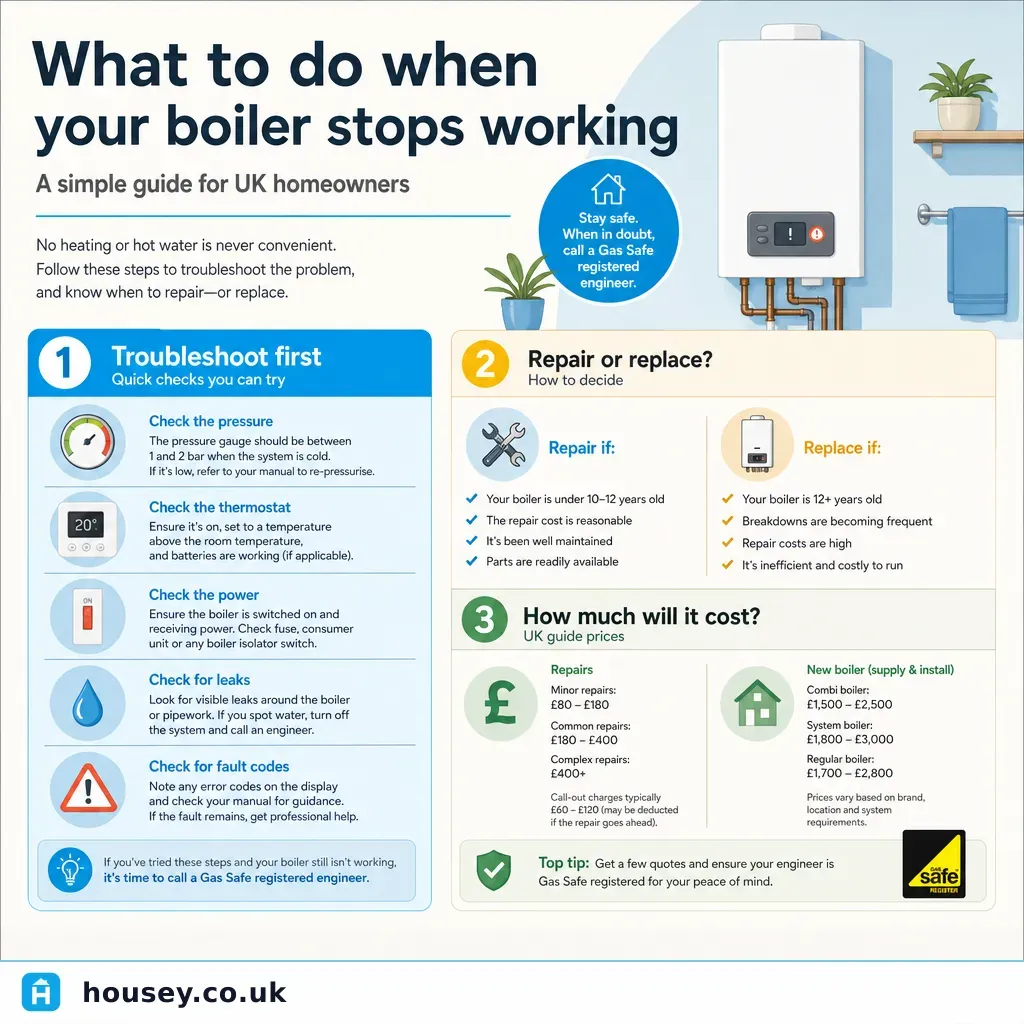
What to do when your boiler stops working
When your boiler stops working, check the pressure gauge (should read 1–1.
 General property advice
Property Market Trends: Activity Growth and Price Movements
UK property market activity is measured through completed sale registrations (HM Land Registry), lender mortgage data, and transaction volumes from HMRC.
 General property advice
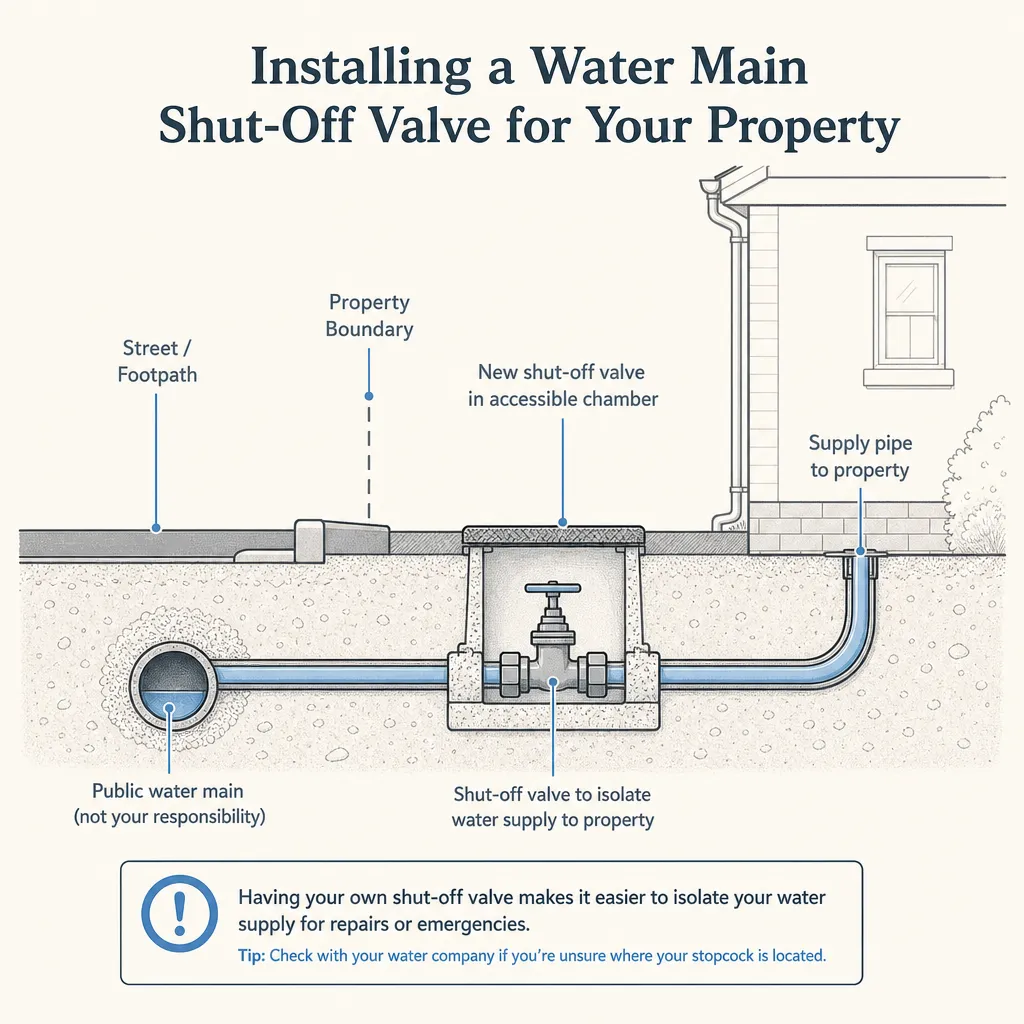
Installing a water main shut-off valve for your property
A water main shut-off valve — commonly called a stopcock — controls all water entering your home from the mains.
 General property advice
Monthly House Price Index: August Market Report and Analysis
The UK House Price Index is published monthly using completed Land Registry transaction data, meaning August figures typically reflect sales agreed months earlier.
 General property advice
Scottish Property Market: Activity and Regional Trends
Scotland's property market operates under distinct legal rules: sellers must provide a Home Report before marketing, transactions become legally binding at conclusion of missives rather than exchange of contracts, and Land and Buildings Transaction Tax replaces Stamp Duty.