Steel-Frame Casement Windows: Restoration and Refurbishment for Period Properties
By Housey · Last reviewed 24th of May 2026
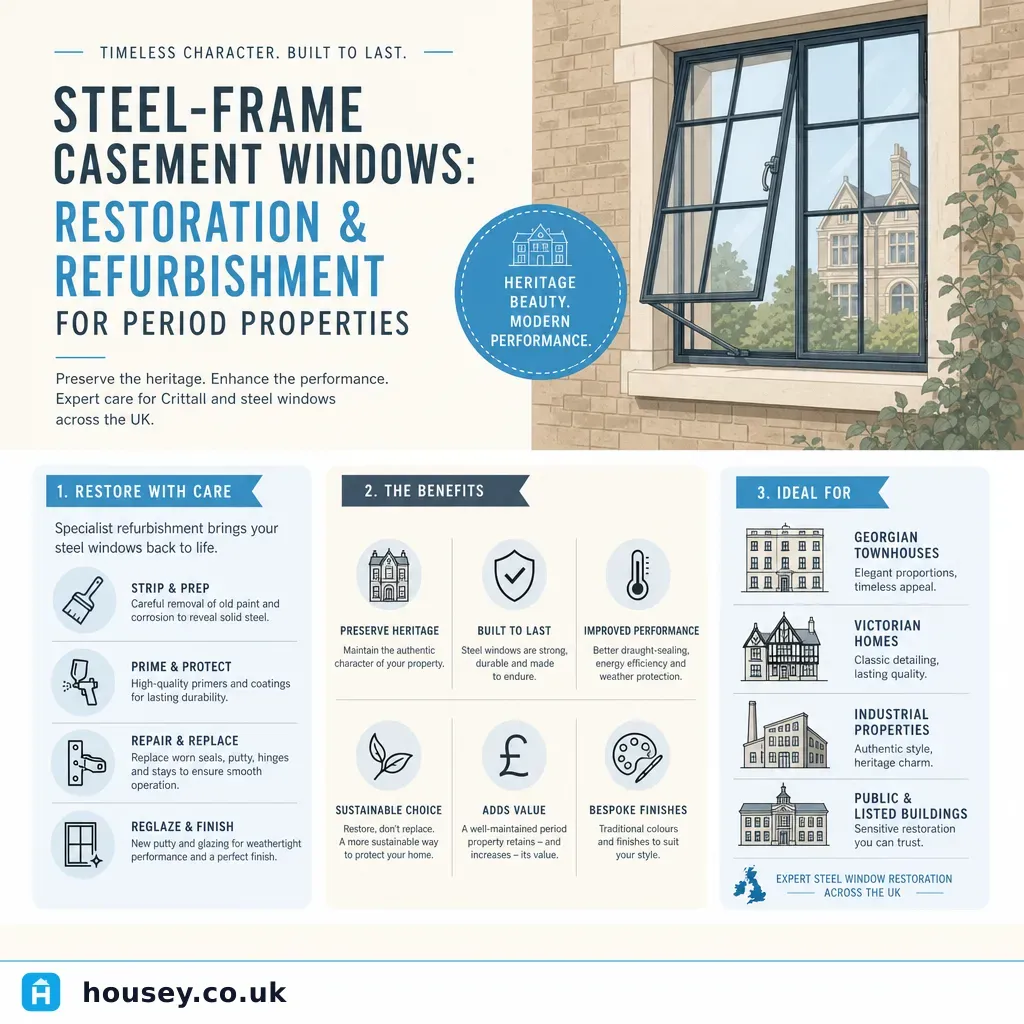
Steel-Frame Casement Windows: Restoration and Refurbishment for Period Properties
Original steel casement windows are a defining feature of millions of UK period properties built between the 1920s and 1960s, from Arts and Crafts houses glazed with Crittall frames to the characteristic metal-framed windows of the post-war suburban semi. When these windows begin to corrode, jam, or lose their seals, owners face a choice between restoration and replacement — a decision that carries planning, heritage, and thermal performance implications quite different from those attached to modern uPVC windows.
Key points
- Steel casement windows were mass-produced in the UK from the 1920s onwards; the Steel Window Association (SWA) represents UK manufacturers and restoration specialists and publishes technical guidance for property owners.
- In a listed building or conservation area, replacing original steel windows with a different material typically requires listed building consent or conservation area consent and is often refused — restoration is usually the preferred or only permissible route.
- Slim-profile double-glazed units can be retrofitted into many original steel casement frames, improving U-values from approximately 5.0 W/m²K (single glazed) to around 2.0 W/m²K.
- Original Crittall and other proprietary steel windows have dedicated specialist restorers who can source matching sections, replace corroded glazing bars, and re-glaze with slim modern units.
- Properly restored and powder-coated steel frames can last 25–50 years before requiring further significant intervention; galvanising the external face extends service life in exposed coastal or urban locations.
Restoration vs replacement: which is right for your property?
The right approach depends on the heritage status of your property, the condition of the frames, your thermal performance goals, and your budget.
Approach | Best for | Not ideal for | Planning implications | Thermal outcome |
|---|---|---|---|---|
In-situ restoration (re-glaze, re-seal, repaint) | Frames in fair structural condition; listed or conservation area properties | Severely corroded or buckled frames with failed glazing bars | Usually no consent needed; inform LPA conservation officer | Significant improvement over failed single glazing; slim DG achievable |
Partial restoration (replace damaged sections, re-glaze) | Localised corrosion or cracked glazing bars | Wholesale deterioration across multiple openings | Usually no consent for like-for-like repair; SWA recommends consulting LPA | As above |
Slim double-glazing upgrade within existing frame | Any restorable steel frame; listed buildings or conservation areas | Frames where rebate depth is insufficient for slim units | May need LPA consent in conservation areas; Historic England generally supports slim DG | U-value improves from ~5.0 to ~2.0 W/m²K |
Full replacement like-for-like steel | Frames beyond economic repair where LPA accepts replacement | Listed buildings where original fabric must be retained | Likely to need consent even like-for-like; check with LPA | New steel frames can meet Part L with correct glazing |
Replacement with uPVC or aluminium | Non-listed properties outside conservation areas where permitted | Listed buildings; conservation areas; character properties | Permitted development in some cases; check for Article 4 Directions | Can meet modern standards; may affect character and resale value |
Understanding the planning position
If your property is listed, your local planning authority (LPA) will almost certainly require the retention of original steel windows. Full replacement — even with identical steel frames — typically needs listed building consent. Conservation area properties face restrictions under conservation area consent rules and local planning policies, even if not individually listed.
Historic England's guidance supports the principle of "repair before replace" and notes that slim-profile double-glazed units — sometimes described as heritage slim DG, typically in a 4–12–4 mm configuration with a warm-edge spacer — are now widely accepted in listed buildings where the rebate depth allows. Always consult your LPA's conservation officer before starting work if your property has any heritage designation.
Outside listed buildings and conservation areas, replacement windows may fall under permitted development rights, but some areas have Article 4 Directions that remove these rights to protect local character. Check with your LPA before purchasing replacement frames.
What a steel window restoration involves
A competent steel window restoration specialist will typically carry out the following steps:
- Condition survey: assess each opening for corrosion extent, glazing bar integrity, hinge and fastener condition, and existing glazing type.
- In-situ repair or workshop restoration: minor corrosion is treated with rust converter and feather-edge fillers; more extensive corrosion may require cutting out sections and welding in matching steel profiles.
- Re-glazing: original single glazing is removed and replaced with slim-profile double-glazed units or, where rebate depth is insufficient, high-performance laminated single glass.
- Re-sealing: new glazing putty or glazing tape is applied to the rebate; weather seals are fitted around the opening casement sash.
- Surface preparation and finishing: frames are cleaned back to bare metal where needed, primed with an appropriate metal primer, and finished with powder coating (workshop) or specialist metal paint (in situ).
What to ask a steel window restoration specialist
- Are you a member of the Steel Window Association, and can you evidence experience on listed or conservation area properties?
- Will you carry out a full condition survey before quoting, and what does the report include?
- Can you supply slim double-glazed units that will fit the existing rebate depth, and what U-value will they achieve?
- What surface treatment do you recommend for my location and exposure level — powder coating or paint — and what is the expected maintenance interval?
- What warranty do you offer on the glazing units and the frame finish?
- Will you liaise with the LPA's conservation officer if consent is required?
- Is VAT included in the quote?
- How will you protect internal finishes and furnishings during the work?
Common problems with steel casement windows — and what causes them
These red flags help you understand what you are dealing with before instructing a specialist:
- Corroded frame sections: usually caused by failed paint or glazing putty allowing moisture ingress over many years. Surface corrosion is treatable; through-corrosion of the section requires welding in new steel.
- Jammed or stiff opening casements: often caused by paint build-up over decades on hinges and rebates, or by corrosion of pivot pins. De-painting and re-lubricating is usually straightforward.
- Draughty casements: failed or absent weather seals around the opening sash. Modern rubber or brush-pile seals can be retrofitted into original frame channels.
- Broken glazing bars: a damaged horizontal or vertical bar may need welding or section replacement — specialist work that should not be attempted without experience.
- Condensation between panes: where double-glazed units have previously been retrofitted and the unit seal has subsequently failed; the unit needs replacement, not the frame itself.
When to get professional help
Seek a specialist steel window restorer or heritage contractor when:
- Your property is listed or in a conservation area — consult the LPA's conservation officer before starting any work, even preparation.
- Corrosion has penetrated the full section thickness at multiple points.
- Glazing bars are broken, bowed, or missing entirely.
- You are considering slim double-glazing and need to confirm whether the existing rebate is deep enough.
- You are unsure whether your permitted development rights apply to replacement windows given local Article 4 Directions.
How Housey can help
Connecting with a specialist who understands both the technical and heritage dimensions of steel window restoration is critical for a successful outcome. Window and door installers on Housey include specialists with experience on period properties, conservation areas, and listed buildings who can carry out condition surveys and provide detailed quotes.
Frequently asked questions
Can steel casement windows be double glazed?
Yes — slim-profile double-glazed units (typically 4–12–4 mm or 4–8–4 mm with a warm-edge spacer) can be fitted into many original steel casement frames where the rebate is deep enough. A specialist will check rebate depth during a condition survey. In some frames the rebate is too shallow, in which case high-performance laminated single glass is an alternative.
Do I need listed building consent to restore or replace steel windows?
For in-kind restoration — repairing original frames without altering their appearance — consent is generally not required, but informing your LPA's conservation officer is advisable. For any replacement, including like-for-like steel, listed building consent is almost certainly required. In conservation areas, replacement may also need conservation area consent. Always check with your LPA before proceeding.
How long do restored steel windows last?
A professionally restored and powder-coated steel frame, with new glazing units, can reasonably be expected to perform for 25–50 years before requiring major intervention, depending on exposure, maintenance, and the quality of the finish. Annual inspection and prompt touch-up of any paint damage will significantly extend service life.
What does steel window restoration cost?
Costs vary considerably depending on the number and size of openings, the extent of corrosion, and whether slim double-glazing is included. As a broad guide, restoration of a single steel casement opening (re-glaze, re-seal, repaint) typically costs £300–£800. Full workshop restoration with slim double-glazing and powder coating can cost £600–£1,500 per opening. Indicative UK costs, last reviewed 2026-05-24. Always obtain at least two specialist quotes.
Sources and further reading
- Repair of Metal Windows — technical advice — Historic England
- Steel Window Association — technical guidance — Steel Window Association
- Listed buildings and conservation areas — Planning Portal
- Permitted development rights for householders — GOV.UK
Useful next reads
 Improvement & Build
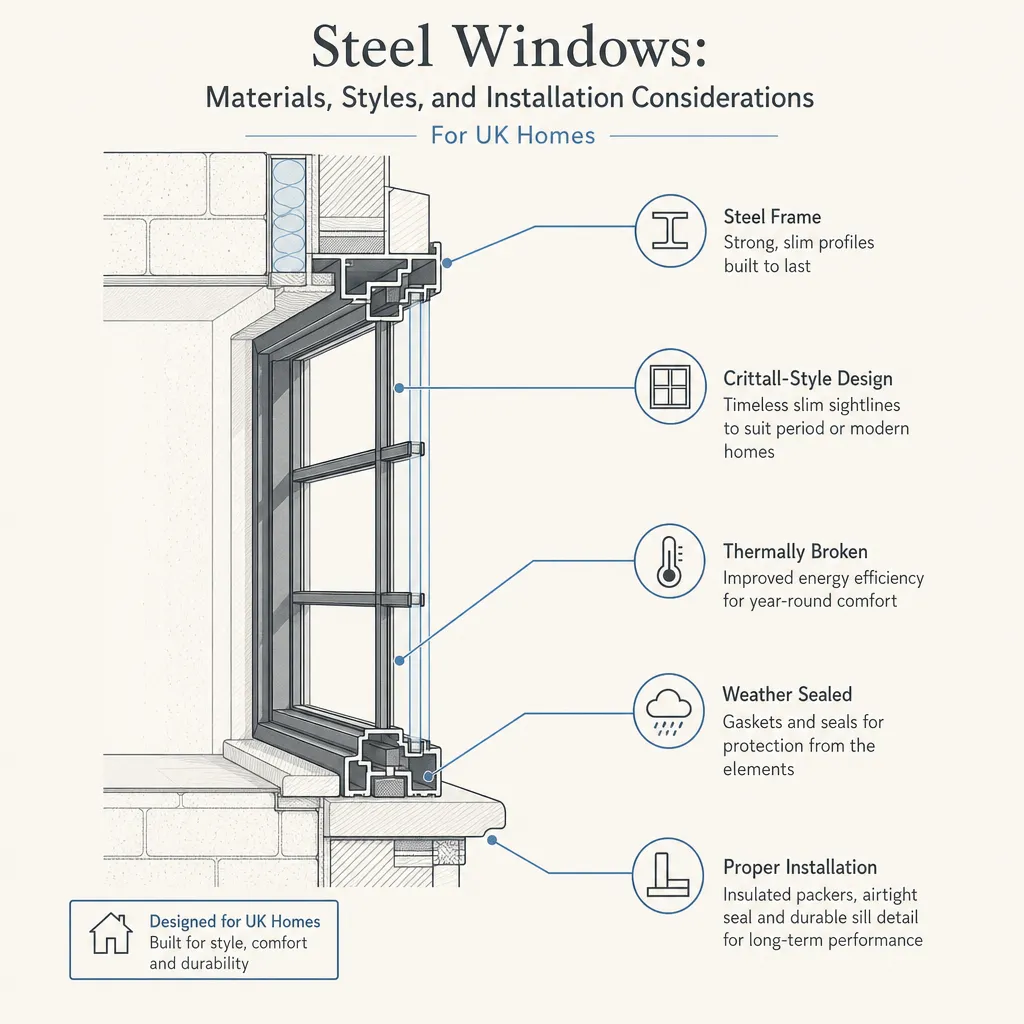
Steel Windows: Materials, Styles, and Installation Considerations
Steel windows offer exceptionally slender sightlines — as narrow as 20–38 mm — making them popular for heritage and contemporary projects alike.
 Improvement & Build
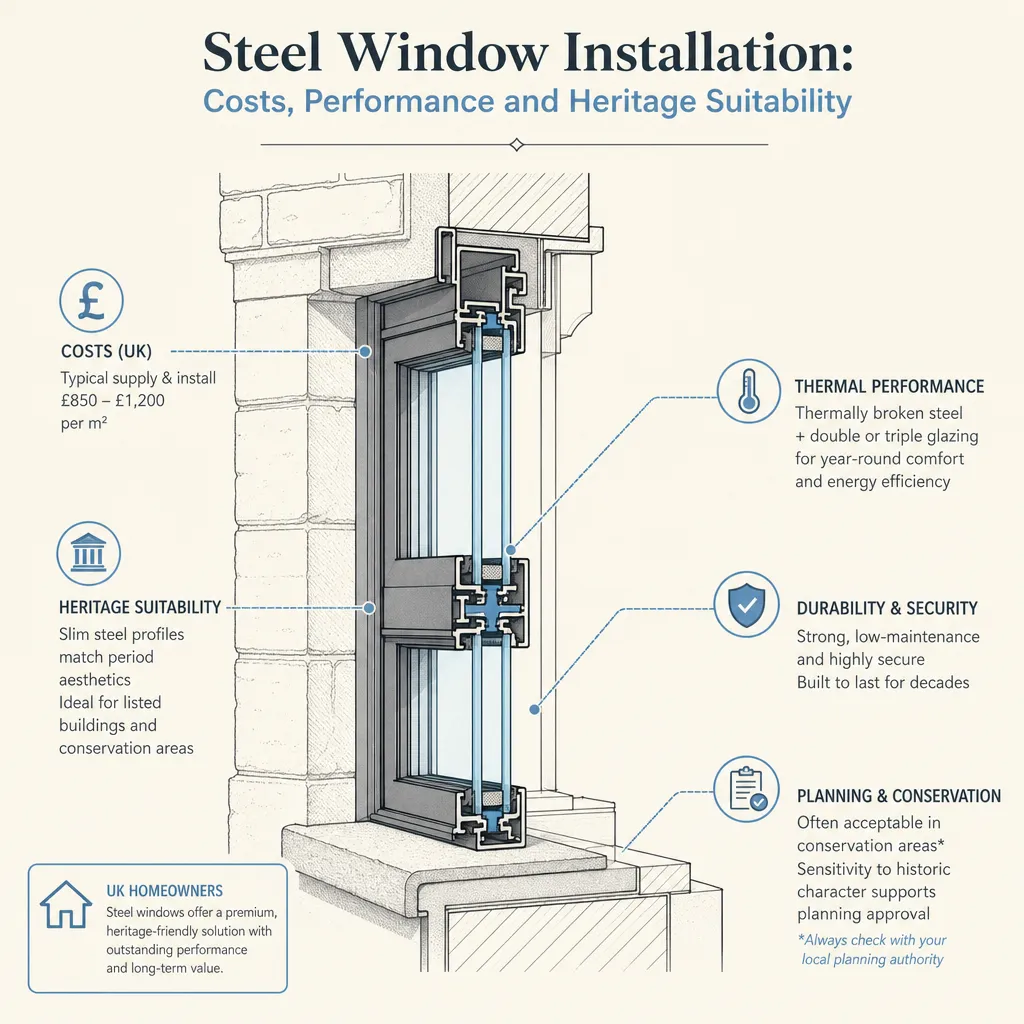
Steel Window Installation: Costs, Performance and Heritage Suitability
Steel windows are suited to inter-war, modernist, and contemporary UK homes where slim sightlines or heritage character matter.
 Improvement & Build
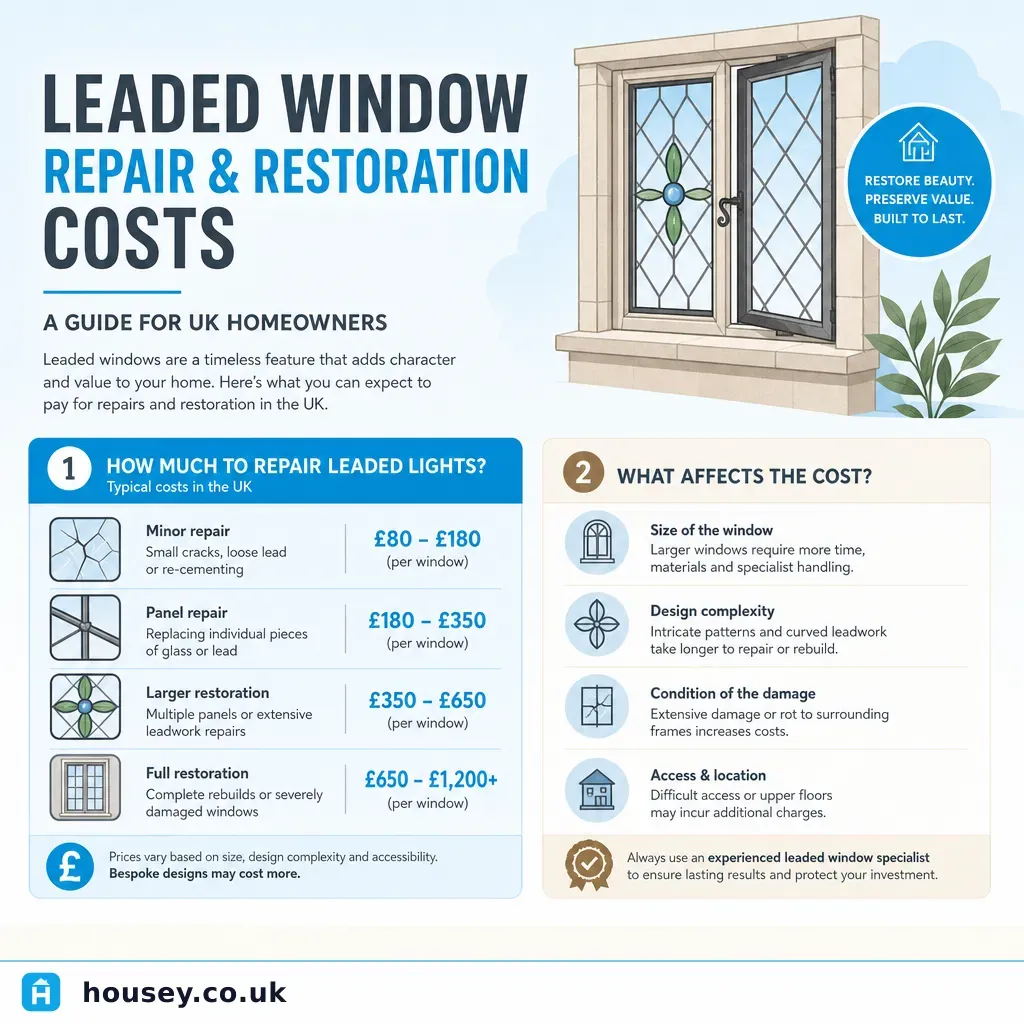
Leaded Window Repair and Restoration Costs
Leaded window repair in the UK typically costs £150–£600 for minor re-soldering or resealing, rising to £800–£2,500+ for full panel removal and restoration.
 Improvement & Build
Repairing Failed Window Seals and Condensation Issues
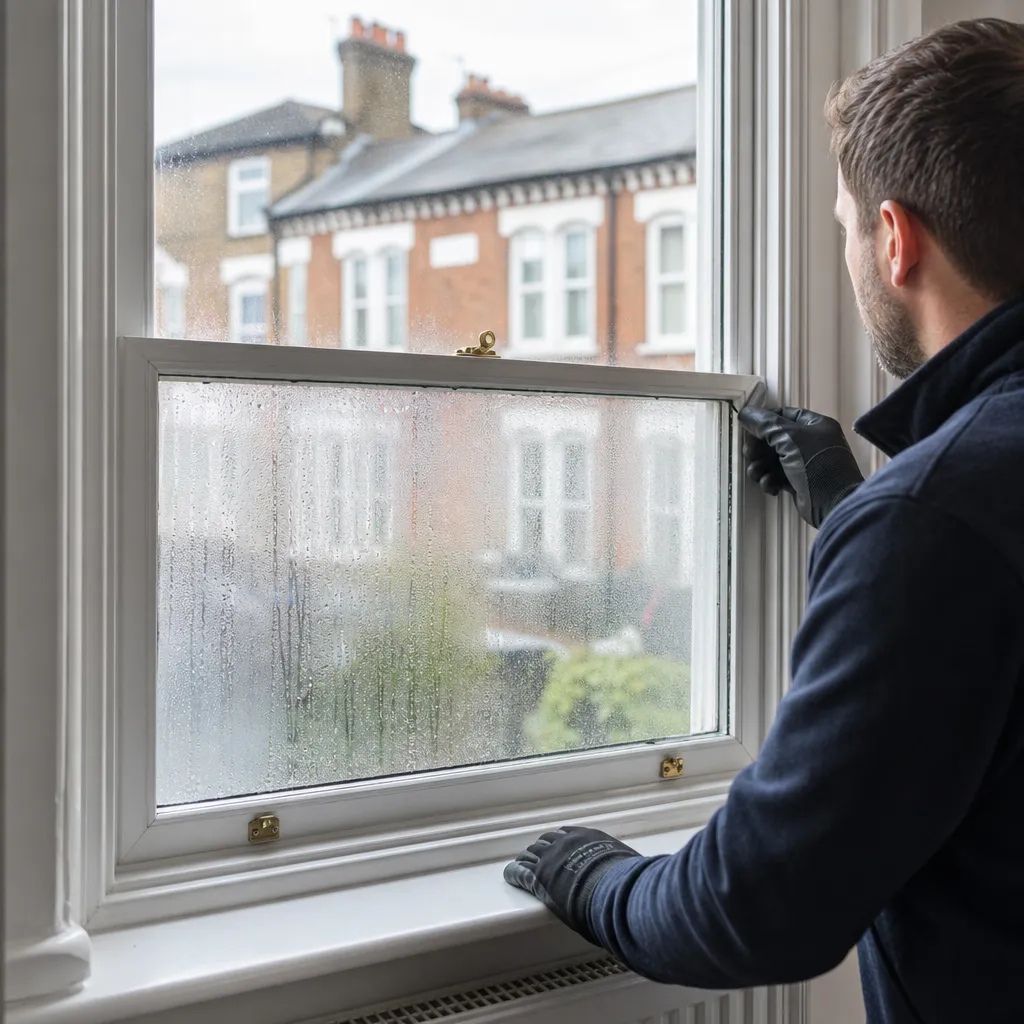
Condensation between double-glazed panes means the hermetic seal on the insulated glass unit has failed.
 Improvement & Build
Steel-Framed Window Installation Costs
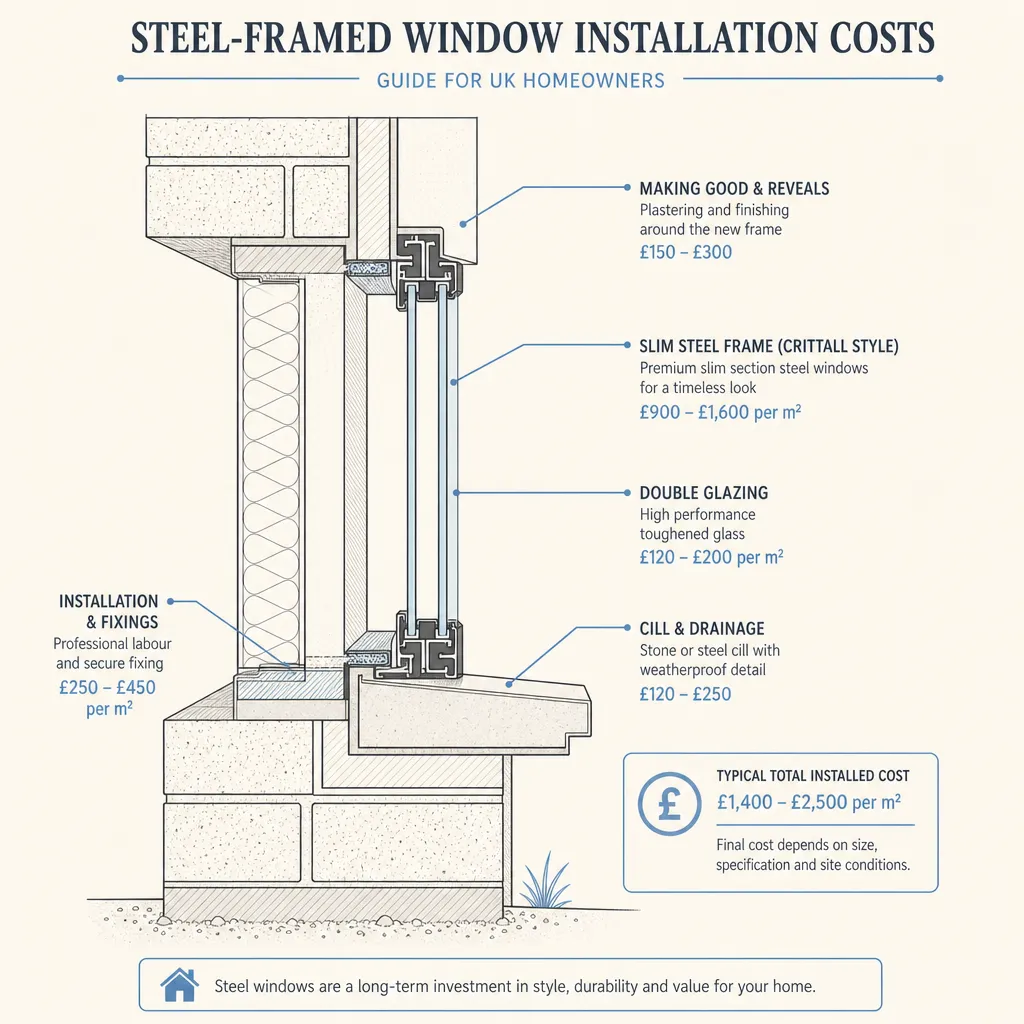
Steel-framed windows cost between £800 and £3,500 or more per window installed in the UK, depending on size, profile type, glazing specification, and whether old frames need removing.