Scaffolding Hire for Construction and Renovation Work
By Housey · Last reviewed 10th of May 2026
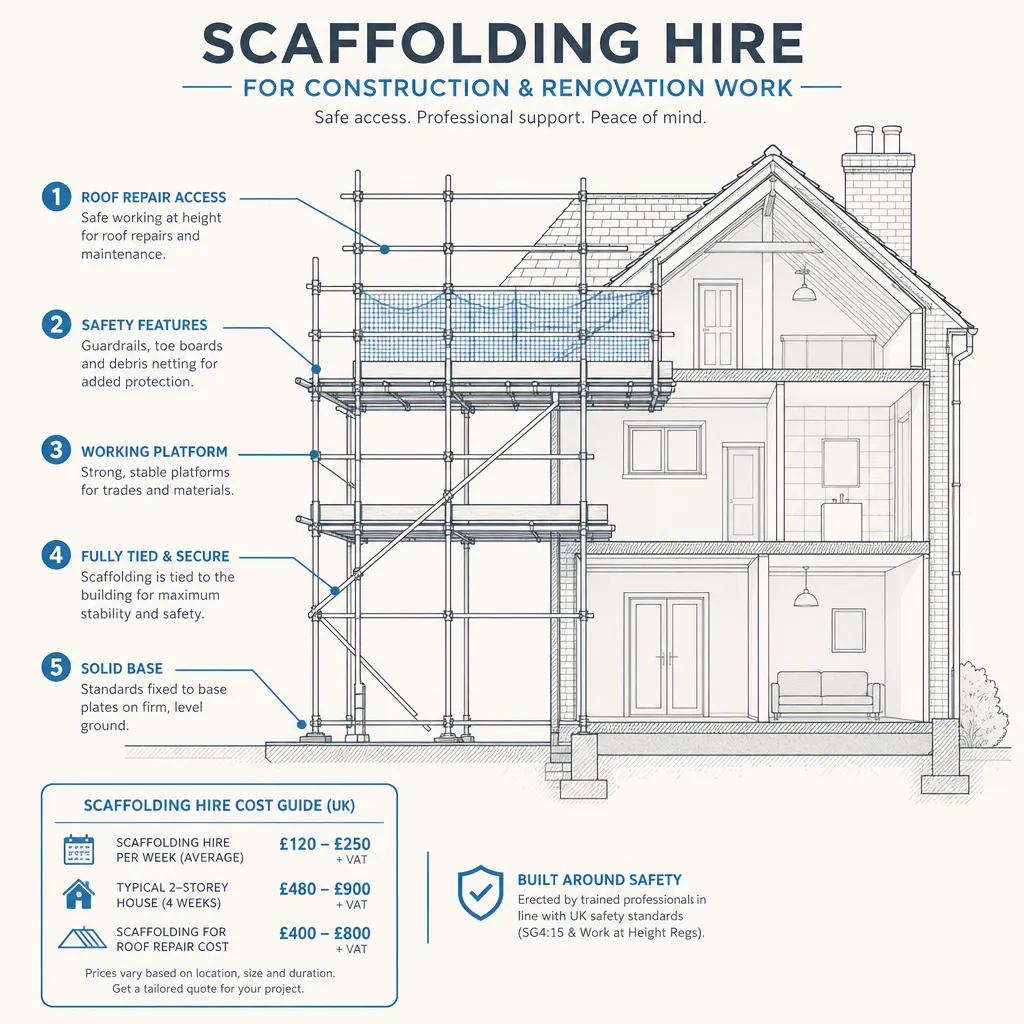
Scaffolding Hire for Construction and Renovation Work
Most significant construction and renovation projects in the UK — from re-roofing a Victorian terrace to building an extension on a 1970s semi — require safe working access at height that goes beyond a standard stepladder. Scaffolding is often the most practical and legally compliant solution, but costs, hire duration, and logistical requirements vary considerably depending on project type, property height, and access constraints. Understanding what you are paying for and what the law requires helps you budget accurately and avoid being caught out by scope gaps or overlooked obligations.
Key points
- Under the Work at Height Regulations 2005, scaffolding must be erected, altered, and dismantled by competent, trained operatives; homeowners must not attempt to erect traditional tube-and-fitting scaffold themselves.
- Scaffold hire is typically charged in two parts: a fixed erection and dismantling fee, plus a weekly or monthly hire charge while the structure remains in place.
- Scaffold contractors should hold CISRS (Construction Industry Scaffolders Record Scheme) accreditation; always ask for the CISRS card number of the erecting supervisor before work starts.
- If scaffold is to be placed on or overhangs the public highway, a licence from the local highway authority is required — allow two to four weeks for the application process.
- The Party Wall etc. Act 1996 may be relevant if scaffold needs to be erected on or over a neighbouring property; written consent or a party wall agreement may be needed before erection.
What is scaffolding and when is it needed?
Scaffolding is a temporary framework of tubes, boards, and fittings that provides a working platform at height and safely supports operatives and materials. The most common types used on UK residential projects are:
- Tube and fitting scaffold — the traditional system; flexible, suitable for irregular structures, and used on most multi-storey residential work.
- System scaffold (Kwikstage, Layher) — pre-engineered components that assemble faster; used on larger or more regular structures.
- Putlog scaffold — uses the building wall itself as one supporting element; suited to new-build brickwork or masonry repair projects.
Typical situations requiring scaffold on a residential project:
- Roof repair, replacement, or re-tiling
- Chimney pointing, repointing, or removal
- Loft conversions involving external dormer or roof alterations
- Render repair, external wall insulation (EWI), or repointing on multi-storey elevations
- Extension construction where operatives work above first-floor level
- Soffit, fascia, and gutter replacement on two-storey or taller properties
- Window installation or replacement on upper floors
How much does scaffolding hire cost?
Indicative UK costs, last reviewed 2026-05-10. Costs vary significantly by location, scaffold type, access conditions, and duration.
Project type | Indicative erection cost | Indicative weekly hire charge | Notes |
|---|---|---|---|
Standard two-storey rear elevation | £600–£1,200 | £80–£180/week | Single elevation; additional lifts cost more |
Full house (four elevations, two storeys) | £1,500–£3,500 | £200–£400/week | Common for re-roofing, full render, or EWI projects |
Chimney scaffold (independent tower) | £400–£900 | £60–£120/week | Height and access dependent |
Loft conversion (dormer works) | £800–£1,800 | £100–£200/week | Varies with dormer size and roof pitch |
Scaffold with highway licence requirement | Add £200–£600 | Plus council licence fee (varies by authority) | Pavement closure or overhang of public land |
Always obtain at least three written quotes. These figures are indicative; regional variation and market conditions can move prices meaningfully.
Factors that increase scaffold costs:
- Additional height above two storeys
- Restricted access — narrow passages, terraced houses with no rear access
- Highway licences and associated traffic management plans
- Debris netting, sheeting, or brick guards
- Loading bays for material delivery
- Extended hire periods when projects overrun their programme
Scaffold types: a comparison
Scaffold type | Best for | Not ideal for | Typical hire duration | Key consideration |
|---|---|---|---|---|
Tube and fitting | Irregular buildings, complex elevations, listed buildings | Speed-critical programmes | Weeks to months | Maximum flexibility; requires skilled erectors |
System scaffold (Kwikstage) | Regular structures, larger projects, faster erection | Highly irregular facades | Days to months | Faster assembly; component availability varies by region |
Chimney tower or birdcage | Isolated chimney work and high-level repairs | Multi-elevation projects | Days to weeks | Compact; minimal footprint on site |
Aluminium mobile tower | Low-level internal or external work (typically to 5 m) | Multi-storey or sustained external use | Day or weekly hire | Not a substitute for full scaffold on complex or high work |
Legal and safety requirements
Work at Height Regulations 2005: these regulations apply to all work at height, including residential projects, and require that such work is properly planned, supervised, and carried out by competent people. Scaffold must be erected, altered, and dismantled by trained operatives. An inspection record must be kept throughout the hire period.
CISRS accreditation: the Construction Industry Scaffolders Record Scheme is the recognised card scheme for UK scaffolders. Ask your contractor for the CISRS card number of the supervisor. Operatives holding CISRS Scaffolder or Advanced Scaffolder cards have demonstrated competency through assessed training and experience.
Scaffold inspections: scaffolding must be inspected by a competent person before first use, after any event liable to affect stability (such as high winds or impact), and at intervals not exceeding seven days. A written record must be retained and made available on request.
Highway licences: if scaffold is to be erected on a public pavement, road, or overhanging the public highway, a licence from the local highway authority is required. Lead times vary by council — allow at least two to four weeks. Some authorities require traffic management plans as part of the application.
Party wall considerations: if scaffold needs to be placed on or over a neighbouring property to access a shared or boundary wall, the Party Wall etc. Act 1996 may apply. A party wall surveyor can advise on the correct process. Never place scaffold on a neighbour's land without their written consent.
What to ask before hiring a scaffold contractor
- Is the contractor a member of the National Access and Scaffolding Confederation (NASC)?
- Can they provide a valid CISRS card for the erecting supervisor?
- Does the quote include erection, weekly hire, and dismantling, or are these priced separately?
- Is VAT included in the quoted price?
- Who arranges and pays for any highway licence required?
- What is the daily or weekly hire rate if the project overruns?
- How much notice is required to arrange dismantling?
- Is debris netting or sheeting included, or separately priced?
- What public liability and employers' liability insurance does the contractor hold?
Homeowner scaffold checklist
When to get professional help
Scaffolding is specialist work. The Work at Height Regulations 2005 are clear: erection, alteration, and dismantling must be carried out by competent, trained operatives. Never attempt to erect traditional tube-and-fitting scaffold yourself.
Consider engaging a project manager if:
- Your project involves scaffold on multiple elevations simultaneously and you need to coordinate sequencing with roofing, window, and render contractors to minimise hire duration.
- You are unsure whether a highway licence or party wall agreement is needed.
- The scaffold needs to be erected on or over a neighbouring property.
- You are managing multiple trades and want to control the overall programme and avoid costly access overlaps.
How Housey can help
Housey connects you with reputable extension builders and demolition contractors who work with trusted scaffold contractors and can include scaffold access as part of an integrated project programme. An experienced project manager can coordinate scaffold hire across multiple trades to minimise duration and avoid costly overlaps. Submit your project brief to compare quotes from vetted specialists.
Frequently asked questions
Do I need a licence to put scaffolding outside my house?
If the scaffold sits entirely within your own curtilage and does not overhang or occupy the public pavement or road, you generally do not need a highway licence. If any part of the scaffold extends onto or over the public highway, a licence from the local highway authority is required. Check with your local council before erecting.
How long can scaffold stay up on a residential property?
There is no fixed maximum period for residential scaffold, but weekly hire charges accumulate throughout. On a typical re-roofing project scaffold may stay up for two to six weeks; on a loft conversion or major renovation it can remain for several months. It should come down as soon as the relevant work is complete.
Can I hire scaffolding myself as a homeowner?
Yes — scaffold contractors can hire directly to homeowners. However, the scaffold must still be erected, altered, and dismantled by competent, trained operatives. You cannot erect traditional tube-and-fitting scaffolding yourself. Lightweight aluminium mobile towers can be hired and erected by non-specialists for low-level work up to the manufacturer's rated height.
Does scaffolding affect my home insurance?
Most home insurers require notification when scaffold is erected on your property, as it can affect the security of the building. Check your policy conditions and inform your insurer before the scaffold goes up. Some policies include a specific clause about scaffold, particularly for unoccupied properties.
How much notice do I need to give to have scaffold taken down?
Most scaffold contractors require between two and five working days' notice for dismantling. Check your contract for the required notice period and build this into your project programme. Calling scaffold back after early removal adds significant additional cost, so coordinate dismantling with the completion of all trades that require access at height.
Sources and further reading
- Work at Height Regulations 2005 — legislation.gov.uk
- Working at height — a brief guide (INDG401) — Health and Safety Executive
- National Access and Scaffolding Confederation — NASC
- Construction Industry Scaffolders Record Scheme — CISRS
- Party Wall etc. Act 1996 — legislation.gov.uk
Useful next reads
 Improvement & Build
Roof Snow Guard Installation and Winter Protection Costs
Snow guards prevent snow and ice from sliding off roofs onto people and property below.
 Improvement & Build
Loft Ladder Installation and Access Equipment Costs
Loft ladder installation typically costs £150–£450 supply and fit in the UK, depending on ladder type and whether the hatch needs enlarging.
 Improvement & Build
Liniar uPVC Windows: Performance, Durability, and Quality Assessment
Liniar uPVC window profiles are manufactured in the UK using multi-chambered, foamed frames.
 Improvement & Build
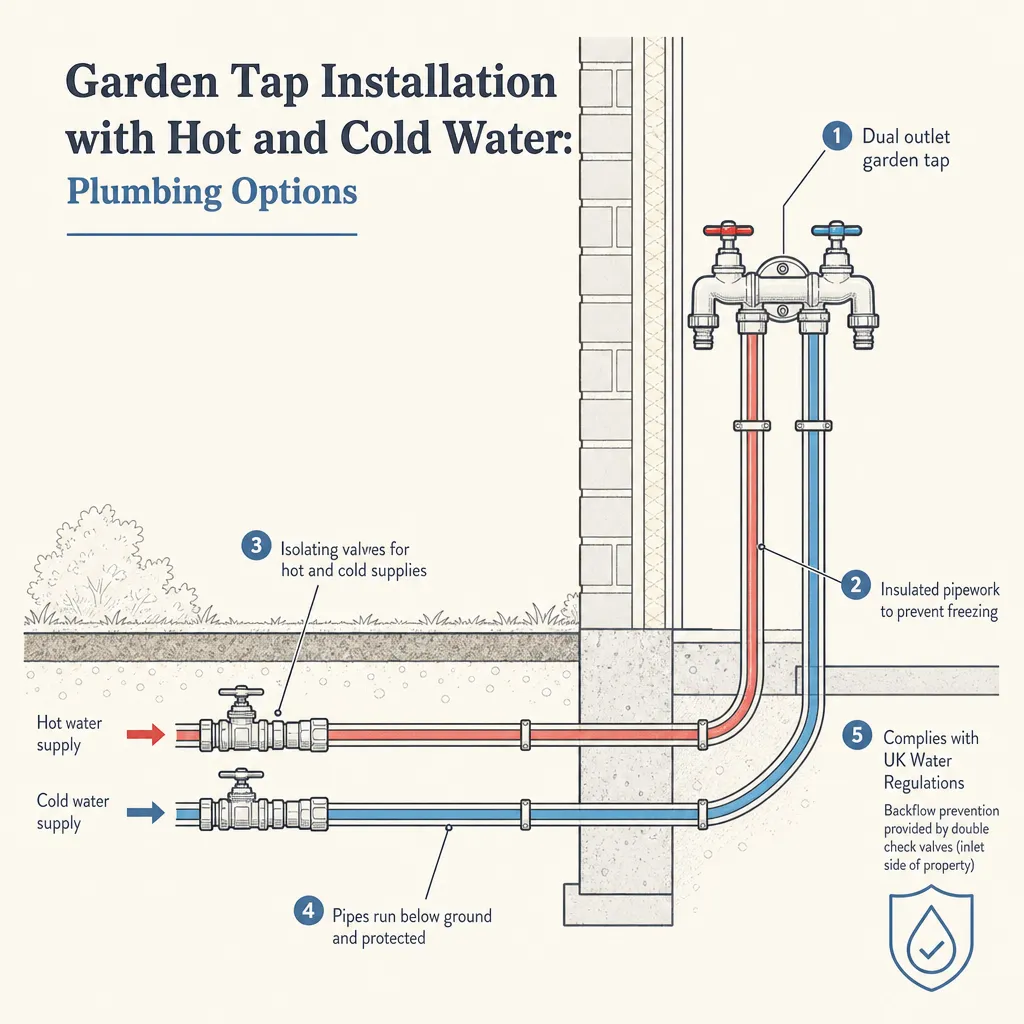
Garden Tap Installation with Hot and Cold Water: Plumbing Options
Adding a cold garden tap is a common DIY project, but routing hot water outdoors requires a plumber to connect to your domestic hot water system and comply with the Water Supply (Water Fittings) Regulations 1999.
 Improvement & Build
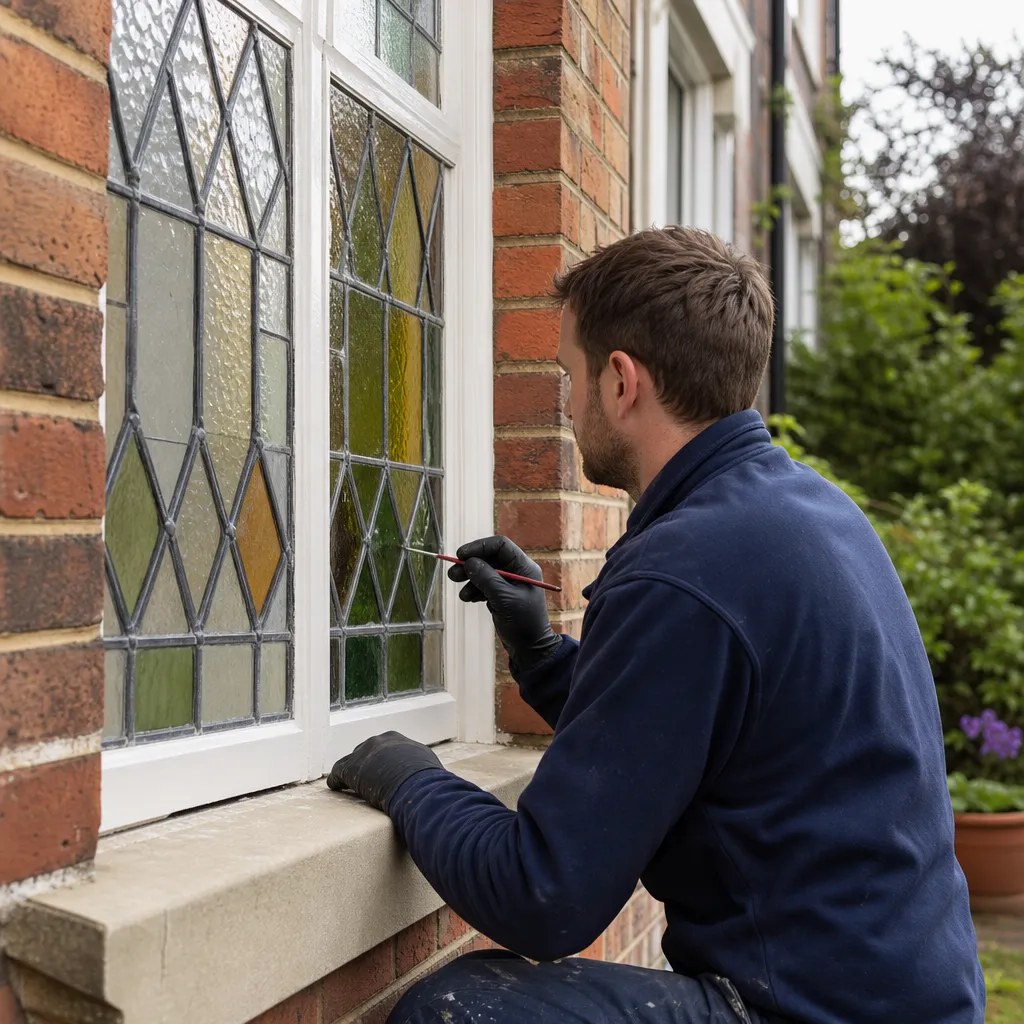
Sealing and Maintaining Historic Leaded Glass Windows: Preservation and Performance
Leaded glass windows are maintained using traditional linseed oil cement — not silicone or modern sealants, which prevent natural movement in the lead came.