Sealing Below-Grade Walls: Epoxy Injection Repair Methods
By Housey · Last reviewed 11th of May 2026
Sealing Below-Grade Walls: Epoxy Injection Repair Methods
Cracked or leaking basement walls are among the more stressful discoveries a homeowner can make, particularly in older Victorian, Edwardian, or interwar properties where below-grade walls were never designed to resist hydrostatic water pressure to modern standards. Epoxy injection is one of several specialist techniques used to seal cracks and restore the water-resistance of below-grade concrete walls, but selecting the right method — and recognising when epoxy is unsuitable — requires understanding what the crack is doing and why it formed.
Key points
- BS 8102:2022 (Protection of below ground structures against water from the ground) is the British Standard governing below-grade waterproofing; it defines three grades of protection and three complementary Type approaches: Type A (barrier), Type B (structurally integral), and Type C (drained cavity).
- Low-viscosity epoxy resin (typically 5–100 centipoise) can penetrate cracks as fine as 0.1 mm under controlled injection pressure, making it suitable for narrow, static structural cracks in poured concrete.
- Epoxy injection creates a rigid, structural repair and is only appropriate for cracks confirmed as stable and non-moving — an active, flexing, or widening crack requires flexible polyurethane (PU) foam injection, not rigid epoxy.
- The Property Care Association (PCA) and the Structural Waterproofing Group (SWG) represent qualified below-grade waterproofing specialists in the UK; membership should be verified before instructing any contractor.
- Where a basement is being converted to habitable use, Building Regulations Approved Document C applies and Building Control sign-off is required for the waterproofing design and works.
What is epoxy injection and when is it used below grade?
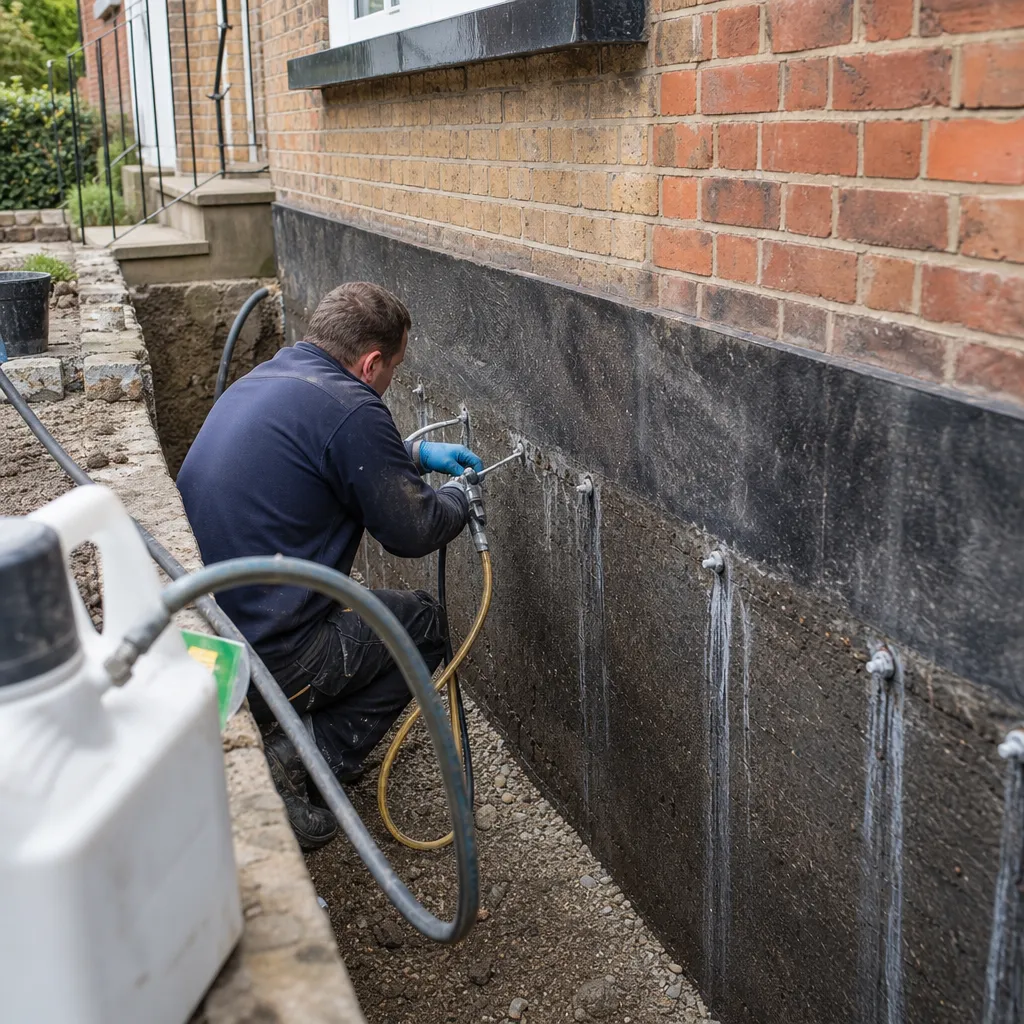
Epoxy injection is a crack-repair method used primarily on concrete structures — including basement walls, foundation walls, and below-ground retaining walls — to restore structural integrity and stop water ingress through specific cracks. A two-part epoxy resin (resin plus hardener) is injected under low to moderate pressure through a series of ports drilled or bonded along the crack at intervals typically of 150–300 mm.
The low viscosity of the product is critical: it allows the resin to flow deep into the crack by gravity and capillary action before it sets hard, creating a monolithic repair. Once cured, structural epoxies can achieve compressive strengths of 70 N/mm² or more — exceeding the strength of many standard structural concrete mixes.
When epoxy injection is appropriate:
- Hairline to medium cracks (0.1–5 mm width) in poured concrete basement walls confirmed as structurally stable.
- Situations where structural integrity as well as water-tightness must be restored.
- As a preparatory repair step before applying a Type A waterproofing barrier system.
When epoxy injection is NOT appropriate:
- Cracks in blockwork, brickwork, or masonry — mortar joints require a different repair approach.
- Active, widening, or cyclically moving cracks, which require flexible PU foam injection.
- Where ongoing water pressure prevents the crack surfaces from drying adequately before injection.
- As a standalone solution in below-grade habitable conversions, where BS 8102 typically requires a full waterproofing system rather than crack repair alone.
Epoxy injection versus polyurethane injection: choosing the right method
Factor | Rigid epoxy injection | Flexible PU foam injection |
|---|---|---|
Crack movement tolerance | None — crack must be confirmed inactive | Tolerates moderate ongoing movement |
Moisture during injection | Requires dry or surface-damp conditions | Can be injected into actively wet or weeping cracks |
Structural value | Yes — restores monolithic bond | No — seals only; not structural |
Suitable crack widths | 0.1–5 mm | 0.05–10 mm |
Post-cure behaviour | Rigid, high-compressive-strength solid | Flexible or expanding foam |
Indicative cost per linear metre (materials and labour) | £80–£200 | £60–£160 |
Common UK residential use | Foundation wall repair; structural crack sealing before Type A waterproofing | Active basement leaks; pipe penetrations; weeping cracks |
Indicative UK costs, last reviewed 2026-05-11. Quotes vary significantly by access, crack extent, depth, and contractor.
The epoxy injection process: what to expect
Understanding what a qualified contractor should carry out allows you to verify the work is being done to an appropriate standard.
- Crack survey and condition assessment. The contractor maps the crack, measures width and depth, and assesses whether movement is ongoing. A crack tell-tale or demountable gauge may be installed and monitored for several weeks before injection is recommended.
- Surface preparation. The crack is cleaned of dust, loose material, and efflorescence using wire brushing and compressed air. Where active weeping occurs, a surface sealant may be applied to contain water while ports are installed.
- Port installation. Low-pressure injection ports (packers) are drilled or surface-bonded at intervals of 150–300 mm along the crack, alternating sides where access allows.
- Crack sealing. The surface of the crack between ports is sealed with epoxy paste or surface cement to prevent blowouts during injection.
- Injection. Starting from the lowest port on a vertical crack, mixed epoxy is injected at low pressure until resin appears at the adjacent port, confirming the void is filled. That port is capped and the next is started.
- Curing and inspection. Epoxy typically achieves full cure within 24–72 hours. The contractor should inspect the repair, test any monitoring gauges, and provide a written report.
- Overlay or waterproofing system. In most below-grade situations, injection repair is followed by a compatible waterproofing coating or a full Type A, B, or C system as specified under BS 8102:2022.
Comparison of below-grade waterproofing methods
Method | Best for | Movement tolerance | Typical UK professional | Main limitation |
|---|---|---|---|---|
Rigid epoxy injection | Static cracks in poured concrete | None | PCA-registered structural waterproofing contractor | Cannot be used on active or moving cracks |
Flexible PU foam injection | Active or wet cracks | Moderate | Specialist damp or waterproofing contractor | Not structural; surface coat usually needed |
Cementitious slurry tanking | Porous masonry walls; minor seepage | None | Damp proofing specialist | Less reliable on cracked concrete |
Crystalline waterproofing (e.g. Vandex, Xypex) | Concrete pores and hairline cracks | None | Waterproofing contractor | Does not reliably bridge cracks wider than approximately 0.4 mm |
Type C drained cavity system | Habitable basements; all crack and wall types | Full — collects and redirects water | PCA-registered specialist basement contractor | Higher cost; reduces usable floor area by 75–100 mm |
Important limitations
The information in this guide is general. The correct repair method for a below-grade wall can only be determined by a qualified professional who has assessed your specific structure: crack geometry, movement history, groundwater level, wall construction type, soil conditions, and intended use of the space all affect the specification.
This guide does not constitute structural, engineering, or waterproofing design advice. Applying the wrong method — particularly using rigid epoxy on an active crack — can cause further damage and make subsequent repair more difficult and costly. If your basement is being converted to habitable use, a compliant waterproofing design must be prepared by a suitably qualified specialist in accordance with Approved Document C.
When this becomes urgent
Seek immediate professional advice if:
- Water is actively entering through a crack with visible flow or pooling on the floor.
- Efflorescence (white salt deposits) is present on or adjacent to the crack — this indicates long-term water movement through the structure.
- The crack is widening, stepped, or accompanied by signs of wall movement, sticking doors, or floor settlement.
- The crack is horizontal or runs at a shallow diagonal — these can indicate structural failure of the wall under lateral ground or hydrostatic pressure.
- The basement contains electrical equipment, a gas meter, or is used for sleeping accommodation.
What to ask a qualified professional
Before instructing a contractor for epoxy injection or any below-grade waterproofing repair, ask:
- Are you a current member of the Property Care Association (PCA) or the Structural Waterproofing Group (SWG)?
- Will you assess whether the crack is active or inactive before specifying the injection method?
- Is a crack-monitoring period recommended before injection is carried out — and if so, for how long?
- What British Standard underpins your specification — BS 8102:2022?
- Will the repair be backed by an insurance-backed guarantee (IBG), and who underwrites it?
- What supplementary waterproofing system, if any, is needed alongside the injection repair?
- Does this project require Building Control notification or approval?
- What professional indemnity and public liability cover do you carry?
When to get professional help
Below-grade waterproofing is not suitable as a DIY task. Incorrect repair of a below-grade crack can cause continued water ingress, progressive structural deterioration, mould growth, and — in habitable spaces — a potential breach of Building Regulations. Engage a PCA-registered specialist or a structural engineer if water is entering the structure, if you are planning a basement conversion, or if you see any crack wider than 0.3 mm or running diagonally through a below-grade wall.
A damp and timber survey from a qualified specialist is often the right starting point — it will diagnose the source of moisture and recommend the appropriate waterproofing strategy before any injection work is commissioned.
How Housey can help
Housey connects homeowners with vetted damp proofing specialists who carry PCA membership, offer insurance-backed guarantees, and can assess and treat below-grade walls to BS 8102:2022 across the UK.
Frequently asked questions
How long does epoxy injection last in a basement wall?
A correctly applied epoxy injection repair on a stable, non-moving crack can last 20–30 years or more when the underlying structure remains sound. Longevity depends on whether the crack was genuinely inactive at the time of injection, the quality of materials and workmanship, and whether a compatible waterproofing system was applied over the repair. Regular inspection every few years is prudent.
Can I inject epoxy into a wet crack?
Rigid epoxy generally requires the crack to be dry or surface-damp — water in the crack prevents proper bonding. If the crack is actively weeping, a polyurethane hydrophilic foam injection is usually carried out first to stop the water ingress. The crack is then allowed to dry before epoxy is introduced for structural repair. Discuss this two-stage sequencing with a qualified contractor.
Does epoxy injection need planning permission?
Crack repair and below-grade waterproofing on an existing structure does not usually require planning permission. However, if the work forms part of a basement conversion or change of use, Building Regulations Approved Document C requires Building Control approval. Listed buildings may also require listed building consent — verify with your local planning authority and conservation officer before starting any works.
What is the difference between Type A, B, and C waterproofing under BS 8102?
Under BS 8102:2022, Type A is a barrier system — membranes, coatings, and injection applied to the structure. Type B relies on structurally integral waterproof concrete design. Type C is a drained cavity system that collects and redirects groundwater away from the occupied space. For Grade 3 fully dry habitable basements, combining two Type approaches is typically recommended by the standard.
Sources and further reading
- BS 8102:2022 — Protection of below ground structures against water from the ground — BSI British Standards
- Property Care Association — structural waterproofing membership and guidance — Property Care Association (PCA)
- Building Regulations Approved Document C: site preparation and resistance to moisture — GOV.UK
- Structural waterproofing technical guidance — Property Care Association (PCA)
Useful next reads
 Improvement & Build
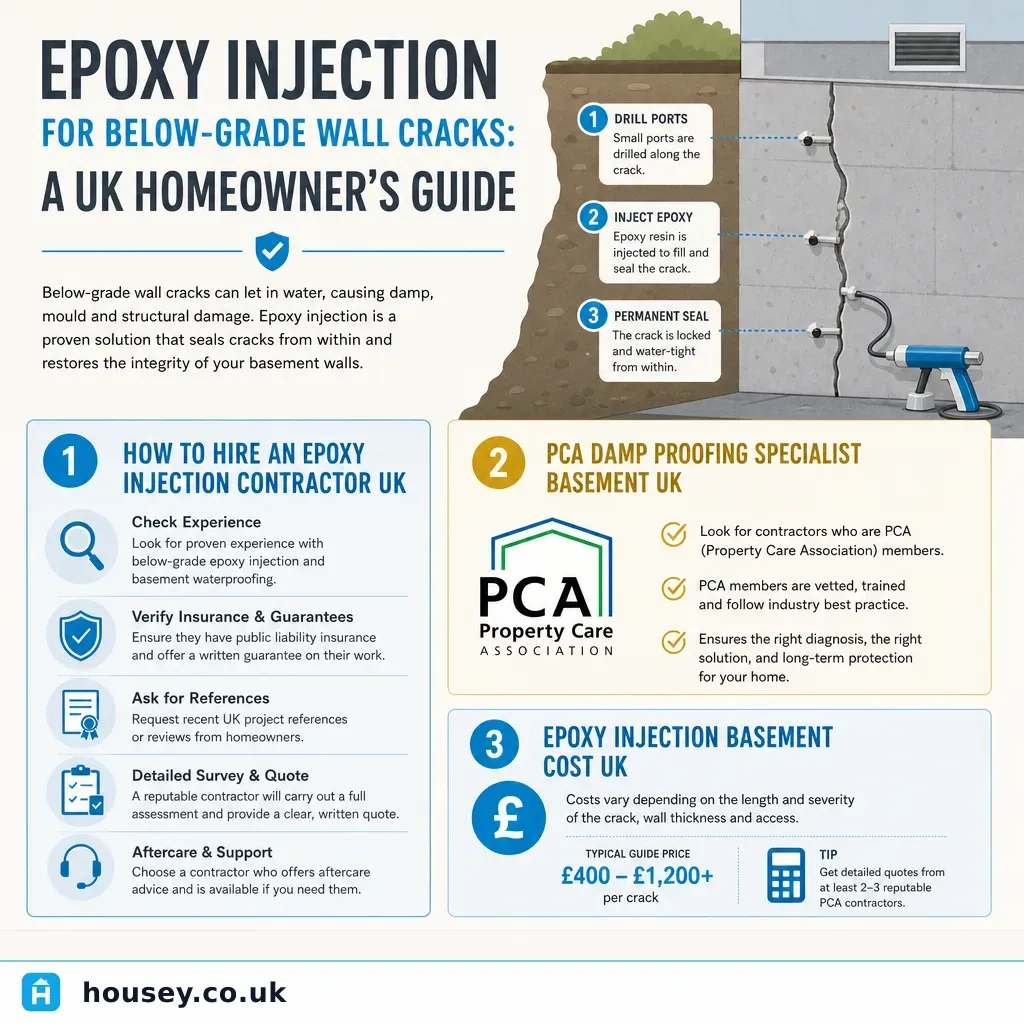
Epoxy Injection for Below-Grade Wall Cracks: A UK Homeowner's Guide
Epoxy injection seals stable, non-moving cracks in below-grade concrete walls but will not work on masonry, actively moving cracks, or as a standalone fix for habitable basement conversions.
 Improvement & Build
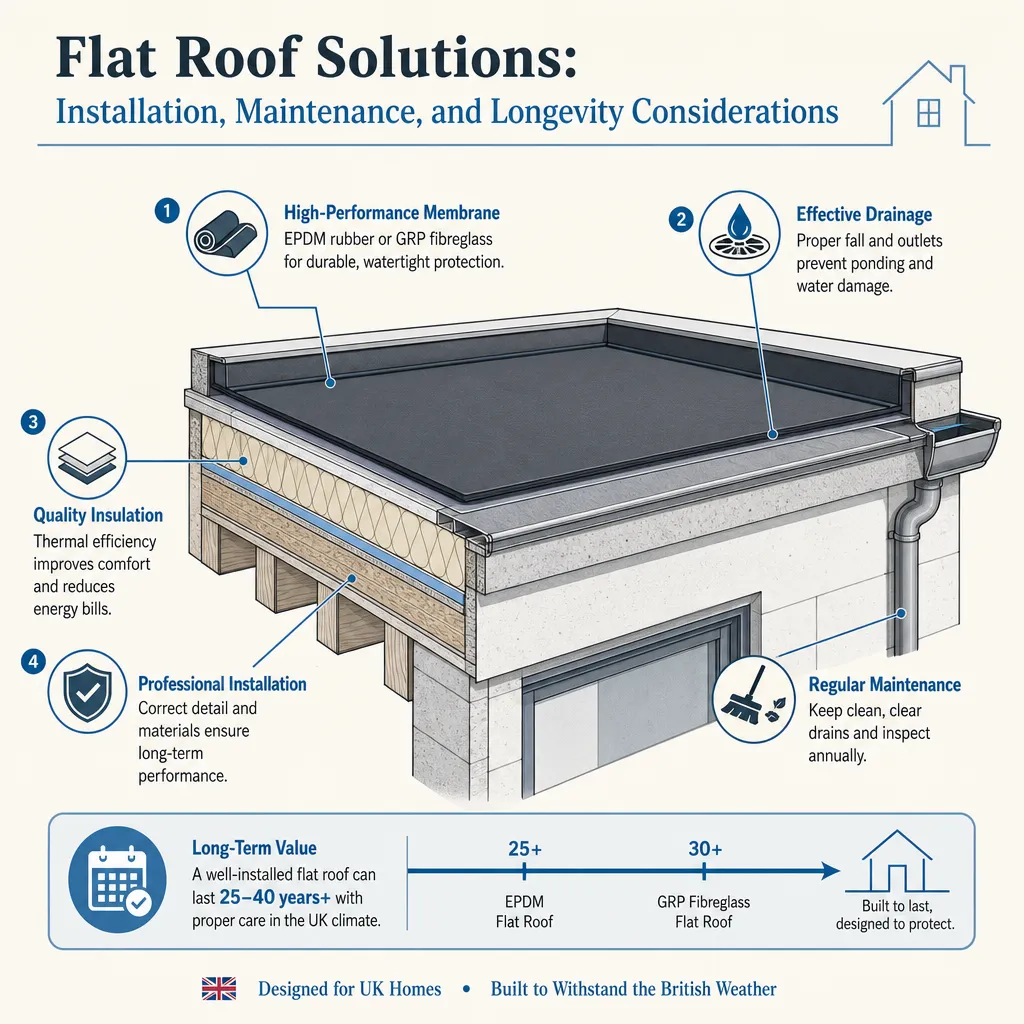
Flat Roof Solutions: Installation, Maintenance, and Longevity Considerations
Flat roofs use several waterproofing systems — EPDM rubber, GRP fibreglass, liquid-applied coatings, modified bitumen felt, lead, and zinc — each with different lifespans and installation requirements.
 Improvement & Build
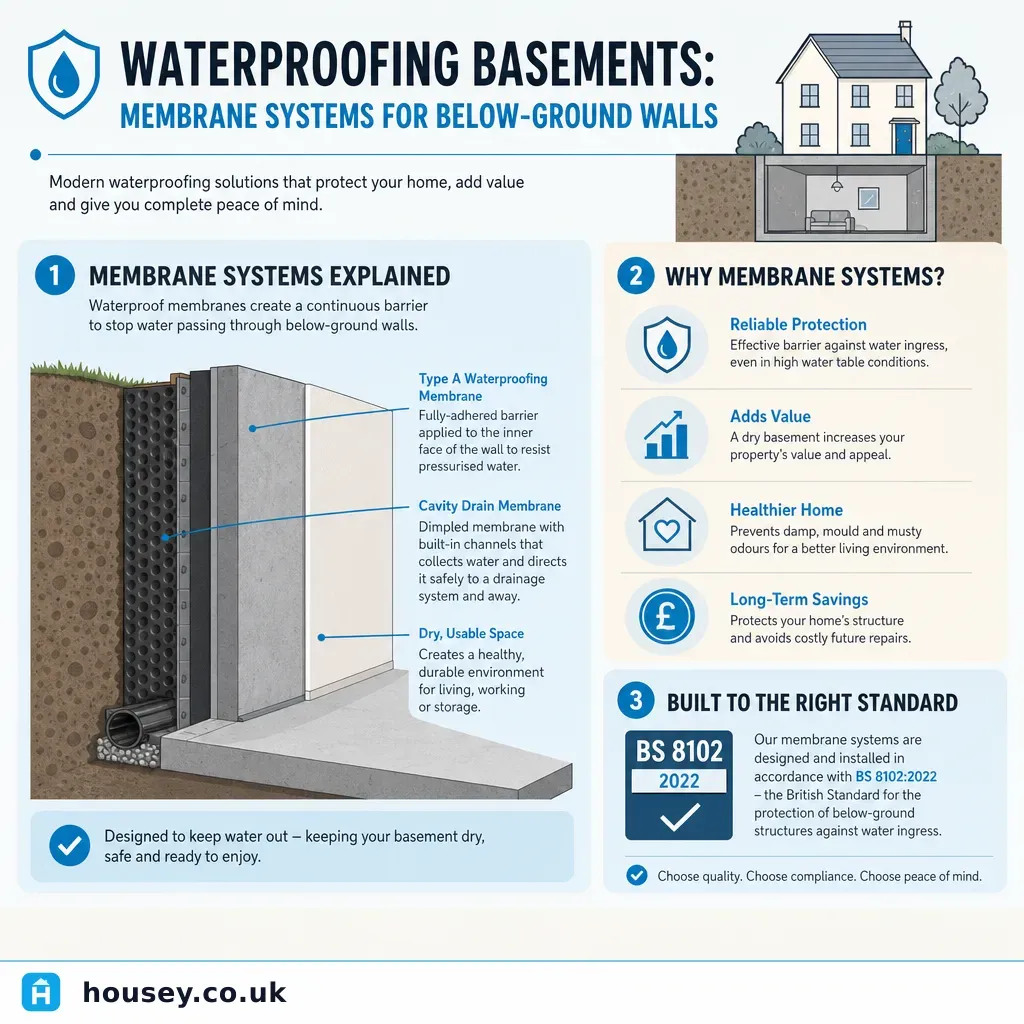
Waterproofing Basements: Membrane Systems for Below-Ground Walls
The three principal below-ground waterproofing systems under BS 8102:2022 are Type A (barrier membranes such as tanking or crystalline coatings), Type B (structurally integral waterproof concrete), and Type C (cavity drain membranes that collect and redirect water).
 Improvement & Build
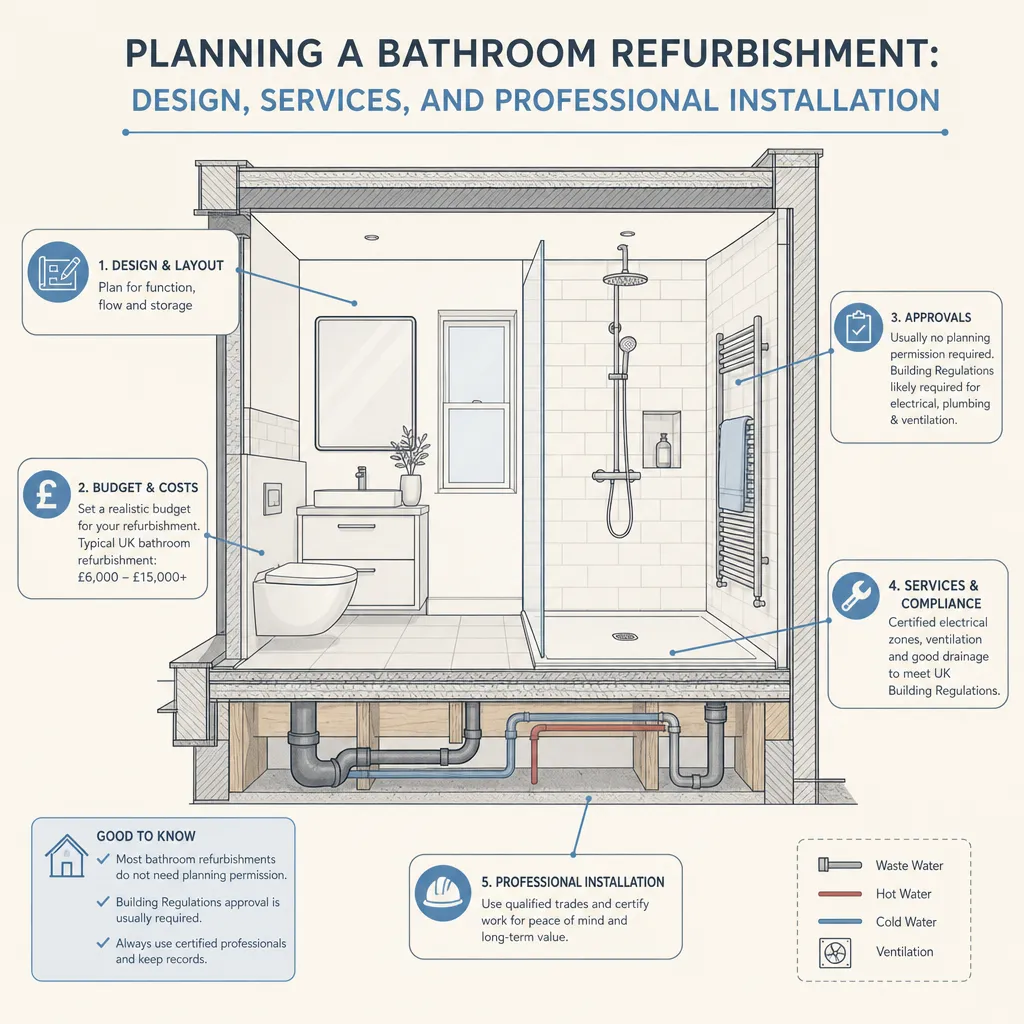
Planning a Bathroom Refurbishment: Design, Services, and Professional Installation
A bathroom refurbishment in the UK typically involves at least three trades — plumber, electrician, and tiler — and costs £4,000–£12,000 for a full project.
 Improvement & Build
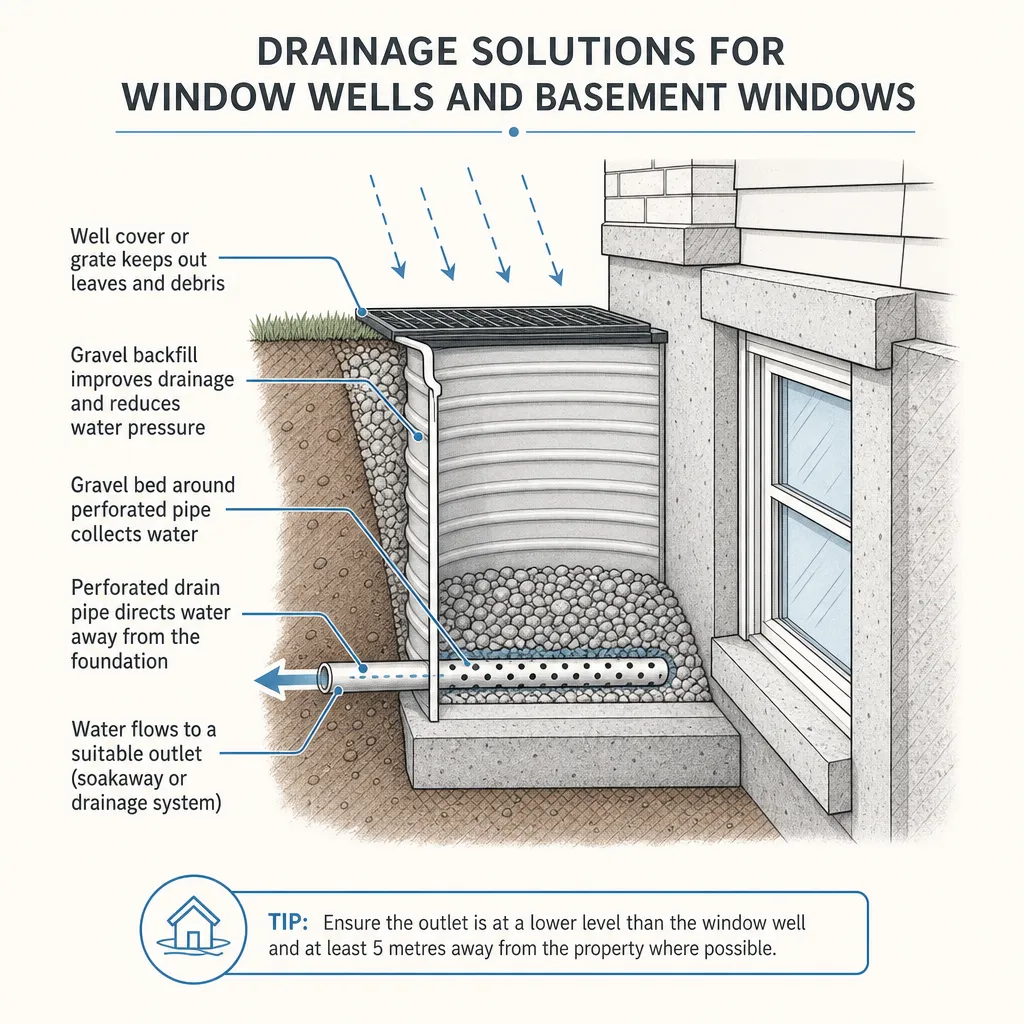
Drainage solutions for window wells and basement windows
Most UK window wells manage water through a gravel-filled sump at least 200 mm deep or a plastic liner fitted with a drain outlet connected to a soakaway or drainage system.